Duygu Ağaoğulları is an Associate Professor at Istanbul Technical University's Department of Metallurgical and Materials Engineering. With over 15 years of research activity, her work spans composite materials, mechanical alloying, graphene-based nanomaterials, and high entropy ceramics. Research Focus: Graphene-reinforced composites, advanced oxidation processes, rare-earth borides, powder metallurgy techniques Collaborations: Active in international research networks, particularly with projects related to plasma-facing materials for nuclear applications Scientific Recognition: Recipient of 10 prestigious awards including the 2008 Young Researcher Award and 2021 MCM Best Paper Award Supervisor of 21 research projects including TUBITAK-funded initiatives on bio-remediation and plasma-facing materials Her research output trends show increasing focus on graphene composites and nuclear material applications since 2016, with significant contributions to spark plasma sintering and mechanochemical synthesis.
Rainer J. Hebert is a Professor in the Department of Materials Science and Engineering at the University of Connecticut, serving as Director of the Pratt and Whitney Additive Manufacturing Center and Associate Director of the Institute of Materials Science. His research focuses on advancing additive manufacturing technologies with particular emphasis on materials development and process optimization for industrial applications. Education Ph.D., University of Wisconsin-Madison, 2003 Postdoctoral Fellow, University of Wisconsin-Madison, 2003-2005 Post Doctoral Fellow, Research Center Karlsruhe, Germany (now Karlsruhe Institute of Technology), 2003-2005 Research Interests Professor Hebert's research spans multiple areas within materials science and additive manufacturing. His primary focus is on developing new alloys specifically designed for additive manufacturing processes, with particular attention to how microstructures form during rapid solidification and laser processing. He investigates powder characteristics and their effects on the final manufactured products, aiming to improve quality and performance. His work on quasicrystal-reinforced aluminum alloys has shown promising results for high-performance applications, and he has made significant contributions to understanding the fundamental mechanisms of laser powder bed fusion. Hebert's research bridges fundamental materials science with practical industrial applications, particularly in aerospace and high-temperature environments. Publication Trends Analysis of Professor Hebert's recent publications reveals a strong focus on advancing additive manufacturing technologies, particularly laser powder bed fusion. His work spans from fundamental materials science (microstructure formation, phase transformations) to practical applications (alloy design, process optimization). A notable trend is the increasing integration of computational methods with experimental work to predict and optimize material behavior. His research shows a progression from basic microstructure characterization to more complex systems involving multi-material interactions, intelligent manufacturing systems, and the development of specialized alloys resistant to cracking and other defects. The consistent theme across his publications is improving the reliability and performance of additively manufactured components for demanding applications. Awards Materials Science and Engineering Program Teaching Award, 2010-2011 Advising and Grants As Director of the Pratt and Whitney Additive Manufacturing Center, Professor Hebert oversees significant research initiatives funded by both government agencies and industry partners, particularly in aerospace applications. His leadership in the Institute of Materials Science provides opportunities for student research and collaboration across multiple disciplines. His extensive publication record suggests active mentorship of graduate students in materials science and engineering. His research program likely involves multiple PhD and Master's students working on various aspects of additive manufacturing, from fundamental materials science to process development. Laboratories and Teams Professor Hebert directs the Pratt and Whitney Additive Manufacturing Center at UConn, which serves as a hub for collaborative research between academia and industry. The center focuses on advancing metal additive manufacturing technologies, particularly for aerospace applications. He also plays a key leadership role in the Institute of Materials Science, one of UConn's premier research centers. His research teams likely include graduate students, postdoctoral researchers, and industry collaborators working on projects related to powder characterization, laser processing, microstructure analysis, and alloy development. The collaborative nature of his work is evident from the multi-institutional authorship on many of his publications.
Yu U. Wang is a Professor in the Department of Materials Science and Engineering at the College of Engineering, Michigan Technological University. His research integrates experimental characterization and computational modeling to advance functional materials science, with a focus on phase transformations and microstructure-property relationships. Dr. Wang's educational background includes: PhD in Mechanical and Aerospace Engineering from Rutgers University BS in Mechanical Engineering from the University of Science and Technology of China His research spans phase transforming materials, in-situ synchrotron X-ray and neutron scattering techniques, diffuse scattering analysis, ferroelectric/magnetoelectric composites, colloidal self-assembly systems, and computational microstructure modeling. This work bridges fundamental materials physics with applications in energy harvesting, sensing, and advanced ceramics, emphasizing the interplay between nanoscale phenomena and macroscopic properties. Analysis of Dr. Wang's publications reveals a sustained focus on computational materials science, particularly phase field modeling applied to ferroelectric and shape-memory systems. His research consistently combines theoretical frameworks with experimental validation through diffraction techniques, targeting high-strain piezoelectrics, magnetoelectric composites, and nanodomain engineering for next-generation functional materials. Scientific awards received by Dr. Wang are not specified in the available documentation. Details regarding graduate student advising, research grants, and laboratory facilities are not provided in the source material, though his extensive publication record indicates active research supervision and project leadership.
Dr. Matthias Jäger is a Researcher in the Department of Fiber Photonics at the Leibniz Institute for Photonic Technology (IPHT) . His work focuses on advanced optical fiber development, particularly in doped materials and nonlinear laser dynamics. Core technologies: Thulium/Yb/Ho-doped fibers, periodic shadowing for stray light suppression, nonlinear loss management Instrumentation: High peak power laser systems, fluorescence lifetime analysis, multicore emission profiling Research interests span laser physics, materials science, and optical engineering. Recent publications highlight breakthroughs in: Directional stability control for fiber ring lasers (2021-2024) Hybrid Tm:YAG crystal-derived fiber fabrication (2022) Nanoparticle-doped optical fibers (2024) 2 µm eye-safe laser systems (2024) Pr3+-doped nanocrystal fiber integration (2024) Thulium concentration optimization for laser efficiency (2025) His work demonstrates expertise in fiber fabrication methods including: Modified Chemical Vapor Deposition (MCVD) Powder-sinter technology Molten-core processing REPUSIL fiber drawing
Associate Professor Damon Kent is affiliated with the University of the Sunshine Coast (UniSC), where he holds the position of Associate Professor of Engineering Sciences within the School of Science, Technology and Engineering. He received his BEng (Hons), MPhil, and PhD from The University of Queensland. As Program Coordinator for the Mechanical Engineering program, he focuses on integrating teaching and research. His research interests span advanced materials development for medical, aerospace, and automotive applications, including metallic alloys, phase transformations, powder metallurgy, and additive manufacturing. He is an expert in materials characterization techniques such as electron microscopy and mechanical property evaluation. Notable achievements include Res-Teach Awards (2013 and 2014) for enhancing teaching through research integration. His work has led to grants including a UniSC Launch Pilot Scheme grant for bioresorbable metal implants (2023) and ARC Linkage grants for materials infrastructure (2021–2019). His publications emphasize innovations in materials processing, degradation control, and biomedical applications. Professional memberships include the Australian Research Council (ARC), Materials Australia, and Engineers Australia.
Jennifer Gray is an Assistant Research Professor at the Materials Characterization Lab within the College of Earth and Mineral Sciences at Pennsylvania State University. She is actively engaged in cutting-edge interdisciplinary research involving advanced materials characterization, with applications in energy, biomedicine, and planetary science. Her work leverages high-resolution electron microscopy and spectroscopy techniques to understand nanoscale structures and properties. Her research interests span a broad range of topics including Materials Science , Transmission Electron Microscopy , Nanomaterials , Thermoelectric Materials , Biomaterials , and Planetary Materials . She has made significant contributions to the analysis of asteroid Ryugu samples, studying space weathering, mineral alteration, and extraterrestrial organic matter. Her work also extends to energy materials, particularly thermoelectrics and magnetic composites, as well as biomedical applications such as nanoparticle delivery in cancer therapy. The recent publications highlight a strong trend toward interdisciplinary collaboration, especially in the characterization of complex materials using advanced electron microscopy techniques. Her work frequently appears in high-impact journals in materials science, planetary science, and biomedicine. The keywords across her articles reflect expertise in electron microscopy , nanoscale characterization , semiconductors , energy materials , and astrogeology . Scientific Awards: No awards explicitly mentioned in the text. Advising and Grants: Jennifer Gray collaborates extensively with large research teams, particularly in NASA-related asteroid sample analysis and energy materials research. While specific grants or students are not listed, her role as a research professor suggests involvement in funded projects and mentorship within the Materials Characterization Lab. She contributes to open science initiatives such as the STEP Initiative, promoting resource sharing in materials research. Labs and Teams: She is a key member of the Materials Characterization Lab at Penn State, which provides centralized facilities for advanced materials analysis. Her work is integral to interdisciplinary teams studying thermoelectrics, biomaterials, and extraterrestrial samples, often in collaboration with national and international researchers.
Amir Mostafaei is Assistant Professor at Illinois Tech's Armour College of Engineering, researching metal additive manufacturing processes. His work focuses on laser powder bed fusion and binder jetting of structural alloys, shape memory materials, and biomaterials. Key areas include process optimization, microstructure control, and advanced characterization using micro-CT and synchrotron techniques. He directs the AMIR Lab investigating process-structure-property relationships in additively manufactured components. Recent projects examine sintering kinetics of binder jetted parts and fatigue behavior of non-spherical Ti-6Al-4V powder processed via laser powder bed fusion. NSF CAREER Award (2024) Multiple student research awards (URCA, RES-MATCH) The lab develops data analytics approaches for quality prediction and maintains collaborations with national labs including Argonne.
Dr. Kunal H. Kate is an Associate Professor in the Department of Mechanical Engineering at the University of Louisville. His research focuses on advancing manufacturing technologies such as 3D printing and powder injection molding (PIM), with a particular emphasis on high-performance materials like ceramics, metals, and polymer composites. He collaborates with NASA's FabLab on in-space manufacturing projects and works with the U.S. Department of Commerce's MBDA to support minority businesses through 3D printing innovation. Dr. Kate holds a B.E. in Chemical Engineering (2009, VIT), M.S. (2013), and Ph.D. (2015) in Materials Science from Oregon State University. Research Interests His work spans additive manufacturing processes (especially metal fused filament fabrication), material characterization, and sustainable composites. Key areas include optimizing material feedstocks for MF3, studying sintering dynamics of titanium alloys, and developing bioplastics from agricultural byproducts like soy hulls. His contributions bridge fundamental materials science with industrial applications in aerospace, medical, and transportation sectors. Grants & Collaborations Recipient of funding from NASA (FabLab initiative), US Department of Commerce, and United Soybean Board. His lab actively explores process-structure-property relationships in AM materials and contributes to advancing energy-efficient manufacturing techniques.
Prof. Eli Jerby is a faculty member at the School of Electrical Engineering , Tel Aviv University. His research focuses on microwave-matter interactions , particularly localized microwave heating (LMH) for industrial applications, fireball and plasmoid generation, and microwave-based technologies in additive manufacturing. University: Tel Aviv University School: School of Electrical Engineering Jerby’s research interests span: Microwave Drilling: Silent, dust-free drilling in concrete, ceramics, and bones. Fireball Dynamics: Laboratory-scale simulation of ball lightning. Additive Manufacturing: Microwave-assisted 3D printing of metal powders. Plasma Generation: Ejection of plasmoids from molten materials. His publications highlight trends in microwave heating for material processing, including concrete cutting, basalt melting, and thermite ignition. Articles emphasize LMH mechanisms, thermal instabilities, and nanoparticle formation. Key subfields include microwave safety , dielectric absorption , and solid-state applicators . Jerby’s scientific work has been featured globally, including in Science , Nature Physics , and Physical Review Letters . He holds patents for microwave drills and heating systems, with applications in construction and materials science. He mentors research students like Yoav Shoshani and collaborates on projects involving microwave-driven plasmas and thermite ignition . His lab explores microwave-DC synergy and the bubble-marble effect for underwater applications.
Sagar Nikam is a Lecturer at Ulster University's School of Computing, Engineering and Intelligent Systems, specializing in additive manufacturing and laser processing technologies. He works at the Derry~Londonderry campus in Magee, Northern Ireland. PhD in Engineering from Indian Institute of Technology Indore (2018) MSc from National Institute of Technology Tiruchirappalli (2013) BSc from Shivaji University (2010) His research focuses on additive manufacturing processes , particularly laser directed energy deposition and powder bed fusion technologies. He develops image processing algorithms and computer vision systems for real-time defect detection in biomedical-grade alloys, employing artificial intelligence techniques like YOLO-based object detection models. His work addresses critical aspects such as: Melt pool dynamics and spatter particle analysis Thermal modeling incorporating Marangoni convection effects Finite element simulation of deposition processes Process parameter optimization using genetic algorithms Recent projects include Digital twin-based process monitoring systems funded by the Department for the Economy (UK Government), collaborating with colleagues like Dr. Deepika Nikam, Dr. David Kerr, and Prof. Sean Coleman.
María Eugenia Rabanal Jiménez is Associate Professor at Universidad Carlos III de Madrid and Deputy Director of the Álvaro Alonso Barba Institute of Chemistry and Materials Technology. Her research focuses on advanced materials synthesis and characterization, particularly nanostructured metal oxides for photocatalytic and biomedical applications. Primary research domains include: Design of ZnO-based nanostructures with controlled morphology Rare-earth doped materials for sensing and catalysis Electrospun nanocomposites for medical applications Metallurgical development of oxide dispersion strengthened steels Recent publications demonstrate strong emphasis on photocatalytic materials, with 12 of 15 articles (2020-2025) addressing ZnO modifications, degradation mechanisms, and catalytic efficiency enhancement through doping and defect engineering. She leads the Powder Technology research group and participates in multiple national projects on nanomaterials processing and sustainable material solutions for industrial applications.
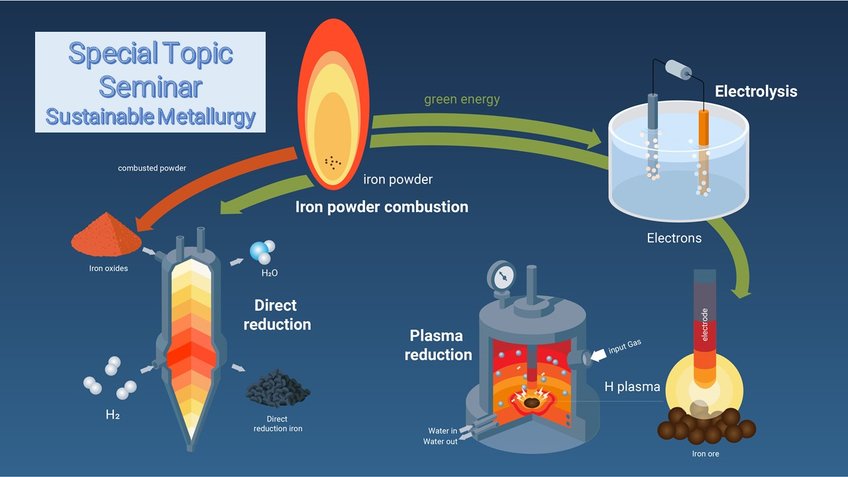
Prof. Wangzhong Mu is a Senior Lecturer (Docent) in the Department of Materials Science and Engineering at KTH Royal Institute of Technology, Stockholm. His research focuses on sustainable metallurgy, microstructure physics, and alloy design. He leads the thermo-physical property analysis section in the Hultgren Lab and is affiliated with Digital Futures at KTH. Educations: PhD in Materials Science, KTH Royal Institute of Technology (2015) MSc/Bachelor's in Materials Science, Northeastern University, China Research Interests: Inclusion engineering and microstructure-property correlations in steels High-entropy alloy design using digital tools (AI/thermodynamic modeling) In-situ characterization via confocal microscopy and multiscale analysis Recycling-oriented steel production and CO2 reduction strategies Grants/Projects (selected): SSF Strategic Mobility Grant (2023-2024): Clean steel for sustainable future VINNOVA Mobility Grant (2022-2024): Hydrogen-based metallurgy STINT Project (2022-2023): Inclusion engineering for green steel EIT RawMaterials (ENDUREIT, 2019-2021): Durable steels at intermediate temperatures Labs/Teams: Hultgren Lab (materials characterization), Digital Futures (AI-driven metallurgy), and international collaborations with Hanyang University (South Korea), IIT Bombay (India), and Tohoku University (Japan).
Oleksiy Yevgenyevich Kapustyan is an Associate Professor and Head of the Department of Integrated Welding Technologies and Structural Modeling at Zaporizhzhia National Technical University. He has been active at the university since 2003 and holds the academic degree of Candidate of Technical Sciences in the specialty 05.02.01 "Materials Science". His educational background includes: Zaporizhia National Technical University, Faculty of Engineering and Physics, 2000 Diploma with honors in "Welding Technologies and Equipment" Qualification as "Mechanical Engineer" Candidate's thesis defended in 2018: "Improving the mechanical and service properties of welded joints of sintered structural titanium" Dr. Kapustyan's primary research interests focus on Materials Science with specialization in Titanium powder welding , Welding of dissimilar and composite materials , and development of resource-saving welding technologies . His work addresses critical challenges in metallurgy, particularly in the recycling of titanium waste materials and the development of new alloys for industrial applications. His research combines theoretical modeling with practical industrial implementation, focusing on improving material properties and extending the service life of welded components. Analysis of Dr. Kapustyan's recent publications reveals a consistent focus on titanium and steel materials processing. His work primarily investigates electroslag remelting technologies, wear resistance of welded joints, and development of new alloys. A significant portion of his research addresses practical industrial problems related to material recycling and resource efficiency. His collaborations span multiple Ukrainian institutions, demonstrating strong integration within the national materials science community. Dr. Kapustyan has authored over 90 scientific works, including 3 textbooks and 11 patents, demonstrating substantial contributions to the field of welding technologies and materials science. His work has been published in reputable journals including Modern Electrometallurgy and Problems of Tribology. As an educator, Dr. Kapustyan teaches several key courses including "Welding of dissimilar and composite materials," "History of technology and the foundations of scientific activity," "Welding and spraying," and "Machine repair." His teaching approach integrates current research findings with practical engineering applications. Dr. Kapustyan is actively involved in academic conferences and professional development within his field. His laboratory work focuses on integrated welding technologies and structural modeling, with particular emphasis on titanium processing and recycling of metal waste.
Devid Maniglio is an Associate Professor at the Department of Industrial Engineering, University of Trento. His research focuses on bioengineering, biomaterials, and tissue engineering, with a particular emphasis on bioprinting, surface modification, and functional materials. He has contributed to advancements in silk fibroin and hydrogel-based systems for medical applications. Research Interests Bioengineering for personalized medicine Biomaterials and surface engineering 3D bioprinting and tissue regeneration Molecular imprinting and biosensors Drug delivery and cell encapsulation Teaching Diagnostic and therapeutic technologies for personalized medicine Engineered materials for precision medicine Fundamentals of biomedical technologies Functional surfaces laboratory Labs & Collaborations Devid Maniglio is affiliated with the Functional Surfaces Laboratory at the University of Trento, collaborating with researchers such as Stefano Rossi and Flavio Deflorian. His work integrates interdisciplinary approaches in biomedical engineering and sustainable medical technologies.
Vincenzo Maria Sglavo is a Full Professor of Materials Science and Technology at the Department of Industrial Engineering , University of Trento , Italy. He coordinates the Doctoral Program in Industrial Innovation (M.D. 45/2013) and has held academic appointments at The Pennsylvania State University (Postdoctoral Fellow, 1993-1994) and as Adjunct Professor there (2001). His career spans over three decades, including roles as Assistant Professor (1989-1999) and Associate Professor (1999-2018) at the University of Trento. Education: Master’s in Materials Engineering (cum laude), University of Trento (1988) Research Interests focus on glasses and ceramics , with expertise in fatigue and fracture mechanics , chemical strengthening , high-strength ceramics , flash and cold sintering , solid oxide fuel cells (SOFC/SOEC), and 3D printing of inorganics . His work bridges fundamental material behavior and industrial applications, particularly in energy, construction, and biomedical fields. Recent publications highlight innovations in ultrafast high-temperature sintering for ceramics, 3D-printed alumina , alkali-activated limestone for construction, and plasma-assisted ammonia synthesis . He explores entropy-stabilized composites, glass joining techniques, and iron speciation effects in aluminosilicates. Scientific Awards include the AIMAT Prize (1996) AIAS Prize (2000) Outstanding Reviewer Award, Scripta Materialia (2019) Pfeil Award (2022) Nanomaterials 2023 Best Paper (Second Award) Fellow, European Ceramic Society (2023) Advising and Grants: He has advised 34 PhD students and over 100 Master’s theses , managing 50+ research projects funded by NATO, the EU, MUR, and private companies. His editorial roles include Associate Editor for the Journal of the American Ceramic Society and Frontiers in Ceramics . Labs and Teams: He collaborates with institutions like the Joint Research Centre (EC) , Universidade de San Carlos , and Instituto de Cerámica y Vidrio . His work integrates academic research with industrial consultancy, addressing technical challenges in ceramics, glass, and sustainable materials.