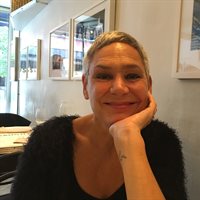
Winnie Wong is a Professor of Rhetoric at the University of California, Berkeley. Her research focuses on art history, particularly exploring themes of fakes, forgeries, and authorship through interdisciplinary approaches. She examines the global artistic networks of Hong Kong, Guangzhou, and Shenzhen, challenging Western narratives of Chinese artistic practices. Wong holds a PhD from MIT's History, Theory + Criticism program and was a Harvard Society of Fellows Junior Fellow. Her major works include Van Gogh on Demand: China and the Readymade (2014, Joseph Levenson Prize winner), Learning from Shenzhen (2017), and a forthcoming book on Canton trade portraitists. She teaches courses like Theory of the Copy and Rhetoric of the Image , mentoring undergraduates through the Undergraduate Research Apprentices program and advising PhD students in art history and visual studies. Wong's research has been supported by grants from Mellon Foundation, ACLS, SSRC, and others. Her work has been translated into multiple languages and appears in journals like Current Anthropology and Law & Literature . She frequently discusses her work on podcasts and collaborates with museums including M+ and the Asian Art Museum.
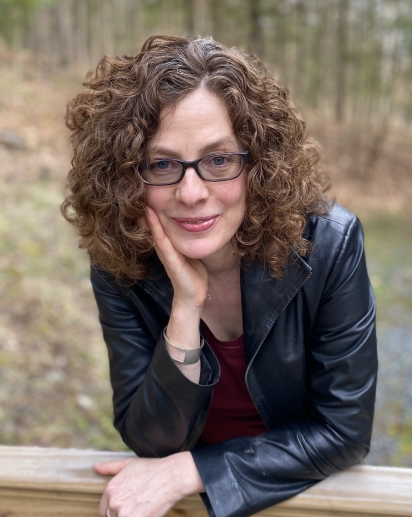
Haiyan Lee serves as the Walter A. Haas Professor of the Humanities and Professor of East Asian Languages and Cultures and of Comparative Literature at Stanford University. She has held these positions since joining Stanford in 2009, and currently serves as Chair of the East Asian Languages and Cultures department (2020-present). Her academic journey includes previous teaching appointments at the University of Colorado at Boulder and the University of Hong Kong, along with post-doctoral fellowships at Cornell University and Harvard University. Lee's research spans multiple interdisciplinary fields with particular focus on modern Chinese literature and cultural production. Her work bridges literary studies with law, philosophy, cognitive science, affect theory, gender studies, and environmental humanities. She has developed influential theoretical frameworks including the concept of "high justice" and "low justice" in Chinese legal imagination. Her current research explores animism, cognition, and the Chinese environmental imagination, extending her longstanding interest in human-animal relations. Lee's publications reveal a consistent trajectory examining Chinese cultural production through innovative theoretical lenses. Her recent work shows increasing engagement with legal theory, environmental humanities, and cognitive approaches to literature. She has produced significant scholarship on Chinese concepts of justice, love, and the stranger, moving across historical periods from early 20th century to contemporary China. Biennial Book Prize, Honorable Mention, International Society for Chinese Law and History (ISCLH) (2024) Humanities Seed Grant, Stanford School of Humanities and Sciences (2023-2025) Bass Fellowship in Undergraduate Education, Stanford University (2022-2027) Joseph Levenson Book Prize, The Association for Asian Studies (2009) Professor Lee actively mentors doctoral students across multiple disciplines, serving as dissertation advisor, co-advisor, and committee member for students working at the intersection of Chinese studies, law, literature, and cultural theory. Her teaching includes courses across East Asian humanities, comparative literature, and interdisciplinary environmental studies. She has received significant research support including the Frederick Burkhardt Residential Fellowship from the American Council of Learned Societies and a residency at the Center for Advanced Study in the Behavioral Sciences.
Jessica Straley is an Associate Professor in the Department of English at the University of Utah, where she has served since 2005 (Visiting Assistant Professor 2005-2007, Assistant Professor 2007-2016, Associate Professor 2016-present). She holds a PhD in English from Stanford University, an MA in Literature, Culture, and Modernity from Queen Mary and Westfield College, University of London, and a BA in English from Cornell University. Education: PhD, English - Stanford University MA, Literature, Culture, and Modernity - Queen Mary and Westfield College BA, English - Cornell University Her research focuses on intersections between Victorian literature, children's literature, animal studies, disability studies, and ecocriticism. She explores how literary imagination interacts with scientific and moral discourses, particularly in 19th-century contexts. Recent publications analyze feral child narratives, zoo representations, and evolutionary theory in children's texts. Her work bridges historical literary analysis with contemporary critical frameworks like disability rights and environmental ethics. Scientific Awards: Faculty Fellowship Award (University Research Council, 2017) Ramona W. Cannon Award for Teaching Excellence (2016) Tanner Humanities Center Fellowship (2016) University Research Committee Faculty Fellowship (2011) Newberry Library Short-Term Library Research Fellowship (2008) She teaches courses in 19th-Century British Literature, Intellectual Movements, and Honors Thesis/Project supervision. Her external grant (Animal Testing URC, 2017-2018) demonstrates institutional support for her interdisciplinary work.
Amanda Phillips is an Associate Professor at Georgetown University, affiliated with the Departments of English, Film and Media Studies, Women’s and Gender Studies, and American Studies. Their research focuses on feminist and queer theory in digital media, with a particular emphasis on critical game studies and digital humanities. Selected publications include Gamer Trouble: Feminist Confrontations in Digital Culture and co-editing the Queer/Trans/Digital book series. Their scholarship appears in journals such as ROMchip , Feminist Media Histories , and Games and Culture . Research Interests: Digital media and gender politics Queer theory in gaming contexts Decolonial and anti-racist digital humanities Critical analysis of game mechanics Digital labor and precarity Affective histories of gaming Scientific Awards: Mellon/ACLS Dissertation Completion Fellow Academic Leadership: Former chair of the American Studies Association Digital Humanities Caucus Co-founder of the #transformDH Collective Editorial work on special issues of Game Studies and Antares: Letras e Humanidades Previous Institutions: IMMERSe Postdoctoral Fellow at University of California, Davis Ph.D. recipient from University of California, Santa Barbara with emphasis in Feminist Studies
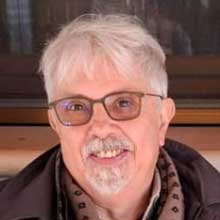
Vincent J. Cheng is a Distinguished Professor of English at the University of Utah, holding appointments since July 2019. He previously served at the University of Southern California (1979–2019) in roles including Professor of English and Director of Asian American Studies. His academic leadership includes directing the Tanner Humanities Center (2003–2007). Cheng specializes in modernist literature, particularly James Joyce, with research focusing on cultural memory, national identity, and postcolonial studies. He has authored influential works like Amnesia and the Nation and edited volumes on Joyce’s legacy. Recognized for teaching excellence, he received the Calvin S. and JeNeal Hatch Prize in Teaching (2024) and the Distinguished Teaching Award (2014). Cheng’s research integrates philosophy, history, and literature, exploring themes like migration, empathy, and ethical remembrance. His recent work analyzes Joyce’s treatment of memory and history, connecting Irish and American Southern narratives. He also contributes to Joyce Studies Annual and serves on editorial boards for Western Humanities Review . Teaching-wise, he leads advanced seminars on literary studies and British writers, guiding Ph.D. thesis research. Award highlights include the Fulbright Scholar Award (2015) and the Carole & Gordon Segal Visiting Chair in Irish Studies (2014). He remains active in community outreach, such as presenting Joyce’s Dubliners to high school students. His interdisciplinary approach bridges literary analysis with cultural and ethical inquiry.
London School of Economics and Political Science (LSE)United Kingdom
Clare Hemmings is a Professor of Feminist Theory at the Department of Gender Studies, London School of Economics and Political Science (LSE), where she has been since 1999. Her work bridges feminist theory, queer studies, and sexuality studies, with a focus on how these fields are institutionalized and narrated. She holds a PhD and has authored seminal works like Why Stories Matter (2011) and Considering Emma Goldman (2018), which explore feminist historiography and political ambivalence. Her research emphasizes interdisciplinary methods, including archival interventions and creative writing to challenge dominant narratives. Hemmings’ research interests include feminist epistemology, queer of color critique, and anarchist thought. She has been active in countering 'anti-gender' movements and is currently developing a project on 'Feminist Knowledge Struggles.' Her work is marked by attention to form, affect, and the intersection of nationalism, feminism, and sexuality. She supervises PhD students Senel Wanniarachchi and Rawda Elaskary and has received the FWSA Book Prize 2012 for Why Stories Matter . Hemmings’ articles span feminist theory, political mobilizations, and affect studies. Her recent work engages with family memory archives and decolonial methodologies. She is a prolific scholar, contributing to journals like Memory Studies , Feminist Studies , and Radical Philosophy . Her interdisciplinary approach integrates literary criticism, sociology, and activism, offering transformative frameworks for feminist praxis.
Maile Arvin is a Kanaka Maoli feminist scholar and Assistant Professor at the Department of Ethnic Studies, University of Hawaiʻi at Mānoa. Her research and teaching focus on Indigenous relationships to land, histories of race and settler colonialism in Hawaiʻi, Oceania, and the United States. Previously, she was faculty in History and Gender Studies at the University of Utah and founding director of the Center for Pasifika Indigenous Knowledges. PhD in Ethnic Studies, University of California San Diego (2013) MA in Ethnic Studies, University of California San Diego (2009) BA in English, Swarthmore College (2005) Her research examines: Colonial production of racial categories, particularly Polynesians as an 'almost white race' in historical social science History of incarceration of Native Hawaiian children in government institutions (1865–1960s) Intersection of settler colonialism and Indigenous feminisms Critique of eugenics and genomic studies in the Pacific Community-engaged memorialization projects in Hawaiʻi Recent scholarly trends include analyses of Indigenous sovereignty, critiques of settler colonial whiteness, and interdisciplinary studies of race-gender dynamics. Arvin's publications explore Polynesian racialization, decolonial feminism, and the socioeconomic impacts of colonial institutions. NEH Chair's Grant for Nā Lei Poina ʻOle ACLS Digital Justice Seed Grant Arvin leads Nā Lei Poina ʻOle (Beloved Children Never Forgotten), a community history project about reformatories and industrial schools in Hawaiʻi. In collaboration with Kawela Farrant and the North Shore Community Land Trust, this project uses archival and oral histories to confront the legacy of child incarceration. She also critiques the nonprofit-industrial complex's role in limiting Indigenous sovereignty.
Lindsay Turner is an Associate Professor in the Department of English at Case Western Reserve University. A poet, critic, and translator, her work bridges creative writing, translation theory, and interdisciplinary research. Her prior role as Assistant Professor at the University of Denver’s Department of English and Literary Arts underscores her commitment to literary education. AB in English, Harvard College Masters in cinema studies, Université Paris III Sorbonne-Nouvelle MFA in poetry, New York University PhD in English, University of Virginia Turner’s research spans creative writing , transnational poetry , and gender studies , with a focus on the intersections of literature and labor. Her recent work examines gendered domestic and reproductive labor through poetic forms. Key trends in her publications include experimental translation , queer theory , and postcolonial philosophy . National Translation Awards Best Translated Book Awards French American Foundation recognition She has received grants such as the WPR Creative Grant from Harvard’s Woodberry Poetry Room and multiple French Voices Grants . Her translations have been praised by The New Yorker and The New York Times for their intellectual rigor and stylistic innovation.
Laura Edmondson is the Helman Family Distinguished Professor and Chair of the Department of Theater at Dartmouth College. She holds affiliations with the African and African American Studies Program and Women's, Gender, and Sexuality Studies Program. Her work bridges postcolonial African drama, feminist/queer performance studies, and transnational theater historiography. Education: B.A. Indiana University, M.A./Ph.D. University of Texas at Austin. Her research examines Eastern/Central African performance through lenses of empire, trauma, and humanitarianism. Recent projects include a NEH-funded book on contagion and care in Central Africa. Notable publications include Performing Trauma in Central Africa: Shadows of Empire (IU Press, 2018) and articles in GLQ , Theatre Journal , and Journal of the African Literature Association . She received the 2021 Oscar Brockett Prize for her analysis of Faustin Linyekula's work. Service includes editing Theatre Journal , leading Dartmouth's Women's, Gender, and Sexuality Studies program, and mentoring through awards from the Dean of the Faculty. Her collaborative theater project Forged in Fire (2015) explored South Sudanese refugee narratives.
Harsha Ram is an Associate Professor in the Department of Comparative Literature at the University of California, Berkeley. His research focuses on Russian and European Enlightenment, modernist literature, and the cultural histories of the Caucasus region. He holds dual B.A. Honors degrees in Italian and Russian from the University of Sydney and University of New South Wales, and a Ph.D. in Comparative Literature from Yale University. His work bridges literary theory, post-colonial studies, and geopoetics, with a particular emphasis on Georgia's literary modernism and its intersections with Russian imperial culture. Key themes include spatial theory, peripheral modernisms, and the transnational dimensions of cultural production. Recent work examines the role of ritual feasts in Georgian national identity and the geopoetics of Eurasian avant-garde movements. Ram has published extensively on figures like Velimir Khlebnikov and Boris Pasternak, exploring their engagement with imperial legacies and revolutionary aesthetics. His book The Imperial Sublime: A Russian Poetics of Empire (2003) remains a seminal study of Russian imperial poetics. Current projects include studies on Georgian literary encounters with Russian culture and the symbolic dimensions of Caucasus representations. His scholarship frequently appears in leading journals such as Modernism/Modernity , Slavic Review , and Ab Imperio . He has held visiting positions at institutions globally and actively participates in interdisciplinary dialogues between literary studies, history, and cultural geography.
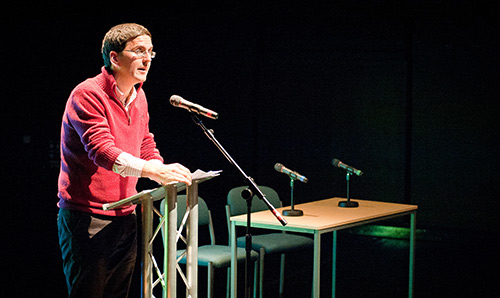
John McAuliffe is Professor of Poetry at The University of Manchester, where he joined in 2004 and currently directs the Creative Manchester research platform focused on Creative Industries, Creativity/Health/Well-being, and Creative Civic Futures. He founded and directed the internationally renowned Centre for New Writing (2007-2021). Additional roles include Associate Publisher at Carcanet Press, co-editor of PN Review, and trustee of Manchester's UNESCO City of Literature. His creative scholarship centers on contemporary poetry with emphases on Irish literary traditions, cross-cultural translation, and poetry's civic applications. Work spans lyric composition, editorial curation of emerging voices, and critical analysis of poetry's intersections with theatre, conflict studies, and social identity. His practice bridges academic scholarship and public literary engagement through institutional leadership. Recent publications reveal evolving thematic trajectories: 2024's National Theatre examines theatricality in modern verse, while Selected Poems (2021/2022) consolidates decades of work exploring Irish landscapes and personal memory. The Kabul Olympics (2020) and Stockholm Syndrome (2019) demonstrate sustained engagement with geopolitical conflict and psychological dimensions of displacement through poetic form. Major recognitions include: Observer Book of the Year (2021/2022) for Selected Poems Guardian Poetry Book of the Month (June 2020) for The Kabul Olympics TLS and Irish Times Book of the Year (2020) for The Kabul Olympics Poetry Book Society Winter Pamphlet Choice (2019) for Stockholm Syndrome McAuliffe served as Deputy Director of the Irish Arts Council (2013-2018), chairs strategic initiatives, contributes to AHRC peer review, and writes extensively for The Irish Times (2013-2020 column). He actively shapes literary policy through Manchester City Council's Events Commission and UNESCO City of Literature governance.
Federico ZANETTIN is a Full Professor in the Department of Comparative Linguistic and Cultural Studies at Ca' Foscari University of Venice. His research focuses on translation studies with particular emphasis on corpus linguistics, graphic narrative translation, and journalistic translation. He maintains an active presence in the academic community through editorial work and research collaborations. Professor ZANETTIN's research interests span multiple areas of translation studies. He is particularly known for his work on corpus linguistics and its applications to translation analysis, with a focus on creating and using linguistic databases. His research on the translation of graphic narratives examines the verbal and visual aspects of translating comics and graphic novels across cultures. Additionally, he investigates journalistic translation , analyzing how information is translated and disseminated across media platforms. His scholarly work demonstrates consistent productivity, with numerous publications that explore the intersection of translation, culture, and media. Professor ZANETTIN's research shows particular strength in analyzing adaptation processes across linguistic, cultural, and modal boundaries, both synchronically and diachronically. Professor ZANETTIN serves on several important editorial boards: Co-editor of inTRAlinea Member of the international advisory board for The Translator Member of the international advisory board for Translang Member of the international advisory board for Entreculturas Member of the publications committee for Transletters. International Journal of Translators and Interpreters Member of the scientific committee for the Book series Interactio He is also frequently called upon as a referee for prestigious research projects, including those funded by The British Academy (UK), MIUR (Ministry of Education, University and Research), Italy, CSIC (Consejo Superior de Investigaciones Científicas), Spain, NRC (National Research Council), Canada, National and Kapodistrian University of Athens, Greece, and SNSF (Swiss National Science Foundation). Professor ZANETTIN teaches courses in English language and translation at both undergraduate and graduate levels, focusing on European, American, and postcolonial languages and literatures. His teaching reflects his research expertise in translation studies and cross-cultural communication.
Albrecht Fuess is a Professor of Islamic Studies at Philipps University of Marburg since 2010, specializing in Middle Eastern History (13th–17th centuries), Mamluk socio-cultural dynamics, and contemporary European Islamic discourses. His research spans historical continuity in Ottoman-Mamluk-Safavid interactions, Islamic youth cultures, and Mediterranean geopolitics. Research Focus: Medieval Islamic history, Transottomanica mobility studies, Islam in Europe, and cultural integration of Muslim migrants. Awards: Le Studium Fellowship (2007–2009) at Université de Tours. His publications emphasize military-economy interplay, legitimacy through religious narratives, and resource management in empires, with a focus on Mamluk and Ottoman transformations. He has advised on doctoral projects covering topics like Islamic welfare, Arabic ʾAmālī literature, and Cypriot-Ottoman relations. Leadership: Co-coordinator of Transottomanica (DFG-SPP 1981), member of ANR and DAAD committees, and liaison professor for the German National Academic Foundation. Editorial Roles: Co-editor of 'Transottomanica' and 'Muslim Worlds' series, and advisory board member for journals in Cairo, Paris, and Leuven.
Alaina Lemon is a Professor of Anthropology at the University of Michigan, affiliated with the College of Literature, Science, and the Arts (LSA). She serves as Director of Undergraduate Studies in Anthropology and holds affiliations with the Center for Russian, East European, and Eurasian Studies (CREES), the Weiser Center for Europe and Eurasia, and the Interdepartmental Program in Anthropology and History. Her research focuses on socio-cultural anthropology, performance studies, and visual culture, with expertise in Russia, the Romani diaspora, and post-Socialist states. Education: BA in Anthropology (University of Wisconsin, 1987), MA (University of Chicago, 1988), and PhD (University of Chicago, 1996). Notable awards include the Wayne S. Vucinich Book Prize (2001), Heldt Book Prize (2001), and a 2023 visiting scholar position at the École des Hautes Études en Sciences Sociales (Paris). Her work bridges historical and contemporary issues, exploring themes like phatic labor, media infrastructures, and affective politics. Recent projects include editing the documentary Tremors (2023) and researching Soviet-era moral projects through studies of Moscow’s Metro and canine-human interactions. Lemon’s interdisciplinary approach integrates performance studies, linguistic anthropology, and critical race theory to analyze cultural dynamics in transitional societies. Grants include a 2019-2024 University of Michigan Office of Research grant for film collaboration and a 2002-2003 International Research and Exchanges Board fellowship. She has authored influential books such as Between Two Fires (2000) and Technologies for Intuition (2017), and her films document Romani experiences and urban cultural phenomena.
David B. MacDonald is a full Professor of Political Science at the University of Guelph's Department of Political Science, housed within the College of Social & Applied Human Sciences. He holds an honorary academic position at the University of Auckland and previously taught at the University of Otago and ESCP Business School in Paris. His research focuses on Indigenous-settler relations, genocide studies, decolonization, and comparative politics in Canada, New Zealand, Australia, and the U.S. He has held significant grants from the Social Sciences and Humanities Research Council (SSHRC), including principal investigator roles on projects like 'Complex Sovereignties' and 'Bi-Nationalism as Reconciliation.' Education: PhD in International Relations from the London School of Economics (2001). Key publications include The Sleeping Giant Awakens (2019) and co-authored textbooks like Comparative Politics (2020). He is North American series editor for Palgrave Macmillan's Global Political Sociology. Research interests emphasize settler colonialism, Indigenous sovereignty, and truth and reconciliation processes. He has contributed to policy discussions, including advising the Canadian Senate on the National Council for Reconciliation. His work bridges academic scholarship with activism, aiming to address systemic inequalities and promote Indigenous rights. SSHRC Grants: Over $200k in grants since 2008, focusing on Indigenous self-determination and colonialism. Publications: 4 sole-authored books; 31 refereed articles; numerous edited volumes. Awards: Shortlisted for the John McMenemy Prize (2013, 2017).