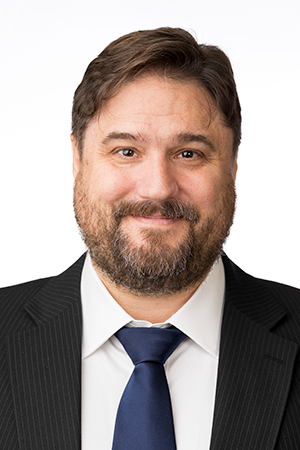
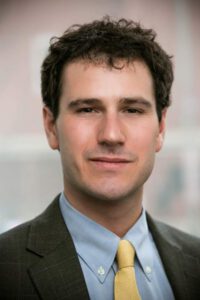
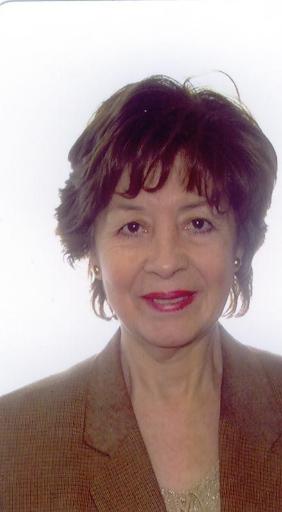
Christopher Freeburg is a Professor of English and holder of the Presidential Humanities and Social Sciences Endowed Chair at the University of Illinois. He is affiliated with the Unit for Criticism and Interpretive Theory. His work focuses on African American literature, Black cultural studies, and the historical intersections of slavery and media aesthetics. Freeburg holds a Ph.D. from the University of Chicago (2006). Research interests include the evolution of Black cultural life from slavery to modernity, the Atlantic World’s impact on racial narratives, and the interior life in Black aesthetics. He is currently completing Soul: A Brief History of Black Cultural Life (Yale UP, 2026) and a project on Black humanity. Notable publications include Counterlife: Slavery after Resistance and Social Death (2021), Black Aesthetics and the Interior Life (2017), and Melville and the Idea of Blackness (2012), which earned the HRI Prize for Research in the Humanities (2014). He has served on editorial boards for American Literature , Leviathan , and J19 . Awards: Hennig Cohen Prize (2012), HRI Prize (2014), Honorable Mention HRI Prize (2018) Editorial Roles: Editorial board memberships since 2012 Labs/Teams: Active in the Unit for Criticism and Interpretive Theory
Chia-rong Wu serves as Associate Professor in the Department of Global, Cultural and Language Studies at the University of Canterbury, New Zealand, holding this position since June 2019. His academic work centers on Sinophone literature, film, and video games through postcolonial theories, Indigenous studies, diaspora, and ecocriticism frameworks. Dr. Wu earned his PhD in Comparative Literature from the University of Illinois at Urbana-Champaign. His scholarly contributions include two monographs: Supernatural Sinophone Taiwan and Beyond (Cambria Press, 2016) and Remapping the Contested Sinosphere: The Cross-cultural Landscape and Ethnoscape of Taiwan (Cambria Press, 2020). He has co-edited Taiwan Literature in the 21st Century: A Critical Reader (Springer, 2023) and is preparing The Southern Discourse in Sinophone Literature: Moving Borders (Routledge, forthcoming September 2025). His research examines cultural production across Taiwan and the Sinophone world, with particular focus on how literature, film, and video games engage with historical trauma, identity formation, and cultural politics. Recent projects explore youth narratives in Taiwanese horror video games, Indigenous perspectives on Oceanic Taiwan, and the global South discourse in Sinophone literature, revealing connections between transnational migration, racial dynamics, gender politics, and indigenous awareness. Dr. Wu serves as executive editor and Advisory Board member of Taiwan Lit and the Global Sinosphere (ISSN: 2994-6816), and holds positions on the Board of the American Association for Chinese Studies, the International Advisory Board of Interdisciplinary and Transcultural Approaches to Chinese Literature (Routledge Book Series), and the Cultural History Editorial Advisory Board (Bloomsbury Book Series). Currently supervising PhD students in Sinophone literary and cultural studies, Dr. Wu is developing a new monograph focused on transmedia narratives of youth politics, continuing his exploration of how contemporary media forms engage with political consciousness and historical memory in Taiwan and beyond.
Nicholas Guyatt serves as Professor of North American History in the Faculty of History at the University of Cambridge and is a Fellow of Jesus College. He joined Cambridge in 2014 after teaching positions at Princeton University, Simon Fraser University, and the University of York. His academic foundation includes a BA and M.Phil. from the University of Cambridge and a Ph.D. from Princeton University under Daniel T. Rodgers. Guyatt's research centers on race, national identity, and state formation in 18th-19th century America, with core expertise in colonial history, the Atlantic World, and intellectual history of American imperialism. His work critically examines racial segregation, maritime history, and evolving concepts of citizenship and world order. Analysis of his recent publications reveals consistent thematic focus on racial ideologies, colonization projects, and imperial thought across the early republic and Civil War eras. His scholarship demonstrates methodological breadth spanning political, intellectual, and social history with particular attention to African American experiences and transnational connections. His distinguished recognition includes: Stanford Humanities Center Faculty Fellow (2009-2010) British Academy Mid-Career Fellow (2013-2014) Senior Visiting Research Fellow at Oxford's Rothermere American Institute (2013-2014) He actively supervises M.Phil. and Ph.D. candidates in 18th-19th century American/Atlantic history, especially welcoming research on Native Americans, African Americans, slavery/abolition, and empire. His editorial leadership with Zed Books' 'Global History of the Present' series reflects commitment to diversifying historical scholarship beyond Eurocentric frameworks. Current major projects include co-authoring 'Jefferson's Wolf: The Struggle to End Slavery in the Founding Era' (Harvard University Press, 2026) and editing 'The Oxford Illustrated History of the United States' (OUP, 2026), demonstrating sustained scholarly productivity through collaborative academic networks.
Rachel M. Werner, MD, PhD, is a Professor of Medicine at the Perelman School of Medicine and holds the Robert D. Eilers Memorial – William Maul Measey Professorship in Health Care Management and Economics at the Wharton School , both at the University of Pennsylvania . She serves as Executive Director of the Leonard Davis Institute of Health Economics and is an Attending Physician at the Philadelphia Veterans Affairs Medical Center . Dr. Werner is a Core Investigator with the VA Center for Health Equity Research and Promotion and a Senior Fellow at the Leonard Davis Institute . Education: B.A. in Political Science, Macalester College (1992) M.D. in Medicine, University of Pennsylvania School of Medicine (1998) Ph.D. in Health Economics, Wharton School, University of Pennsylvania (2004) Dr. Werner's research program, spanning over two decades, explores the effects of health care payment policies and quality improvement incentives on delivery systems, with a focus on unintended consequences such as worsening racial disparities through public quality reporting. She employs causal inference methods from observational data and leads R01 grants from the Agency for Healthcare Research and Quality (AHRQ) and the National Institute on Aging (NIA) . Scientific Awards: Alice Hersh New Investigator Award Presidential Early Career Award for Scientists and Engineers American Federation of Medical Research (AFMR) Outstanding Investigator Award Elected member of the National Academy of Medicine Her work influences federal and state advisory committees and evaluates Medicaid policies , Medicare systems, and post-acute care models . She directs a VA national center assessing the medical home effectiveness and collaborates with institutions like the Center for Health Equity Research and Promotion and the Center for Health Incentives and Behavioral Economics .
Jonathan Santo is a Professor of Psychology at the University of Nebraska at Omaha (UNO), where he serves as Director of the Graduate Developmental Psychology Program and as a faculty member in the Office of Latino/Latin-American Studies. His research explores peer relations, cultural differences in self-esteem, and classroom-level influences on child and adolescent development, with a focus on improving school environments and fostering positive social interactions. ORCA Faculty Fellow His research spans broad areas including Developmental Psychology , Social Support Systems , and Cross-Cultural Peer Dynamics , with specific attention to peer victimization , self-continuity , school climate , and developmental trajectories in Brazilian and Colombian youth . Recent publications analyze topics like hikikomori experiences , friendship security , and HPA axis dysregulation in adolescents. Scientific awards include the ORCA Faculty Fellow recognition. His work often involves longitudinal assessments of peer relationships cross-cultural comparisons (Brazil, Colombia, China, Nigeria, Singapore, U.S.) policy-focused blog posts on family separations and school interventions
Darold Cuba is an intellectual historian and political scientist affiliated with the Department of History at the University of Cambridge. He serves as a Teaching Fellow at the Global History Lab (GHL) and a Research Associate at the Cambridge Black Advisory Hub (CamBAH). As a founder of multiple initiatives including MarronageOrg, Oxbridge Africas (OA), the Cambridge AntiRacism Forum (CARF), Cambridge Enterprise's CRoSS+Hub, and the Cambridge Histories of Marronage (CHoM) Workshop series, he maintains significant influence in academic and social justice circles. His research focuses on the concept of "Landed Blackness" and "United States Post Emancipation Marronage (USPEM)," examining how Freedom Colony Founding Families (FCFFs) in the United States from 1865 to 1900 created autonomous Black communities through land ownership, strategic worship traditions, and collective governance. His work engages deeply with anticolonial, postcolonial, and decolonial scholarship, drawing on theorists like Frantz Fanon, Edward Said, Homi Bhabha, Gayatri Chakravorty Spivak, and Linda Tuhiwai Smith. By applying Michel Foucault's concept of the "regime of truth," Cuba investigates how Black communities created their own truths to resist systemic white supremacy and institutional racism. Cuba serves on the Fairfield Foundation's Family Circle Leadership Group's Executive Committee and is a descendant of indigenous Native AmerIndian, African, and European communities from Tsenecommacah (Gloucester County in the Virginia Tidewater region). His scholarship connects historical freedom colonies to contemporary Black political thought, emphasizing their continued relevance in modern movements for reparations and racial justice.
Jennifer D. Oliva is a Professor of Law at Indiana University Maurer School of Law where she holds the Val Nolan Faculty Fellow position. She maintains significant interdisciplinary affiliations as a Research Scholar at Georgetown University Law Center's O'Neill Institute for National & Global Health Law and as a Senior Scholar with the UCSF/UC Law Consortium on Law, Science & Health Policy. Her academic work bridges legal scholarship with practical health policy development, focusing on the intersection of constitutional protections, public health needs, and modern surveillance technologies. Professor Oliva's research interests center on health law, privacy law, and drug policy with particular expertise in prescription drug monitoring programs (PDMPs), health information privacy, and the legal dimensions of the opioid crisis. Her scholarship critically examines how law enforcement surveillance of prescription data impacts patient privacy rights, particularly for vulnerable populations including those with substance use disorders. She has developed significant expertise in how constitutional privacy protections apply to health data in the digital age, especially following the Supreme Court's decision in Carpenter v. United States. Her recent publications reveal a growing focus on algorithmic regulation in healthcare, examining how risk scoring systems and coverage algorithms can perpetuate health disparities. She has published extensively on the intersection of reproductive rights and health data privacy in the post-Dobbs landscape, analyzing how prescription monitoring systems could be weaponized against individuals seeking reproductive healthcare. Her work consistently connects doctrinal legal analysis with public health realities, advocating for evidence-based policy approaches that prioritize patient privacy and health equity over punitive enforcement. Dosing Discrimination: Regulating PDMP Risk Scores (2022) The "New" Drug War (2024) Prescription Drug Policing: The Right to Health Information Privacy Pre- and Post-Carpenter (2020) Opioid Multidistrict Litigation Secrecy (2019) Surveillance, Privacy, and App Tracking (2020) Professor Oliva actively engages with policymakers and has contributed to amicus briefs in significant cases including Ruan v. United States. Her scholarship has been cited in legal proceedings and she regularly presents at major academic conferences including the Association of American Law Schools Annual Meeting. She has collaborated with scholars across disciplines including public health researchers, medical ethicists, and data scientists to address complex challenges at the intersection of law, technology, and healthcare.
Geraldine Heng is the Mildred Hajek Vacek and John Roman Vacek Chair in English at the University of Texas at Austin, where she is cross-appointed to Middle Eastern Studies, Women's Studies, Jewish Studies, and the Rapoport Center for Human Rights and Social Justice. Elected to the American Academy of Arts and Sciences in 2023 and a Fellow of the Medieval Academy of America, she founded and directs the Global Middle Ages Project (G-MAP), a major interdisciplinary initiative promoting global perspectives on premodernity. With a Ph.D. from Cornell University, Heng has pioneered the field of premodern critical race studies, fundamentally challenging the assumption that race is a modern construct. Her research focuses on literary, cultural, and social encounters between worlds, particularly through the lenses of race, gender, sexuality, class, and religion, with special attention to medieval Europe's interactions with Asia and Africa. Heng's scholarly work reveals how medieval global connections shaped cultural production and identity formation long before the so-called 'Age of Exploration.' Her approach synthesizes literary analysis, historical research, and critical theory to uncover the deep roots of globalization and its implications for understanding contemporary identity politics and cultural exchange. Her publications demonstrate a consistent trajectory toward increasingly global frameworks, moving from studies of medieval romance to comprehensive examinations of early global interconnectedness. This evolution reflects her commitment to dismantling Eurocentric narratives of the medieval world and revealing the complex networks of exchange that characterized premodern societies across Afro-Eurasia. 2019 PROSE prize in Global History 2019 Academy of American Literature prize in Historical Studies 2019 Robert W. Hamilton Grand Prize 2020 Otto Gründler prize Fellow of the American Academy of Arts and Sciences (2023) Fellow of the Medieval Academy of America Heng has secured approximately $750,000 in grants for digital projects and held eight major fellowships at research centers. She co-edits the Cambridge University Press Elements series in the Global Middle Ages and the University of Pennsylvania Press series RaceB4Race: Critical Studies of the Premodern. Her teaching encompasses courses on early global literatures, premodern race, Crusades literature, Arthurian traditions, and feminist theory. As founder and director of the Global Middle Ages Project (G-MAP), Heng has built an international scholarly network that challenges traditional disciplinary boundaries and promotes collaborative approaches to studying premodern global connections. The project has fostered numerous digital initiatives, publications, and conferences that have significantly reshaped how scholars understand medieval intercultural exchange.
Marshall Steinbaum is an Assistant Professor of Economics at the University of Utah and a Senior Fellow in Higher Education Finance at the Jain Family Institute. His empirical research focuses on employer power in labor markets, with applications to antitrust policy, student debt, and economic inequality. He holds a Ph.D. in Economics from the University of Chicago and a B.A. (Hons) in Philosophy, Politics, and Economics from Oxford University. Steinbaum's research investigates: The dynamics of labor market concentration and its impact on wages Antitrust enforcement in franchising and gig economies Student debt crises and higher education financing Historical and policy-driven causes of economic inequality His recent publications analyze trends in franchising restrictions, mergers' labor market effects, and student debt cancellation impacts. Articles consistently emphasize employer power, regulatory gaps, and structural inequities across labor and education sectors.
Sarah Banet-Weiser is the Walter H. Annenberg Dean of the Annenberg School for Communication and Lauren Berlant Professor of Communication at the University of Pennsylvania. She concurrently serves as Research Professor at the University of Southern California's Annenberg School for Communication and Journalism. As founding director of the Center for Collaborative Communication (C3), she fosters cross-institutional research initiatives bridging both Annenberg Schools. Education: B.A., University of California, San Diego, 1989 M.A., University of California, San Diego, 1992 Ph.D., University of California, San Diego, 1995 Her interdisciplinary research examines how media shapes cultural politics through frameworks of gender, race, and power. Core investigations include feminist media analysis, consumer culture's relationship to identity formation, and the mediation of citizenship. Recent scholarship critically engages with digital feminisms, sexual violence epistemologies, and neoliberal branding strategies during social crises. Publication analysis reveals consistent focus on feminist critique of media systems, particularly examining gender violence representation, authenticity politics, and digital activism. Her work demonstrates methodological innovation through cultural analysis of television narratives, platform economies, and institutional communication during socio-political upheavals. Awards & Honors: Constance Rourke Prize for Best Article in American Quarterly Mellon Graduate Student Mentoring Award Distinguished Faculty Fellow, Center for Excellence in Teaching (USC) Fellow, International Communication Association Her mentorship extends through editorial leadership as former editor of American Quarterly and co-editor of Communication, Culture, Critique , plus founding co-editorship of NYU Press's Critical Cultural Communication Studies series. International recognition includes fellowships at Fondation Maison des sciences de l'homme (Paris), Gulbenkian Foundation (Lisbon), Microsoft Research New England, and Media@McGill. She directs the Center for Collaborative Communication, advancing interdisciplinary media scholarship through institutional partnerships across Penn and USC. Her pedagogical approach integrates critical theory with media activism across courses like 'Gender, Media, and Culture' and 'Critical Approaches to Popular Culture'.
Lady Rojas Benavente is an Associate Professor in the Department of Classics, Modern Languages and Linguistics at Concordia University, where she has been teaching since her appointment as Assistant Professor in 1996, with promotion to Associate Professor in May 2003. Prior to joining Concordia, she served as an Assistant Professor at the University of Ottawa and as a lecturer at the Faculty of Education at The University of Western Ontario, where she taught second language methodology, French and Spanish. Dr. Rojas Benavente received her PhD in Hispanic Literature from the University Laval in 1991, following an MA in Spanish Literatures (Cum Laude, 1985) and BA in History and Spanish (1983), both from the University of Ottawa. She also holds a Diploma qualifying as a Secondary School teacher specializing in Spanish Language and Literature, Psychology and Philosophy from the National Pedagogic University of Women in Lima, Peru (Cum Laude, 1968). Her research focuses on Critical Feminism in Peruvian & Latin-American Women Writers, with special emphasis on contemporary Peruvian and Mexican narrative, drama, poetry and essay. Her work encompasses Cultural Studies and Literary and Critical Theories, Latin American History, Post-colonialism, Human Rights, Women Studies, Feminist Theories, Gender Issues, Latin America Black History, Indigenous and Minorities Studies, and Comparative Studies in Education. She has published nine books (two poetry collections and seven critical interpretations) and over 50 refereed papers in Latin American Women's literary work, particularly focusing on Peruvian and Mexican authors. Dr. Rojas Benavente's scholarly output demonstrates consistent engagement with themes of gender, ethnicity, and power structures in Latin American literature. Her recent publications explore the works of contemporary Peruvian women writers, examining how they address issues of violence, racism, and gender in post-independence national contexts. Her research trajectory reveals a deepening focus on decolonial perspectives, indigenous resistance, and the intersection of gender with other social categories. Hispanic Literary and Cultural Institute's Honor Diploma (2010) Publication Award from the University of New Brunswick for the Anthology, Constructing Memory: Latino-Canadian Women Writers in the New Millennium Recognition by Mouvement Desjardins in celebration of International Women's Day (2008) As president of the Society for Literary Criticism of Spanish American Women Writers' work (CCLEH), Dr. Rojas Benavente has facilitated connections between Concordia colleagues, local artists, international writers, and the Latino-Montreal community. She serves on the editorial boards of Alba de America, a literary magazine from the United States, and Voces, a Peruvian cultural magazine. Her leadership extends to organizing numerous conferences on Latin American women writers across Canada, Latin America, and Montreal, including multiple meetings of Hispano-Canadian Women Writers and events commemorating significant figures in Latin American literature.
Professor Matthew Jones is Professor of International History at the London School of Economics and Political Science (LSE), where he joined in 2013. He previously held academic positions at the University of Nottingham and Royal Holloway, University of London. He was appointed Cabinet Office official historian for the UK strategic nuclear deterrent in 2008. University: London School of Economics and Political Science School: Department of International History Academic Rank: Professor Email: m.c.jones@lse.ac.uk Office: SAR.3.09 Office Hours: Wednesday 1-2pm, Thursday 4-5pm Education: Undergraduate Degree: University of Sussex DPhil in Modern History: St Antony’s College, Oxford Professor Jones’s research focuses on 20th-century international history, particularly Post-WWII British Foreign and Defence Policy , Cold War Nuclear History , and British Decolonization in Southeast Asia . His work explores Anglo-American relations, nuclear strategy in Asia, and the political history of the UK’s nuclear deterrent. He has a sustained interest in the Vietnam War and US foreign relations after 1941. His recent publications reveal a strong trend in official historical analysis of nuclear policy, especially through his two-volume Official History of the UK Strategic Nuclear Deterrent , based on full access to classified government records. His scholarship combines diplomatic, strategic, and political history with deep archival research, often uncovering new insights into high-level decision-making during the Cold War. Scientific Awards and Recognition: Appointed Cabinet Office official historian of the UK strategic nuclear deterrent and Chevaline programme (2008) Recipient of grants from the Arts and Humanities Research Council, British Academy, JFK Library, LBJ Library, Gilder Lehrman Institute, and Eccles Centre Professor Jones has supervised multiple PhD students, including Grant Golub, Alexandra Penler, and William King. His research is supported by major grants from national and international funding bodies. He has also served as Head of the Department of International History at LSE from 2017 to 2020. He is actively involved in public engagement, having delivered talks at institutions such as the Woodrow Wilson Center, Los Alamos National Laboratory, and the Royal United Services Institute. His work bridges academic scholarship and policy-relevant historical analysis.
Rachel Cremona is an Associate Professor of Political Science & International Studies and serves as the Dean of the School of Liberal Arts & Sciences at Flagler College. She is affiliated with the Department of Humanities, where she teaches courses including Introduction to Political Science, Politics in the U.S., Comparative Government, and US/Latin American Foreign Policy, demonstrating leadership in liberal arts education. Her academic credentials include: Ph.D. in Political Science from the State University of New York at Binghamton (2006) M.A. in Political Science from the State University of New York at Binghamton (2003) M.A. in United States Government and Politics from the University of Essex (2001) B.A. in American Studies: Politics and Government from the University of Kent (2000) Study Abroad at the University of California, Berkeley (1998-1999) Dr. Cremona's research critically examines Latin American Politics , U.S./Latin America Relations , the rise of Far Right Political Parties , European Union dynamics, theories of Democratic Representation , and evolving concepts of Citizenship . Her work consistently explores how identity, governance structures, and historical contexts shape political systems across diverse regions. Analysis of her 2004-2012 publications reveals a strong empirical focus on comparative politics, with recurring themes of ethnic diversity in state formation, electoral system impacts on representation, and historical foundations of national identity. Her research bridges African, Latin American, and American political contexts while maintaining methodological rigor in examining democratic processes. No scientific awards were mentioned in the provided text. Dr. Cremona actively mentors students as Faculty Advisor for Pi Sigma Alpha (National Political Science Honor Society) and First Year Advisor. Her sustained scholarly output indicates ongoing research engagement, complemented by significant administrative leadership as Dean of the School of Liberal Arts & Sciences. There is no information about dedicated research laboratories or specialized research teams associated with Dr. Cremona in the provided materials.
Sarah Banet-Weiser is the Walter H. Annenberg Dean and Lauren Berlant Professor of Communication at the University of Pennsylvania’s Annenberg School for Communication. She also holds a Research Professor position at the University of Southern California’s Annenberg School for Communication and Journalism and directs the Center for Collaborative Communication (C3). Previously, she served as Head of the Department of Media and Communications at the London School of Economics (LSE) and held leadership roles at the University of Southern California, including Vice Dean and Director of the School of Communication. Her interdisciplinary research focuses on gender in media, consumer culture, neoliberal capitalism, branding, and social media. Key publications include Authentic™: The Politics of Ambivalence in a Brand Culture (NYU Press, 2012), Empowered: Popular Feminism and Popular Misogyny (Duke, 2018), and Believability: Sexual Violence, Media, and the Politics of Doubt (2024). She has edited flagship journals like American Quarterly and co-edits Communication, Culture, Critique . Education: B.A., M.A., and Ph.D. in Communication from the University of California, San Diego (1989–1995). Editorial Roles: Former editor of American Quarterly ; founding co-editor of NYU Press’ Critical Cultural Communication Studies series. Her awards include the ICA Outstanding Book Award, Mellon Mentoring Award, and Distinguished Faculty Fellow at USC. She has held fellowships at the Fondation Maison des sciences de l'homme (Paris), Microsoft Research New England, and McGill University. Teaching and courses cover gender, media economies, popular culture, and crisis communication. Her work bridges activism and academia, examining media’s role in global cultural politics.
Dr. Ali Kassem is a Lecturer in Sociology and Anthropology at the National University of Singapore (NUS), Faculty of Arts and Social Sciences. His academic work spans multiple disciplines, focusing on decolonial approaches to understanding power dynamics, knowledge production, and social formations across the Arab-majority world and beyond. Dr. Kassem received his PhD from the School of Law, Politics, and Sociology at the University of Sussex. He completed postdoctoral research at the Institute for Advanced Studies at the University of Edinburgh and was an early career fellow with the Arab Council for Social Sciences funded by the Carnegie Corporation of New York. His academic journey includes teaching and research positions at Ludwig-Maximillian University in Munich, EHESS in Paris, American University of Beirut, and Lebanese American University. Dr. Kassem's research examines contemporary coloniality across questions of power and knowledge. His work spans anti-Muslim racism within Arab-majority contexts, transformations in Islamic educational institutions, dehumanization of Syrian refugees, and urban transformations in Lebanon. His transdisciplinary approach engages ethnic and racial studies, sociology of religion, social psychology, migration studies, and urban studies, working alongside anticolonial thinkers including Frantz Fanon, Ali Shariati, and James Baldwin. His recent publications reveal a strong focus on decolonial theory applied to education, urban studies, and Islamic contexts. Dr. Kassem's work consistently challenges Eurocentric frameworks while exploring alternatives emerging from the Global South. His research demonstrates particular attention to Lebanon and the eastern Mediterranean region as sites for theorizing global coloniality. Dr. Kassem has authored the book "Islamophobia and Global Coloniality: the Lived Erasure of Visibly Muslim Women in Lebanon" (Bloomsbury Academic, February 2023) and is currently editing "Decoloniality and Arabo-Islamicate Worlds" (Bristol University Press, 2025). His scholarly contributions appear in journals including Ethnic and Racial Studies, Globalizations, Contemporary Religion, and Review of Middle East Studies.