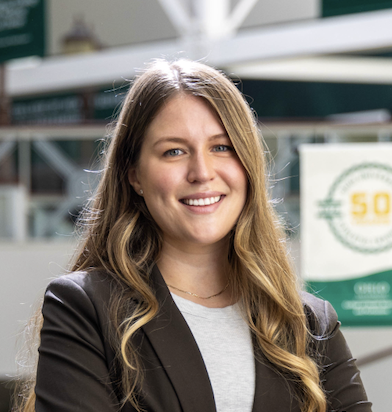
Melissa AndersonView profile
Assistant Professor
Melissa Anderson, Ph.D., is an Assistant Professor in the Department of Exercise Physiology at Ohio University's College of Health Sciences and Professions. She leads the Concussion Research Group and co-directs the Neuromuscular Biomechanics and Health Assessment Lab, focusing on the neurological and biomechanical impacts of concussions and musculoskeletal injuries. Her research centers on understanding long-term neurological complications of head trauma and subsequent injury risk after concussion. Dr. Anderson combines clinical tools with advanced technologies like fMRI, fNIRS, and EMG to study neuroplasticity, neuromuscular control, and injury prevention. She emphasizes inclusive research, particularly addressing the underrepresentation of women and minorities in sports trauma studies, and investigates sex-based differences in neuroinflammatory biomarkers and outcomes following repetitive head impacts. The recent publications reflect a strong trend in integrating neurocognitive assessment with biomechanical testing, especially in post-concussion and post-ACL reconstruction populations. Her work spans from foundational neuroimaging studies to applied clinical interventions, with a clear focus on improving rehabilitation outcomes and return-to-sport decisions through a multi-system, evidence-based approach. Scientific Awards and Recognitions: No individual scientific awards listed in the provided text. Dr. Anderson actively mentors doctoral and post-doctoral trainees, including HoWon Kim, Amber Schnittjer, and Justin Rush. Her research is supported by major funding agencies such as the National Institutes of Health (NIH) and the National Collegiate Athletic Association (NCAA). She collaborates with OHIO athletics to provide baseline and post-concussion testing, ensuring high-quality care for student-athletes. Her lab also receives internal funding through Ohio University’s Kopchick MCB/TBS fellowship program, awarded to her trainees. She is a key member of the Neuromuscular Biomechanics and Health Assessment Laboratory, which conducts forefront research in neuroplasticity, neuromuscular control, and injury prevention. The lab integrates neuroimaging, biomechanics, and clinical assessment to develop innovative rehabilitation strategies. Ongoing projects include 'Rehabilitation 2.0,' which examines brain changes post-injury using MRI, and studies on virtual reality-enhanced exercise and neurocognitive challenges during return-to-activity testing.