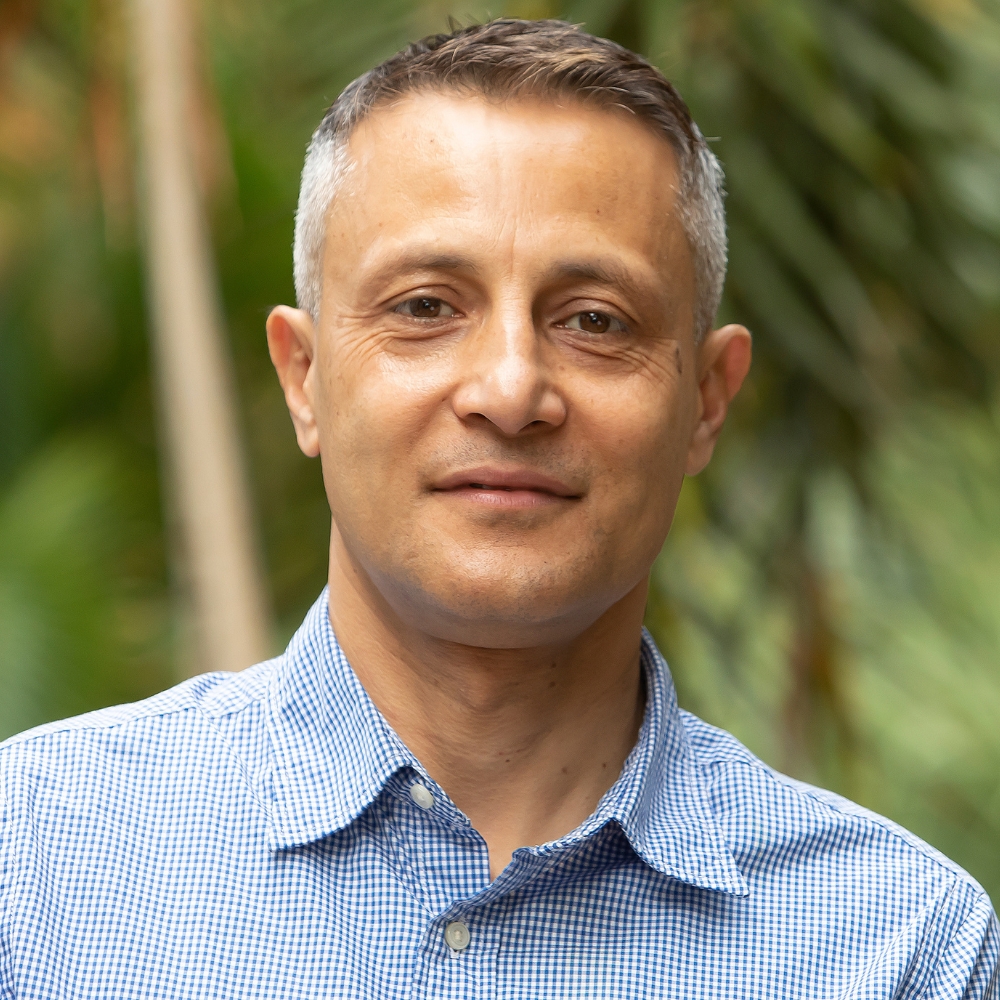
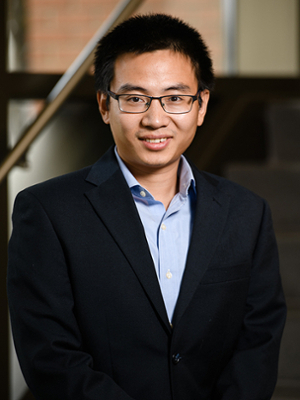
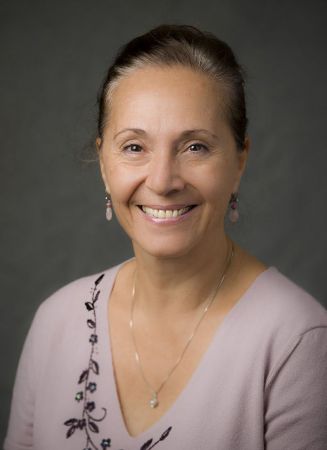
Emily Hannum is a Professor of Sociology and Education at the University of Pennsylvania's College of Arts & Sciences, where she also serves as Associate Dean for Social Sciences. She is affiliated with the Population Studies Center, Center for the Study of Contemporary China, Graduate School of Education, and Penn Development Research Initiative. Education: PhD in Sociology from University of Michigan (1998) Research Focus: Poverty and child welfare, gender and ethnic stratification, sociology of education Projects: Gansu Survey of Children and Families, climate-environment-childhood inequalities in LMICs Workshops: Co-organizer of Penn Education and Inequality Workshop Her research explores childhood poverty in China, demographic impacts on education systems, and climate risks affecting children's welfare. She investigates environmental hazards, educational disparities, and family separation effects across China, India, and low/middle-income countries. Recent publications analyze educational expansion in East Asia, climate crisis impacts on child health, and gender disparities in Latin America. She directs longitudinal studies on rural poverty and collaborates on cross-national projects related to environmental and educational equity. Scientific awards include the Stanley I. Sheerr Term Professorship in Social Sciences.
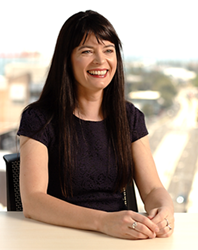
Professor Amy Maguire is a leading academic in human rights and public international law at the University of Newcastle, Australia. She holds roles as Deputy Head of the School of Law and Justice (2021-2024) and co-founder Director of the Centre for Law and Social Justice. Her research focuses on human rights accountability, Indigenous rights, climate change displacement, and refugee rights. She has secured over $2.7 million in grants, including an ARC Mid-Career Industry Fellowship (2024-2028) for national human rights reform initiatives. Maguire advises the Queensland Parliament on human rights compliance and collaborates with global institutions like the Australian Human Rights Commission. Her work has influenced policy, including Australia’s death penalty abolition strategy and Indigenous rights frameworks. She has been awarded multiple accolades for research and teaching excellence, including the 2020 Leadership Excellence Award and 2016 Early Career Researcher of the Year. Maguire’s education includes a BA, LLB (Hons), and PhD from the University of Newcastle. Her interdisciplinary approach bridges law and social justice, addressing issues like climate migration and legal responses to global crises. She leads projects such as the Hunter Region climate displacement study and the Human Rights Measurement System. Maguire’s public engagement includes over 70 articles for The Conversation, reaching 920,000+ readers, and expert media commentary globally. She advocates for inclusive education through initiatives like early entry programs for Indigenous and refugee students, earning a 2021 Senior Fellowship from Advance HE. Her research outputs span 60+ publications, with key works on MH17 litigation, climate justice, and Indigenous legal frameworks. Grants include a 2021 stimulus grant to establish the Centre for Law and Social Justice, supporting postdoctoral research and international collaborations. Maguire’s leadership extends to global networks, including the UN Human Rights Council evaluation project and the Human Rights for NSW Alliance. She remains committed to translating research into policy, education, and community impact through clinics, youth forums, and law reform advocacy.
Diane E. Austin is a Professor and Director of the School of Anthropology at the University of Arizona. She also serves as a Research Anthropologist at the Bureau of Applied Research in Anthropology (BARA). Her work focuses on environmental anthropology, particularly community dynamics in industrial and environmental contexts, with a strong emphasis on social justice and collaborative research. She has over 25 years of experience leading interdisciplinary projects in the U.S., Mexico, and Gulf Coast regions. Austin's research spans diverse areas including Native American communities, U.S.-Mexico border sustainability, Gulf Coast oil industry impacts, and urban food systems in arid regions. She has pioneered long-term partnerships with tribal organizations, federal agencies, and community groups, earning recognition such as the University Distinguished Outreach Professor (2008) and Distinguished Director (2023). Her recent work highlights longitudinal studies on the Deepwater Horizon oil spill's social effects, binational environmental initiatives in Nogales, and community-based approaches to disaster resilience. She coordinates BARA's internship and post-baccalaureate programs, supporting hundreds of students in applied anthropological research. Awards: Partners in Conservation Award (2010), Border Research Partnership Award Finalist (2012) Leadership Roles: Chair of the Good Neighbor Environmental Board, Member of the Gulf Research Program Advisory Board Key Projects: Southern Paiute cultural preservation, Gulf Coast oil industry studies, Nogales reforestation initiatives Austin’s teaching includes courses on ethnographic methods, data analysis, and mixed-methods research. She actively engages in policy advocacy, contributing expert testimony in legal proceedings related to environmental disasters and labor rights.
Vesna Terzic is a Professor in the Department of Civil Engineering and Construction Engineering Management at California State University Long Beach's College of Engineering. Her research specializes in seismic performance assessment, infrastructure resilience, and probabilistic risk analysis of structures. Education includes a PhD in Structural Engineering from UC Berkeley, MS in Earthquake Engineering from Ss. Cyril and Methodius University, and BS in Structural Engineering from University of Belgrade. Research focuses on developing advanced computational frameworks for evaluating post-earthquake functionality of buildings and bridges. Her work integrates performance-based engineering with resilience quantification, emphasizing practical applications for seismic design and retrofitting. Recent publications demonstrate consistent focus on functional recovery modeling, structural health monitoring, and optimization of protective systems. Research trends show progression from component-level analysis to regional recovery simulation frameworks. Major awards: ACI Chester Paul Siess Award for Excellence in Structural Research (2017) Popert Fellowship, UC Berkeley (2009) Professional service includes membership on FEMA P-58 project committees and contributions to OpenSees development. Current projects investigate soil-structure interaction effects on tall buildings and recovery-based design methodologies.
Jerold S. Kayden is the Frank Backus Williams Professor of Urban Planning and Design at Harvard University's Graduate School of Design. He holds affiliations with Urban Planning and directs the Master in Real Estate Program. His expertise spans land use law, public space design, climate resilience, and urban disasters. Kayden advises governments, NGOs, and developers globally, with notable work in China, Russia, and Ukraine. He is a legal scholar with Supreme Court amicus brief experience, a Guggenheim Fellow, and recipient of the Harvard GSD 'Teacher of the Year' award. Education: Bachelor's, Law, and City & Regional Planning degrees from Harvard University Research Interests: Kayden focuses on urban legal frameworks, disaster resilience, and public-private space dynamics. His work bridges law, policy, and design, addressing climate adaptation and equitable urban development. Notable books include Privately Owned Public Space: The New York City Experience and Urban Disaster Resilience . Recent Articles: His 2022 Today’s Global contribution explores cross-cultural urban governance, while 2021's America examines legal history and urban resilience. Post-pandemic urban resilience analyses and legal analyses of Midtown Manhattan’s development highlight his recent work. Awards: Guggenheim Fellowship NEA Fellowships ACSP, ABA, ASLA, and EDRA awards Harvard GSD Teaching Excellence Advising & Grants: Principal Investigator for the Harvard-Netherlands Climate Adaptation Project (2009–2011). Advises the National Trust for Historic Preservation and leads the non-profit Advocates for Privately Owned Public Space . Collaborates with World Bank, UNDP, and the Dutch Government on land use policies. Labs/Teams: Leads urban resilience initiatives at Harvard GSD, coordinating interdisciplinary teams on climate adaptation and legal frameworks.
Professor Haijiang Li is a Chair in BIM for Smart Engineering at Cardiff University's School of Engineering. His roles include leading the Computational Mechanics and Engineering AI Research Group, directing the BIM for Smart Engineering Centre, and overseeing the BIM MSc programme. He holds editorial roles for journals like Construction Innovation and Automation in Construction , and chairs the European Group of Intelligent Computing in Engineering (EG-ICE). Research focuses on smart computational engineering platforms integrating BIM, AI, and big data for sustainable infrastructure. Key areas include digital twins, disaster management, and resilient urban systems. He has secured £40M in research funding, including £9M as PI, and led over 70 research staff and students. Prof. Li is a Standards Committee Technical Executive at buildingSMART, driving international BIM standards. His work includes co-authoring a book on BIM standards across China, the US, and the UK. Awards include Fellowships from the British Computer Society (FBCS) and the Higher Education Academy (FHEA). His research outputs span over 250 publications, covering topics like AI-driven bridge maintenance, ontology-based decision-making, and energy-efficient urban systems. Collaborations with industry and global partners emphasize practical applications of BIM and smart technologies.
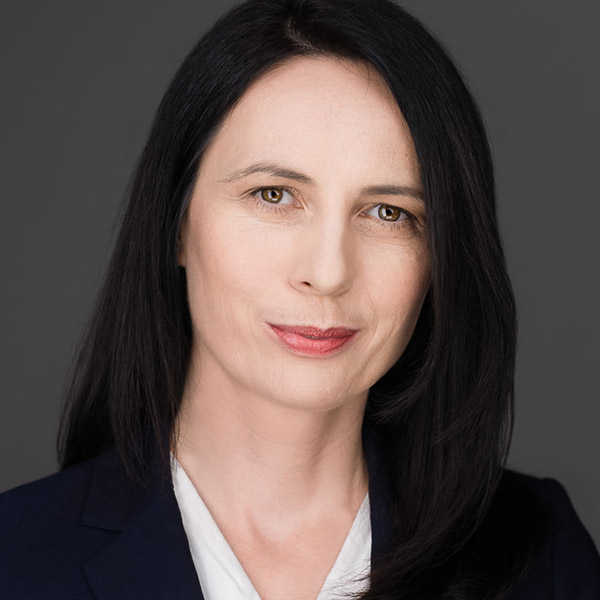
Professor Emily So serves as Deputy Head of the School of Arts and Humanities at the University of Cambridge and directs the Cambridge University Centre for Risk in the Built Environment (CURBE). A chartered civil engineer with extensive field experience, she holds leadership roles in the Open-Oxford-Cambridge AHRC Doctoral Training Partnership and chairs the Faculty EDI Committee. Her research focuses on urban risk and resilience , particularly in earthquake-prone regions. Combining structural engineering with epidemiological approaches, she develops innovative casualty estimation models and engages directly with affected communities worldwide. Her work spans seismic safety, disaster epidemiology, and remote sensing applications for rapid damage assessment. Professor So's publication trends reveal strong emphasis on machine learning for disaster risk modeling , with recent work featuring graph neural networks, deep clustering for urban morphology, and LSTM-based population forecasting. Her research bridges engineering, social sciences, and data science to address resilience in developing nations. 2010 Shah Family Innovation Prize (Earthquake Engineering Research Institute) Fellow of the Institution of Civil Engineers (FICE) Scientific Advisory Group for Emergencies (SAGE) member advising UK government As Director of CURBE, she leads interdisciplinary collaborations with EEFIT, Global Earthquake Model (GEM), World Bank, and USGS. Her field investigations following major earthquakes inform practical solutions for vulnerable communities, notably contributing to the 2017 World Building of the Year design in China. Current work includes sabbatical research for 2025-2026 focused on decolonizing architectural approaches to disaster resilience. Professor So maintains active roles in professional organizations and international disaster response frameworks, with her CURBE team developing methodologies now implemented globally for seismic safety improvements.
Pawan Adhikari is a Professor of Accounting at Essex Business School, University of Essex , where he serves as Director of Impact and Enterprise and Director of Essex Accounting Centre . He is an Associate Editor of the Journal of Public Budgeting, Accounting and Financial Management and a Executive Board Member of the Comparative International Governmental Accounting Research Network (CIGAR) . Previously, he led accounting reforms at Nepal’s Accounting and Auditing Standards Board and lectured at Nord University, Norway. PhD, Nord University Business School Fellow of the Higher Education Academy His research focuses on public sector accounting in developing countries, particularly accounting reforms , public value creation , and climate accountability . He explores how accrual accounting and participatory budgeting can enhance transparency in South Asian and African contexts. His work has influenced policy-making in Nepal and is recognized with the 2023 Best International Research Impact award by the University of Essex. Recent publications analyze wellbeing economies (2025), NGO accountability in disasters (2024), and climate budgeting (2023). He collaborates with institutions like the World Bank , European Commission , and British Academy , focusing on projects related to financial resilience , circular economy , and health sector accountability . Supervising 8 current PhD students, his advisees have produced work on topics like accrual accounting in Bangladesh and NGO accountability in Palestine . World Bank/PEFA Research Award African Accounting and Financial Association (AAFA) Award ESRC IIA Impact Fund GCRF and SeNSS Grants 2019 Best Postgraduate Supervisor (Essex)
Paolo Gardoni is the Alfredo H. Ang Family Professor and an Excellence Faculty Scholar in the Department of Civil and Environmental Engineering at the University of Illinois Urbana-Champaign, with additional professorial appointments in Industrial & Enterprise Systems Engineering and Biomedical & Translational Sciences. He also serves as Director of the MAE Center and Editor-in-Chief of Reliability Engineering & System Safety. Education Ph.D. in Civil Engineering, University of California, Berkeley (2002) M.A. in Statistics, University of California, Berkeley (2001) M.Eng. in Structural Engineering, University of Tokyo (1997) Laurea (BS+MS equivalent) in Structural Engineering, Politecnico di Milano (1997) Research Interests Gardoni’s scholarship integrates probabilistic methods with large-scale infrastructure systems to advance reliability, risk, and life-cycle analysis. His work quantifies the performance of deteriorating systems under natural and anthropogenic hazards, models societal impacts of disasters, and develops decision frameworks for sustainable and resilient infrastructure. He also examines ethical, social, and legal dimensions of risk, and investigates optimal strategies for hazard mitigation, disaster recovery, and climate adaptation. Across more than 250 refereed journal papers, he has advanced sub-fields ranging from probabilistic mechanics and earthquake engineering to catastrophe bond pricing and engineering ethics, leveraging tools such as stochastic differential equations, Bayesian networks, and physics-informed machine learning. Awards & Honors Alfredo Ang Award on Risk Analysis and Management of Civil Infrastructure (ASCE, 2021) Best Paper Awards in ASCE Journal of Sustainable Water in the Built Environment (2019) and Geotechnical Research (2018 Telford Premium Prize) Fellowships and named professorships: Alfredo H. Ang Family Professor, Excellence Faculty Scholar, and courtesy or honorary professorships at Tsinghua, IIT Guwahati, Tongji, Jianghan, and Loughborough universities. Research Leadership & Funding Gardoni has secured over $58 million in research funding from NSF, DHS, NIST, USAID, Qatar National Research Fund, and other agencies. He directs the MAE Center—formerly an NSF Engineering Research Center—focused on multi-hazard engineering approaches, and is Editor-in-Chief of Reliability Engineering & System Safety (Elsevier, IF 9.4). He founded and formerly led the journal Sustainable and Resilient Infrastructure (Taylor & Francis) and serves on editorial boards of nine additional journals. Advising & Mentorship He has graduated 27 PhD and 35 Master’s students, many of whom now hold faculty positions worldwide. His group maintains an active pipeline of doctoral and post-doctoral researchers working on resilience analytics, infrastructure monitoring, and risk-informed decision-making. Laboratories & Collaborations He leads the MAE Center and is affiliated with the Critical Infrastructure Resilience Institute (CIRI) and the Biomedical and Translational Sciences group. International collaborations span the UK (Loughborough), India (IIT Guwahati), and China (Tsinghua, Tongji, Jianghan), fostering cross-disciplinary research in reliability and resilience engineering.
Harald Fuess is a Professor of Cultural Economic History at the Heidelberg Centre for Transcultural Studies since 2009. He holds a Ph.D. from Harvard University and B.A. from Princeton University , with prior teaching roles at the University of Sheffield, Sophia University, and visiting appointments at Oxford, Duisburg-Essen, Columbia, and Tokyo University. He serves as the Erasmus Coordinator for Asian Studies and as University Scientific Coordinator of the Hexagon Alliance . Education: Princeton University – B.A. Harvard University – M.A., Ph.D. His research spans modern Japanese history , gender dynamics , transcultural economic relations , and Eurasian cultural flows . Publications focus on Japan's legal sovereignty, consumption patterns, and the Meiji Restoration's global impact. Key academic contributions include leadership roles such as President of the European Association for Japanese Studies (2008-2011) and ongoing membership in its Executive Council (since 2000) . He has held administrative positions including Director of the Cluster Graduate School Transcultural Studies (2012-2017) and Speaker for Research Area C "Health and Environment" (2009-2012) . Recent publications analyze topics ranging from historiography of the senses to colonial legal frameworks in East Asia. His work bridges historical analysis with contemporary issues like tourism's economic impact and intellectual property evolution in transnational contexts.
Dr. Yongjia Song is an Associate Professor in the Department of Industrial Engineering at Clemson University's College of Engineering, Computing and Applied Sciences. His research focuses on optimization under uncertainty, stochastic programming, and network interdiction with applications in disaster logistics, energy systems, and humanitarian operations. BS in Computational Mathematics (2009), Peking University MS in Industrial Engineering (2012), University of Wisconsin-Madison MS in Computer Sciences (2012), University of Wisconsin-Madison PhD in Industrial Engineering (2013), University of Wisconsin-Madison His work addresses complex systems under uncertainty through: Stochastic and robust optimization frameworks Integer programming for discrete decision problems Applications in disaster response and transportation networks Evacuation planning and shelter management Human trafficking disruption modeling Recent publications demonstrate trends in: Multistage stochastic programming for dynamic disaster response Bayesian preference elicitation for complex design problems Network interdiction models for security and trafficking disruption Integration of logistics and evacuation planning under uncertainty Adaptive algorithms for large-scale optimization Professional affiliations include: Institute for Operations Research and the Management Sciences (INFORMS) Mathematical Optimization Society (MOS) Society for Industrial and Applied Mathematics (SIAM) He teaches graduate courses in risk modeling (IE 8090) and actively works on practical implementations of optimization techniques in real-world systems.
Dr. Maud Borie is a Senior Lecturer in Environment, Science & Society at King’s College London’s Department of Geography, within the School of Global Affairs. Her work bridges Human Geography and Science and Technology Studies (STS), focusing on biodiversity governance, environmental policy, and green finance. She holds a PhD from the University of East Anglia and has held visiting fellowships at Harvard Kennedy School. Borie’s research explores the politics of environmental knowledge and its societal implications, including nature-based solutions and green finance mechanisms. She has contributed to global initiatives like the Intergovernmental Platform on Biodiversity and Ecosystem Services (IPBES) and co-founded the Mediterranean Alliance for Wetlands. Her recent projects include analyzing green finance’s reliance on scientific legitimacy and mapping resilience strategies in cities. She teaches courses on environmental policy, qualitative methods, and geographies of financialization. Borie has been awarded grants for interdisciplinary projects such as ‘deep listening with machines for equitable environmental futures’ and ‘forestscapes’ immersive soundscapes. Her research outputs span over 18 peer-reviewed articles, with topics ranging from climate change framing to urban resilience in the Global South. Awards: Planetary-scale interpretation (2023), Rethinking environmental policy (2022), Forestscapes collaboration (2023) Grants: Creative Collaboration Seed Fund (2023), EU/PEARL disaster resilience projects Labs/Teams: KingsCAT (Social Media Research), Political Ecology, Biodiversity & Ecosystem Services (PEBES) group
John W. van de Lindt is the Harold H. Short Endowed Chair Professor in Civil and Environmental Engineering at Colorado State University and Co-director of the NIST Center of Excellence for Risk-Based Community Resilience Planning. His research develops performance-based engineering frameworks for natural hazards including earthquakes, tsunamis, hurricanes, and tornadoes. Research integrates physical testing (full-scale shake tables), computational modeling, and field reconnaissance to quantify community resilience. Key areas include: multi-hazard fragility assessment; coupled physical-socio-economic recovery modeling; climate adaptation strategies; and resilient timber structural systems. Recent projects include longitudinal tornado impact studies, earthquake-tsunami risk assessment for coastal communities, and life-cycle analysis of sustainable buildings. Publications document innovations in resilience-informed design, validation of recovery models using disaster reconnaissance, and development of the IN-CORE computational platform for community resilience planning. Research consistently bridges structural engineering with social science for multidisciplinary disaster impact reduction. Awards include ASCE Fellow (2019), Ernest E. Howard Award (2017), and multiple best paper awards. Van de Lindt has led disaster reconnaissance following major US events including the 2021 Midwest tornado outbreak.
Jérôme Picard is a Researcher at the French National Center for Scientific Research (CNRS) affiliated with UMR 8586 - PRODIG at Campus Condorcet. His work focuses on Geomatics, Remote Sensing, Cartography , and Environmental Changes . His research involves GIS project management Linguistic and ethnic cartography Land use and territorial dynamics in Central Africa and the Himalayas Recent publications include cartographic contributions to linguistic studies in Africa, Asia, and the Himalayas (2016-2021), with methods integrating GIS and remote sensing for analyzing environmental and societal issues . Scientific awards include Award at Pastoralism and Wide Open Spaces festival for 'The Waters of Discord' He has collaborated with institutions like the University of Bangui, ENSG-Marne la Vallée, and the French Society of Photogrammetry and Remote Sensing (SFPT), and contributed to GIS training programs for doctoral students and researchers.
Sibel Pamukcu is a Professor in the Department of Civil and Environmental Engineering at Lehigh University, affiliated with the P.C. Rossin College of Engineering and Applied Science. Her research focuses on electroremediation of soils and groundwater, advanced geo-materials, and sensor systems for subsurface monitoring. She has held leadership roles including interim Chair of Civil and Environmental Engineering and co-director of Lehigh’s ADVANCE grant. Pamukcu teaches courses in geotechnical and environmental engineering at both undergraduate and graduate levels. Education: Ph.D. in Civil Engineering, Louisiana State University M.S. in Civil Engineering, Louisiana State University B.S. in Civil Engineering, Bogazici University, Turkey Research Interests: Her work spans electrochemical methods for environmental detoxification, development of polymer-enhanced sands, and distributed sensor networks for real-time subsurface monitoring. Key focus areas include: In-situ destruction of contaminants in clay-rich soils Enhanced oil recovery via electric fields Wireless and fiber-optic sensor systems for hazard mitigation Grants & Awards: Principal investigator on over 60 grants from NSF, DOE, DOD, and others. Notable awards include the Alfred Noble Robinson Award (Lehigh University) and the ASCE Civil Engineering Foundation Grant Award. Her lab holds multiple patents on soil remediation techniques and polymer-coated sands. Advising & Service: Supervised 9 Ph.D. and 25+ M.S. students Appointed to Martindale Center faculty and Sigma Xi leadership Contributed to 50+ peer-reviewed articles and 100+ technical publications Labs & Teams: Leads interdisciplinary initiatives in electrokinetic remediation and underground sensing, collaborating with industry partners like Electric Power Research Institute and the Pennsylvania Department of Transportation.