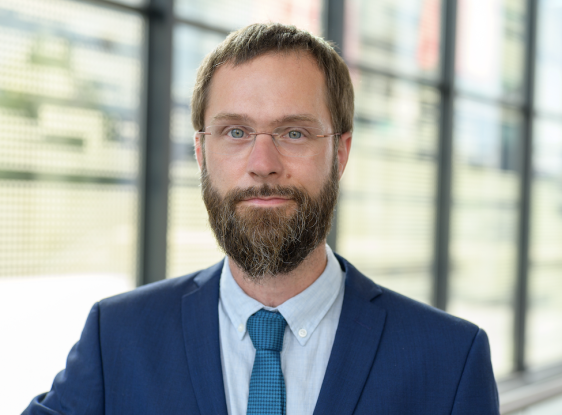
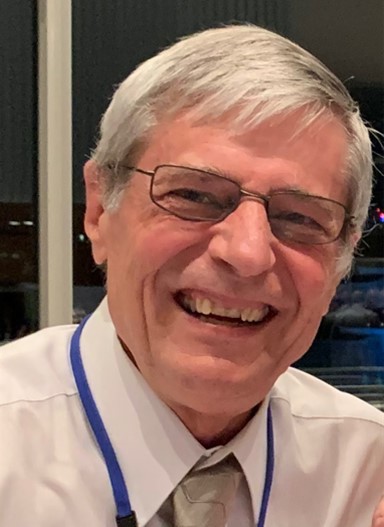
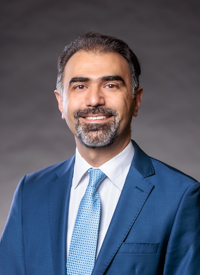
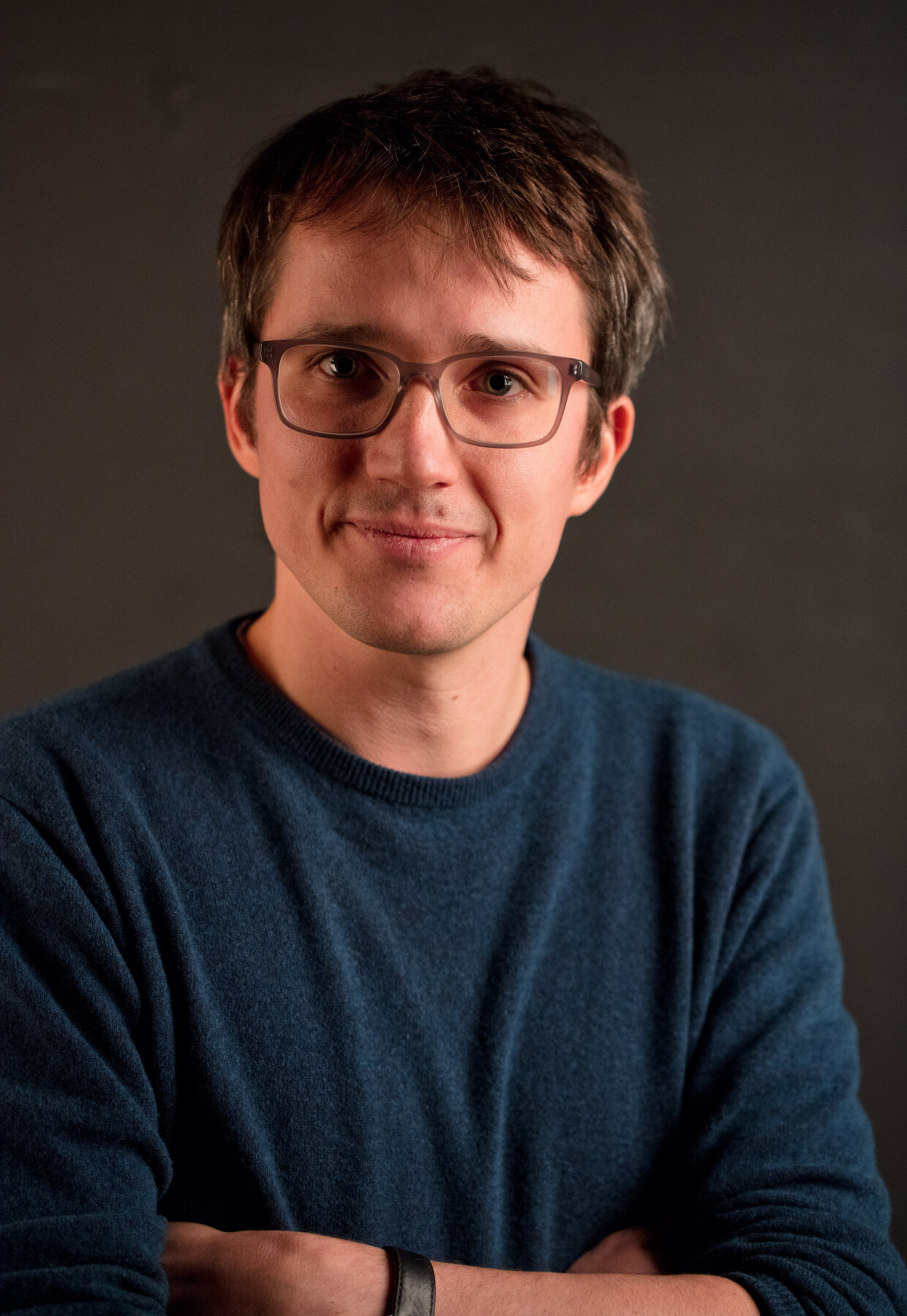
Professor Alberto J. Lamadrid is a faculty member in the Economics Department at Lehigh University with a joint appointment in Industrial and Systems Engineering. He serves as Director of the Institute for Cyber Physical Infrastructure and Energy (I-CPIE) and as a Research Affiliate at MIT's Laboratory for Information and Decision Systems (LIDS). His work focuses on electricity economics, cyber-physical systems, and stochastic optimization in interdependent networks. James T. Kane Faculty Fellow Principal Investigator for $2.5M ARPA-E grant Research Affiliate at MIT LIDS His research examines resilient infrastructure design, renewable energy integration, and market mechanisms for uncertain environments. Current projects address environmental change, risk management in networks, and critical infrastructure valuation. Methodologically, he combines optimization techniques, GIS analysis, and engineering-economic modeling. Recent publications span: 2025 studies on hurricane evacuation behavior and electricity market pricing; 2024 work on smart grid-transit co-optimization; 2023 analysis of pandemic social cohesion; 2022 market convexity studies; and 2021 cybersecurity models. Articles appear in The Energy Journal , IEEE Transactions , and European Journal of Operational Research . Scientific recognition includes: James T. Kane Faculty Fellowship ARPA-E $2.5M grant for electricity risk management His extramural funding sources span NSF, DOE, EPA, EPRI, and MIT collaborations. Teaching includes PhD-level Mathematical Economics, Electricity Economics, and MBA courses in Economics & Government.
Michael Muma is a Professor in the Department of Electrical Engineering and Information Technology at Technische Universität Darmstadt. His research focuses on robust data science theory and methods applied to signal processing and machine learning in biomedicine and engineering. He leads the ERC Starting Grant ScReeningData project, developing methods for reproducible information discovery in biomedical databases, and is a Principal Investigator in the LOEWE center emergenCITY and BMBF cluster curATime. Prior roles include Independent Junior Research Group Leader (Athene Young Investigator) and Lecturer at TU Darmstadt from 2017 to 2022, and Research Associate (Post-Doc since 2014) from 2009 to 2017. His research interests span robust statistical methods, high-dimensional data analysis, emergency response systems, and biomedical signal processing. Notable projects include FDR-controlled portfolio optimization, ECG delineation algorithms, and radar-based vital sign estimation. Muma has contributed to distributed sensor networks, robust clustering, and sparse regression techniques. His work addresses challenges in multi-source detection, financial data analysis, and genomics through interdisciplinary approaches combining signal processing, machine learning, and robust statistics. Recent publications emphasize scalable solutions for high-dimensional problems, including applications in robotics, cardiology, and financial index tracking.
Roman Krzysztofowicz is a Professor of Systems Engineering and Professor of Statistics at the University of Virginia's College and Graduate School of Arts & Sciences. He joined U.Va.'s faculty in 1982 after holding posts at the University of Arizona and MIT. His research focuses on probabilistic forecasting, decision-making under uncertainty, and Bayesian methodologies applied to hydrology, meteorology, and engineering. He pioneered the Bayesian Forecast-Decision Theory, a unifying framework for probabilistic forecast systems and optimal decision systems. Dr. Krzysztofowicz has authored/co-authored over 120 archival articles, 15 books, and 60+ papers, with publications in prestigious journals like the Journal of Hydrology. He served as Editor-in-Chief of the Journal of Hydrology (1996–2007) and held editorial roles in several other journals. His work spans theoretical advancements and practical applications in flood forecasting, weather prediction, and risk assessment. His research interests include stochastic environmental systems, Bayesian probabilistic models, and the integration of forecasts with decision-making processes. Notable contributions include the Bayesian Processor of Output for probabilistic quantitative precipitation forecasting and the Hydrologic Uncertainty Processor for river stage forecasting. Key Achievements: Recipient of the Presidential Young Investigator Award Eminent Engineer designation from Tau Beta Pi 5 Departmental Teaching Awards Featured in multiple Marquis 'Who's Who' publications His work emphasizes bridging scientific understanding and societal applications, with implications for disaster management, climate adaptation, and infrastructure resilience. He has advised international organizations like the World Meteorological Organization and trained forecasters at the National Weather Service.
Christopher L. Barrett is the Executive Director of the Biocomplexity Institute and Distinguished Professor of Computer Science at the University of Virginia. He holds a joint appointment in the School of Engineering and Applied Science. His interdisciplinary work spans computational science, dynamical networks, and AI-driven modeling. He leads large-scale research initiatives for federal agencies and has advised organizations like the Department of Defense and the European Commission. Education: Ph.D. in Bioinformation Systems (Caltech, 1985), Post-Ph.D. in Aerospace Experimental Psychology (U.S. Navy, 1986) Awards: 2021 Virginia Academy of Science Award, Jubilee Professorship (Chalmers University, 2012–2013), Distinguished International Professor (Royal Institute of Technology, 1997–1998) Research focuses on multi-scale systems, including RNA evolution, pandemic modeling, and sociotechnical infrastructure resilience. His work bridges computational methods with real-world problems like disaster preparedness and vaccine distribution strategies. He has published over 100 articles and holds seven patents. Recent publications emphasize agent-based frameworks for migration modeling, genomic surveillance, and HPC-driven epidemic analysis. His interdisciplinary approach unifies mathematical, biological, and social science methods to address complex global challenges.
Preetham Goli is an Associate Teaching Professor in the Department of Electrical Engineering at the University of Missouri-Kansas City (UMKC), School of Science and Engineering. He is affiliated with the Division of Energy, Matter, and Systems, where he contributes to both teaching and research in power systems engineering. Educational Background: B.E. in Electrical Engineering, Andhra University, India Ph.D. in Electrical Engineering, University of Houston, 2014 Dr. Goli's research focuses on the modernization and resilience of power systems, with core interests including distribution system planning, integration of electric vehicles into the grid, microgrid protection, and cybersecurity challenges in power infrastructure. He also explores the application of machine learning techniques for monitoring and enhancing power system reliability. His work addresses both technical and educational aspects of power engineering, including post-disaster restoration of critical infrastructure and operational technology (OT) security. Although no publications are listed in the provided text, his active engagement in research is evident through his professional service and ongoing academic contributions. Scientific Awards: Scholarship recipient for the year 2011 by American Society of Indian Engineers (ASIE) Excellence in Teaching Award, School of Computing and Engineering, UMKC, 2021 Dr. Goli is actively involved in academic service, mentoring, and curriculum development. As a dedicated educator, he advises students and contributes to power engineering education. He has been recognized for excellence in teaching and maintains strong professional engagement through grant-related research activities focused on grid resilience and smart grid technologies. Laboratories and Research Teams: While specific lab names are not mentioned, Dr. Goli is part of the research ecosystem within the Division of Energy, Matter, and Systems at UMKC, which supports interdisciplinary work in energy systems, smart grids, and infrastructure resilience. His collaborations likely involve teams working on grid integration, protection systems, and cybersecurity for critical energy infrastructure.
Dr. Paul Carnell is a Senior Lecturer in the School of Science at RMIT University, specializing in natural capital assessment and ecosystem restoration. His research focuses on quantifying ecosystem services in marine and freshwater environments, particularly kelp forests, saltmarshes, and wetlands, using UN frameworks like the SEEA. He leads projects applying novel methods for ecosystem valuation and restoration, emphasizing practical applications in coastal management. Key Roles: Leading research on ecosystem accounting, advising government and NGOs on coastal restoration, and teaching environmental science courses. Research Interests: Blue carbon dynamics, biodiversity valuation, climate mitigation through restoration, and policy integration. His work bridges scientific research with real-world impact, including partnerships with organizations to implement restoration projects and policy frameworks. Recent publications highlight advancements in carbon sequestration quantification, permit streamlining for restoration, and the economic benefits of marine ecosystems. Dr. Carnell's articles emphasize interdisciplinary approaches, combining ecological data with economic modeling to demonstrate ecosystem services' value. He collaborates internationally, contributing to global blue carbon initiatives and regional policy development.
Dr. Donovan Finn is an Associate Professor and Faculty Director of Environmental Design & Planning (EDP) at Stony Brook University's School of Marine and Atmospheric Sciences (SoMAS). He specializes in sustainability and resilience planning, with a focus on community-based approaches to disaster recovery and urban design. His research emphasizes public participation in planning processes and has been applied to projects in New York City, Long Island, and post-Hurricane Sandy regions. Education: Ph.D., Urban and Regional Planning, University of Illinois at Urbana-Champaign (2009) Masters in Urban and Regional Planning, University of Illinois at Urbana-Champaign (2004) Research Interests: Dr. Finn explores how urban planning and policy can enhance community resilience against climate-related disasters. His work bridges academic research with practical applications, such as designing inclusive recovery strategies and reimagining public spaces during crises like the pandemic. He advocates for equitable access to resources and collaborative governance frameworks. Key Contributions: His recent studies analyze extreme weather impacts on planning efforts, flood resiliency in coastal regions, and interdisciplinary approaches to convergent research in climate science. He frequently engages undergraduate students in fieldwork and real-world planning projects, fostering hands-on learning. Awards & Recognition: None explicitly mentioned in the text. Grants & Advising: Collaborates with non-profits and local governments on sustainability initiatives. Advises students on independent research projects, often integrating them into his own work. Labs/Teams: Actively involved in SoMAS's interdisciplinary teams focusing on environmental policy and coastal resilience.
Doğa Doğan is a Professor in the Department of Geophysical Engineering at Istanbul Technical University. His primary research focuses on geophysical modeling of fluid circulation in fault systems, geothermal energy systems, and tectonic influences on geological processes. He has led major projects including the 'Numerical Modeling of the Effect of the Gediz Graben Detachment Fault' and 'Investigation of Geothermal Potential of Izmir Region'. His work combines geophysics, hydrogeology, and numerical simulation to study fluid dynamics in complex geological settings like the Gediz Graben and the Sea of Marmara. Key projects involve finite volume modeling techniques to analyze heat distribution and fluid flow in fault-controlled environments. Dr. Doğan has published extensively on fault architecture impacts, geothermal reservoir characterization, and the interplay between tectonics and hydrological systems. His research has contributed to understanding deep hydrothermal systems in back-arc basins and the thermal regimes of active fault zones. He currently leads the BAP-funded project 'Karadenizde Gaz Hidratların Duraylılığını Etkileyen Faktörlerin Sonlu Hacimler Yöntemi Kullanılarak Araştırılması', exploring gas hydrate stability factors using numerical methods.
Yi Huang is an Associate Professor of Mathematics and Statistics at the University of Maryland, Baltimore County (UMBC) and an affiliated faculty member at the School of Medicine, University of Maryland, Baltimore (UMB). Her expertise lies in biostatistics, with a focus on causal inference, comparative effectiveness research (CER), and propensity score methods. She is actively involved in interdisciplinary research at the interface of statistics, public health, and medicine. Education: Ph.D. in Biostatistics, Johns Hopkins University Bloomberg School of Public Health (2007) M.S. in Atmospheric Science with a graduate minor in Statistics, University of California, Los Angeles (2000) B.S. in Atmospheric Physics, Peking University (1997) Research Interests: Her methodological research centers on causal inference and CER, particularly propensity score-related methods and meta-analysis. She also explores statistical designs for personalized medicine (including traditional Chinese medicine), tolerance intervals, GLM, survival analysis, and longitudinal binary data. Her collaborative work spans post-marketing safety studies, gerontology, mother/infant health, and environmental health. Scientific Awards: Best Methodological Development Award, Johns Hopkins Bloomberg School of Public Health (2007) ADVANCE Special Research Initiation Award for women in STEM, UMBC (2007) Certificate of Appreciation, FDA Office of Women’s Health (2009) NASA Graduate Fellowship (1999-2000) Summa Cum Laude, Peking University (1997) Grants and Advising: She has served as PI or co-PI on numerous NIH and FDA grants, including RO1 grants on pediatric psychopharmacologic outcomes and aging studies. She mentors graduate students and collaborates extensively with researchers from FDA, NIH, and other institutions. Labs and Teams: She is part of the joint biostatistics graduate program between UMBC and UMB School of Medicine, fostering interdisciplinary research teams in aging, environmental health, and maternal-child health.
Dr. Burcu Balçık is a Professor in the Department of Industrial Engineering at Özyeğin University, where she also serves as the Academic Director of the OzU Sustainability Platform. With a PhD in Industrial Engineering from the University of Washington (2008) and degrees from Middle East Technical University, she has established herself as a leading expert in humanitarian logistics and disaster management. Her work bridges theoretical operations research with practical applications to improve disaster preparedness and response systems. Dr. Balçık's educational background includes: PhD in Industrial Engineering, University of Washington Seattle, 2008 Master's in Industrial Engineering, Middle East Technical University, 2003 Bachelor's in Industrial Engineering, Middle East Technical University, 2001 She also completed postdoctoral research at Northwestern University (2008-2009) and has been a visiting researcher at the HUMLOG Institute, HEC Montreal (2017-2018), and the Zero Hunger Lab at Tilburg University (2024-2025). Dr. Balçık's research focuses on humanitarian supply chains and disaster management, where she develops data-driven analytical approaches—including optimization, mathematical modeling, simulation, and heuristics—to improve decision-making for better disaster preparedness and response. Her work addresses critical challenges in healthcare planning and food insecurity during crises, with strong emphasis on practical implementation through collaboration with governmental and non-governmental organizations. She has pioneered methodologies for equitable resource allocation, rapid needs assessment, and collaborative prepositioning strategies in humanitarian contexts. Her publication record demonstrates a consistent focus on applying operations research to humanitarian challenges, with recent work emphasizing drone technology for post-disaster assessment, mathematical modeling for equitable vaccine distribution during pandemics, and innovative approaches to managing healthcare systems during disasters. Her research shows an evolution from foundational work on facility location and last-mile distribution to more complex systems addressing interdependent infrastructure networks, multi-country collaborations, and machine learning applications for handling ambiguity in humanitarian decision-making. Dr. Balçık's contributions have been recognized with numerous prestigious awards: Young Scientist Award from the Turkish Science Academy (2014) Best Paper Award from the College of Humanitarian Operations and Crisis Management (HOCM) for POMS (2019) Best Paper Award from SEIO-BBVA Foundation (2023) for the best applied paper in operations research Luk Van Wassenhove Career Award from EURO-HOpe (2023) Member of Science Academy of Turkey (December 2024 -) She also serves as an Associate Editor for Transportation Science and IISE Transactions, and on editorial boards of several leading journals in her field. Dr. Balçık has mentored numerous graduate students through PhD dissertations and M.S. theses, with many of her former students pursuing doctoral studies at prestigious institutions or successful careers in industry. Her research has been supported by significant grants from TUBITAK (multiple projects including 1001, 1002, 2219, and 3501 programs), the Norwegian Research Council, the Ministry of Economy and Innovation of Quebec, and IVADO. She has served as Principal Investigator (PI) for projects on resource planning for chronic dialysis patients after disasters, modeling stock-sharing strategies in humanitarian networks, and designing global humanitarian relief networks through local partnerships. As Academic Director of the OzU Sustainability Platform, Dr. Balçık leads interdisciplinary initiatives addressing sustainability challenges. She is actively involved in professional societies including INFORMS Public Sector Operations Research (PSOR) and the EURO Working Group on Humanitarian Operations (EURO-HOpe), where she has held leadership roles. She serves on the Istanbul Metropolitan Municipality's Earthquake Science Council (February 2023 – ) and collaborates with international organizations to translate research into practical disaster management solutions.
Adrian Besimi is a Full Professor and Dean at the Faculty of Contemporary Sciences and Technologies at South East European University (SEEU), Tetovo, Macedonia. He holds a PhD in Computer Science from SEEU (2013) and an MSc in Computer Science from Indiana University-Purdue University Indianapolis (IUPUI, 2007). His research spans Data Analytics, Artificial Intelligence, Cryptocurrencies, and Educational Technology , with a focus on predictive modeling, AI-driven research tools, and technology adoption in higher education. He has published extensively on these topics, including works on federated learning, hate speech detection, and cryptocurrency price prediction. PhD in Computer Science (SEEU, 2013) MSc in Computer Science (IUPUI, 2007) BSc in Computer Science (SEEU, 2005) His recent publications highlight trends in AI applications for education , medical data sharing, and blockchain analytics. He has served as Pro-Dean and Teaching Assistant at SEEU, with prior roles in software development and web design at SEEU, IUPUI, and Phalanx ICT. He collaborated on projects funded by the German Embassy and contributed to disaster response systems, data-driven journalism, and peer assessment models. Contact: a.besimi@seeu.edu.mk
Duygu YÜCEL serves as an Assistant Professor at Trakya University's Edirne Social Sciences Vocational School within the Accounting and Tax Department, maintaining active research output through 2025. Her academic foundation spans three decades of engagement with Turkish economic institutions. Her educational qualifications include: PhD in Economics from Istanbul University (2011), thesis: "Income Distribution Theories and Policies: Income Distribution-Poverty Problem in Türkiye" Master's Degree in Economics from Marmara University (1997), thesis: "Market Economy and Privatization of Public Economic Enterprises" Bachelor's Degree in Economics from Marmara University (1994) Dr. YÜCEL's research centers on Poverty Studies and Gender Economics, with seminal work on women's secondary labor participation, anti-poverty methods, and social transfer expenditures in Turkey. Her scholarship bridges theoretical frameworks with policy analysis, particularly examining how economic crises impact vulnerable populations. Recent publications demonstrate expanding interdisciplinary scope into psychological dimensions of economic hardship. Analysis of her 2020-2025 publications reveals a strategic pivot toward contemporary socioeconomic challenges: pandemic economic impacts (37% of recent work), digital economy transformations (29%), and gendered economic resilience (22%). This evolution shows consistent methodological rigor while addressing emerging national priorities, with Turkey-specific case studies comprising 85% of her empirical work. Her scholarship maintains strong policy relevance through Central Bank analyses and social inclusion frameworks.
Brian T. Forschler is a Professor in the Department of Entomology at the University of Georgia's College of Agricultural & Environmental Sciences. With 26 years as Principal Investigator for the Household and Structural Entomology Research Program, he has taught Urban Entomology and IPM courses for over 16 years and mentored 11 post-doctoral associates, 6 PhD, 12 Master’s, and 18 undergraduate students. He serves on multiple regulatory committees including the Georgia Department of Agriculture Structural Pest Control Commission. International Collaborations: Madihol University (Thailand), RISH Institute (Japan), BAM Institute (Germany), Vietnam Academy for Water Resources Research Themes: Termite biology, IPM strategies, soil insecticides, genetic analysis, urban-rural ecosystem interactions His work includes organizing international symposia on urban pests and authoring over 100 scientific/popular articles. Key contributions involve termite baiting systems, chemotaxonomic studies, and ecological impact assessments of invasive species. Current research explores termite-mediated carbon cycling in forest ecosystems and economic impacts of pest control. Recent Article Trends: Termite management in forests (2018) Chitin synthesis inhibitors in baits (2016) Termite economic impact analysis (2024) Wood decomposition modeling tools (2021) Biological control mechanisms (2019) Urban-natural ecosystem intersections (2018) Scientific Leadership: Chair of Termiticide Scientific Review Panel; member of ASPCRO Termiticide Label Review Committee. Has conducted training for industry/regulatory officials across continents.
Can Dogan is an Associate Professor of Economics and a Special Sworn Status Researcher at the Center for Economic Studies, focusing on Industrial Organization , International Economics , and Business Forecasting . His work combines technical rigor from his engineering background with economic analysis, particularly examining the impact of AI on business ecosystems and human-algorithm interactions. Research Areas : Industrial Organization, International Economics, Business Forecasting, AI in Business Publications : Published in high-reputation journals like Management Science and International Review of Economics and Finance . Teaching : Emphasizes lively discussions and activating student potential, connecting Economics to everyday life. Community Involvement : Senior Fellow at the American Leadership Forum and board member in Houston-based non-profits. Personal : Married with three children, enjoys fishing, math puzzles, and European soccer leagues.
Dr. Piotr Makowski is affiliated with the University of Warsaw as a member of the Department of Oriental Archaeology . His research focuses on the archaeology of the Byzantine and Islamic Near East, with particular emphasis on settlement patterns, Christian communities during the Byzantine-Islamic transition, and material culture analysis. Specializes in handmade ceramic wares of the Islamic Near East Investigates post-Byzantine urban adaptation in Jordan and Lebanon Collaborates on Polish-Lebanese archaeological missions Recent publications highlight his work on chronological modeling of handmade wares, environmental changes in Bilad Al-Sham, and adaptive reuse of sacral spaces after disasters. His fieldwork spans sites in Jordan (Dharih, Khirbat edh-Dharih), Lebanon (Rachkida, Jiyeh), and Tunisia (Mustis). Makowski contributes to academic discourse through environmental archaeology approaches and regional synthesis studies, combining pottery analysis with landscape evolution and cultural continuity patterns across the Byzantine-Islamic transition.