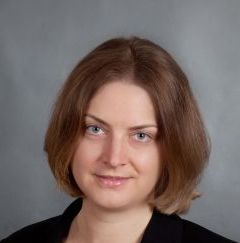
Sophie Ryan is a Climate and Health Research Fellow at Appalachian State University's Department of Geography and Planning, supported by the National Academy of Sciences. She holds a Ph.D. in Geography (candidate) from the University of North Carolina at Chapel Hill and advanced degrees in Geography from Appalachian State University and the University of Vermont. Education : Ph.D. Candidate in Geography (UNC Chapel Hill), M.A. in Geography (Appalachian State), B.S. in Geography (University of Vermont) Ryan's research integrates medical geography and climate science to explore mental health impacts of extreme weather events. Her work combines spatiotemporal modeling , health data analysis , and disaster response studies , focusing on youth, older adults, and vulnerable populations. Recent projects examine greenspace effects on mental health , compound climate events , and pandemic-related health disparities . Her publications highlight climate-mental health linkages , spatial epidemiology , and social vulnerability in disaster contexts. Articles address topics like heat-stress and mental health , transgender youth post-disaster trauma , and suicide risk disparities during the COVID-19 pandemic. Ryan employs distributed lag models , cluster analysis , and geospatial techniques to assess environmental health impacts. Scientific Awards : NASEM Climate-Health Fellow
Qixuan Chen, PhD, is an Associate Professor of Biostatistics at Columbia University Mailman School of Public Health. She obtained her PhD from the University of Michigan in 2009, with dual expertise in biostatistics and survey sampling. Education: BA in Economics (Nankai University), MS in Applied Statistics (Bowling Green State University), PhD in Biostatistics (University of Michigan) Her research focuses on advanced statistical methods for complex surveys, causal inference, and handling missing data. Key contributions include developing Bayesian predictive inference frameworks using machine learning and regularized regression for integrating administrative records with survey samples. Recent publications emphasize environmental health applications, including measurement error correction for immunoassays and variable selection in multiply imputed data. Her work bridges biostatistics with computational methods for data integration. Scientific Awards: NIEHS Career Development Award, Teaching Award, Calderone Research Prize, Bryant Scholarship, Hutzinger Award She actively contributes to public health through dashboards like the New York City Neighborhoods COVID-19 tracker and PRIME radiology diagnostics platform. Grants such as R01ES035784 support her ongoing work in exposure-response analysis.
David Henderson is the Director of the Cyclone Testing Station (CTS) in the School of Engineering and Physical Sciences at James Cook University, Australia. He has over two decades of experience as a research engineer specializing in the performance of low-rise buildings under extreme wind conditions. He previously served as the CTS Research Fellow and Manager, and was seconded as a Postdoctoral Researcher at the University of Western Ontario, Canada, working on full-scale house testing under simulated wind loads. His work bridges engineering research, disaster assessment, and policy development. David's research focuses on wind engineering, structural resilience, and disaster mitigation. His key interests include cyclonic wind loading, internal and external pressure dynamics in buildings, fatigue failure of structural connections, and the vulnerability of housing to severe wind events. He has conducted post-disaster surveys across Australia and Canada, assessing damage from cyclones, tornadoes, and earthquakes. His research has direct applications in building codes, retrofitting strategies, and community risk reduction. The recent publications highlight a strong trend in understanding and mitigating wind-induced damage to residential structures, particularly through full-scale testing, modeling of pressure dynamics, and fragility assessment of roofing systems. His work spans experimental, theoretical, and policy-oriented domains, with a growing emphasis on climate change adaptation and community resilience. Topics such as internal pressure design, load sharing in roof frames, and retrofitting for wind resistance are central to his contributions. 14 research awards (specific names not listed) Active member of Standards Australia code committees Invited speaker at national and international conferences Media contributor on storm damage and building safety David has led multiple research projects funded by councils and agencies focused on extreme wind mitigation, data systems (SWIRLnet), and community risk reduction. While formal student supervision is not explicitly listed, he collaborates extensively with researchers such as John Ginger, Korah Parackal, and Daniel Smith. He has contributed to major studies involving wind load testing, housing vulnerability modeling, and climate adaptation planning. David is a key figure in the Cyclone Testing Station, leading its full-scale testing program and contributing to the development of software for controlled load and measurement systems. His team conducts wind risk assessments for communities and large installations, incorporating terrain analysis and retrofitting evaluations. The CTS serves as a national resource for wind engineering research and disaster resilience innovation.
Dr. Debraj Roy is a Visiting Professor at the University of Amsterdam (UvA), affiliated with the Faculty of Science, Mathematics and Computer Science and the Informatics Institute. His research focuses on agent-based modeling, socio-economic dynamics, environmental resilience, and blockchain technology. He investigates complex systems such as urban slums, disaster recovery, and climate adaptation using computational methods like remote sensing and machine learning. His work bridges theory and practice, offering insights into policy design for sustainable development and social equity. Key research interests include slum dynamics, poverty traps, and the application of blockchain oracles for decentralized systems. He employs advanced techniques such as global sensitivity analysis and manifold learning to explore multi-scale socio-environmental challenges. His recent articles highlight trends in carbon pricing, flood risk valuation, and multi-agent systems. Earlier work concentrated on urban inequality in cities like Bangalore and Mexico City, leveraging geospatial and statistical tools. No scientific awards or grants are explicitly listed. His advising and team collaborations are unspecified in the provided text.
Dr. Terje Haukaas is a Professor of Structural & Earthquake Engineering at the University of British Columbia (UBC), Department of Civil Engineering, Faculty of Applied Science. He holds a PhD and Master's from UC Berkeley (2003, 1999) and a bachelor's from the Norwegian University of Science and Technology (1996). His research focuses on probabilistic modeling, structural reliability, and earthquake engineering, with contributions to software development (e.g., FERUM, OpenSees). He teaches courses like Structural Analysis, Nonlinear Analysis, and Reliability & Safety. Education: PhD in Civil Engineering, UC Berkeley, 2003 Master's in Civil Engineering, UC Berkeley, 1999 Bachelor's in Civil Engineering, NTNU, Trondheim, 1996 Engineering Degree (Stavanger University College, 1994) and Technician Degree (Stavanger Technical College, 1992) Research Interests: Probabilistic mechanics and reliability analysis Seismic vulnerability and risk assessment Software tools for finite element analysis (FERUM, OpenSees) Timber engineering and structural optimization Awards & Recognition: UBC Killam Teaching Prize (2016) President of CERRA (2015–2019) Keynote/Semi-plenary speaker at major conferences (ICASP12, COMPDYN 2017) Student Appreciation Awards (Top Professor rankings) Grants & Labs: Recipient of grants supporting seismic risk research Developed computational frameworks for structural analysis
Dr. Patrick Shane Crawford serves as Assistant Professor in the Department of Civil, Construction and Environmental Engineering at the University of Alabama's College of Engineering. Affiliated with the Center for Sustainable Infrastructure and Alabama Water Institute, his research focuses on enhancing community resilience to tornadoes, floods, and hurricanes through interdisciplinary engineering approaches integrating social science and policy perspectives. His educational background includes: B.S. in Civil Engineering (2012, University of Alabama) M.S. in Civil Engineering (2014, University of Alabama) Ph.D. in Civil Engineering (2018, University of Alabama) Dr. Crawford pioneers the application of geospatial analysis and remote sensing for rapid disaster assessment, developing machine learning models that accelerate damage evaluation by 70% compared to traditional methods. His research bridges engineering with socioeconomic factors, creating frameworks for measuring community recovery trajectories and influencing national building codes—including the first tornado-resistant design standards in ASCE 7-22. Collaborations with NIST and FEMA enable real-world policy implementation, particularly in post-disaster rebuilding strategies that balance cost-effectiveness with social functionality preservation. Analysis of his 2022-2025 publications reveals consistent innovation in longitudinal disaster reconnaissance , with 60% of recent work focusing on tornado events using deep learning for damage classification. Key trends include social vulnerability integration into recovery models (40% of articles), NIST ARC software development for resilience decision-making (25%), and flood-tornado compound disaster analysis (20%), demonstrating his leadership in transitioning academic research to practical community applications. Active in federal partnerships, Dr. Crawford's 2025 feature Confident but Exposed: How Prepared Are U.S. Homeowners for Extreme Weather? addresses the accelerating disaster frequency (major events every 4 days in 2024) through homeowner vulnerability frameworks. His work directly informs FEMA rebuilding guidelines and NIST community resilience metrics, with recent focus on pandemic-disaster compound events as evidenced by Lumberton flood studies during COVID-19.
Prof. Muhittin Eren Uçkan is a Professor in the Department of Civil Engineering at Rafet Kayış Faculty of Engineering. His work focuses on earthquake engineering, structural dynamics, and seismic performance of infrastructure systems. Education: MS in Civil Engineering (1987) from Middle East Technical University, PhD in Earthquake Engineering (1994) from Boğaziçi University Key Research Areas: Seismic response of pipelines, soil-structure interaction, base isolation systems, and infrastructure resilience His recent publications analyze post-earthquake performance of transmission pipelines (2024 Kahramanmaras), liquid storage tanks (2023), and buried steel pipes (2016–2019). Studies emphasize fault crossing effects , sloshing damping , and seismic risk frameworks . Administrative roles include Vice Dean at Gebze Institute of High Technology (1998), Head of Department (1995–1998), and Commission Presidency at Alanya Aladdin Keykubat University (2020).
Ruth Reef is an Associate Professor at the School of Earth Atmosphere and Environment, Monash University. She leads the Coastal Research Group, focusing on coastal dynamics, climate change impacts, and environmental DNA applications. Her research emphasizes mangrove and coral reef ecosystems' resilience to sea level rise and human activity. She coordinates courses such as EAE3311 (Oceans and Coasts) and teaches EAE1022 (Earth, Atmosphere and Environment 2). Expertise: Coastal processes, sediment transport, climate adaptation, and ecosystem management. Projects: Includes studies on mangrove restoration in Vietnam, coastal wetland carbon fluxes, and bathymetry innovations via CoastBAT. Her work addresses UN Sustainable Development Goals related to climate action and sustainable ecosystems. Notably, she received the 2021 Award for Exceptional Educational Service to the Faculty of Science.
David Wanik is an Assistant Professor in the Department of Operations and Information Management and Associated Faculty in the Department of Civil and Environmental Engineering at the University of Connecticut. He serves as Academic Director for Business Data Analytics at the Stamford campus and conducts research in the Eversource Energy Center, focusing on data science, natural hazards, remote sensing, and IoT applications in utility systems. PhD, MS, and BS in Environmental Engineering from University of Connecticut His research bridges natural hazard prediction, power grid resilience, and environmental data science. Key themes include: Machine learning for power outage prediction Climate change impact on energy demand Remote sensing for population and environmental monitoring IoT-enabled infrastructure hardening Recent publications emphasize deep learning for nighttime light imagery analysis, hybrid physics-data-driven models for grid resilience, and climate-integrated demand forecasting. His work integrates satellite data, LiDAR, and utility infrastructure records for predictive analytics. Teaching includes courses in business analytics, Python-based data science, and deep learning for the MS Business Analytics and Project Management program.
Cody Buntain is an Assistant Professor at the College of Information Studies (iSchool) at the University of Maryland (UMD), serving as Co-Director of the Center for AI, Data, and Conflict. He is also an Affiliate Fellow at UMD's Honors College – Artificial Intelligence Cluster and a research affiliate at NYU’s Center for Social Media and Politics (CSMaP). His research focuses on crisis informatics, online political engagement, and information quality, particularly examining how AI shapes information ecosystems during crises, conflicts, and social unrest. Dr. Buntain’s work addresses disinformation, health misinformation, and AI-driven methods for emergency response. Key affiliations include the Global Elections and Information Security (GEIS) initiative and the Tech Policy Research & Education Hub. His research has been featured in major media outlets like the New York Times, Washington Post, and WIRED. Education: PhD in Information Studies from University of Maryland (2016), postdoctoral research at NYU’s SMaPP Lab (2018-2019) and UMD’s Human-Computer Interaction Lab (HCIL, 2016-2018). Previously served as Assistant Professor at NJIT’s Informatics department and Adjunct Faculty at American University. Professional experience includes Director of Research at Pikewerks Corporation (2008–2013). Current projects include E-VERIFY (HMT-ISR analysis), M3I (maps/models for influence efforts), and the Incident Streams TRECIS initiative. His GitHub repositories reflect technical contributions to crisis informatics, including tools for social media analysis during disasters.
Lisa Saum-Manning is the Associate Director of the International Security and Defense Policy Program, a Senior Political Scientist, and Professor of Policy Analysis at the RAND School of Public Policy, RAND Corporation. She is actively engaged in research that bridges defense policy, international security, and public administration. RAND Corporation – Associate Director, International Security and Defense Policy Program RAND Corporation – Senior Political Scientist RAND School of Public Policy – Professor of Policy Analysis Her educational background includes a Ph.D. in Political Science from the University of California, Los Angeles. Ph.D., Political Science – University of California, Los Angeles Lisa Saum-Manning's research focuses on strategic planning for the U.S. Armed Forces and Department of State, particularly in the areas of security cooperation, conflict prevention in fragile states, WMD nonproliferation, and unconventional warfare. She has also led field research on building sustainable security capacity in Africa, Central and South America, and disaster recovery in Puerto Rico. Her work frequently addresses diversity and inclusion in the military, homeland security policy, and U.S. foreign military sales accountability. She recently served as a senior advisor to the Assistant Secretary of State for Conflict Stabilization Operations during implementation of the Global Fragility Act. Her recent publications span topics such as Foreign Military Sales (FMS) accountability, Army readiness, disaster recovery in Puerto Rico, and diversity in military personnel. The body of her work demonstrates a consistent focus on policy-relevant research that informs national security decision-making, with an interdisciplinary approach combining political science, security studies, and public policy analysis. Scientific Awards and Recognitions: No specific awards listed in the provided text. Lisa Saum-Manning has advised on major defense and homeland security initiatives, including FEMA’s terrorism risk formula, U.S. Army personnel policy, and Coast Guard diversity strategies. She has received funding for multiple RAND studies from U.S. government agencies, including the Department of Defense and Department of Homeland Security. Her advisory roles include direct engagement with senior officials in the State Department and Congress, particularly through her testimony before the U.S. Senate Committee on Armed Services. She leads and contributes to research teams at RAND focused on international security, defense policy, and stability operations. Her projects often involve interdisciplinary collaboration, field data collection, and policy implementation analysis, particularly in complex operational environments such as post-conflict zones and disaster-affected regions.
Yogi Vidyattama is an Associate Professor at the Canberra School of Politics, Economics and Society, University of Canberra. He specializes in spatial microsimulation modeling, economic growth, income distribution, and fiscal decentralization. Previously affiliated with the University of Indonesia, he contributed to regional economic analysis in Indonesia. His research focuses on linking economic policies with spatial outcomes, including corruption determinants, healthcare access, and disaster resilience. Education: PhD in Patterns of Provincial Economic Growth from Australian National University (2008), Master's from ANU (2003), and Bachelor's in Fiscal Decentralisation from University of Indonesia (2000). Research interests include microsimulation modeling, regional economic disparities, and policy impacts. He has led 49 projects, including studies on electric vehicle policy, disaster capability mapping, and regional fast rail economic impacts. His work contributes to UN SDGs related to economic growth, inequality reduction, and disaster resilience. Publications span over 117 outputs, analyzing topics like Indonesia's regional corruption, Australian housing crises, and pandemic policy effects. Awards and recognitions are unspecified, but his roles in executive councils of ANZRSAI and PRSCO highlight peer recognition. Advised 10 students and maintains NATSEM's spatial models and GIS systems.
Prof. Anke Hagemann holds a guest professorship at TU Berlin's Habitat Unit since 2021, focusing on urban-rural transformations and global production networks. She earned a doctoral degree (summa cum laude) from HafenCity University Hamburg in 2023, exploring Istanbul's clothing industry networks. Her academic journey includes interim professorships at BTU Cottbus-Senftenberg and teaching roles at ETH Zurich, TU Stuttgart, and HafenCity University. Her research spans global commodity production, urban mega-events, and holiday architectures. Notable projects include the DFG-funded 'Transnational Production Spaces' (2016–2019) and BMBF-funded 'Urban Rural Assembly' in China. She has published widely on spatial constellations of global production, including works on Bulgarian post-socialist tourism and Ethiopia's garment industry. Awards include her thesis distinction and grants like the DFG scientific network on global production spaces. Her teaching spans urban design studios and seminars on topics like 'Feeding the City' and 'Global City Local Spaces.' She co-curated exhibitions like 'Shrinking Cities' and contributed to initiatives like the 'Urban Rural Assembly' to address sustainability challenges.
Hassan Sajjad is an Associate Professor in the Faculty of Computer Science at Dalhousie University, Halifax, Canada. He is also the Director of HyperMatrix, a research group focused on AI and deep learning. His work centers on Natural Language Processing, Safe and Trustworthy AI, interpretability, and robustness of language models. PhD - University of Stuttgart, Germany (2012) Masters - National University of Computer and Emerging Sciences, Pakistan (2007) BSc - National University of Computer and Emerging Sciences, Pakistan (2005) Hassan Sajjad's research focuses on making AI systems more interpretable, robust, and safe. He investigates how deep learning models, particularly transformers, encode linguistic and conceptual knowledge. His work spans language generation , model editing , interpretability , and generalization . He develops tools like NeuroX and NxPlain to analyze neuron-level behavior in NLP models. His research also extends to crisis informatics and multilingual NLP, especially Arabic and Urdu. The recent publications show a strong trend in analyzing and interpreting deep NLP models, with a focus on neuron interpretation , latent concept discovery , and model robustness . His work appears in top-tier venues like NeurIPS, ICLR, ACL, and EMNLP, indicating high impact in the AI and NLP communities. There is a clear emphasis on developing practical tools and frameworks for model analysis. No formal scientific awards are mentioned in the provided text. Hassan Sajjad mentors students and has fellowship opportunities available. While specific grants are not listed, his extensive publication record and leadership roles suggest active research funding. He advises students in AI, NLP, and deep learning, and collaborates widely across institutions. He leads the HyperMatrix research group at Dalhousie University, which focuses on AI, deep learning, and NLP. The group develops tools for model interpretation and works on safe and trustworthy AI. Collaborations extend to institutions like MBZUAI, NYU Abu Dhabi, and various international research centers.
Prof. Tina Wakolbinger is a Professor at Vienna University of Economics and Business (WU) , where she serves as Deputy Head of the Institute for Transport Economics and Logistics and Head of the Supply Chain Management Research Institute. She also chairs the Senate and has led numerous research projects in supply chain management, humanitarian logistics, and the circular economy. PhD in Business Administration, Isenberg School of Management, UMASS Amherst (2007) Mag. in International Economics, University of Innsbruck (2002) Her research focuses on Supply Chain Management , with an emphasis on Humanitarian Logistics and the Circular Economy . She investigates how operational settings and disaster characteristics affect supply chain resilience, explores sustainable urban mobility solutions like electric scooters, and develops frameworks for resource allocation in disaster relief. She has published extensively on topics including disaster preparedness, outsourcing in humanitarian logistics, and the impact of digitalization on sustainable supply chains. Recent publications highlight trends in 2025 with strategic dependencies in supply chains, 2023 contributions to circular economy models and humanitarian logistics assessments, and 2022 analyses of pandemic-era supply chain disruptions. Earlier work includes studies on sustainable freight transport, e-waste management, and risk-sharing contracts. Scientific Awards Literati Award 2020 (Journal of Humanitarian Logistics) WU Cooperation Officer of the Year 2018 Talent promotion bonus of Upper Austria 2011 Best Paper Award 2008 (Fogelman College of Business) Graduate School Fellowship 2006 (UMASS Amherst) She has been involved in external positions such as Member of the Post Control Commission (2022–2027) and advisory roles for Caritas Österreich and Finland’s Strategic Research Council. Current projects include developing circular business models for timber supply chains and optimizing e-scooter fleet management in Vienna.