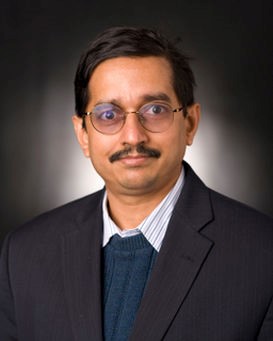
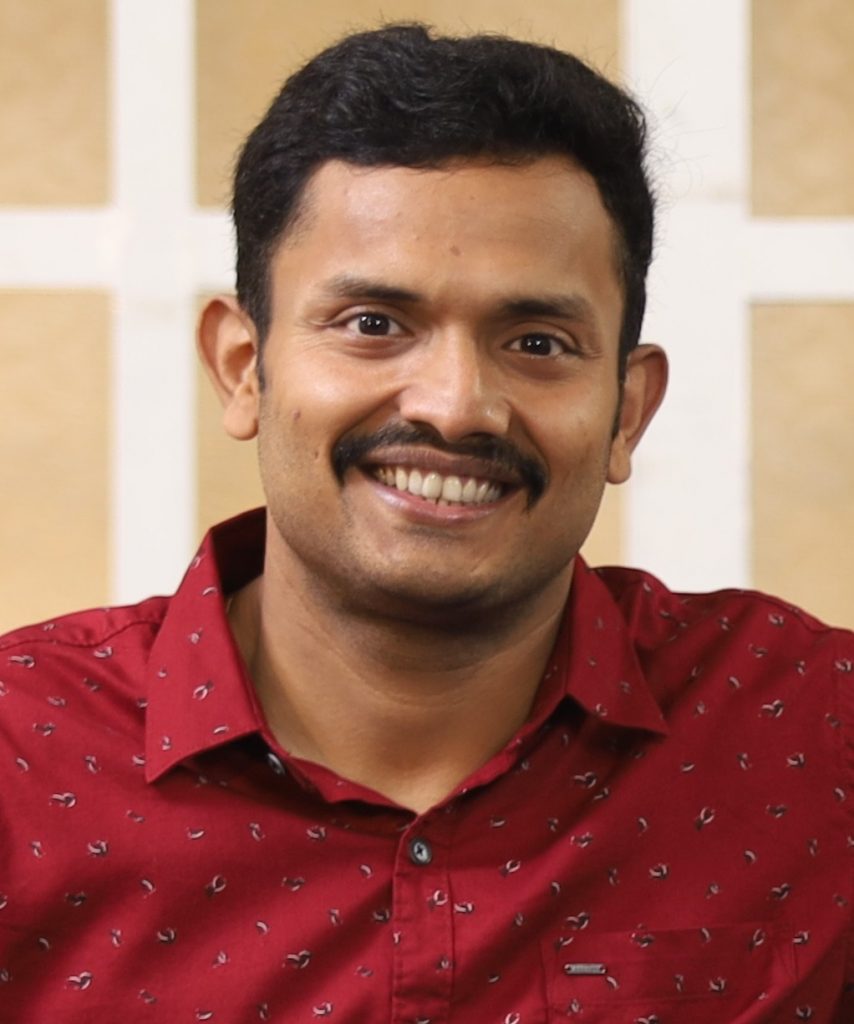
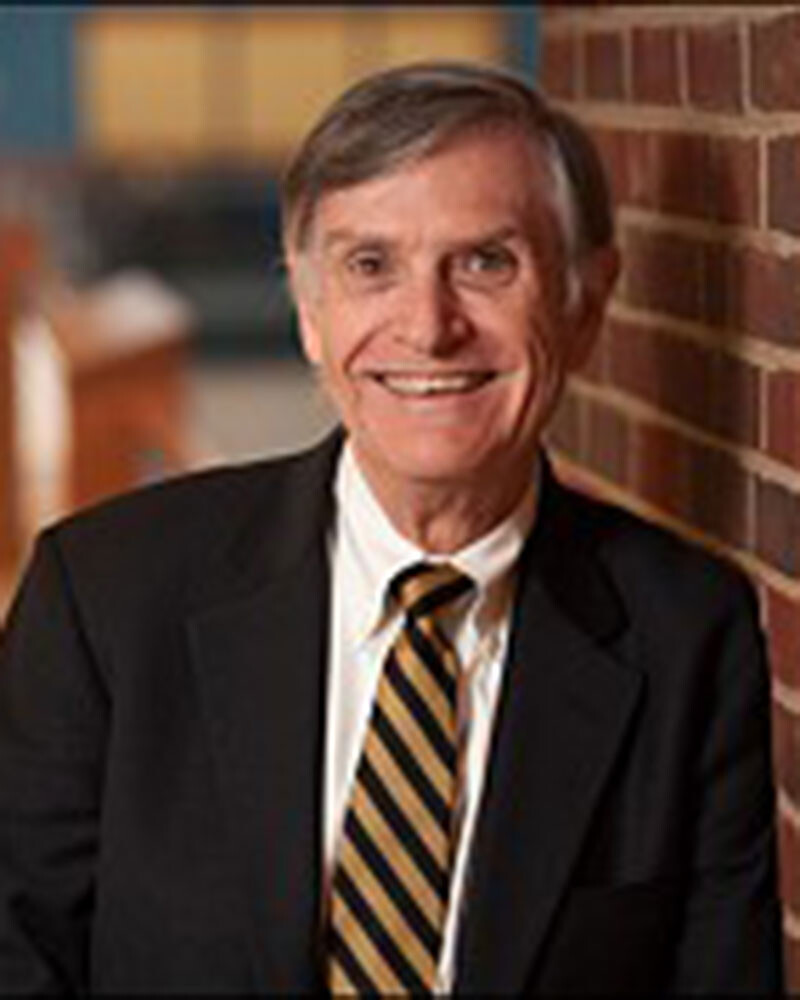
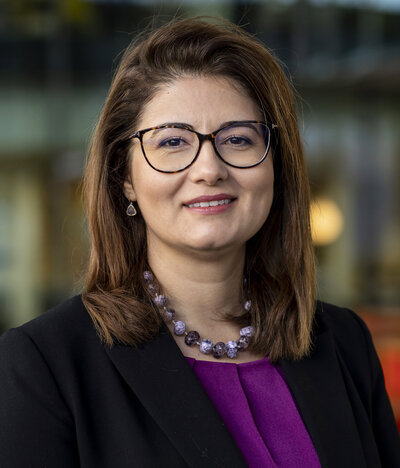
Vijaykrishnan Narayanan is a Professor at the College of Engineering , Pennsylvania State University, with affiliations in both Computer Science & Engineering and Electrical Engineering departments. He co-directs the Microsystems Design Lab and leads the Architecture, Benchmarking, and Circuits Thrust at the DARPA/SRC LEAST Center. Education : Bachelors (1993) from University of Madras; Ph.D. (1998) from University of South Florida His research focuses on Power Aware Computing , Computer Architecture , Embedded Systems , and Emerging Device Integration . Recent work explores steep-slope devices for energy efficiency, nonvolatile processors for ambient energy harvesting, and neuromorphic architectures using hybrid VO₂-MOSFET oscillators. Key article trends span post-CMOS technologies (tunnel FETs, VO₂ devices), low-power design , and bio-inspired signal processing . Scientific Awards : IEEE Fellow, ACM Fellow, IEEE Transactions on VLSI Best Paper, IEEE Micro Best Paper Patents : Dynamically-configurable hardware architecture for audience analytics
Jayakrishnan M. Purushothama is an Assistant Professor in the Microwave and Antenna Engineering Research Group at Heriot-Watt University's School of Engineering and Physical Sciences since March 2023. Previously, he held roles including Post-Doctoral Researcher (2019–2021) and Ph.D. scholar (2016–2019) at Université Grenoble Alpes, and Research Fellow (2014–2016) at Cochin University of Science and Technology. Education: B.Sc. (Electronics) & M.Sc. (Electronics Science), Mahatma Gandhi University & Cochin University of Science and Technology (2012–2014), both with first rank honours. Ph.D. (RF and Microwave Electronics Engineering), Université Grenoble Alpes (2019). Research interests focus on microwave antennas, beamforming, chipless RFID systems, CBRAM-based RF switches, medical biosensors, and electromagnetic compatibility. His work emphasizes reconfigurable systems, energy efficiency, and non-volatile memory applications in passive devices. Awards include the URSI Young Scientist Award (2020), 4th Prize in URSI Student Competition (2018), and UGC NET/JRF qualification (top 0.6% in 2013). Grants include ERC-funded ScattererID project (2019–2021) developing CBRAM-based RF switches. His lab explores innovations in antenna engineering, RF materials, and wearable electronics. Key contributions include reconfigurable antennas, low-cost RFID tags, and metamaterial-based shielding solutions.
Robert A Weller is a Research Professor of Electrical Engineering at Vanderbilt University's School of Engineering, with Emeritus titles in Physics and Materials Science. His research focuses on radiation effects in semiconductors, simulation of radiation interactions, and ion-beam analytical techniques. He developed the MRED simulation tool, revolutionizing single-event effect studies. Weller holds a Ph.D. in Physics from Caltech and a B.S. in Engineering Physics from the University of Tennessee. His career spans over 40 years, including roles at Yale University and collaborations with institutions like Sandia National Laboratories. He has authored over 240 publications and pioneered advancements in radiation-hardened electronics, earning the R&D 100 Award (2001) and multiple conference accolades. His work bridges astrophysics, materials science, and engineering, addressing challenges in space electronics and semiconductor reliability. Education: Ph.D., Physics, Caltech (1978); B.S., Engineering Physics, University of Tennessee (Undergraduate) Key Contributions: Ion-induced electron emission microscope (R&D 100 Award), MRED simulation code Awards: IEEE Senior Member, APS Fellow, Outstanding Conference Paper Awards (2007, 2013) Weller's research extends to gravitational wave detection and space radiation monitoring via missions like RadFxSat-2. He actively contributes to interdisciplinary initiatives in radiation effects and reliability, emphasizing both theoretical and applied advancements.
Prof. Vivek Pachauri holds the Chair of Materials for Electrical Engineering I at RWTH Aachen University, leading research at the Institute of Materials for Electrical Engineering. His work bridges materials science and bioelectronics, focusing on graphene-based transducers, silicon nanowires, and metal-organic frameworks (MOFs) for biosensing applications. University: RWTH Aachen University (Germany) Department: Materials for Electrical Engineering Academic Rank: Professor Email: pachauri@iwe1.rwth-aachen.de His research spans nanoscale sensor development , microfluidic platforms , and bioelectronic systems , with applications in disease detection, environmental monitoring, and cellular analysis. Recent work highlights programmable molecular amplification and multi-parametric point-of-care diagnostics. Key trends in his publications include: Advanced 2D materials (graphene oxide, MoS 2 ) Metal-organic frameworks for fluorescence sensing Microfluidic integration of biosensors Plasmonic and Fano resonance-based detection Low-cost cellular assays using organic electronics
Associate Professor Aron Woldeghiorgis is a Senior Lecturer at the School of Electrical Engineering and Telecommunications, University of New South Wales (UNSW), with a PhD in Electrical Engineering from UNSW. His research focuses on Micro-Electro-Mechanical Systems (MEMS) and Micro-Opto-Electro-Mechanical Systems (MOEMS), including silicon-based fabrication techniques, piezoelectric actuation, CMOS-MEMS integration, and flexible sensors. He has published over 90 scientific works and led innovations in on-chip atomic force microscopy, optical interconnects, and LiDAR technology for autonomous vehicles. B.E. (Hons) in Electrical Engineering, Addis Ababa University (AAU) MEngSc in Electronics and Communication, UNSW PhD in Electrical Engineering, UNSW His research interests span Nano/Micro electro-mechanical systems (N/MEMS) for optical switching, silicon photonics, and carbon nanofibers in flexible sensors. Recent articles highlight advancements in electrothermal actuators, low-thermal-budget silicon films, and piezoelectric micro-lens systems. He has secured grants like the 2021 ARC LIEF ($527K) for maskless lithography and 2018 Innovation Connect Grant ($120K) for MEMS tunable diffraction grating. Awards include the 2010 UNSW Inventor of the Year Award for '3D-Optical Interconnect.' He supervises four PhD students and teaches courses in Integrated Circuit Technology and Microsystems . Collaborations include industry partnerships with Baraja Pty Ltd and Sensornomics, along with academic roles in technical committees for APCOT and Transducers conferences.
Dr. Mohammed Niamat is a Professor in the Department of Electrical Engineering and Computer Science at the University of Toledo, part of the College of Engineering. His research focuses on hardware security, FPGA design, quantum-dot cellular automata (QCA), cryptography, and smart grid infrastructure. He holds a primary appointment at the University of Toledo, with contact details at 2008 Nitschke Hall. Research interests include Built-in-Self Test (BIST), fault-tolerant hardware, secure FPGA supply chains, and role-based access control. His work emphasizes securing advanced metering infrastructure (AMI) and IoT systems through hardware-oriented authentication and PUF (Physical Unclonable Function) techniques. Key publication trends highlight advancements in FPGA security, machine learning countermeasures against PUF attacks, and blockchain-integrated frameworks for hardware trustworthiness. Recent projects address vulnerabilities in ring oscillator PUFs and lightweight cryptographic solutions for IoT. Dr. Niamat has contributed to over 40 publications since 1986, spanning topics from power system stabilizers to nanoscale QCA logic synthesis. His work bridges theoretical computing and practical applications in high-performance systems.
Dr. Shamim Ara Shawkat is an Assistant Professor in the Department of Electrical and Computer Engineering at Florida International University (FIU), part of the College of Engineering and Computing. She holds a Ph.D. in Electrical Engineering from the University of Tennessee Knoxville (2019), an M.Sc. in Telecommunications from Waseda University (2006), and a B.Sc. in Electrical and Electronic Engineering from Bangladesh University of Engineering and Technology (2002). Prior to FIU, she served as a Post-Doctoral Research Associate at the University of Tennessee and as faculty at BUET for four years. Her research focuses on mixed-signal VLSI circuits, neuromorphic computing hardware, bio-sensor design for lab-on-chip systems, optical detectors in quantum computing, and SoC design. Notable contributions include work on perimeter-gated single-photon avalanche diodes (SPADs) for quantum imaging and biomedical applications. Her publications span over 40 peer-reviewed articles in journals like IEEE Transactions and MDPI Applied Sciences. Education: Ph.D., Electrical Engineering, University of Tennessee, 2019 M.Sc., Telecommunications, Waseda University, 2006 B.Sc., Electrical & Electronic Engineering, BUET, 2002 Awards: Chancellor Citation Award (University of Tennessee, 2017–2019) Chancellor Fellowship (2015–2019) Her work bridges cutting-edge semiconductor devices and biomedical applications, with recent advancements in neuromorphic systems and SPAD-based detectors. Collaborative projects include developing energy-efficient LiDAR sensors and AI-driven SPAD modeling techniques.
Nava Setter is a Professor at École polytechnique fédérale de Lausanne (EPFL), affiliated with the School of Engineering and the Institute of Materials (PH-STI unit). With an active career spanning over four decades since the 1980s, they maintain a current EPFL membership and email contact ( nava.setter@epfl.ch ). Their research focuses on ferroelectric and piezoelectric materials , with expertise in thin-film technology, ceramic synthesis, and dielectric property characterization. Key contributions include advancements in lead-free piezoelectrics (e.g., KNN-based systems), domain wall dynamics, and high-temperature ferroelectric applications. Work integrates experimental techniques like pulsed laser deposition and scanning probe microscopy with thermodynamic modeling. Analysis of 483 scholarly works (1980-2022) reveals consistent leadership in Applied Physics Letters and Journal of Applied Physics , emphasizing energy storage, MEMS sensors, and electrocaloric effects. Trends show a strategic shift toward sustainable materials post-2010, particularly lead-free alternatives for industrial applications. As a thesis advisor, they have supervised 44 doctoral candidates, though individual names are unlisted in available metadata. Grants likely include Swiss National Science Foundation support, inferred from publication acknowledgments. Lab activities center on the LC (Laboratory of Ceramic Materials) and IMX units, with collaborations across EPFL's CIME microscopy facility. Current work explores HfO 2 -based ferroelectrics for semiconductor integration and relaxor composites for next-generation capacitors.
Aida Todri-Sanial is a Full Professor in the Integrated Circuits group of the Electrical Engineering department at Eindhoven University of Technology (TU/e). She leads the NanoComputing Research Lab and is affiliated with the Center for Quantum Materials and Technology Eindhoven (CQMT-E), EAISI, and the Integrated Circuits group. Her research focuses on energy-efficient circuits, novel computing paradigms (e.g., 3D integration, neuromorphic computing, quantum computing), and nanotechnology-driven architectures. Education: PhD in Electrical and Computer Engineering, University of California Santa Barbara (2009) Bardeen Fellow at Fermi National Accelerator Laboratory (2009–2010) Scientist/Research Director at CNRS (2011–2021) Visiting Fellow at the University of Cambridge (2016–2017) Research Interests: Dr. Todri-Sanial’s work integrates physics and electronics to design unconventional computing systems. Key areas include: Physical design optimization for energy efficiency Oscillatory neural networks (ONNs) for edge AI Quantum computing hardware and error mitigation 3D integration and monolithic-3D architectures Nanomaterials (e.g., VO₂, MoS₂) for neuromorphic and sensing applications Awards & Grants: ERC Consolidator Grant THERMODON (2023) NWO AiNed Fellowship (2024) NWO Quantum Technology Grant (2024) CNRS Bronze Medal (2016), IBM Quantum Open Science Prize (2021), and IEEE Distinguished Lecturer (2022) Labs & Teams: Principal Investigator of the NanoComputing Research Lab Lead researcher in EAISI (Eindhoven Artificial Intelligence Systems Institute) Collaborator with global institutions (e.g., IBM, STMicroelectronics)
Dr Tomasz Kazmierski is an Associate Professor in the Department of Electronics and Electrical Engineering at the University of Southampton. His research focuses on hardware security, VLSI design, and energy-efficient computing. He leads projects such as the EPSRC-funded 'Next Generation Energy-Harvesting Electronics' and 'Event-based parallel computing (POETS)'. Current Projects: Event-based parallel computing (EPSRC) Next Generation Energy-Harvesting Electronics (EPSRC) Supervision: PhD students Peiyao Sun, Xuan Ji, and Haosen Yu Research Interests: Hardware Security & Trojan Resilience Approximate Computing Ultra-Low Power Circuits Neural Network Accelerators Recent work emphasizes secure design of neural network hardware, optimization of VLSI interconnects, and aging-aware circuit techniques. His publications span conferences like IEEE ISCAS and IEEE AsianHOST, addressing topics from fault-tolerant signal processing to energy-harvesting systems.
Hakan Karaağaç is a Professor in the Department of Physics Engineering at Istanbul Technical University's Faculty of Science and Letters. With a distinguished career spanning over a decade at ITU, he progressed from Lecturer (2013-2014) to Assistant Professor (2014), Associate Professor (2014), and ultimately to his current position as Professor. His academic journey includes post-doctoral research at the University of California, Davis (2011-2012), a doctorate from Middle East Technical University (2005-2010), a master's degree from the same institution (2003-2005), and undergraduate studies at Çukurova University (1998-2003). Dr. Karaağaç's research focuses on advanced materials for energy applications, particularly in the areas of Materials Physics , Nanotechnology , and Semiconductors . His work centers on thin film technology, solar cell development, and nanowire applications, with special emphasis on ZnO nanostructures, Cu 2 ZnSnS 4 materials, and graphene-based transparent conductive layers. His fingerprint analysis reveals strong expertise in Thin Films (100%), Solar Cells (76%), Nanowires (65%), and ZnO (48%), among other related fields. The publication trends in Dr. Karaağaç's work demonstrate a clear progression toward increasingly sophisticated solar energy technologies. His most recent articles (2023-2025) focus on cutting-edge applications of nanomaterials in photovoltaics, including selective synthesis of ZnO nanorods on graphene and exploration of graphene's potential in Cu 2 ZnSnS 4 solar cells. Earlier works established foundational research in nanowire photodetection and characterization of thin film materials, showing a consistent trajectory toward solving practical challenges in renewable energy conversion. Dr. Karaağaç has successfully led multiple significant research projects: Fabrication and Characterization of SnS Thin Films for ZnO Nanorods-Based SnS Solar Cells (2024-2025, BAP) Fabrication of Regularly Structured and Passivated ZnO Nanowire-Based Czts Semi-Conductive Solar Cells on Graphene Layers (2021-2024, TUBITAK) Production of Low-Cost and High-Efficiency Transferable Cu 2 ZnSnS 4 -Based 3rd Generation Solar Cells (2017-2019, TUBITAK) Production of ZnO Nanowire-Based 3rd Generation Inorganic Solar Cells (2015-2021, BAP) With an h-index of 16 and 576 citations according to Scopus, his research has made substantial contributions to the fields of materials science and renewable energy. His work continues to evolve with current projects focusing on next-generation solar cell technologies that address efficiency and cost challenges in photovoltaic systems.
Nikhil Shukla is an Associate Professor at the University of Virginia with a joint appointment in Electrical and Computer Engineering and Materials Science and Engineering. His work bridges emerging hardware technologies with computational paradigms for energy-efficient systems. Education: Ph.D. in Electrical Engineering (University of Notre Dame, 2017), BS in Electronics and Telecommunications (University of Mumbai, 2010) His research focuses on emerging solid-state devices for non-Boolean computing, energy-efficient data storage , and integration of novel materials to redefine computing architectures. Key efforts include co-designing devices, circuits, and system-level solutions for Ising machines and dynamical systems solving combinatorial optimization problems. The 15 most recent articles highlight trends in oscillator-based Ising machines for optimization, ferroelectric and phase-transition materials, and hardware acceleration for NP-hard problems like Max-Cut and MaxSAT. Topics span from device physics (e.g., hafnium oxide endurance) to circuit-level implementations (FPGA accelerators, CMOS-compatible designs). Scientific Awards: IEEE TMSCS Best Paper Award (2017), STARnet LEAST Center Best Publication Awards (2015–2017), J.N. TATA and J.R.D TATA Scholarships (2011) Shukla's work at the Computing Hardware Research Lab emphasizes cross-disciplinary approaches, leveraging synchronized oscillators and correlated materials to push beyond CMOS-era limitations.
Andrew R. Brown is a Professor at Griffith University's Queensland College of Art and Design , with a focus on Creative AI, algorithmic music/art, and interaction design. He leads the Creative Arts Research Institute and co-authored Making Music with Computers: Creative Programming in Python . His research spans computational creativity, digital music tools, and technology's philosophical dimensions. Education : PhD (UQ 2004), Master of Education (U. Melbourne 1993), Graduate Diploma in Computer Science (Deakin 1990), Bachelor of Education (Melbourne CAE 1984). Research Themes : Brown bridges music, computer science, and design through projects like low-cost DIY grooveboxes (OnBoard Quadra), live-coding performance systems, and AI-assisted creative frameworks. His work examines how constraints in technology foster innovation and democratize artistic expression. Recent Publications emphasize accessible electronic instruments, algorithmic pattern generation, and intersections between handmade hardware and digital fabrication. He has secured significant ARC Discovery Project grants and internal university funding for interactive media research. Supervision includes doctoral candidates exploring AI collaboration in art, sonic expression through costume instruments, and open-source design pathways. He also delivered keynotes at ComputationWorld 2019 (Venice) and World Science Festival 2016.
Dr. Longyang Lin is an Assistant Professor at the School of Microelectronics, Southern University of Science and Technology (SUSTech) in Shenzhen, China. He received his Ph.D. from the National University of Singapore in 2018 and has been with SUSTech since May 2021. His research focuses on cutting-edge integrated circuit design with emphasis on ultra-low power systems, hardware security, and cryogenic circuits. Education: Ph.D., National University of Singapore, 2018 M.Sc., Lund University, 2011-2013 B.Sc., Umeå University & B.Eng., Shenzhen University, 2007-2011 Dr. Lin's research spans ultra-low power digital circuit design , energy-efficient AI processor design , compute-in-memory , on-chip sensor fusion , and cryogenic CMOS circuit design . His work addresses critical challenges in battery-less systems, hardware security, and energy-efficient computing. He has developed innovative solutions for self-powered sensor nodes, widely energy-scalable VLSI systems, and secure integrated circuits that operate across extreme temperature ranges. His recent publications demonstrate a strong focus on hardware security, ultra-low power design, and biomedical applications. The research shows a clear progression toward more integrated systems that combine sensing, processing, and communication in highly energy-constrained environments. Many papers address the challenge of maintaining performance while drastically reducing power consumption, with several targeting sub-nanowatt operation. Scientific Awards: Takuo Sugano Award for Outstanding Far-East Paper, ISSCC 2022 ISSCC Demonstration Session Certificate of Recognition, 2022 ISSCC Demonstration Session Certificate of Recognition, 2020 IEEE SSCS Singapore Chapter Award, 2017 & 2018 ISSCC Student Travel Grant Award, 2017 Dr. Lin actively mentors students and researchers, with openings for Research Assistant Professors, Postdoctoral Fellows, Research Assistants, and Graduate Students. His research group benefits from ample funding and regular tape-out opportunities (3-5 per year across different process nodes). He serves as Associate Editor for IEEE Transactions on VLSI Systems and has authored or co-authored over 40 publications, including 10 in IEEE JSSC, 5 in ISSCC, and 12 in VLSI Circuits conference. His laboratory focuses on integrated circuit design for ultra-low power applications, with specialized expertise in hardware security, energy harvesting systems, and cryogenic electronics. The research environment supports tape-outs in advanced CMOS processes, enabling practical validation of theoretical designs.
Dr. Lihong Zhang is a Full Professor in the Department of Electrical and Computer Engineering at Memorial University of Newfoundland. He holds a PhD in Electrical Engineering from Otto-von-Guericke University (Germany) and has held post-doctoral positions at Concordia University, Dalhousie University, and the University of Washington. His research focuses on VLSI design automation, analog/mixed-signal circuits, MEMS, energy harvesting, and biomedical instrumentation. Dr. Zhang leads the CADLAMS lab, supported by NSERC, CFI, and industry partners. Education: B.E. (H.U.S.T. Wuhan), M.Sc. (Eng.) (H.U.S.T. Wuhan), Ph.D. (Otto-von-Guericke University, Germany). Research Interests: VLSI design automation, MEMS design, renewable energy harvesting, microfluidics, wireless sensor networks, and EDA tools. His work addresses challenges in nanometer-scale technologies, including layout-dependent effects and manufacturability. Awards: 2008 CFI Leaders Opportunity Fund, 2016 Memorial University Research Excellence Award. Grants include funding from NSERC, CFI, and industry collaborations. Students and Collaborations: Supervises over 50 graduate students and collaborates with industry partners like Cadence, Synopsys, and IBM. Active in editorial roles for IEEE journals and conference organization. Lab Infrastructure: CADLAMS lab includes advanced computing resources, EDA software, and lab equipment for circuit prototyping and testing.