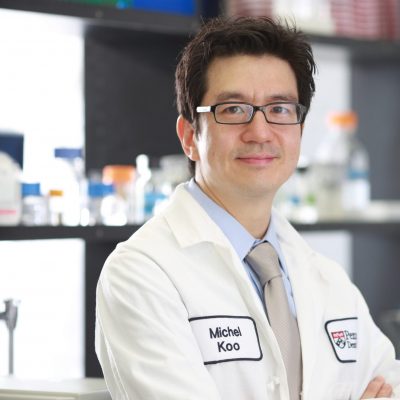
Hyun (Michel) Koo is a Professor at the University of Pennsylvania School of Dental Medicine , with affiliations in the Department of Orthodontics , Division of Community Oral Health , and Division of Pediatric Dentistry . As Co-Founder and Co-Director of the Center for Innovation & Precision Dentistry (CiPD) , he leads interdisciplinary efforts merging bioengineering, nanotechnology, and oral health research. Education : DDS and PhD Research Focus : Biofilms, bacterial-fungal interactions, and nanotechnology for oral disease prevention Leadership : Co-Director of CiPD; key roles in training programs like NIDCR-sponsored R90 and T90/R90 Dr. Koo’s research explores biofilm mechanisms in oral infectious diseases, particularly childhood caries, through engineering methods and microrobotics . His team developed micron-scale robots for automated biofilm eradication and FDA-approved nanoparticles for caries prevention. Collaborations with Penn Engineering, including Dr. Daeyeon Lee and Dr. Kacy Cullen, emphasize translational approaches. The 15 most recent publications highlight his work in nanorobotics , interkingdom biofilms , and precision diagnostics . Articles span 2025–2024 and address topics like adaptive micromotors , biofilm matrix degradation , and single-cell microbial interactions . These emphasize his focus on targeted therapies and biofilm microenvironment engineering . Key Awards : Elected Fellow, American Association for the Advancement of Science (AAAS) IADR Distinguished Scientist Award for innovative dental research Dr. Koo trains next-generation researchers through the CiPD NIDCR T90/R90 Postdoctoral Training Program , mentoring fellows like Smruti Nair (ACE2 Chewing Gum development) and Zhi Ren (K99 awardee). His work intersects with Penn Health-Tech, CT3N , and Penn Institute for Biomedical Informatics , fostering transdisciplinary innovation.
Andrew Currie is a Professor and Associate Dean (Research & Innovation) at Murdoch University's School of Medical, Molecular and Forensic Sciences, within the College of Environmental and Life Sciences. He leads the Sepsis Diagnostics Research Group at the Centre for Molecular Medicine and Innovative Therapeutics and co-heads the Neonatal Infection and Immunity Team with Clinical Professor Tobias Strunk at the Wesfarmers Centre of Vaccine & Infectious Diseases at Telethon Kids Institute. His research focuses on immunology and infectious diseases in pediatric populations, particularly sepsis diagnostics and neonatal immunity. Education: PhD (Immunology, University of Western Australia, 2001); BSc (Biotechnology with Honors, Murdoch University, 1997). Research Interests: Sepsis diagnostics, innate immunity mechanisms in neonates, medical biotechnology for diagnostics (e.g., biosensors), and translational research in pediatric infections. Collaborates internationally with institutions in Canada, Denmark, the UK, US, and China. Aims to reduce sepsis burden in vulnerable populations through advanced molecular methods and interdisciplinary partnerships. Key Affiliations: Lead of Sepsis Diagnostics Research Group (Murdoch University), Senior Lecturer in Immunology, Honorary Associate at Kids Research Institute Australia. Past roles include leadership in the Centre for Molecular Medicine and Innovative Therapeutics. Scientific Contributions: Over 100 peer-reviewed articles focusing on sepsis biomarkers, neonatal immunity, tick-borne diseases, and clinical trials for interventions like vitamin C and probiotics in critical illness. Active in developing precision medicine approaches for neonatal sepsis. Grants & Funding: Co-leads major projects on sepsis diagnostics and neonatal infection, supported by national and international grants. Collaborates on multi-institutional initiatives. Labs/Teams: Sepsis Diagnostics Research Group (Murdoch) and Neonatal Infection and Immunity Team (Telethon Kids Institute). Works closely with the Personalised Medicine Centre and Health Futures Institute.
Dr. F. Jerry Reen serves as a Senior Lecturer and Principal Investigator in the School of Microbiology at University College Cork (UCC), Ireland. With over two decades of academic experience since joining UCC's Department of Microbiology in 2002, he has established himself as a leading researcher in microbial communication systems and host-pathogen interactions. His research group operates within the BIOMERIT Research Centre, and he maintains active collaborations across multiple institutions in Ireland and internationally. Dr. Reen earned his BSc in Biochemistry at the National University of Ireland Galway (NUIG), followed by a PhD in the Molecular GlycoBiotechnology Group at NUIG, supported by an Enterprise Ireland Scholarship and an NUI Teaching Fellowship. His academic journey includes a postdoctoral position in the lab of Dr. E. Fidelma Boyd at UCC, during which he was a visiting scientist at the Sidney Kimmel Cancer Center in San Diego and received an IRCSET Postdoctoral Fellowship for bacteriophage-host interactions research. Dr. Reen's research focuses on deciphering communication systems underpinning polymicrobial-host interactions for human and ecosystem health, with particular emphasis on small molecule signaling in microbial communities. His work bridges fundamental microbiology with translational applications, targeting antimicrobial resistance through chemico-biological therapeutics and developing sustainable pharmaceutical production methods using marine biocatalysts. His research has evolved from early work on Vibrio species to current investigations of Pseudomonas aeruginosa signaling systems, bile acid interactions in cystic fibrosis, and marine enzyme applications in green chemistry. His laboratory's publication record demonstrates consistent productivity with over 80 peer-reviewed papers (h-index 26), spanning from foundational studies on LysR-type transcriptional regulators to recent innovations in virtual reality educational tools. The research trajectory reveals an expanding scope from molecular microbiology to systems-level understanding of microbial communities, with increasing emphasis on sustainable solutions for the pharmaceutical industry. Bronze LEAF Award (2022) - Green Campus University College Cork The Disciplinary Excellence in Learning, Teaching and Assessment (DELTA) Award (2021) - National Forum for the Enhancement of Teaching and Learning Purdy-Lucey UCC Life Sciences Invention of the Year 2015 (2016) Best Poster Exhibition (2012) - Royal Irish Academy National Researcher of the Year, Silver Medal (2011) - Roche BioSciences Researcher of the Year, Gold Medal (2011) - Roche Dr. Reen has successfully secured significant research funding from multiple sources including Science Foundation Ireland (SFI), Health Research Board (HRB), Enterprise Ireland, and Irish Research Council. His current projects include 'BioBloc' enhanced Contact LEns solutioNS (BBCLENS), HEACOVID19, SSPC3 Pharm5, and investigations into novel macrolides for cystic fibrosis management. He has mentored numerous graduate students, including Stephanie Flynn (PhD, 2019), Noelle McCarthy (PhD, 2009), and David Woods (MSc, 2008), with two doctoral students currently completing their research. His educational innovations, particularly student-partnered virtual reality simulations, have transformed how challenging molecular concepts are taught. Dr. Reen leads an interdisciplinary research group that combines microbiology, chemistry, bioinformatics, and education technology. His team collaborates with internal UCC colleagues including Dr. Gerard McGlacken and Prof. Anita Maguire, as well as external partners from institutions like the University of Warwick, Medical University of Graz, and University de Porto. The laboratory maintains strong connections with clinical researchers studying cystic fibrosis and has developed novel approaches for detecting bacterial signaling molecules using boron-doped diamond electrodes.
David Goldblatt is a Professor of Vaccinology and Immunology at the UCL Great Ormond Street Institute of Child Health (UCL ICH) and Consultant Paediatric Immunologist at Great Ormond Street Hospital for Children NHS Trust. He serves as Deputy Director of NHS Engagement at UCLICH, Head of the Immunobiology Section, and Director of the WHO Reference Laboratory for Pneumococcal Serology. His academic journey includes roles as Reader (2000–2003), Senior Lecturer (1995–2000), and Clinical Lecturer (1991–1995) at UCL. Research focuses on pneumococcal immunity, vaccine development, and pediatric immunology. Notable contributions include establishing immune memory paradigms, standardizing pneumococcal serology assays, and evaluating vaccine efficacy. He led the £37 million NIHR GOSH/UCL Biomedical Research Centre (2007–2017) and advised WHO on conjugate vaccines. Key Honors: NIHR Senior Investigator (2012–2020), WHO Advisor Grants: £37M Biomedical Research Centre, multiple NIH-funded studies Labs/Teams: Immunobiology Section, WHO Reference Lab, Thailand Birth Cohort Study
Christian Jenul is Lecturer in Molecular Microbiology at the University of Leicester's Department of Genetics and Genome Biology. He holds an MSc in Molecular Microbiology from the University of Graz and a PhD from the University of Zurich, where he studied natural product biosynthesis in Burkholderia cenocepacia. Education: PhD, University of Zurich MSc Molecular Microbiology, University of Graz BSc Molecular Biology, University of Graz His research examines enzyme-driven modification of natural products during polymicrobial infections, combining mass spectrometry, bacterial genetics, and infection models to understand microbial competition. Recent work focuses on staphylococcal enzymes that inactivate Pseudomonas siderophores, revealing mechanisms influencing pathogen fitness in co-infections. His publications demonstrate consistent application of chemical biology approaches to bacterial signaling and antimicrobial strategies. Scientific Awards: Postdoc Mobility Fellowship, Swiss National Science Foundation He leads an independent research group investigating bacterial communication systems and develops genetic tools to study metabolic interactions in infection contexts.
Professor Jeremy Bagg is Professor of Clinical Microbiology and Head of Glasgow Dental School at the University of Glasgow since January 2005. He also serves as Deputy Head of the School of Medicine, Dentistry & Nursing. With a distinguished career spanning over four decades, Professor Bagg has made significant contributions to oral microbiology, infection control, and public health dentistry. Professor Bagg qualified BDS (Hons) from the University of Edinburgh in 1979 and was awarded a PhD in 1982 for research on bacterial adhesion mechanisms. He served as Lecturer in Oral Medicine & Oral Pathology at Cardiff Dental School from 1983-1991, gaining the FDS diploma and MRCPath in oral microbiology in 1987. Joining the University of Glasgow in 1991 as Lecturer in Oral Microbiology, he was awarded a Personal Professorship in Clinical Microbiology in 1999. His research focuses on the role of oral micro-organisms in systemic disease, oral infections in medically compromised patients, infection control in dental surgery, and public health microbiology. As a member of the Infection & Immunity Research Group, Professor Bagg has co-authored two textbooks and published over 160 papers. His work spans dental microbiology, infection control practices, oral-systemic health connections, and global oral health policy development, with particular expertise in denture microbiology, blood-borne virus management, and the oral health of medically compromised patients. Professor Bagg holds significant leadership positions including Chairman of the National Dental Advisory Committee at the Scottish Government Health Department and Chair of the Steering Group of the Scottish Dental Clinical Effectiveness Programme. He is also a member of the UK Advisory Panel for Health Care Workers Infected with Blood-borne Viruses. In 2004, he was awarded the Fellowship of the Faculty of Public Health for his contribution to public health microbiology. His recent work demonstrates continued excellence across multiple domains including dental infection control, global oral health policy, dental education innovation, and the microbiology of oral diseases. Professor Bagg's research has particular relevance to denture care, blood-borne virus management in dental settings, and the connection between oral health and systemic conditions. Professor Bagg has contributed to major initiatives including the Scottish Oral Health Research Strategy and serves as one of two Scottish representatives on the Oral & Dental Specialty Group of the UK Clinical Research Network. His work has influenced dental practice guidelines and public health policy in Scotland and beyond.
Dr. Ines Krohn is a Research Group Leader at the University of Hamburg's Faculty of Mathematics, Informatics and Natural Sciences, specifically within the Department of Microbiology & Biotechnology. She leads the "Algae-Bacteria Interactions" research group, focusing on marine and environmental microbiology with biotechnological applications. University of Hamburg (2010-2013): Diploma in Biology University of Hamburg (2013): Dr. rer. nat. in Biology Her research spans two primary areas: 1) Utilizing aquatic and marine resources for biotechnology, particularly through metagenomic analysis of microalgal-bacterial communities to discover novel biomolecules and 2) investigating molecular mechanisms in microalgae-bacteria interactions, including biofilm formation and cell-cell communication. Current projects include MarBioTech (marine biodiversity exploration), AimM (biofilm monitoring), AquaHealth (aquaculture disease prevention), and SuReMetS (marine nutraceuticals for metabolic syndrome). Her publication record demonstrates expertise in metagenomics , biofilm inhibition , microalgal biotechnology , marine enzyme discovery , and antimicrobial applications . Notable collaborations include work with Prof. Wolfgang R. Streit and teams at Hagenbeck Zoo. She actively supervises bachelor's and master's candidates and offers thesis opportunities in metagenomics and biofilm research. Her laboratory explores both fundamental microbial interactions and applied biotechnologies , including biofilm disruption strategies for medical and industrial applications. Specific techniques include RNAseq, functional screening, and enzyme characterization from marine sources.
José Lopez-Ribot is a Professor and Associate Dean for Research at the Department of Molecular Microbiology and Immunology, College of Sciences, The University of Texas at San Antonio (UTSA). He also holds the Margaret Batts Tobin Distinguished Chair in Biotechnology, reflecting his leadership and scholarly excellence in biotechnology and medical mycology. His research focuses on fungal pathogenesis , particularly of Candida albicans , with a multidisciplinary approach integrating microbiology, immunology, and biotechnology. Key areas include antifungal drug development, microbial biofilms, immunopathogenesis, high-throughput screening, and diagnostic innovation. His lab investigates virulence factors such as filamentation and biofilm formation, aiming to develop novel therapies that target pathogenic mechanisms rather than just inhibiting growth. The recent publications highlight a strong trend toward understanding biofilm dynamics, overcoming drug resistance, and developing novel platforms like microbial chips for nanoscale culture. These works are frequently published in high-impact journals and often take the form of reviews, indicating his role as a thought leader in the field. Margaret Batts Tobin Distinguished Chair in Biotechnology Dr. Lopez-Ribot mentors a diverse team of researchers, including doctoral students and postdoctoral fellows. His lab is actively involved in grant-funded research, though specific grants are not detailed in the provided text. He has advised students such as Gina Wall and Olabayo Harry Ajetunmobi, who contribute to publications on biofilm dispersal and antifungal therapy. The Lopez-Ribot Lab operates at UTSA and focuses on both fundamental and translational research in fungal infections. It includes research scientists, postdoctoral fellows, and students, working on projects ranging from genomics to diagnostic technologies. The lab's work has significant implications for hospital-acquired infections and the development of next-generation antifungals.
Carolyn Ibberson serves as an Assistant Professor of Microbiology at the University of Oklahoma, where she leads the Ibberson Lab focused on bacterial physiology in chronic human infections. Her research program addresses fundamental questions about how pathogens like Staphylococcus aureus establish and persist in chronic infections, with particular emphasis on polymicrobial interactions. B.S. in Biology from University of Wisconsin-Madison (2010) Ph.D. in Microbiology from University of Iowa (2015) Postdoctoral training at University of Texas at Austin (2015-2017) and Georgia Institute of Technology (2017-2021) Dr. Ibberson's research focuses on understanding bacterial physiology during human infection, particularly examining how co-infecting microbes influence S. aureus behavior and disease severity. Her work bridges classic microbiology with advanced genomic and computational approaches to address why chronic polymicrobial infections are notoriously difficult to treat, representing a significant healthcare burden costing over $20 billion annually in the United States. Her laboratory employs next-generation sequencing, microscopy, computational pipelines, and deep learning to investigate the molecular mechanisms of bacterial persistence and microbe-microbe interactions in chronic infection settings. Analysis of Dr. Ibberson's publications reveals a consistent focus on bacterial pathogenesis, particularly Staphylococcus aureus and Pseudomonas aeruginosa in human infections. Her work spans transcriptomics, biofilm formation, virulence factor regulation, and polymicrobial interactions, demonstrating an interdisciplinary approach that combines molecular microbiology with ecological and evolutionary perspectives. Her research trajectory shows increasing sophistication in methodologies, incorporating advanced genomic techniques and computational analysis to address complex questions in infection biology. Dr. Ibberson maintains an active research program through the Ibberson Lab at the University of Oklahoma, where she mentors students and collaborators in cutting-edge microbiological research. While specific grant information isn't detailed in the available materials, her publication record suggests successful funding for research on bacterial physiology in chronic infections, polymicrobial communities, and pathogen adaptation mechanisms. Her work has significant implications for developing new therapeutic approaches for difficult-to-treat chronic infections. The Ibberson Lab represents a dynamic research environment focused on understanding the fundamental biology of bacterial pathogens in clinically relevant contexts. The lab's work on spatial structure in microbial communities, host-pathogen interactions, and gene regulation during infection provides critical insights that could lead to novel antimicrobial strategies targeting the complex ecology of chronic infections.
Laura Knoll is a Professor in the Department of Medical Microbiology and Immunology at the University of Wisconsin–Madison, School of Medicine and Public Health. Her research focuses on the molecular mechanisms of protozoan parasite pathogenesis, particularly Toxoplasma gondii , Cryptosporidium parvum , and Entamoeba histolytica . She leads a dynamic research laboratory that employs cutting-edge technologies including next-generation sequencing, mass spectrometry, multi-omics, and organoid models. B.A. in Chemistry and Biology, Saint Olaf College (1989) Ph.D., Washington University School of Medicine (1994) Postdoctoral Research, Stanford University Dr. Knoll's research spans several key areas: host-pathogen interactions, chronic infection mechanisms, microbial metabolism, and the role of host immune genes such as IFN-γ and ZBP1 in infection outcomes. Her lab has pioneered the use of organoids to study parasite development and has developed novel animal models for Entamoeba histolytica infection. Her work integrates molecular, biochemical, and immunological approaches to dissect how parasite and host genes influence infection dynamics. The recent publications from her lab reflect a strong trend in understanding metabolic manipulation by parasites, host lipid signaling, and the development of advanced in vitro and in vivo models. Her work increasingly leverages multi-omics to uncover regulatory networks in both host and pathogen during acute and chronic stages of infection. Dr. Knoll has received numerous scientific awards recognizing her contributions to parasitology and infectious disease research: 2024: UW-Madison Kellett Mid-Career Award 2022: William Trager Award for Basic Parasitology (ACMCIP) 2012: WARF Romnes Faculty Fellow 2009: Hartwell Foundation Biomedical Research Award 2008: American Heart Association Established Investigator Award 2007: American Cancer Society Research Scholar Award 2003: Shaw Scientist Award 2000: Burroughs Wellcome Career Award She actively mentors graduate students through UW-Madison’s Microbiology, Cellular & Molecular Pathology, and Cellular & Molecular Biology programs. Her lab welcomes postdoctoral scholars and undergraduates, fostering a collaborative and inclusive research environment. Dr. Knoll’s work continues to advance the understanding of eukaryotic parasite biology and host defense mechanisms, with implications for therapeutics and vaccine development. Her laboratory is based in the Microbial Sciences Building, where she leads a team investigating the complex life cycles and pathogenic strategies of apicomplexan and amoebic parasites.
Wei Chao, MD, PhD , is a Professor at the University of Maryland School of Medicine with primary appointments in Anesthesiology and secondary appointments in Physiology . He serves as Vice Chair for Translational Research and Co-Director of the STAR Center . MD from Hunan Medical College, China PhD in Biochemistry, University of Texas Postdoc at University of California, San Diego Dr. Chao's research spans sepsis , trauma , and ischemic myocardial injury , focusing on innate immunity , microRNA , and bioinformatics . His work integrates mouse genetics , physiology , and machine learning to identify biomarkers and therapeutic targets. Recent publications highlight his team's discoveries in extracellular RNA sensing, TLR7 signaling , and coagulopathy in critical illnesses. His 15 most recent articles address topics like sepsis-induced organ injury, miRNA-based diagnostics, and inflammation mechanisms. Dr. Chao has received prestigious awards including the R35 Maximizing Investigators’ Research Award (NIGMS, 2021), Frontiers in Anesthesia Research Award (IARS, 2018-2021), and Colin Mackenzie & Cristina Imle Mentoring Prize (2021). He has been continuously funded by NIH for over 20 years, DoD since 2017, and holds grants from the Air Force and National Science Foundation .
Dean R Madden, PhD serves as Professor of Biochemistry and Cell Biology at Dartmouth College's Geisel School of Medicine. He holds significant leadership positions including Vice Provost for Research, Director of the Dartmouth Institute for Biomolecular Targeting, and Director of the Dartmouth Cystic Fibrosis Research Center (DartCF). His academic journey began with an A.B. in Physics from Harvard (1985) followed by a Ph.D. in Biophysics from Harvard (1992). Dr. Madden's research focuses on understanding ion channels and transporters at the molecular level, particularly AMPA-receptor subfamily of glutamate receptors and the cystic fibrosis transmembrane conductance regulator (CFTR). His work bridges structural biology, biophysics, and translational medicine with applications in neurological disorders and cystic fibrosis treatment. He employs diverse methodologies including X-ray crystallography, NMR, fluorescence spectroscopy, and computational modeling. His publication record demonstrates consistent contributions to understanding protein-ligand interactions, particularly in the context of PDZ domains and CFTR-related mechanisms. Recent work shows increasing focus on bacterial virulence factors in cystic fibrosis, particularly Pseudomonas aeruginosa and its Cif protein. His research integrates structural insights with physiological implications, creating a strong foundation for therapeutic development. Dr. Madden actively mentors early-career faculty through the COBRE Institute for Biomolecular Targeting and leads GrantGPS, a college-wide initiative supporting faculty scholarship. He has served as Chair of the MCB Graduate Program and contributed to Dartmouth's Strategic Planning for Graduate Education and Geisel Curriculum Reform initiatives. His laboratory maintains robust NIH funding from NIDDK, NIGMS, and NHLBI, with past support from NIAID and the Cystic Fibrosis Foundation. As course director for BIOC101 (Molecular Information in Biological Systems), he continues to contribute to medical education while directing two major program-project grants.
Dr. Katrin Schilcher is a Lecturer in Microbial Molecular Biology at the University of Leicester's Department of Genetics and Genome Biology. Her research addresses the growing challenge of antimicrobial resistance by investigating bacterial interactions and signaling mechanisms in polymicrobial infections. Research focuses on Staphylococcus aureus lipoproteins and derived linear peptides, examining their roles in horizontal gene transfer, bacterial communication, and virulence regulation. Her lab studies how bacterial networks control lipoprotein expression and how interspecies interactions influence antibiotic resistance transmission. Current investigations aim to decipher gene expression changes during polymicrobial infections and identify determinants of bacterial competition/coexistence. This work combines molecular microbiology, transcriptomics, and infection models to understand resistance dynamics at molecular levels.
Allon Edward Moses serves as a Visiting Professor in the Department of Microbiology and Immunology at the School of Medicine, European University Cyprus, while maintaining active clinical leadership as Senior Physician at Hadassah-Hebrew University Medical Center in Jerusalem since 1991, including tenure as Head of Department (2005-2020). His academic credentials include: MD, Ben Gurion University of the Negev, Israel (1981) Residency in Medicine, Hadassah Hebrew University Medical Center (1988) Infectious Diseases Fellowship, Harvard Medical School (1991) Dr. Moses' research centers on infectious disease pathogenesis with emphasis on microbiome dynamics, antibiotic resistance mechanisms, and streptococcal infections. His work bridges clinical practice and translational research, addressing critical challenges in infection control and novel therapeutic interventions for resistant pathogens through hospital-based epidemiological studies. His publication trajectory (2013-2022) reveals evolving expertise from bacterial genetics (sil characterization, 2013) to contemporary pandemic responses (COVID-19 vaccine efficacy, 2022), with consistent focus on microbiome applications (vaginal transplantation, 2019) and alternative antimicrobial strategies (bacteriophage therapy, 2019). These studies demonstrate methodological diversity across cohort analyses, cross-sectional behavioral research, and therapeutic case reports. No major scientific awards are documented in the provided information. Research funding includes the human microbiome of the external ear canal project (2021-2022), and the politically impacted antibiotic stewardship initiative in Palestinian hospitals (2023-2025) funded by USAID's Middle East Regional Cooperation Program (MERC), which was approved but withheld following US policy changes regarding Palestinian Authority funding. He also contributed to the government-sponsored project "Reduction of Hospital Acquired Infections in Israeli and Palestinian Hospitals". Dr. Moses maintains extensive clinical-research collaborations across Israeli medical centers, particularly Hadassah-Hebrew University teams, with documented partnerships spanning infectious disease epidemiology, microbiome therapeutics, and cross-border public health initiatives despite geopolitical constraints.
Daniela Machado is a researcher at the Centre for Biotechnology and Fine Chemistry (CBQF) within the Escola Superior de Biotecnologia (ESB-UCP) at Universidade Católica Portuguesa. Holding a PhD in Chemical and Biological Engineering from Universidade do Minho (2017) funded by an FCT grant, she specializes in probiotics, intestinal microbiota, and encapsulation technologies. Her work bridges microbiology with food science, focusing on delivery systems for probiotics in food matrices, biological validation, and antimicrobial activity research. Education : PhD in Chemical and Biological Engineering (Universidade do Minho, 2017) Research Trends : Recent publications highlight innovations in probiotic encapsulation, functional food development, and bacterial vaginosis treatment. Her work with Akkermansia muciniphila and Faecalibacterium species demonstrates expertise in gut microbiota modulation. Scientific Awards : Individual Call to Scientific Employment Stimulus (2017) CBQF Annual Incentives (2021–2025) Advising & Leadership : She supervises biotechnology internships and co-organizes scientific outreach events like the International Microorganism Day and Open Week at ESB. Her editorial role at MDPI underscores her academic engagement.