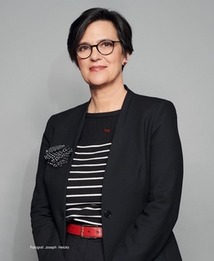
Prof. Paula-Irene Villa Braslavsky holds the Chair of Sociology/Gender Studies at Ludwig Maximilian University of Munich (LMU), Faculty of Social Sciences. She is on sabbatical during Summer Semester 2025 but continues research supervision and colloquia. Her research focuses on intersections of racism, sexism, and neoliberalism, with notable works like The Future of Difference and Top Girls . She co-edits the journal Gender Salon and leads projects on gender studies, queer theory, and postfeminism. Her academic contributions span monographs, anthologies, and journal articles addressing global social movements, anti-genderism, and body politics. Key themes include critical analysis of contemporary gender regimes, decolonial theory, and the sociocultural implications of neoliberalism. Her work frequently bridges theory and activism, emphasizing intersectional approaches to systemic oppression. Publications include edited volumes on #MeToo, fat studies, and the sociological analysis of bodies, reflecting her commitment to interdisciplinary research. She maintains an active academic presence through her website LMU Gender Studies and Academia.edu .
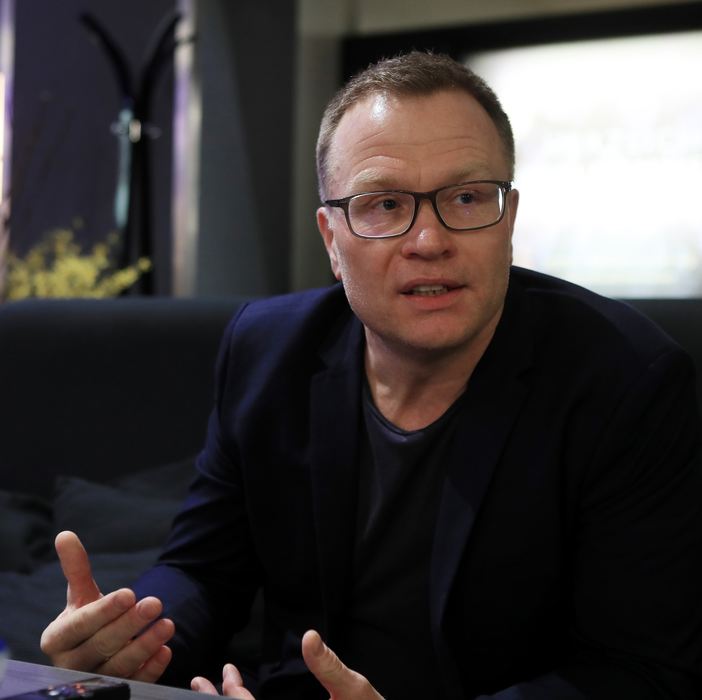
Professor Martin Doevenspeck is a distinguished scholar of Political Geography at the University of Bayreuth, where he holds a professorship in the Department of Political Geography within the Faculty of Biology, Chemistry & Earth Sciences. Since 2019, he has served as a Principal Investigator in the Cluster of Excellence "Africa Multiple" and as Spokesperson of the Research Section Mobilities. Previously, he was Managing Director of the Institute of Geography at the University of Bayreuth (2018-2022) and a member of the Executive Board of the Institute of African Studies Bayreuth. Professor Doevenspeck earned his "Diplom" in Geography from the University of Bonn and completed his PhD thesis entitled "Migration in rural Benin – Studies in social geography at an African border" at the University of Bayreuth in 2004. His academic journey includes positions as a Teaching and Research Assistant at the University of Bayreuth (2005-2011), Post-doc at the University of Bonn (2004), and various research and teaching roles focused on African geography and development. At the intersection of migration studies and political geography, Professor Doevenspeck's research focuses on (forced) im/mobilities, conflict, and border studies, with particular emphasis on African contexts. His current work centers on the project "Oil movements: the production and government of petro-(im)mobilities in East Africa" within the Bayreuth Cluster of Excellence "Africa Multiple," where he serves as Spokesperson of the Research Section Mobilities. His research spans West Africa (particularly Benin), Central Africa (Democratic Republic of Congo, Rwanda), and East Africa, examining how borders, conflicts, and resource extraction shape human mobility and territorial control. Analysis of Professor Doevenspeck's recent publications reveals a consistent focus on migration, borders, and conflict in African contexts, with increasing attention to environmental factors and resource extraction. His work demonstrates interdisciplinary approaches combining political geography, migration studies, and African studies. Recent publications particularly emphasize petro-mobilities, terrorism impacts on education, and migration control in West African borderlands, reflecting evolving research interests in the interplay between infrastructure development, security concerns, and human mobility. Professor Doevenspeck has supervised numerous doctoral and master's students, including Jaana M. Janßen, Fabian Liedl, Clemens Romankiewicz, Morgane Anziani-Vente, Muhire Blaise Mwanga, and Daniela Boß. His academic leadership extends to serving as Vice Dean of the Bayreuth International Graduate School of African Studies (BIGSAS) from 2012-2021, where he played a significant role in shaping graduate education in African studies. As a Principal Investigator in the Cluster of Excellence "Africa Multiple," Professor Doevenspeck leads research initiatives examining diverse manifestations of "Africa" across the continent and diaspora. His work involves collaboration with researchers from multiple disciplines and institutions, focusing particularly on mobilities as a key research section within the cluster. This collaborative research environment has produced significant insights into migration patterns, border dynamics, and conflict resolution in African contexts.
Prof. Dr. Julia Bee holds a Professorship for Gender Media Studies with special emphasis on diversity at the Institute for Media Studies (IfM) at Ruhr-Universität Bochum. Her work focuses on critical intersections of gender, media, and social justice. Her research interests span Gender Media Studies, Diversity, Media Climate Justice, Digital Violence, Digital Misogyny, and Antifeminism. She examines how digital spaces perpetuate gender-based violence and how media can be leveraged for climate justice initiatives. Her recent publications include the experimental learning book Learning Experiments, Exchanging Techniques No. 2 (2025), which explores innovative pedagogical approaches in media studies. Her work shows a clear trend toward examining the connections between digital violence, climate justice, and gender politics. Prof. Bee is actively involved in numerous academic initiatives including the relaunch of the online journal Culture&Gender and organizing the Spring School Media Climate Justice. She frequently collaborates with colleagues like Prof. Dr. Henriette Gunkel on interdisciplinary projects. She organizes and participates in significant academic events, including the lecture series 'Conflicting Masculinities' and 'Digital Violence and Antifeminism,' which examine contemporary challenges in digital spaces from gender and intersectional perspectives. Her work on 'Politics and Ethics of Activist Research' demonstrates her commitment to ethical collaborations between academics and activists.
Prof. Dr. Ulrike Freitag is Director of the Leibniz-Zentrum Moderner Orient (Berlin) and holds a special professorship in Islamic Studies at Freie Universität Berlin. Her research focuses on social and cultural history of the Arab world, urban history, and transregional connections in the Indian Ocean. She has directed major projects like 'An Oasis Facing Globalisation: Hegra’s History since the 19th Century' and authored seminal works such as A History of Jeddah . Education: Habilitation (Islamic Studies, 2002, Bonn), PhD (1991, Freiburg), MA (1987, Freiburg). Key research stays include Damascus (1984-85, 1987-90), Yemen, and Southeast Asia. Research Interests: Urban development, migration networks, Ottoman heritage, Saudi state formation, and transregional Islamic dynamics. Current projects explore Jeddah’s urban history and transregional entanglements in the Arabian Peninsula. Engagement: Editorial roles for Journal of Arabian Studies , ZMO Studien , and advisory boards for institutions like the Leibniz Institute of European History. Awarded fellowships from Käthe-Hamburger Kolleg and LUCIS. Supervised over 20 doctoral theses on topics ranging from Ottoman governance to Gulf intellectual history. Publications: Over 150 articles, 8 monographs, and 6 edited volumes. Her work blends archival research with transregional perspectives, emphasizing marginalized voices and material culture. Recent focus on pandemic impacts and Saudi-Iranian geopolitical dynamics.
Gerhard Hirschfeld is an Honorary Professor at the Department of History, University of Stuttgart, and has served as Director of the Bibliothek für Zeitgeschichte since 1989. His research focuses on Social and Cultural History of World War I , Comparative Occupation History of World War II , 20th Century Netherlands History , and Academic Emigration post-1933 . He has been a Fellow of the Netherlands Institute of Advanced Studies in the Humanities and Social Sciences (1996/1997, 2006/2007) Fellow of the German Historical Institute London and held leadership roles including Chair of the German Committee for the History of WWII (1991–2000) and President of the International Committee for the History of WWII (2000–2010). His publications span monographs, edited volumes, and essays on occupation policies, collaboration, and exile studies. Recent works emphasize the media representation of WWI , continuity of nationalist rhetoric , and ethical dimensions of historical taboos . He contributes to journals like Zeithistorische Forschungen and Tijdschrift voor Geschiedenis . Scientific awards include Fellowships at NIAS and DHIL Editorial leadership in academic series like Zeit der Weltkriege and Schriften der Bibliothek für Zeitgeschichte and advocacy for interdisciplinary war studies.
Max Planck Institute for Innovation and CompetitionGermany
Prof. Dr. Dirk Heckmann is a prominent academic and legal expert currently serving as a member of the Bavarian Institute for Digital Transformation (bidt) Board of Directors and holding the Chair of Digital Law and Security at the Technical University of Munich . As a constitutional lawyer and judge at the Bavarian Constitutional Court, he bridges legal expertise with digital policy through advisory roles in the Federal Government's Data Ethics Commission and the Chancellor's National IT Summit. In 2020, he established the TUM Center for Digital Public Services to advance legally sound, common-good-oriented digitalization. His research focuses on digital education , digital administration , and healthcare digitalization , with particular emphasis on legal certainty for digital systems . Recent projects like ReDiKo (Regulating Digital Communication Platforms) and AFFAIRE (AI Regulation for Examinations) highlight his commitment to evidence-based digital governance. He has authored the juris Practical Commentary on Internet Law since 2021, shaping Germany's digital legal discourse. Professor Heckmann actively engages in public debates about digital sovereignty and platform regulation , most notably at the 2025 Nuremberg Digital Festival where he will discuss open-source foundations for digital sovereignty. His work spans constitutional law , data ethics , and AI policy , with recent publications analyzing social media harassment, AI's impact on education, and digital violence legislation.
Prof. Dr. Ulrike Freitag is a distinguished scholar in Islamic Studies and social history of the Arab world, holding a Professorship at Freie Universität Berlin and serving as Director of the Leibniz-Zentrum Moderner Orient (ZMO) . Her work bridges urban history, transregional Islamic networks, and Arabian Peninsula studies within Indian Ocean and Red Sea contexts. Education : PhD in Islamic Studies (Freiburg, 1991), Habilitation (Bonn, 2002) Research : Focus on Ottoman urban violence, Saudi state formation, Hadhrami diaspora, and historical urbanism in Jeddah Her supervision of PhD projects spans topics from Moroccan Sufi sanctußen to Yemeni Jewish communities. Recent scientific awards include fellowships at Leiden University and Käthe-Hamburger Kolleg. She contributes to public discourse through Tagesspiegel op-eds and international conferences.
Axel Dreher is Professor of International and Development Politics at Heidelberg University’s Alfred-Weber-Institute for Economics. He is a leading scholar in political economy and development economics, with extensive affiliations including the German National Academy of Sciences Leopoldina, CEPR, CESifo, KOF, AidData, and EUDN. He serves as Editor of the Review of International Organizations and Co-Director of the Center for European Studies (CefES) at the University of Milan-Bicocca. Ruprecht-Karls-University Heidelberg (2011–Present) Georg-August University Göttingen (2008–2011) ETH Zurich (2005–2008) University of Konstanz (2004–2005) University of Exeter (2003–2004) University of Mannheim (2000–2003) His research centers on political economy , economic development , foreign aid , and globalization . He investigates how political institutions, leadership incentives, and geopolitical interests shape development outcomes and international financial flows. His work often employs empirical and geospatial methods to analyze aid allocation, corruption, migration, and the rise of emerging donors like China. The 15 most recent publications reflect a strong focus on China’s overseas development finance , regional favoritism , and the political determinants of aid . Keywords span political economy, development economics, and international relations, with subfields including Chinese foreign aid, geospatial analysis, governance, institutional quality, and South-South cooperation. His recent book Banking on Beijing and award-winning paper Wedded to Prosperity exemplify his cutting-edge contributions to understanding the political economy of development. Scientific awards include: 2023 Best Paper Award, Political Economy of Aid Society (PEAS) 2023 Best New Dataset Award, International Political Economy Society International Geneva (IG) Award 2020 Excellence in Refereeing Award, World Bank Economic Review (2019) 2010 KfW Excellence Award for policy-relevant research Multiple DFG and Swiss research grants Dreher has advised over 30 PhD students on topics ranging from aid effectiveness to political violence and migration. He has received major research grants from the German Research Foundation (DFG), Swiss Network for International Studies (SNIS), European Commission, and VolkswagenStiftung. His leadership roles include organizing the annual Political Economy of International Organizations conference series and serving on editorial boards of top journals such as World Development and Defence and Peace Economics . He is actively involved in academic labs and research networks including the Courant Research Center on Poverty and Equity at Göttingen, AidData at William & Mary, and the Center for European Studies (CefES). His current work continues to explore the intersection of politics, development, and globalization, particularly through georeferenced data and natural experiments.
Catholic University of Eichstätt-IngolstadtGermany
Prof. Dr. Isabelle Stauffer holds the Professorship for Modern German Literature at the Catholic University of Eichstätt-Ingolstadt , where she also serves as Vice Dean of the Faculty of Languages and Literature and Deputy Director of the Center for Religion, Church, and Society in Change (ZRKG) . She co-leads the ZRKG Research Field III on "Religiosity in Contemporary Transformation Processes" and examines intersections of literature with gender/queer studies , postcolonial theory , and cultural history of gallantry . Studied at University of Zurich and Humboldt University Berlin Doctorate (2006) and Habilitation (2015) from Johannes Gutenberg University Mainz Previously held positions at Goethe University Frankfurt, Philipps University Marburg, and Saarland University Her research spans early modern to contemporary German literature , with specializations in intermediality (film, digital media), epistolary culture , and dandyism/fashion history . Current projects include organizing the 2025 IVG congress panel "Figures of Crisis – Crisis of the Figure" and editing the complete works of Aurora von Königsmarck. She has published extensively on topics including: Postcolonial transformations in early modern texts Religious discourse in contemporary literature Intermedia reflexivity in digital age narratives Queer performativity in historical and modern contexts Translation as cultural transfer mechanism Surface aesthetics in cinema and art
Mahmoud Abdallah is a Researcher at the Center for Islamic Theology , University of Tübingen, where he has worked since 2020. His career includes roles as Senior Scientist at the University of Innsbruck (2019–2020), Project Leader at ZITh (2016–2019), and Post-Doc researcher (2013–2018). He also held guest lectures at Marmara University (2017) and served as an Arabic Editor (2012–2013). Education : PhD in Comparative Linguistics (2012, Heinrich Heine University Düsseldorf), Master’s summa cum laude (2002, University of Minia), State Examination (1998, Al-Azhar University). Research Interests focus on Islamic Theology , Pastoral Care , Interreligious Dialogue , and Religious Institutions in Pluralistic Societies . He explores hermeneutics in Islamic counseling, Ḥisba in public order, and Umma dynamics in multicultural contexts. Recent Publications (2014–2022) analyze Qur’anic ambiguity , interfaith education , religious responses to crises (e.g., pandemic pastoral care), and Islamic social ethics . Key themes include Abrahamic unity , contextual theology , and religious hermeneutics . Scientific Awards : Master’s degree with summa cum laude distinction (University of Minia, 2002). Advising & Projects : Co-editor of Grundlagen muslimischer Seelsorge (2020) and Theologie des Zusammenlebens series (2017–2022). Led the 2016 project Scientific Education and Social Responsibility (Baden-Württemberg Ministry). Currently working on books about Prophetic Hermeneutics (2023) and Religious Transformations in Crisis (2022). Committee Memberships : Member of the German Islam Conference (since 2018), Scientific Advisory Boards at Zukunftsforum Islam e.V. (since 2017), and the DAVO (German Working Group on the Middle East, since 2009).
Markus Koller is a faculty member at Ruhr-Universität Bochum, affiliated with the Center for Religious Studies (CERES). His research focuses on Ottoman history, South-East European studies, and religious historiography. He holds an academic rank of Researcher and has been active in multiple projects, including the CERES Research Department. His work spans Ottoman military expansion, religious policies, and cultural exchanges. Notable contributions include studies on Atatürk's political biography, Ottoman-European diplomatic relations, and the historiography of the Ottoman Empire. Koller's publications cover books, edited volumes, and articles in peer-reviewed journals, reflecting his expertise in interdisciplinary historical research. He currently serves as a member of the CERES Research Department and has contributed to collaborative projects such as the 'Ottoman Europe' research initiative. His email is Markus.Koller@ruhr-uni-bochum.de .
Prof. Nicole Deitelhoff is Executive Director at the Peace Research Institute Frankfurt (PRIF) and holds a chair in International Relations and Theories of Global Order at Goethe University Frankfurt. She leads PRIF's International Institutions research department and co-leads the Frankfurt section of the Research Institute Social Cohesion (RISC). Her work examines contestation of international norms, world order politics, and democratic conflict integration. She has held visiting roles at Harvard, Hebrew University, and the European University Institute. Recognized with the Ernst-Otto Czempiel Award and Hessian Peace Prize, her research bridges academic rigor with policy relevance. Education : Ph.D. (summa cum laude) TU Darmstadt (2004), M.A. Political Science SUNY Buffalo (1998) Key Roles : Head of PRIF's Research Department since 2017, LOEWE Top Professor (2023), Co-speaker of Normative Orders Research Center Research Interests : Focuses on institutional legitimacy crises, norm dynamics, and security governance. Recent work analyzes the Ukraine war's impact on European order and democratic cohesion mechanisms. Awards : Includes the prestigious Hessian Peace Prize (2020) and sustained academic honors reflecting her contributions to global governance studies. Grants & Projects : Leads projects on Cold War comparisons ( PATTERN ), radicalization studies, and normative orders. Active in policy dialogue through initiatives like Global House of Young Voices .
Prof. Dr. Ute Fendler holds the Chair of Romance Literature and Comparative Studies with Special Emphasis on Africa at the University of Bayreuth. Her academic journey includes a 2006 Habilitation and 1992 PhD from Saarland University, with research spanning Francophone African literatures , intermedial phenomena , and postcolonial cinematic analysis . She coordinates the Bayreuth Academy of Advanced African Studies as Vice-Director and serves on multiple editorial boards. 2006-Present: Professor at University of Bayreuth 2011-2015: Director of Institute for African Studies 2015-Present: Vice-Director of Bayreuth Academy of Advanced African Studies Her research interrogates urban ecotonal spaces through African music videos, transnational cinematic flows in African and Afro-Asian contexts, and mediated memory practices . Recent publications explore post-apocalyptic storytelling and decolonial aesthetics in music videos and films. Scientific contributions include: 2025: Staging Atmosphere: Urban Ecotonal Spaces in African Music Videos (Brill) 2024: Co-edited Asia-Africa: Multifaceted Engagement (Palgrave Macmillan) 2022: Animating the Future: Superheroes in Africa (Brill) 2020: Ghosts as Mediators: Memory and Hauntology (iwalewabooks) 2019: K-Pop Fandom in Germany (Korea University Press) She received the Faculty Enrichment Award from the Canadian Embassy in 2005 and serves on multiple academic committees including the University Library Commission (2007-2016).
Prof. Dr. Andreas Zick is a leading scholar at Bielefeld University, serving as Scientific Director of the Institute for Interdisciplinary Conflict and Violence Research (IKG) and Professor for Socialization and Conflict Research at the Faculty of Education. He also co-leads the ConflictA initiative since 2023 and contributes to migration education through the Faculty of Education. 2008: Professor for Socialization and Conflict Research, Bielefeld University 2013: Director of IKG 2023: Scientific Head of ConflictA His research focuses on intergroup conflicts , group-based antipathy , right-wing extremism , radicalization , and socialization processes . He investigates spatial dimensions of radicalization, societal integration challenges, and prejudice dynamics through comparative studies. Recent publications analyze radicalization spaces (2024-2025) using spatial sociology, democratic conflict perceptions (2025), and cross-cultural prosocial behavior during pandemics. Key methods include ethnography, longitudinal surveys, and multi-perspective comparative analysis. Scientific contributions recognized by: Communicator Award (2016) Nevitt Sanford Lifetime Award (2022) Active in public policy as member of the Federal Agency for Civic Education's advisory board and Federal Commissioner's Antiracism Expert Council. Leads major projects on radicalization prevention and spatial conflict dynamics with national/international partners.
Prof. Dr. Elisa Marie Hoven is a professor at the Faculty of Law, University of Leipzig, specializing in German and foreign criminal law, criminal procedural law, and commercial/media criminal law. She works at Burgstraße 21, Room 1.10, Leipzig. Education: Law at Free University Berlin, Radboud University Nijmegen, and University of Cambridge Professional Background: Legal clerkship in Berlin and at the International Criminal Court; visiting roles at Berkeley, Harvard, Sydney, and others Her research focuses on: Corporate criminal law (particularly corporate sanctions) Media criminal law and digitalization (hate speech) Sentencing law reform Anti-doping legislation Animal welfare criminal law Current third-party funded projects: "Gerechte Strafzumessung" (DFG-funded, analyzing sentencing practices and proposing reforms) "Hate Speech im Internet" (funded by German Federal Ministry of Justice, interdisciplinary collaboration with media studies and sociology) Scientific awards: Habilitation award from the University of Erlangen-Nuremberg Dissertation prize from the Free University of Berlin She leads the "Legal Lab Hate Speech" and founded the national Moot Court Strafrecht. Her work spans legal education, empirical research, and public science communication.