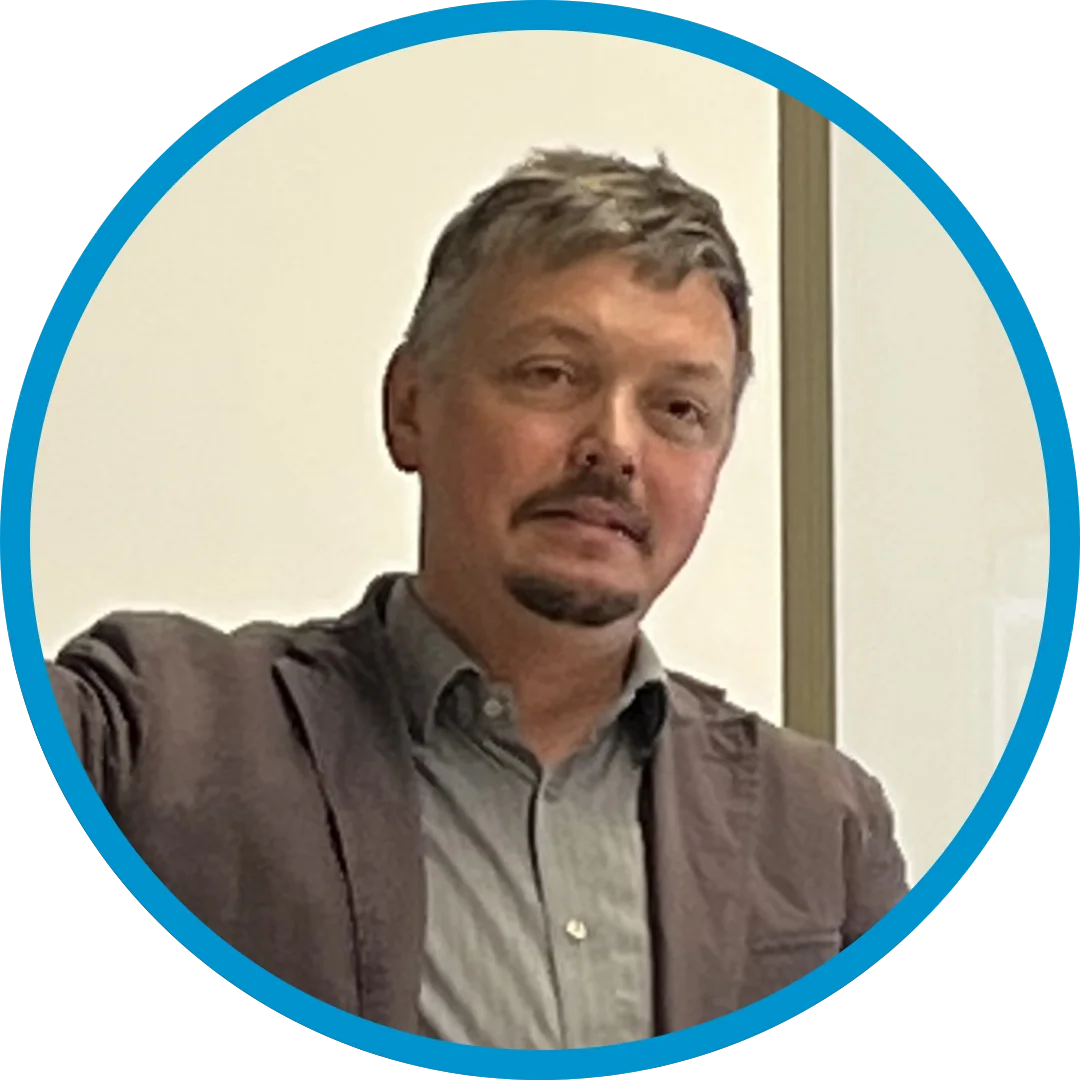
Monika Gabryś-Sławińska is a Professor at the Department of Polish Literary History , part of the Faculty of Languages, Literatures and Cultures at the University of Maria Curie-Skłodowska (UMCS). Her research spans 19th- and 20th-century Polish literature , focusing on Stefan Żeromski , historical journalism , text editing , voice emission , and museology . MA in Polish Philology (1998, UMCS) PhD in Literary Studies (2007, UMCS) Habilitation in Literary Studies (2016, UMCS) Her research interests include political commentary in historical press , media's role in cultural identity , and sociolinguistic trends . She has edited over 29 academic volumes and authored 5 monographs. Scientific awards: Bronze Cross of Merit KEN Medals (Bronze, Silver) 8 Rector's Awards (UMCS) Lublin Mayor's Medal (2019) She has participated in 5 research grants , organized 35 academic conferences , and contributed extensively to Annales UMCS as a scientific editor.
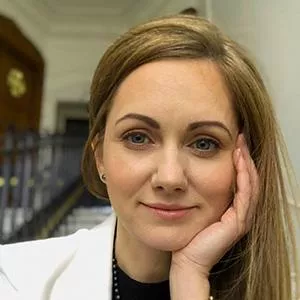
Professor Agnieszka Zabłocka-Kos is a faculty member at the Institute of Art History, University of Wrocław, specializing in Central European architectural history and urbanism. Her work focuses on 19th-20th century architecture, with particular emphasis on Wrocław/Breslau, including post-war reconstruction, national identity construction, and sacred space design. Professor, University of Wrocław Specialist in 19th-20th century Central European architecture Director of postdoctoral internships (NCN FUGA III) Recipient of multiple Rector's awards for research and teaching Research Themes: Urban development in Central Europe, political architecture in Poland/Germany, sacred architecture of the 19th century, post-war modernism, industrial architecture revitalization. Her students have produced award-winning theses on topics like Wrocław urban blocks, Silesian architects, and post-industrial adaptations. Scientific Contributions: Notable works include the edited volume Architecture in the 'long' 19th century (2019), multiple articles on Breslau's architectural conflicts, and international projects on Central European sacred architecture. She has supervised 33 master's and 5 doctoral theses, with several student works published as books. Dettloff Prize for dissertation (1992) Rector's awards for research and didactic achievements International projects with universities in Berlin, Freiburg, and Leipzig Advisor for Wrocław's Monument Office and City Development Bureau Her teaching integrates interdisciplinary approaches, linking art history with political, economic, and social contexts. She promotes student research popularization through conferences, exhibitions, and publications.
Piotr Głogowski is a researcher at the Institute of History, University of Wrocław, specializing in ancient epigraphy and Near Eastern studies. His work bridges the Hellenistic, Roman, and Persian periods, with a focus on the Levant and Phoenicia. Education: BA & MA in History and Classical Philology (University of Wrocław, 2012-2015); Erasmus exchanges at Bilkent University (2013/2014, 2016/2017); PhD in History (University of Wrocław, 2021). Research areas include ancient epigraphic cultures, Phoenician identity, Achaemenid Persia, and Greco-Persian military dynamics. His publications analyze inscriptions as cultural markers and explore historical narratives in Diodorus. Notable grants: Principal investigator for the National Science Center's Preludium project (2021-2024) on Near Eastern epigraphic culture, and internal grants for studies on Phoenician regional identity and Cappadocian politics. Scientific Awards: Gerda Henkel Foundation Scholarship (2020)
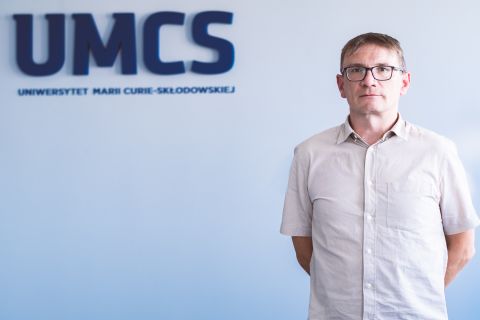
Dr. hab. Piotr Łukomski is an Associate Professor at the Department of Political Theory, Institute of Political Science, University of Wrocław. His academic career focuses on the intersection of political theory, philosophy, and cultural analysis, with notable contributions to Hannah Arendt's philosophy, game theory applications in politics, and the role of imagination in political thought. Department: Political Theory Email: piotr.lukomski@uwr.edu.pl ORCID: 0000-0002-5307-616X Research Interests: His work spans conceptual metaphors in political theory, decision-making under hazardous conditions, cultural evolution of tyranny, and the aestheticization of politics. He examines how digital technologies (like VR) reshape political identity and how Arendtian frameworks apply to modern governance. Teaching: Coordinates social consulting labs and teaches decision-making processes in political contexts, with a focus on practical applications in hazardous conditions. Publications: Recent articles analyze VR-era political identity, Hannah Arendt's relevance to modern democracy, and the integration of problem-solving strategies in political thought.
Kamil Glinka is an Associate Professor and Deputy Director of the Institute of Political Science for Science and Development at the University of Wrocław, specializing in public governance, urban policy, and political marketing. His work focuses on municipal self-governments in Visegrad Group countries and their responses to crises like the COVID-19 pandemic. His research interests span public governance , theory and practice of local development , urban policy , public communication , and political and territorial marketing . Glinka examines how cities navigate crises, implement strategic planning, and develop effective communication strategies with citizens. His recent publications reveal a strong focus on urban responses to the pandemic across Visegrad countries, with particular attention to municipal governance models, post-pandemic recovery strategies, and the impact of crises on urban democracy. His work bridges theoretical frameworks with practical policy applications in Central and Eastern Europe. Scientific Awards: Visegrad Fellowship Program (2024) laureate Multiple Rector's Awards from University of Wrocław (2020-2024) for scientific, teaching, and organizational achievements Bernard Steinacher Fellowship 2022-2023 from METREX Network IDUB program awards for academic excellence Glinka leads numerous international research projects including 'Urban Post-COVID Recovery in the V4 Countries' (2022-2025), 'Urban energy transition in Czechia' (2025), and 'Urban policy under ten pressure of the crisis' (2024). His work involves substantial collaboration with institutions across Visegrad countries and beyond. As a member of the Steering Committee of the European Consortium for Political Research's Standing Group on Central and East European Politics and active participant in METREX and IPSA, Glinka contributes significantly to international academic networks focused on urban governance and political science.
Przemysław Kordos is a Professor at the University of Warsaw , affiliated with the Faculty of Liberal Arts , where he serves as Coordinator for the Development of the Modern Greek Philology Program . He holds two PhDs in Humanities (2007, 2019) and was awarded the Loukis Papaphilippou Seat of Advancement in Modern Greek scholarship. Education: MA in Ethnology and Cultural Anthropology (University of Warsaw, 2001) MS in Sociology (University of Warsaw, 2002) PhD in Humanities (University of Warsaw, 2007) Second PhD in Humanities (University of Warsaw, 2019) His research interests span: Contemporary Modern Greek and Cypriot literature Polish-Greek cultural relations (philhellenism) Social and ethnographic issues in Greece and Cyprus Travel literature analysis Fantasy literature's cultural implications His scientific work reveals a focus on linguistic assimilation in foreign language learning (via fMRI studies), historical parallels between Polish and Greek independence movements, and critical analyses of Cypriot folk culture's politicization. Key scientific awards include: Loukis Papaphilippou Seat (University of Warsaw) Internships at EKPA and IKY (Greece) Scholarships at IMXA (Greece) and MUNI (Czech Republic) His academic contributions include cataloging 60+ Polish travel accounts to Greece, analyzing the shift from travel literature to tourism discourse, and examining the Hellene-Romios dichotomy's role in modern Greek identity construction.
Dorota Jarecka is an Adjunct Professor at the Institute of Literary Research of the Polish Academy of Sciences (PAN), specializing in the social history of art and visual culture. She is also the director of Warsaw’s Galeria Studio since 2016, and a renowned curator and author. Her work focuses on 20th-century art, surrealism, and gender studies in Eastern Europe. Key professional roles include: Adiunkt (Adjunct Professor) at PAN’s Institute of Literary Research Kurator of major exhibitions including the Erna Rosenstein series (2011–2014) Editor of monographs on artists like Krystiana Robb-Narbutt, Natalia LL, and Ewa Zarzycka Research highlights include her 2021 monograph analyzing surrealism, realism, and Marxism in post-war Polish art, and a 2013 interview with Anda Rottenberg. Her 2022 article on Helena Berlewi explores avant-garde movements and gendered artistic identity. Her exhibitions and publications emphasize underrepresented female artists and political contexts shaping art production in communist Poland.
Rev. Dr. hab. Waldemar Żurek, Professor at the John Paul II Catholic University of Lublin, serves at the Center of Ecclesiastical Archives, Libraries and Museums (ABMK) within the Faculty of Theology. His academic career spans decades of dedicated research and publication in church history, particularly focusing on Eastern European Catholicism and the Salesian Order. As an active scholar, he continues to contribute significantly to ecclesiastical documentation and historical research. Professor Żurek's research interests center on ecclesiastical archives, parish documentation, and the history of religious orders, with particular emphasis on the Salesian Order's activities in Poland and Eastern Europe. His work explores the intersection of religious life with historical events, particularly during challenging periods like the communist era in Poland. He has developed expertise in analyzing parish inventories, visitation records, and chronicles to reconstruct religious life and administration across different historical periods. His extensive publication record demonstrates a consistent focus on documenting church history through meticulous examination of primary sources. The most recent works reveal trends toward comprehensive chronicles of religious institutions, detailed parish records analysis, and biographical studies of clergy members. His research spans multiple disciplines including religious studies, historical documentation, and Eastern European studies, with particular attention to regions like Pinsk, Lutsk, and Volhynia that have complex religious histories across changing political borders. Scientific Awards: Gold Medal for Long Service Professor Żurek has supervised numerous diploma theses including master's work on topics such as 'Social activities of Bishop Adolf Piotr Szelążek.' His editorial work includes significant publications like 'Kult Matki Bożej Ostrobramskiej w historii narodu polskiego' (The Cult of Our Lady of the Gate of Dawn in the History of the Polish Nation) and 'Ojciec Profesor Henryk Damian Wojtyska 1933-2009. Pasjonista, historyk Kościoła i dydaktyk' (Father Professor Henryk Damian Wojtyska 1933-2009. Passionist, Church Historian and Educator). He serves on the Scientific Council of the biannual journal 'Archives, Libraries and Church Museums' and is a member of the Theological Society of Józef Bilczewski in Ukraine. His work with the Center of Ecclesiastical Archives, Libraries and Museums represents a significant contribution to preserving and analyzing religious heritage. Through his leadership and scholarship, Professor Żurek has helped establish important methodologies for working with ecclesiastical documentation and has fostered international collaboration in church historical studies, particularly between Polish and Ukrainian scholars.
SWPS University of Social Sciences and HumanitiesPoland
Alina Landowska serves as Assistant Professor in the Department of Cultural Studies at the Faculty of Humanities, SWPS University of Social Sciences and Humanities in Warsaw. Her academic profile integrates cultural studies, computational linguistics, and ethics, with significant contributions to understanding moral foundations in digital discourse and technological futures. Her educational background includes degrees in Management and Economics from Gdańsk University of Technology and European Integration from the Pontifical University of John Paul II in Krakow, complemented by international scholarship experiences: SDG Academy (United Nations) Tantur Ecumenical Institute, Jerusalem (University of Notre Dame) Baltic University Program, Uppsala Swedish Institute of Environmental Research, Kalmar Royal Danish Student Fund, Copenhagen Landowska's research investigates cultural evolution through computational discourse analysis, focusing on morality-technology intersections. She pioneers text-mining methodologies to examine moral foundations in social media, anticipatory rhetoric in digital communication, and value-based management frameworks. Her work bridges humanities with data science, analyzing polarization mechanisms and proleptic cues in online environments while exploring cooperation ethics in business contexts. Recent publications demonstrate methodological innovation in mapping technological futures through sentiment/emotion analysis and moral-value detection systems. Her article corpus reveals consistent thematic threads: digital rhetoric analysis (particularly prolepsis functions), moral psychology applications in AI/social media, and cultural evolution studies linking cooperation theory with business ethics. This interdisciplinary approach positions her at the nexus of computational social science and humanistic inquiry. No scientific awards or prizes are documented in her current professional profile. As an educator, Landowska mentors students in discourse analysis methodologies and socio-economic media studies while serving as executive coach with EMCC Poland. Her research leadership extends to co-founding the Institute for Development think tank and representing Employers of Poland at the OECD's Business and Industry Advisory Committee (2016-2018). She previously held vice-presidential roles in the Polish Association of Businesswomen. Landowska maintains active research affiliations with the Humanistic Management Center (University of Lucerne), International Council for Small Business (George Washington University), and ArgDiaP association. Her 2022-2024 tenure with New Ethos Lab advanced dialogue studies in persuasion frameworks, complementing her current work on digital rhetoric's ethical dimensions.
Prof. Jerzy Bański is a retired Professor and former Head of the Department of Rural Geography and Local Development at the University of Warsaw's Faculty of Geography and Regional Studies. His academic career spans over three decades with a PhD (1996) and post-doctoral degree (2000) in Earth Sciences, specializing in economic and rural geography. He has led 48 research projects and supervised 5 PhD and 43 MSc students at Maria Curie-Skłodowska University in Lublin. His research focuses on land use dynamics, rural development, spatial planning, and socioeconomic processes in Central and Eastern Europe. Notable contributions include analyzing post-socialist agricultural transformations, village decline, and pandemic spatial impacts. He authored 421 publications, including 151 in English, and received the Jan Olaf Chmielewski Science Award (2001) and Honorary Membership in the Bulgarian Scientific Society. Key projects include classifying rural areas for territorial policy, assessing pandemic geography, and evaluating agricultural land ownership changes. His work frequently intersects with policy design, institutional analysis, and interdisciplinary collaboration in academia. Awards: Jan Olaf Chmielewski Science Award (2001), Honorary Membership (Bulgarian Scientific Society) Grants: 48 projects led, including EU and national funding Education: MA (University of Warsaw), postgraduate studies in scientific photography
Dr. Bartosz Bojarczyk is a Lecturer at the Department of International Political Relations within the Faculty of Political Science and Journalism at Maria Curie-Skłodowska University (UMCS) in Lublin. He specializes in international relations with regional expertise in the Middle East, Central Asia, and Caucasus regions. Education: PhD in Political Science (UMCS, 2006) - Dissertation on Iran's international political adaptation MA in Contemporary Iranian Studies (School of International Relations, Tehran, 2003) MA in International Relations (UMCS, 2001) Research Focus: His work centers on geopolitical dynamics in transitional regions, particularly: International security frameworks and threat analysis Iranian foreign policy formulation and implementation Regional integration mechanisms in the Persian Gulf Terrorism as a transnational security challenge Energy security and nuclear policy intersections Publication Trends: Bojarczyk's scholarly output demonstrates consistent focus on evolving security architectures in post-Soviet spaces and the Middle East. His 15 most recent works (2007-2016) analyze power projection, regional organizations, and energy politics through geopolitical and institutional lenses, with particular emphasis on Iran's strategic positioning.
Jerzy Gorzelik is an Associate Professor at the Institute of Arts Studies within the Faculty of Humanities at the University of Silesia in Katowice. He holds a doctorate from the University of Wrocław and graduated from Jagiellonian University. His academic work centers on art history with a focus on Central European art, particularly in Upper Silesia from the 16th to the 20th centuries. His research explores the intersections of art, national and confessional identities, cultural heritage, and collective memory. He investigates how artistic expressions have been used in the discursive construction of imagined communities, especially in contested borderlands like Upper Silesia. His interests include wooden and industrial architecture, sacred art, museum practices, and the role of art in nationalist narratives. The recent publications highlight a consistent focus on heritage discourse, national identity formation, and the symbolic use of architecture and sculpture in Central Europe. His work analyzes how nationalisms—Polish, German, and Silesian—have instrumentalized art and heritage to legitimize political claims and shape regional identity. Themes such as the postcolonial critique of museum curation, the historiography of art history, and the interplay between Catholicism and nationalism recur across his scholarly output. Jerzy Gorzelik is actively engaged in public outreach, having conducted lectures, workshops, and educational projects on Silesian art history in collaboration with institutions such as the House of Polish-German Cooperation and the Foundation Dom Modernisty. He has also contributed to academic discourse through platforms like ResearchGate, Academia.edu, and Google Scholar, and maintains an ORCID profile (0000-0001-6405-9835).
His Excellency Bishop Andrzej Borkowski (born 1974) is a Polish Orthodox hierarch, theologian, and historian. He serves as Bishop of Supraśl and Vicar of the Białystok-Gdańsk Diocese since 2017. Since 2012, he has been an Assistant Professor at the Department of Orthodox Theology, University of Białystok, where he teaches courses on Byzantine civilization, monasticism, and liturgical history. Education: Habilitacja (2017), University of Białystok PhD in Theological Sciences (2009), University of Athens Master of Theology (2005, University of Athens; 2001, Christian Theological Academy in Warsaw) Greek language studies (2001-2002), University of Athens Research Interests: Specializes in the history of Eastern patriarchates in post-Byzantine Poland-Lithuania, Orthodox autocephaly movements (1919-1927), Union of Brest controversies, monasticism, canon law, and Byzantine-Balkan cultural influences in Poland. His work examines liturgical reforms, interfaith dialogues, and diplomatic exchanges between Orthodox churches and European powers. Academic Contributions: Authored three monographs and over 40 articles on Orthodox Church-state relations, including Patriarchaty Wschodu w dziejach Rzeczypospolitej (2014) and Między Konstantynopolem a Moskwą (2015). His research spans 16th-20th century Orthodox history in Poland, Ukraine, and the Balkans. Scientific Awards: Rektor's Award (2013), University of Białystok Leadership Roles: Promotes Orthodox theological education through international conferences, expert teams for heritage restoration, and supervision of theological licentiate theses. Currently chairs expert commissions for monastery renovations and participates in Pan-Orthodox Council initiatives.
Ewa Domańska is a Professor at Adam Mickiewicz University and a visiting professor in the Department of Anthropology/Archaeology Center/DLCL at Stanford University since 2002. She is affiliated with the Center for Russian, East European & Euroasian Studies at Stanford and holds a 2024 Reinhart Koselleck Visiting Professorship at Bielefeld University. Research Interests: Historiography, posthumanist history, environmental history, genocide studies, and non-anthropocentric approaches to the past. Research Trends: Her recent work focuses on the intersection of history, ecology, and ethics, particularly through projects exploring the Anthropocene, mass graves, and multispecies heritage. She leads the PRELUDIUM BIS grant on the water heritage of the Warta River (2021-2025) and has participated in international projects like "Unruly Heritage" and "My Favourite Things." Scientific Awards: 2024 Złoty Krzyż Zasługi for historical knowledge dissemination 2024 Joachim Lelewel Award for contributions to historiography 2023 Gold Medal for Long-term Service Multiple rectoral awards for teaching and research International fellowships (Fulbright, Kościuszkowski, Civic Education Project) Academic Leadership: She coordinates editorial work for projects like Humanistyka prewencyjna and has chaired panels for prestigious initiatives. Her editorial roles span journals such as History and Theory and Journal of Genocide Research . Labs & Teams: Founder of the Resilience Academic Team (RAT), she collaborates with institutions like the University of Iceland, Arctic University of Norway, and the Institute for Human Sciences (IWM) in Vienna.
Dr. Anna Rogos-Hebda is an Assistant Professor at the Faculty of English, Adam Mickiewicz University in Poznań, Poland. She is actively involved in research and teaching in the fields of cognitive and historical linguistics, with a strong emphasis on diachronic semantics, emotion terminology, and corpus-based analysis. Faculty of English, Adam Mickiewicz University Researcher in Cognitive and Historical Linguistics Active contributor to international academic conferences Her research interests center on the language of emotions , conceptual metaphor theory , and the diachronic development of abstract categories in English and Polish. She employs corpus linguistics and cognitive semantics to investigate semantic change, particularly in Middle and Late Modern English. Her work explores how emotions such as hope, belief, and hate are linguistically encoded and evolve over time. The recent articles reflect a consistent focus on diachronic cognitive linguistics , with themes including semantic change in emotion terms , conceptualization of social categories (e.g., beggars, refugees, immigrants), and political and ideological discourse . Her methodology is predominantly corpus-based, often involving quantitative and multivariate analysis of lexical usage across time and cultures. She has not been awarded any formal scientific prizes or fellowships mentioned in the text. Dr. Rogos-Hebda has served as an assistant editor for Studia Anglica Posnaniensia (2001–2010) and has been actively involved in organizing academic events such as the History of English Language in Poznań (HEL-P) and Figurative Thought and Language (FTL) conferences. She has received research support through scholarships from the University of Helsinki and Otto Friedrich Universität, Bamberg, as well as a conference grant from the Foundation for Polish Science. She is a member of several professional organizations, including Societas Linguistica Europea (SLE), Polish Association for the Study of English (PASE), International Society for the Linguistics of English (ISLE), and The Philological Society (TPS). She regularly presents her work at major international conferences and contributes to collaborative research projects, particularly with scholars like Małgorzata Fabiszak and Karolina Krawczak-Glynn.


.jpg)