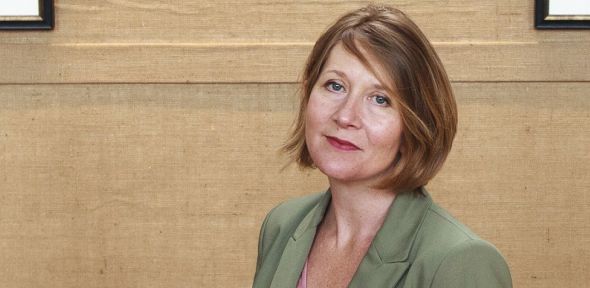
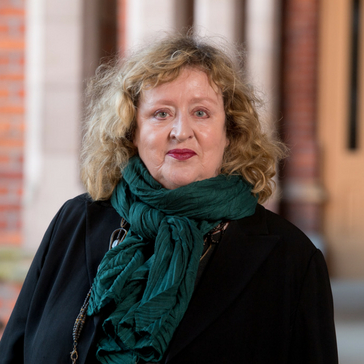
Professor Emma Widdis is a leading scholar at the Faculty of Modern and Medieval Languages and Linguistics at the University of Cambridge, specializing in the intersection of Soviet cinema, ideology, and cultural geography. Her work explores the reeducation of sensory perception through film, early Soviet urban spaces, and the construction of subjectivity via cinematic techniques. Teaches 20th-century Russian/Soviet literature, cinema, and film theory Focuses on sensory engagement, political avant-garde, and urban spatial representation Supervisor for MPhil and PhD students in Slavonic Studies Her recent book Socialist Senses (2017) examines how cinema shaped Soviet perceptions of reality. Her publications span topics like silence in sound film, set design materiality, and costume symbolism in early Soviet cinema. While no formal scientific awards are listed, her research has been supported through institutional grants and collaborations with centers like CRASSH and Cambridge Language Sciences.
Luke J Davies is a Leverhulme Early Career Fellow in the Faculty of Philosophy at the University of Oxford. His research focuses on Kant’s moral and political philosophy, particularly exploring the interplay between duties to self and the legitimate role of the state. He previously held a fellowship in the Department of Government at the London School of Economics (2018–2022). Education: PhD in Philosophy, University of Oxford (2014–2019) BPhil in Philosophy, University of Oxford (2012–2014) BA in Philosophy, University of Toronto (2006–2011) His research interests include Kantian ethics, political philosophy, rights theory, and the philosophical foundations of state legitimacy. Current work examines how duties to self shape interpersonal moral obligations within Kantian frameworks. Key Themes in Publications: Recurring topics include Kant’s theories of property, citizenship, welfare, and cosmopolitanism, with a focus on reconciling individual autonomy with collective moral obligations. Recent work extends to the state of nature, cosmopolitan law, and active citizenship in republican frameworks. Awards: Leverhulme Early Career Fellowship (2022–2025) His academic trajectory combines rigorous engagement with Kantian texts and contemporary applications of classical philosophy to political and ethical dilemmas.
London School of Economics and Political Science (LSE)United Kingdom
Clare Hemmings is a Professor of Feminist Theory at the Department of Gender Studies, London School of Economics and Political Science (LSE), where she has been since 1999. Her work bridges feminist theory, queer studies, and sexuality studies, with a focus on how these fields are institutionalized and narrated. She holds a PhD and has authored seminal works like Why Stories Matter (2011) and Considering Emma Goldman (2018), which explore feminist historiography and political ambivalence. Her research emphasizes interdisciplinary methods, including archival interventions and creative writing to challenge dominant narratives. Hemmings’ research interests include feminist epistemology, queer of color critique, and anarchist thought. She has been active in countering 'anti-gender' movements and is currently developing a project on 'Feminist Knowledge Struggles.' Her work is marked by attention to form, affect, and the intersection of nationalism, feminism, and sexuality. She supervises PhD students Senel Wanniarachchi and Rawda Elaskary and has received the FWSA Book Prize 2012 for Why Stories Matter . Hemmings’ articles span feminist theory, political mobilizations, and affect studies. Her recent work engages with family memory archives and decolonial methodologies. She is a prolific scholar, contributing to journals like Memory Studies , Feminist Studies , and Radical Philosophy . Her interdisciplinary approach integrates literary criticism, sociology, and activism, offering transformative frameworks for feminist praxis.
Roger Giner-Sorolla is Professor of Social Psychology at the University of Kent's School of Psychology, where he has been a faculty member since 2001 after completing his PhD at New York University in 1996. He served as Editor-in-Chief of the Journal of Experimental Social Psychology from 2016-2022 and currently leads a Leverhulme Foundation grant examining moral heroism across professions. His academic journey includes a postdoctoral fellowship at the University of Virginia and has established him as a leading figure in social and moral psychology. Professor Giner-Sorolla's research focuses on the social role of emotions, particularly moral emotions including self-condemning emotions (guilt and shame) and other-condemning emotions (anger, contempt, and disgust). His work extends to intergroup apologies, dehumanization, emotionally driven prejudice, and collective moral roles, with a notable side interest in the ironic enjoyment of music and aesthetic experiences. He is a strong advocate for transparency in scientific reporting, having written extensively on improved reporting guidelines, pre-registration, and open science practices. Analysis of his recent publications reveals a consistent focus on moral psychology with expanding interdisciplinary reach. His work bridges traditional social psychology with emerging areas including cross-cultural emotion research, replication science, and historical memory. The trend shows increasing attention to methodological rigor while maintaining core interests in emotion and morality, with growing emphasis on practical applications in conflict resolution and intergroup relations. Fellow of the Association for Psychological Science Member of Rising Stars selection committee (2023-2024) Promising Scholars Award (University of Kent, 2006) Vacation Research Scholarship (Wellcome Trust, 2005) Multiple ESRC grants totaling over £400,000 European Science Foundation Workshop Award (2004) Professor Giner-Sorolla has supervised an impressive number of PhD students, with 17 doctoral candidates listed in the documentation including both current and past students. His grant portfolio demonstrates significant research impact with funding from major organizations including ESRC, Wellcome Trust, and Leverhulme Foundation. His supervision style appears to encourage students to pursue research that aligns with his core interests in moral emotions while allowing exploration of novel applications and contexts. While the documentation doesn't specify laboratory or research team structures, his extensive collaborative work suggests leadership of research groups focused on moral psychology and emotion research. His numerous international collaborations and invited workshops indicate an active research program with global reach, likely involving multiple research teams working on interconnected projects related to his core interests in moral psychology and scientific methodology.
Mungo Wilson is a Professor of Finance at the Saïd Business School , University of Oxford, and an associate member of the Oxford-Man Institute of Quantitative Finance. He holds a PPE degree from Oxford, an MSc in Economics from LSE, and a PhD in Economics from Harvard. His research focuses on asset pricing, credit risk, mutual funds, and macroeconomic influences on financial markets. He has published extensively in top journals and engages actively with industry through board roles and advisory work. Education : Bachelor's in Philosophy, Politics & Economics (PPE), University of Oxford MSc Economics, London School of Economics PhD in Economics, Harvard University Research Interests : Assesses how macroeconomic conditions and credit risk shape asset prices Analyzes mutual fund behavior and market information transmission mechanisms Explores political dynamics' impact on financial markets His professional engagements include board memberships with funds like EA Asia Absolute Return Master Fund and advisory roles at Broadwell Capital. Teaching focuses on microeconomics for MBA programs, covering game theory, market structures, and price discrimination. Advisory & Grants : Supervises doctoral students at Saïd Business School and serves on programme committees for major finance conferences (e.g., European Finance Association, CEPR Annual Spring Symposium). Awards : While no specific prizes are listed, his impactful research has been widely cited and presented globally.
Hasan Dindjer is an Associate Professor of Law at the University of Oxford’s Faculty of Law and the Blanesburgh Fellow and Tutor in Law at Balliol College. His research focuses on public law, philosophy of law, and related areas of moral and political philosophy. He has specialized in administrative law standards, particularly the 'reasonableness' standard, and has engaged with foundational questions in legal positivism. Education: BA and BCL (New College, Oxford) LLM (Harvard Law School, as a Fulbright Scholar) Previously served as Examination Fellow at All Souls College, Oxford Research Interests: Public Law and Administrative Law Standards Philosophy of Law and Legal Positivism Moral and Political Philosophy in Legal Contexts Publications: Over a decade of scholarship includes journal articles, book chapters, and blog posts analyzing administrative law theory, constitutional principles, and debates over legal positivism. Recent work includes contributions to Modern Law Review and Legal Theory . Affiliations: Member of the Jurisprudence in Oxford Research Group and actively involved with blogs like the UK Constitutional Law Blog and ICONnect.
Dr. Laura McMahon is an Associate Professor in Film and Screen Studies at the Faculty of Modern and Medieval Languages and Linguistics , University of Cambridge. She is currently on sabbatical leave and will return in Easter Term 2024. Her research explores intersections between film and philosophy , with a focus on French and Francophone cinema , decolonial approaches , feminist theory , and ecocritical perspectives . Dr. McMahon’s work examines how contemporary feminist filmmakers like Onyeka Igwe and Khady Sylla engage with archives to reframe history through speculative reimagining . She also investigates ecological themes in Claire Denis’s films and the ethics of animality in global art cinema. Her monograph Animal Worlds: Film, Philosophy and Time (2019) and edited collections like Animal Life and the Moving Image (2015) highlight her contributions to debates on nonhuman representation and deconstructive aesthetics . Her recent publications analyze documentary practices , postcolonial archives , and critical repurposing in moving image work. She welcomes inquiries from MPhil and PhD students working on related topics. Her teaching and research are affiliated with the Cambridge Film and Screen initiative and the Cambridge Italian Research Network (CIRN).
Johnny Golding is a Professor at the Royal College of Art (RCA), School of Arts & Humanities. His career spans roles such as Director of the Centre for Fine Art Research at Birmingham City University, Professor of Philosophy in the Visual Arts & Communication Technologies (2000–2012), and honorary Professorship in Philosophy and Imaging at Dundee School of Art (2009). Born in New York, he holds a PhD from the Universities of Toronto and Cambridge. Education : - PhD in Philosophy from the Universities of Toronto and Cambridge. - Earlier studies in Toronto and New York. Research Interests : Golding’s work explores post-Newtonian analytics, new materialisms, and the erotics of sense as 'radical matter.' His interdisciplinary approach bridges art, philosophy, and 'wild sciences' like AI, robotics, and quantum theory. Key themes include data proliferation's societal impact, emergent systems, and the interplay between art and technology. Recent Articles & Projects : Focus on Data Loam (2020), exploring future knowledge systems through art and science collaborations. Recent works address radical empathy, distributed intelligence, and the ethics of AI. His 2018 opera Entanglement: The Opera and installations like Of The Thick and the Raw exemplify his practice-led philosophy. Grants & Leadership : - Led the Data Loam project (FWF-PEEK funded), involving over 20 artists and scholars. - PI for AiDesign Labs on generative AI at RCA. Labs & Collaborations : - Radical Matter Lab (2017–2018), a pedagogical experiment at RCA. - Collaborations with institutions like the University of Applied Arts Vienna and the British Library.
Leigh Oakes is Professor of French and Linguistics in the Department of Modern Languages and Cultures within the School of Languages, Linguistics and Film at Queen Mary University of London. He has held progressive academic positions at the institution since 2000, advancing from Lecturer to his current professorship. His international academic background includes a PhD from the University of Melbourne and research at Stockholm University's Centre for Research on Bilingualism. His educational qualifications include a PhD (2001) and BA (Hons) (1996), both from the University of Melbourne. Oakes specializes in language policy and planning, with particular focus on language and national identity in France, Quebec, and Sweden. His research has expanded into linguistic justice debates in political theory, advocating for normative and interdisciplinary approaches to language policy. Oakes' publication trends reveal a consistent focus on ethical dimensions of language policy, with increasing emphasis on pluricentric justice and linguistic integration since 2016. His work bridges sociolinguistics and political philosophy, demonstrating strong interdisciplinary connections between language attitudes, national identity construction, and policy implementation across Francophone contexts. The 2018 co-authored monograph 'Normative Language Policy' represents a significant theoretical contribution to the field. 2008 Pierre Savard Prize for 'Language, Citizenship and Identity in Quebec' Leverhulme Trust Research Project Grant for 'The Ethics of Linguistic Integration' project Co-editor-in-chief of Sociolinguistica: European Journal of Sociolinguistics Co-editor of Multilingual Matters book series Member of editorial boards for Language Policy and Modern Languages Open Oakes actively supervises PhD candidates in sociolinguistic topics, with current research focusing on linguistic integration in Quebec and adaptation among mobile French speakers. His major Leverhulme-funded project 'The Ethics of Linguistic Integration' examines moral implications of language requirements for immigrants across England, Quebec, and Wales. He serves on several international academic committees including the Association internationale des études québécoises and the British Association of Canadian Studies. He leads the interdisciplinary 'Ethics of Linguistic Integration' research team, which combines expertise from applied linguistics, sociolinguistics, and political theory to investigate language integration policies. His work connects with broader university initiatives through Queen Mary's research highways in social justice and global challenges.
Anna Lukina is a Research Fellow in Law at the London School of Economics and Political Science and a PhD candidate at the University of Cambridge's Faculty of Law. Her research focuses on jurisprudence, legal history, and public law, with a specialization in Soviet legal systems, Nazi legal frameworks, and the philosophical underpinnings of 'evil law.' She holds a B.A. (Jurisprudence) and B.C.L. from the University of Oxford, and an LL.M. from Harvard Law School. Her doctoral work, Towards a Jurisprudence of Evil Law , examines the relationship between law and immorality in authoritarian regimes, funded by the Institute for Humane Studies, Modern Law Review, and Cambridge Law Journal. Key research areas include: Legal justifications for totalitarian regimes Resistance to morally corrupt legal systems Historical analysis of Soviet, Nazi, and antebellum U.S. legal structures Publications span legal-historical analyses of Soviet legal education, Schmittian dictatorship theory, and Kelsen's critiques of communist jurisprudence. She actively engages with legal theory through blogs like Legal Form and academic networks such as the Cambridge Legal Theory Discussion Group. Her work bridges theoretical jurisprudence and historical case studies, offering critical perspectives on law's role in enabling or resisting evil. Grants and fellowships support her exploration of legal systems' moral boundaries and their societal impacts.
Janina Dill holds the Dame Louise Richardson Chair in Global Security at the Blavatnik School of Government, University of Oxford. She is also a Professorial Fellow at Trinity College and Co-Director of the Oxford Institute for Ethics, Law, and Armed Conflict (ELAC). Her academic work focuses on the intersection of law, morality, and international relations in the context of war. Her research spans three interconnected strands: the legal requirements for military operations under international law; theoretical frameworks for understanding how international law serves as an instrument of morality in war; and empirical investigations into how moral and legal norms affect real-world military decision-making and public opinion in conflict zones. Professor Dill's work has particular relevance to contemporary conflicts, with extensive analysis of the wars in Ukraine and Gaza. She has examined how international humanitarian law applies to these conflicts, the moral arguments employed by different parties, and the practical challenges of implementing legal constraints in complex warfare environments. Her research has been recognized with the prestigious Philip Leverhulme Prize in 2021, which she has used to advance her work on the moral psychology of decision-making in war. She is currently leading multiple significant research projects, including a three-year ESRC/NSF-funded study on "Cumulative Civilian Harm" and an expert process with the ICRC on military objectives under international humanitarian law. Professor Dill is frequently consulted by international media outlets including The Guardian, The Economist, BBC, CNN, and major European publications. Her expertise is regularly sought on matters related to the laws and ethics of war, particularly regarding the conflicts in Ukraine and Gaza. She has received recognition for her contributions to the field through numerous speaking engagements, media appearances, and her influential research that bridges theoretical legal scholarship with practical applications in contemporary conflicts.
Professor Helen Steward holds the position of Professor of Philosophy of Mind and Action at the University of Leeds, within the School of Philosophy, Religion and History of Science. She serves as Director of Recruitment and Admissions. Her expertise spans free will, action theory, metaphysics of mind, causation, and animality, with recent work on plant agency, determinism, and two-way power theories. She is currently writing a book on causation and has previously authored A Metaphysics for Freedom (OUP), arguing for an incompatibilist view linking determinism with free action across humans and animals. Education: D.Phil: 'Events, States and Processes: the Ontology of Mind' B.Phil in Philosophy BA in Philosophy, Politics and Economics Her research explores the metaphysical underpinnings of agency and perception, emphasizing biological and evolutionary perspectives on human-animal relations. She is affiliated with the Centre for Theoretical Philosophy and holds memberships in the British Philosophical Association, Mind Association, and Aristotelian Society.
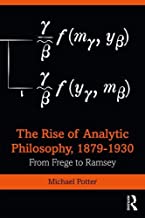
Michael Potter is Professor of Logic at the Faculty of Philosophy , University of Cambridge, and a Life Fellow at Fitzwilliam College. Previously at Balliol College, Oxford (D.Phil. in pure mathematics), he has held research fellowships at St Andrews, Harvard, and Stirling University (AHRC-funded). His work bridges historical and systematic philosophy, focusing on History of analytic philosophy (Frege, Russell, Wittgenstein, Ramsey) Philosophy of mathematics and logic Philosophy of religion Potter's research has produced major works like Set Theory and its Philosophy (OUP 2004) and The Rise of Analytic Philosophy (Routledge 2019), with significant contributions to understanding the Metaphysical underpinn't> of the Tractatus Neo-Fregean logicism Paradoxes in mathematical foundations He has supervised research on topics spanning dialetheism, predicative mathematics, and modal ontological arguments. Scientific awards include the AHRC Senior Research Fellowship (2004-2005). His recent publications analyze Transcendental arguments in Wittgenstein Sortition-based democratic theory Philosophical implications of Ramsey's infinite proofs via peer-reviewed chapters and journal articles.
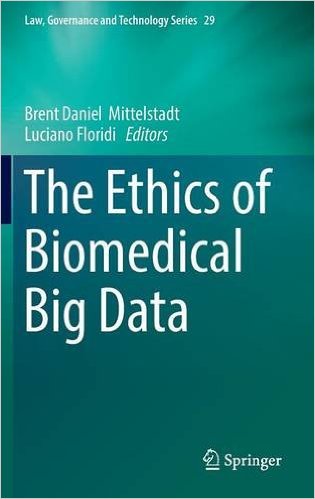
Professor Brent Mittelstadt is a leading academic in data ethics and AI governance at the University of Oxford's Oxford Internet Institute (OII), serving as Professor of Data Ethics and Policy and Director of Research. He coordinates the Governance of Emerging Technologies (GET) programme, focusing on ethics, law, and technology interplay. His work bridges academic research with policy impact, contributing frameworks like 'counterfactual explanations' and fairness metrics ('Conditional Demographic Disparity') used globally. He leads high-profile projects such as Trustworthiness Auditing for AI and A Right to Reasonable Inferences in Advertising and Financial Services. Research interests span AI ethics, medical ethics, technology governance, and non-discrimination law. He has pioneered ethical frameworks addressing algorithmic bias, GDPR compliance, and AI accountability. His work has influenced policy bodies like the UK Information Commissioner’s Office and the European Commission, and is implemented by tech giants such as Google and Microsoft. Awarded O2RB Excellence in Impact Awards (2018, 2021) and PLSC Best Paper (2019) Funded by Wellcome Trust, Sloan Foundation, and others Advisory roles for NHSx, GSK Consumer Healthcare, and regulatory bodies Recent work focuses on AI regulation (EU AI Act), generative AI ethics, and healthcare AI governance. He co-leads the OxonFair toolkit for algorithmic fairness and investigates societal impacts of deepfake proliferation and large language models.
Dr. Margaret O'Callaghan is a Professor in the School of History, Anthropology, Philosophy and Politics at Queen's University Belfast . Her research focuses on Modern Irish history, political thought, and the politics of commemoration. She has published extensively on British-Irish relations, partition, and gender studies in Irish politics. She holds a First Class Honours BA and MA from University College Dublin, and a PhD from the University of Cambridge. Research Interests: Irish political thought, British high politics, cultural identity in the Irish Free State, and the role of commemoration in historical narratives. She is currently researching figures like Conor Cruise O'Brien and Alice Stopford Green. Awards: Recipient of the Silver Medal for Oratory from the Literary and Historical Society UCD (1979). She has supervised over 40 MA dissertations and 17 doctoral theses. Activities: Active in academic conferences and media engagements, including talks on the politics of commemoration and partition. Collaborates with institutions like the Institute of Irish Studies.