
Dr. Alexandra Machado Ferreira Castilho is a leading researcher at the Institute of Plant Biotechnology and Cell Biology within the University of Natural Resources and Life Sciences, Vienna (BOKU) . She has served as Principal Investigator since 2018 and previously as Scientific Coordinator of the Laura Bassi Center PlantBioP (2010-2017). Her work focuses on Plant Molecular Farming and Glycoengineering , aiming to optimize plant-based production of therapeutically relevant glycoproteins. Specializes in tailoring N-glycan profiles for biopharmaceuticals Develops plant cell factories for antibody and decoy receptor production Key projects include SARS-CoV-2 neutralization strategies and cancer immunotherapy agents Her recent publications analyze glycoengineering techniques in Nicotiana benthamiana , covering topics like ACE2-Fc decoys for viral neutralization, PD1/PDL1 blockade for oncology, and protease suppression for protein stability. She has received funding from the Austrian Science Fund (FWF) for projects on immune checkpoint inhibitors and glycosylation pathway modulation.
Find Academic Supervisors
Find and connect with academic supervisors, professors, and scholars for your research journey.
Showing 16-30 of 169 supervisors
Profile data may be stale. It is sourced from public faculty pages.
Joseph StraussView profile
Professor
Joseph Strauss is a Full Professor at the University of Natural Resources and Life Sciences Vienna (BOKU), leading the Institute of Microbial Genetics. With a career spanning over three decades, he has focused on fungal genetics, epigenetics, and bioactive metabolite discovery, particularly in filamentous fungi and pathogens. His work bridges fundamental research with applications in agriculture, medicine, and environmental biotechnology. Research Focus: Epigenetic regulation of fungal secondary metabolism, chromatin dynamics, bioactive compounds, nitrate signaling, and microbial interactions. Projects: Leads multiple grants from Austrian Science Fund (FWF), European Commission, and industry partners, including studies on chromatin engineering, fungal biotechnology, and toxin biosynthesis. His recent publications highlight advancements in chromatin proteomics, fungal pathogenicity, and novel bioactive molecules like luteapyrone and rasfonin. Articles emphasize broad disciplines such as Fungal Genetics, Epigenetics, and Natural Product Discovery, with subfields including secondary metabolite clusters, histone modifications, and stress response mechanisms. Scientific Awards: 2021 - Keratinophyton straussii fungal species named after him 1999 - START Preis 1995 - EMBO Stipendium 1994 - OTTO LOEWI Stipendium He has supervised over 69 theses and contributed to 186 publications, reflecting his leadership in fungal genomics and its applications. Projects like 'Bioaktive Mikrobielle Metaboliten' and 'TASSMATA' underscore his commitment to translating research into sustainable solutions.
Rainer HahnView profile
Associate Professor
Rainer Hahn is an Associate Professor in Biochemical Engineering at the Institute of Biochemical Engineering, Department of Biotechnology and Food Sciences, University of Natural Resources and Life Sciences, Vienna (BOKU). He also serves as Head of the Downstream Processing Unit at the BioIndustrial Pilot Plant and is a key researcher at the Austrian Center of Industrial Biotechnology (ACIB). His work is centered on bioprocess engineering with a strong focus on downstream processing and biopharmaceutical purification. University: University of Natural Resources and Life Sciences, Vienna (BOKU) School: Department of Biotechnology and Food Sciences Department: Institute of Biochemical Engineering Role: Associate Professor, Head of Downstream Processing Unit His research interests span Bioprocess Engineering , Downstream Processing , Industrial Biotechnology , Pharmaceutical Technology , and Chemical Biology . He investigates advanced purification techniques, particularly in chromatography and protein separation processes. His recent work emphasizes multicomponent adsorption, protein A affinity systems, and purification of complex biomolecules like secretory immunoglobulin A (sIgA). The trend in his recent publications reveals a strong emphasis on protein purification , chromatographic modeling , and process optimization in biopharmaceutical manufacturing. His work integrates experimental analysis with mathematical modeling to improve efficiency and predictability in downstream operations, especially in multi-component systems. Topics such as continuous chromatography , pH transients , and affinity resin development reflect his leadership in advancing industrial bioprocessing. His notable scientific awards include: HOUSKA PRIZE (Recognition Award) - 2016 Dissertation Prize of the Austrian Society for Biotechnology - 2002 Rainer Hahn has been actively involved in numerous research projects funded by FWF, national enterprises, and private foundations, focusing on biopharmaceutical purification and process development. He mentors students and contributes to academic training through lectures and supervision. He is also a dedicated reviewer for leading journals such as Journal of Chromatography A , Biotechnology and Bioengineering , and Separation and Purification Technology . His work is closely tied to industrial applications, particularly in the development of scalable and efficient biomanufacturing processes. He is associated with the BioIndustrial Pilot Plant and collaborates with ACIB, contributing to innovation in industrial biotechnology. His research group focuses on developing robust downstream strategies for next-generation biopharmaceuticals.
Veronika SomozaView profile
Professor
Veronika Somoza is a University Professor at the University of Vienna , affiliated with the Faculty of Chemistry and the Centre for Microbiology and Environmental Systems Science . Her research focuses on Bitter Taste , Food Chemistry , and Pharmacology , particularly exploring interactions between taste receptors and bioactive compounds. Key Research Areas Bitter Taste Receptors (TAS2R4, TAS2R43, TAS2R16) Gastric Acid Secretion Serotonin Release Plant-Derived Compounds (Resveratrol, Nonivamide, Capsaicin) Mass Spectrometry Imaging Scientific Awards AGFD Fellow Award 2020 Her work spans Gastric Physiology , Food Toxicology , and Sustainable Nutrition , aligning with UN Sustainable Development Goals. Recent publications highlight LA-ICP-MS imaging for zinc mapping and AFM probing of bitter peptide interactions. She has also contributed to understanding Chlorogenic Acid and Advanced Glycation End-Products in food science. Veronika Somoza actively participates in scientific communication , including invited talks on flavor research and media engagement on food chemistry topics.
Crisanto GutierrezView profile
Professor
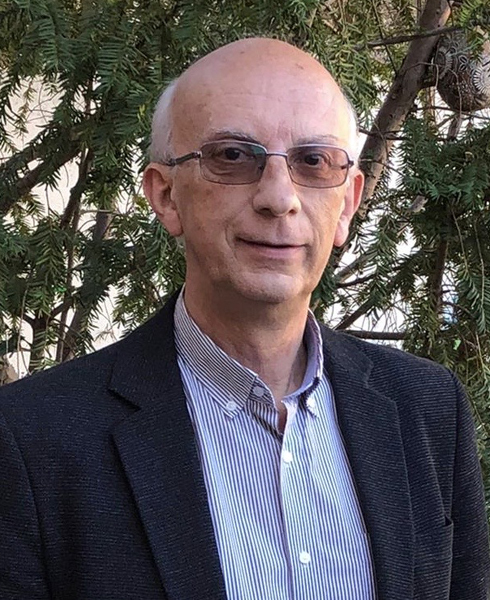
Crisanto Gutierrez is a distinguished Professor at the Spanish National Research Council (CSIC) and Head of the Genome Dynamics and Function Program at the Center for Molecular Biology Severo Ochoa in Madrid, Spain. With over three decades of academic service since 1982, he has held progressive academic ranks from Assistant Professor to his current full Professor position since 2002, establishing himself as an internationally recognized leader in plant molecular biology. His pioneering research focuses on the interplay between chromatin dynamics, DNA replication, and cell proliferation in plants, utilizing multidisciplinary approaches across cellular, molecular, genetic, and genomic domains. Gutierrez achieved seminal breakthroughs including the discovery of the retinoblastoma (Rb) tumor suppressor protein in plants and deciphering geminivirus DNA replication mechanisms coupled to the cell cycle. His work primarily employs Arabidopsis thaliana as a model system to investigate fundamental biological processes, with particular expertise in endoreplication, epigenetics, chromatin organization, and root development. Analysis of his recent publications reveals a consistent trajectory exploring chromatin organization's role in genome function, with increasing emphasis on epigenetic regulation of DNA replication origins and their developmental implications. His research bridges fundamental cell cycle mechanisms with plant-specific adaptations, demonstrating how chromatin landscapes dictate replication timing and transcriptional activity across different tissue types. Honors and awards include: EMBO Council Member (2020) ERC Advanced Grant PLANTGROWTH (2019-2024) Research Prize from Fundacion Carmen y Severo Ochoa (2008) Membership in the Royal Academy of Medicine and Surgery of Cadiz (2009) EMBO Membership (1998) Gutierrez maintains an active research program with continuous competitive funding since 1993, including his current European Research Council Advanced Grant. He has trained over 60 PhD and postdoctoral researchers, nine of whom now lead independent laboratories worldwide. His editorial leadership includes positions at EMBO Journal , EMBO Reports , and Plant Journal , while his advisory roles extend to research institutes in France, Spain, and Argentina. He serves on prestigious evaluation panels including LABEX (France) and the ERC Consolidator Grant Life Sciences panel.
Giulia De LorenzoView profile
Professor
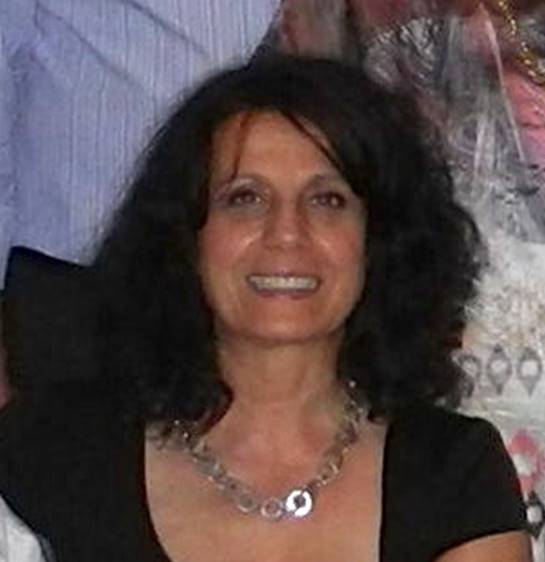
Giulia De Lorenzo is a Full Professor of Plant Physiology at Sapienza University of Rome since 2000, with prior roles as Associate Professor at Sapienza University of Rome (1994-1999) and University of Bari (1991-1994). Her research focuses on plant immunity, molecular recognition, and cell wall dynamics, particularly in plant-pathogen interactions involving damage-associated molecular patterns (DAMPs) and their role in signal transduction. Education: Laurea in Biology (1980, Sapienza University of Rome, cum laude), PhD in Evolutionary Biology (1987, Sapienza University of Rome) Her work explores the structural and functional basis of plant defense mechanisms, including the inhibition of cell wall-degrading enzymes and engineering plant resistance through chimeric receptors. Articles highlight her contributions to understanding DAMPs, PGIP proteins, and their applications in crop protection and bioconversion. Notable scientific awards include the 2011 Sapienza University of Rome Award for Excellence in Research , 1997 Giovanni Armenise-Harvard Foundation Award , and the 1983 Fondazione V.V. Landi Award from the Accademia dei Lincei. She has served on editorial boards and organized international conferences in plant science.
Miguel A. De la RosaView profile
Professor
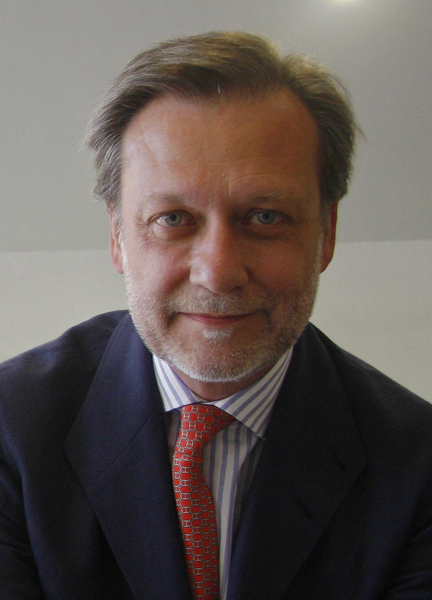
Miguel A. De la Rosa is a Full Professor of Biochemistry and Molecular Biology at the University of Seville since 1995. His academic career spans leadership roles including Director of cicCartuja Scientific Research Center (2009-18) and Secretary General of FEBS (2023-). He also served as Visiting Professor at the University of Arizona (1990-94). Education : M.Sc. (1st class honours, 1977) and Ph.D. (cum laude, 1981) in Biochemistry from the University of Seville. Research interests focus on structure-activity relationships of biological macromolecules, particularly protein-protein and protein-nucleic acid interactions. His work employs interdisciplinary approaches from molecular biology to computational chemistry, with major achievements in metalloprotein evolution, electron transfer mechanisms in photosynthesis/respiration, and cytochrome c's role in DNA damage and programmed cell death. Publication trends emphasize cytochrome c modifications (phosphorylation, acetylation), electron transfer dynamics, structural analysis of redox proteins, and mitochondrial dysfunction. His studies bridge structural biology, biophysics, and molecular mechanisms of cell death. 2025 FAMA Prize for scientific career 2019 Honorary Member of SEBBM 2019 Elected Member of Academia Europaea FEBS National Lecture Award (2010) He has supervised more than 20 PhD students and 20 postdocs, co-founded spin-off ManSciTech S.L. , and directed large-scale interdisciplinary projects at CSIC-University of Seville institutes.
Cedar HowardView profile
Professor
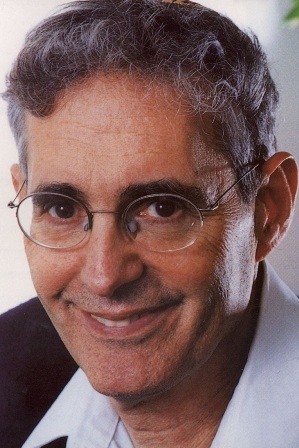
Prof. Cedar Howard is a distinguished Professor of Molecular Biology at the Hebrew University Medical School. His career spans decades of groundbreaking research in DNA methylation, gene regulation, and epigenetics, with significant contributions to understanding chromatin structure and transcriptional repression. Research Focus: His work primarily explores DNA methylation mechanisms Epigenetic gene silencing Chromatin dynamics CpG island regulation Transcriptional control Cancer epigenetics Scientific Contributions: His research on methylation patterns in higher organisms, transcriptional repression, and Polycomb-mediated epigenetic marks has shaped modern molecular biology. Notable publications include studies on DNA methylation inheritance, chromatin accessibility, and cancer-related methylation changes. Awards & Honors: Wolf Prize in Medicine (2008) Israel Prize in Biology (1999) Gairdner International Award (2011) Emet Prize in Medicine (2009) Member, Israel Academy of Sciences (2003)
Gerhard ThielView profile
Professor
Gerhard Thiel is a Professor of Botany at the Faculty of Biology, Technical University of Darmstadt, Germany, since 2005. He previously held a C2 Professorship at the same institution from 2000 to 2005 and served as a Group Leader in Plant Physiology at the University of Göttingen (1995-2000). His career includes postdoctoral work at the University of Göttingen (1991-1995) and the University of Cambridge, UK (1989-1991). Education: Diploma in Biology (University of Bremen, 1979-1986), PhD in Biology (University of Bremen, 1986-1989), Habilitation in Plant Physiology (1995) Thiel’s research spans cellular biophysics, ion channel structure-function analysis, viral ion channels, exo-endocytosis in plant cells, and protein engineering. His work integrates plant physiology with molecular and cellular mechanisms. He has held significant administrative roles, including Dean of the Faculty of Biology at TU Darmstadt (2006-2008, 2012-2014) and Co-Speaker of the Graduate College 1675 on “Molecular and cellular responses to ionizing irradiation” (2011-2014). He is also an Editorial Board Member for Plant Physiology, Plant Biology, and Scientific Reports. Scientific awards and honors include: ERC Advanced Grant (2016) Heisenberg Fellowship (1996-2000) DFG Fellowship for Habilitation (1991) Studienstiftung des Deutschen Volkes Fellowship (1986) Fulbright Fellowship (1884)
Markus TeigeView profile
Researcher
Markus Teige is a researcher at the Max Perutz Labs, affiliated with the Faculty of Life Sciences at the University of Vienna, in the Department of Biochemistry and Cell Biology. His work focuses on plant stress tolerance, calcium signaling, chloroplast development, protein phosphorylation, and organelle signaling networks. Current projects include Molecular mechanisms of plant stress tolerance (2021–2025) and Calcium regulation of chloroplast development & function (ongoing). Past projects include Auswirkungen von Virusinfektionen auf die Kalziumhomöostase (2020–2022). Research trends from his 62 publications emphasize calcium signaling in plant antiviral defense, chloroplast stress responses, and integrated multi-omics approaches to abiotic stress in crops like potato. His work bridges organelle physiology with whole-plant stress adaptation. Teige collaborates internationally on plant signaling and systems biology, contributing to Sustainable Development Goals (SDGs) related to climate-resilient agriculture and stress biology.

Sebastian FalkView profile
Associate Professor
Sebastian Falk is an Associate Professor at the Max Perutz Labs, part of the University of Vienna, within the Department of Structural and Computational Biology. His research focuses on the biogenesis and action of small RNAs, particularly piRNAs, employing structural biology and biochemical approaches to elucidate molecular mechanisms. He received the prestigious EMBO Young Investigator award in 2022. His lab investigates RNA surveillance pathways, mRNA splicing, and the interplay between RNA processing and degradation. Key projects include studying the MTR4-NRDE2-CCDC174 complex and piRNA processing factors in C. elegans. Falk has organized major symposia on RNA biology and contributed to high-impact publications in journals like Nature and Nucleic Acids Research . EMBO Young Investigator (2022) Grants: 'Characterization of piRNA processing factors in C. elegans' (2023-2026)
Dr. Alexandra Machado Ferreira Castilho is a researcher at the University of Natural Resources and Life Sciences, Vienna , affiliated with the Department of Plant Biotechnology and Cell Biology . Her work focuses on plant biotechnology and cell biology, contributing to advancements in biological sciences and genetic engineering. Research Interests Plant Biotechnology Cell Biology Genetic Engineering Plant Molecular Biology Contact Email: alexandra.castilho@boku.ac.at Phone: +43 1 47654-94353 Postal Address: Muthgasse 18, 1190 Vienna, Austria
Colin RuprechtView profile
Researcher
Colin Ruprecht is a Researcher at the Institute of Organic Chemistry , part of the University of Natural Resources and Life Sciences, Vienna (BOKU) . His career spans roles at prestigious institutions including the Max Planck Institute of Colloids and Interfaces and the Max Planck Institute of Molecular Plant Physiology . Ruprecht holds a PhD in Molecular Plant Physiology from the Max Planck Institute and a Diploma in Biology from Georg-August University of Göttingen. His research focuses on organic synthesis of carbohydrates , plant cell wall biochemistry , and glycosyltransferase characterization . He utilizes chemoenzymatic methods to create synthetic plant polysaccharide fragments for studying enzyme-substrate interactions and has developed glycan array technologies for high-throughput analysis of carbohydrate modifications. Ruprecht's publications highlight expertise in synthetic carbohydrate chemistry , plant glycan analysis , and cell wall dynamics . Key contributions include methodologies for producing azido-modified sugar nucleotides , defined arabinoxylan structures , and tools for enzyme active site mapping . His work bridges chemical synthesis, structural biology, and plant physiology to advance understanding of biomass composition and modification.
Stefan GorkaView profile
Researcher
Stefan Gorka is a Researcher at the Centre for Microbiology and Environmental Systems Science , active since 2019. His work focuses on soil microbial ecology, root exudation dynamics, and biogeochemical interactions in terrestrial ecosystems. Soil Microbiology Microbial Ecology Environmental Systems Science Plant-Soil Interactions Fatty Acid Analysis Mycorrhizal Networks His research involves innovative methodologies like microdialysis and high-throughput lipid extraction to study microbial metabolite dynamics, carbon allocation, and nutrient cycling. Recent publications highlight microbial preference for organic acids over sugars, temporal metabolite shifts in rhizospheres, and advancements in soil microbial community analysis. Stefan has contributed to 9 peer-reviewed publications and delivered 12 academic activities (talks/posters) since 2016, including collaborations with institutions like University of Vienna and international research teams. His work bridges microbial physiology with ecosystem-scale carbon dynamics.
Elke H. HeißView profile
Associate Professor
Elke H. Heiß is an Associate Professor at the University of Vienna , affiliated with the Faculty of Life Sciences and the Department of Pharmaceutical Sciences, Division of Pharmacognosy . Her research focuses on molecular mechanisms of natural products in cellular stress resistance, redox balance regulation, and metabolic immunomodulation. Key research areas include: AMPK-Nrf2 signaling crosstalk in cellular homeostasis Impact of biogenic compounds on glucose homeostasis and cellular bioenergetics Metabolic regulation of macrophage polarization Molecular pharmacology of indirubin derivatives in cardiovascular disease Current projects investigate: FWF Project P33778 (2021-2026): AMPK-mediated phosphorylation of Nrf2 targets FWF Project P32600 (2019-2024): Metabolic immunomodulation by natural products FWF Project P29392 (2016-2019): AMPK-Nrf2 interactions in stress response Her work combines chemical biology approaches with metabolic profiling to uncover novel therapeutic strategies for chronic diseases and aging-related conditions.