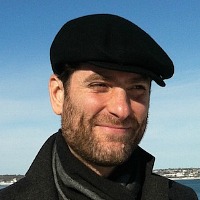
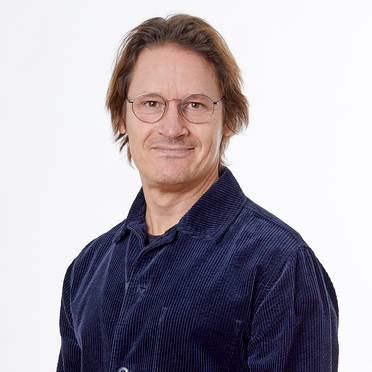
Jesús Vilar Martín is a Full Professor at the Department of Social Education and Social Work , Faculty of Social Education and Social Work , Ramon Llull University. He leads the Innovation Research and Social Analysis Group (GIAS) , focusing on ethical frameworks and complexity in socio-educational practices. Role: Full Professor Institution: Ramon Llull University Department: Social Education and Social Work Research Interests: His work explores the intersection of ethics and complexity theory in social education, emphasizing: Moral personality development in educational contexts Technical and ethical implications of complex systems Socio-educational interventions for vulnerable youth and juvenile justice populations Building ethical organizational cultures Key Scientific Contributions: His recent publications address deontological codes, emotional dimensions in decision-making, and professional satisfaction in early childhood education. Notable themes include complexity theory , ethical mentorship , and territorial analysis .
Vincent Hok is a Lecturer at the Laboratoire de Neurosciences Cognitives (LNC) at Aix Marseille Université, where he conducts research in cognitive neuroscience with a focus on spatial cognition and hippocampal function. His work primarily investigates how neural systems support spatial navigation, memory formation, and cognitive mapping in rodent models. Dr. Hok's research interests center on spatial cognition, hippocampal function, and neural coding mechanisms. His work explores how place cells and head-direction cells in the hippocampus and related brain structures represent spatial information, how these representations change during learning and memory tasks, and how stress and aging affect these neural systems. He employs sophisticated electrophysiological recording techniques to examine neural activity patterns during spatial navigation tasks, contributing significantly to our understanding of how the brain creates cognitive maps of the environment. His publication record shows consistent research output since 2004, with a focus on spatial navigation systems, hippocampal place cells, and the neural basis of memory. Dr. Hok's collaborative work spans multiple institutions and demonstrates expertise in both experimental neuroscience and computational analysis of neural data. His research has appeared in high-impact journals including Journal of Neuroscience, European Journal of Neuroscience, and Progress in Neurobiology. Dr. Hok has maintained a productive research program through collaborations with prominent researchers in the field including Bruno Poucet, Etienne Save, and Shane O'Mara. His work bridges experimental neuroscience with computational approaches to understand fundamental mechanisms of spatial cognition and memory.
Associate Professor Hamish Rennie serves in the Department of Environmental Management at Lincoln University's Faculty of Environment, Society and Design. He currently holds the position of Head of Department (since 2023) and is a Key Investigator in the Coasts and Catchments Area of the Centre for Land Environment and People. Rennie also serves as a Member of the Severe Weather Recovery Review Panel for the New Zealand Government (2023-2025) and maintains extensive professional engagement with regional councils, iwi, and community organizations. Professor Rennie's research focuses on geography, environmental planning and management, with particular emphasis on commons management (oceans, freshwater, biodiversity), especially multi-layered commons. His work examines how to empower people and establish formal and informal institutions to minimize resource use conflicts and achieve sustainable resilient livelihoods. As a professional planner, he views planning as a form of social technology or applied geography, with geography providing knowledge on spatial relationships with place. His research has directly shaped coastal policy and law in New Zealand. Analysis of Rennie's recent publications reveals a strong focus on ecosystem-based management, particularly in marine and coastal environments. His work bridges academic theory with practical application, addressing critical issues like climate change adaptation, resource management conflicts, and the integration of indigenous knowledge systems. A significant portion of his research addresses Aotearoa New Zealand's specific environmental challenges, while maintaining international relevance through comparative studies in the Philippines, Nepal, and other regions. 2020 NZ Geographical Society President's Award for Research Supervision 2011 NZ Planning Institute Award of Merit (for Lincoln Planning Review) New Zealand Planning Institute Distinguished Service Award Fellow of the New Zealand Geographical Society Professor Rennie has supervised numerous graduate students, currently overseeing 8 research students while having completed supervision of dozens of Master's and PhD candidates since 2018. His academic service includes extensive editorial work as Editor-in-Chief of the Lincoln Planning Review, service on multiple editorial boards (Coastal Management, MAST-Maritime Studies, Planning Quarterly), and examination of over 30 theses and dissertations. Rennie actively engages with professional bodies as a member of the New Zealand Planning Institute, NZ Association of Resource Management, New Zealand Geographical Society, Resource Management Law Association, NZ Association for Impact Assessment, and NZ Coastal Society. Rennie leads significant collaborative projects including the Sustainable Seas National Science Challenge and maintains active partnerships through the Waihora Ellesmere Trust and Te Pātaka o Rākaihautu/Banks Peninsula Geopark Trust. His work bridges academic research with practical application through advisory roles with communities like Mangamaunu and as an Expert Planning witness in Environment Court hearings.
Juan Jesús García Domínguez is a Professor in the Department of Electronics at the Universidad de Alcalá. His primary research focuses on sensor systems, wearable technology, and their applications in healthcare and smart environments. He leads the GEINTRA research group, dedicated to Electronic Engineering Applied to Intelligent Spaces and Transport. Dr. García Domínguez holds a PhD from Universidad de Alcalá (2006) with a thesis on infrared obstacle detection in railway environments. His research interests include biomedical sensors, inertial measurement units (IMUs), indoor localization systems (BLE/UWB), and elderly care technology. He has pioneered work on non-invasive behavioral monitoring, gait analysis, and wearable devices for vulnerable populations. Recent projects involve developing systems for activity recognition, fall detection, and telemedicine applications. Key contributions include the FrailWear wearable IoT device, BLE-based behavioral analytics frameworks, and multi-sensory systems for long-term patient monitoring. His work bridges electronic engineering with healthcare, emphasizing practical solutions for aging-in-place and smart transportation safety. Teaching includes digital electronics and active learning methodologies in engineering education. Dr. García Domínguez has published extensively on topics like acoustic positioning systems, IMU calibration algorithms, and NILM techniques for energy management. His lab focuses on translating sensor data into actionable insights for medical and environmental applications.
Lynsey Elizabeth Hollywood is a Senior Lecturer at Ulster University Business School and Manager of the Food & Drink Business Development Centre. She holds a PhD in food marketing from Ulster University (awarded 2008) and a First Class Honours BSc in Consumer Studies. Her academic career began after completing her PhD in 2009, with a position as Lecturer in Business Strategy, followed by a Research Fellow position at Queens University Belfast's Global Institute for Food Security (2010-2012), before returning to Ulster University. Her research portfolio centers on food marketing, consumer food choice, and food safety. She has served as Principal Investigator on multiple significant projects including the Food Standards Agency investigation into food retail promotions in Northern Ireland, safefood-funded studies on cooking skills across Ireland, and research on consumer use of meat thermometers that informed national safety campaigns. Her methodological expertise includes survey design, qualitative NVivo analysis, focus groups, interviews, and observation studies. Dr. Hollywood currently supervises five PhD students working on projects related to food marketing, consumer insight, food poverty, and product development. She serves as Course Director for the MSc Food Design and Innovation program and teaches modules including Consumer Marketing Management, Consumer Behaviour, Food and the Media, Product Development, and Food Retailing. Distinguished Research Fellow Award (2018) Impact Excellence Awards for Research (2018) Impact Excellence Awards (2017) UUSU Inspirational Lecturer of the Year (2016) Civic Ambassador Pin (2020) She is actively involved in professional networks including Belfast Food Network's Food Poverty steering group, the Chartered Institute of Marketing (as a volunteer), and the Women in Business Network. Her research contributes to multiple UN Sustainable Development Goals related to food security and sustainable consumption.
Simon D. Feldman is an Associate Professor of Philosophy at Connecticut College, where he has been teaching since 2003. He holds a Ph.D. from Brown University and specializes in ethics, moral psychology, feminist philosophy, and philosophy of law. Feldman teaches courses including Introduction to Philosophy, Ethics, Feminist Philosophy, Philosophy of Law, and has developed innovative courses on Philosophy of Race and Racism and The Meaning of Life. Feldman's research explores the complex relationship between individual self-understanding and community values. His work investigates moral contradiction, examining how people navigate inconsistent ethical beliefs in daily life. He has written the book 'Against Authenticity,' which critically examines the concept of being 'true to oneself,' and has presented papers on the ethics of bad faith and environmental ethics, particularly 'Not-In-My-Backyard' (NIMBY) claims. His current research focuses on the psychological dimensions of moral contradiction and the ethical implications of self-help ideologies. Feldman's scholarly work reveals a consistent theme of examining how theoretical ethical principles interact with practical moral living. His publications span contemporary moral philosophy, feminist theory, and applied ethics, often challenging conventional wisdom about moral consistency and authenticity. He frequently collaborates with colleagues across disciplines, as evidenced by his work with Professor Derek Turner on environmental ethics. Connecticut College 2010 John S. King Faculty Award for Excellence in Teaching Feldman is an engaged educator who delivered the keynote address at Connecticut College's 2010 Convocation ceremony on 'Honor Code Ethics 101.' He has received recognition for his teaching excellence and concern for students. His pedagogical approach emphasizes critical thinking and the application of philosophical concepts to real-world ethical dilemmas. Feldman regularly participates in the department's 'Pizza and Profundity' lecture series and other academic events that bring philosophers to campus to engage with students. As a member of the Philosophy Department in the Blaustein Humanities Center, Feldman contributes to a vibrant intellectual community that emphasizes interdisciplinary approaches to philosophical questions. The department's curriculum reflects Connecticut College's commitment to exploring profound questions about knowledge, human nature, and the good life through a 'liberated logical imagination.'
Dr. Victoria Fantozzi is an Associate Professor of Childhood and Early Childhood Education at Manhattanville University's School of Education. With extensive experience spanning academic research and practical classroom teaching, she brings a comprehensive perspective to her work in early childhood education. Education Ph.D. in Curriculum and Instruction, University of Virginia (2010) M.T. in Elementary Education, University of Virginia (2003) B.A. in Psychology, University of Virginia (2003) Research Focus Dr. Fantozzi's scholarly work centers on three interconnected domains that address critical challenges in contemporary early childhood education: Teacher education : Her research examines mentoring relationships, observation practices, and professional identity development among preservice teachers, revealing nuanced perspectives on what student teachers seek from mentor teachers. Curriculum history : She has conducted significant historical analysis of John Dewey's educational philosophy and practices, challenging common misconceptions about progressive education. Technology integration : Her groundbreaking work explores how digital tools can be meaningfully incorporated into play-based early childhood classrooms to support literacy development while maintaining developmentally appropriate practices. Her research consistently bridges theory and practice, ensuring scholarly contributions have direct classroom applications. Publication Patterns Dr. Fantozzi's publications reveal an evolving research trajectory from historical educational analysis toward practical technology applications. Her early work focused on teacher preparation and educational history, while her recent scholarship increasingly examines digital tools in preschool settings. A consistent theme throughout her work is the emphasis on technology as an enhancement to, rather than replacement for, developmentally appropriate practices. Her research has been published in leading journals including Educational Researcher, Young Children, and the Reading Teacher. Professional Leadership New York State Association of Early Childhood Teacher Educators (Treasurer) National Association for the Education of Young Children (Member) National Council of Teachers of English (Member) Association of Teacher Educators (Member) Teaching and Public Engagement Dr. Fantozzi teaches courses in Emergent Literacies, Early Childhood Foundations, and Research Methods. During the pandemic, she provided media commentary on the challenges of transitioning to online education, noting that "Online courses have planned routines and structures because you know you won't see students face-to-face. Here, teachers are being thrown into this. They have to take what they do daily in their classrooms, and make it work online." Her work with the Watchung Cooperative Preschool's iPad program demonstrates her practical approach to technology integration in early childhood settings.
Steven Davis is an Assistant Teaching Professor and Assistant Dean in the Honors College at Montana State University, with dual affiliation in the Chemical & Biological Engineering Department of the College of Engineering. His work focuses on engineering education through indigenous perspectives to broaden participation and improve student retention metrics including enrollment, persistence, and graduation rates. His research centers on integrating Indigenous Knowledge Systems into engineering pedagogy, developing culturally responsive models for mentorship and experiential learning. He designs service-learning projects and co-curricular activities to engage honors students while addressing systemic barriers in STEM education for underrepresented groups. Dr. Davis' recent publication on Tipi fluid mechanics demonstrates his innovative approach to connecting traditional knowledge with engineering principles. His work reveals emerging trends in decolonizing engineering curricula through place-based learning and community-centered pedagogy. His notable recognitions include: International Engineering Education Conference Best Presentation Award (2024) International Seed Grant Award - Honor Bound & University of Waikato (2024) Outreach and Engagement Seed Grant Award - Honor Bound & PLHI (2024) Nomination for LSAMP Bridge to Doctorate Fellow (2024) Sloan Indigenous Graduate Partnership Fellow (2023) He mentors students through senior design projects (ECHM411/412) and independent studies (HONR292/492), developing experiential learning frameworks. His grant portfolio includes international collaborations with University of Waikato and PLHI focused on indigenous knowledge exchange and land-based education. Dr. Davis leads community initiatives including the Honor Bound project, serves on the Montana Land Reliance Future Montana Committee, advises the IWIKUA Indigenous Names & Place-Based Knowledge project, and participates in Blackfeet cultural education through Bobcat Singers.
Bertolino Fabrizio is a University Researcher in General and Social Pedagogy (M-PED/01) at the Department of Human and Social Sciences of the University of Valle d'Aosta since 2003. He serves as co-director of the interuniversity advanced training course "Education and Nature: Role and Skills of the Outdoor Professional" (UniMib, UniBo, UniPr, UniVda) and co-director of the editorial collection "Educazione e Natura" (Junior-Spaggiari, Parma). His professional profile bridges environmental education and pedagogy, with a focus on creating meaningful connections between children and nature. Dr. Bertolino holds a Diploma di Laurea in Scienze Naturali (Natural Sciences) from the University of Turin (1995), with highest honors. His academic journey expanded from natural sciences to humanities, complemented by certifications as an Environmental Educator (1995) and Voluntary Ecological Guard (1995). Prior to his current position, he served as President of the Collina Torinese Natural Park (2001-2011) and held research scholarships at the University of Turin. His research interests focus on environmental and sustainability education, particularly examining the educational potential of rural contexts, outdoor learning environments, and nature-based pedagogy. He investigates how children's relationship with nature can be strengthened through various educational approaches including comics and picturebooks as teaching tools. His work bridges the "two cultures" of sciences and humanities, creating a unique interdisciplinary perspective on education. His recent publications demonstrate a consistent focus on nature-based education, with particular attention to rural contexts, outdoor learning environments, and the use of visual media like comics and picturebooks in education. His work spans theoretical frameworks, practical applications, and historical perspectives on environmental education, showing a deep commitment to understanding how educational practices can reconnect children with natural environments. Dr. Bertolino is actively involved in several research projects including the PRIN national project on Maria Montessori's pedagogy and the PRA project "Classrooms under the Sky" aimed at establishing a regional network of open-air schools. He serves on the scientific committees of journals "Bambini" and "Culture della Sostenibilità" and is a member of numerous academic associations including the European Science Education Research Association (ESERA) and the Italian Society of Pedagogy (SIPED).
Sen Chen is a Professor at Nankai University, holding positions in both the College of Cryptology and Cyber Science and the College of Computer Science. He leads the Nankai Software Security Laboratory (NKSSecLab) and is a member of Professor Zheli Liu's research group. Previously, he served as a tenured associate professor and research professor at Tianjin University (2021-2024), and as a research assistant professor at Nanyang Technological University (NTU), Singapore. Dr. Chen's research focuses on software security and software supply chain security, with particular emphasis on vulnerability analysis and malware detection. His work spans multiple domains including mobile security, AI security, open-source security, and intelligent software development and testing. His research has led to significant contributions in automated security vulnerability detection, software composition analysis, and security tool development for various platforms including Android, Java, and blockchain systems. Analysis of Dr. Chen's recent publications (2023-2025) reveals a strong focus on software supply chain security, with particular attention to vulnerability detection and remediation in open-source ecosystems. His work demonstrates expertise in applying advanced machine learning techniques to security problems, especially in the context of Android applications and containerized environments. There's a clear trajectory toward addressing emerging challenges in AI security and large language model supply chains, reflecting his ability to adapt research directions to evolving technological landscapes. ACM SIGSOFT Distinguished Paper Award (FSE 2024) ACM SIGSOFT Distinguished Paper Award (ASE 2023) First Place of the 13th Challenge Cup China College Students' Entrepreneurship Competition ACM SIGSOFT Distinguished Paper Award (ICSE 2023) Prototype Research Tool Award 2nd Place (Freestyle) in CCF ChinaSoft 2022 First Place of The 8th China International College Students' 'Internet+' Innovation and Entrepreneurship Competition ACM SIGSOFT Distinguished Paper Award (ASE 2022) ACM China Rising Star Award (ACM Tianjin Council) ACM SIGSOFT Distinguished Paper Award (ICSE 2021) First Class of Progress of Science and Technology Prize of Tianjin, 2020 Dr. Chen has successfully secured funding from multiple prestigious sources including key R&D programs, general and pre-research projects of the National Natural Science Foundation of China, and the Populus euphratica Forest Fund. His theoretical research has been applied by major companies such as State Grid, China Automotive Industry Corporation, and Huawei. He has mentored students to win national gold medals in both the 'Internet Plus' and Challenge Cup programs, demonstrating his commitment to student development and practical application of research. Dr. Chen leads NKSSecLab (Nankai Software Security Laboratory), which focuses on cutting-edge research in software security and supply chain security. The lab has developed several notable tools including SCTruster (a digital trust chain platform for software supply chain security) and LiDetector. The lab maintains strong international collaborations with institutions like Nanyang Technological University in Singapore and has established itself as a leading research group in software security within China.
Dr. Ye Hong is a Researcher affiliated with the Institute of Cartography and Geoinformatics at ETH Zürich, specifically within the Department of Geoinformation Engineering. Their work focuses on geospatial data analysis, urban mobility modeling, machine learning applications in transportation systems, and sustainable urban planning. They contribute to open-source tools like Trackintel for mobility analysis and have published extensively on topics such as mobility data synthesis, traffic prediction, and privacy-preserving techniques. Research interests emphasize integrating multi-source geospatial data with deep learning to address challenges in urban sustainability, poverty reduction, and transportation efficiency. Their articles highlight innovations in trajectory generation, uncertainty quantification, and contextual-aware neural networks for spatial-temporal prediction. Dr. Hong’s publications explore the interplay between urban infrastructure, human behavior, and environmental impact. Key themes include accessibility measurement in cities, carbon footprint analysis, and the ethical implications of tracking mobility data. Their work bridges theoretical advancements in geoinformatics with practical applications in urban policy-making and infrastructure design. Notable contributions include frameworks for causal intervention in mobility data, methods to estimate poverty reduction efficiency using remote sensing, and analyses of tracking duration effects on location privacy. These efforts demonstrate a commitment to leveraging geospatial technologies for socially impactful research.
Konstantinos A. Tsintotas is an Assistant Professor at the Department of Information and Electronic Engineering, International Hellenic University. His research focuses on artificial intelligence, robotics, computer vision, and their applications in smart cities, healthcare, and manufacturing. He is actively involved in advancing AI-driven systems for critical infrastructure management, robotic vision, and embedded device technologies. His work spans theoretical advancements and practical implementations, including projects like SLAM algorithms for autonomous navigation, deep learning models for medical diagnosis, and IoT-integrated smart supply chains. Tsintotas also explores ethical implications of AI in human action recognition and contributes to neuromorphic computing through spiking neural networks. Key technical contributions include ReJSHand (real-time hand pose estimation), fall detection systems for embedded devices, and visual place recognition frameworks. His interdisciplinary approach bridges computer science, electrical engineering, and biomedical applications, reflecting a strong commitment to innovation at the hardware-software interface. Notable trends in his publications emphasize AI ethics, multimodal perception for robotics, and low-power embedded solutions. Ongoing work includes advancing digital twin technologies for supply chains and refining bio-inspired neural architectures for robotics applications.
Dr. Stephanie Godrich is a Senior Lecturer in Nutrition at Edith Cowan University's School of Medical and Health Sciences and a core member of the Nutrition & Health Innovation Research Institute. With 20 years of experience as a Registered Public Health Nutritionist (Nutrition Society of Australia), her work bridges community practice, academic research, and teaching. PhD in Food Security & Child Nutrition (ECU, 2017) BHealthSc in Nutrition (ECU, 2006) Specializes in regional/remote populations Her research focuses on food security , sustainable food systems , and healthy built environments for vulnerable populations. She leads systemic innovation approaches across food production, health promotion, and town planning sectors. Recent work explores regenerative agriculture and human rights-based frameworks for food access. Current teaching roles include: NUT3221 Community Nutrition NUT6110 Food Vision Bachelor of Health Science (South West Campus course lead) Scientific awards highlight her impact: 2025: AHPA Advocacy Award 2024: NHMRC Working Group member 2022: Universities Australia Citation for Student Learning 2020: ECU Vice Chancellor's Teaching Award Advising includes supervision of a PhD project on place-based sustainable horticulture and a Master's thesis about regional food security challenges. Major grants include: $555,274 Healthway Food Community Initiative (2022–2025) $93,583 Food Security Plan (2025–2026) $469,078 Pathway to Healthy Food Environments (2018–2023)
Jonas Mikaels is a Senior Lecturer in Outdoor Studies at the Swedish School of Sport and Health Sciences (GIH), affiliated with the Department of Movement, Culture and Society. He holds a PhD in Sports Science and specializes in outdoor education, health pedagogy, and posthuman theorizing. His research focuses on re-conceptualizing outdoor life in educational curricula through a relational materialist lens, emphasizing spatial and environmental learning paradigms. Education: PhD in Sports Science from GIH Teaching Roles: Undergraduate/postgraduate courses in outdoor studies Research Group: Member of Research in Education & Movement Culture – an interdisciplinary humanities/social sciences group His work examines human-nature relations through posthuman frameworks, challenging conventional epistemologies to foster embodied place-based learning. Recent publications explore salutogenic models linking outdoor activities to health and reimagining educational thought paradigms. No academic awards recorded but maintains active participation in outdoor initiatives as a skier, kitesurfer, and yogi.
Rachael Durrant is a Senior Research Fellow at SPRU (Science Policy Research Unit) within the University of Sussex Business School, where she has been based since 2010. Her research focuses on societal transformations toward sustainability, with particular attention to food and land-use systems, civil society roles, and eco-feminist perspectives on land-based labor. Education: DPhil in Science, Technology and Innovation Studies, University of Sussex (2010-2014) MA in Sustainable Development Advocacy, University of Worcester (2007-2008) MA in Geography, University of Cambridge (2003-2006) Durrant's research explores how people and organizations guide transformations toward greener, fairer societal systems through socio-technological, ecological, psycho-social, and cultural lenses. Her current Leverhulme-funded project investigates women's increasing participation in land-based work (farming, forestry, conservation) in 21st century Britain through an eco-feminist perspective. She has developed expertise in community-engaged research methods, including participatory observation, co-designing research with non-academic beneficiaries, and using visual methods like graphic journaling and ethnographic filmmaking. Her publication record reveals consistent focus on sustainability transitions across multiple domains. Early work examined civil society roles in sustainable food systems, followed by research on urban sustainability transitions in European cities, community-connected pastoral agriculture, rewilding, and social innovation in energy systems. More recently, her work has increasingly integrated gender perspectives, particularly exploring women's relationships with land-based work. Her interdisciplinary approach bridges Science, Technology and Innovation Studies with Gender Studies, Cultural Geography, and Rural Studies. Scientific Recognition: Enabling Impact Award from University of Sussex's Vice Chancellor for Research (2015) Leverhulme Trust Early Career Fellowship (2021-2026) Durrant has secured significant research funding including her current Leverhulme Fellowship 'Eco-Rural Feminism: a new generation of women heading back to the land' and participation in the EU-funded SONNET project on social innovation in energy transitions. She has advised on Master's dissertations, including work on gender-responsive climate financing in South Africa. Her professional activities include committee membership with the Brighton and Sussex Universities Food Network and service on the Esmée Fairbairn Foundation's Food Strand panel. Her collaborative approach extends to building special interest networks like the Brighton and Sussex Universities Food Network (BSUFN) and working with diverse organizations including Unilever's Sustainable Agriculture team, Heineken NV, the Guardian Hay Festival, Esmee Fairbairn Foundation, and the Food Ethics Council.