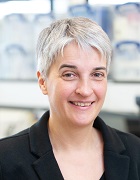
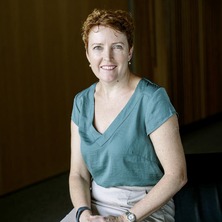
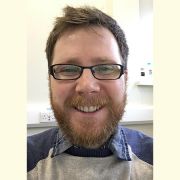
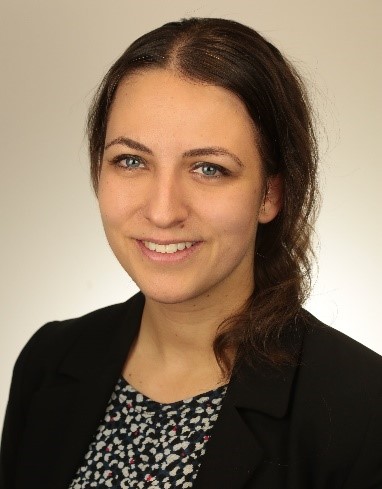
Prof. Beat Ruhstaller is a Professor at the ZHAW School of Engineering, leading research in Organic Electronics and Photovoltaics. He specializes in perovskite solar cells, OLEDs, and optoelectronic device simulation. His work focuses on improving device efficiency through charge transport analysis, photon recycling, and material characterization. He heads multiple projects including 'Organic Electronics and Photovoltaics Projects', 'Perovskite-on-Silicon Tandem Photovoltaics', and 'Advanced Materials for Opto-Electronic-Ionic Devices'. Research Interests: Organic Electronics, Photovoltaic Technologies, Perovskite Materials, Device Simulation, Charge Transport Phenomena, and Optoelectronic Devices. His interdisciplinary approach combines experimental and computational methods to tackle challenges in energy-efficient optoelectronics. Key Projects: Tandem solar cell design, perovskite stability, and OLED degradation mechanisms. Over 90 peer-reviewed articles and book chapters, including contributions to Nature Communications , Advanced Materials , and Physical Review Applied . Active in international conferences like EU PVSEC and SID.
Prof. Dr. Julia Schnabel is the TUM Liesel Beckmann Distinguished Professor and Helmholtz Distinguished Professor at TUM's TUM School of Computation, Information and Technology. Her research focuses on computational imaging and AI in medicine, including medical image processing, machine learning, motion modeling, and quantitative imaging. She holds IEEE, Ellis, and MICCAI Society fellowships, and has pioneered work in image reconstruction, artifact correction, and AI-based diagnostics. Educations: Bachelor/Master from TU Berlin (1993) PhD from University College London (1998) Postdocs at UMC Utrecht, King's College London, and UCL Her research interests span medical AI, deep learning for medical imaging, and clinical evaluation methodologies. Key contributions include frameworks for motion artifact correction in MRI, physics-informed neural networks, and benchmark datasets like NOVA for anomaly detection in brain MRI. She has authored over 100 publications, with recent work advancing unsupervised anomaly detection and federated learning in healthcare. Prof. Schnabel leads interdisciplinary projects at TUM and Helmholtz Zentrum München, focusing on AI-driven solutions for diagnostic and therapeutic challenges. Her labs develop tools for real-time cardiac imaging, histopathology segmentation, and trustworthy AI guidelines (FUTURE-AI initiative).
Yafang Cheng is Director of the Aerosol Chemistry Department at the Max Planck Institute for Chemistry since 2024, with concurrent appointments as Guest Professor at Peking University (2023-) and Distinguished Guest Professor at University of Science and Technology of China (2021-). Her research integrates experimental methods , multi-scale modeling , and machine learning to advance understanding of aerosol particle dynamics and their impacts on air quality , public health , and climate change . Ph.D. in Environmental Sciences (Peking University, 2007) B.Sc. in Environmental Sciences (Wuhan University, 2001) Her work focuses on reactive nitrogen chemistry , aerosol acidity , black carbon effects , and planetary boundary layer interactions . She has developed novel instrumentation for aerosol analysis and pioneered machine learning applications in atmospheric science. Recent publications emphasize black carbon mitigation strategies (One Earth 2023), aerosol microdroplet pH (Chem 2023), and SARS-CoV-2 transmission modeling (Science 2021). These studies demonstrate interdisciplinary approaches spanning environmental chemistry , climate physics , and public health policy . Fellow: AAAS (2023), AGU (2022) Joanne Simpson Medal (AGU, 2022) Science Breakthroughs of the Year (Falling Walls, 2021) Highly Cited Researcher (Web of Science, 2021-2022) Minerva Outstanding Female Scientist Award (2014) She has mentored 38 early-career researchers (21 postdocs, 17 PhD students) who have achieved professorships , tenured positions , and international awards . Her institutional leadership includes initiating academic exchange programs between European and Chinese institutions.
Professor Sandy Brauer, Deputy Executive Dean at The University of Queensland's Faculty of Health, Medicine and Behavioural Sciences, is a leading researcher in neurorehabilitation, aging, and balance disorders. Her work focuses on improving postural control, gait, and physical activity in stroke survivors and individuals with neurological conditions. Executive Leadership: Deputy Executive Dean, Faculty of Health, Medicine and Behavioural Sciences Research Center: Director of Centre for Neurorehabilitation, Ageing and Balance Research Her research addresses impaired postural control's devastating impacts, developing physiotherapy techniques and cost-effectiveness analyses for clinical translation. Current themes include: Post-stroke physical activity recovery Dual-task training for Parkinson's patients Community mobility challenges SMART Arm device for stroke rehabilitation Hospital fall prevention Professor Brauer's recent work explores digital health implementations, machine learning for rehabilitation outcomes, and sensory impairments in neurological populations. She actively supervises PhD candidates in movement science and biomechanics. Key affiliations include: Queensland University Technology collaborations Sonova AG research on hearing-loss balance issues NHMRC and ARC funded projects
Ingrid Mann is a Professor in Space Physics at the UiT The Arctic University of Norway , Department of Physics and Technology. She leads and participates in multiple externally funded research initiatives including the Cosmic dust injection into the upper Earth atmosphere , MXD 2 rocket project to study the mesosphere , and EISCAT Research infrastructure project . ORCID: 0000-0002-2805-3265 Member of research group Space Physics Member of projects: Intermittent fluctuations in physical systems , Maxidusty-2 , CASCADE , Codia , Boosting Space Business , and Forskningsparken 1 A216 Her research spans space and atmospheric physics , focusing on dusty plasmas , cosmic dust dynamics , and polar atmosphere interactions . She employs spacecraft observations , EISCAT radar , rocket experiments , and machine learning for data analysis. Recent publications highlight cosmic dust detection with Parker Solar Probe and Solar Orbiter , PMSE multilayer properties , and dust impact signal modeling . Her work integrates radar , optical , and spacecraft data to understand polar atmospheric systems. She teaches FYS-2000 Kvantemekanikk , FYS-2019 Sun, Planets, and Space , and supervises G-Chaser student rocket projects . Her research group contributes to EISCAT_3D infrastructure and interplanetary dust modeling . Co-edited books: Nanodust in the Solar System (2012) Small Bodies in Planetary Systems (2008) Modern Meteor Science (2005)
Timo Laaksonen is a Professor of Pharmaceutical Nanotechnology at the Faculty of Pharmacy, University of Helsinki , Finland. His research spans biomaterials, photo-activated systems, and controlled drug release mechanisms, with a focus on nanocellulose applications and photon upconversion technologies. Doctor of Science (Technology), Helsinki University of Technology (2007) Master of Science (Technology), Helsinki University of Technology (2002) Docent, University of Helsinki (2010) Research interests include: Utilizing nanofibrillar cellulose for sustained drug delivery Developing light-responsive hydrogels via triplet energy transfer Advancing photon upconversion for low-power drug release Modeling drug release kinetics from nanomaterials His recent publications highlight trends in DNA origami nanocarriers , liposomal photorelease , and 3D-printable hydrogels , blending nanophotonics and biomaterials engineering . Awards include the Young Researcher's Award 2012 and Gust. Komppa Prize 2008 for his doctoral thesis. He supervises doctoral research and leads projects like Bioblocks (Foundation for Pharmaceutical Sciences) and TARDIS (Academy of Finland).
Dr. Md Reduanul Hossain is a Research Fellow at the University of Newcastle's School of Medicine and Public Health, specializing in reproductive medicine within the Mothers and Babies Research Program. He holds a PhD in Reproductive Medicine (Newcastle) and dual Master's degrees (MSc Pharmaceutical Science, MPhil) from the University of Greenwich, UK. His research integrates reproductive biology, nanomedicine, and pharmacology, focusing on: Developing uterine-targeted nanoparticle systems for preterm birth prevention Identifying synergistic tocolytic drug combinations using human tissue models Investigating placental exosomes in uterine contractility Creating precision medicine approaches for gynaecological cancers via patient-derived xenografts/organoids Publications emphasize tocolytic efficacy , nanoparticle drug delivery , and myometrial physiology , with recent work advancing quantitative methods for contraction analysis and low-dose combination therapies. Awards & Grants: Animal Welfare Award (2023) UNRSC/UNIPRS Scholarships (2017) $78,726 in active funding for placental biopsy/exosome projects (2025–2026) He mentors students through Honours/Master's projects in reproductive sciences and molecular biology, though no named advisees are documented.
Dr. Steven Parsons is a Lecturer in Astrophysics and an Ernest Rutherford Fellow at the University of Sheffield's School of Mathematical and Physical Sciences. His research focuses on white dwarf stars and their binary systems, particularly eclipsing binaries that provide precise measurements of stellar properties. As part of the astronomy group, he contributes to understanding stellar evolution, binary star interactions, and the progenitors of Type Ia supernovae. Dr. Parsons received his academic training at: MPhys in Physics with Astrophysics at the University of Kent (2008) PhD at the University of Warwick under Professor Tom Marsh Dr. Parsons specializes in the study of white dwarfs - the incredibly dense remnants of dead stars that have masses similar to the Sun but are only Earth-sized. His research particularly focuses on white dwarfs in binary systems, especially those that eclipse, allowing precise measurements of their properties. He uses telescopes worldwide to investigate these systems to better understand stellar structure, composition, and evolution. A key aspect of his work involves searching for progenitors of Type Ia supernovae in our Galaxy to determine how these white dwarfs gain mass to reach the Chandrasekhar limit and explode, which has implications for cosmological distance measurements. Dr. Parsons' publication record demonstrates a consistent focus on white dwarf binary systems, with particular emphasis on eclipsing binaries that allow precise mass and radius measurements. His work spans observational studies using ground-based and space telescopes, theoretical modeling of binary evolution, and large-scale surveys to identify and characterize white dwarf systems. Recent work shows increasing involvement with major astronomical surveys like Gaia and TESS, expanding the scope of his research to larger stellar populations and connecting observational data with theoretical models of stellar evolution. Dr. Parsons has received several prestigious fellowships supporting his research: ESO/Comite Mixto Post Doctoral fellowship at Universidad de Valparaiso FONDECYT Post Doctoral fellowship Leverhulme Early Career Fellowship STFC Ernest Rutherford Fellowship As an active researcher in the astronomy group at Sheffield, Dr. Parsons collaborates extensively with international teams on white dwarf research. His work with the HiPERCAM project demonstrates his involvement in cutting-edge instrumentation for high-speed astronomy. While specific student advisement details aren't provided, his role as Astronomy L2 Year Tutor indicates significant involvement in undergraduate education and mentorship. His research connects with broader efforts to understand stellar evolution and the role of binary systems in shaping the final stages of stellar life. Dr. Parsons is a key contributor to the 'white dwarf binary pathways survey' which systematically investigates the evolution of white dwarf binary systems. His work connects observational astronomy with theoretical models of binary star evolution, particularly focusing on post-common envelope binaries and systems that may lead to Type Ia supernovae. The team utilizes data from major observatories worldwide and space-based missions to build comprehensive understanding of these stellar systems, with implications for fundamental astrophysics and cosmology.
Sandeep Gupta is a Professor and Director of the School of Computing and Augmented Intelligence at Arizona State University's Ira A. Fulton Schools of Engineering. He also serves as a Senior Global Futures Scientist. His work bridges computer science, engineering, and healthcare applications with a focus on creating reliable cyber-physical systems that interact safely with humans. Education: Ph.D. from The Ohio State University (1995) Research Interests: Professor Gupta's research spans cyber-physical systems, green and sustainable computing, mobile and pervasive computing, and parallel and distributed computing. His work increasingly focuses on human-in-the-loop systems where AI and humans collaborate safely, particularly in healthcare contexts. Recent research integrates large language models with cyber-physical systems to enhance safety and operational effectiveness in critical applications like medical monitoring and industrial automation. Research Trends: Analysis of Professor Gupta's recent publications reveals a strong focus on operational safety in human-AI collaborative systems, particularly in healthcare applications. His work combines physics-guided models with machine learning to detect "unknown-unknowns" in safety-critical systems, develops LLM-based approaches for medical image classification, and creates frameworks for ethical human-AI collaboration. The research increasingly addresses real-world challenges in diabetes management, epilepsy diagnosis, and industrial automation. Professional Service: IEEE Communication Letters Editorial Board, Area Editor (2008-Present) IEEE Journal on Special Areas in Communications - Issue on Body Area Network, Co-editor (2006-Present) Elsevier COMNET - Computer Network Journal, Reviewer (2008-Present) Technical Advisory Committee Chair for Networks (2005-Present) Advising and Grants: Professor Gupta has secured numerous research grants from NSF, NIH, Intel, Raytheon, and other organizations, totaling millions of dollars. His research portfolio includes projects on smart stadiums, mobile ECG sensing, power-aware scheduling, medical device verification, and sustainable data center management. He actively advises PhD and Master's students through thesis courses and research supervision, focusing on cyber-physical systems and healthcare applications. Labs and Research Groups: Professor Gupta leads research in cyber-physical systems with applications in healthcare, sustainable computing, and mobile networks. His work involves interdisciplinary collaboration across engineering, computer science, and medical domains, particularly through ASU's Global Futures initiatives.
Dr. Monika Rojewska is a faculty member at the Institute of Chemical Technology and Engineering, Department of Chemical Technology, at Poznan University of Technology. She earned her PhD in Chemical Technology from the same institution in 2012 and has been actively contributing to research in membrane science and biomaterials. Her primary research interests focus on the biophysical analysis of model biological membranes, with special emphasis on interactions between membrane components and various compounds including drugs, biosurfactants, nanoparticles, and mucoadhesive polymers. She specializes in Langmuir monolayer techniques and has extensive experience with membrane preparation and characterization. Dr. Rojewska's publication record demonstrates a consistent research trajectory in membrane science and drug delivery systems over the past decade. Her recent work (2022-2025) has increasingly focused on the interactions between natural compounds like saponins and bacterial membranes, with implications for antibiotic enhancement and novel drug delivery approaches. She has published in high-impact journals across biophysics, materials science, and pharmaceutical research. As an academic, Dr. Rojewska teaches courses in Chemical Technology, including Fundamentals of Chemical Technology, Technology of Monomers, and Membrane Separation Techniques. She also serves as an Associate Editor for the journal "Membranes" and has participated in the "Integrated university for the future" project. She has supervised doctoral research, most notably guiding Aleksandra Bartkowiak's dissertation on mucoadhesive polymers and their mixtures as components of drug carriers. Her collaborative work extends to the Department of Drug Form Technology at Poznan University of Medical Sciences since 2011.
Klaus Richter is an Associate Professor at the Faculty of Chemistry, University of Vienna, affiliated with the Department of Functional Materials and Catalysis. His research spans materials science, catalysis, and thermodynamics. Academic Rank: Associate Professor (ao. Univ.-Prof.) Research Focus: Phase diagrams, intermetallic compounds, vapour-solid synthesis, and catalytic applications for hydrogen production Projects: Notable work on Al-Cu-X (X=Si, Zn) phase diagrams and intermetallic nanoparticle synthesis Richter’s publications emphasize sustainable energy solutions through intermetallic catalysts, with recent studies on Ni-Te and Pt-Zn nanoparticles for green hydrogen production. His work integrates computational modeling (CALPHAD) with experimental phase analysis. Key scientific awards include the APDIC Best Paper Award (2014) and JPED Editors Choice Award (2018). He actively contributes to conferences and collaborative research in intermetallic systems.
Bruce Dick is a Professor in the Department of Anesthesiology & Pain Medicine at the University of Alberta's Faculty of Medicine & Dentistry. He maintains dual clinical roles at the Pediatric Chronic Pain Clinic (Stollery Children's Hospital) and the Multidisciplinary Pain Centre (University of Alberta Hospital), integrating research with direct patient care. Education: Ph.D. in Clinical Psychology (Dalhousie University, Pediatric Pain Research Laboratory) Clinical training at Royal National Hospital for Rheumatic Diseases (Bath, UK) and IWK Health Centre (Halifax, NS) AHFMR Postdoctoral Fellowship (University of Calgary/Alberta Children's Hospital) Dr. Dick's research examines chronic pain's impact across the lifespan with particular focus on cognitive function , disability , sleep disturbances , and social stigmatization . His work bridges pediatric pain management with innovative distance treatment programs and population-level interventions. Key themes include psychosocial pain modulation in adolescents, virtual care adaptation during crises, and cancer pain self-management systems. Analysis of his 2020-2022 publications reveals dominant trends in pandemic-responsive pain care delivery, caregiver-focused interventions, and adolescent social dynamics. His work spans pediatric psychology , digital health implementation , and pain epidemiology with strong emphasis on real-world clinical translation. Scientific Awards: AHFMR Postdoctoral Fellow As a registered clinical psychologist, Dr. Dick directs multiple research streams including the Chronic Pain Network initiatives and Teens Taking Charge cancer pain program. His grant portfolio supports telehealth innovation and longitudinal studies of pain's social impact, while mentoring focuses on training the next generation of pain researchers through clinical rotations and co-authorship opportunities. Dr. Dick leads collaborative teams across the Stollery Children's Hospital Pediatric Chronic Pain Clinic and University of Alberta Multidisciplinary Pain Centre , with active partnerships in the Canadian Pain Society and international pain research consortia. Current projects emphasize scalable digital interventions and neurocognitive pain mechanisms using MEG technology.
Manuela Reben serves as a Professor at AGH University of Science and Technology in Kraków, Poland, within the Faculty of Materials Science and Ceramics. Her primary appointment is in the Department of Glass Technology and Amorphous Coatings, with office space in building A-3, room 222. She holds the significant administrative role of Vice-Dean of the Faculty of Cooperation and participates in multiple governance bodies including the Chemical Engineering Discipline Council, Faculty College, University Senate, and Senate Committee on Science. Her research centers on advanced glass systems with specialization in optical materials , radiation shielding composites , and waste glass valorization . Key investigations include structural characterization of rare earth-doped tellurite and phosphate glasses, development of novel compositions for photonic applications, and utilization of industrial glass wastes in sustainable construction materials. Her work bridges fundamental materials science with practical engineering solutions for laser technology, nuclear shielding, and eco-friendly building products. Analysis of her recent publications (2022-2025) reveals dominant research trajectories in three interconnected domains: (1) Engineering phosphate/tellurite glass matrices doped with rare earth ions for broadband optical amplifiers and laser gain media; (2) Developing radiation-shielding glasses with optimized attenuation properties for medical and nuclear applications; (3) Transforming industrial glass wastes into functional construction materials through sintering process optimization. These efforts demonstrate consistent innovation in glass composition design and property tailoring. Scientific awards: No awards documented in available sources. Advising activities and research grants are not specified in current documentation, though her leadership roles suggest significant mentorship responsibilities. Her departmental affiliation indicates active participation in collaborative research teams focused on glass technology and amorphous materials development.
Pierre Lermusiaux is the Nam Pyo Suh Professor of Mechanical Engineering and Associate Department Head for Operations Research at MIT. His research focuses on numerical ocean modeling, data assimilation, uncertainty quantification, and applications to ocean dynamics and engineering. He holds a B/M.Eng. from University of Liège, M.Sc. and Ph.D. from Harvard University. Recognized with awards like the MIT Doherty Chair and Spira Teaching Award, his work bridges computational science and marine systems. Education: B/M.Eng., University of Liège, 1992 M.Sc., Harvard University, 1993 Ph.D., Harvard University, 1997 Research Interests: Combines oceanographic modeling with advanced computational methods. Specializes in stochastic ocean prediction, autonomous systems optimization, and interdisciplinary applications of uncertainty quantification. His work enables real-time environmental forecasting and marine robotics navigation strategies. Publications: Focus on developing computational frameworks for probabilistic ocean forecasts, acoustic propagation modeling, and machine learning-based environmental prediction systems. Recent work emphasizes adaptive sampling strategies and energy-efficient path planning for underwater vehicles. Awards: Fulbright Foundation Fellowship (1993-96) Ruth and Joel Spira Award for Teaching (2010) MIT Doherty Chair in Ocean Utilization (2009-2011) Advising & Grants: Leads MIT’s MSEAS group and has secured funding from NSF, ONR, and international collaborations. Advises projects on ocean robotics, climate modeling, and underwater acoustics. Key contributions include the MIT Red Sea Modeling System and real-time forecasting platforms. Labs/Teams: Directs MIT’s multidisciplinary ocean modeling efforts, integrating mechanical engineering, computer science, and environmental science. Co-leads initiatives like the Ocean Predictions with Ensembles (OPEN) project and the METEOR autonomous observatory system.
Olaf Schmidt is a Professor at the School of Agriculture and Food Science, University College Dublin (UCD). His academic career includes roles such as Senior Lecturer/Associate Professor (2008–2017) and extends back to a Post-doctoral Research Assistant position (1999–2001). He holds a Ph.D. from UCD (2000), an M.Sc. in Soil Science from the University of Aberdeen (1993), and a Diplom-Agraringenieur from Martin-Luther-University Halle-Wittenberg (1992). Research Focus: Schmidt specializes in soil ecology, earthworm biology, stable isotope analysis, and sustainable agriculture. His work addresses topics like soil restoration, invasive species impacts, food authentication, and ecosystem rehabilitation. He leads projects such as Edaphobase 2.0 and the Gunnera tinctoria invasion studies. His research integrates molecular techniques, isotopic tracing, and large-scale data synthesis. Awards & Recognition: Fellow of the Royal Entomological Society (2023) Honorary Member of the Association of Applied Biologists (2022) Fellow of the Institute of Soil Science (2023) Teaching & Outreach: Coordinates modules on soil science, environmental microbiology, and the circular bioeconomy. Engages in public lectures on topics like earthworm contributions to soil health. Collaborates internationally, including a visiting professorship at the University of Agriculture in Kraków (2022). Grants & Impact: Contributed to the SmartGrass project, enhancing sustainable agricultural practices through multispecies swards. His work on peat alternatives and mine tailings rehabilitation has practical implications for environmental management and policy. Labs & Collaborations: Active in the Global Soil Biodiversity Initiative and Soil BON network. Edaphobase 2.0 exemplifies his data-driven approach to soil biodiversity research.