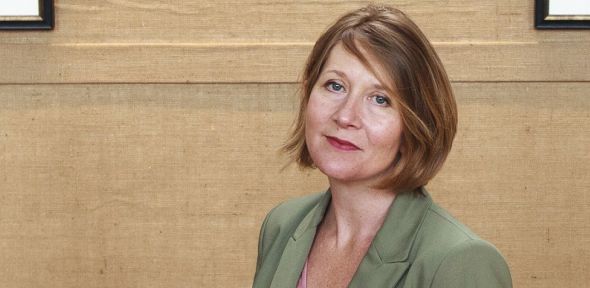
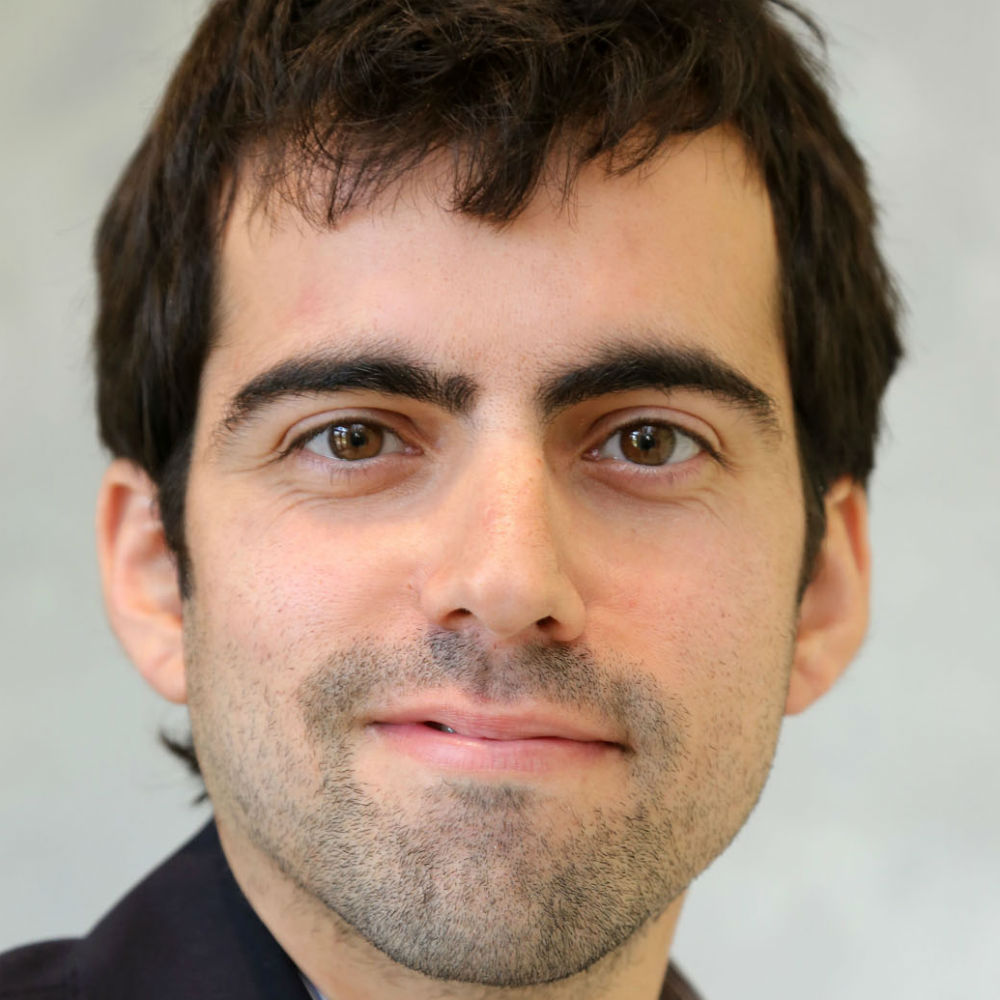
Professor Emma Widdis is a leading scholar at the Faculty of Modern and Medieval Languages and Linguistics at the University of Cambridge, specializing in the intersection of Soviet cinema, ideology, and cultural geography. Her work explores the reeducation of sensory perception through film, early Soviet urban spaces, and the construction of subjectivity via cinematic techniques. Teaches 20th-century Russian/Soviet literature, cinema, and film theory Focuses on sensory engagement, political avant-garde, and urban spatial representation Supervisor for MPhil and PhD students in Slavonic Studies Her recent book Socialist Senses (2017) examines how cinema shaped Soviet perceptions of reality. Her publications span topics like silence in sound film, set design materiality, and costume symbolism in early Soviet cinema. While no formal scientific awards are listed, her research has been supported through institutional grants and collaborations with centers like CRASSH and Cambridge Language Sciences.
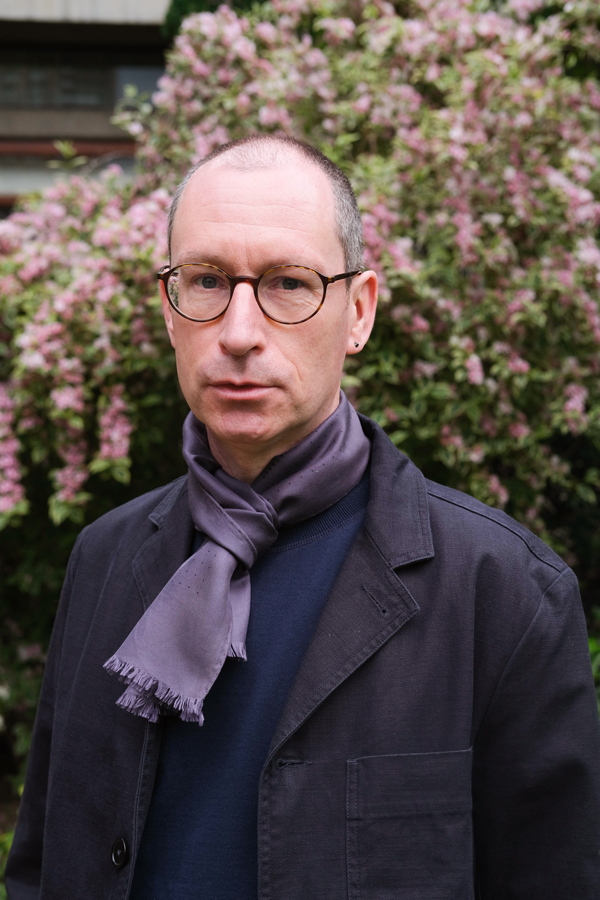
Jennifer Rushworth is an Associate Professor in French and Comparative Literature at University College London (SELCS). She holds a DPhil in Medieval and Modern Languages from the University of Oxford (2010–2013) and previously served as a Junior Research Fellow at St John's College, Oxford (2013–2017). Her research focuses on mourning, medievalism, music, and interdisciplinary studies spanning literary theory, cultural analysis, and philosophy. She has published extensively, including her monograph Proust’s Songbook (Penn Press, 2024). Her work aligns with Sustainable Development Goals 4 (Quality Education), 5 (Gender Equality), and 11 (Sustainable Cities and Communities). Education: DPhil in Medieval and Modern Languages, University of Oxford (2010–2013) Her research integrates musicological, philosophical, and critical-theoretical approaches to modern literature. Recent work explores intersections between memory, aesthetics, and cultural heritage. She teaches courses on comparative literature, medievalism, and French literature. Her academic contributions emphasize interdisciplinary dialogue, with a focus on how literary and musical forms articulate historical and philosophical themes.
Professor Brian Dillon is the Professor of Creative Writing and Director of Creative Writing at Queen Mary University of London's School of English and Drama. Previously, he served as Head of the Writing Programme at the Royal College of Art. He holds a PhD from the University of Kent (1999) and has authored numerous books blending creative nonfiction, literary criticism, and art analysis. His research focuses on the essay form, autobiography, literature-visual arts intersections, and writing about illness. Key publications include *Suppose a Sentence* (2020), an experimental essay collection analyzing literary sentences, and *Affinities* (2023), exploring photographic imagery. Current projects include a study of Kate Bush's *Hounds of Love* and an essay on education. Dillon frequently contributes to *The Guardian*, *London Review of Books*, and *Artforum*, and has curated exhibitions for Tate and Hayward Galleries. His awards and fellowships are not explicitly listed here, but his work has been widely exhibited and published internationally. He supervises doctoral students in creative writing and related fields, emphasizing interdisciplinary approaches to literature and art. Public engagement includes talks at institutions like the British Museum and Pompidou Centre, and appearances on BBC Radio 3 and RTE Radio. His work bridges academic critique with accessible creative writing, making complex themes engaging for broader audiences.
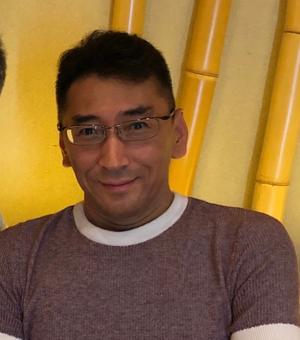
Sho Konishi serves as Director of the Nissan Institute of Japanese Studies and Associate Professor in Modern Japanese History at the University of Oxford, holding dual appointments in the Faculty of History and the Oxford School of Global and Area Studies. His interdisciplinary work bridges Japanese studies with transnational intellectual history, focusing on non-imperial connections between Japan, Russia, and global networks. Undergraduate studies completed as a U.S. military school cadet after extensive coursework in Russia Georgetown University: Philosophy and International Affairs University of Chicago: Ph.D. in History (Theology and History) Postdoctoral fellowship at Harvard University Konishi's research centers on intellectual and cultural history with emphases on transnational encounters, anarchist thought, and the history of science. He investigates non-imperial knowledge production across 19th-20th century Japan, Russia, and Eastern Europe, with particular focus on symbiosis theory, linguistic democracy, and the role of nonverbal communication in epistemology. His work challenges Western-centric modernity narratives through examinations of anarchist natural science and transnational emotional histories. His publications reveal consistent engagement with alternative epistemologies and cross-cultural exchanges, spanning transnational history, the history of science, and cultural studies. Key themes include Japan-Russia intellectual networks, anarchist cooperative movements, and non-imperial frameworks that reposition Japan within global knowledge systems rather than colonial paradigms. ICAS Book Prize 2023 – Humanities for Japan’s Russia: Challenging the East-West Paradigm Konishi contributes to international academic governance as Advisory Board Member for the Esperantic Studies Foundation, External Faculty at the University of Chicago Stevanovich Institute on the Formation of Knowledge, and International Advisory Board Member for Manchester University Press's Anarchist Studies Series. His cultural impact extends to architectural projects like the Venice Biennale's Philippine Pavilion through 'Symbiogenesis: The Art of Bayanihan Architecture'.
Professor Matthew Treherne is a leading scholar in Italian literature at the University of Leeds, where he holds the position of Professor of Italian Literature in the School of Languages, Cultures and Societies within the Faculty of Arts, Humanities and Cultures. He currently serves as Pro-Dean for Research and Innovation, and co-directs the Leeds Centre for Dante Studies. His research bridges medieval and Renaissance literature with contemporary issues such as finance, ecology, and technology. PhD in Italian Literature, University of Cambridge (2007) Diploma in Management Studies, Judge Business School, University of Cambridge (2000) M.Phil in European Literature (Distinction), University of Cambridge (1999) BA in Modern and Medieval Languages (First-class), University of Cambridge (1997) Matthew Treherne's research focuses on Dante and late-medieval religious culture, with a strong emphasis on the liturgical imagination and theological discourse in poetry. He explores how Dante’s work can inform modern debates on the ecological crisis, financialisation, and time. His interdisciplinary approach integrates theology, philosophy, and cultural studies. He leads the project The Cultural Life of Money and Finance , which investigates how the humanities can shape financial futures. His recent publications include Dante’s ‘Commedia’ and the Liturgical Imagination and co-edited volumes on Dante’s theology. His recent scholarly articles and chapters show a consistent engagement with Dante’s theological and poetic structures, Tasso’s religious poetry, and the role of art and liturgy in early modern culture. Themes such as sacramentality, time, vision, and interdisciplinarity recur across his work, reflecting a deep commitment to understanding literature as a living, ethically engaged practice. University Teaching Fellowship Developmental University Teaching Fellowship Faculty of Arts Development Teaching Prize Treherne has supervised numerous PhD students and fosters research-led teaching, notably through projects like Discover Dante and the Leeds Dante Podcast . He has led major research initiatives, including the AHRC-funded Dante and Late Medieval Florence , and collaborates widely across disciplines and institutions. He is also active in public engagement, contributing to BBC Radio 4’s In Our Time and curating podcast series such as Conversations on Dante and Arts and Humanities Futures . He co-leads the Cultural Life of Money and Finance project with Invisible Flock, blending humanities research with creative practice.
Ann Heilmann is Professor of English Literature at Cardiff University, serving as Director of Research and REF coordinator for the School of English, Communication and Philosophy. Research spans Victorian to contemporary literature with focus areas in women's writing, gender/sexuality studies, and neo-Victorianism. Current work examines in/authenticity in neo-Victorian cultural productions and intersections between transgender studies and life-writing. Publications analyze feminist engagements with history, New Woman fiction, and contemporary reimaginings of Victorian cultural paradigms. Recent scholarship explores comic strategies in suffrage narratives, gender representations in life-writing, and neo-Victorian adaptations of historical figures. Heilmann has supervised 16 PhD students to completion and serves as general editor for Routledge's Gender and Genre and History of Feminism book series. Editorial board membership includes journals such as Memory Studies and Neo-Victorian Studies. Significant service includes Deputy Chair roles for REF2021 English sub-panel and co-chair for REF2029 History pilot panel, shaping national research assessment frameworks.
Dr. Doyle D. Calhoun serves as University Assistant Professor of Francophone Postcolonial Studies within the Department of French at the Faculty of Modern and Medieval Languages and Linguistics, University of Cambridge, where he is also a Fellow of Peterhouse College. His scholarly profile spans African and Caribbean literary studies, cinema analysis, and historical sociolinguistics with a focus on resistance narratives. His educational trajectory includes a Ph.D. in French from Yale University (2022), an M.A. in Linguistics from KU Leuven, and undergraduate studies in Linguistics and French Literature at Boston College. Additional academic development occurred through residencies at Fondation Camargo (Cassis) and Bibliothèque Marmottan (Paris). Calhoun’s research centers on Francophone postcolonial resistance, particularly suicidal acts against French colonialism as documented in The Suicide Archive (2024). His work excavates silenced histories of Atlantic slavery, abolition movements, and Négritude philosophy through literary and cinematic archives, emphasizing Senegalese and Caribbean contexts. He explores how contemporary writers reconstruct erased narratives of enslaved resistance through transmedia practices. His recent publications reveal a methodological convergence between literary analysis, historical recovery, and decolonial theory. Articles frequently address archival silences in colonial documentation while examining how contemporary artists reimagine resistance through linguistic innovation, cinematic storytelling, and embodied protest. Key thematic clusters include the weaponization of silence, subversive uses of missionary linguistics, and the politics of memory in postcolonial contexts. 2024 Malcolm Bowie Prize (Society for French Studies) 2024 William R. Parker Prize (Modern Language Association) 2021 Ralph Cohen Prize (New Literary History) 2016 Vivien Law Prize (Henry Sweet Society) Calhoun actively mentors graduate students in African/Caribbean literatures and cinema studies, with current projects including Africa after 1848 and Florence . His grant history features academic residencies at Fondation Camargo and Bibliothèque Marmottan, alongside a 2021 scholarship from the latter institution. Public engagement includes the 2025 La Noire de... film symposium and contributions to Los Angeles Review of Books and Salon . He contributes to the Cambridge Language Collective and Polyglossia Magazine while organizing events through Peterhouse. His 2025 podcast appearances on Stegi Radio and New Books Network demonstrate active knowledge dissemination beyond traditional academic channels.
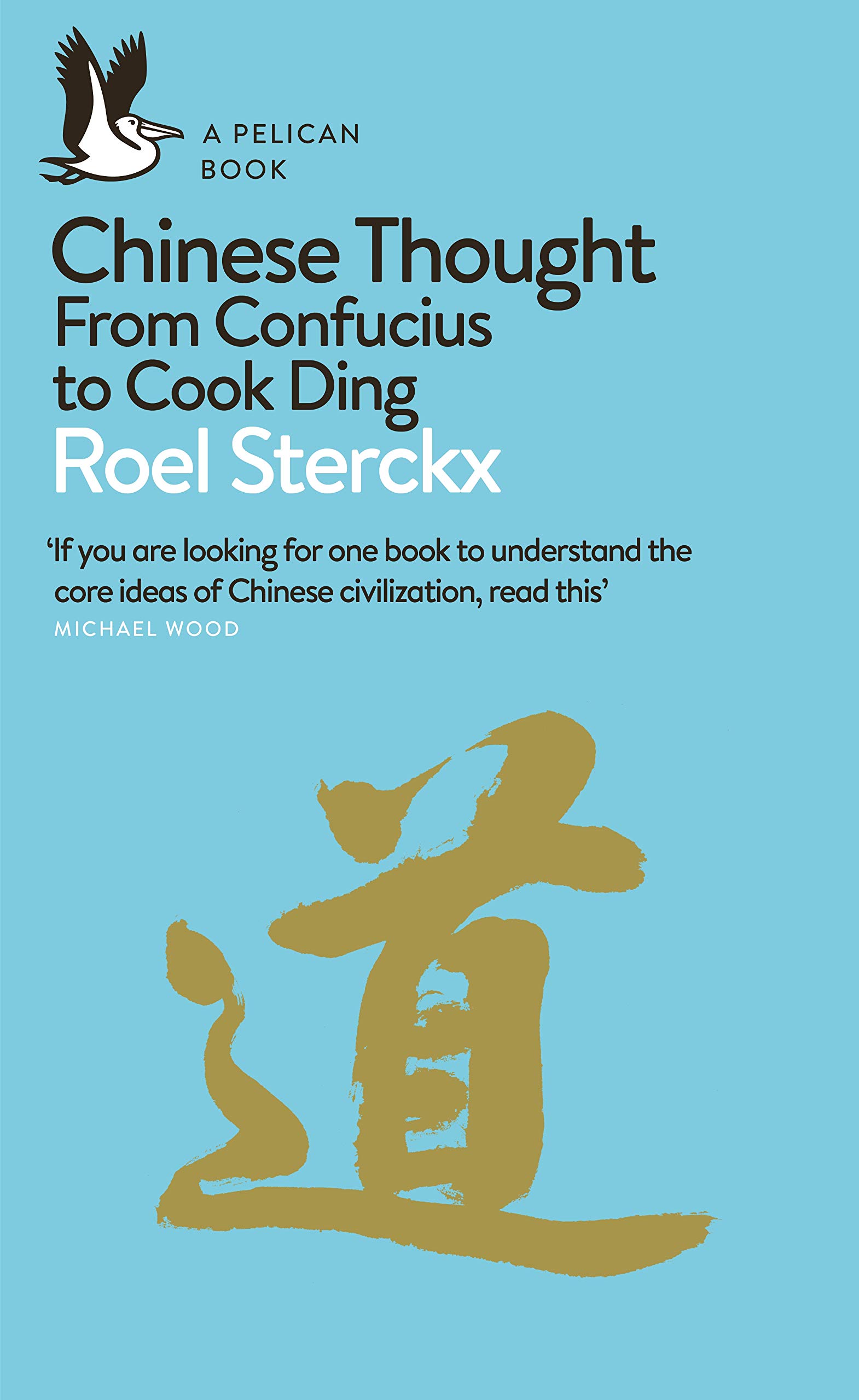
Professor Roel Sterckx is the Joseph Needham Professor of Chinese History, Science, and Civilization at the University of Cambridge, affiliated with Clare College. He specializes in pre-imperial and early imperial Chinese thought, classical Chinese language, and natural history. His research bridges anthropology and the history of science, focusing on topics like ritual, economic thought, and animal studies. He has authored influential books including Food, Sacrifice, and Sagehood in Early China and Animals through Chinese History . Sterckx is a Fellow of the British Academy (since 2013) and holds leadership roles at the Needham Research Institute. He supervises PhD students on subjects ranging from Warring States rhetoric to Han Dynasty apocrypha. Education: BA/PGCE in Sinology and History, Katholieke Universiteit Leuven Masters in Classical Chinese and Philosophy, National Taiwan University PhD in Chinese History, University of Cambridge Research Interests: Early Chinese cultural ecology, ritual economy, and the interplay of moral and material values. His work analyzes texts like the Rites of Zhou , Mozi , and Huainanzi , emphasizing agricultural thought and animal symbolism. Awards: British Academy Fellowship (2013) Grants and Labs: Directs the Cambridge-based Needham Research Institute, focusing on East Asian science and technology history. Current projects include studies on Han perceptions of southern regions and the economics of ritual in early China.
Dr. Charilaos Nikolaidis is a Senior Lecturer at Essex Law School, University of Essex, specializing in international human rights law and the intersection of law and literature. He received his LLB from City, University of London, LLM in International Business Law from University College London, and PhD in Law from King's College London. His research focuses on international human rights law, particularly the theory and implementation of the right to equality, and the relationship between law and literature. Nikolaidis has published extensively on equality jurisprudence, comparative human rights law, and democratic challenges in European contexts. Nikolaidis's publications demonstrate consistent focus on human rights jurisprudence, particularly equality and non-discrimination within European legal frameworks. His work spans theoretical explorations of legal equality, comparative analyses of European and US privacy rights, and practical examinations of democratic challenges in Greece and beyond.
Kazuyo Murata is a Senior Lecturer in Islamic Studies at King's College London, based in the Department of Theology & Religious Studies within the Faculty of Arts & Humanities. She specializes in pre-modern Islamic intellectual history with a focus on Sufism, falsafa (Islamic philosophy), and Persianate traditions. Her research bridges theological aesthetics, metaphysics, and comparative philosophy, particularly exploring themes of beauty, love, and human perfection in Sufi thought. Dr. Murata holds a PhD in Islamic Studies (with a joint MPhil in Medieval Studies) from Yale University and a BA (summa cum laude) in Philosophy and Religious Studies from SUNY Stony Brook. She is a Fellow of the Higher Education Academy and a member of the Royal Asiatic Society. Her monograph *Beauty in Sufism: The Teachings of Ruzbihan Baqli* (SUNY Press, 2017) analyzes the role of beauty in the cosmology of the 13th-century Persian mystic Rūzbihān Baqlī. Recent work includes comparative studies of Plotinus and Sufi conceptions of beauty, and analyses of Rūmī's mystical poetry. She teaches undergraduate and graduate courses on Islamic thought, Sufism, and Islamic philosophy. Current research focuses on 'Sufi Recipes for a Life Lived Well,' a Leverhulme-funded project (2025–2026) exploring ethical and spiritual frameworks in classical Sufi literature. She has delivered invited lectures on topics such as Sufi conceptions of beauty and well-being in contemporary contexts.
John H. Arnold is Professor of Medieval History at the University of Cambridge and Fellow of King's College. Educated at the University of York (BA History, D.Phil Medieval Studies), his academic career includes positions at University of East Anglia and Birkbeck, University of London before joining Cambridge in 2016. He holds editorial roles at Cultural and Social History, Past & Present, and directs publication series at both York Medieval Press and Cambridge University Press. Arnold's research centers on medieval religious culture, particularly lay belief, heresy, inquisition, and the history of gender. His monograph 'The Making of Lay Religion in Southern France' (2024) exemplifies this focus. Current projects investigate the social history of confession and the repression of usury. Analysis of Arnold's 15 most recent publications reveals consistent engagement with medieval religious dissent and belief systems. Key themes include: reinterpretations of heresy trials (2019), sensory dimensions of faith (2018), historiographic debates about Catharism (2016), and methodological examinations of archival sources (2022). His work frequently employs theoretical frameworks from sociology and philosophy to reinterpret medieval religious conflict. Arnold maintains active research networks through editorial leadership and supervision. His Cambridge Studies in Medieval Life and Thought series promotes innovative scholarship in medieval history.
Professor Stephen Chan is a faculty member at SOAS University of London in the Department of Politics and International Studies (POL) . With a focus on African political thought and international relations, his work critically examines postcolonialism, decoloniality, and global governance. Key research themes include: Decolonizing international relations theory Sino-African political dynamics Election observation and democratic processes Non-Western cosmopolitanism Comparative diplomatic practices His recent publications analyze the ideological ambiguity of decoloniality (2023), pluralist visions for global security (2017), and the legacy of African liberation movements (2021). He has advised multiple theses on topics ranging from parliamentary governance in Kenya/Zimbabwe to China-Africa media interactions. Notably: Critiqued the misuse of 'decoloniality' as ideological rhetoric (2023) Authored a poetic autobiography of political engagement (2022) Traced Africa's intellectual history of freedom (2021) Examined Zimbabwean elections (2017) Explored non-Western modernity (2018)
Professor Kay O'Halloran serves as Chair Professor and Head of Department of Communication and Media within the School of the Arts at the University of Liverpool since August 2019. She concurrently holds the position of Co-Director for the Digital Media and Society Institute (DMSI), demonstrating significant leadership across academic and research domains. Her career spans prestigious institutions including Curtin University (2013-2019) and National University of Singapore (1998-2013), where she directed the Multimodal Analysis Lab and served as Deputy Director of the Interactive & Digital Media Institute. PhD from Murdoch University (1996) Postdoctoral position at Martin Luther University (1997-1998) Visiting Distinguished Professor at Shanghai Jiaotong University (2017-2020) Professor O'Halloran's research focuses on multimodal discourse analysis, particularly the interaction of language with visual and mathematical resources. Her pioneering work in systemic functional multimodal discourse analysis (SF-MDA) has significantly impacted mathematics education and digital communication studies. Current research emphasizes digital tools for multimodal analysis and mixed methods approaches to big data analytics, addressing contemporary challenges in misinformation and public health communication. Her recent publications reveal strong thematic concentration in pandemic-related communication analysis, misinformation resistance mechanisms, and multimodal argumentation across social and cultural contexts. The 15 most recent articles demonstrate consistent application of multimodal frameworks to urgent societal issues including public health crises, political discourse, and digital literacy challenges. Founding editor of Routledge Studies in Multimodality book series (57+ volumes) Over 150 publications in leading international journals 50+ plenary/keynote presentations globally Competitive funding from National Research Foundation, MOE Singapore, US Air Force, ARC, NHMRC, and others Professor O'Halloran has directed interdisciplinary research teams comprising social scientists, computer scientists, and designers. Her leadership extends to developing commercial multimodal analysis software (Multimodal Analysis Image and Video) adopted internationally. Current projects include Eurovision 2023 wellbeing evaluation and COVID-19 misinformation immunity development, demonstrating continued relevance to contemporary societal challenges.
Dr. Joseph Habib is a Research Fellow in Hebrew Linguistics and Philology at the University of Cambridge's Faculty of Asian and Middle Eastern Studies. His research focuses on early medieval Jewish exegesis, Judaeo-Arabic literature, and the intersection of Masoretic traditions with biblical interpretation. Key areas of expertise include the works of Saadya Gaon, Karaite scholars, and textual criticism of the Hebrew Bible. His recent publications analyze exegetical principles of Ya’qūb al-Qirqisānī, Saadya’s use of Masoretic accents, and Karaite interpretations of Leviticus. Habib’s work bridges linguistic analysis with historical and theological contexts of medieval Jewish scholarship. Affiliations: Faculty of Asian and Middle Eastern Studies, University of Cambridge Research Interests: Hebrew linguistics, biblical exegesis, Judaeo-Arabic translations, Masoretic textual traditions
David Bawden is a Professor in the Department of Library and Information Science (CityLIS) at City, University of London. With a publication record spanning over two decades, he has established himself as a leading scholar in information science, particularly known for his work on the philosophical foundations of information, knowledge organization, and information behavior. His research frequently intersects with Luciano Floridi's Philosophy of Information, which he has applied to library and information science theory and practice. Bawden's research interests focus on the theoretical underpinnings of information science, including information behavior, information literacy, knowledge organization, and the philosophical dimensions of information. His work often explores the conceptual frameworks that shape how we understand information in both physical and digital environments. He has made significant contributions to understanding information privacy through a philosophical lens and has examined temporal aspects of information in contemporary society. His recent publications demonstrate a continued focus on theoretical developments in information science, with particular attention to the implications of Floridi's work for library and information practice. Bawden's scholarship shows a consistent trajectory from examining historical aspects of information to contemporary challenges in the digital age, maintaining a strong theoretical orientation throughout. As a frequent collaborator with Lyn Robinson (also at City, University of London), Bawden has co-authored numerous papers exploring transitions between concepts of information across different domains, information overload, and the philosophical foundations of information science. His work has appeared in leading journals including the Journal of Documentation, Journal of the Association for Information Science and Technology, and Information Research. Bawden has been actively involved in the CityLIS program, contributing to innovative approaches to information science education including the development of curricula addressing data librarianship and the 'onlife' nature of contemporary information experience. His scholarship reflects a deep commitment to advancing the theoretical foundations of the field while maintaining relevance to practical information challenges.