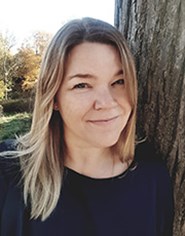
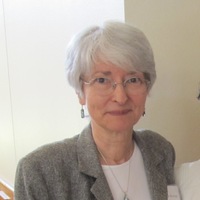
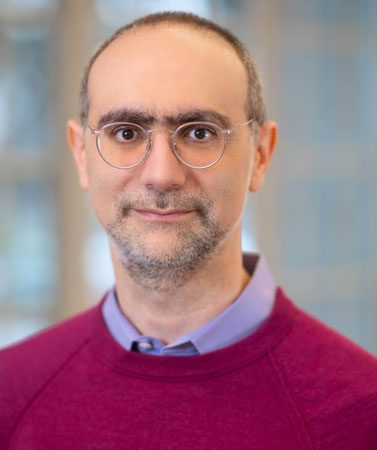
Prof. Dr. Olena Palko is a historian specializing in Eastern Europe, the Soviet Union, and Ukraine. She holds the SNSF Professorship at the University of Basel's Department of History, focusing on East European History. Her research emphasizes Soviet minority policies, cultural politics, and national identity formation in interwar Ukraine. She is a leading scholar with notable works including Making Ukraine Soviet (2021), awarded the 2023 Alexander Nove Prize. Her current SNF-funded project, Red Tower of Babel , examines Soviet minority experiments in Ukraine. Education: PhD from University of East Anglia (2017); Kandydat nauk from National Academy of Sciences of Ukraine (2013). Research Interests: Soviet nationality policy, minority history, Ukrainian twentieth-century history, transnational border dynamics. Her work bridges archival analysis with transnational perspectives, addressing contested borderlands between Poland and the USSR. Key publications include co-edited volumes like Making Ukraine (2022) and Ukraine's Many Faces (2023). She actively contributes to academic governance roles, including co-convening the BASEES Study Group for Minority History and serving on the Scientific Advisory Council of the Council of Europe's history observatory.
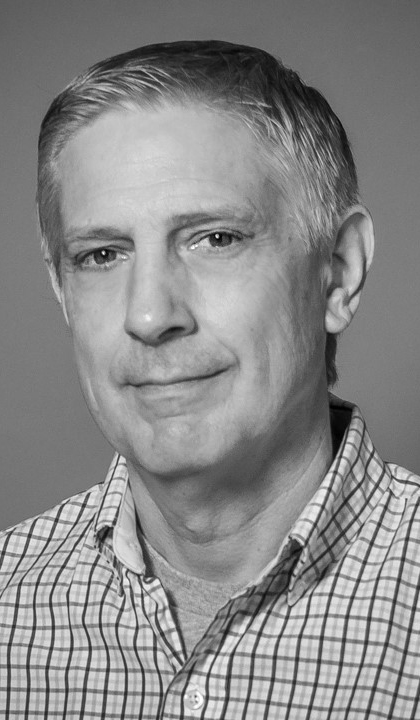
Hillard von Thiessen is a full Professor of Early Modern History at the Historisches Institut of Universität Rostock, where he has held the chair since Summer Semester 2013. He served as Dean of the Philosophischen Fakultät from Winter Semester 2018/19 to Summer Semester 2022 and was previously acting chair at Universität zu Köln (2007-2012) and Universität Rostock (2012-2013). Currently, he is also a Fellow at the Käte-Hamburger-Kolleg "Einheit und Vielfalt im Recht" at the University of Münster. Professor von Thiessen completed his Magister Artium in 1995 at Freiburg with a thesis on witch hunts in Freiburg (1632-1677), for which he received the Waldseemüllerpreis in 1997. He earned his doctorate in 2001 with research on Capuchin friars as a reform order between confessionalization and everyday culture. In 2007, he completed his habilitation at the University of Bern with a study on cross-border patronage and diplomacy between Spain and the Papal States during Pope Paul V's pontificate (1605-1621). His research focuses on European Early Modern History, particularly international relations, norm competition, corruption and patronage cultures in the pre-modern era, religiosity, and the political culture of Habsburg Spain. His work often employs actor-centered perspectives to examine how individuals navigated complex normative frameworks during the Early Modern period. Recent publications demonstrate his interest in ambiguity as a historical phenomenon and how societies managed competing values and norms. His scholarly output reveals a consistent trajectory examining power structures, diplomatic networks, and cultural frameworks in Early Modern Europe, with particular attention to the intersection of religious, political, and social norms. The publications show increasing sophistication in analyzing how ambiguity functioned as a productive force rather than merely a problem to be solved in Early Modern governance and social relations. Waldseemüllerpreis der Universität Freiburg (1997) Professor von Thiessen has supervised numerous doctoral candidates through his habilitation and professorial positions, though specific student names aren't listed in the available documentation. His research has been supported by prestigious grants including the Gerda-Henkel-Stiftung post-doc fellowship, THEORIA Kurt von Fritz Science Program funding from the Mecklenburg-Vorpommern Ministry, and Swiss National Science Foundation support for collaborative research projects. His current research activities are centered at the Historisches Institut of Universität Rostock, with additional collaborative work through the Käte-Hamburger-Kolleg at the University of Münster, where he explores legal frameworks and norm competition in historical perspective. His ongoing monograph project "Das Zeitalter der Ambiguität" represents a significant contribution to understanding how Early Modern societies managed conflicting norms and values.
Dr. François Soyer is an Associate Professor at the University of New England's School of Humanities, Arts, and Social Sciences, specializing in Early Modern History. He holds a PhD from the University of Cambridge (2007) and has held academic positions at the University of Southampton and the University of Adelaide. His research focuses on anti-Semitism, the Spanish and Portuguese Inquisitions, gender/sexuality history, and colonial empires. He has authored multiple books and articles, including Popularizing anti-Semitism in early modern Spain and its empire (2014) and Antisemitic conspiracy theories in the early modern Iberian world (2019). His work often examines how religious persecution intersected with medical, artistic, and legal practices. Education: PhD in History, University of Cambridge (2007) MPhil in History, University of Cambridge (2003) MA Honours, University of St. Andrews (2002) Postgraduate Certificate in Academic Practice, University of Southampton (2011) Research Interests: Anti-Semitic propaganda and conspiracy theories Inquisitorial archives and legal practices Gender transgression and queer histories Censorship of art and religious imagery His recent publications explore the Blood Libel legend, the trial of Catalan cross-dresser Maria Duran, and the emotional dimensions of religious conversion. He has been awarded fellowships from the Royal Historical Society and the Parkes Institute. His current projects include tracing the origins of anti-Jewish iconography in colonial Peru and analyzing the role of emotion in early modern religious trials.
Ramón Soneira Martínez is a Postdoctoral Fellow at the Austrian Archaeological Institute's Department of Classical Studies. He holds a Degree in History from the Complutense University of Madrid (Spain) with a focus on Ancient History, a Master's degree in Religious Studies, and a PhD in Religious Studies from the Max-Weber-Kolleg of the University of Erfurt (Germany) and the University of Graz (Austria). His academic career centers on interdisciplinary approaches to ancient religious phenomena. Education : Bachelor's Degree in History (Ancient History focus), Complutense University of Madrid Master's Degree in Religious Studies Doctor of Philosophy (PhD) in Religious Studies, Max-Weber-Kolleg (University of Erfurt) and University of Graz Research Interests : Ramón specializes in Ancient History of Religion, Theory and Methodology of Religious Studies, Religious Deviance, and Atheism in the ancient Mediterranean. His work explores unbelief narratives, sacred spatial practices, and biopolitical dimensions of religious systems in Greco-Roman contexts. Publication Trends : His recent scholarship (2020–2025) examines atheistic positions in Classical Athens, interdisciplinary frameworks for analyzing ancient religion, biopolitical dimensions of marriage, and ecological interpretations of sacred landscapes. These works frequently engage with Platonic philosophy, pre-Socratic thought, and comparative methodologies across Mediterranean civilizations. Current Research Projects : Doubt and religion in the ancient Mediterranean: A comparative analysis of unbelief narratives Lodging/Living in a Sacred Context: Investigating spatial dynamics of religious environments
Lena Berggren serves as an Associate Professor in the Department of Historical, Philosophical and Religious Studies at Umeå University, Sweden, with her office located in Humanisthuset (HUM.H.125), Umeå. She holds the title of Docent and has been honored as a Distinguished university teacher for exceptional pedagogical contributions. Her academic qualifications include the Swedish Docent credential (a post-doctoral habilitation) and recognition as a Distinguished university teacher, reflecting dual expertise in research and education. Berggren's research centers on Swedish fascism, antisemitism, and ultra-nationalism during the interwar period, with specific focus on clerical fascism intersections with Lutheranism and völkisch thought. She simultaneously advances university pedagogy through investigations into scientific methodology development and assessment strategies for students, creating a unique bridge between historical scholarship and educational innovation. Analysis of her publication trajectory reveals persistent examination of extremist ideologies' historical roots and modern manifestations, culminating in her 2024 co-authored book '100 år av svensk nazism' which directly addresses contemporary far-right movements in Sweden. Her scientific recognition includes: Distinguished university teacher award Berggren secured research funding for the project 'Swedish fascism 1920-1950' (2007-2008), demonstrating sustained investigative focus. While no formal advisee list is documented, her pedagogical publications indicate active mentorship in historical methodology and academic writing development.
Max Planck Institute for Social AnthropologyGermany
Katia Bianchini is a Research Fellow at the Max Planck Institute for Social Anthropology in Halle, Germany, with a focus on the intersection of law and anthropology in refugee and immigration contexts. She holds a PhD in Law (University of York), an LLM in Comparative Laws (University of San Diego), and a Law degree (Università di Pavia). Her work bridges empirical legal analysis with anthropological methodologies to address issues such as statelessness, asylum adjudication, and the rule of law in migration policies. Education PhD in Law, University of York (2011–2016) LLM in Comparative Laws, University of San Diego (1999–2000) Law degree, Università di Pavia (1992–1998) Bianchini’s research interests include refugee law , immigration law , statelessness , EU law , and human rights law . Her current project examines legislation and responses to missing and deceased sea migrants in Italy , analyzing legal frameworks for search, identification, and burial practices, particularly along the Central Mediterranean Route. She emphasizes the importance of legal anthropology to understand gaps between abstract law and its real-world application. The trends in her publications reflect a focus on statelessness determination procedures , asylum law (notably witchcraft-based claims), humanitarian visas , and rule of law challenges in migration contexts. Her work spans journal articles , book chapters , and monographs , often combining legal analysis with empirical data from interviews and fieldwork. Scientific Awards Erasmus scholarship, University of Leuven, Belgium (1997–1998) Grants and Professional Activities include visiting researcher roles at Fordham University and the University of Oxford, as well as editorial work for the Statelessness and Citizenship Review and the CUREDI Database . She has presented extensively on topics like statelessness in the UK , cultural diversity in asylum adjudication , and NGO criminalization in Mediterranean rescue operations .
Gervase Phillips is a Principal Lecturer in the Department of History at Manchester Metropolitan University. He serves as Head of the History Section and is a Faculty Timetable Champion. His research focuses on human conflict, including struggles between nations, religions, ideologies, and persecution. Key interests include technology in warfare, the military use of animals, and the causes/resolution of conflicts. Phillips also explores historical themes such as the Civil War, colonialism, and genocide. Teaching emphasizes fostering analytical thinking through engaging methods, including role-play and document analysis. He advocates for the importance of history in cultivating critical thinking, empathy, and adaptability. Phillips has authored books like Persecution and Genocide: A History (2024) and contributed to scholarly discussions on topics ranging from medieval warfare to modern military ethics. Administratively, he balances academic leadership with pedagogical innovation. His work bridges historical analysis and contemporary relevance, often highlighting the moral complexities of past conflicts and their legacies today.
Professor Owen Davies is a faculty member at the University of Hertfordshire , affiliated with the History Department at the School of Creative Arts . His research spans witchcraft , magic , supernatural beliefs , and folklore , with a focus on interdisciplinary approaches integrating archaeology, anthropology, and biomedical studies. Key research areas : Witchcraft, Domestic Magic, Medical History, Electrification, Public History. Recent projects : AHRC-funded 'StoryMachine', Leverhulme 'Inner Lives', Wellcome Trust 'Harnessing the Power of the Criminal Corpse', and a new AHRC 3-year study on witch bottles. Selected publications : America Bewitched (2013), The Oxford Illustrated History of Witchcraft and Magic (2017), Troubled by Faith (2023). Awards : Funded by AHRC, Wellcome Trust, and Leverhulme Trust. Collaborates with institutions like Museum of London Archaeology and University of Essex. Leads community engagement via the Heritage Hub and 'Electric Generations' exhibition.
Carl F. Young is an Associate Professor in the Department of History at Western University. He holds a PhD from the University of London (2004). His research focuses on religious social movements, nationalism, and imperialism in modern Asia, particularly in Korea and Japan. He has supervised Master's and Doctoral students and teaches courses such as HIST 2641G (Korea Since 1800), HIST 3609G (Japan since 1945), and HIST 4603F (Silk Roads and Spice Routes). His work explores topics like the Tonghak and Ch'ondogyo movements in Korea, comparative world history, and cross-cultural interactions. Notable publications include Eastern Learning and the Heavenly Way (2014) and articles in Extrême-Orient, Extrême-Occident and Journal of Korean Religions . He served as guest editor for a special issue on North Korea and Religion (2013). Teaching and Office Hours: Fall/Winter 2024-2025 office hours are Wednesdays 10:00-11:00 AM and Thursdays 11:00 AM-12:00 PM in Lawson Hall 2225.
Charles Parker is a Professor in the Department of History at Saint Louis University's College of Arts and Sciences. He specializes in early modern European history, focusing on religious belief, global entanglements, and the Dutch Empire. His recent work examines Calvinism's role in Dutch colonial missions. Parker holds a Ph.D. from the University of Minnesota (1993). Education: Ph.D., University of Minnesota, 1993 M.A., Auburn University, 1986 B.A., Auburn University, 1981 His research explores how religious identity shaped global interactions, particularly through Dutch commercial and missionary activities. Current projects include a book on global Calvinism's impact on the Dutch Empire. He has received prestigious fellowships, including the Felix M. Gilbert Membership at the Institute for Advanced Study (2019–2020). Parker's publications span monographs like Global Calvinism (2022) and Faith on the Margins (2008), and edited volumes such as Religious Diaspora in Early Modern Europe (2013). His articles address themes like religious conversion, colonial missions, and early modern governance. Awards: Eugene A. Hotfelder Professor in the Humanities (2010–2016) NEH Summer Institute co-director (2013) Fulbright Fellowship to the Netherlands (1990–1991) Parker advises in the History department and has contributed to grants like the Spencer Foundation Research Grant (2002). He is affiliated with Saint Louis University's interdisciplinary initiatives in global history and religious studies.
Dr. Philippa Carter is University Assistant Professor in the History of Medicine and Health before 1800 at the University of Cambridge's Department of History and Philosophy of Science. She serves as an Affiliated Lecturer in the Faculty of History and is a Fellow and Director of Studies at Sidney Sussex College. Additionally, she manages the MPhil in Health, Medicine and Society program. Her educational background focuses on early modern European history with specialization in medical and intellectual history. Her research spans a wide range of interests including: Early understandings of mental and physical illness Bodies and embodiment in historical contexts Mind/body relations in premodern thought Disability and visible difference Disease categorization and diagnosis across historical periods Boundaries between natural philosophy, magic, and religion Sciences of the psyche Dr. Carter's scholarly work examines premodern Aristotelian understandings of 'nature,' particularly in the processes of 'generation' and 'corruption.' Her research bridges cultural history, medical history, gender studies, and the history of science, with particular attention to how historical societies conceptualized bodily experience and mental states. She has published significant work on childbirth and madness, gender and witchcraft, and is currently completing a monograph on madness, brain disease, and the soul in early modern England. Her recent publications demonstrate a consistent focus on the intersection of gender, medicine, and social history in early modern contexts. The articles reveal trends toward examining marginalized historical experiences, particularly women's health and mental states, while connecting historical medical concepts to contemporary understandings. Among her notable scholarly contributions: 'Childbirth, "Madness", and Bodies in History' (History Workshop Journal, 2021) 'Work, Gender and Witchcraft in Early Modern England' (Gender & History, 2023) "Madness Embodied" (forthcoming in The Bloomsbury Cultural History of Madness) Dr. Carter teaches on Early Science and Medicine at the Department of HPS, Part I History Tripos Outline Paper 4 ('Early Modern Britain'), and Part II, Paper 11 ('Early Medicine'). She serves as Associate Editor for the digital humanities project 'Reading Early Medicine' and is actively involved with Cambridge Reproduction research initiatives. Her work contributes significantly to interdisciplinary approaches to historical medical understanding, connecting past and present perspectives on reproductive health, mental illness, and bodily experience.
Catherine Wessinger is the Rev. H. James Yamauchi, S.J. Professor of the History of Religions at Loyola University New Orleans, where she teaches in the Department of Religious Studies within the College of Arts and Sciences. She serves as co-director of the Loyola Himalaya Adventure: Summer Study in Dharamsala, India program and director of the Religion and Media Minor. Her educational background includes: Ph.D. in History of Religions from the University of Iowa (1985) Dr. Wessinger's research spans several interconnected fields within religious studies. She is particularly known for her expertise in women in religions, new religious movements, millennialism, and religion and violence. Her work often examines the intersection of gender and religion, with special attention to women's leadership in both mainstream and marginal religious traditions. She has conducted extensive research on Tibetan and Indian religions, as well as the Branch Davidian movement and other new religious movements that have experienced conflict with authorities. Her publications reveal a consistent focus on understanding religious movements that exist outside mainstream religious traditions, with particular attention to how these groups interact with society and authority structures. Over her career, she has traced the evolution of millennialist thought across different cultures and historical periods, while also documenting women's leadership roles in religious movements that have often provided more opportunities for female religious authority than mainstream traditions. Dr. Wessinger serves as co-general editor of Nova Religio: The Journal of Alternative and Emergent Religions published by University of California Press, and is editor of the Women in Religions series at New York University Press. She is also co-director of the Women in the World's Religions and Spirituality Project , part of the World Religions and Spirituality Project online encyclopedia. Her advising work has been particularly notable in her oral history project with surviving Branch Davidians, which produced three autobiographies. She continues this work through her YouTube channel, documenting first-hand accounts from Branch Davidian survivors. Her current research includes writing books on the Branch Davidian-Federal Agents Conflict and Women in New Religious Movements for the Cambridge Elements Series.
Mauricio Drelichman is a Professor at the University of British Columbia's Vancouver School of Economics within the Faculty of Arts. He serves as the Director of Undergraduate Studies and holds a Ph.D. from Northwestern University. His research focuses on Economic History , particularly Early Modern Spain , with emphasis on sovereign debt, fiscal policy, and institutional development. Ph.D., Northwestern University Director of Undergraduate Studies, UBC Research: Economic History, Early Modern Spain Drelichman's work investigates historical financial mechanisms such as sovereign debt contracts under Philip II, demonstrating how risk-sharing and contingent debt allowed sustained market access despite defaults. He has also analyzed resource curses , Dutch disease effects, and social consequences of persecution in Spain. His recent article in the Proceedings of the National Academy of Sciences (2021) examines long-term impacts of the Spanish Inquisition , while earlier studies explored gender wage gaps and housing markets in Early Modern Toledo. His publications often focus on historical debt sustainability , financial repression , and institutional quality . Scientific Awards: AEHE 2021 Earl J. Hamilton Prize Explorations Prize (2005/06 and 2010/11)
Aleksandra Pomiecko is a Lecturer in Modern History at King's College London, specializing in Eastern European and Soviet history. She has held teaching positions at the University of St Andrews, the University of Manitoba, and the University of Toronto, and was a postdoctoral fellow at the Mandel Center for Advanced Holocaust Studies. PhD, University of Toronto MA, Uniwersytet Jagielloński Her research focuses on war and violence in twentieth-century Eastern Europe, particularly paramilitary activity, partisan movements, and local experiences of conflict. She explores topics such as Belarusian nationalism, post-war insurgency, and the role of religious institutions during the Holocaust. Recent publications examine paramilitarism in Polish borderlands, Soviet nation-building policies, and religious resistance in wartime Poland. Her work contributes to understanding the longue durée of paramilitary dynamics and their global implications. Scientific awards: Postdoctoral Fellowship at the Mandel Center for Advanced Holocaust Studies
Susan Ashbrook Harvey is the Willard Prescott and Annie McClelland Smith Professor of History and Religion at Brown University. Her research focuses on late antique and Byzantine Christianity, particularly Syriac studies, with expertise in asceticism, hagiography, women's roles, hymnography, and liturgical practices. She holds affiliations with the American Academy of Religion, Society of Biblical Literature, and the North American Patristic Society. Her research interests include the intersection of religion and the senses, women in ancient Christianity, and liturgical lament. Notable publications include Scenting Salvation (2006) and Knowing Bodies, Passionate Souls (2017). She has received prestigious awards such as the Guggenheim Fellowship and honorary doctorates from Lund University, the University of Bern, and Grinnell College. Harvey teaches courses like 'Sacred Stories' and 'Women and Gender in Ancient Religions.' Her work bridges historical scholarship with contemporary theological discourse, emphasizing marginalized voices in early Christian traditions.