Dr. Burkhard Maess is a Research Professor and Group Leader at the Max Planck Institute for Human Cognitive and Brain Sciences, leading the Methods and Development Group Brain Networks. His research focuses on auditory and language processing, signal analysis, and dynamic modeling of neuronal networks. He holds a Diploma in Physics (University of Leipzig, 1987) and a PhD in Physics (University of Leipzig, 1990). His career includes postdoctoral positions at the Academy of Sciences of the GDR and the Free University of Berlin before joining the MPI in 1995. Since 2000, he has led research groups on MEG/EEG signal analysis and cortical network dynamics. His work integrates advanced neuroimaging techniques like MEG and EEG to study sensory processing, neural network dynamics, and the effects of aging on auditory attention. Key contributions include developing high-resolution BEM-FMM methods for source localization and analyzing cross-frequency coupling in neuroscience data. His group also explores spinal cord electrophysiology and the neural underpinnings of perceptual decision-making. Dr. Maess’ research spans cognitive neuroscience, biomedical engineering, and computational modeling, with a focus on bridging empirical findings with theoretical frameworks in neuroscience.
Luisa Sotomayor is an Associate Professor in the Faculty of Environmental and Urban Change at York University, where she also serves as the Director of the City Institute. Her academic work bridges urban planning, governance, and socio-spatial justice, with a strong focus on inequality, housing, informality, and participatory planning. She is actively engaged in research across Latin America and Canada, contributing to critical debates on urban policy and citizenship. Education: PhD in Planning, University of Toronto MSc in Planning, University of Toronto BA in Sociology, National University of Colombia Her research interests center on urban inequality, housing precarity, socio-legal exclusions, and the formation of informal urban peripheries. She critically examines how state and non-state actors, community activism, and legal frameworks shape urban planning agendas. Her work questions the capacity of planning to address socio-spatial injustices and foster more equitable, democratic cities. The recent publications reflect a strong engagement with judicialization of urban planning in Bogotá, student housing precarity in Toronto, sanctuary city policies, and the impacts of social urbanism in Medellín. Collectively, her scholarship reveals a transnational, interdisciplinary approach that connects urban theory with grassroots realities, emphasizing legal mobilization, policy mobility, and the lived experiences of marginalized populations. Scientific Awards and Recognitions: MITACS Accelerate (2023-2024) EUC Dean’s Service Award (2021-2022) York University Academic Innovation Fund Award (2020-2021, 2021-2022) SSHRC Insight Grant (2022-2025) MITACS Global Link (2019) MITACS Accelerate (2021, 2022) SSHRC Partnership Engage Grant (2020-2021) SSHRC Connections Grant (2018-2019) SSHRC Doctoral Award (2011-2015) International Development Research Centre, Doctoral Award (2011) Luisa Sotomayor supervises graduate students in Environmental Studies, Geography, and Planning programs. She has led major funded research projects including SSHRC Insight and Partnership Engage Grants, focusing on issues such as vertical peripheries in Colombia, policy mobility in Latin American cities, legal mobilizations in urban planning, and student housing affordability in Toronto. Her collaborative work with institutions across Canada and Latin America underscores her commitment to engaged, interdisciplinary scholarship. She is involved in research labs and teams through the City Institute at York University and leads multi-institutional collaborations such as StudentDwellTO, which brings together faculty and students from OCAD University, Toronto Metropolitan University, University of Toronto, and York University to address student housing challenges. Her work continues to influence urban planning theory and practice in both the Global North and South.
Brad Campbell is an Associate Professor in the Department of Computer Science and Electrical and Computer Engineering at the University of Virginia, where he is a member of the Link Lab, a cross-disciplinary research group focused on cyber-physical systems. His research centers on designing and building scalable, effective, and unobtrusive embedded systems for the Internet of Things, with applications in smart buildings, smart cities, and personal health. His work spans hardware design, networking, and cloud infrastructure, with a strong emphasis on energy-harvesting systems, low-power wireless communication, and resilient embedded operating systems. He has led projects such as the Living Link Lab, a heavily instrumented smart building testbed, and has developed open-source platforms for self-powered sensing and IoT ecosystems. His recent publications reflect a strong trend toward privacy-preserving federated learning, contactless occupancy sensing using WiFi and light, decentralized edge computing, and sustainable IoT systems. These works are published in top venues including SenSys, BuildSys, MobiCom, and IPSN, indicating a high impact in the systems and networking community. NSF CAREER Award (2022) Best Paper Award at DFHS’19 Multiple graduate fellowships and teaching awards for his students UVA Engineering Endowed Graduate Fellowships Link Lab Seminar Award CPS Rising Star recognition Brad Campbell has advised numerous PhD and master’s students, many of whom have gone on to academic and industry roles. He has secured significant research funding, including from the NSF, and has contributed to curriculum development in cyber-physical systems. He is actively involved in teaching courses on computer networking, IoT, and operating systems, and has co-taught wireless IoT courses across multiple institutions. His lab focuses on real-world deployment of IoT systems, emphasizing scalability, fault tolerance, and long-term sustainability. He continues to push the boundaries of what embedded systems can achieve in everyday environments, from homes to cities.
Associate Professor Emily Jones is a political economist at the Blavatnik School of Government, University of Oxford, and Director of the Global Economic Governance Programme. Her work focuses on international trade, financial regulation in developing countries, and post-Brexit policy analysis. University of Oxford, DPhil in International Political Economy School of African and Oriental Studies, MSc in Development Economics University of Oxford, BA in Philosophy, Politics, and Economics Her research explores the political economy of global trade , Basel banking standards , and digital economy governance , with an emphasis on asymmetric negotiations and developing country agency . Recent projects examine cross-border data flows and regulatory competition . Notable publications include the 2020 book The Political Economy of Bank Regulation in Developing Countries and the 2019 Global Policy article on Europe-Africa relations. Her work has attracted ESRC Impact Acceleration Award DFID-ESRC Growth Research Grant and engages with the UK Parliament as a Special Advisor to the International Trade Committee.
Marisa Carrasco-Queijeiro is the Julius Silver Professor of Psychology and Neural Science at New York University, affiliated with the Department of Psychology and the Center for Neural Science. She holds a PhD from Princeton University (1989) and has held academic positions at Wesleyan University and NYU, including department chair from 2001–2007. Her research focuses on the interplay between visual perception, attention, and neurophysiological mechanisms. She uses psychophysical methods to study visual search efficiency, spatial resolution, and how attention modulates early visual processing. Key contributions include demonstrating that attention enhances perceptual resolution at attended locations and challenging traditional serial/parallel search models through time-course analyses and cueing experiments. Her work spans visual search efficiency, eccentricity effects, perceptual organization, and contrast sensitivity. Notable findings include attention's role in reducing eccentricity-based performance declines and the modulation of spatial resolution via covert attention. Methodologies include fMRI, EEG, MEG, and computational modeling. Awards: Guggenheim Fellow (1999), NSF Young Investigator Award (1993–1999), Porter Ogden Jacobus Fellowship (1987–1988). Lab: Carrasco Lab at NYU investigates visual perception development in children and adult cognition. Located at 6 Washington Place, Room 971, NYC. Her lab integrates cognitive neuroscience and psychological approaches to understand attention's neural underpinnings. Current projects explore developmental visual perception and attention's impact on early visual processing via neuroimaging and behavioral studies.
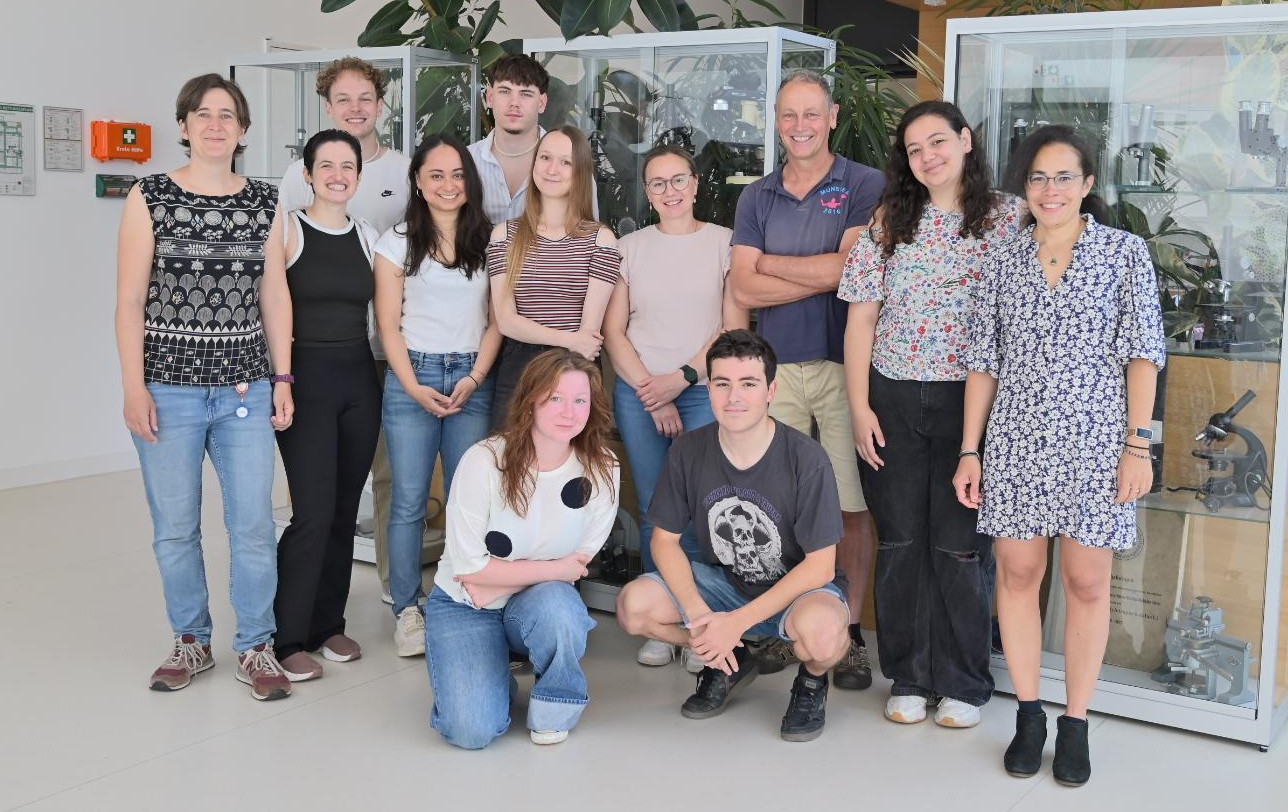
Professor Ralf Stanewsky leads the Stanewsky Group at the Institute of Neuro- and Behavioral Biology, University of Münster. His research focuses on the molecular mechanisms of circadian rhythms in Drosophila melanogaster , particularly how environmental cues like light and temperature reset the circadian clock. The group employs genetic, molecular, histological, and behavioral approaches to study sensory pathways and their integration in central clock neurons. Member of the Multiscale Imaging Centre (MIC) and Imaging Network – Microscopy Current lab members: Ph.D. students Anna Katharina Eick, Angelica Coculla, Maia Zabel Barroso Technical assistants Regina Hube and Ume Aiman Research Themes Light and temperature synchronization of circadian clocks Temperature compensation mechanisms in biological timing Neuronal integration of environmental signals Evolutionary aspects of circadian regulation Professor Stanewsky’s work spans molecular clock components (e.g., cryptochromes, timeless gene variants) to broader ecological implications of temporal niche choice. His lab investigates how clock gene expression responds to seasonal changes and environmental stressors, while also exploring novel synchronization pathways beyond classical photoreceptors. Publication Trends Recent articles emphasize temperature-dependent clock regulation , evolutionary capacitance via Hsp90 , and non-canonical phototransduction in circadian systems. Key subfields include nuclear transport dynamics, kinase evolution, and computational modeling of periodic patterns across species. Contact Information Institute of Neuro- and Behavioral Biology, University of Münster MIC | Röntgenstraße 16, D-48149 Münster, Germany Email: stanewsky@uni-muenster.de Phone: +49 251 8321029
Mehmet S. Ozcan, MD is an Associate Professor of Anesthesiology at Yale School of Medicine and Section Chief of Neuroanesthesia. He specializes in neurosurgical and critical care anesthesia, focusing on cerebrovascular diseases, intracranial tumors, and intraoperative neurophysiologic monitoring. His roles include Co-Chief of the Division of Adult Multispecialty Anesthesia. Dr. Ozcan completed medical training at Istanbul University Cerrahpasa School of Medicine (1996), followed by residency and fellowships in anesthesiology and critical care at the University of Florida (2003–2005). He previously practiced at the University of Illinois Chicago and University of Oklahoma before joining Yale. Research interests include ethical considerations in neurocritical care, cerebrovascular management, and neuroanesthesia techniques. He has published extensively in peer-reviewed journals, with recent work focusing on medical device transparency, entropy analysis in anesthesia, and lipid emulsion therapies. Professional activities include serving on the Society for Neuroscience in Anesthesiology and Critical Care (SNACC) Scientific Affairs Committee and editorial roles for journals like Anesthesia and Analgesia and Journal of Neurosurgical Anesthesia .
Professor Vlad Mykhnenko is Professor of Geography and Political Economy in the University of Oxford Department for Continuing Education, and a Research Fellow in Sustainable Urban Development at St. Peter's College, Oxford. He serves as Academic Director for Social Sciences at Oxford Lifelong Learning and has been with the Department since January 2017, initially taking up an Associate Professorship in Sustainable Urban Development. His academic career spans multiple institutions including the University of Birmingham, Al-Farabi Kazakh National University, the University of Nottingham, the University of Glasgow, and the Central European University. Professor Mykhnenko's educational background includes: PhD in Political Economy from Darwin College, the University of Cambridge (2005) MA in International Relations and European Studies from the Central European University (1999) MA (1998) and BA (1996) in International Relations from Taras Shevchenko National University of Kyiv As an economic geographer specializing in geographical political economy, Professor Mykhnenko challenges conventional wisdom about urban and regional development. His research initially focused on transition economies of Eastern Europe (particularly Polish Upper Silesia and the Ukrainian Donbas) before expanding to cities and regions worldwide. He has produced over 140 research outputs and secured £16 million in external research funding, with £2 million as Principal Investigator. His current research initiatives focus on green steel - rebuilding Ukraine's iron and steel sector post-war without fossil fuels - and sustainable urban development in Kazakhstan. His publication record demonstrates significant scholarly impact across diverse areas including urban shrinkage, post-war reconstruction, geopolitical analysis, and future trends in technology and governance. The breadth of his research interests spans from analyzing spatial economic patterns in African cities to examining the implications of the metaverse for future business practices. Professor Mykhnenko has substantial policy impact, with research quoted in at least 79 policy documents by 49 organizations across 21 countries. His work contributes to UN Sustainable Development Goals, with 30% directly attributed to SDG11: Sustainable Cities and Communities. He has advised governments, intergovernmental organizations, and multinational enterprises, including serving on a UN expert group to shape the New Urban Agenda and providing expert evidence to the UK House of Commons on Ukraine's recovery. In early 2025, he was appointed a commissioner for the Lancet Commission on Ukraine. Professor Mykhnenko has taught over 3,100 students across various institutions and currently contributes to Oxford's MSc in Sustainable Urban Development program. He has supervised numerous doctoral students and received recognition for his teaching excellence, including Fellow of the Higher Education Academy status and a Postgraduate Certificate in Academic Practice. His commitment to research-led teaching has resulted in innovative pedagogical approaches documented in peer-reviewed academic publications.
Clemencia Rodríguez is a Professor in the Department of Media Studies and Production at Temple University's Lew Klein College of Media and Communication. Her work bridges Colombian and Philadelphia-based research on citizens' media, focusing on environmental communication in post-conflict Colombia and local community media initiatives in the U.S. She co-founded OURMedia/NUESTROSMedios and serves on the Independence Public Media Foundation's board. Education: BA in Communication, Universidad Javeriana (Colombia) MA in Communication and Development, Ohio University PhD in International Telecommunications, Ohio University Research Focus: Community/alternative media theory War, peace, and media interactions Environmental communication in grassroots movements Media representations of gender, class, and race Teaching: Media studies Communication and social change Latin American media systems
Jing Tsu is the Jonathan D. Spence Chair Professor of Comparative Literature and East Asian Languages and Literatures at Yale University. She holds affiliations with the MacMillan Center for International and Area Studies (as Senior Research Fellow), the Humanities Program, Women’s, Gender, and Sexuality Studies (WGSS), and Ethnicity, Race, and Migration (ER&M). Her interdisciplinary research focuses on modern Chinese literary and cultural studies, with specialties in diaspora, science history, and comparative frameworks. Her key works include Sound and Script in Chinese Diaspora (2010) and Failure, Nationalism, and Literature (2005), which explore themes of cultural identity, transnational networks, and historical transformations. Tsu has held prestigious fellowships from institutions including Harvard Society of Fellows, Alexander von Humboldt Foundation, and the Institute for Advanced Study at Princeton. Her research bridges literary analysis with technological history, examining how language, script, and scientific knowledge shape cultural power dynamics. Her recent publications analyze global literary frameworks (e.g., 2023’s World Literature and National Literature(s) ) and the intersections of science translation with national identity (e.g., 2014’s Science in Translation: Yan Fu’s Role ). Tsu’s work consistently interrogates the boundaries between global and local cultural systems, emphasizing the agency of marginalized voices in shaping intellectual histories. Awards: Harvard Society of Fellows Fellowship, Radcliffe Institute Fellowship, Mellon Foundation Fellowship, and others. Grants/Advising: Extensive institutional support through fellowships; her advisory roles focus on guiding interdisciplinary scholarship in Sinophone studies and transnational literatures. Labs/Teams: Collaborates through the MacMillan Center’s international studies initiatives and interdisciplinary programs like ER&M and WGSS.
Ben Derudder is a Professor at KU Leuven's Public Governance Institute within the Faculty of Social Sciences. He serves as Director of the LUSI - KU Leuven Urban Studies Institute and is a member of the LIM - KU Leuven Institute for Mobility. His roles include Promotor and Co-promotor in numerous high-impact research projects focusing on urban development, polycentric regions, and global city networks. Derudder actively contributes to policy advisory complexes and cross-border regional studies, with a strong emphasis on sustainability transitions and digital twins. His research explores urban systems, innovation dynamics, and the interplay between cities and their governance structures. Notable projects include analyzing the Yangtze River Delta's labor market integration, Chinese city-region innovation, and Brussels' urban sustainability challenges. Derudder's work bridges theoretical frameworks with empirical analysis, often employing big data and network methodologies. Recent publications highlight urban polycentricity, intercity cooperation, and global financial infrastructure. He supervises PhD students investigating neighborhood delineations, climate mitigation strategies, and urban periphery innovation. Derudder's interdisciplinary approach addresses both local and global urban challenges, emphasizing policy applications and transnational collaboration. Key affiliations include the LUSI and LIM institutes, reflecting his focus on urban studies and mobility. His advisory roles in Flemish municipal fusion scenarios and policy evaluations underscore his commitment to impactful research. Derudder's work is characterized by its methodological rigor and real-world policy relevance in an increasingly urbanized global landscape.
Felicia Fai is a Senior Lecturer (Associate Professor) at the University of Bath, affiliated with the Management Strategy & Organisation department. She holds roles in the Centre for Governance, Regulation and Industrial Strategy, the Made Smarter Innovation: Centre for People-Led Digitalisation, and the Institute of Sustainability and Climate Change. Her research focuses on technological capabilities, regional innovation ecosystems, and policy frameworks for economic development. She is particularly interested in how regional capabilities can drive innovation beyond traditional industry classifications. PhD: Corporate Technological Competence (University of Reading, 1999) MA: International Business (University of Reading, 1994) BA: Applied Economics (Ulster University, 1993) Her research explores corporate technological competence, regional innovation networks, and the role of universities as anchor institutions. Recent projects include studies on coworking spaces' impact on regional development, smart specialisation strategies for lagging regions, and the UK's Industrial Strategy. She has advised the Cabinet Office on regional growth policies and served as an external examiner for postgraduate programs at Birkbeck and the University of Strathclyde. Her work contributes to UN Sustainable Development Goals by addressing innovation-driven economic growth and regional inequality reduction. She actively supervises doctoral students interested in competence-based technological innovation and networks. Key grants include projects funded by the Economic and Social Research Council and Engineering and Physical Sciences Research Council, focusing on topics such as regional innovation ecosystems and the potential of coworking spaces for levelling up regional economies. Her research outputs highlight themes like the role of policy in regional development, the contemporary relevance of classical economic theories to modern workspaces, and the temporal effects of R&D subsidies on innovation outcomes.
María José Piñeira Mantinán is a Professor at the University of Santiago de Compostela, affiliated with the Department of Geography within the Faculty of Geography and History. She is part of the Institute of Studies and Development of Galicia (IDEGA) and leads the ANTE research group focused on territorial analysis. Her doctorate (2005) from the same university examined urban structures in A Coruña, supervised by Dr. Xosé Manuel Santos Solla and Dr. Petros Petsimeris. Her research interests center on urban geography, particularly urban planning, tourism impacts, social vulnerability, housing policy, and regional development. She explores how urbanization processes intersect with economic, social, and environmental challenges, with a focus on Spanish cities and peripheral regions. Her recent work highlights trends in urban segregation, the effects of touristification on historical centers, and innovative housing solutions. She has also addressed environmental challenges like flood mitigation in Niamey and fisheries policy impacts in Galician ports. Her interdisciplinary approach combines spatial analysis with socio-economic frameworks. No scientific awards are explicitly mentioned. She has advised one doctoral thesis (2005) and collaborates with IDEGA and ANTE to advance urban governance and territorial development initiatives. Her involvement with research groups like ANTE and IDEGA positions her at the forefront of urban studies in Galicia, contributing to policy-oriented research on sustainable urbanization and regional resilience.
Dr John Pill is a Lecturer in Language Testing at Lancaster University’s School of Social Sciences, holding the Trinity College London Lectureship in Language Testing . His research focuses on testing language for specific purposes, speaking assessment, language assessment literacy, and test impact across academic and healthcare domains. He actively collaborates with Trinity College London on research and development projects. Current Teaching (2025-26): MA in Language Testing by distance (LING504, LING506) PhD Supervision: All aspects of language testing, particularly test constructs and stakeholder perspectives Research Groups: Language Testing Research Group (LTRG) Research Interests span technical and social dimensions of language testing. Technically, he examines test development for domain-specific language use (e.g., medical contexts) and construct validity. Socially, he investigates test impact through stakeholder views, including professional registration bodies and multilingual faculty at the American University of Beirut. His work bridges discourse community analysis with practical testing frameworks. Recent publications (2025) address societal implications of language testing, comparative judgment methodologies in EFL writing assessment, and fairness in testing legacy. Earlier work (2016-2024) includes healthcare communication standards, academic-to-workplace writing transitions, and Trinity College London Graded Examinations alignment with China’s English standards.
Pabitra Sahoo is an Assistant Professor in the Department of Biological Sciences at Rutgers University, leading a research group focused on axonal mRNA dynamics and stress granule biology. His work bridges molecular neuroscience and regenerative medicine with direct implications for neural repair mechanisms. His educational background includes: B.S. from Utkal University, India (2005) M.S. from University of Hyderabad, India (2007) Ph.D. from National Centre for Cell Science, University of Pune (2013) Postdoctoral fellowship at Twiss Lab, University of South Carolina (2023) Dr. Sahoo's research centers on stress granules in axons and their dual role in physiological mRNA storage and pathological inhibition of nerve regeneration. His lab investigates how localized protein synthesis mechanisms govern neural repair, neurodevelopment, and neurodegenerative processes through cutting-edge approaches in spatial transcriptomics and axonal biology. Key discoveries include the identification of G3BP1 as a critical regulator of axonal mRNA translation and the demonstration that stress granules exist under normal physiological conditions in neurons. Analysis of his 2021-2025 publications reveals a dominant focus on stress granule disassembly mechanisms (particularly involving G3BP1), RNA-binding protein functions in axonal mRNA stability, and therapeutic targeting of these pathways for nerve regeneration. His work consistently connects fundamental molecular mechanisms to applications in spinal cord injury, peripheral nerve repair, and neurodegenerative conditions like ALS. The Sahoo Lab operates as a collaborative team of "curiosity driven, fun, and coffee loving scientists" investigating how mRNA storage granules respond to neuronal signals. Current projects specifically examine stress granule dynamics in neuronal development models and their dysfunction in neurodevelopmental disorders (e.g., Down syndrome) and neurodegenerative diseases, with therapeutic strategies emerging from multiple patent filings.