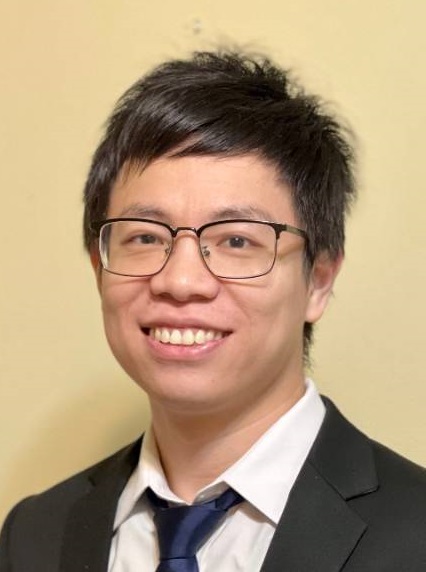
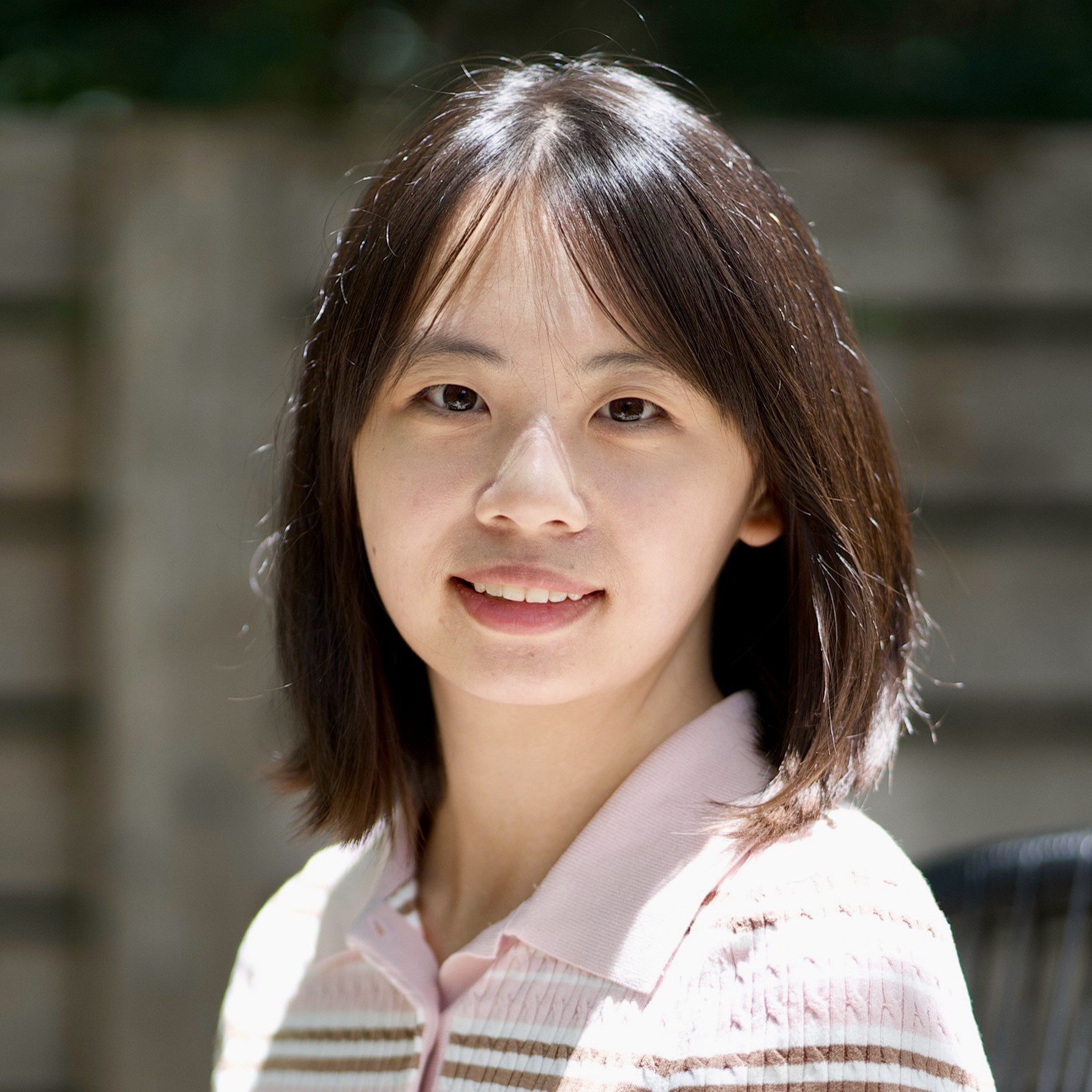
Shungeng Zhang serves as an Assistant Professor in the Department of Computer & Cyber Sciences at Augusta University's School of Computer and Cyber Sciences. He holds a Ph.D. in Computer Science from Louisiana State University (2021) and a B.E. in Computer Engineering from Huazhong University of Science and Technology (2014). His educational background includes: Ph.D. in Computer Science, Louisiana State University, 2021 B.E. in Computer Engineering, Huazhong University of Science and Technology, 2014 Dr. Zhang's research spans distributed systems, cloud computing, and cybersecurity with a focus on enhancing performance and scalability of web applications and IoT stream processing in cloud environments. He employs sophisticated timeline analysis and fine-grained monitoring to identify transient bottlenecks causing long-tail latency problems, addressing propagation effects in complex dependency chains among application components. His publication record (2017-2022) reveals consistent contributions to cloud systems performance, particularly in n-tier architectures, concurrency control, and latency optimization. Key themes include stream processing synchronization, fanout query performance, adaptive concurrency for SLO compliance, and mitigation of transient resource contention attacks across distributed systems. No scientific awards were mentioned in the provided information. Dr. Zhang actively seeks graduate students with strong computer systems backgrounds for research collaboration. His departmental service includes Faculty Assembly participation (2021-2022) and faculty interviewing duties. Professionally, he serves as a reviewer for ACM SoCC'23, ACM TOIT, SmartCom 2023, The Journal of Supercomputing, and ACM SoCC'22. Teaching responsibilities include AIST 4720 (Enterprise System Architectures), CSCI 1200 (Introduction to Computers and Programming), and graduate courses such as CSCI 8940 (Dissertation Research) and AIST 3310 (Advanced Networking). No dedicated research labs or teams were specified in the available documentation.
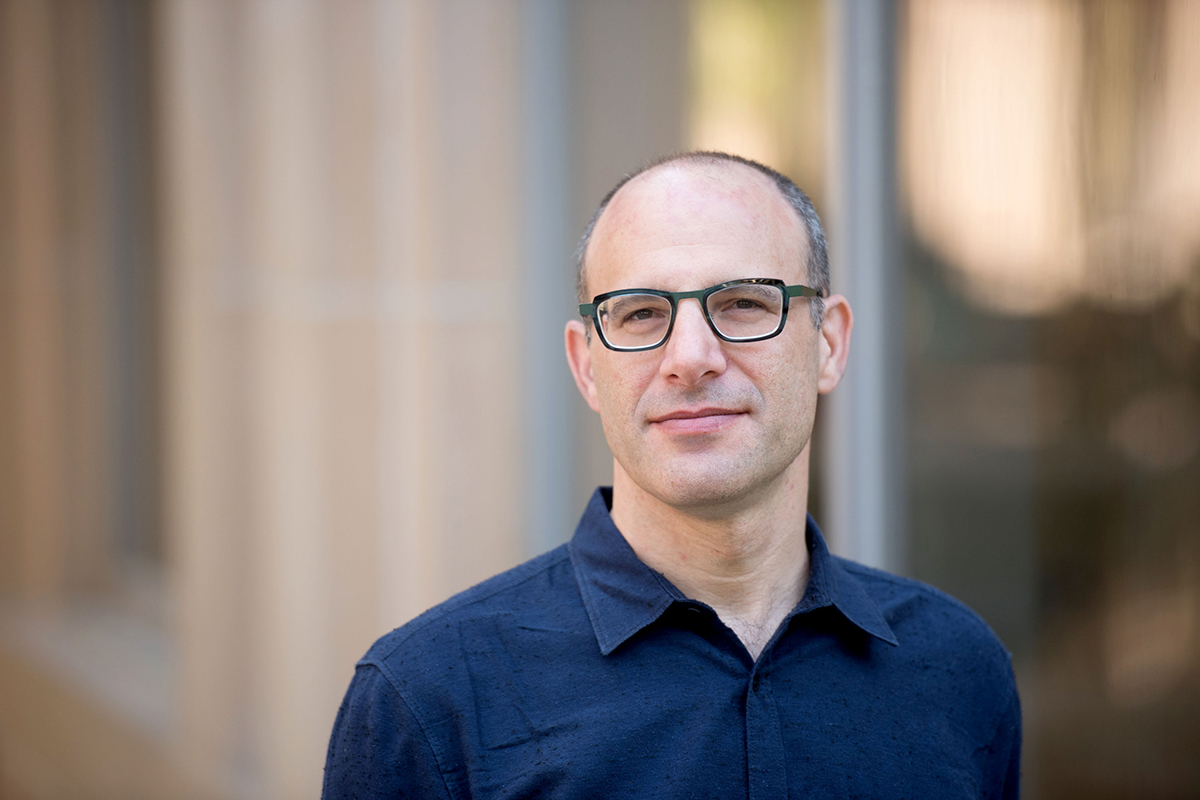
Emmett Witchel is a Professor of Computer Science at the University of Texas at Austin , with research spanning computer architecture, systems, networking, security, and privacy . His work focuses on low-level systems optimization and secure concurrent execution. Research Interests: Concurrent systems, secure execution environments, GPU integration, distributed systems. Teaching: CS 380L (Advanced Operating Systems), CS 371M (Mobile Computing). Scientific Awards: Runner-up Best Paper, ASPLOS 2013 Runner-up Award for Outstanding Research, USENIX Symposium 2012 IEEE Micro Top Pick Award 2007 ACM Honorable Mention 2004 George M. Sprowls Award, MIT EECS 2004 Recent Publications demonstrate leadership in CXL pod databases ( Tigon ), stateful serverless computing ( Boki ), SmartNIC-accelerated file systems ( LineFS ), and GPU security ( Telekine ). His work bridges hardware-software co-design and practical systems implementation.
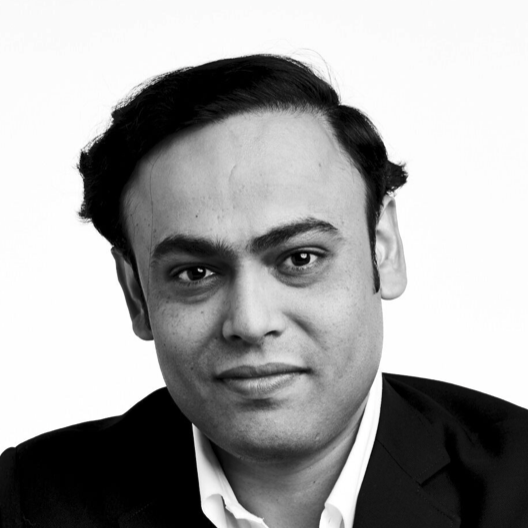
Saurabh Amin is a Professor in the Department of Civil and Environmental Engineering at the Massachusetts Institute of Technology (MIT), where he also serves as the Edmund K. Turner Professor and Undergraduate Officer. He is a Principal Investigator at the Laboratory of Information and Decision Systems and holds affiliations with the Operations Research Center and the Center for Computational Science and Engineering. His educational background includes: B.Tech. 2002, Indian Institute of Technology (IIT) Roorkee M.S. 2004, University of Texas (UT) Austin Ph.D. 2011, University of California (UC) Berkeley Saurabh Amin's research focuses on the design and control of infrastructure systems using game theory and optimization in networks. His work spans three main areas: resilient network control, information systems and incentive design, and optimal resource allocation in large-scale infrastructure systems. By concentrating on critical infrastructure domains including highway transportation, electric power distribution, and urban water networks, his research develops innovative theory and tools to enhance system performance against both stochastic and adversarial disruptions. His approach involves modeling cyber-physical interactions in infrastructures to assess vulnerabilities, developing detection and response tools for failures at various scales, and designing economic incentive schemes that improve aggregate public good while accounting for dependencies and private information among strategic entities. Amin's work bridges mathematical systems theory with practical civil engineering applications, creating a rigorous theoretical foundation for infrastructure resilience that addresses diverse failure mechanisms from natural disasters to deliberate malicious actions. His recent publications demonstrate a strong focus on decarbonization of energy systems, resilient infrastructure planning under climate uncertainty, optimization methods for complex networked systems, and game-theoretic approaches to sustainable infrastructure management. His work increasingly integrates artificial intelligence and machine learning techniques with traditional control theory to address contemporary challenges in infrastructure resilience and sustainability. The research shows a clear trajectory toward addressing climate change impacts on infrastructure systems while maintaining economic efficiency and operational reliability. Professor Amin has received numerous prestigious awards and honors: Common Ground Excellence in Teaching Award, 2025 HSCC Test-of-Time Award, 2024 MIT CEE, Distinguished Service and Leadership Award, 2023 Samuel M. Seegal Prize (SoE) – inspiring students in pursuing and achieving excellence, 2022 Earll M. Murman for Excellence in Undergraduate Advising, 2022 C3.ai Digital Transformation Institute Research Award, 2020 MIT, Ole Madsen Mentoring Award, 2020 MIT, Energy Initiative Research Award, 2020 National Academy of Engineering, China-America Frontiers of Engineering Symposium speaker, 2019 MIT, Robert N. Noyce Career Development Professor, 2015-2018 Google Faculty Research Award, 2015 National Science Foundation CAREER Award, 2015 Siebel Energy Institute Research Award, 2015 MIT, Solomon Buchsbaum AT&T Research Fund Award, 2012 Professor Amin has been actively involved in significant research projects including the C3.ai DTI project on Causal Reasoning for Real-Time Attack Identification in Cyber-Physical Systems and another on Learning in Routing Games for Sustainable Electromobility. He serves as the chief scientist on multi-institutional NSF grants, including the $9 million Foundations of Resilient Cyber-Physical Systems (CPS) project. His teaching portfolio includes courses such as 1.008 Engineering for a Sustainable World, 1.104 Sensing and Intelligent Systems, 1.020 Engineering Sustainability: Analysis and Design, and 1.208 Resilient Networks. As Undergraduate Officer, he plays a key role in shaping the educational experience for civil and environmental engineering students at MIT. Professor Amin leads the Resilient Infrastructure Networks Lab at MIT, where his team develops theoretical foundations and practical tools for infrastructure resilience. The lab focuses on the intersection of control theory, game theory, and optimization applied to cyber-physical infrastructure systems. Current research directions include pandemic-resilient urban mobility and hurricane-resilient smart grid operations, reflecting the lab's commitment to addressing pressing societal challenges through rigorous systems engineering approaches.
Gautam Kamath is an Assistant Professor at the University of Waterloo's Cheriton School of Computer Science, a Faculty Member at the Vector Institute, and a Canada CIFAR AI Chair. He leads The Salon, a research group focused on statistics, algorithms, machine learning, and optimization. His work bridges theoretical foundations with practical applications in data privacy and robustness, contributing to both academic research and real-world deployments that impact millions of users. Dr. Kamath earned his PhD and SM degrees in Electrical Engineering and Computer Science at MIT, where he was advised by Costis Daskalakis. Prior to MIT, he graduated from Cornell University in May 2012 with a degree in Computer Science and Electrical and Computer Engineering, where he worked with Bobby Kleinberg. His academic journey reflects a strong foundation in both theoretical computer science and practical applications. His research focuses on developing solutions for trustworthy and reliable machine learning and statistics, with particular emphasis on data privacy and robustness. He addresses fundamental problems in these areas, revitalizing statistical toolkits for the modern data era where privacy preservation is paramount. His work spans theoretical foundations of differential privacy to practical applications that have been deployed at scale, including contributions to systems that protect the sensitive information of hundreds of millions of individuals. Analysis of his recent publications reveals a strong trend toward addressing the interplay between privacy, robustness, and machine learning performance. His work increasingly examines practical deployment challenges while maintaining theoretical rigor, with growing emphasis on diffusion models, generative AI, and the legal implications of AI systems. There's a clear trajectory from foundational privacy theory toward addressing real-world implementation challenges across diverse application domains. Canada CIFAR AI Chair Ontario Early Researcher Award 2024 Caspar Bowden Award for Outstanding Research in Privacy Enhancing Technologies STOC Best Student Presentation Award ICML 2024 Best Paper Award Microsoft Research Fellow at the Simons Institute for the Theory of Computing Dr. Kamath actively mentors students, with notable successes including Valentio Iverson winning the Germain-Erdős Undergraduate Award and Chris Trevisan receiving the CRA Outstanding Undergraduate Researcher Award. His service to the research community is extensive, serving as Editor-in-Chief of TMLR, on the Executive Committee of the Learning Theory Alliance, and on steering committees for major conferences including ICML, COLT, and ALT. He has organized numerous workshops focused on privacy-preserving machine learning and differential privacy. Through The Salon research group, Dr. Kamath fosters a collaborative environment where postdoctoral fellows, graduate students, and undergraduates work together on cutting-edge problems at the intersection of statistics, algorithms, machine learning, and optimization. The group maintains strong connections with industry partners and participates in major research initiatives, including the Vector Institute's privacy and security research efforts. Looking forward, Dr. Kamath will be moving to the Computer Science department at NYU's Courant Institute of Mathematical Sciences in September 2026, where he plans to expand his research program.
Alan Zaoxing Liu is an Assistant Professor of Computer Science at the University of Maryland, College Park , with appointments at the University of Maryland Institute for Advanced Computer Studies (UMIACS) and Maryland Cybersecurity Center (MC2) . His research bridges systems, networking, and cybersecurity to design scalable, trustworthy approximate computing systems. Ph.D. in Computer Science from Johns Hopkins University (2018) Postdoctoral research at Carnegie Mellon CyLab (2018–2020) Research Interests : Networked and data-intensive systems Telemetry/analytics for heterogeneous networks Machine learning for network optimization Security in programmable networks Recent Publications include work on future-proof telemetry (PromSketch, VLDB’25), scalable caching (OctoCache, ASPLOS’25), and secure network analytics (TrustSketch, NDSS’24). His NSF-funded projects focus on optics-enabled DDoS defense and data-driven network management. Scientific Awards : USENIX FAST Best Paper (2019) USENIX ATC 'Best of Rest' (2021) Red Hat Collaboratory Research Awards (2022, 2023) Teaching : Leads Cloud Computing at Boston University , emphasizing agile development, open-source collaboration, and cloud infrastructure.
Justin Yim is an Assistant Professor at the Department of Mechanical Science and Engineering at the University of Illinois Urbana-Champaign (UIUC), where he runs the Novel Mobile Robots Lab (NMbL). His research focuses on enabling high-performance locomotion in robots through concurrent design of mechanisms and controllers, inspired by biological systems. He previously earned his PhD in Electrical Engineering from UC Berkeley (2020) and dual BS degrees in Mechanical Engineering and Applied Mechanics/Electrical Engineering from the University of Pennsylvania (2015), followed by a postdoctoral researcher role at Carnegie Mellon University (2020-2022). PhD, Electrical Engineering, University of California, Berkeley (2020) MSE, Robotics, University of Pennsylvania (2015) BSE, Mechanical Engineering and Applied Mechanics/Electrical Engineering, University of Pennsylvania (2015) His research explores legged robot design, bioinspired robotics, and locomotion dynamics, with a focus on overcoming terrain challenges through minimalist mechanical systems and control strategies. Recent work emphasizes squirrel-inspired jumping and landing mechanics, programmable substrates for locomotion studies, and energy-efficient robot mobility. Selected article trends highlight innovations in monopedal hopping with series-elastic actuators, bioinspired balance control, underactuated bipedal walkers, and cooperative cable-driven modular robots. His work bridges theoretical insights with practical applications in extreme-terrain mobility. NSF CAREER Award (2025): 'Extreme Robot Walking: Speed, Agility, and Efficiency via Reduced Degrees of Freedom' NASA Innovative Advanced Concepts Fellow (2025) Justin Yim actively mentors graduate students and leads research projects in the NMbL lab, which develops robots capable of walking, hopping, and rolling in complex environments. Recent lab achievements include a Best Demo award at the 2nd Unconventional Robots Workshop (2025) and awards for outstanding locomotion papers. He teaches courses such as ME 370 Mechanical Design I and SE 422 (ME 446, ECE 489) Robot Dynamics and Control.
Jiaxin Lin is an Assistant Professor in the Department of Electrical and Computer Engineering at Cornell University , affiliated with the Computer Systems Laboratory . She earned her Ph.D. in Computer Science from UT Austin (2025) , preceded by an M.S. from University of Wisconsin-Madison and a B.S. from ShenYuan Honors College at Beihang University. Her research focuses on co-designing software and hardware systems to enable high-performance data center communication, particularly through: Programmable network interface controllers (SmartNICs) Terabit network system stacks Cache/memory interconnects Compilers for in-network computing Chip-to-chip interconnects Her work addresses challenges in portability across heterogeneous SmartNICs, demonstrated through the development of the Alkali compiler framework (NSDI '25). Key themes include hardware abstraction, data center scalability, and network-compute co-design. Scientific Awards: Google Junior Faculty Award (2025) MIT EECS Rising Star (2024) Google Ph.D. Fellowship (2021) Meta Ph.D. Fellowship (2021)
Graeme J. Kennedy is an associate professor in the Daniel Guggenheim School of Aerospace Engineering at the Georgia Institute of Technology where he leads the Simulation-based Multidisciplinary Design Optimization (SMDO) research group. His research focuses on developing numerical optimization techniques for structural and multidisciplinary design problems, particularly for fixed-wing aircraft analysis and design. Dr. Kennedy received his PhD from the University of Toronto Institute for Aerospace Studies (UTIAS) in 2012, followed by a postdoctoral research fellowship at the University of Michigan in the Department of Aerospace Engineering. His research spans several critical areas in aerospace design optimization: Development of advanced numerical optimization techniques for structural design Large-scale topology optimization for aerospace structures Aeroelastic and aerothermoelastic optimization of flexible aircraft Optimization of composite structures with manufacturing constraints Electric motor optimization for electric vertical take-off and landing (eVTOL) vehicles He has developed multiple open-source research codes including TACS (parallel finite-element solver), ParOpt (optimization toolkit), TMR (mesh generation tool), and FUNtoFEM (aeroelastic coupling framework). Dr. Kennedy is particularly interested in designing structures that manage heat from battery packs in air taxis while achieving optimal aeroelastic performance. His publications reveal a strong focus on computational methods for solving large-scale optimization problems in aerospace design. The research shows progressive development from fundamental optimization algorithms toward increasingly complex multidisciplinary applications, with particular emphasis on making high-fidelity simulation-based optimization practical for industrial design cycles through high-performance computing approaches. Dr. Kennedy actively mentors numerous graduate students, including six current PhD candidates and multiple former PhD and MS students who have completed their degrees under his supervision. His research group maintains strong connections with industry through various grants supporting the development of computational tools for aerospace design. The SMDO group also engages in educational outreach through 'Optimization through Intuition,' providing accessible learning modules about optimization concepts for middle and high school students, demonstrating Dr. Kennedy's commitment to broadening participation in engineering education.
Professor John L Provis is a leading expert in cement materials science at the University of Sheffield 's School of Chemical, Materials and Biological Engineering. He also holds a Visiting Professor position at Luleå University of Technology's Building Materials division. PhD in Chemical Engineering (University of Melbourne) 2013 RILEM Robert L'Hermite Medal 2015 Honorary Doctorate from Hasselt University Editor-in-Chief of Materials and Structures His research focuses on alkali-activated materials and geopolymer binders for sustainable construction, with key themes in chemical speciation , waste immobilization , and novel cement systems for nuclear applications. Recent publications highlight 15 representative articles spanning topics: Radiation-resistant cementitious matrices Geopolymer synthesis for heavy metal containment Thermodynamic modeling of binder systems Corrosion mechanisms in alkali-activated concretes Low-carbon cement alternatives Microstructural analysis via advanced spectroscopy Scientific Recognition : RILEM Robert L'Hermite Medal recipient Hasselt University Honorary Doctorate Editorial leadership roles in major journals Contact: j.provis@sheffield.ac.uk | Sir Robert Hadfield Building, University of Sheffield
Sankar Sivarajah is the Head of Kingston Business School and Professor of Technology Management and Circular Economy at Kingston University London. He joined the university in September 2024 after serving as Dean of the School of Management at the University of Bradford (2017-2024). His academic career began at Brunel University London in 2014 as a post-doctoral researcher. Qualifications: PhD in Management and Information Systems Studies, Brunel University London MSc in Management (Entrepreneurship), Bayes Business School BSc in Business and Management (Computing), Brunel University London His research focuses on leveraging digital technologies for societal benefit, particularly in Technology Management , Circular Economy , and Operations/Supply Chain Management . Recent work analyzes AI-driven decision-making in public sectors, blockchain integration for sustainable supply chains, and smart technology applications in green HRM. His publications span journals like Government Information Quarterly , Annals of Operations Research , and Information Systems Frontiers , covering topics from drone-based food security to ethical AI frameworks. Trends show increasing emphasis on Industry 5.0, 6G impact evaluation, and cross-country sustainability practices. Scientific Recognition: Included in World’s Top 2% Scientists (2023, 2024) Fellow of the UK Higher Education Academy (FHEA) He serves as Deputy Editor for the Journal of Enterprise Information Management , peer reviewer for EFMD and AACSB accreditations, and governing council member of Chartered Association of Business Schools (CABS). His £3M+ funded projects address 6G evaluation, AI strategy, and Smart Cities.
Azad J Naeemi is a Professor holding the Dean's Professorship in the School of Electrical and Computer Engineering at the Georgia Institute of Technology. He serves as Editor-in-Chief of the IEEE Journal on Exploratory Computational Devices and Circuits and Associate Director for Computation of the NSF-supported National Nanotechnology Coordinated Infrastructure (NNCI). His educational background includes a B.S. in Electrical Engineering from Sharif University (1994) and M.S./Ph.D. in Electrical and Computer Engineering from Georgia Tech (2001/2003). Prior to academia, he worked as a design engineer in Tehran (1994-1999) and as a research engineer at Georgia Tech's Microelectronics Research Center (2004-2008). Professor Naeemi's research spans nanotechnology with focus on emerging nanoelectronic devices, spintronics, ferroelectric devices, and design technology co-optimization for CMOS/beyond-CMOS technologies. His work bridges materials, devices, circuits, and systems, particularly investigating integrated circuits based on nanoscale devices and interconnects. Educational research includes experiential learning environments for engineering education. Recent publications (2024-2025) demonstrate strong emphasis on spin-orbit torque MRAM, ternary content addressable memories, ferroelectric/antiferroelectric devices, and plasmonic circuits. Key trends include energy-efficient hardware accelerators, neuromorphic computing applications, and compact modeling for advanced technology nodes. His scientific honors include: IEEE Solid-State Circuits Society James Meindl Innovators Award (2022) IEEE Electron Devices Society Paul Rappaport Award (2008) NSF CAREER Award (2013) SRC Inventor Recognition Award (2010) Multiple Georgia Tech teaching awards Professor Naeemi leads research supported by NSF (including NNCI infrastructure) and SRC. His editorial role with IEEE JXCDC positions him at the forefront of exploratory computational devices. He previously served as General Co-Chair for the IEEE International Interconnect Technology Conference (2013). His work connects with Georgia Tech's Microelectronics Research Center and national nanotechnology initiatives through the NNCI network, focusing on computational infrastructure for nanoscale device characterization and design.
Javier Zamora is a Professor at IESE Business School , part of the University of Navarra. He holds a Ph.D. in Electrical Engineering from Columbia University and an M.Sc. in Telecommunications Engineering from the Polytechnic University of Catalonia. Education Ph.D., Electrical Engineering, Columbia University M.Sc., Telecommunications Engineering, Polytechnic University of Catalonia PDG, IESE Business School Research Interests : Zamora specializes in digital transformation, focusing on data-driven organizations and artificial intelligence. His work explores how new technologies reshape business models, organizational structures, and leadership strategies. Publications span topics from AI implementation in finance and sports management to cloud computing in crisis scenarios. His research emphasizes practical frameworks like the "Digital Density" concept and tools for assessing digital maturity. Professional Roles : He co-founded Inqbarna (AI-powered mobile solutions) and served as CEO of eNeo Labs (digital home products). Currently, he directs executive programs at IESE, including Digital Transformation: Senior Management Program and Navigating IT Architecture .
Lili Zheng is an Assistant Professor in the Department of Statistics at the University of Illinois. Her research focuses on statistical methodology, machine learning, and high-dimensional data analysis with applications in neuroscience and network science. Key areas of expertise include graphical models, stochastic processes, and algorithmic optimization. She collaborates extensively on projects involving functional connectivity analysis, neuronal data imputation, and interpretable machine learning frameworks. Her work bridges statistical theory and computational practice, addressing challenges in model inference, feature importance assessment, and low-rank tensor completion. Notable contributions include techniques for distribution-free inference, spectral clustering in patchwork learning, and Gaussian process parameter estimation using mini-batch stochastic gradient descent. Dr. Zheng's research emphasizes interdisciplinary applications, particularly in neuroimaging (calcium imaging, functional connectivity) and multi-modal data integration. She actively explores statistical challenges in big data contexts, emphasizing robust methodologies for real-world datasets.
Marita Dale is a Senior Lecturer in the Discipline of Physiotherapy at the University of Sydney and an Early Career Researcher affiliated with the Charles Perkins Centre. She specializes in cardiorespiratory physiotherapy, focusing on exercise interventions for chronic respiratory and cardiac diseases, particularly asbestos-related and dust-related conditions. Her work emphasizes improving accessibility to pulmonary rehabilitation services and leveraging mHealth technologies for patient care. Education: PhD in Physiotherapy (2016, University of Sydney). Her research interests include optimizing pulmonary rehabilitation through mobile health platforms, such as the m-PR™ app, and investigating pediatric burn injury rehabilitation, including orthosis use and scar prevention. She also explores multimorbidity management and simulation-based learning in healthcare education. Recent studies have highlighted her contributions to COPD care protocols, telehealth implementation during the pandemic, and qualitative analyses of patient experiences. Major awards: Sydney School of Health Sciences Teaching Citation (2022), Ashurst Prize for Outstanding Oral Presentation (2015), Helga Pettitt FHS Postgraduate Study Award (2010). Marita supervises Honours, Masters, and PhD students, including Mitchell Taylor on airway clearance in bronchiectasis. Her teaching spans undergraduate and postgraduate programs in cardiopulmonary and musculoskeletal physiotherapy. She collaborates on projects like the Lung Support Service, a nationwide text message program for chronic respiratory patients during the pandemic, and contributed to the commercialization of the Perx-R app for pulmonary rehab. Labs/teams: Active member of the Charles Perkins Centre, focusing on interdisciplinary chronic disease research and healthcare innovation.
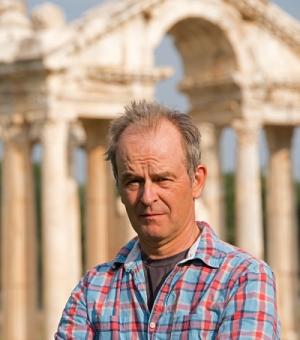
Professor Bert Smith is a distinguished academic at the University of Oxford, serving as a Fellow of Lincoln College. He holds the position of Professor in the Faculty of Classics, with a specialization in Greek Archaeology and Roman Art/Archaeology. His academic journey includes MA, MPhil, and DPhil degrees from Oxford University. Prior to his current role, he was a Harkness Fellow at Princeton University (1983-85) and taught Hellenistic and Roman art at New York University’s Institute of Fine Arts (1986-1995). His research focuses on the art and visual cultures of the ancient Mediterranean, particularly the relationship between visual representation and social/political contexts. As director of the Aphrodisias excavation project since 1991, he has contributed significantly to understanding the archaeology of Greek cities in the Eastern Roman Empire. Key achievements include a British Academy/Philip Leverhulme Fellowship (2007-2008) and leadership in the AHRC-funded 'Last Statues of Antiquity' project (2009-2012), resulting in a collaborative book (2016). Teaching responsibilities include lectures and seminars on Greek and Roman art and archaeology. His publications span over four decades, with notable works on sarcophagi iconography, Aphrodisias excavations, and Hellenistic art. He actively collaborates with institutions like the Oxford Centre for Greek and Roman Antiquity (OCGRA). Current research continues to explore late antiquity art and archaeology through fieldwork and interdisciplinary projects.