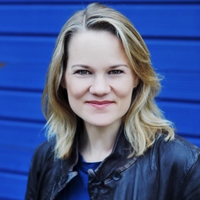
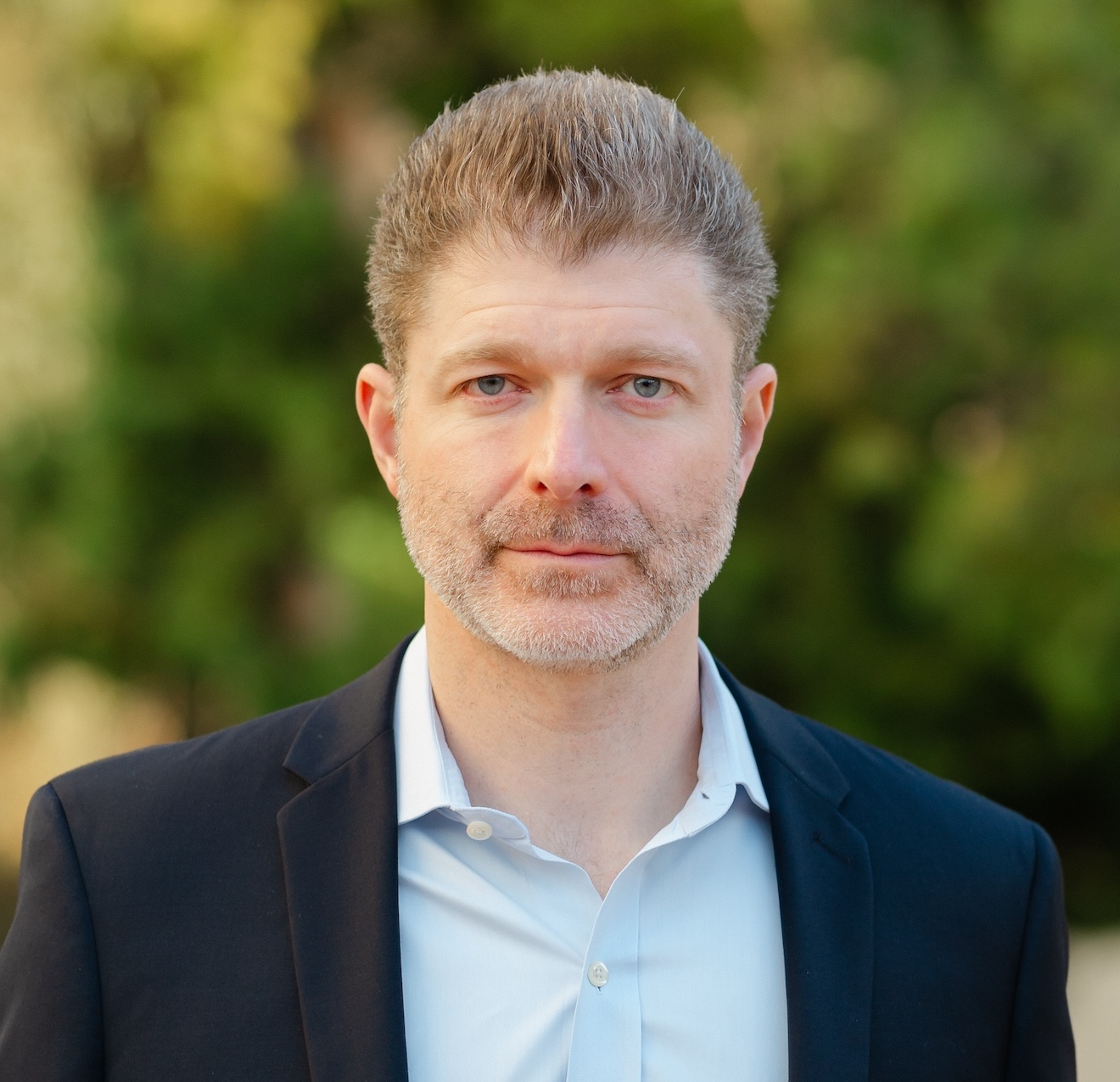
Professor Takeyoshi Ishimatsu at Nagoya Institute of Technology's College of Engineering, Social Engineering Department (Architecture & Design Field), holds a Doctorate in Engineering (2015). His work bridges environmental design, art education, and regional revitalization through community-university collaborations. Doctor (Engineering), Nagoya Institute of Technology (2015) Professional Memberships: Institute of Environment Art and Design, Japan Society of Basic Design and Art Research focuses on environmental design with emphasis on regional revitalization through art , educational design workshops , and human-environment interaction . His recent studies explore balance toy-inspired kinetic design, cross-modal sensory experiences in origami and electric guitar aesthetics, and STEAM education applications in personal fabrication workshops. Scientific awards include: Japan Society of Basic Design and Art 2014 Young Researcher Award Nagoya Institute of Technology Staff Award (2017) Japan Society of Basic Design and Art 2014 Research Encouragement Award Contributions span: Principal investigator for art festival projects funded by NPO法人越後妻有里山協働機構 (2024, 2022) Collaborative research with companies like 株式会社伊藤商店 Media coverage in 毎日新聞, 十日町新聞社, and TV programs
George P. Kafentzis is a Lecturer in the Computer Science Department at the University of Crete, where he teaches Physics for Engineers (CS-112), Digital Signal Processing (CS-370), and Signals and Systems (CS-215). He is a core member of the Speech Signal Processing Lab within the Multimedia Informatics Labs, focusing on advanced signal processing methodologies. His educational background includes a Ph.D. in Signal Processing and Telecommunications from MATISSE Doctoral School (University of Rennes 1) and a Ph.D. in Computer Science and Engineering from the University of Crete (2014), a Master of Science in Computer Science (2010), and a Bachelor's degree in Computer Science (2008), all from the University of Crete. Research interests span speech, audio, and biosignal processing with emphasis on sinusoidal modeling, emotion recognition from speech, deep learning applications, pathological speech analysis, and music signal processing. His work bridges theoretical signal processing with clinical and engineering applications, particularly in non-invasive vocal fold pathology detection through glottal analysis. Recent publications demonstrate a strategic pivot toward cough sound analysis for respiratory diagnostics using AI, while maintaining core expertise in adaptive sinusoidal models for speech transformations. Publication trends reveal an evolution from fundamental speech modeling (2010-2016) toward applied health informatics (2021-present), with increasing focus on real-world diagnostic systems leveraging cough acoustics. Over 50% of recent work integrates deep learning with traditional signal processing for medical applications, particularly in low-resource settings. Graduate student Scholarship - Institute of Computer Science, FO.R.T.H. (2008-2010) Undergraduate Scholarship - Institute of Computer Science, FO.R.T.H. (2007-2008) As an active industry collaborator, Kafentzis has served as Signal Processing Engineer at Hyfe AI (2022-2025) and contractor for VoiceSignals and Toshiba Research Europe. His teaching portfolio includes a widely adopted textbook Continuous and Discrete Time Signal Processing (2019), which integrates MATLAB implementations with theoretical foundations. Current research leverages his signal processing expertise in cough monitoring systems validated through multicenter clinical trials. He leads projects in the Speech Signal Processing Lab including Novel Deep Learning Architectures for Automatic Speech Recognition and Speech Emotion Recognition and Visualization Techniques, with recent work extending to Greek-language pathological speech analysis and respiratory health monitoring systems.
Dr. Alice Hall serves as a Professor in the Department of Communication and Media within the College of Arts and Sciences at the University of Missouri-St. Louis. She teaches foundational and advanced courses including Introduction to Mass Communication, Seminar in Mass Communication, and Introduction to Broadcasting and Digital Media, shaping student understanding of media theory and practice. Education: Ph.D., University of Pennsylvania M.A., University of Pennsylvania B.A., Trinity University Research Focus: Dr. Hall's scholarship investigates the psychological mechanisms through which audiences interpret and are influenced by entertainment media narratives. Her work centers on perception of reality in both fictional and reality-based content, narrative transportation into stories, and parasocial relationships with media characters. She examines how individual differences—including personality traits, gender, and race—shape media engagement and effects, with significant contributions to understanding audience responses to superhero franchises, reality television, and digital storytelling formats. Publication Trends: Analysis of Dr. Hall's recent work reveals sustained exploration of audience-media interaction dynamics across evolving media landscapes. Her research consistently bridges communication theory and psychological science, with increasing attention to demographic variables in media consumption and the cognitive-emotional processes underlying narrative engagement. The publication record demonstrates methodological diversity while maintaining focus on core questions about how media stories shape audience perceptions of reality.
Christian Fennesz is a renowned Austrian guitarist, composer, and electronic musician who joined the Faculty of Performing Arts at the Music and Arts Private University of the City of Vienna as a lecturer in September 2019. Widely recognized as a key figure in electronic music, his innovative work combines traditional guitar techniques with advanced digital signal processing to create unique symphonic soundscapes. He is particularly known for his critically acclaimed albums that have redefined the perception of electronic music. As a lecturer, Fennesz contributes to the university’s mission of exploring new musical expressions and integrating technology with artistic performance. His teaching likely bridges his practical expertise in electronic music with academic frameworks. Research & Artistic Contributions : Fennesz’s work focuses on the intersection of guitar-based composition and electronic music production. His albums demonstrate pioneering approaches to: Transforming analog instruments through digital manipulation Creating immersive ambient environments Developing glitch and microsound aesthetics Integrating mathematical sound patterns Exploring non-linear audio editing Advancing real-time sound processing techniques Scientific Awards : Prix Ars Electronica (for Hotel Paral.lel , 1997) Collaborations & Projects : Fennesz has collaborated extensively with diverse artists including Ryuichi Sakamoto, David Sylvian, Keith Rowe, and Mike Patton. He was a member of the improvisational trio Fenn O'Berg with Peter Rehberg and Jim O'Rourke. His recent works continue to push the boundaries of electronic music through innovative studio releases and live performances.
Nurten Demet DEMİREL is a Lecturer at Kastamonu University , affiliated with the Turkish Language Teaching Application and Research Center since 2012. Her work focuses on Turkish education, open/distance learning, and educational technology integration. PhD in Distance Education, Anadolu University (2020) Master's in Distance Education (2014) and Turkish Language Teaching (2008) Bachelor's in Turkish Language and Literature, Eskişehir Osmangazi University (2007) Her research explores digital tools in Turkish language instruction , including video conferencing, mobile apps, and social media platforms. She has published on collaborative learning environments, technology usage in listening skills, and adaptation challenges for foreign students. Key trends in her publications include foreign language teaching methodologies , technology-enhanced learning environments , and analysis of distance education systems . Collaborative work with scholars like Evrim Genç Kumtepe and Murat Sümer demonstrates interdisciplinary engagement.
Dr. Leah Reid is an Assistant Professor of Composition at the University of Virginia , where she teaches courses in composition and technology. Her work bridges music composition , electroacoustic music , and sound art through explorations of timbre, space, and perception. D.M.A. and M.A. in Music Composition, Stanford University B.Mus, McGill University Reid’s research focuses on the perceptual modeling of timbre and its applications in creating immersive soundscapes. She has developed a multidimensional timbre model to explore relationships between reverberant space and timbre , often using interactive sound installations and electroacoustic techniques . Her recent articles/compositions emphasize spectral density , timbral transformation , and spatial audio design . Reid is a Vice President of the International Alliance for Women in Music (IAWM), Vice President for Programs and Projects for the Society of Electroacoustic Music in the United States (SEAMUS), and Artistic Director of the Boston New Music Initiative (BNMI). She has received commissions from ensembles including Accordant Commons , Jack Quartet , and Yarn/Wire , with presentations at international festivals such as ICMC , ManiFeste , and Tilde New Music Festival . 2022 Guggenheim Fellowship American Prize in Composition Pauline Oliveros Award (IAWM) Fellowships from MacDowell, Yaddo, and Copland House Her collaborative projects and educational outreach highlight her engagement with emerging composers and technology-driven music . Reid’s works are published by Ablaze Records, New Focus Recordings, and BabelScores, reflecting her influence in contemporary acousmatic and electroacoustic circles.
Mª Aurora Pérez Maíllo is a Professor at the Faculty of Communication of the Pontifical University of Salamanca since 1994. She specializes in Audiovisual Communication and Podcasting , with a focus on Transmedia literacy education Radio culture promotion Digital media adaptation Oral expression pedagogy Her research group Media cartography and ICS. Innovation in Social Sciences have produced key studies on podcast cover design, radio industry digital transformation, and sound culture education for youth. Notable projects include Esp@cio Podc@st , an educational podcast platform for improving primary students' oral skills through playful, interactive methods. Her work combines Quantitative surveys on audience behavior Qualitative analysis of crisis communication (e.g., 2004 Madrid bombings coverage) Educational tool development for transmedia radio literacy with practical applications in university classrooms and school settings.
Florian Müller serves as Assistant Professor for Mobile Human-Computer Interaction at Technical University of Darmstadt, leading the Urban Interaction Lab. His research pursues seamless integration of digital information, AI agents, and physical environments into unified Extended Reality (XR), with focus on novel interaction techniques for mobile XR and human-AI collaboration through body-centric, tangible, and haptic interfaces. Müller's primary research spans Extended Reality, Human-Computer Interaction, and Mobile Interaction with specialization in Haptic Interfaces, Tangible Interfaces, and Body-Centric Interaction. He investigates how multimodal sensory feedback enhances user experiences in immersive environments, particularly examining AI-driven adaptation for context-aware XR systems and the social implications of pervasive interactive technologies in urban settings. Recent publications (2024-2025) demonstrate strong interdisciplinary trends across multisensory XR (taste modulation, thermal feedback), social VR/AR applications (privacy, content sharing), and human-AI co-creation systems. Key domains include health (motor control assessment), education, and urban interaction contexts, with consistent emphasis on user experience, safety, and practical implementation challenges. Müller directs the Urban Interaction Lab at TU Darmstadt, which develops and evaluates interactive technologies for public spaces through prototyping novel mobile and XR interfaces. The lab's work emphasizes real-world deployment in urban environments, focusing on social engagement, situational awareness, and seamless interaction between physical and digital layers of city infrastructure.
Tabea Zmiskol is a Researcher at the Chair of Primary School Pedagogy and Didactics within the Faculty of Human Sciences at Otto-Friedrich-University Bamberg. She actively contributes to projects like 'Help² – I help you help' and 'DiKuLe – Developing Digital Cultures of Teaching' , focusing on interactive teaching videos and classroom analysis tools. Current focus: Video-based feedback systems in teacher training Specializations: Literacy acquisition, educational technology integration Location: Markusstraße 8a, Bamberg (Room MG2/03.11) Her research explores performance heterogeneity in primary education , blending digital tools with pedagogical strategies. Key themes include: Asynchronous online teaching methods Audio feedback effectiveness Theory-practice transfer mechanisms Interactive video analysis systems Notable achievements: 2023 Certificate in University Teaching at Bavarian Universities (Advanced Level) Publications in leading educational technology journals She leads workshops on digital learning activation and serves as a doctoral candidate at the Bamberg Graduate School of Teacher Education (BaGraTEd). Her work bridges empirical research with practical teacher development.
Helen Wolfenden is a lecturer in radio at Macquarie University’s School of Media, Music, Communication and Cultural Studies (MMCCS). With a professional background in radio broadcasting at the Australian Broadcasting Corporation (ABC) and British Broadcasting Corporation (BBC), she bridges academic research with industry practice. Her work focuses on the epistemological challenges of translating practical media knowledge into academic frameworks. Research Interests: Radio identity, para-social audience relationships, podcasting, theory-practice integration in media studies. Publications: Explores television scheduling, radio authenticity, and podcast-based academic translation. Notable works include Making Practice Publishable (2019) and A Face for Radio (2014). Conferences: Presented at ECREA and transnational radio conferences on topics like podcasting, producer roles, and audience engagement. PhD Thesis: Analyzed how ABC radio presenters construct authentic on-air identities, revealing the dynamic interplay between imagined and actual audiences.
Frans Wiering is an Associate Professor at the Interaction Technology division of the Department of Information and Computing Sciences at Utrecht University . His research bridges computer science and musicology , focusing on music information retrieval (projects: WITCHCRAFT, C-Minor, COGITCH), computational musicology (Tunes and Tales, Transforming Musicology), and music technology for games (COMMIT work package). He founded the Thesaurus musicarum italicarum , a digital collection of Renaissance music treatises, and has held visiting positions at Stanford University and Goldsmiths College . Research Interests : Music information retrieval Computational musicology Music technology for interactive environments Digital humanities Algorithmic analysis of historical music data Notable Contributions : Co-organized the Dagstuhl Seminar on Knowledge Representation for Intelligent Music Processing General Chair of ISMIR 2010 and Program Chair of ISMIR 2015 Founder of Thesaurus musicarum italicarum
Dr. Charlotte van Hooijdonk is an Assistant Professor at Utrecht University's Faculty of Humanities, specializing in Language and Communication within the Department of Languages, Literature and Communication. Her research focuses on human-AI interaction, digital communication strategies, and health information design. Research Focus: Her work bridges communication studies with technology, examining: Chatbot interaction design and conversational AI applications Health communication optimization (medication labels, patient information) Social media strategies for organizations and brands Visual/textual comprehension in digital environments Human-centered AI integration in customer service and public administration Publication Trends: Her 15 most recent articles (2021-2025) show strong emphasis on conversational AI design, chatbot-user interaction, and health communication. Earlier work (2005-2017) focused on multimodal learning, instructional design, and visual rhetoric. Methodologically, she employs mixed-methods approaches including content analysis, experimental studies, and user experience evaluation. Teaching and Service: Teaches courses in Communication and Information Sciences (BA) and Communication and Organization (MA) Covers topics including Academic Writing, Research Methodology, and Language Technology Skills include experimental design, corpus-based discourse analysis (SPSS/JASP), and survey research
Dr. Henri Hurkmans is an active Researcher at Erasmus University Medical Center in Rotterdam, Netherlands, affiliated with the Erasmus School of Medicine and the Department of Orthopedics and Sports Medicine. His research program focuses on developing and validating technological interventions for rehabilitation, particularly in stroke recovery and orthopedic rehabilitation settings. Dr. Hurkmans' research interests center around the application of sensor technology and feedback systems to improve rehabilitation outcomes. His work spans multiple domains including stroke rehabilitation where he has pioneered mirror therapy protocols, orthopedic rehabilitation with focus on weight-bearing techniques, and sensor-based monitoring of patient movements in hospital settings. His research demonstrates how technological innovations can provide objective measurements and real-time feedback to enhance patient recovery. Analysis of his publication history reveals a clear progression from foundational work on mirror therapy and visual illusions for stroke patients (2012-2015) toward more recent applications of wearable sensor technology for monitoring hospitalized patients (2023-2024). His research consistently bridges clinical rehabilitation practice with technological innovation, with particular emphasis on validating measurement tools and developing practical clinical applications. Dr. Hurkmans has established productive collaborations with key researchers including Bussmann, Verhaar, Selles, and Ribbers across multiple publications. His work has demonstrated significant impact, with his 2015 mirror therapy article accumulating 59 Scopus citations and his 2014 visual illusion study receiving 47 citations, indicating substantial influence in the neurorehabilitation field.
Josh McDermott is a Professor in the Department of Brain and Cognitive Sciences at the Massachusetts Institute of Technology (MIT), where he also serves as Associate Department Head and previously as Interim Department Head. He leads the Laboratory for Computational Audition and conducts groundbreaking research at the intersection of psychology, neuroscience, and engineering, with a primary focus on understanding human auditory perception and its computational underpinnings. Dr. McDermott's educational background includes: PhD in Brain and Cognitive Sciences from MIT (2001-2006), advised by Edward Adelson MPhil in Computational Neuroscience from University College London (1998-2000), advised by Geoff Hinton B.A. in Brain and Cognitive Science, summa cum laude, from Harvard University (1994-1998), advised by Nancy Kanwisher McDermott's research program centers on understanding how humans derive information from sound in complex environments. His lab investigates why biological auditory systems outperform even the most sophisticated machine hearing systems in everyday situations like noisy city streets. He explores computational audition, natural sound statistics, music perception, and the relationship between sensory modalities, with long-term goals to improve treatments for hearing impairment and enable the design of machine systems that mirror human auditory abilities. His work bridges fundamental neuroscience with practical applications for hearing technologies. His recent publications reveal a strong trend toward integrating deep learning and neural network models with auditory neuroscience. His lab has been exploring how generative models, metamers, and task-optimized networks can illuminate human auditory processing. There's a clear progression from basic auditory phenomena to more complex computational models that bridge neuroscience and artificial intelligence, particularly in areas like sound segregation, music perception, and cross-modal integration. His work consistently demonstrates how computational approaches can reveal fundamental principles of auditory perception. Dr. McDermott has received numerous prestigious awards, including: Troland Research Award (2018) NSF CAREER Award (2015) APAN Young Investigator Award (2017) BCS Awards for Excellence in Undergraduate Advising (2014, 2018) BCS Award For Diversity, Equity, Inclusion and Justice (2023) As an advisor, McDermott has mentored numerous PhD students who have gone on to make significant contributions in auditory neuroscience and computational modeling. His Laboratory for Computational Audition serves as a hub for interdisciplinary research that bridges psychology, neuroscience, and engineering approaches to understanding hearing. The lab has developed innovative methodologies for studying auditory perception, including sound synthesis techniques, computational models, and cross-cultural approaches to music cognition. McDermott's work continues to push the boundaries of our understanding of auditory perception and its computational underpinnings.
Zerrin Yumak is an Assistant Professor at the Department of Information and Computing Sciences, Faculty of Science, Utrecht University, specializing in virtual humans and social robotics. She leads Task 3.2: Embodiment and Physical Interaction in the RAGE project. Her research focuses on Social and emotional behavior analysis for virtual characters Machine learning applications in motion capture data Constrained motion graph search algorithms Lip-sync and gesture animation generation Real-time multimodal interaction systems Notable projects include the Virtual Human Controller asset for Unity 3D, integrated with BiP Media and Randstad applications. Recent work spans 2025: SemGes for semantics-aware gesture generation 2024: ProbTalk3D emotion-controllable facial animation 2023: Diffusion model-based facial animation (Facediffuser) 2020: Music-driven expressive gesture generation She contributes to workshops like GENEA (2021-2022) and MASSXR (2025), advancing non-verbal behavior modeling for embodied agents.