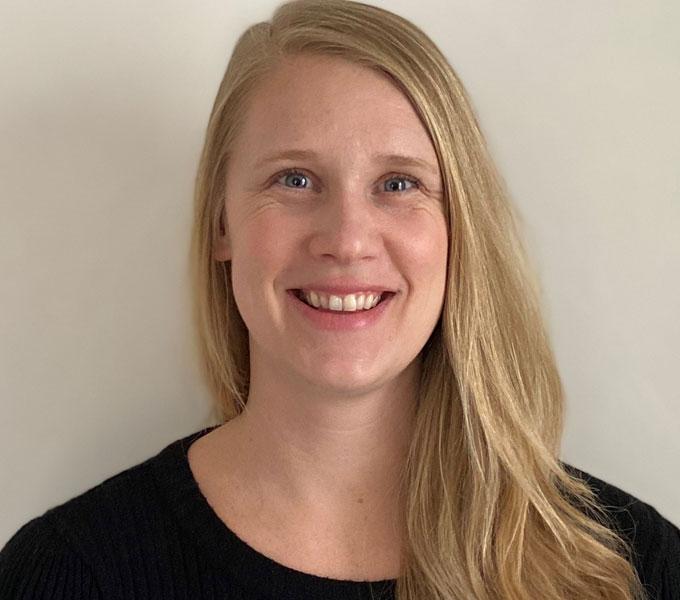
Dr. Simone Schieskow (née Kreimeier) is a researcher at Bielefeld University's Faculty of Health Sciences, working in Working Group 5 Health Economics and Health Management since October 2010. She holds a B.Sc. in Health Communication and M.Sc. in Public Health from Bielefeld University, and completed her doctorate in November 2020 with a thesis titled "Conceptual and Methodological Development of Quality of Life Assessment in Children and Adolescents Using the EQ-5D-Y as an Example." Education : B.Sc. Health Communication (Bielefeld University), M.Sc. Public Health (Bielefeld University) Her research focuses on health-related quality of life (HRQoL) in children and adolescents, specializing in patient-reported outcomes and EQ-5D-Y instrument development. She has contributed to international collaborations through the EuroQol Group, particularly its Youth Working Group where she serves as deputy chair since 2025. Recent publications highlight methodological advancements in EQ-TIPS (EuroQol Toddler and Infant Populations) preference elicitation (2025), molecular risk scoring for childhood asthma (2024), and comparative studies on adult-vs-adolescent health state preferences (2021). Her work spans from psychometric testing to policy-oriented stakeholder engagement. Key Affiliations : EuroQol Group (since 2016), Youth Working Group (deputy chair since 2025) Contact : simone.schieskow@uni-bielefeld.de | Office: UHG S5-227
Dr Bena Brown is a clinician/researcher and Adjunct Senior Fellow at the UQ Poche Centre for Indigenous Health , affiliated with the Faculty of Health and Behavioural Sciences at the University of Queensland. She is also an Advanced Speech Pathologist at Brisbane's Princess Alexandra Hospital and supervises higher-degree students in the School of Health and Rehabilitation Sciences . Her work bridges clinical practice and research to enhance cancer care for Aboriginal and Torres Strait Islander peoples . Research Interests : Cancer Care, Survivorship, Novel Service Delivery Models, Telehealth, Patient-Centered Care. Grants : Over $3.6 million in research funding, including projects like Yarning About Cultural Safety and PROMISE . Committee Memberships : Human Research and Ethics Committees at Metro South Health, Queensland Collaborative for Cancer Survivorship, COSA Patient-Reported Outcome Working Group. Publications : Over 60 peer-reviewed articles focusing on head and neck cancer outcomes , lymphoedema , dysphagia , and culturally responsive care .
Jeffrey P. Baker is a Professor in the Department of History at Duke University, with a joint appointment in Pediatrics. His work bridges medical history, bioethics, and public health, focusing on the intersection of medicine, technology, and societal values. Research Interests: History of neonatal medicine, vaccine development, autism studies, health disparities, and medical technology. Education: Ph.D. in History (Duke University, 1993); M.D. (Duke University, 1984). Teaching: Courses include Research in Medical Humanities and Practical & Patients: Historical Clinical Medicine . Dr. Baker’s research has chronologically examined premature infant care (notably in The Machine in the Nursery ), vaccine controversies (e.g., thimerosal-autism debates), and structural health disparities. Recent projects use computational methods to detect early autism markers via computer vision analysis, collaborating with teams at Duke and beyond. His publications span 20th-century medical history, with a focus on pediatrics, immunization, and technology. While no explicit awards are listed, his interdisciplinary work impacts medical education models and public health policy. Dr. Baker’s Durham, NC-based studies highlight how local history shapes community trust in academic health centers. He actively integrates historical perspectives into medical clerkships, emphasizing longitudinal understanding of clinical practices. Current projects explore digital phenotyping tools and the social history of neonatology.
Miriam Ashford is an Assistant Professor in the Department of Psychiatry at the University of California, San Francisco (UCSF) School of Medicine. Her research focuses on Alzheimer's disease, cognitive decline, and brain health equity, with an emphasis on community-engaged approaches to research. Education: BSc in Psychology from the Faculty of Language and Literature, Humanities, Arts and Education, University of Luxembourg (2011) MSc in Foundations of Clinical Psychology and Mental Health from the School of Psychology, University of Sussex, Brighton, UK (2012) Postgraduate Certificate in Academic Teaching from the Department of Learning Enhancement and Development, City, University of London, UK (2015) PhD in Health Psychology from the Centre for Maternal and Child Health Research, City, University of London, UK (2018) Postdoctoral fellowship in Neuroscience at NCIRE & University of California, San Francisco, CA (2025) Dr. Ashford's research interests center on Alzheimer's disease and cognitive aging , with particular emphasis on developing and validating online assessment tools for cognitive decline. She has pioneered work in community-engaged research to improve representation of minority populations in Alzheimer's research, focusing on culturally informed approaches to recruitment and retention. Her work bridges health psychology, neuropsychology, and digital health , with significant contributions to understanding subjective cognitive decline and developing accessible assessment methods. Her publication record demonstrates a clear trajectory from early work on perinatal mental health to her current focus on cognitive aging and Alzheimer's disease. She has developed expertise in online research methodologies , contributing significantly to the Brain Health Registry and Alzheimer's Disease Neuroimaging Initiative (ADNI). Her recent work emphasizes health equity , with multiple publications addressing barriers to research participation among underrepresented racial and ethnic groups. Scientific Awards and Honors: Research Sustainability Fund from School of Health Sciences, City, University of London (2016) Workshop Bursary from PsyPAG Postgraduate Student Organisation (2015) Best Poster Award 1st Prize at 3rd School of Health Sciences Annual Doctoral Research Conference (2015) Best Poster Award 1st Prize at 5th Annual Postgraduate Research Symposium, City, University of London (2015) Oral Presentation Runner-Up Prize at 4th Annual Postgraduate Research Symposium, City, University of London (2014) Best Presentation Award 3rd Prize at 26th Annual Convention of the Association for Psychological Sciences (2014) Travel Assistance Award from 29th Annual PsyPAG Postgraduate Student Conference (2014) Conference Bursary from City University of London (2014) PhD Studentship (fully funded PhD scholarship) from City University of London (2013) Academic Exchange Scholarship (ERASMUS) (2010) Dr. Ashford has been actively involved in major research initiatives including the Alzheimer's Disease Neuroimaging Initiative (ADNI), where she serves on the Engagement Core for ADNI-4, focusing on culturally informed, community-engaged research to advance brain health equity. She has secured funding to support her work on digital interventions for increasing research participation among Black American participants through the Community Engaged Digital Alzheimer's Research (CEDAR) Study. Her research has been supported by multiple grants focused on improving representation in Alzheimer's research and developing accessible cognitive assessment tools. As a key contributor to the Brain Health Registry, Dr. Ashford has helped develop infrastructure for digital, dyadic data collection and has led efforts in remote blood collection for biomarker analysis. Her work bridges clinical research with digital health innovation, creating novel approaches to participant recruitment, screening, and assessment for Alzheimer's clinical research.
Teagen L O'Malley is a Research Assistant Professor in the Department of Infectious Diseases and Microbiology at the University of Pittsburgh. Her work focuses on gender-based, social, and economic inequities in HIV prevention and care, using mixed-methods approaches and stakeholder engagement to develop structural interventions for cisgender women and marginalized populations. Education BA in Economics and Global Studies (2009, University of Minnesota) MPH in Behavioral and Community Health Sciences, Global Health (2012, University of Pittsburgh) PhD in Behavioral and Community Health Sciences (2019, University of Pittsburgh) Research Interests span: Structural interventions to address HIV risk in contexts of intimate partner violence (IPV) Biobehavioral prevention strategies for women-centered PrEP programs Intersectional stigma reduction in HIV healthcare settings Action-oriented research methodologies for health promotion Recent Publications highlight trends in: Stakeholder-driven PrEP intervention frameworks Linking STD surveillance data to HIV prevention programs Human-centered design for stigma-reduction interventions Survivor-centered approaches to domestic violence crisis response Research Grants include the 2025 Rustbelt Center for AIDS Research pilot study on women-centered PrEP programs.
Dr. Susan M. Sereika is a Professor in the Department of Health and Community Systems at the University of Pittsburgh School of Nursing . She holds secondary appointments in the Department of Biostatistics and Health Data Science and the Department of Epidemiology in the School of Public Health, as well as affiliations with the Clinical and Translational Science Institute and UPMC Hillman Cancer Center's Biostatistical Facility. Associate Dean for Computing and Information Technology (School of Nursing) Faculty Statistician (Office of Research Scholarship) Active in Senate Computing & IT Committee (Pitt, 1992-present) Her statistical expertise focuses on: Longitudinal data analysis for intensive monitoring (Aardex MEMS, Fitbit, actigraphy) Latent variable methods (group-based trajectory, dual/multi-trajectory analyses) Dyadic analysis Model assessment She collaborates on weight loss, lifestyle self-management, symptom management, and regimen adherence research. Academic Contributions include: PhD-level courses: Advanced Quantitative Methods Seminar (NUR 3290) Independent study supervision (NUR 3060) Statistical mentorship for honors/masters/doctoral committees Consulting for NIH reviews and journal editorial boards
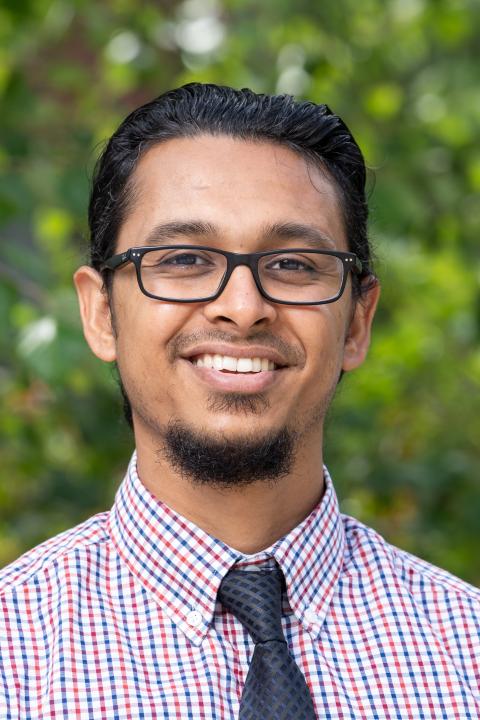
Nikhil Tomar is an Assistant Professor in the Department of Occupational Therapy at the University of New Hampshire. His research focuses on mental health stigma, its effects on healthcare utilization, and interdisciplinary approaches to addressing these challenges across diverse populations, particularly those involved with the criminal justice system and racialized students in higher education. Ph.D., Occupational Science, University of North Carolina at Chapel Hill M.S., Occupational Therapy, University of Wisconsin B.S., Occupational Therapy, Chaudhary Charan Singh University His work spans qualitative and community-based research, examining topics such as gradient rationality in stigma, moral economics of occupation, and interventions for reducing mental health disparities. Publications appear in top-tier journals like the American Journal of Occupational Therapy and Social Science & Medicine. Dr. Tomar teaches courses in psychosocial evaluation, research methods, and human occupation. Recent publications highlight his focus on intersectional stigma, cross-cultural mental health differences, and transitions in community treatment. He actively contributes to interdisciplinary research and training programs, including statewide mental health initiatives for probation officers.
Dr. Katherine Swanson is an Assistant Professor in the Department of Obstetrics and Gynecology, Reproductive Sciences at the University of California, San Francisco (UCSF) School of Medicine. She specializes in Maternal-Fetal Medicine and Reproductive Genetics, providing clinical care and conducting research in high-risk pregnancies and prenatal genetic testing at UCSF's Fetal Treatment Center. Dr. Swanson's educational background includes: Bachelor of Arts in Anthropology from the University of Chicago (2006) Doctor of Medicine from Northwestern University (2013) Residency in Obstetrics and Gynecology from Northwestern University (2017) Fellowship in Maternal-Fetal Medicine from the University of California, San Francisco (2022) Her research focuses on gestational carrier pregnancies, prenatal genetic testing, pregnancy loss, and clinical obstetrics. Dr. Swanson has published extensively on outcomes in gestational carrier arrangements, examining severe obstetric morbidity, neonatal outcomes, reproductive travel patterns, and adherence to clinical guidelines. Her anthropological training informs her approach to understanding the social, ethical, and cultural dimensions of reproductive medicine, providing a unique perspective on patient counseling in complex reproductive situations. She has also investigated labor progression patterns, uterocervical angle measurements, gestational diabetes screening methods, and cord blood gas analysis. Analysis of Dr. Swanson's publication record reveals a strong emphasis on evidence-based practice in assisted reproductive technologies. Her research employs population-based methodologies to evaluate real-world clinical practices, with particular attention to multifetal gestation complications, preimplantation genetic testing outcomes, and anesthesia exposure during cesarean delivery. Her work bridges clinical practice and research to improve outcomes for patients navigating complex reproductive journeys. Dr. Swanson actively contributes to the academic community through presentations at major conferences including the Society for Maternal Fetal Medicine and the Society of Reproductive Investigation. Her research has been published in high-impact journals such as the American Journal of Obstetrics & Gynecology, Obstetrics & Gynecology, and American Journal of Perinatology. While specific information about her laboratory team is not provided, her collaborative publication pattern suggests she works within UCSF's Maternal-Fetal Medicine division and Reproductive Genetics program.
Henrique da Silva Domingues is a predoctoral researcher in Nursing at the Universidad de Jaén. His work focuses on social support systems, family dynamics, and their impact on health behaviors across different populations, including adolescents, university students, and elderly caregivers. PhD in Nursing (2023) with research on lifestyle factors in university students Focus areas: social support, dementia caregiving, clinical simulation, geriatric nutrition Current research explores pandemic-related nursing challenges, psychometric validation of health tools, and digital interventions for caregivers. His publications highlight interdisciplinary approaches combining nursing, psychology, and public health. Collaborations include advisors Dr. Antonio Frías Osuna and Dr. Pedro Angel Palomino Moral from Universidad de Jaén.
Hassan Fouayzi, PhD, MS, MEng is an Assistant Professor in the Division of Biostatistics and Health Services Research, Department of Population and Quantitative Health Sciences, and a Senior Biostatistician in the Division of Health Systems Science, Department of Medicine, at the University of Massachusetts Chan Medical School. His academic appointments span both the Department of Population and Quantitative Health Sciences and the Department of Medicine within the T.H. Chan School of Medicine. Dr. Fouayzi earned his MS in Resource Economics from the University of Massachusetts Amherst and his PhD in Clinical & Population Health from the University of Massachusetts Medical School. His educational background has prepared him for his current role focusing on quantitative health research methodology and application. Dr. Fouayzi possesses extensive expertise in large data management and analysis, statistical computing, advanced statistical methods, risk adjustment/predictive modeling, epidemiology, and econometrics/health economics. His research spans multiple critical areas including health care services, health policy, cancer research, chronic illness management, pharmacoepidemiology, and drug safety. A significant portion of his work focuses on incorporating social determinants of health into global payments to ensure health quality, equity, and efficiency in health care financing and delivery, as part of Dr. Arlene Ash's UMass Chan research team. His publication record demonstrates strong engagement with contemporary health issues, particularly evident in his numerous studies related to the COVID-19 pandemic, vaccine hesitancy, hospital readmissions, nursing home care quality, and cardiovascular disease risk prediction. These works collectively address critical questions in health services research through rigorous methodological approaches and large-scale data analysis. Multiple publications on vaccine hesitancy and acceptance during the pandemic Research on high-frequency hospital users and readmissions Studies examining cancer screening patterns during public health emergencies Work on incorporating social determinants into payment models Dr. Fouayzi serves as a technical liaison in multi-site research collaborations funded by major national organizations including the National Cancer Institute, the Agency for Healthcare Research and Quality, CDC, and FDA. His research has been widely disseminated through numerous peer-reviewed publications and has garnered significant attention in both academic and policy circles, as evidenced by substantial citation metrics and media coverage across multiple platforms. Through his work, Dr. Fouayzi contributes significantly to advancing health services research methodology while addressing practical challenges in healthcare delivery, payment reform, and health equity. His research directly informs efforts to improve healthcare quality, reduce disparities, and develop more effective healthcare financing models.
Dr. Jade Boyd serves as an Associate Professor in the Division of Social Medicine within the Faculty of Medicine at the University of British Columbia. She is also a research scientist with the BC Centre on Substance Use (BCCSU) and maintains affiliations with the Vancouver Coastal Health Research Institute (VCHRI) and Providence Health Care's Interdepartmental Division of Addiction Medicine. Dr. Boyd's research program focuses on substance use, harm reduction, and overdose prevention through qualitative, ethnographic, and community-based methodologies. Her work examines social, structural, and environmental factors that impact people who use drugs, with particular attention to reducing the harms of criminalization and addressing gendered impacts of drug policy. She employs intersectional frameworks to understand how multiple forms of marginalization affect drug-related outcomes and healthcare access. Analysis of Dr. Boyd's publication record reveals consistent focus on harm reduction practices, gender-specific experiences in drug treatment, overdose prevention strategies, and the structural determinants of health among people who use substances. Her research spans community-based interventions, healthcare settings, and policy analysis, with increasing attention to virtual care models and housing-based responses to the overdose crisis in recent years. Scientific Recognition: Michael Smith Health Research BC Scholar Award (2020) Dr. Boyd's research program is supported through multiple funding mechanisms that enable her community-engaged work examining the social and structural determinants of health among people who use drugs. Her collaborative approach involves partnerships with community organizations, healthcare providers, and policymakers to translate research findings into practice and policy. While specific student mentoring details aren't publicly documented, her role as an Associate Professor includes supervising graduate students in the Faculty of Medicine. Dr. Boyd works within the BC Centre on Substance Use, an interdisciplinary research hub dedicated to transforming the health and wellness of people who use substances through evidence-informed care. Her research contributes to the Centre's mission of developing and implementing innovative approaches to substance use care across British Columbia.
Professor Catherine Hawke is a faculty member at the University of Sydney within the School of Rural Health (Dubbo/Orange) under the Faculty of Medicine and Health. She serves as Head of Clinical School and specializes in Population Health , evidence-based medicine , and research methods . Her research focuses on Adolescent Health , Epidemiology , and Public Health , with particular attention to Obesity , Diabetes , Cardiovascular Disease , and Healthy Ageing . Recent work includes rural STEMI care optimization and mental health impacts of climate change. Key Themes : Rural health disparities Hormonal influences on adolescent development Health system navigation Climate change resilience Articles Trends : Her publications emphasize adolescent endocrinology , rural healthcare innovation , and public health policy , often employing longitudinal studies and mixed-methods research .
Taj Nathan is a Visiting Professor at the University of Chester's Chester Medical School, an Adjunct Professor at Liverpool John Moores University, and an Honorary Senior Research Fellow at the University of Liverpool. He serves as Director of Research for the Cheshire and Wirral Partnership NHS Foundation Trust and holds the dual role of CRN-NWC Clinical Lead and Mental Health Specialty Lead for the National Institute for Health Research. Professor Nathan's academic qualifications include: MB BCh (University of Wales College of Medicine, 1991) MRCPscyh (Royal College of Psychiatrists, London, 1996) MMedSc (University of Leeds, 1997) Dip. Foren. Sc. (University of Liverpool, 1999) MD (University of Liverpool, 2007) PGCert Historical Studies (distinction) (University of Oxford, 2022) His research focuses on forensic psychiatry with emphasis on personality disorders, autism spectrum disorder, and violence risk assessment in complex mental health systems. He investigates clinical decision-making processes, standardized assessments, and the interplay between psychosis and substance misuse, while also addressing critical issues in suicide prevention and emergency mental healthcare pathways. Analysis of his 2024 publications reveals a strong concentration on patient safety mechanisms in mental healthcare, particularly incident reporting systems and adverse event responses. A recurring theme is risk assessment methodology in forensic settings, alongside expanding research on complex mental health needs involving autism and intellectual disability. His work increasingly utilizes mixed-methods approaches to dissect systemic challenges in mental health service delivery. Professor Nathan has received the following scientific recognition: JM Press international non-fiction essay prize (2018) He actively supervises research, currently co-supervising 4 PhD candidates, and secures funding through NIHR grants as Clinical Lead. His projects include the COMPAT study on complex mental health pathways and SSHaRE NoW research on suicide prevention, often involving collaborations with NHS trusts and academic institutions across the UK. As Director of Research, he leads interdisciplinary teams at the Cheshire and Wirral Partnership NHS Foundation Trust, working closely with the COMPAT study group and SSHaRE NoW consortium. His operational framework integrates clinicians, academics, and service users to address forensic mental health challenges through system-level innovations.
Claire Levy is a Senior Lecturer in Film at the Bath School of Art, Film and Media , Bath Spa University. She holds an MA in Photography and Urban Cultures from Goldsmiths, University of London, and a BA Hons in French and German from Oxford University. As a Fellow of the Higher Education Academy (FHEA), she bridges academic and industry expertise. Her research explores young people's rural experiences , public space dynamics , and interactive documentary through a participatory lens. She is currently pursuing a PhD at Goldsmiths on these topics while serving as a Research Associate at the Centre for Community and Urban Research. Claire's filmography spans UK broadcast (Channel 4, BBC) and BFI-funded projects. She has collaborated with the NHS on educational materials and co-founded the Stroud Film Festival. Her consultancy includes corporate films for Beazley, ACCA, and HSBC. Scientific Awards & Honors Royal Television Society (RTS) Award nominations for documentary work (2009) Fellow of the Higher Education Academy (FHEA) Her corporate projects like 'Brent Council Citizenship Film' and 'ACCA Executive Team: Reflecting Back and Looking Forwards' demonstrate expertise in brand-aware filmmaking. She supervises students in documentary, participatory research, and non-linear storytelling.
Prof. Dr. Susan Thieme is a full Professor of Geography and Critical Sustainability Studies at the Faculty of Science, University of Bern , serving as Executive Director of the Institute of Geography since 2023. She founded the mLAB and co-directs the Global Science Film Festival , blending academia with artistic and digital practices. PhD in Human Geography (2005), Habilitation (2012), both at University of Zurich 2017–present: Full Professor at University of Bern 2015–2017: Professor at Freie Universität Berlin Her research spans critical sustainability studies , im/mobility , and transdisciplinary knowledge co-production , emphasizing social justice and emancipatory frameworks . Current projects like EcoArtLab integrate climate science with artistic methods. Her publications reveal a focus on migration infrastructures , healthcare labor , and transdisciplinary education . She supervises PhD candidates in themes of art-climate collaborations , healthcare cooperatives , and education for sustainability . Scientific outreach includes hosting the FameLab science communication competition and co-creating MOOCs on transdisciplinarity. She advises organizations like HELVETAS and Swiss Development Cooperation .