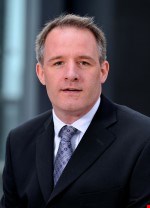
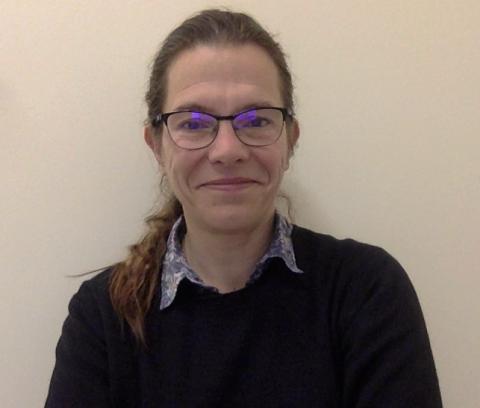
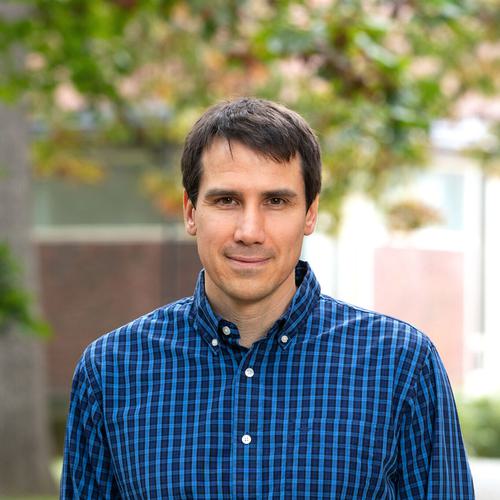
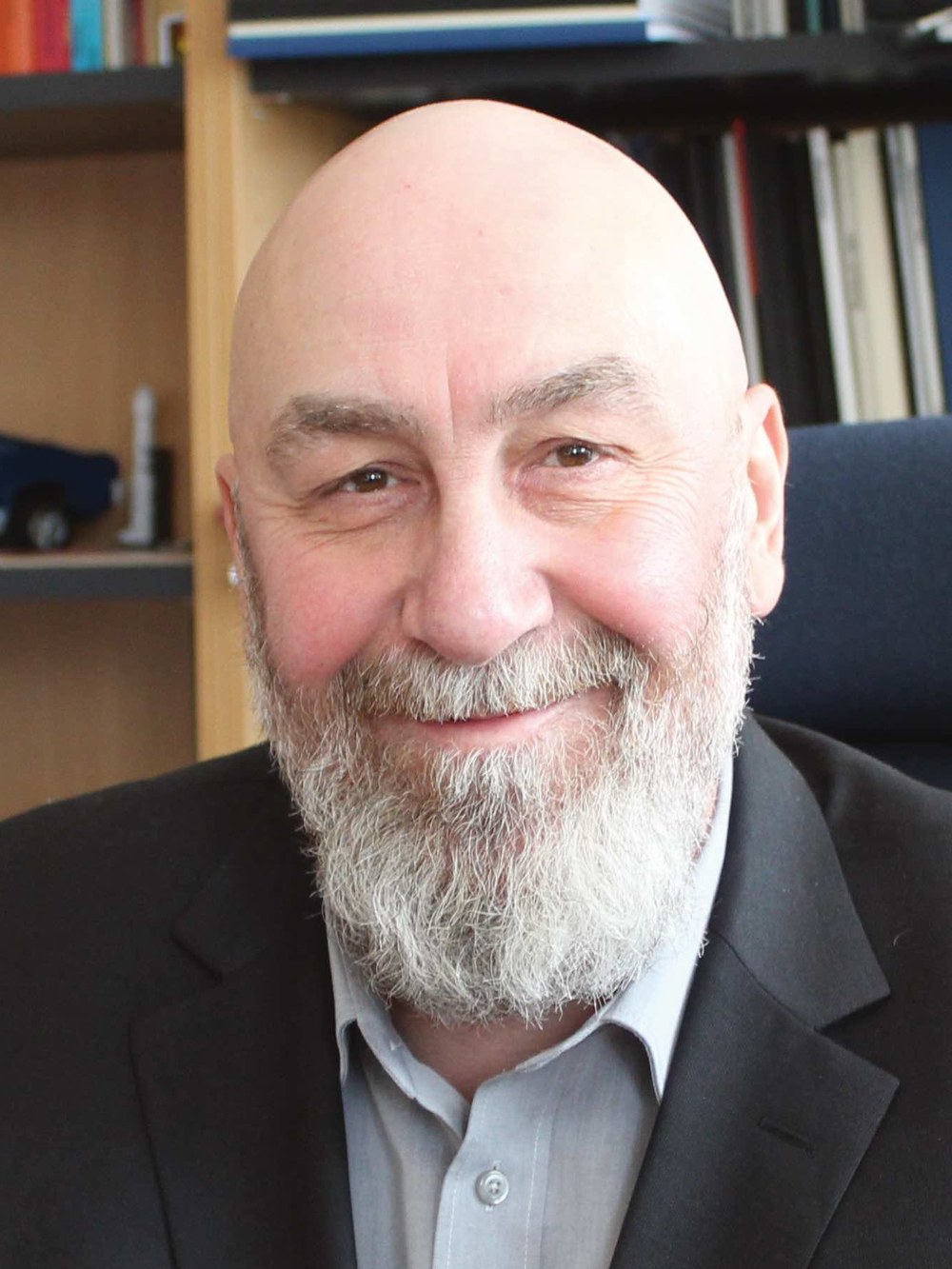
Professor Dr. Sebastian Böser is a faculty member at the Johannes Gutenberg University Mainz, holding the PRISMA Professorship for Experimental Astroparticle Physics within the School of Physics, Mathematics and Computer Sciences. His research focuses on neutrino astronomy, precision measurement of neutrino oscillations, and the development of advanced photosensors for large-scale experiments like IceCube. He contributes to Research Area B: "Origin of Mass and Physics Beyond the Standard Model" at JGU. Born in 1977 in Starnberg, Bavaria Diploma in Physics, Technical University Munich PhD, DESY Zeuthen (2006) His work includes extending the IceCube neutrino observatory to lower energy thresholds for probing neutrino mass hierarchy and CP-violation, as well as designing novel light sensors using wavelength-shifting materials. He also investigates extragalactic supernova neutrinos and cosmic ray origins through high-energy neutrino flux analysis. Scientific awards include the Tiburtius Recognition Award (2007) for his PhD thesis "Acoustic detection of high-energy cascades in ice". He has participated in major collaborations including IceCube, ATLAS, and the ARENA 2005 workshop.
Janusz Marzec is a Professor at the Nuclear and Medical Electronics Division of Warsaw University of Technology's Faculty of Electronics and Information Technology. His career spans roles as Professor (2022), Doctor (1983), and Master of Science (1975), with leadership as Head of Division (2017-). He contributes to particle physics experiments and detector development. Sciences: Automation, Electronics, Electrical Engineering, Space Technologies Key Topics: HEP Detectors, Spin Physics, Neutrino Astrophysics, QCD His recent publications focus on muon scattering experiments (COMPASS), neutrino oscillation sensitivity in Hyper-Kamiokande, exotic meson spectroscopy, and spin-dependent asymmetries. Articles emphasize detector design, deep-inelastic scattering, and resonance analysis. He participates in institutional governance as Member of Faculty Council Committee on Faculty Organization and University Disciplinary Committee of Appeal. Contact: janusz.marzec@pw.edu.pl | +48 22 234 76 43 | Room 62.
Dr. Marcin Ziembicki serves as an Assistant Professor at the Institute of Radioelectronics and Multimedia Technology within the Faculty of Electronics and Information Technology at Warsaw University of Technology. His research integrates experimental particle physics with advanced detector development, focusing on neutrino interactions and nuclear phenomena through major international collaborations. His primary research interests include: Neutrino oscillation physics and cross-section measurements Development of photomultiplier-based detection systems for water Cherenkov experiments Analysis of hadronic final states in deep-inelastic scattering Spin-dependent asymmetries in polarized targets Real-time FPGA-based data acquisition systems Recent publications demonstrate concentrated activity in T2K and Hyper-Kamiokande neutrino experiments, with significant contributions to oscillation parameter measurements, neutron capture studies in oxygen targets, and detector calibration techniques. His work spans theoretical modeling and hands-on hardware implementation, particularly in FPGA-based readout systems for particle detectors. With 168 publications and an h-index of 49 (Scopus), his experimental work has advanced precision measurements in neutrino physics. He has supervised 7 promoted theses and participated in 14 research projects, including the T2K Near Detector upgrade and Hyper-Kamiokande photosensor development. Dr. Ziembicki maintains active roles in the COMPASS spin physics collaboration and the AMBER experiment, where he develops specialized electronics for hadron spectroscopy. His technical expertise bridges particle physics with electrical engineering, particularly in signal processing and detector electronics design for high-radiation environments.
Dr David Smith is a Senior Lecturer in Electronic and Electrical Engineering at Brunel University London, affiliated with the College of Engineering, Design and Physical Sciences and the Sensors and Instrumentation Research Group. He serves as UG EEE Course Director and Radiation Protection Supervisor, with expertise in radiation detection and space instrumentation. Education: PhD in Radiation Damage in Charge Coupled Devices (University of Leicester), MPhys in Physics with Space Science and Systems (University of Kent), PGCert in Learning and Teaching in Higher Education. Research: Focuses on radiation testing of solid-state sensors, scintillator development for neutron detection, and dosimetry techniques for space and terrestrial applications. His work addresses space weather effects and high-temperature radiation-hard detectors. Publications: Recent studies include FLUKA-code modeling of YSO:Ce detectors (2024), europium-doped scintillators (2022), and quantum dot radiation sensors (2021). His article trends span radiation detection, space instrumentation, and computational modeling. Awards: Senior Fellow of the Higher Education Academy (SFHEA). Teaching: Develops courses in sensors, programming, and analogue electronics for undergraduate and postgraduate programs. Supervision: Mentored 8 PhD students, including Nadeera Gunaratna Mudiyanselage and Uthayanath Suthakar, with research spanning plasma cathode electron guns and scintillator design. Grants: Principal investigator for FEUD (2021-2022), providing 30% recycled content for packaging (2020-2022), and high-temperature radiation detectors (2013-2016).
Paolo Carniti is a Professor in the Department of Physics 'Giuseppe Occhialini' at the University of Milano-Bicocca, School of Science. With over 700 publications listed in the institutional repository, he maintains an active research program in experimental particle physics, particularly focused on precision measurements in heavy flavor physics. Professor Carniti's research spans multiple areas within particle physics, with significant contributions to the LHCb experiment at CERN. His work primarily focuses on precision measurements of CP violation, rare decays, and mixing phenomena in beauty and charm meson systems. He also contributes to detector development and data analysis techniques, as evidenced by his work on liquid argon time projection chambers for neutrino experiments. His research bridges theoretical predictions with experimental verification, contributing to our understanding of fundamental particle interactions and potential physics beyond the Standard Model. The recent publications demonstrate consistent activity across multiple frontiers of particle physics, from precision measurements at the LHC to detector development for future neutrino experiments. Carniti frequently collaborates with large international teams, particularly on the LHCb experiment, where he contributes to analyses of B-meson and D-meson decays, as well as developing novel analysis techniques. As a senior researcher with extensive publication record, Professor Carniti likely supervises graduate students and postdoctoral researchers, though specific names aren't listed in the available information. His work on detector development suggests involvement in significant experimental grants supporting hardware and software development for particle physics experiments. Professor Carniti's research activities span multiple experimental collaborations, including LHCb at CERN and ProtoDUNE for neutrino physics, indicating leadership roles in these international projects. His work on both heavy flavor physics and detector development demonstrates versatility across theoretical analysis and experimental instrumentation.
Lorenzo Cassina is a researcher at the Department of Physics "Giuseppe Occhialini" at the University of Milano-Bicocca, specializing in experimental particle physics with a focus on rare decay phenomena and detector development. His work primarily involves participation in major international collaborations including CUORE, CUPID, and LHCb. Dr. Cassina's research interests center on neutrino physics, particularly neutrinoless double beta decay, which has profound implications for understanding neutrino properties and potential physics beyond the Standard Model. His work also extends to heavy flavor physics, charm and beauty quark decays, and detector technology development for cryogenic and bolometric experiments. He has made significant contributions to the development of low-background techniques and cryogenic detector systems that operate at millikelvin temperatures. Analysis of his publication record shows consistent contributions to major experiments in particle physics over the past several years, with particular emphasis on the CUORE experiment for neutrinoless double beta decay searches and the LHCb experiment for precision measurements in heavy flavor physics. His work demonstrates expertise in both theoretical analysis and experimental detector development, with publications spanning detector performance characterization, rare event searches, and precision measurements of particle decays. Lorenzo Cassina actively collaborates with international research teams across multiple continents, contributing to some of the most sensitive experiments in particle physics today. His research has implications for fundamental questions about the nature of matter, the properties of neutrinos, and potential new physics beyond the Standard Model.
Araceli Lopez-Martens is a Researcher at the National Centre for Scientific Research (CNRS) and works at the Laboratory of the Physics of the two Infinities Irène Joliot-Curie (IJCLab - Université Paris-Saclay, CNRS, Université Paris Cité). She specializes in experimental nuclear physics, focusing on the internal cohesion of atomic nuclei and extreme nuclear deformation. Education: Double Bachelor's degree in Physics and Russian at the University of Sussex (UK) Diploma of Advanced Studies (now equivalent to a Master’s) in Fields, Particles, and Materials at Université Paris-Sud (now Université Paris-Saclay) PhD in Nuclear Physics at the Nuclear and Mass Spectrometry Centre (CSNSM), now part of IJCLab Research Contributions: Developed gamma tracking algorithms for the AGATA detector Coordinated AGATA collaboration in France (2016-2022) Launched GABRIELA experimental program at JINR-Dubna Discovered new nobelium isotope 249No (2020) Scientific Awards: CNRS Silver Medal (2023)
Jeffrey Wetter serves as a Lecturer in the Department of Physics and Astronomy at Wellesley College, teaching courses including PHYS 104, 106, 305, and PHYS 107 (Principles and Applications of Mechanics with Laboratory). His educational background comprises a B.A. from Middlebury College and both M.S. and Ph.D. degrees from Tufts University. His doctoral research centered on experimental Higgs Boson detection using the ATLAS detector at CERN's Large Hadron Collider, specifically analyzing decay channels into W bosons and subsequent particle decays. Wetter's research spans high energy particle physics, cosmology, and general relativity, with emphasis on computational analysis of subatomic phenomena. He actively promotes physics education innovation through active learning and flipped classroom methodologies, having redesigned introductory physics curricula and developed a full two-year electrical engineering program at prior institutions. He welcomes student collaboration on theoretical physics research projects across his specialized domains. Outside academia, Wetter maintains an active outdoor lifestyle including rock climbing, skiing, and hiking—having previously taught skiing at Mammoth Resort—and enjoys chess, poker, and video games.
Dr. Michele Caselle is a Researcher at the Karlsruhe Institute of Technology (KIT), specifically at the Institute for Process Data Processing and Electronics (IPE). He coordinates the program subtopic "Detection and Measurement" and "Beam Physics Instrumentation" within the Detector Technologies and Systems (MT-DTS) of the Helmholtz Association. He serves as Principle Investigator in the TANGERINE and ACCLAIM innovation programs, Local coordinator of the PANDA experiment at GSI, and is a member of the International Research Program RD 50 at CERN and the CMS experiment at CERN. Dr. Caselle obtained his Master's Degree in electronic engineering with a specialization in microelectronics from the Polytechnic of Bari in 1998, followed by a PhD in microelectronics from the same institution in 2006. He completed a Post-Doctoral position at the Physics Department of the University and INFN Bari (2006-2008). Prior to joining KIT in 2011, he worked at CERN's Microelectronics Group (2008-2011) and held positions at GSI including Head of Department for Experiment Electronics (2019). His research focuses on advanced silicon sensors and electronic design , high-density interconnection technologies and packaging , commissioning of complex detector systems , and high-resolution beam diagnostics . Dr. Caselle has led research groups designing and producing cutting-edge silicon detectors for large physics experiments at CERN and GSI, including the CMS pixel detector for the Phase 1 upgrade. He has also developed beam diagnostic detector systems for synchrotron and free electron laser accelerator machines, and data acquisition systems for next-generation photon science experiments. Dr. Caselle's recent publications demonstrate a strong focus on detector technologies, particularly in silicon-based detectors, data acquisition systems for particle physics experiments, and the application of machine learning techniques to accelerator physics problems. His work spans both theoretical development and practical implementation of detector systems for major international experiments. As Principle Investigator for the TANGERINE and ACCLAIM programs, Dr. Caselle leads efforts in next-generation silicon detectors and the application of artificial intelligence and machine learning to scientific challenges. His coordination of the national program subtopic within the Helmholtz Association's Detector Technologies and Systems highlights his leadership role in advancing detector technologies across Germany. Dr. Caselle has been instrumental in developing several key detector systems, including the KALYPSO line camera for MHz repetition rate applications, the ToASt ASIC for the PANDA experiment's strip detectors, and radiation-hardened silicon sensors for high-luminosity environments. His work bridges the gap between fundamental detector research and practical implementation in major physics experiments.
Prof. Dr. K.-T. Brinkmann is a Professor at Justus Liebig University Giessen, affiliated with the II. Physics Institute within the Faculty of Physics. The Brinkmann working group conducts research in experimental hadron physics with specialized expertise in detector physics including tracking detectors and calorimeters. Research interests include: Experimental Hadron Physics through PANDA, Crystal Barrel/TAPS and CLAS experiments Detector physics and development for particle physics applications Radiation hardness testing of electronics for space applications Characterization of detector materials for medical diagnostics and therapy Neutron detector development for medical physics applications Funding for the Brinkmann group comes from the German Federal Ministry of Education and Research (ErUM-FSP T08) for PANDA-related activities and the EU project INTELUM for detector material research. The group is also a key participant in the LOEWE research cluster ADMIT, a €4.8 million collaboration between THM, JLU Giessen and Philipps University Marburg focused on advancing medical physics through 2027. Prof. Brinkmann actively engages in educational outreach through Particle World masterclasses for high school students, university information days featuring experimental physics demonstrations, and supervises bachelor's, master's and doctoral theses. The group recently led the successful STRATO-II stratospheric balloon project and hosts major conferences including the DPG Spring Conference 2024.
Prof. Dr. Christian Eggeling is the Head of the Biophysical Imaging Research Department at the Leibniz Institute of Photonic Technology (Leibniz-IPHT). His work bridges advanced optical techniques with cellular biophysics, focusing on nanoscale imaging and molecular dynamics in biological systems. Institution: Leibniz Institute of Photonic Technology (Leibniz-IPHT) Role: Professor and Department Head Research interests include: Super-resolution microscopy (STED, dSTORM) Single-molecule tracking and fluorescence correlation spectroscopy (FCS) Biophysical characterization of cellular structures (lipids, proteins, extracellular vesicles) Development of novel imaging technologies (iSCAT-TIRF, PiF-IR) Recent publications highlight his group's innovations in: Overcoming photoconversion artifacts in confocal/STED microscopy Combining organ-on-chip models with imaging to study gut-lung axis interactions Quantifying candidalysin neutralization as a therapeutic strategy for vulvovaginal candidiasis Advancing iSCAT and PiF-IR for nanoparticle tracking and protein structure analysis Optimizing membrane vesicle production methods for biomedical applications Technical focus spans optical engineering, computational data processing (e.g., neural networks for artifact correction), and interdisciplinary applications in virology, immunology, and cellular biophysics.
Dr. Kristian Baumann is a Postdoctoral Research Fellow at Stanford University since 2012, affiliated with the research group of Benjamin Lev. Previously, he held a Postdoctoral position at ETH Zurich (2011-2012) under Tilman Esslinger. His academic journey includes a Ph.D. from ETH Zurich (2011) and a Diplom in Physics from Technische Universität München (2007), with thesis work conducted at IBM Zurich Research Laboratory. Research Interests : Baumann's work spans quantum optics , ultracold atomic physics , and quantum phase transitions . Key areas include cavity quantum electrodynamics, dipolar Bose-Einstein condensates, and cavity-mediated long-range interactions. His studies on the Dicke phase transition and quantum fluctuations have been published in top-tier journals such as Nature and Science. He has contributed to experimental frameworks for quantum simulation and photonic crystal lasers. Publications : Baumann has co-authored 18 publications, focusing on quantum degenerate gases, cavity QED, and neutron optics. Recent projects include dysprosium quantum gases and multimode cavity apparatus development. Education : Ph.D. in Physics, ETH Zurich (2011) Diplom in Physics, Technische Universität München (2007)
Ashutosh V. Kotwal serves as the Fritz London Distinguished Professor of Physics in the Department of Physics at Duke University's Trinity College of Arts & Sciences, a position he has held since 2010 with distinguished status since 2014. His research focuses on fundamental particle physics at high energies, particularly precision measurements of the W boson mass and Higgs boson properties to probe beyond the Standard Model. His educational background includes a Ph.D. from Harvard University (1995) and dual B.S. and B.S.E.E. degrees from the University of Pennsylvania (1988). His research interests center on electroweak physics, Higgs boson studies, dark matter detection, and collider phenomenology, with recent work highlighting anomalies in W boson mass measurements that challenge established physics models. Analysis of his 15 most recent publications reveals a dominant focus on W boson mass precision (40% of works), Higgs boson studies (30%), and innovative collider techniques including AI applications (20%). His research leverages ATLAS and CDF detector data from LHC and Tevatron experiments, with increasing emphasis on future collider physics and dark matter signatures. Scientific Awards: AAAS Fellow (2012) APS Fellow (2008) Sloan Research Fellowship (2000) Outstanding Junior Investigator Award (DOE, 2000) Dean's Leadership Award (Duke, 2013) ABP Majha Sanman (2022) International Maharashtra Academy of Sciences Fellow (2013) Professor Kotwal actively mentors graduate students, serving on Ph.D. dissertation committees for seven students between 2022-2024 including Conner Awe, Hanqing Liu, and Elise Le Boulicaut. His research is supported by significant grants including DOE's 'Research in High Energy Physics at Duke University' (2013-2025) and NSF's 'REU Site: Undergraduate Research in Nuclear Physics' (2015-2019), totaling over $10 million in funding. He serves on Duke's Standing Committee for Misconduct in Research (2019-2025) and has led major initiatives including Snowmass Workshop organization and CDF Collaboration leadership. His experimental work primarily operates within the ATLAS and CDF collaborations at CERN and Fermilab, with recent focus on developing silicon-based AI systems for dark matter detection at the LHC and precision W boson mass measurements that generated global scientific attention in 2022.
Professor Seog Oh of Duke University's Department of Physics conducts groundbreaking research in high-energy particle physics through the ALICE and STAR experiments at the LHC and RHIC. His work focuses on quark-gluon plasma characterization via jet substructure analysis, charm and strange hadron production mechanisms, and fundamental studies of hypernuclei and antihypernuclei. Ph.D., Massachusetts Institute of Technology (1981) Principal Investigator, Mu2e Tracker Panel Processing (Fermilab, 2018-2023) Co-Investigator, DOE-funded High Energy Physics Research (2013-2025) His experimental investigations span: Jet quenching and medium modification in Pb-Pb collisions Charm quark hadronization in pp and p–Pb systems Electromagnetic dissociation and photoproduction in heavy-ion collisions Femtoscopic measurements of hadron emission sources Antinucleus production and coalescence dynamics Recent publications (2024-2025) reveal novel insights into: Medium-induced jet modifications via angularity measurements Quark-gluon plasma diagnostics using strange meson production Hyperon polarization studies in isobar collisions Transverse momentum fluctuations and flow decorrelations Chiral magnetic effect constraints from isobar collision data
Karl Toland is a Research Fellow in the Physics & Astronomy department at the University of Glasgow's College of Science and Engineering. His work focuses on gravitational wave detection technology and precision measurement instrumentation, with significant contributions to the LIGO-Virgo-KAGRA collaborations. His research interests span gravitational wave detection , MEMS technology , and precision measurement systems . Toland has made significant contributions to the development of cryogenic suspension systems for next-generation gravitational wave detectors and high-sensitivity MEMS gravimeters. His work bridges fundamental physics with practical engineering applications, particularly in the areas of gravitational astronomy and geophysical instrumentation. Recent research has focused on developing single crystalline silicon cryogenic suspensions and investigating temperature sensitivity in MEMS gravimeters based on geometric anti-spring principles. Analysis of Toland's publication record reveals a strong focus on gravitational wave detector technology and precision measurement systems . His work spans both theoretical and applied aspects, with recent publications addressing cryogenic suspension systems, MEMS gravimeters, and gravitational wave data analysis. The research demonstrates a consistent trajectory toward improving the sensitivity of gravitational wave detectors and developing novel instrumentation for geophysical applications. Toland actively collaborates with international research teams through the LIGO-Virgo-KAGRA collaborations, contributing to major publications in gravitational wave astronomy. His work on MEMS gravimeters shows potential applications in both fundamental physics research and practical geophysical monitoring.