

About
Ashutosh V. Kotwal serves as the Fritz London Distinguished Professor of Physics in the Department of Physics at Duke University's Trinity College of Arts & Sciences, a position he has held since 2010 with distinguished status since 2014. His research focuses on fundamental particle physics at high energies, particularly precision measurements of the W boson mass and Higgs boson properties to probe beyond the Standard Model.
His educational background includes a Ph.D. from Harvard University (1995) and dual B.S. and B.S.E.E. degrees from the University of Pennsylvania (1988). His research interests center on electroweak physics, Higgs boson studies, dark matter detection, and collider phenomenology, with recent work highlighting anomalies in W boson mass measurements that challenge established physics models.
Analysis of his 15 most recent publications reveals a dominant focus on W boson mass precision (40% of works), Higgs boson studies (30%), and innovative collider techniques including AI applications (20%). His research leverages ATLAS and CDF detector data from LHC and Tevatron experiments, with increasing emphasis on future collider physics and dark matter signatures.
Scientific Awards:
- AAAS Fellow (2012)
- APS Fellow (2008)
- Sloan Research Fellowship (2000)
- Outstanding Junior Investigator Award (DOE, 2000)
- Dean's Leadership Award (Duke, 2013)
- ABP Majha Sanman (2022)
- International Maharashtra Academy of Sciences Fellow (2013)
Professor Kotwal actively mentors graduate students, serving on Ph.D. dissertation committees for seven students between 2022-2024 including Conner Awe, Hanqing Liu, and Elise Le Boulicaut. His research is supported by significant grants including DOE's 'Research in High Energy Physics at Duke University' (2013-2025) and NSF's 'REU Site: Undergraduate Research in Nuclear Physics' (2015-2019), totaling over $10 million in funding. He serves on Duke's Standing Committee for Misconduct in Research (2019-2025) and has led major initiatives including Snowmass Workshop organization and CDF Collaboration leadership.
His experimental work primarily operates within the ATLAS and CDF collaborations at CERN and Fermilab, with recent focus on developing silicon-based AI systems for dark matter detection at the LHC and precision W boson mass measurements that generated global scientific attention in 2022.
Find Ashutosh V. Kotwal elsewhere
Related Searches
You Might Also Like
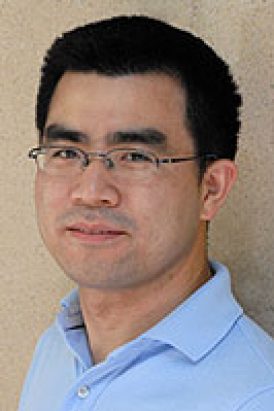 Junjie ZhuUniversity of Michigan-Ann Arbor · Professor
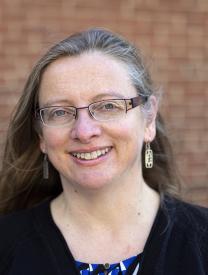 Evelyn ThomsonUniversity of Pennsylvania · Professor
 Elliot LipelesUniversity of Pennsylvania · Professor
- TTimothy KoethUniversity of Maryland, College Park · Academic
- DDan ToveyUniversity of Sheffield · Professor
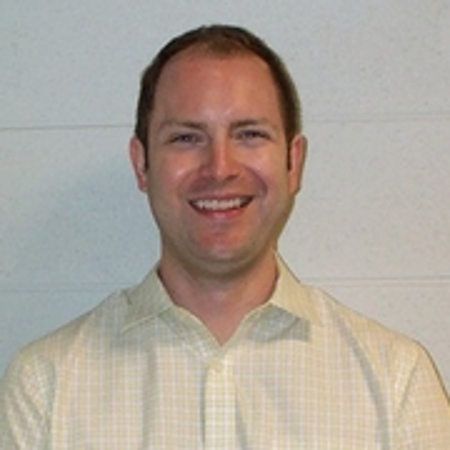 Wade Cameron FisherMichigan State University · Professor