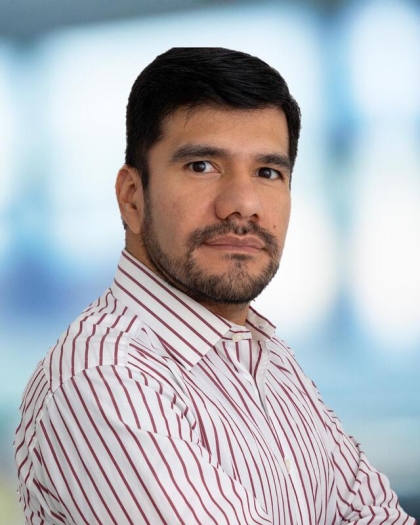
Dr. Corey T. Callaghan is an Assistant Professor in the Department of Wildlife Ecology and Conservation at the University of Florida . Based at the Fort Lauderdale Research and Education Center , his research focuses on global change ecology using big data from citizen science platforms like eBird and iNaturalist, combined with geospatial analyses and macroecological theory . Ph.D. (2019) from UNSW Sydney M.S. (2015) from Florida Atlantic University B.S. + B.S. (2013) from Canisius College His work examines urban ecology , including how species traits influence urban tolerance across birds, amphibians, and butterflies. He develops adaptive sampling frameworks to optimize citizen science data collection while addressing biases. Current projects analyze human-nature interactions through citizen science participation, secondary data in photographs, and machine learning for biodiversity monitoring. He actively contributes to conservation strategies for urban biodiversity and data-driven restoration efforts . Recent publications highlight his expertise in cross-taxa comparisons , continental-scale analyses , and ecosystem service quantification . He leads the Global Ecology Research Group at the University of Florida, emphasizing collaborative science and open-source methodologies .
Anette Mikes is an Associate Professor of Accounting at the University of Oxford’s Saïd Business School and a Hertford College Fellow. She specializes in risk management, corporate governance, and sustainability, with a focus on the intersection of ethics and organizational control systems. Her research explores how risk frameworks shape corporate decision-making, particularly in climate change and decarbonization contexts. Education: PhD in Accounting from the London School of Economics (2005) Pre-doctoral work in the City of London (2006–2007) studying Chief Risk Officer roles Research Interests: Behavioral approaches to risk management Management control systems for sustainability Ethics in corporate governance Decarbonization strategies in heavy industries Her 2012 Harvard Business Review article (with Robert Kaplan) on risk frameworks remains influential, while her documentary on the Kursk submarine disaster highlights crisis management failures. Awards: 2025 Honorary Doctorate from Uppsala University 2017 ACA Prize for Risk Management Contributions 2014 Global Risk Forum Film Award Key Contributions: Co-developed Harvard’s Risk Management executive program Leads research on ‘Values at Risk’ and corporate purpose Published widely on climate risk governance and ethical leadership Her recent work emphasizes decarbonization strategies and moral accountability in business, bridging accounting practices with environmental and ethical imperatives.
Hugo Jose Herrera de Leon is a Research Fellow at the Department of Geography, University of Bergen. His work focuses on socio-ecological resilience, system dynamics modeling, and policy planning for climate change adaptation. He is affiliated with the System Dynamics research group and has presented at major international conferences like the European Conference on Operational Research and the International System Dynamics Conference. His research explores bioeconomy transitions in Norwegian agriculture, resilience in farming systems, and participatory policy design. He has been funded by the Research Council of Norway (2021-2025) for projects investigating sustainable transitions in rural systems. Notable contributions include developing frameworks for assessing resilience through hybrid simulations and collaborative modeling approaches. Publications span topics like microworld simulations for policymaking, organizational impacts of group model-building, and system dynamics applications in food security. His doctoral thesis (2018) addressed public policy strategies for enhancing resilience in socio-ecological systems under climate change.
Diane E. Austin is a Professor and Director of the School of Anthropology at the University of Arizona. She also serves as a Research Anthropologist at the Bureau of Applied Research in Anthropology (BARA). Her work focuses on environmental anthropology, particularly community dynamics in industrial and environmental contexts, with a strong emphasis on social justice and collaborative research. She has over 25 years of experience leading interdisciplinary projects in the U.S., Mexico, and Gulf Coast regions. Austin's research spans diverse areas including Native American communities, U.S.-Mexico border sustainability, Gulf Coast oil industry impacts, and urban food systems in arid regions. She has pioneered long-term partnerships with tribal organizations, federal agencies, and community groups, earning recognition such as the University Distinguished Outreach Professor (2008) and Distinguished Director (2023). Her recent work highlights longitudinal studies on the Deepwater Horizon oil spill's social effects, binational environmental initiatives in Nogales, and community-based approaches to disaster resilience. She coordinates BARA's internship and post-baccalaureate programs, supporting hundreds of students in applied anthropological research. Awards: Partners in Conservation Award (2010), Border Research Partnership Award Finalist (2012) Leadership Roles: Chair of the Good Neighbor Environmental Board, Member of the Gulf Research Program Advisory Board Key Projects: Southern Paiute cultural preservation, Gulf Coast oil industry studies, Nogales reforestation initiatives Austin’s teaching includes courses on ethnographic methods, data analysis, and mixed-methods research. She actively engages in policy advocacy, contributing expert testimony in legal proceedings related to environmental disasters and labor rights.
Elena Agapie is an Assistant Professor in the Department of Informatics at the Donald Bren School of Information & Computer Sciences, University of California, Irvine. Her research lies at the intersection of human-computer interaction (HCI), health, and behavior change, focusing on designing technologies that support individuals in adopting and maintaining healthy behaviors through human-centered approaches. She is affiliated with the Connected Learning Lab and the Institute for Future Health at UCI. Her educational background includes a PhD in Human Centered Design and Engineering from the University of Washington, an MS in Computer Science from Harvard University, and a BS in Computer Science from Jacobs University Bremen in Germany. She has also conducted research at Microsoft Research, FXPAL, Intel Labs, and NASA Jet Propulsion Lab. Elena's research focuses on designing tools that integrate evidence-based behavioral interventions with user needs, particularly in mental health, chronic disease management, and social support systems. She explores how technology can support therapist-client collaboration, enable tailored health interventions, and leverage crowd expertise for personalized behavior change plans. Her work often involves participatory design, qualitative studies, and prototyping of interactive systems for diverse populations, including youth, hospitalized patients, and underserved communities. Her recent publications, primarily in top-tier venues like CHI and CSCW, reflect a strong trend toward social computing in health, longitudinal behavior support, and the design of inclusive digital health tools. Key themes include goal setting, conversational agents, social sharing in health tracking, and cross-disciplinary collaboration in health technology development. Best Paper Award (top 1%) at CHI 2017 Honorable Mention Best Paper Award (top 5%) at CHI 2016 Best Paper Award (top 1%) at HCOMP 2015 Honorable Mention Best Paper Award (top 5%) at CHI 2013 Elena has been funded by the National Science Foundation, National Institutes of Health, and UCI internal grants. She actively mentors PhD students including Bruna Oewel, Meeshu Agnihotri, and Mehreen Masood, and is currently recruiting students interested in HCI, health, and behavior change. She previously led the outreach program in the HCDE department at the University of Washington, creating workshops that introduced K–12 students to engineering and human-centered design, reaching over 2,000 students across public schools and community events. She runs initiatives to broaden participation in computing and advises undergraduate students in outreach and curriculum development. Her lab collaborates with clinical partners and interdisciplinary teams to ensure real-world impact of her research.
Amy Bruckman is a Regents’ Professor and Senior Associate Chair in the School of Interactive Computing at Georgia Institute of Technology. As a Fellow of The ACM and member of the SIGCHI Academy , she contributes to social computing research focusing on online collaboration, cross-cultural understanding, and content moderation. Her 2022 book "Should You Believe Wikipedia? Online Communities and the Construction of Knowledge" explores digital knowledge creation. Education: Ph.D. from MIT Media Lab (1997), B.A. in Physics from Harvard (1987) Research Affiliations: GVU Center, IRI People and Technology Her work addresses social computing challenges including: AI ethics in human-AI interaction Algorithmic bias in content moderation Epistemic justice in online communities Comparative platform analysis (Reddit, Discord, TikTok) Grassroots technology movements Recent publications examine: AI support tools for online counseling Community-driven research frameworks Racial bias mitigation in toxic language detection Designing teachable social media experiences Human trafficking intervention ethics Scientific recognition includes: ACM Fellowship SIGCHI Academy membership She has contributed to: Georgia Tech's Computing Education initiatives Research ethics frameworks for Human-Computer Interaction
Gregg M. Garfin is a Professor and Specialist in Climate, Natural Resources, and Policy at the University of Arizona’s School of Natural Resources and the Environment, and Deputy Director for Science Translation and Outreach at the Arizona Institute for Resilience. He holds a Ph.D. in Geosciences from the University of Arizona (2003), an M.S. in Geology and Geography from the University of Massachusetts (1997), and a B.S. in Geology and Geography from the same institution (1993). His work bridges science and societal decision-making, focusing on climate adaptation, drought management, and climate services. He directs the Water, Society, and Policy M.S. Program and has led interdisciplinary projects on climate resilience, including contributions to the Fourth National Climate Assessment. Roles: Professor, Deputy Director, Program Director Affiliations: Arizona Institute for Resilience, School of Natural Resources and the Environment Research Interests His research emphasizes climate adaptation strategies, climate policy, and the co-production of knowledge between scientists and decision-makers. Key areas include: Climate impacts on water resources and ecosystems Extreme heat and drought resilience in urban and border communities Climate change communication and education Awards & Recognition Garfin has received multiple accolades, including AAAS Fellowship (2020), University of Arizona Service Awards (2020, 2015), and the Global Initiative for Academic Networks (GIAN) Visiting Fellowship (2018). His work has been featured in peer-reviewed journals and media outlets, emphasizing actionable science for climate resilience. Grants & Contributions He has led federal and transnational projects, including binational climate resilience initiatives in the U.S.-Mexico border region and flood risk assessments in Seoul, South Korea. His work integrates participatory governance approaches to enhance community preparedness.
Kevin Manaugh is an Associate Professor at McGill University, specializing in Urban Planning with a focus on sustainable transportation and spatial justice. His research examines how decision-making processes in urban development balance environmental, economic, and social equity goals, particularly through transport systems. He holds a PhD in Urban Planning from McGill University (2013). His key research interests include integrating social equity into land use policies, analyzing accessibility impacts on socioeconomically diverse populations, and studying behavior change related to sustainable transportation. Current projects explore equitable transit accessibility, responses to local mobility policies, and health/well-being effects of sustainable transport choices. Manaugh has published extensively on transportation equity, urban form analysis, and GIS applications. His work bridges theoretical frameworks with practical policy implementation, emphasizing participatory approaches to urban planning. Notable contributions include studies on pandemic street reallocation equity and cycling infrastructure prioritization strategies. His research has been supported by interdisciplinary collaborations and applied to Canadian urban contexts. Despite prolific output, Manaugh maintains an active engagement with public discourse on urban mobility challenges and equitable urban futures.
London School of Economics and Political Science (LSE)United Kingdom
Dr Alison Powell is an Associate Professor in the Department of Media and Communications at the London School of Economics and Political Science (LSE), serving as Programme Director for the MSc Media and Communications (Data and Society). Her research focuses on technology design, public sector technology, and digital futures. She is known for her book Undoing Optimization: Civic Action in Smart Cities (2021) and her participatory research method, data walking. From 2019–2023, she directed the JUST AI network, supported by the Ada Lovelace Institute and UKRI, advancing AI ethics research. Her work integrates critical theory, participatory methods, and interdisciplinary collaboration. Education: PhD in Communication from Concordia University (Canada), MA in Media Studies from Toronto Metropolitan University, and postdoctoral research at the Oxford Internet Institute. Prior to academia, she worked in the film and TV industry. Research interests include civic engagement in data-driven governance, ethical AI, and participatory urbanism. She has advised projects like Africa Just AI and Operationalising Ethics for AI, funded by Horizon Europe, AHRC, and the Open Society Foundations. Her articles address topics such as AI governance, urban light ecology, feminist research praxis, and the ethical implications of technology for marginalized communities. She contributes to blogs like Media@LSE and leads initiatives at Polis and the LSE’s Digital Futures for Children project. Grants and collaborations include work with Projects by IF, Open Rights Group, and the Human Data Interactions Network (EPSRC). She explores intersections of technology, justice, and sustainability, emphasizing equitable and inclusive innovation.
Tuuli Mattelmäki is a Professor at Aalto University's School of Arts, Design and Architecture , affiliated with the Department of Design . Her work centers on co-design , service design , and creative practices , with a focus on empathic approaches and societal transformations. Research Interests : Empathic Design : Human-centered methodologies in public sector innovation Transformational Futures : Exploring creative practices for sustainability Service Design : Cross-organizational B2B innovation and prototyping Design Probes : Experimental tools for participatory engagement Recent Articles (2022-2025) reflect expertise in service design , sustainability , and creative interventions , spanning subfields like co-laboratories, inner conditions in co-design, and climate-responsive design. Collaborations include institutions such as University of Sussex, RMIT, and Utrecht. Scientific Awards : Ziman Award (2024) for the CreaTures project Industrial Designer of the Year (2008) by TKO and ORNAMO Dean's Publication Bonus (2012) for the Encore team Teams & Labs : Principal Investigator of the CreaTures (Creative Practices for Transformational Futures) project, leading a multidisciplinary team with partners including Superflux, Kersnikova, and RMIT University.
Professor Andrew Hudson-Smith is the Director of the Bartlett Centre for Advanced Spatial Analysis (CASA) at University College London (UCL), where he holds the title of Professor of Digital Urban Systems. He leads UCL's academic and applied research in smart cities, digital twins, and urban informatics. His roles include Editor-in-Chief of the Future Internet Journal and academic lead for the Smart Queen Elizabeth Park project. He contributes to strategic initiatives such as the Greater London Authority Smart London Board and EPSRC Digital Economy Programme Advisory Board. Education: PhD (2003), MSc (1996) from UCL; BSc in Geography from the University of Plymouth (1992). Research focuses on digital urban systems, IoT applications, sustainable urban planning, and cyberphysical systems. Notable projects include urban heat island monitoring, participatory planning platforms, and metaverse-driven urban design. His work bridges technology, art, and public engagement, exemplified by initiatives like Tales of Things and the Haggle-O-Tron. Recent publications emphasize digital twins, metaverse urbanism, and IoT integration in urban environments. Awards include a Fellowship of the Royal Society of Arts. His work addresses SDGs 3 (Good Health) and 11 (Sustainable Cities), with a focus on equitable smart city development and public space innovation.
Professor Ana Mijic is a leading academic in water systems integration at Imperial College London's Department of Civil and Environmental Engineering (Faculty of Engineering). Her work focuses on developing systems tools to balance economic growth with sustainable water use, flood management, and water quality under future uncertainties. She leads high-profile projects like the EPSRC VENTURA initiative and the NERC CAMELLIA impact programme, emphasizing adaptive planning and grey/green infrastructure integration in urban systems. Education: BEng (First Class) in Civil Engineering from the University of Belgrade (Serbia), MSc (Distinction) in Hydrology for Environmental Management, and PhD in Earth Science & Engineering from Imperial College London (2013). Previously served as a teaching assistant in Fluid Mechanics and Hydrometry at Belgrade University. Research interests include whole-water system modelling, socio-hydrological interactions, and nature-based solutions for resilient urban water systems. Her work bridges academia and practice through partnerships with regulators like the UK Environment Agency and global initiatives like the IAHS HELPING programme. Awards include the Satish Dhawan Visiting Chair Professorship (2022) and the 2019 Imperial President’s Award for Excellence in Research (as part of her Hydrology team). She co-leads Imperial’s Transition to Zero Pollution (TZP) Urban Ecosystems theme and serves on editorial boards for journals like Water Security . Her contributions span over 50 peer-reviewed articles (2020–2025), focusing on integrated water management frameworks, AI-driven monitoring, and systemic approaches to urban resilience. She advocates for participatory decision-making and policy coherence in water governance.
Pawan Adhikari is a Professor of Accounting at Essex Business School, University of Essex , where he serves as Director of Impact and Enterprise and Director of Essex Accounting Centre . He is an Associate Editor of the Journal of Public Budgeting, Accounting and Financial Management and a Executive Board Member of the Comparative International Governmental Accounting Research Network (CIGAR) . Previously, he led accounting reforms at Nepal’s Accounting and Auditing Standards Board and lectured at Nord University, Norway. PhD, Nord University Business School Fellow of the Higher Education Academy His research focuses on public sector accounting in developing countries, particularly accounting reforms , public value creation , and climate accountability . He explores how accrual accounting and participatory budgeting can enhance transparency in South Asian and African contexts. His work has influenced policy-making in Nepal and is recognized with the 2023 Best International Research Impact award by the University of Essex. Recent publications analyze wellbeing economies (2025), NGO accountability in disasters (2024), and climate budgeting (2023). He collaborates with institutions like the World Bank , European Commission , and British Academy , focusing on projects related to financial resilience , circular economy , and health sector accountability . Supervising 8 current PhD students, his advisees have produced work on topics like accrual accounting in Bangladesh and NGO accountability in Palestine . World Bank/PEFA Research Award African Accounting and Financial Association (AAFA) Award ESRC IIA Impact Fund GCRF and SeNSS Grants 2019 Best Postgraduate Supervisor (Essex)
Prof. Dr. Pinar Yolum Birbil is a leading researcher in Responsible AI at the Faculty of Science , Utrecht University . Her work bridges Artificial Intelligence , Privacy and Data Protection , and Software Agents , focusing on Human-Centered AI and Trustworthy Systems . She is part of the AI & Data Science and Responsible AI research groups. PhD in Computer Science, North Carolina State University (2003) MS in Computer Science, North Carolina State University (2000) BSc in Computer Engineering, Marmara University (1998) Her research explores Privacy Preservation in collaborative systems, Computational Theory of Mind for human-agent coordination, and Norm-Based AI Systems . Recent projects include the Hybrid Intelligence Center and tools like PANOLA for privacy support. She investigates how AI can balance user autonomy , ethical norms , and societal values in applications ranging from urban planning to healthcare. Her scientific publications (2023-2025) span topics like Explainable Privacy , Trust in Hybrid Teams , and AI for Diabetes Management , appearing in venues such as JAIR , AAMAS , and ACM TOIT . She emphasizes collaborative AI , with contributions to multiagent simulations and privacy-preserving mechanisms . Scientific Awards : NC State University Alumni Hall of Fame (2017) Woman Entrepreneur of the Year (Microsoft Turkey & KAGIDER, 2017) Bogazici University Academic Encouragement Award (multiple years) Best Paper Award at ESAW 2009 She supervises a dynamic research group with PhD students working on Hybrid Intelligence , Computational Ethics , and Privacy Modeling . Her projects often involve interdisciplinary collaboration with institutions like TNO and the Transforming Cities Hub .
Armelle Choplin is an Associate Professor at the University of Geneva's Department of Geography and Environment within the Geneva School of Social Sciences, and affiliated with the Global Studies Institute since 2019. She serves as Director of the Institute of Environmental Governance and Territorial Development (IGEDT), leading research on urban transformations in the Global South. Research Focus Her research examines urban policies, social transformations, and development challenges in African cities and the Global South. Core interests include: urban planning dynamics, governance frameworks, construction industry impacts, poverty alleviation, sustainable development pathways, globalization effects, digital innovation in urban contexts, and postcolonial urban studies. Her geographical specialization focuses on West Africa and MENA regions. Publication Analysis Recent publications (2017-2024) demonstrate consistent focus on material urbanism, governance innovations, and spatial justice in African cities. Key thematic clusters include: urban material flows (concrete, energy), participatory planning methods, transnational urban corridors, and postcolonial urban theory. Methodologically, her work combines spatial analysis with political economy and ethnographic approaches. Research Leadership She directs multiple international projects including: Global Urb: Global Urbanism from the South MatéRhône: Construction materials in Rhone Valley West African Coastal Corridor study (Accra-Lagos axis) URBACOT: West African Coastal Urban Dynamics Observatory Map&Jerry: Participatory mapping in Cotonou Student Advising Currently supervising eight doctoral candidates researching urban development topics across Africa. Her teaching portfolio includes courses on urban globalization, metropolitan governance, spatial justice, and regional project development at both bachelor's and master's levels.