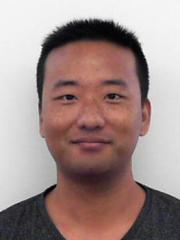
Dr. Mingyan Li is an Adjunct Research Fellow at The University of Queensland's School of Electrical Engineering and Computer Science. Their research focuses on advanced imaging and sensing technologies with applications in biomedical engineering, particularly in MRI system development, RF coil design, and medical signal processing. They hold a PhD from The University of Queensland (2015). Research interests include high-field MRI systems, rotating RF coil technologies, MRI-Linac integration, and electrical properties tomography (EPT). Key contributions include innovations in MRI-Linac distortion correction, RF shielding for SAR reduction, and deep learning approaches for cardiac arrhythmia classification. Publications span MRI hardware optimization, image reconstruction algorithms, and biomedical signal analysis. Collaborations include work on metamaterial-inspired RF shielding and multi-modal antenna systems for body MRI.
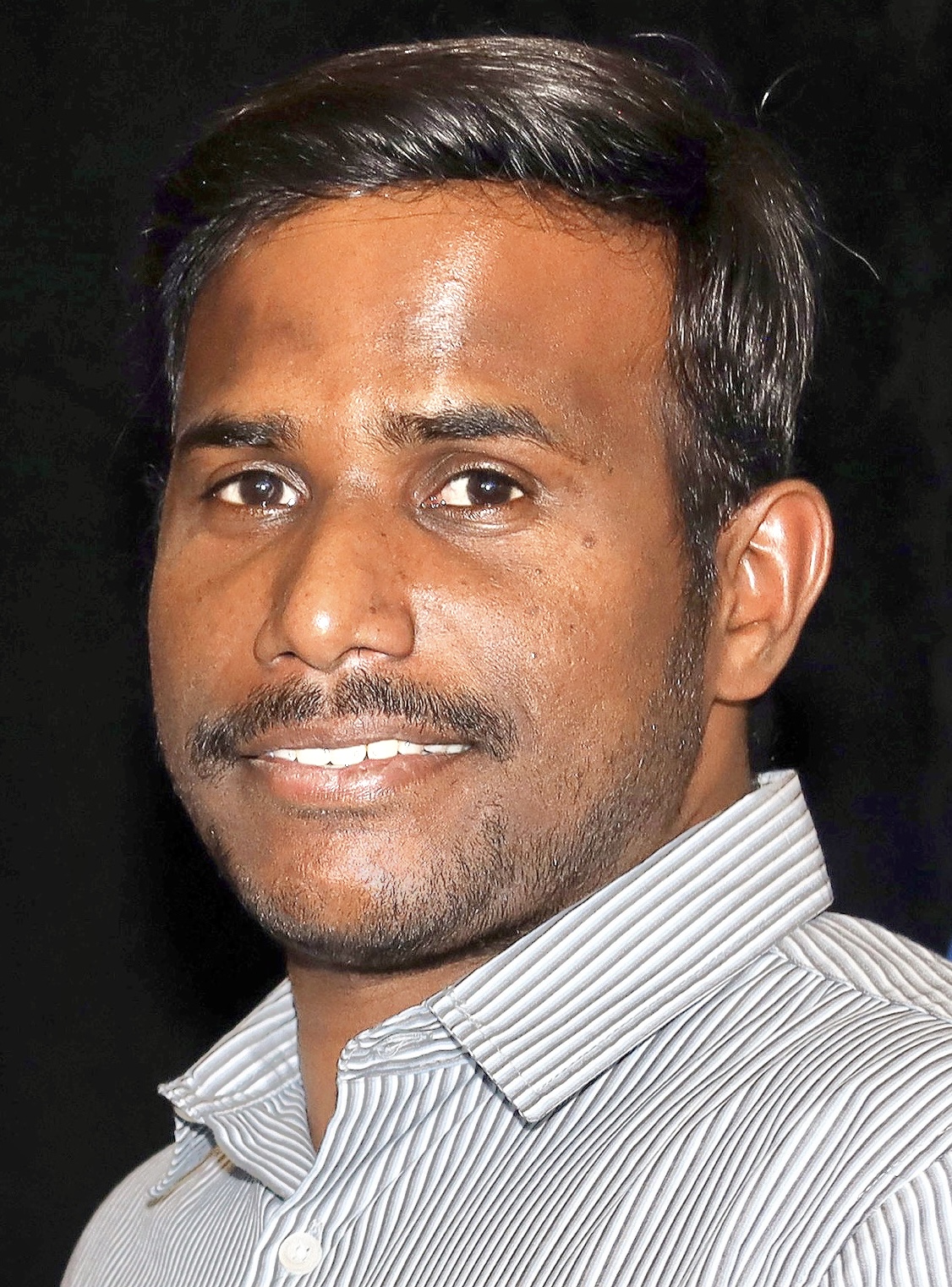
Dr. Sirojan Tharmakulasingam serves as a Lecturer and Research and Development Coordinator at the Signals, Information & Machine Intelligence lab within the Faculty of Engineering at the University of New South Wales (UNSW) Sydney. His work bridges theoretical machine learning with practical applications in edge computing and high-performance systems. His research spans multiple cutting-edge domains including machine learning, artificial intelligence, data science, edge computing, and high-performance computing. Dr. Tharmakulasingam specializes in developing next-generation inference models by integrating machine learning, signal processing, mathematical modeling, and computing across diverse data types including images, video, audio, and quantum molecular data. His work has significant implications for scientific computing, telecommunications, and healthcare applications. Analysis of his publication trends reveals a strong focus on practical AI implementations, with increasing emphasis on edge computing solutions, quantum applications, and energy-efficient models. His recent work demonstrates progression from foundational machine learning techniques toward specialized applications in scientific computing and real-time systems. Dr. Tharmakulasingam holds a Doctor of Philosophy from UNSW Sydney and a Bachelor of Science of Engineering from the University of Moratuwa in Sri Lanka. His academic journey reflects a strong foundation in both theoretical and applied engineering principles. As Research and Development Coordinator for the Signals, Information & Machine Intelligence lab, he oversees critical research infrastructure and collaborations. His work location in Room 447 of the EE&T Building (G17) places him at the heart of UNSW's engineering research ecosystem, with access to the Mark Wainwright Analytical Centre's extensive facilities.
Dr. Ying Zhou is a Lecturer in the School of Computer Science at The University of Sydney. She holds a BSc and MEng from Nanjing University (1997) and a PhD from the School of Computing at the National University of Singapore (2003). Her research focuses on human-centred data management, including large-scale data storage, user behavior analysis, and improving image query systems. Current projects include mining socially tagged images and accountability mechanisms for multitenant cloud platforms. Teaching responsibilities include courses on Advanced Data Models (COMP5338), e-Commerce Technology (COMP5347), and Cloud Computing (COMP5349). She collaborates with industry partners like Amazon and IBM, and advises four research students. She is a member of the Sydney Southeast Asia Centre. Her publication record spans 20 years, with recent work emphasizing machine learning applications, big data systems, and cloud security. Research trends include optimizing distributed computing frameworks (Hadoop/Spark/Flink), adversarial machine learning, and trustworthy database systems. Earlier work focused on social network analysis, web communities, and blogosphere dynamics. Current research projects address both technical challenges (e.g., efficient image search, cloud platform accountability) and applied solutions for leveraging social media data. Her lab activities involve interdisciplinary collaboration between computer science and information systems domains.
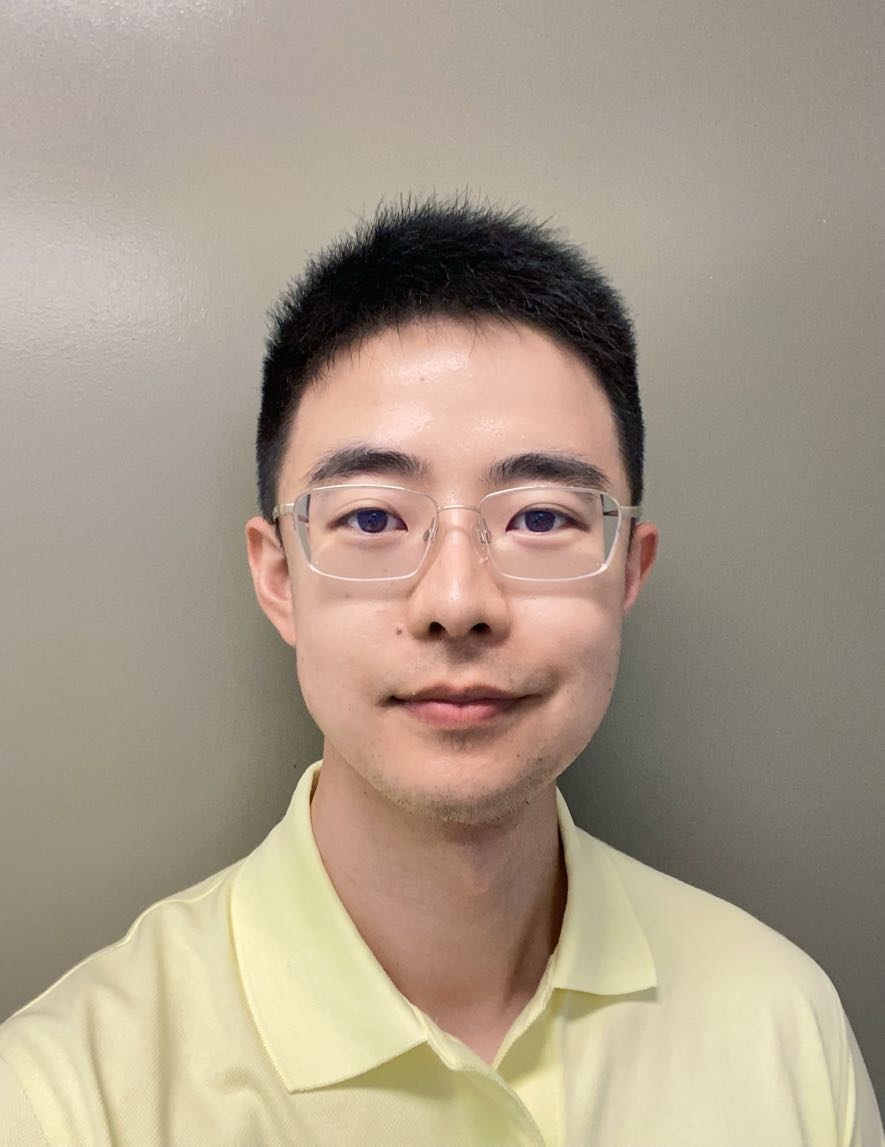
Dr. Shixun Huang is a Lecturer in the School of Computing and Information Technology at the University of Wollongong, Australia. He holds a PhD from RMIT University and specializes in data mining, machine learning, and optimization algorithms for high-dimensional data problems. His research develops efficient algorithms for data discovery, similarity search, and network analysis. Current projects focus on optimized data acquisition strategies for machine learning, cost-effective labeling for graph neural networks, and cardinality estimation in high-dimensional databases. Methodologically, he combines combinatorial optimization with machine learning techniques. Dr. Huang supervises graduate research on diffusion models for medical imaging, graph prompt learning, and image captioning systems. His honors include multiple best paper awards at top database conferences and recognition for teaching excellence (College Top Course Award at RMIT). Recent publications address dataset distinctiveness maximization (WWW 2025), high-dimensional similarity search (VLDB 2025), and edge computing optimization (2024). Earlier foundational work established new approaches for influence maximization in social networks and temporal graph representation learning.
Associate Professor Rahul Sharma is affiliated with the School of Electrical Engineering and Computer Science at The University of Queensland (UQ), within the Faculty of Engineering, Architecture and Information Technology. His primary research focuses on control systems applications, particularly in solar farm fault detection, grid-connected inverter control, and demand side management. His work emphasizes system modeling, control development, and model-based fault diagnosis, with significant industrial relevance in renewable energy and smart grid technologies. Research Interests: - Solar farm fault detection and diagnosis via control theory to identify underperforming panels. - Advanced control methods for grid-connected inverters to enhance power quality and stability. - Demand side management through novel control algorithms for distributed energy resources. His experimental work includes field trials at Gatton Solar Farm and collaborations with industry partners. Articles Trends: Recent publications emphasize network-aware control of distributed energy resources, dynamic operating envelopes for demand response, and smart grid optimization. Key themes include low-voltage distribution networks, prosumer P2P trading, and fault diagnosis in power systems. Advising & Labs: He supervises prospective PhD students in control systems and renewable energy. Experimental setups at UQ and field trials at Gatton Solar Farm support his research on fault detection and grid systems.
Dr. Xiaoyu Xia is a Lecturer (equivalent to Assistant Professor in North America) in Cybersecurity & Software Systems at RMIT University's School of Computing Technologies. He received his PhD with the prestigious Alfred Deakin Medal from Deakin University, Australia, and has established himself as a leading researcher in distributed systems and cybersecurity with over 50 peer-reviewed publications in top-tier venues including IEEE S&P, ACM WWW, and IEEE Transactions. Dr. Xia's research spans critical areas at the intersection of computing and security: System Privacy and Security Distributed Systems and Edge Computing AI Privacy and Machine Learning Systems Sustainable Computing Cybersecurity and Privacy-Preserving Technologies His recent work demonstrates a clear trajectory toward developing practical privacy-preserving frameworks for emerging technologies, particularly in edge computing environments and large language models. Dr. Xia has made significant contributions to machine unlearning, secure data management in distributed systems, and energy-efficient edge computing solutions that balance performance with sustainability concerns. Dr. Xia has received notable recognition for his scholarly impact: World's Top 2% Scientists by Stanford University (2022-2024) Alfred Deakin Medal for PhD research excellence (2021) Teaching Excellence Award from Swinburne University of Technology (2021) As an active researcher, Dr. Xia currently leads multiple funded projects including an ARC Discovery Project grant worth over $500,000 for developing privacy-aware intelligent digital twins for secure critical infrastructures. He is open to supervising motivated PhD students with interests in system security and privacy, and distributed ML systems. Dr. Xia serves the academic community through editorial roles as Associate Editor for IEEE Transactions on Dependable and Secure Computing and as a Review Board Member for IEEE Transactions on Parallel and Distributed Systems, and regularly participates in program committees for major conferences including ACM WWW and IEEE ICDCS.
Dr. David Boland is a Senior Lecturer at the School of Electrical and Computer Engineering, University of Sydney. He holds an MEng and PhD from Imperial College London. His research focuses on energy-efficient hardware acceleration, particularly using FPGAs and application-specific integrated circuits (ASICs), to optimize computational efficiency in domains like machine learning and optical communications. He has contributed to projects involving custom hardware accelerators, federated learning for edge computing, and real-time signal processing. Education: MEng, Imperial College London, 2007 PhD, Imperial College London, 2012 Research Interests: Dr. Boland’s work emphasizes reducing computational overhead through customized hardware solutions. He explores techniques for minimizing unnecessary computations while maintaining accuracy, leveraging FPGA-based designs for parallelism and energy efficiency. Key areas include: Hardware acceleration for machine learning FPGA optimization for neural networks Energy-efficient algorithms for edge computing Online arithmetic and latency-accuracy trade-offs Grants & Collaborations: 2022: On-Board Federated Learning in Orbital Edge Computing (NSW Department of Industry) 2017: Fast Automated Anomaly Detection in Communication Networks (Defence Science & Technology Group) Affiliations: Member of the Net Zero Institute, collaborating on sustainable computing solutions.
Professor Heinrich Schmidt is an Adjunct Professor in the School of Science at RMIT University, Australia. His research focuses on Software Engineering, Distributed Systems, and Cyber-Physical Systems. He specializes in areas such as formal verification, safety-critical systems, and cloud computing. His work emphasizes practical applications in industrial automation, IoT, and HPC environments. Key research interests include spatio-temporal analysis, fault tolerance, and adaptive systems design. He has supervised projects on IoT data contextualization, software fault characterization, and spatial modeling in PRISM. Over 98 publications highlight his contributions to formal methods, distributed systems, and industrial software solutions. Professor Schmidt collaborates on projects like Chiminey (cloud/HPC integration) and VxLab (industrial visualization). His teaching covers parallel systems, trusted components, and model-based monitoring. No specific awards are listed, but his extensive publication record underscores his academic impact.
Dilum Bandara is a Principal Research Scientist at CSIRO's Data61 in Australia and an Adjunct Senior Lecturer at the School of Computer Science and Engineering, Faculty of Engineering, University of New South Wales (UNSW). He has previously served as a Senior Lecturer at the University of Moratuwa, Sri Lanka, and has over two decades of experience in research, teaching, and consultancy in distributed systems, security, and software engineering. His academic qualifications include: PhD in Computer Science, Colorado State University, USA (2012) MS in Computer Science, Colorado State University, USA (2008) BSc Eng. (Hons) in Computer Science and Engineering, University of Moratuwa, Sri Lanka (2004) Dilum's research interests are centered on Distributed Systems (Blockchain, Cloud, P2P), Computer Security , Software Architecture , Data Engineering , Performance Engineering , and the Internet of Things (IoT) . He applies these technologies in multidisciplinary domains such as Supply Chains , Digital Finance , Environmental, Social, and Governance (ESG) , Fleet Management , and Weather Monitoring . His work emphasizes real-world impact through trusted data management in multi-party ecosystems. The analysis of his recent publications reveals a strong focus on blockchain for transparency and security, cloud-native performance engineering, IoT integration with edge and cloud, and data-driven solutions for smart cities and sustainability. His work consistently bridges theoretical innovation with practical deployment, particularly in national and international infrastructure projects. His scientific awards include: Best Paper Award at BPM 2024 Multiple CSIRO internal awards (Customer First, Engineering and Technology, Collaboration) from 2021–2023 Student Paper Award (Merit) at IEEE SOLI 2018 Award of Excellence for Outstanding Research at University of Moratuwa (2015–2018) Dilum has led and contributed to several research grants, particularly during his time at the University of Moratuwa, including projects on smart city integration, real-time data forecasting, and cloud platforms for scientific computing. He has also held leadership roles such as Director of the Engineering Research Unit and co-founder of VaticHub. He is actively involved in professional communities as a Senior Member of IEEE and a Chartered Engineer with IESL. At CSIRO, he serves as a Health and Safety Representative, reflecting his commitment to corporate citizenship. He has advised students and early-career researchers, though specific names are not listed in the provided text. His labs and research teams include the Architecture and Analytics Platforms (AAP) team at CSIRO Data61 and collaborations with academic institutions like UNSW and University of Moratuwa.
Dr. Peter J. Robinson is an Honorary Research Fellow at the School of Electrical Engineering & Computer Science, The University of Queensland. His academic career spans over three decades, focusing on foundational research in programming languages, formal methods, and distributed systems. His work includes contributions to Qu-Prolog, a multi-threaded Prolog implementation, and TeleoR, a robotic task programming framework. Research interests include agent-based systems, blockchain security for aerospace applications, software verification, concurrent programming, and education technology. Notable projects include the Pedro publish/subscribe server and MyPyTutor, an interactive Python learning tool. He has collaborated on railway safety protocols and spacecraft control systems using blockchain. Publications span journals like Formal Aspects of Computing and conferences such as IEEE Symposium on Computers and Communications. Technical reports include work on unification algorithms and multi-agent verification frameworks. He has advised on projects involving IoT architectures and swarm intelligence simulations.
Nandini Sidnal serves as Senior Learning Facilitator and National Academic Course Coordinator for Torrens University's Master of Software Engineering program through the Centre for Artificial Intelligence Research and Optimisation (AIRO). With over 20 years of international teaching experience in Computer Science, Engineering, and Networking, she has established herself as a key academic figure in AI and blockchain applications. Her educational foundation includes: PhD in Computer Science and Engineering (Cognitive Computing using Intelligent Agents) from Visvesvaraya Technological University (2012) M.Tech in Computer Science and Engineering (Parallel and Distributed Computing using Intelligent Mobile Agents) (2003) Bachelor of Engineering (1993) Nandini's research spans Artificial Intelligence, Blockchain Security, and Cognitive Computing , with strong emphasis on practical implementations in agriculture and healthcare. Her work integrates intelligent agents with distributed systems to solve real-world problems like food supply chain security and medical diagnostics, demonstrating consistent innovation from her early best paper award-winning thesis to current cutting-edge applications. Recent publications reveal a pronounced trend toward AI-driven agricultural optimization (dairy quality, aeroponics, nut farming) and healthcare diagnostics (epilepsy detection), alongside critical work in edge security. These outputs consistently bridge theoretical frameworks with tangible industry solutions, particularly in blockchain-secured IoT systems and deep learning applications. Her scientific recognition includes: Best Paper Award at an international conference for distributed computing research Nandini actively mentors high-impact projects including 'Strengthening Mobile-Based Services for Agriculture' and 'Enhancing VANET Performance with Cloud and Edge Technology.' Her industry collaborations with Intel (Parallel Programming integration) and Nokia (Mobility Research Lab establishment in Finland) demonstrate exceptional academic-industry synergy. The AIRO Centre serves as her primary research hub where she guides PhD candidates in blockchain-secured agri-supply chains and semantic recommender systems. Her Mobility Research Lab in Finland remains a cornerstone of her practical innovation legacy, focusing on next-generation mobile application development that continues to influence current VANET and edge computing research directions.
Kathryn Hodgins is an Associate Professor in the School of Biological Sciences at Monash University, specializing in evolutionary and ecological genomics. Her work focuses on understanding how species adapt to environmental changes, particularly in the context of climate change and biological invasions. She leads multiple research projects funded by the Australian Research Council, including studies on rapid adaptation to climate extremes, genetic rescue of endangered species, and developing climate-resilient restoration strategies. Her research integrates genomic tools to study invasive species biology, parallel evolution, and the genetic basis of climate adaptation. Notable projects include analyzing genomic data of Ambrosia artemisiifolia (common ragweed) to track invasion dynamics and investigating structural variants driving parallel adaptation. Hodgins also explores social factors in STEM education, such as how group identity impacts academic outcomes. Hodgins has authored over 50 peer-reviewed articles and collaborates internationally on topics like genomic tools for invasion management and predicting species' responses to environmental shifts. Her work contributes to UN Sustainable Development Goals related to life on land and climate action.
Per Stenstrom is a Professor at Chalmers University of Technology in Gothenburg, Sweden, renowned for foundational contributions to computer architecture and high-performance memory systems. His work bridges theoretical innovation with practical implementations in modern processor design. His research spans data-centric computing paradigms, focusing on memory hierarchy optimization, microarchitectural parallelism, and memory consistency models. Key themes include compression techniques for memory systems, databound architecture solutions, and sustainable performance scaling under power constraints—addressing critical challenges in contemporary computing infrastructure. Dr. Stenstrom serves as associate editor-in-chief of the Journal of Parallel and Distributed Computing (JPDC) for architecture, senior associate editor of ACM TACO, and topical editor of IEEE Transactions on Computers. He has chaired premier conferences including the IEEE/ACM Symposium on Computer Architecture and IEEE High-Performance Computer Architecture Symposium. ACM Fellow IEEE Fellow Member of the Royal Swedish Academy of Engineering Sciences Member of Academia Europaea Member of the Royal Spanish Academy of Engineering Science With four textbooks, approximately 200 publications, and 20 patents, his scholarly output defines modern computer architecture education. His editorial leadership shapes publishing standards across top-tier venues, though no student advising or grant details appear in source materials. Current lecture offerings include memory hierarchy compression, databound architectures, and microarchitectural optimization for modern processors.
Professor René Hexel currently serves as Dean (Learning & Teaching) and Pro Vice Chancellor (Sciences) at Griffith University, where he directs the Cyber-Physical Systems Lab. With over 85 peer-reviewed publications, he specializes in safety-critical real-time systems and autonomous system verification. 2022–present: Dean (Learning & Teaching), Griffith Sciences 2016–2022: Deputy Head of School (L&T), Griffith School of ICT 2007–2016: Director for Internationalisation, Griffith School of ICT 1999: PhD from Vienna University of Technology His research focuses on safety-critical systems , time-triggered protocols , and human-in-the-loop AI , with applications in aerospace, automotive, and healthcare robotics. Recent work explores humanoid robots for dementia care and verifiable executable models. Key article trends show expertise in: Formal verification techniques Robotics communication protocols Explainable machine learning Real-time system architectures Embedded system validation Human-robot interaction design Research grants include: Australian Space Manufacturing Network (2023–2025) SPASE STEM program grant (2022) Social media wellness monitoring (2019–2020) Internal Griffith grants (2003–2010) He has supervised 12 PhD candidates across topics including: Autonomous system verification Robotics security VR sickness mitigation Intelligent control systems Distributed real-time architectures Professor Hexel previously held academic positions at Vienna University of Technology and founded an IT consulting firm specializing in safety-critical systems.
Farzad Farajizadeh is a Research Fellow in Power Engineering at the School of Engineering, The University of Western Australia (UWA). He holds a PhD in Electrical Engineering from Queensland University of Technology (2021), specializing in wireless power transfer systems for dynamic chargers. Previously, he served as a post-doctoral researcher at the University of Queensland, focusing on electromagnetic interference modeling in power electronic systems. His research interests encompass power electronic converters, renewable energy systems, wireless power transfer (WPT), and FACTS technologies. He leads projects on stackable multi-level power electronic modules and has contributed to advancements in dynamic WPT for applications like electric vehicle charging. His work aligns with UN Sustainable Development Goals, particularly in sustainable energy and innovation. Farajizadeh has authored over 20 peer-reviewed publications, including studies on grid-side current oscillations, EMI mitigation in IPT systems, and control strategies for cascaded multilevel inverters. He is a co-investigator on the ARC-funded Renewable Microgrid Pilot for Gravitational Wave Facilities project, addressing energy resilience in remote infrastructure. His research bridges theoretical analysis and experimental validation, with applications in smart grids, renewable integration, and high-efficiency power systems. Key contributions include novel converter designs for dynamic WPT and harmonic mitigation techniques in parallel grid-tied inverters.