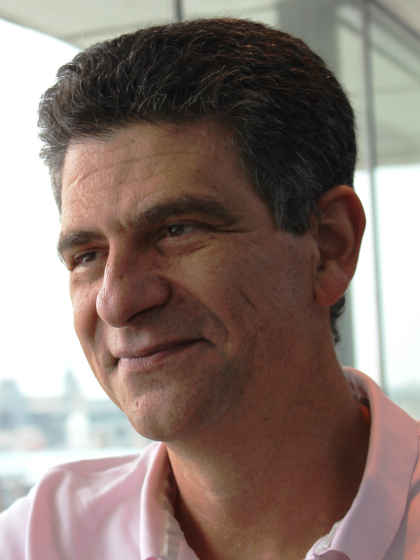
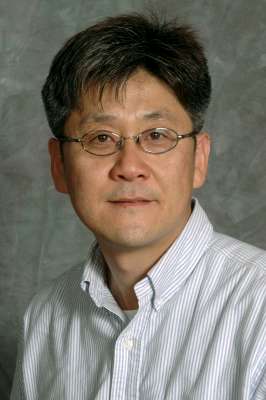
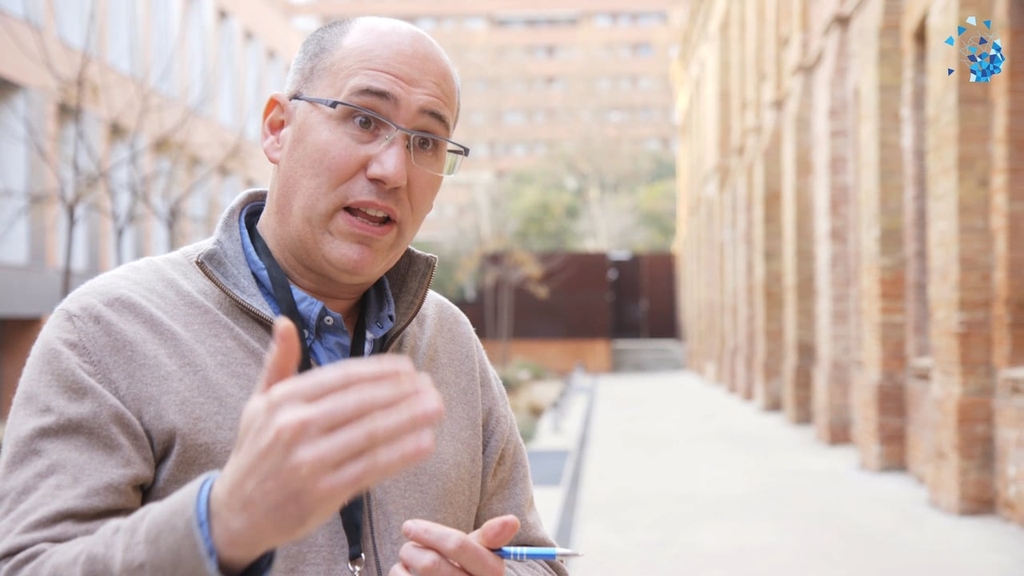
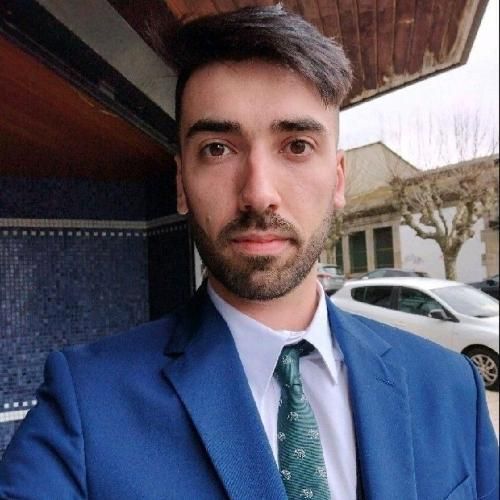
Georgi Gaydadjiev is a Professor in Innovative Computer Architecture at the University of Groningen's Faculty of Science and Engineering. Previously, he held roles including Chair Professor at TU Delft and Chalmers University of Technology, and served as VP of Dataflow Software Engineering at Maxeler Technologies. He holds a PhD from TU Delft and has over 35 years of industry and academic experience, focusing on reconfigurable computing, high-performance systems, and energy-efficient architectures. His research spans embedded systems, fault tolerance, and scalable architectures. Education: MSc Electrical Engineering (TU Delft), PhD (TU Delft), studies at Voenmeh (Baltic State Technical University). Research interests include reconfigurable computing, advanced architectures, parallel systems, and HPC. He leads projects funded by EU, Google, and Swedish Research Councils, addressing exascale computing and customized hardware. His work has been recognized with awards like the CES Design Showcase (1999) and best paper awards at ICS'10 and WiSTP'07. He advises PhD students and oversees labs like Maxeler IoT-Labs BV, focusing on deploying dataflow technology beyond data centers.
Roles and Affiliations: Sangjin Hong is a Professor in the Department of Electrical and Computer Engineering at Stony Brook University (SUNY). He holds a Ph.D. from the University of Michigan and has prior industry experience at Ford Aerospace, Samsung, and as a research fellow at the University of Michigan. Education: B.S. and M.S. in Electrical Engineering and Computer Science, University of California, Berkeley Ph.D. in Electrical Engineering and Computer Science, University of Michigan, Ann Arbor Research Interests: Focuses on low-power VLSI design for multimedia and wireless communication systems, SOC design methodology, digital signal processing architectures, and hardware-aware system modeling. His work integrates algorithmic innovation with hardware optimization for real-world applications like surveillance, healthcare, and network systems. Teaching: Teaches core courses such as Discrete Mathematics for Engineers (ESE 122) , Digital Signal Processing Architectures (ESE 375) , and System Specification and Modeling (ESE 356/501) . Courses emphasize hands-on projects and SystemC-based system design. Awards and Affiliations: Senior Member of IEEE Member of Eta Kappa Nu and Tau Beta Pi Honor Societies Key Research Themes: Recent articles highlight work in real-time biomedical imaging, machine learning for education, and multi-sensor collaboration in surveillance systems. His publications span over two decades, reflecting expertise in both theoretical and applied aspects of signal processing and system design.
Jean-Marc Van Gyseghem is Research Director and Deputy Director at the Centre for Research on Information, Law and Society (CRIDS) at the University of Namur, where he has worked since 2001. He also serves as Senior Lecturer at the Catholic University of Lyon teaching data protection law. Van Gyseghem maintains a parallel legal practice as founding partner at Rawlings Giles law firm, specializing in privacy, medical law, and insurance. His research focuses on: Protection of medical data and health telematics systems Implementation of EU data regulations (GDPR, EHDS) AI governance in healthcare contexts Civil liability frameworks for digital health Recent publications (2025) concentrate on European Health Data Space implementation challenges, patient data rights, and regulatory compliance. His work consistently addresses tensions between technological innovation and fundamental rights protection in Belgian and EU contexts. Van Gyseghem holds significant institutional roles: President of Ethics Committee at Belgian Superior Health Council Data Protection Officer for Brussels Health Network Expert for International Telecommunication Union (UN) Deputy Director of 'Collection du Crids' publication series He currently leads multiple research projects including AIPD (AI in Parkinson's Disease), CERTAINTY (personalized cancer therapy), and TEF AI Sante (health robotics testing facility), with funding extending through 2028.
Lotte NS Andreasen Struijk is a Professor and Center Director at the Department of Medicine and Health Technology, Faculty of Health Sciences, Aalborg University. She leads the Center for Rehabilitation Robotics and the Neurorehabilitation Robotics and Engineering research group, and she heads both the Rehabilitation Engineering and Robotics Laboratory and the Biorobotics Laboratory. Her work is dedicated to advancing rehabilitation technologies for individuals with severe disabilities. Education: PhD in Biomedical Engineering and Science, Aalborg University (2002) University Pedagogics for Assistant Professors, Aalborg University (2001–2004) Her research focuses on developing innovative assistive technologies, particularly tongue-based interfaces (e.g., iTongue), exoskeletons, and robotic rehabilitation systems. These technologies aim to restore independence for people with spinal cord injuries and neuromuscular disorders. Key areas include brain-computer interfaces, human-robot interaction, and the clinical evaluation of assistive devices. Her work significantly contributes to the UN Sustainable Development Goals, especially in health and innovation. Her recent publications highlight advancements in intelligent exoskeletons, EEG-based tongue movement classification, and real-world usability of assistive robotic arms. These works reflect a strong trend toward user-centered, clinically validated, and interdisciplinary solutions in rehabilitation robotics. Scientific Awards: Vanførefondens Forskerpris (2019) Clinica Award (2013) Honorary Professor, Amity University (2022) Nominated full member of Sigma Xi (2023) Nominated IEEE EMBS Geographical Representative for Europe (2024) She has supervised 9 PhD students as main supervisor and 5 as co-supervisor. She has secured major research grants, including from the Independent Research Fund Denmark and the Louis-Hansen Foundation, supporting projects like EXOTIC and intelligent hybrid exoskeletons. She is also actively involved in academic leadership, serving on the Academic Council of the Faculty of Medicine and the AAU Parallel Language Advisory Group. She leads the Rehabilitation Engineering and Robotics Laboratory (https://rerob.aau.dk/) and the Biorobotics Laboratory, where interdisciplinary teams develop and test next-generation assistive technologies. Her work bridges engineering, clinical practice, and user needs, ensuring translational impact.
Paolo Brandimarte is a Full Professor at the Department of Mathematical Sciences (DISMA) of Politecnico di Torino. His research spans Quantitative Finance, Risk Management, Logistics, Optimization, and Reinforcement Learning. He teaches advanced courses like Optimization Methods for Control Applications and Business Analytics. Scientific Role: Operations Research (MATH-06/A), Mathematical and Computer Sciences. Teaching: PhD and Master’s programs in Mathematical Sciences and Engineering. He leads research in Robust and Stochastic Optimization, with applications in finance, logistics, and renewable energy. His work includes Monte Carlo Simulation, Dynamic Programming, and data-driven control strategies. Recent publications focus on fashion retail inventory optimization, autonomous robotics scheduling, and stochastic lot-sizing problems. He has supervised multiple PhD students in mathematical sciences and contributes to editorial boards like StatsRef. Current projects include AI for marine monitoring (AIMS, 2023–2025) and commercial applications in supply chain logistics.
Artan Luma is a Full Professor at the Faculty of Contemporary Sciences and Technologies at South East European University in Tetovo, Macedonia. His career spans 20+ years in academia, focusing on cryptography, cybersecurity, and blockchain technologies. He has held leadership roles such as Deputy Director of the e-Learning Center since 2005. PhD in Computer Sciences (SEEU, 2010) MSc in Electrical Engineering Science (State University of Prishtina, 2007) Engineer of Informatics (State University of Tetova, 2002) Luma's research bridges theoretical and applied domains, including blockchain-based academic credential verification , IIoT cybersecurity frameworks , and data mining for curriculum-job market alignment . His recent publications highlight smart contract implementations and machine learning-enhanced security systems . As a co-author, Luma collaborates with researchers like Halil Snopce, Azir Aliu, and Ylber Januzaj. His work appears in journals such as IEEE, SAR Journal, and TEM Journal, with a 2025 article on test coverage analysis.
Shouvik Chaudhuri is a Research Fellow at the Institute of Mechanical and Electrical Engineering, University of Southern Denmark (SDU). Holding a PhD and postdoctoral qualifications in Mechatronics, he conducts research in control systems and electrohydraulic actuation. His educational background includes advanced training in mechanical and electrical engineering systems. Dr. Chaudhuri's research focuses on nonlinear control methodologies with applications spanning: Electrohydraulic actuation systems and motion control Marine vehicle stabilization and control systems Energy-efficient refrigeration and thermal management Robust control applications in biomedical devices Mechatronic systems integration with vision-based sensing His recent publications demonstrate strong cross-disciplinary collaboration, particularly in marine engineering, thermal systems, and biomedical applications. Research frequently incorporates advanced control strategies including sliding mode control, adaptive neural networks, and fuzzy logic implementations. Dr. Chaudhuri actively supervises student projects in mechatronics and control systems, including: Trajectory generation for CNC foam cutting machines Autonomous aerial mapping using drone-based SLAM Electrohydraulic valve systems for pharmaceutical applications Diesel dosing units for exhaust system testing He maintains laboratory activities through SDU Mechatronics (CIM) research group, focusing on experimental validation of electrohydraulic systems and marine control technologies.
Fiemu E. Nwariaku, MD, FACS, MBA is Professor and Chair of the Department of Surgery at the Spencer Fox Eccles School of Medicine, University of Utah, where he also holds the Helen Lowe Bamberger Colby Presidential Endowed Chair in Health Sciences. An internationally recognized endocrine and minimally invasive surgeon, he previously served as Professor of Surgery at the University of Texas Southwestern Medical Center for more than 25 years. Education & Training MBBS – University of Ibadan College of Medicine / University College Hospital, Nigeria General Surgery Residency – University of Texas Southwestern Medical Center, Dallas Research Fellowship – University of Texas Southwestern Medical Center MBA – Physician Executive Program, University of Tennessee Research Interests Dr. Nwariaku’s scholarship integrates basic, translational, and clinical investigation across endocrine neoplasia, robotic and minimally invasive surgery, inflammation and cancer signaling, and global surgical systems. His group has advanced understanding of thyroid, parathyroid, adrenal, and pancreatic tumor biology while pioneering robotic approaches that reduce operative morbidity. A parallel body of work addresses road-traffic injury epidemiology, pre-hospital care, and health-system strengthening in low-resource settings such as Nigeria. Publication Themes Analysis of more than 130 peer-reviewed articles shows sustained productivity in: • Endocrine oncology (pheochromocytoma, medullary thyroid carcinoma, adrenal incidentaloma) • Surgical outcomes and health-services research • Global surgery, injury surveillance, and EMS optimization • Translational signaling studies involving CDK5, RET, VEGF, and oxidative-stress pathways Scientific Awards & Honors Fellow, American College of Surgeons (FACS) Helen Lowe Bamberger Colby Presidential Endowed Chair in Health Sciences Member: American Association of Endocrine Surgeons, Association for Academic Surgery, Society of University Surgeons, Society of Clinical Surgery Leadership & Grants As Department Chair at Utah, Dr. Nwariaku oversees a multidisciplinary team of faculty, residents, and research staff. He has secured competitive federal, foundation, and industry funding to support projects ranging from molecular adrenocortical carcinoma research to implementation science initiatives improving trauma care in West Africa. Mentorship of surgical residents and junior faculty is a central component of his academic mission, although specific advisee names are not provided in the source text. Laboratory & Clinical Teams His laboratory focuses on translational models of endocrine cancer and oxidative-stress signaling, while his clinical team operates high-volume robotic endocrine surgery programs at the Huntsman Cancer Institute and University of Utah Health. Collaborative networks span institutions in the United States, Nigeria, and the Dominican Republic, reinforcing his commitment to equitable global surgical care.
Leticia Arco Garcia is a postdoctoral researcher at Vrije Universiteit Brussel working in the Department of Informatics and Applied Informatics with affiliations at Federated Labs AI and Robotics. Her research spans computational linguistics, complex network analysis, and more recently, interdisciplinary applications in archaeobotany. Her research interests focus on Natural Language Processing , Complex Networks , and Deep Learning methodologies. Early work centered on community detection in complex networks and customer behavior analysis, while recent publications demonstrate expansion into archaeobotanical applications using morphometric analysis of phytoliths. She employs advanced computational techniques including LSTM networks, case-based reasoning, and multi-objective optimization across diverse domains from smart power grids to electronic money systems. Analysis of her 15 most recent publications reveals an interdisciplinary trajectory moving from pure computer science applications toward biological/archaeological domains. The earliest works focus on network construction and community detection, while more recent papers apply similar analytical frameworks to botanical specimens, indicating methodological transfer between fields. Her work consistently applies computational rigor to complex data structures across diverse application areas. Her scientific contributions include: Development of novel network construction methodologies for large purchasing collections Advancements in overlapping community detection using rough clustering Application of deep learning to sentiment analysis and customer behavior prediction Recent innovative work applying morphometric analysis to archaeobotanical specimens Dr. Garcia actively presents her research at international conferences including INTERSPEECH and specialized meetings on phytolith research. Her collaborative network spans multiple institutions, with co-authorship on interdisciplinary projects connecting computer science with archaeology and plant science. While specific grant information isn't detailed in the available text, her consistent publication output across multiple domains suggests successful research funding.
Prof. Dr. Jan Bender holds a professorship in Computer Animation at RWTH Aachen University's College of Engineering. As a leading researcher in physics-based simulation methods, his work focuses on developing advanced numerical techniques for fluid dynamics, deformable solids, and multi-physics interactions through Smoothed Particle Hydrodynamics (SPH) and Finite Element Methods (FEM). Key Contributions: Invented PF-FLIP for two-phase flows, developed SymX symbolic framework for energy-based simulations, created STARK unified solver for robotics applications, and introduced implicit boundary handling for SPH Methodologies: Specializes in hybrid Eulerian/Lagrangian approaches, differentiable physics, adaptive discretization, and machine learning integration for simulation acceleration Research Impact: 2023 & 2024 Best Paper Awards in VMV and SCA conferences. His work enables billion-particle fluid simulations and realistic multi-body interactions for robotics, with applications in welding, thermal spraying, and soft robotics. Collaborations: Works extensively with robotics institutes (Gazebo Fluids extension) and materials science departments (TIG welding, thermal spray modeling). Maintains open-source code repositories for simulation frameworks.
Ziwei Wang is a Lecturer in Robotics at Lancaster University and co-theme lead of the Lancaster Intelligent, Robotic and Autonomous Systems Centre (LIRA). He holds a Ph.D. in Automation from Tsinghua University and previously worked as a Research Associate at Imperial College London's Department of Bioengineering before joining Lancaster. Research Focus : Teleoperation systems, human sensorimotor augmentation, AI-based telerobotics, haptic interaction, and control technologies for extreme environments. His work addresses challenges in remote surgery, space robotics, and nuclear decommissioning through prescribed-performance control, reinforcement learning, and fuzzy modeling. Scientific Contributions : Over 70 publications in journals like IEEE Transactions on Automatic Control and IEEE/ASME Transactions on Mechatronics . Key projects include the Future AI and Robotics for Space (FAIR-SPACE) Hub and RAICo Fellowships. Awards include Best Paper at ICAC 2022 and IROS 2024 New Generation Star recognition. Academic Roles : Associate Editor for IET Journal of Engineering and Biomimetic Intelligence and Robotics , with leadership in IEEE conference committees. Teaches Mechanics Engineering and Machine Learning in Engineering at Lancaster.
Dr. Diego Silva Muñiz is an Assistant Professor at the University of Vigo , affiliated with the School of Industrial Engineering and the Department of Marine Geosciences and Territorial Planning . His research bridges robotics, automation, and marine engineering, focusing on adaptive systems for dynamic environments. PhD in Systems and Automatic Engineering (2025) with a thesis on general-purpose machinery adaptability in maritime contexts. Advisor: Dr. Julio Garrido Campos. Research Interests : Robotics (Cable-Driven Parallel Robots, Stewart Platforms) Control Systems for Dynamic Environments 3D Printing and Circular Economy Marine Technology Applications Scientific Trends : Recent publications highlight his work on anomaly detection in robots, wave compensation systems, and sustainable maritime 3D printing. His research emphasizes automation frameworks for unconventional robotics and environmental sustainability. Labs & Teams : Member of the EN.EDI (Efficient and Digital Engineering) research group, advancing industrial automation and digital engineering solutions for maritime and robotic systems.
Матвій Борисович Ільяшенко is an Associate Professor at the Department of Computer Systems and Networks, Faculty of Computer Science and Technologies, Zaporizhzhia Polytechnic National University. He holds a Ph.D. in Computer Engineering from the Institute of Modeling Problems in Energy (NAS of Ukraine, Kyiv) and graduated from ZNTU with honors in 2005. Ph.D. in Computer Engineering (2008) Specialty: Computer Systems and Networks (2005) His research focuses on graph algorithms, combinatorial optimization, and artificial intelligence systems. Recent publications explore blockchain integration in digital twins, neuroevolution for anomaly detection, and spiking neural network synthesis with probabilistic coding. His work spans distributed computing, medical diagnostics, and industrial cybersecurity. Key trends in his publications include: 1) Advanced graph isomorphism algorithms for resource allocation; 2) Neuroevolutionary techniques in time series analysis; 3) Blockchain-enhanced digital twin architectures; 4) Stochastic programming for big data reduction; 5) Probabilistic neural models with neuropattern mechanisms. He teaches Fundamentals of optimization of computer systems and networks and has contributed to specialized digital systems semantic analysis, GRID network resource reservation, and communication channel efficiency optimization. His work bridges theoretical algorithms with practical implementations in industrial and medical domains.
Xavier Casadevall i Solvas is a Senior Lecturer at the Faculty of Bioscience Engineering, KU Leuven, with active roles in the Mechatronics, Biostatistics and Sensors (MeBioS) unit and leadership of the MeBioS Technologies-XCS subdivision. He contributes to Leuven One Health Institute and the KU Leuven Institute for Integration of Micro- and Nano-scale Technologies (LIMNI), while serving on the Faculty Council and Departmental Council for Biosystems. His research focuses on microfluidic systems for biomedical applications, including artificial cell engineering, cystic fibrosis therapies, and organ-on-chip platforms. 2024 Senior Lecturer in Physical Biology and Biomachines 2023-2025 Promotor/Co-promotor for 10+ advanced microfluidics projects 2010-2025 30+ publications in microfluidic manipulation and artificial cells His recent publications demonstrate expertise in droplet-based biological systems, with emphasis on artificial cell creation (biomimetic red blood cell vesicles, synthetic dendritic cells), disease modeling (lung fibrosis, vasculature inflammation), and advanced screening technologies. Collaborations span gene therapy (CFTR correction), cancer immunotherapy (artificial T-cells), and biomedical device development. Key techniques include acoustophoresis, droplet stabilization, and programmable microfluidic platforms.
Babak Esfandiari is a Professor at the Faculty of Engineering and Design , Department of Systems and Computer Engineering , Carleton University. His research focuses on Agent-based systems , Network computing , Artificial intelligence applications , Object-oriented design , and Network management . He leads the NM-AI Research Lab and contributes to Sustainable Energy initiatives. Ph.D. from Université Montpellier II (France) Email: babak@sce.carleton.ca Office: MacKenzie Building, Room 4478 His research bridges Artificial Intelligence , Network Engineering , and Software Engineering , with applications in Mobile Robotics , Digital Twin Emulation , and Network Optimization . He has developed frameworks for BDI Agents , Trust Management , and Network Simulation , as evidenced by his publications. He teaches advanced courses such as SYSC 5103 Software Agents , SYSC 3110 Software Development Lab , and SYSC 4806 Software Engineering Lab . His work has influenced interdisciplinary domains including Energy Policy and Human-Agent Interaction .