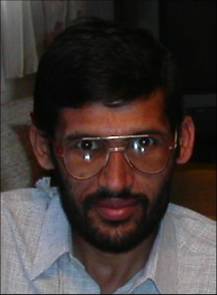
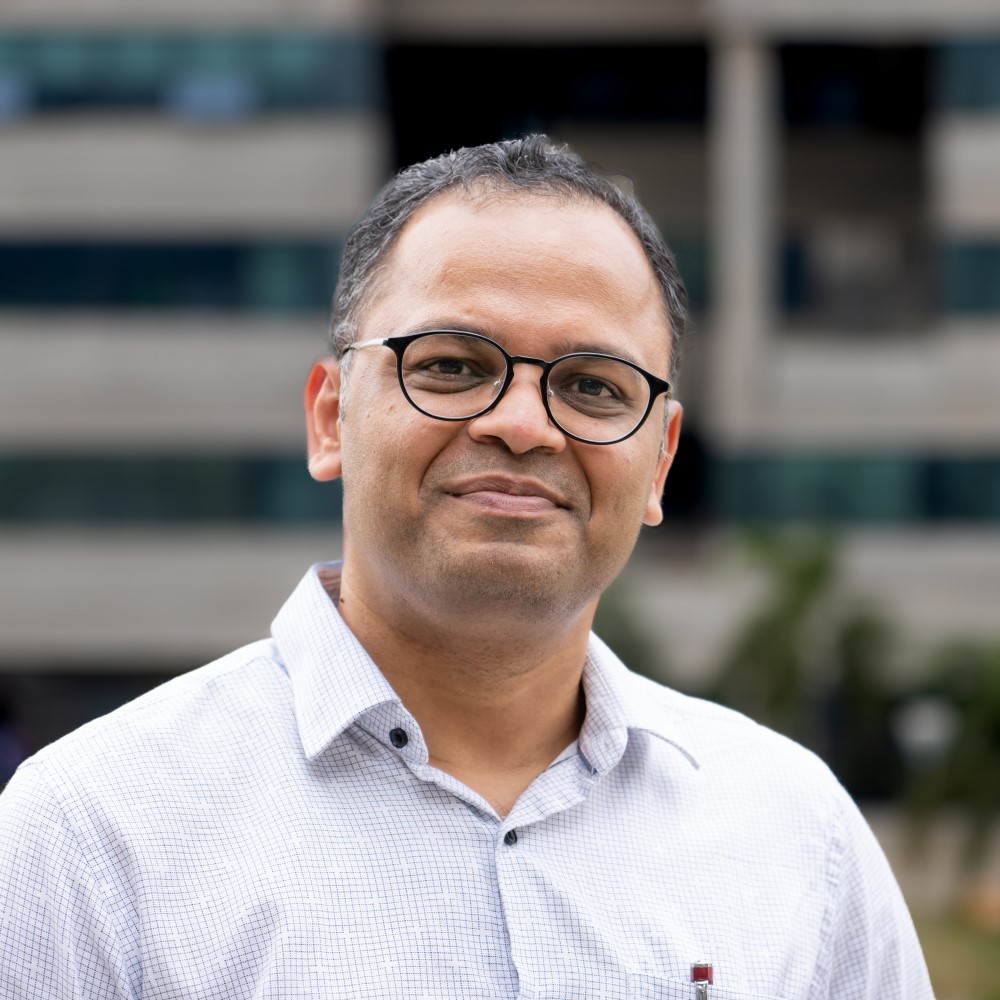
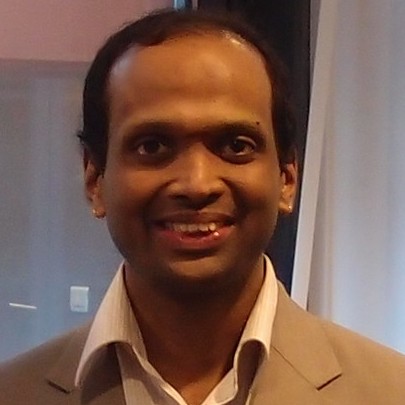
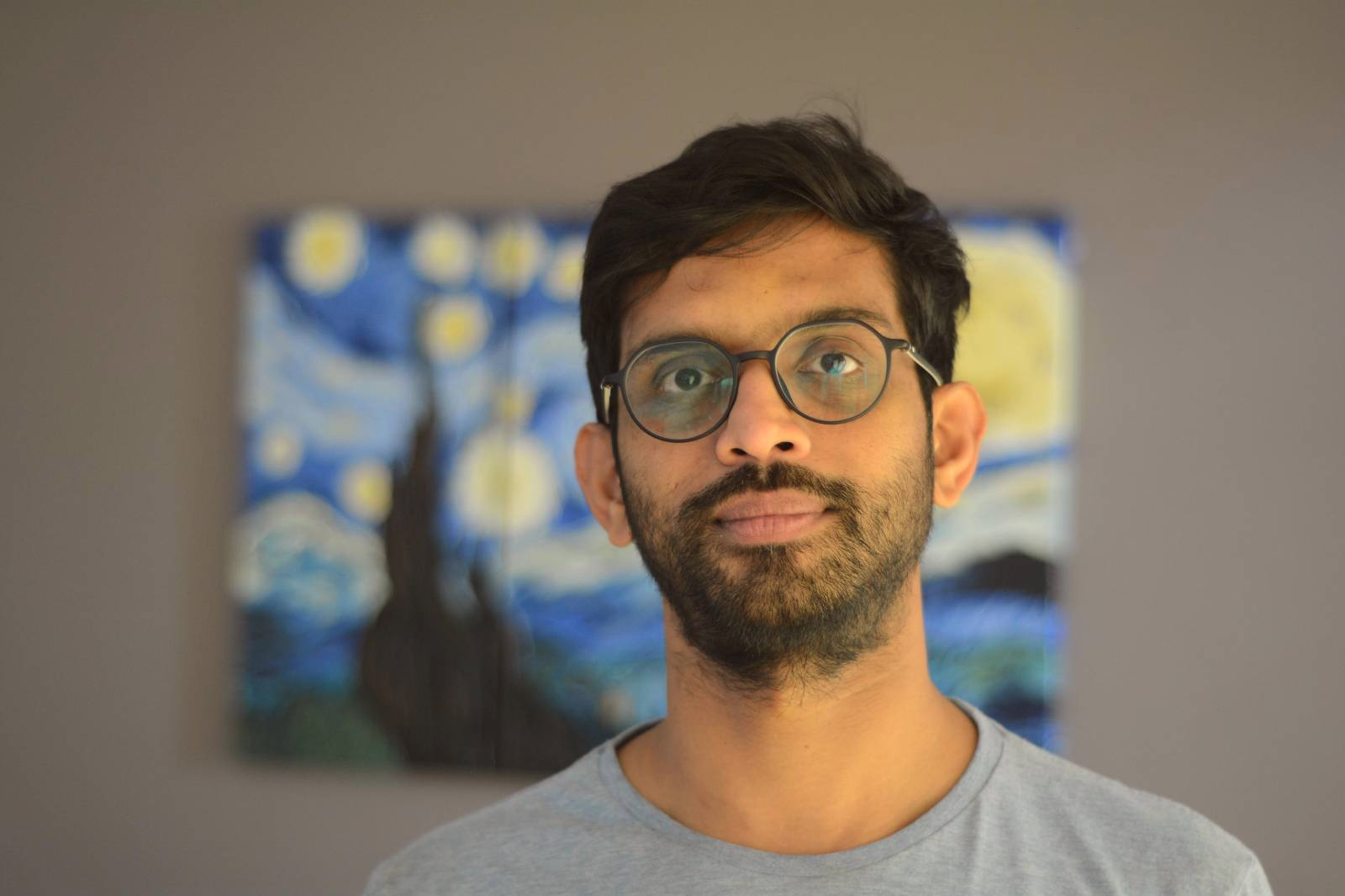
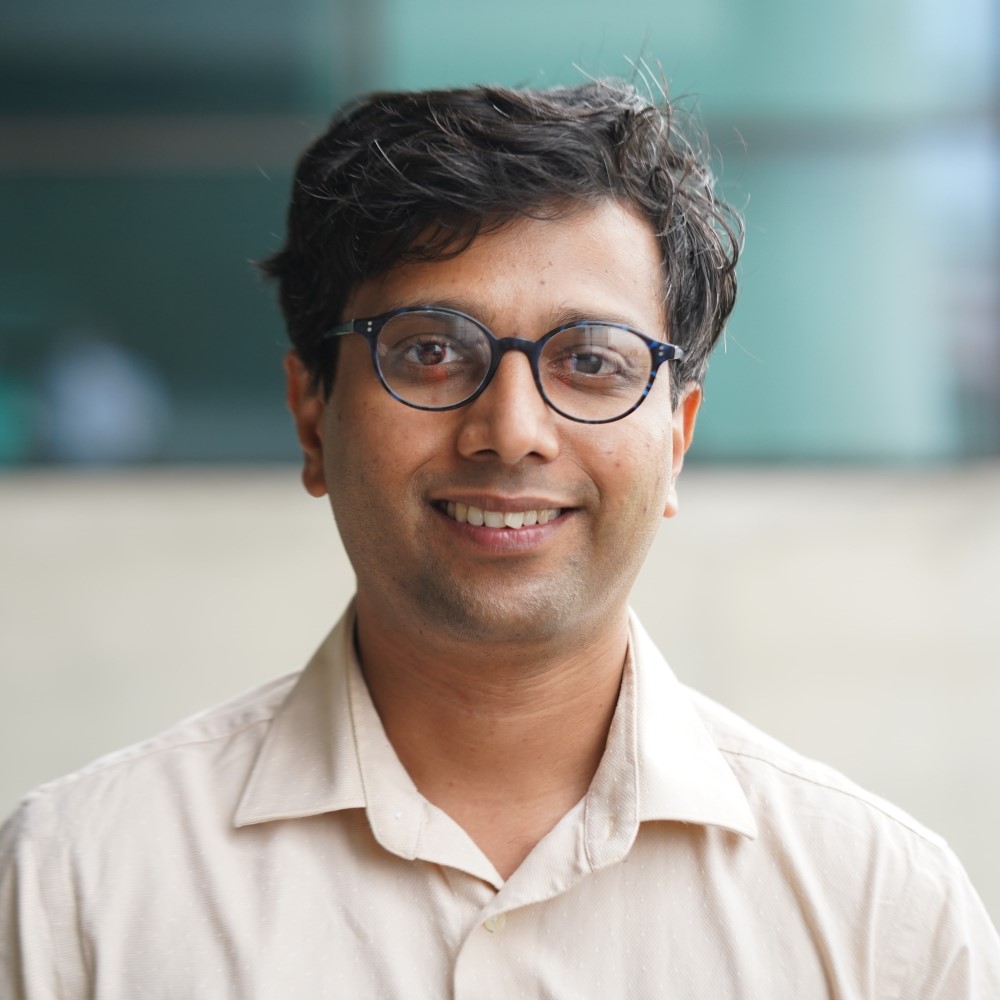
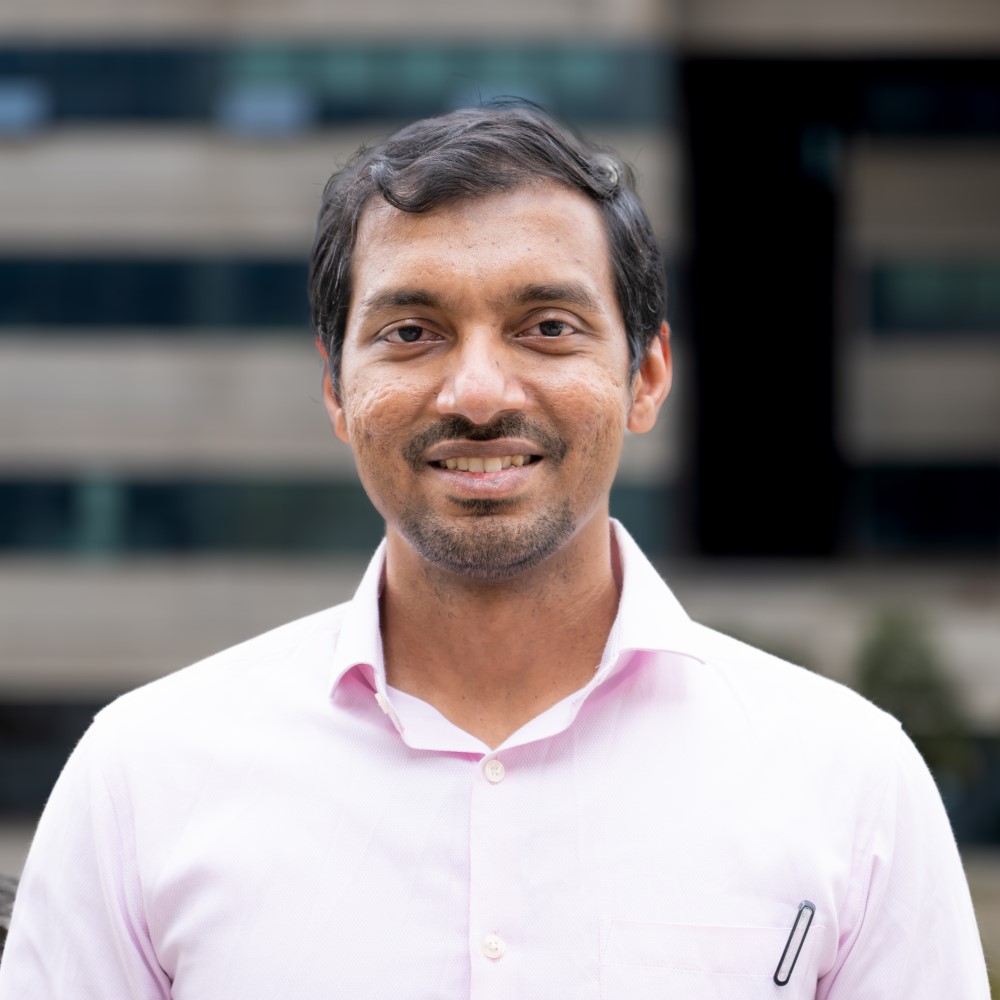
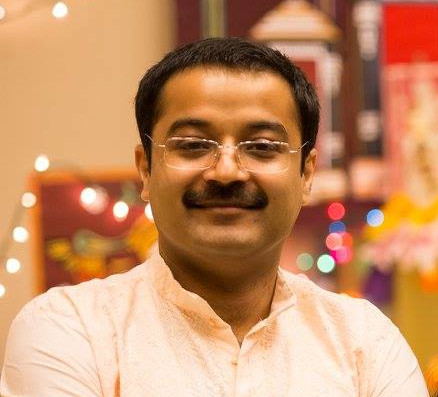
Anisur Rahaman Molla is an Associate Professor at the Indian Statistical Institute (ISI) in Kolkata, India, affiliated with the Cryptology and Security Research Unit (CSRU) and the R. C. Bose Centre for Cryptology and Security . His work spans distributed computing, network algorithms, and mobile robotics, with a focus on fault tolerance and Byzantine agreement. Education : PhD in Computer Science from Nanyang Technological University, Singapore (2014) M.Tech in Computer Science from ISI Kolkata (2010) M.Sc in Pure Mathematics from Calcutta University (2007) B.Sc in Mathematics (Honors) from Calcutta University (2005) Research Trends : His recent work emphasizes mobile agent algorithms for tasks like dispersion, leader election, and graph traversal, with applications in fault-tolerant systems and dynamic networks. Papers frequently address message complexity, Byzantine resilience, and optimization in unoriented/oriented grids. Scientific Awards : Best Contributor Award (PhD Forum), ICDCN 2013 Advising : Supervised Prabhat Kumar Chand (current PhD student at ISI) and graduated Manish Kumar (PhD, ISI 2023). Co-supervised master's and bachelor's theses at the University of Freiburg and ISI. Labs & Collaborations : Works within the CSRU and R. C. Bose Centre at ISI. Collaborates with institutions like IIT Madras, University of Freiburg, and ETH Zürich.
Virendra Singh is a Professor at the Indian Institute of Technology Bombay , affiliated with both the Department of Electrical Engineering and Department of Computer Science & Engineering . He leads the Computer Architecture and Dependable Systems Lab (CADSL) and coordinates the Indo-Japanese Joint Laboratory for Intelligent Dependable Cyber Physical Systems and the Information Security Research and Development Centre (ISRDC). Ph.D. in Computer Science from Nara Institute of Science and Technology (NAIST), Japan (2002-2005) M.E. and B.E. in Electronics & Communication from Malaviya National Institute of Technology (MNIT), Jaipur (1994-1996 and 1990-1994) Research Interests : Virendra Singh focuses on Cyber Security , Computer Architecture , Fault-Tolerant Computing , Formal Verification , Trusted Computing , and Blockchain Technology . His work integrates security into hardware design, with a strong emphasis on Cyber Physical Cognitive Systems and Software Defined Networking . Recent Publications highlight advancements in cache security , quantum-resistant cryptography , malware detection , and heterogeneous computing , reflecting his interdisciplinary approach. Awards : SP Sukhatme Excellence in Teaching Award (2021) Students : He currently supervises 15 Ph.D. students, advancing cutting-edge research in security and architecture.
Rajesh Kedia is an Assistant Professor in the Department of Computer Science & Engineering at Indian Institute of Technology Hyderabad . He received his Ph.D. from IIT Delhi under the supervision of Prof. M. Balakrishnan and Prof. Kolin Paul, and holds a B.Tech. in Electronics and Communication Engineering from MNIT Jaipur (2006). His research focuses on computer architecture , embedded systems , and VLSI design automation , with specific emphasis on thermal management of processors and memories , shared resource management , and FPGA-based accelerator design . His recent publications address CNN execution time prediction, thermal modeling for 3D systems, and efficient resource allocation in multi-accelerator environments. Rajesh has received multiple scientific awards including the Visvesvaraya Ph.D. fellowship , IEEE Senior Member designation, and a BEST PAPER NOMINATION at DATE 2022 . He has mentored several Ph.D. and M.Tech students, including Lakshay Arora , Venugopal Ramamurthy , and M A Muneeb , with research topics spanning compilers, thermal management, and RISC-V architecture. He actively contributes to the academic community as a reviewer for leading conferences/journals (ASPDAC, DAC, IEEE ESL, CODES+ISSS) and previously served as Design Contest co-chair for ISLPED 2024 . His work has been supported by a SERB startup research grant (INR 20.26L) for shared resource management research.
Ramakrishna Upadrasta is an Associate Professor in the Department of Computer Science & Engineering and Heritage Science & Technology at Indian Institute of Technology Hyderabad. He earned his PhD from University of Paris-Sud and INRIA, Paris, with a focus on improving scalability in polyhedral compilation tools. His academic journey includes an M.S. from Colorado State University, M.Tech from Indian Institute of Science (IISc), and B.E. in Electrical and Electronics Engineering from Andhra University. His research expertise includes: Domain Specific Programming Languages for Parallelization LLVM Optimizations Polyhedral Compilation Abstract Interpretation Sub-polyhedral Approximations High-Performance Computing (HPC) He leads the IITH-LLVM group and collaborates with industries on compiler technologies. His work addresses scalability vs. precision trade-offs in static analysis tools and extends polyhedral compilation frameworks like Pluto and Polly. Scientific Recognition : HiPEAC paper award for his POPL-2013 publication As an educator, he has taught advanced compiler courses (e.g., CS6250, CS5260) and coordinated interdisciplinary initiatives, including Sanskrit language courses via Samskrita Bharati. His students span PhD, M.Tech, and B.Tech levels, focusing on compiler design and parallelization.
Dr. C.S. Upadhyay is a Professor in the Department of Aerospace Engineering at the Indian Institute of Technology Kanpur, specializing in advanced computational methods and structural mechanics. Education: PhD, Texas A&M University Research Interests: Finite Element Analysis : Adaptive FEM, Goal-based adaptivity, Time-dependent nonlinear problems, Generalized FEM, Nonconforming FEM, Parallel computation Composite Structures : Micromechanics, Homogenisation, Hierarchic plate/shell modeling, Adaptive finite element modeling for laminates, Specialized finite element methods, Shape/topology optimization, Stochastic analysis Solid Mechanics : Constitutive modeling for electro-thermo-elastic materials with losses, Analysis of piezo structures, Crack propagation in 3D solids, Life enhancement of structures, Finite elasticity, Damage in composites Laboratory: Structural Analysis Lab at IIT Kanpur
Amey Karkare is a Professor in the Department of Computer Science and Engineering at the Indian Institute of Technology Kanpur (IIT Kanpur). He holds a PhD from IIT Bombay and has been affiliated with IIT Kanpur since 2010, progressing through academic ranks to his current role since 2021. Education: PhD, IIT Bombay (2003-2008); B.Tech., IIT Kanpur (1994-1998) Research Interests: His work spans compilers , functional programming , program analysis , code optimization , and programming education . He focuses on improving compiler error messages, automated error repair, and educational tools like Prutor for programming courses. Recent Publications highlight advancements in pedagogical error repair , intelligent problem indicators , error localization , and GPU energy optimization . Notably, his 2023 paper on automated error repair received a Best Paper Award. Awards & Recognitions: Poonam and Prabhu Goel Chair Fellowship (2022) IIT Kanpur 1989 Batch Faculty Award for innovative teaching (2019) Best Faculty of the Year by Computer Society of India (2018) P. K. Kelkar Young Faculty Fellowship (2013-2016) Teaching & Advising : He supervises PhD, M.Tech, and B.Tech students, offering courses like Advanced Compiler Optimizations and Principles of Programming Languages . His projects integrate AI and functional programming in education.
Kavi Arya is a Professor in the Department of Computer Science and Engineering at the Indian Institute of Technology Bombay, serving as Principal Investigator for the e-Yantra Project (http://www.e-yantra.org) and Director of Chetana Pvt. Ltd. since 1994. His academic qualifications: B.Sc. (Hons.) in Computer Science, Imperial College, London University (1980-1983) M.Sc. (Hons.), Programming Research Group, Oxford University (1983-1984) D.Phil., Programming Research Group, Oxford University (1984-1988) Research focuses on Functional Programming applications through Domain Specific Languages, high-level language approaches for Embedded Systems design, Parallel Programming Languages, and Distance Learning methodologies. His work emphasizes software-centric solutions for embedded systems and educational innovation through robotics initiatives. Professional roles include: Research Scientist, IBM TJ Watson Research Center, Yorktown Heights, NY, USA (1988-1990) Research Staff, Tata Research Development and Design Centre, Pune (1992-1994) Technical Advisor (CTO) to Vice Chairman/MD's Office, Mahindra & Mahindra Ltd. (2007, sabbatical) He leads the e-Yantra project establishing robotics/embedded systems labs across Indian engineering colleges, significantly impacting hands-on technical education through scalable infrastructure and curriculum development.
Chethan Kamath is an Assistant Professor in the Department of Computer Science and Engineering at IIT Bombay, where he is a member of the Theory Group and Trust Lab. His primary research focus is on cryptography, particularly its foundations, with broader interests extending to theoretical computer science. His educational journey includes: PhD from IST Austria (2014-2020) under Krzysztof Pietrzak, with thesis titled "On the Average-Case Hardness of Total Search Problems" Master's in CS from IISc Bangalore (2010-2013) under Sanjit Chatterjee, with thesis titled "Constructing Provably Secure Identity-Based Signature Schemes" Bachelor's in CS from University of Kerala (2005-2009) at TKM College of Engineering, Kollam Dr. Kamath's research interests span the theoretical foundations of cryptography, with particular focus on secure computation, complexity theory, and cryptographic hardness assumptions. His work often bridges theoretical computer science with practical cryptographic applications, exploring the boundaries of what can be efficiently computed while maintaining security guarantees. His research frequently addresses fundamental questions about the relationship between cryptographic primitives and complexity classes, especially the PPAD and TFNP complexity classes. His recent publications demonstrate a consistent focus on foundational aspects of cryptography, with particular emphasis on secure computation (garbled circuits, Yao's protocol), proofs systems (proofs of work, proofs of exponentiation), and complexity-theoretic aspects of cryptographic primitives. A notable trend is his exploration of the connections between complexity classes like PPAD and cryptographic assumptions, as well as his work on verifiable delay functions and their underlying number-theoretic assumptions. His research often employs tools from algorithmic graph theory (treewidth, separators) to analyze cryptographic protocols. His notable scientific achievement includes: Azrieli Fellowship during his post-doc at Tel Aviv University Dr. Kamath actively mentors students and researchers, currently advising several PhD and MS students at IIT Bombay, often in collaboration with Sruthi Sekar. His service to the academic community includes extensive program committee memberships for major conferences including Crypto, Eurocrypt, and TCC, demonstrating his standing in the cryptographic research community. He has co-organized educational events like the "Introduction to Cryptography" school as part of the ACM India Summer School 2025 and the "Theoretical Foundations of Cryptography" school as part of the ACM India Summer School 2024. He leads research activities within the Trust Lab at IIT Bombay, which focuses on theoretical and applied aspects of cryptography and security. The lab actively recruits MS/PhD students and post-docs, with ongoing research in foundational cryptography and its applications to secure computation, verifiable delay functions, and complexity-theoretic aspects of cryptographic security.
Kirit Makwana is an Assistant Professor in the Department of Physics at the Indian Institute of Technology Hyderabad (IIT Hyderabad), located in Kandi, Sangareddy, Telangana, India. He holds a Ph.D. from the University of Wisconsin-Madison, WI, USA, and his office is in Room PH-212 of the Physics Building. Research Interests: ASIC plasma physics Space plasmas Plasma astrophysics High Performance Computing (HPC) Multiscale modelling Fluid dynamics Parallel processing Contact: Office phone (040) 2301 - 6721 .
Rakesh Venkat is an Assistant Professor in the Department of Computer Science and Engineering at the Indian Institute of Technology Hyderabad. His research focuses on Theoretical Computer Science, including approximation algorithms, hardness of approximation, and communication complexity. Education : Ph.D., Tata Institute of Fundamental Research (TIFR), Mumbai. Research Trends : His work addresses fundamental challenges in algorithm design, such as optimizing cache misses, improving clustering algorithms, analyzing graph expansion, and exploring embedding techniques. Publications span top-tier conferences like APPROX, FSTTCS, ICALP, and ITCS, with collaborations at institutions including HUJI, TIFR, and IIT-Bombay. Teaching : Courses taught include Approximation Algorithms, Advanced Data Structures, Discrete Mathematics, and Spectral Graph Theory.
Swarnendu Biswas is an Assistant Professor in the Department of Computer Science and Engineering at the Indian Institute of Technology Kanpur. He teaches courses including Programming for Performance (CS 610), Analysis of Concurrent Programs (CS 636), and Compiler Design (CS 335), demonstrating his expertise across multiple areas of computer systems. His research interests center on Programming Languages, Compilers, Runtime Systems, and Parallel Software Systems. He leads the PROSPAR (Programming Languages and PARallel Systems) research group, which focuses on developing techniques to build efficient and correct parallel software through program analysis, compiler optimizations, and runtime systems. His recent publications reveal a strong trend in addressing fundamental challenges in parallel computing, with work spanning cache coherence, false sharing detection, data race analysis for GPUs, verification of neural networks, and thermal-aware management of heterogeneous systems. His research bridges theory and practice with significant contributions to both hardware and software aspects of parallel systems. His scientific achievements have been recognized through multiple prestigious awards: Google India Research Award 2021 Google Explore CSR 2022 Research Grant from Intel Corporation SERB Start-up Research Grant 2019 Google Cloud Platform Research Credits (2019, 2020) IITK Initiation Grant 2019 As an advisor, he mentors several PhD and MTech students working on cutting-edge research in parallel systems. His PROSPAR group has secured significant funding from industry and government sources, supporting innovative research in programming languages and parallel systems. The group actively collaborates with industry partners including Google and Intel, addressing real-world challenges in parallel computing. He leads the PROSPAR research group at IIT Kanpur, which brings together faculty, PhD students, and MTech researchers to tackle challenging problems at the intersection of programming languages, compilers, and parallel systems. The group maintains strong industry connections and focuses on practical solutions that can be deployed in real systems.
Sanjeev Saxena serves as Professor in the Department of Computer Science and Engineering at the Indian Institute of Technology Kanpur, where he has established himself as a prominent researcher in algorithm design and parallel computing. His research spans five key domains: Algorithms - specializing in efficient computational methods and theoretical foundations Parallel Processing - developing architectures for multi-processor computation VLSI - exploring algorithm-hardware integration for circuit design Data Structures - innovating in information organization techniques Heuristics - creating practical solutions for complex computational problems Professor Saxena's publication timeline reveals a consistent research trajectory focused on computational efficiency, with early work on VLSI parallel algorithms evolving into broader applications in data structures and scientific computing. His most recent publications demonstrate expertise in translating theoretical computer science into practical implementations for scientific and engineering applications. His educational contributions include authoring the textbook "Java for Scientists and Engineers" (2008), which bridges programming knowledge with scientific applications, reflecting his commitment to computer science education.