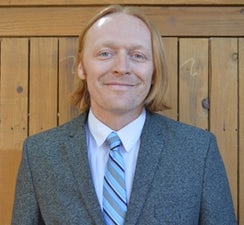
Ben Nobbs-Thiessen is an Assistant Professor of History and Chair of Mennonite Studies at the University of Winnipeg. He holds a PhD from Emory University (2016), with prior roles as a research associate at Arizona State University (2016–18) and a teaching fellow at Washington State University (2018–2020). His research focuses on Mennonite migrations across the Americas, environmental change, and indigenous-settler relations. He teaches courses on Latin American Mennonites and Mennonite Studies II. His research combines archival work, field studies, and oral histories from Bolivia, Paraguay, Mexico, Canada, and the U.S. His 2020 book Landscape of Migration examines Bolivia’s lowland colonization and its intersection with Mennonite and indigenous communities. Current projects include a century-long study of Mexico-Canada Mennonite migrations linked to water scarcity and neoliberal reforms. His publications span journals like Journal of Latin American Studies and Agricultural History , addressing topics like frontier development, foodways, and border conflicts. His transnational approach bridges environmental, migration, and colonial histories. He contributes to interdisciplinary initiatives such as the Newberry Consortium in American Indian Studies and the Centre for Rupert's Land Studies.
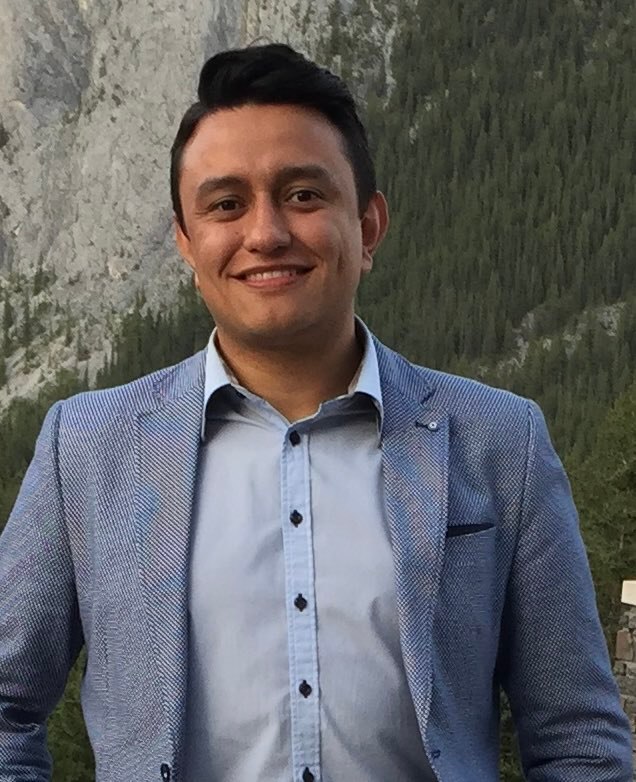
José Eduardo Villalobos Graillet is an Assistant Professor of Spanish at Idaho State University , specializing in Modern Peninsular Literature and Culture with a focus on visual culture (film and television) . He previously held a position as Spanish Instructor at Wilfrid Laurier University in the Department of Languages and Literatures. Research Areas : Spanish Film Studies, Spanish Medieval Literature, Latin American and Caribbean Studies, Teaching Spanish as a Foreign Language, Visual Culture, and Critical Pedagogy. His scholarly work examines film and television adaptations of 'La Celestina' , analyzing censorship dynamics across Francoist Spain, the Democratic Transition, and contemporary Spain. He also contributes to Spanish pedagogy , developing technological tools like Lang-8 for written expression and culturally immersive teaching units on topics such as winter festivals and Caribbean music. His publications span both critical academic analysis and methodological innovations for language instruction. Key Themes in Publications : Adaptation fidelity, political censorship, intercultural pedagogy, and the role of digital platforms in language learning.
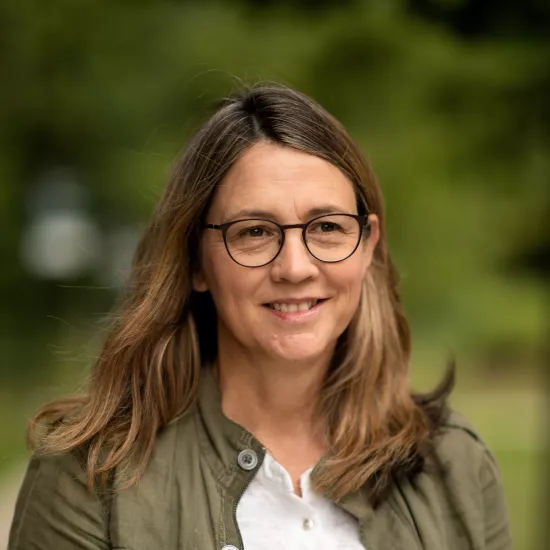
Todd McCallum is an Assistant Professor in the Department of History at Dalhousie University . His research focuses on North American social and cultural history , particularly intersections with Marxism, anarchism, and working-class movements . He also explores themes of gender and sexuality within historical contexts. PhD in History from Queen’s University MA in History from Simon Fraser University BA in History from Queen’s University McCallum’s recent publications analyze transient worker communities, labor activism, and spatial marginalization during economic crises. His work critically examines how categories like “tramp” evolved alongside industrial capitalism and social policy, often incorporating interdisciplinary lenses such as eugenics, documentary photography, and urban sociology. Key trends in his research include the dialectic of mobility and marginality, gendered interpretations of transient life, and the role of radical ideologies in shaping worker identities. He has contributed extensively to journals like Labor/Le Travail and BC Studies , with a particular focus on Vancouver’s Depression-era hobo communities. His teaching portfolio includes courses on the history of the future , conspiracy theories , and gender formation in North America . Office hours are held in the Marion McCain Building, Halifax.
Tracey Galloway is an Associate Professor in the Department of Anthropology at the University of Toronto Mississauga (UTM), where she conducts critical research on Indigenous health disparities and policy interventions in northern Canada. Her work bridges medical anthropology, public health, and community-based participatory research to address systemic inequities affecting circumpolar populations. Education: PhD, McMaster University, 2008 MA (institution unspecified) BA (institution unspecified) BScN (institution unspecified) Dr. Galloway's research program centers on chronic disease risk assessment and health system improvement in Indigenous communities, with specific expertise in nutrition transition, food security, child growth patterns, and public health policy evaluation. She examines the impact of federal programs like Nutrition North Canada while developing community-led solutions for health equity. Her methodological approach combines quantitative analysis of health outcomes with qualitative community engagement, emphasizing Indigenous research sovereignty and decolonizing methodologies. Her publication record reveals consistent thematic focus across 15 recent articles, demonstrating interdisciplinary collaboration between anthropology, epidemiology, and health economics. Key trends include rigorous evaluation of colonial impacts on Indigenous food systems, innovative analysis of subsidy program effectiveness, and centering Indigenous patient experiences in healthcare design. Her work consistently prioritizes community-defined research questions and actionable policy recommendations. Dr. Galloway actively mentors graduate students including Darci Belmore, Carly Checholik, Neda Maki, and Hiliary Monteith, guiding research on Indigenous health determinants and policy interventions. While specific grant details aren't publicly enumerated, her collaborative projects involve partnerships with Indigenous communities across Northern Canada and interdisciplinary teams addressing complex health system challenges. She maintains strong community partnerships for her applied research, particularly in Nunavut and Northwestern Ontario, working directly with Anishinabeck and Inuit communities to translate findings into culturally safe health initiatives and policy reforms that address the root causes of health inequities.
Margaret Robinson is an Associate Professor at Dalhousie University, holding dual appointments in the Department of English and Department of Sociology and Social Anthropology within the Faculty of Arts and Social Sciences. She is a bisexual two-spirit scholar from Eski'kewaq, Nova Scotia, and a member of the Lennox Island First Nation. Her interdisciplinary work bridges Indigenous studies, queer theory, and intersectional feminism, with a focus on decolonizing methodologies and Indigenous oral traditions. Robinson’s research explores representation of Indigenous peoples and sexual/gender minorities in creative works, including fanfiction and popular culture. She holds a Tier 2 Canada Research Chair in Reconciliation, Gender, & Identity (2019-2023) and leads the Mi’kmaw Cultural Research Lab funded by the Canadian Foundation for Innovation (2021-2024). Her education includes a BA from Saint Mary’s University and MA/PhD from the University of Toronto. Key research areas include Indigenous New Wave literature, Mi’kmaw spirituality, and Two-Spirit feminism. Recent grants focus on reconciliation frameworks and LGBTQ2S+ health equity. She has published widely on topics like queer mental health, animal personhood in Mi’kmaw cosmology, and decolonizing pedagogies.
Denis Kozlov is an Associate Professor in the Department of History at Dalhousie University, specializing in modern Russian and Soviet history. His academic journey includes a BA from Herzen Russian State Pedagogical University, an MA from the University of Massachusetts Amherst, and a PhD from the University of Toronto. He holds appointments within Dalhousie's Faculty of Arts and Social Sciences and maintains an active research profile focused on cultural and intellectual transformations in the Soviet Union. His educational background reflects deep engagement with Russian studies: BA: Herzen Russian State Pedagogical University MA: University of Massachusetts Amherst PhD: University of Toronto Kozlov's research centers on Soviet cultural and intellectual history during the post-Stalin era (1953-1991), with particular emphasis on memory practices, reading audiences, and migration. His work examines how Soviet citizens processed historical trauma through literature and media, especially during the Thaw period, and explores transnational migrations from the USSR in the 1970s-1980s. He investigates intersections between literature, society, and historical consciousness, revealing how cultural production shaped Soviet identity and social change. Analysis of his 15 most recent publications shows consistent focus on Soviet cultural history, with dominant themes including reading practices during de-Stalinization, migration as political expression, and memory politics. His methodology combines archival research with cultural analysis, increasingly incorporating transnational perspectives in recent works on Soviet Jewish migration and Eastern European identity. His scholarly recognition includes significant awards: SSHRC Insight Grant (2019-2024) Andrew W. Mellon Fellowship at Institute for Advanced Study, Princeton (2010-2011) Harvard University Postdoctoral Fellowships (2008-09) Faculty of Arts and Social Sciences Teaching Award (2014-2015) Kozlov actively supervises graduate research in Soviet history while securing major grants including SSHRC and NEH funding. His teaching spans introductory surveys to advanced seminars on Soviet Russia and comparative cultural history, with recent courses including HIST 2021F (Soviet Russia) and HIST 3088F (History & Memory Russia and West) for 2024-2025. While no dedicated research labs are mentioned, his collaborative projects like the NEH-funded conference "The Thaw: Soviet Society and Culture during the 1950s and 1960s" demonstrate his role in building scholarly networks. Current work focuses on Soviet migration patterns and their ideological implications.
Nicholas Ng-A-Fook is a Full Professor in the Faculty of Education at the University of Ottawa, where he has served as former Associate Dean of Graduate Studies and Director of Teacher Education and Indigenous Teacher Education Programs. His work is deeply engaged with the Truth and Reconciliation Commission's 94 Calls to Action, working in partnership with Indigenous communities and school boards to disrupt colonialism, systemic racisms, and inequalities in educational curricula. Dr. Ng-A-Fook's educational background includes a Ph.D. in Curriculum and Instruction from Louisiana State University (2006), an M.A. in Education (Multicultural Education) from York University (2001), a Graduate Diploma in Education (Secondary Science and History) from the University of Western Sydney (1998), and a B.A. in Classical Studies from the University of Ottawa (1996). His research interests span Curriculum Studies, History of Education (particularly oral history), Life-writing research (autobiography and narrative inquiry), Critical Youth Studies (focusing on first-generation immigrant and Indigenous youth), Community-based research, and Contemporary perspectives in philosophy, science and technology including AI, genomic education, and anti-racist science education. Dr. Ng-A-Fook approaches his work as a curriculum theorist who draws on life writing research methodologies to co-create culturally responsive, relevant, and relational curriculum with educators. Dr. Ng-A-Fook's publications reveal a strong focus on reconciliation education, decolonizing curriculum, and addressing systemic racism in educational contexts. His work increasingly engages with digital technologies and artificial intelligence from a critical, decolonial perspective, examining how these technologies intersect with historical and ongoing colonial structures. His research shows a clear evolution toward more interdisciplinary work connecting curriculum studies with Indigenous knowledge systems, technology studies, and social justice movements. Among his notable honors are the 2024 Coutts Prize, the Ted T. Aoki Distinguished Service Award (2018), and the R.W.B. Jackson Award for an outstanding article in the Canadian Journal of Education. He also serves as Director of the EdCan Network and was Past-President of the Canadian Society for the Study of Education. As a supervisor, Dr. Ng-A-Fook currently mentors several graduate students including Melissa Daoust, Lisa Ambaye, Bahareh Samsamiardekani, and Madelaine McCracken. He created the FooknConversation podcast to address educational challenges with colleagues, community activists, artists, education leaders, teachers, and politicians, and maintains the Canadian Curriculum Theory Project website as a resource for his research.
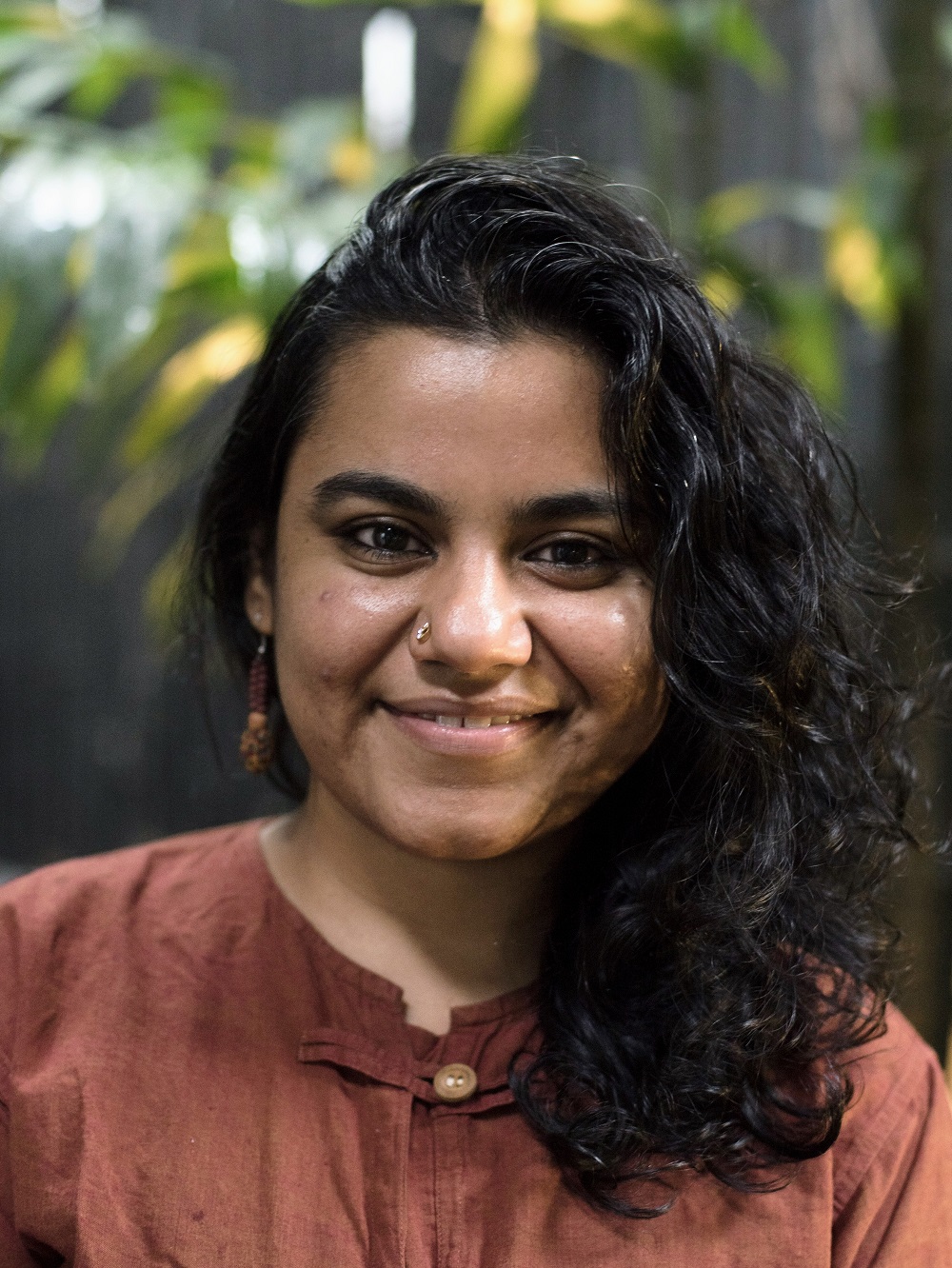
Priti Narayan is an Assistant Professor in the Department of Geography at the University of British Columbia (UBC), Faculty of Arts. Her research and teaching focus on urban processes and politics in India, with an emphasis on state-society relations, feminist methodologies, and public scholarship. Prior to joining UBC, she was a postdoctoral fellow at Princeton University’s Mellon Initiative in Architecture, Urbanism, and the Humanities. PhD in Geography, Rutgers University (2019) Narayan’s research explores how marginalized communities in Chennai, India, negotiate slum evictions through collective action. She collaborates with the Pennurimai Iyakkam (“Women’s Rights Movement”) to document working-class activists’ lived experiences and theorize their contributions to urban studies. Her work bridges academic and activist knowledge, advocating for interdisciplinary approaches to environmental justice and labor rights. Recent projects examine urban development in Tamil Nadu, labor codes, and occupational health for construction workers. Her academic publications span journals like Gender, Place & Culture , Urban Studies , and Environment and Planning D: Society and Space , often co-authored with local activists. She emphasizes ethnography, archival analysis, and collaborative methods. Scientific Awards : SSHRC Insight Development Grant (2023) UBC PRE Fund Award (2023) CIHR Operating Grant (Co-PI, 2021-23) Hampton New Faculty Research Grant Narayan supervises graduate students in Geography and Interdisciplinary Studies, including Varun Panickar and Paroma Wagle (postdoctoral). She currently does not accept new supervisees. Her courses at UBC include topics like urban environmental politics and climate change.
Dr. April Nowell is a Professor of Anthropology in the Department of Anthropology at the University of Victoria's Faculty of Social Sciences, specializing in Paleolithic archaeology, cognitive archaeology, and the archaeology of children. Currently on leave, she leads internationally recognized research projects across Europe, the Levant, Australia, and Africa while actively accepting graduate students. She earned her PhD from the University of Pennsylvania and has developed expertise in Neanderthal lifeways, Paleolithic art, and hominin life histories. Her academic journey reflects deep engagement with both theoretical frameworks and fieldwork across diverse geographical contexts. Nowell's research examines how prehistoric societies structured knowledge transmission, childhood development, and symbolic expression. Her groundbreaking work on finger flutings in Australian caves reveals children's roles in Paleolithic storytelling traditions, while her analysis of Levantine wetland ecosystems demonstrates how Pleistocene humans adapted to environmental shifts. She challenges conventional narratives about Neanderthal cognition and has pioneered methodologies for reconstructing prehistoric childhood experiences through skeletal and material evidence. Her recent publications show consistent innovation in archaeological methodology, particularly in digital documentation of rock art and interdisciplinary approaches to human development. Key trends include integrating bioarchaeological data with cognitive models, examining material culture as evidence of social learning, and analyzing environmental archives to understand human dispersal patterns. Her scientific recognition includes: 2023 EAA Book Prize for Growing Up in the Ice Age: Fossil and Archaeological Evidence of the Lived Lives of Plio-Pleistocene Children Nowell secures major research funding including Social Sciences and Humanities Research Council grants supporting her Azraq Basin project in Jordan and Koonalda Cave research in Australia. She mentors graduate students in Paleolithic theory while collaborating with Indigenous communities and international scholars on field projects spanning five continents. Her work bridges academic research and public engagement through TEDx talks and media appearances examining science communication. She directs field programs at Jordan's Azraq Basin wetlands and Australia's Koonalda Cave, working with multidisciplinary teams including geochronologists, bioarchaeologists, and Traditional Owners to investigate Pleistocene human adaptation and cultural transmission.
Stephen Sliwa is the Executive Program Director of Teacher Education and an Adjunct Professor at Queen’s University’s Faculty of Education. He holds an MA from Trent University, MEd and MPA degrees from Queen’s University. Previously, he served as Director of Education and CEO of the Upper Canada District School Board, with extensive experience as a superintendent, principal, and teacher in K-12 education. His research focuses on Indigenous Studies foundations, special education support, intermediate education design, and public sector management. His academic work spans historical analyses of Indigenous-white relations, policy development for inclusive education, and digital learning strategies. He has contributed to provincial education guides and government reports on topics like disability inclusion and Indigenous economic development. Publications include book reviews in Canadian Social Studies and Saskatchewan History , practical guides for teachers, and case studies on Indigenous communities. His work bridges academic research with actionable strategies for educators and policymakers.
Aqsa Ijaz is an Assistant Professor (Teaching Stream) at the Department of Language Studies and teaches the popular course Being Human in South Asia in the Department of Historical Studies at the University of Toronto Mississauga. She is a literary scholar specializing in Persianate literatures and multilingualism, with a focus on classical Persian poetry reception in South Asia. Education: PhD in Islamic Studies (McGill University), MPhil in Translation Studies (G.C. University, Pakistan), BA Hons in English Literature and Philosophy (minor in French). Her research explores the transcultural and temporal resonance of Nizami Ganjavi's Khusrau u Shirin across Persian, Urdu, and Punjabi traditions. She is the architect of the Global Past Research Initiative and serves on the editorial board of The Marginalia Review of Books . Key publications include her monograph Shaping the Language of Love and annotated translations of the 18th-century Persian history The Gift of the Generous and the French graphic novel Majnun and Laila: Songs from Beyond the Grave . Her work intersects premodern manuscript studies, oral performances, lithographs, and modern graphic novels. She teaches Introductory Persian , Urdu , and Punjabi courses while actively translating and performing as a cellist.
Jeremy Brown is a Professor in the Department of History at Simon Fraser University. He specializes in the social and political history of the People’s Republic of China, with a focus on urban-rural dynamics, Maoist-era policies, and the Tiananmen protests. His research integrates oral histories and grassroots sources to challenge state-centric narratives. Brown earned his PhD from the University of California, San Diego (2008), and has held editorial roles for Cambridge Studies in the History of the People’s Republic of China (2014–2021). He is a recipient of the SFU Excellence in Teaching Award (2017) and multiple SSHRC grants. His books include June Fourth: The Tiananmen Protests and Beijing Massacre of 1989 (2021) and Maoism at the Grassroots (2015). He currently supervises graduate students in Asian history and oral history. Education: PhD in History, UC San Diego (2008); Language training at Harbin Institute of Technology (1997) and Tsinghua University (2000–2001). Key Research Themes: Maoist ideology, urban-rural divides, Cultural Revolution, memory studies, and political repression. Grants: SSHRC Standard Research Grant (2010–2013), Henry Luce Foundation Fellowship (2014–2015). His work often examines everyday life under Maoism, including resistance to state policies, grassroots agency, and the legacies of trauma in modern China. Brown is also active in teaching innovation, such as using Wikipedia to engage students with contested historical events.
Fahmida Suleman is Senior Curator of Islamic Art & Culture at the Royal Ontario Museum (ROM) and holds a non-budgetary cross-appointment as Associate Professor at the University of Toronto (Department of Near and Middle East Civilizations and Art History). She specializes in medieval and contemporary Islamic art, with a focus on the Fatimid period , Shi‘i material culture , and Islamic iconography , particularly textiles and jewelry from the Middle East and Central Asia. Education : DPhil and MSt in Islamic Art & Archaeology from the University of Oxford; BA Hons in Islamic and Religious Studies from the University of Toronto. Her research integrates fieldwork on female silversmithing traditions in Oman and exhibitions like Being and Belonging (2023–2024), Picnics and Pastimes (2024–2025), and the forthcoming The Indian Ocean: Monsoon Worlds (2026). She co-founded the Islamic Art and Material Culture Collaborative (IAMCC) to promote interdisciplinary research and curated the Albukhary Foundation Gallery of the Islamic World at the British Museum. Her work bridges medieval Islamic art with modern diasporic narratives, emphasizing marginalized voices and cultural preservation. At the University of Toronto, she teaches courses on curating Islamic material culture and Islamic iconography . She is currently documenting the Widad Kawar Collection of Arab Dress and Heritage Arts and exploring food and hospitality cultures in the Middle East through material culture.
Sophie McCall is a Professor in the Department of English at Simon Fraser University (SFU), specializing in Indigenous literatures. Her research focuses on decolonization, resurgence, and the ethics of collaborative authorship, particularly examining how Indigenous writers challenge settler colonialism through storytelling. She holds a BA from Queen’s University, an MA from UBC, and a PhD from York University. McCall is the author of First Person Plural: Aboriginal Storytelling and the Ethics of Collaborative Authorship (2011), which received critical acclaim, and editor of foundational texts like Devil in Deerskins: My Life with Grey Owl (2014). She co-edits Read, Listen, Tell: Indigenous Stories from Turtle Island (2017) and directs SFU’s Masters of Arts for Teachers of English (MATE) program. Her work bridges literary criticism and activism, addressing residential school narratives, Indigenous-Black solidarity, and the politics of reconciliation. She co-chairs the Indigenous Voices Awards and leads SSHRC-funded projects exploring Indigenous-led literary collaborations. Key themes in her scholarship include textualizing orality, ethical representation, and multidisciplinary Indigenous arts. Awards: Gabrielle Roy Prize finalist (2011), Canada Prize finalist (2011) Projects: SSHRC-funded collaboration with NunatuKavut scholar Kristina Bidwell Roles: Director of MATE, Co-chair Indigenous Voices Awards McCall’s publications span scholarly articles, edited collections, and anthologies, emphasizing Indigenous agency in storytelling. Her teaching and research prioritize decolonizing methodologies and amplifying Indigenous voices across disciplines.
Yvon Wang is an Associate Professor at the Department of History , University of Toronto (St. George Campus), specializing in East Asian history with a focus on gender, sexuality, and everyday life. He coordinates the Chinese History Grad Group and directs the Faculty & Postdoc Writing Workshop . His research spans imperial to modern China, including material culture, suicide studies, and Cold War socio-political dynamics. PhD and MA from Stanford University AB from Princeton University Current projects include SSHRC-funded studies on suicide in Chinese history and global responses to the Sinosphere during the Great Leap Forward . His publications examine topics like pornography in modern China, masculinities in early People's Republic media, and legal constructions of sexuality in Beijing. Recent articles include: Gray Markets in the Great Leap (2022) exploring economic deviance in 1950s Shandong Everyday Lives in China's Cold War Military-Industrial Complex (2022) analyzing worker experiences in Shanghai Reinventing Licentiousness (2021) tracing pornography's historical trajectory Scientific honors include SSHRC-funded research projects . He maintains affiliations with the Department of East Asian Studies and teaches courses covering Chinese history from prehistory to the 21st century.