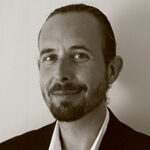
Associate Professor Jarryd Pla is an experimental physicist and electrical engineer at the University of New South Wales, specializing in quantum information processing and quantum technologies. He holds a PhD in Electrical Engineering from UNSW (2013) and a first-class honors BEng in Photonic Engineering (2009). Current ARC Future Fellow Former Bragg Gold Medal recipient His research focuses on: Spin-based quantum computation in silicon Superconducting quantum circuits Quantum-noise-limited microwave amplifiers Hybrid quantum systems for quantum memory Quantum sensing and spectroscopy Recent publications highlight: Room-temperature maser amplifiers Kinetic inductance parametric amplifiers Coherent control of donor spins Quantum-limited electron spin resonance Scientific Awards: ARC Future Fellowship (2024-2028) Bragg Gold Medal His grants include: ARC DECRA (2019-2022): Superconducting hybrid quantum technologies ARC Discovery Project (2021-2024): Quantum sensing with semiconductor devices ARC Future Fellowship (2024-2028): Room-temperature diamond-based microwave detection
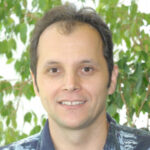
Thorsten Ackemann is a Professor of Nonlinear Photonics in the Department of Physics at the University of Strathclyde, United Kingdom. He has been a faculty member since 2005 and was promoted to full Professor in 2012. His research lies at the intersection of nonlinear optics, quantum optics, and complex systems, with strong affiliations to the Institute of Photonics and Quantum Sciences (IPaQS) and SUPA (Scottish Universities Physics Alliance). His research focuses on self-organization in light-matter systems, particularly in cold atoms and semiconductor lasers. Key themes include the formation of spontaneous patterns and phase transitions in cold atomic gases, simulation of condensed matter phenomena, realization of supersolids, and the study of solitons and structured light in vertical-cavity surface-emitting lasers (VCSELs). His work often bridges fundamental physics with technological applications in photonics and quantum technologies. The recent publications highlight a strong trend in quantum-enhanced interferometry, entanglement generation, optomechanical coupling, and complex soliton dynamics. These works reflect a deep engagement with quantum simulation, nonlinear feedback systems, and collective behavior in nonequilibrium systems. Fellow of the Institute of Physics (IOP), 2012 Fellow of the Optical Society (OSA), 2013 Professor Ackemann has led multiple research projects as Principal Investigator, including EU Horizon 2020 and Leverhulme Trust grants, often in collaboration with leading institutions across Europe and the US. He has supervised several PhD students and postdoctoral researchers, though specific names are not listed in the provided text. He is active in organizing international conferences and workshops, such as the ColOpt Winter School, and serves on professional committees. He is involved in several research groups and networks, including the Photonics Group at Strathclyde, and participates in large-scale collaborative efforts like the Stanford-Scotland Photonics Innovation Collaboration. His lab focuses on experimental and theoretical investigations of nonlinear optical phenomena, particularly in cold atom systems and semiconductor lasers.
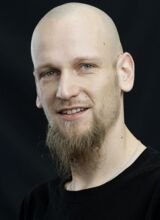
Professor Hakan Ürey has been a faculty member at Koç University since 2001 and currently serves as Vice President for Research and Innovation. He holds a PhD in Electrical and Computer Engineering from Georgia Institute of Technology and leads the Optical Microsystems Laboratory (OML). Education: PhD (1997), Georgia Institute of Technology MSc (1996), Georgia Institute of Technology BS (1992), Middle East Technical University Research Interests: His work spans optical microsystems, MEMS technology, augmented reality displays, and biomedical systems including ophthalmology and neuroscience. Recent projects focus on holographic displays for vision simulation and implantable sensors. Scientific Awards: TÜBA-GEBİP Award TÜBİTAK-Encouragement Award Sedat Simavi Science Award Elginkan Technology Award Outstanding Faculty Award En Başarılı Koçlular Award (multiple times) Labs and Teams: Director of the Optical Microsystems Laboratory (OML), which has produced 60+ licensed patents and five spinoff companies. Collaborated with KUTTAM, KUAR, and N2STAR research centers.
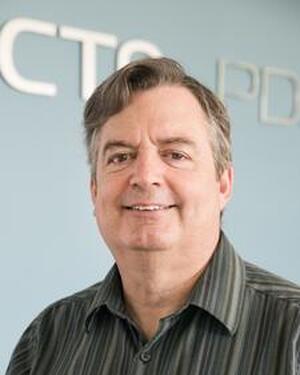
Saeed Ur Rehman serves as a Senior Lecturer in Cybersecurity and Networking within the College of Science and Engineering at Flinders University. He holds leadership positions as Course Leader for BIT and MIT (Networks and Cybersecurity) programs and Deputy Research Section Lead for Data and Information Sciences. His institutional affiliations include membership in the Centre for Defence Engineering Research and Training and the South Australia Cyber Security Innovation Node (SA Node) Advisory Board. Dr. Rehman's educational background includes: PhD in Electrical and Electronic Engineering from the University of Auckland (2015) Graduate Diploma in Higher Education from Unitec Institute of Technology (2016) Master of Engineering from the University of Auckland (2009) BSc Engineering from Pakistan (2004) His research spans cybersecurity, wireless communication, and network security with specific expertise in physical layer security, satellite communication, visible light communication, and fog computing. Dr. Rehman has developed innovative approaches in RF fingerprinting for device authentication and has contributed to vital sign monitoring technologies using radar systems. His work bridges theoretical security frameworks with practical applications in digital agriculture, vehicular networks, and energy harvesting systems. Analysis of his recent publications reveals a strong focus on emerging security challenges in next-generation networks, particularly addressing vulnerabilities in digital agriculture systems, privacy preservation in fog computing environments, and physical layer security enhancements for 6G networks. His research demonstrates consistent interdisciplinary collaboration across computer science, electrical engineering, and healthcare technology domains. Dr. Rehman has received significant recognition including: IEEE Senior Member status (2016) Fellowship from The Higher Education Academy, UK (2019) Cisco Networking Academy instructor certifications (2019, 2022) PhD Completion Award from University of Auckland (2014) As an active researcher and supervisor, he has secured substantial research funding including AUD$810,000 for the SmartSat CRC project (2020), AUD$150,000 from Defence Innovation Partnership (2023), and multiple grants from Flinders University and New Zealand institutions. He supervises PhD and Master's students in cybersecurity, with completed projects focusing on IoT security and privacy-preserving data aggregation, and current projects exploring intelligent reflective surfaces, RF emitter geolocation, and vehicular data communication frameworks. Dr. Rehman contributes extensively to the academic community as an IEEE Senior Member serving multiple societies, conference chair, journal editorial board member, and peer reviewer for numerous publications in his field.
Benoit PICHON is a Full Professor in Material Chemistry at the University of Strasbourg, specializing in Inorganic Materials Chemistry (DCMI). His research focuses on designing new nanomaterials based on transition metal oxides as substitutes for critical raw materials like noble metals and rare earth elements, with applications in energy and data storage. His research interests include the development of core-shell nanoparticles as electrocatalysts for enhanced hydrogen production via water splitting, magnetic sensors enhanced by collective properties of magnetic nanomaterials, and plasmonic biosensors enhanced by nanostructured assemblies of high refractive index nanoparticles. His work bridges fundamental materials science with practical applications in sustainable energy technologies and advanced sensing systems. His recent publications (2020-2025) demonstrate a consistent research trajectory in magnetic nanomaterials, electrocatalysis, and sustainable materials design, with particular emphasis on core-shell nanostructures, exchange-coupled systems, and applications in energy conversion. His work shows strong collaboration with European research groups and has significant implications for sustainable energy technologies. Junior Fellow of Institut Universitaire de France (2016) IdEx award - Espoir de l'Université de Strasbourg (2015) Professor PICHON has supervised numerous PhD students and postdoctoral researchers throughout his career, contributing significantly to the training of next-generation materials scientists. His research has been supported by various national and European funding agencies, enabling the development of advanced characterization facilities and collaborative research networks. His laboratory at IPCMS (Institut de Physique et Chimie des Matériaux de Strasbourg) focuses on the synthesis, characterization, and application of functional nanomaterials, with particular expertise in magnetic nanoparticles, core-shell structures, and their applications in energy conversion and biomedical technologies.
Mircea Rastei is an Assistant Professor in the Department of Organic Materials (DMO) at IPCMS (Institut de Physique et Chimie des Matériaux de Strasbourg), University of Strasbourg. His research focuses on the electronic, magnetic, optical, and quantum mechanical properties of nanostructures using advanced atomic force microscopy techniques. Dr. Rastei's primary research interests include light-matter interaction, local photovoltaic effects, inversion symmetry breaking-driven charge generation, ferroelectric materials for data storage, and the discretization of interactions between solid-state nanostructures. His work bridges fundamental physics with practical applications in nanotechnology and materials science. His recent publications (2020-2025) demonstrate a consistent focus on ferroelectric Bi 2 FeCrO 6 thin films, photovoltaic effects, magnetic properties of nanoparticles, and advanced atomic force microscopy techniques. The research spans multiple disciplines including condensed matter physics, materials science, and nanotechnology, with significant contributions to understanding nanoscale phenomena. Dr. Rastei actively supervises PhD students including Antoine Bagard (2024), X. Henning (2024), M. D. Pichois (2022), and M. A. Hurier (2021), guiding research in ferroelectric materials, photovoltaic effects, and nanoscale characterization techniques. His laboratory features two specialized Atomic Force Microscopes coupled with wavelength-tunable lasers for optical excitation studies from 350-900 nm, enabling advanced photoinduced force microscopy/spectroscopy techniques (hν-CAFM, hν-KPFM, hν-PFM, PiFM-vis).
Tobias Neiß-Theuerkauff, M.Sc., is a researcher at the Institute for Applied Photogrammetry and Geoinformatics (IAPG) within Jade University of Applied Sciences, Oldenburg. His work centers on optical 3D metrology applications in surgical assistance and maritime systems, currently contributing to the ASKAR3D project (2023-2026) funded by the Federal Ministry of Education and Research for developing augmented reality-guided knee arthroplasty systems. His research integrates computer vision, photogrammetry, and AI to solve practical challenges in medical imaging and maritime engineering. Recent publications demonstrate a focused shift toward surgical applications, developing AI-driven 3D bone reconstruction and semantic segmentation techniques for knee arthroplasty, while maintaining expertise in maritime 3D visualization established through earlier work on vehicle simulation and autonomous systems. Supported by significant grants including ASKAR3D and CoSAIR (Collaborative Spatial Artificial Intelligence in Realtime), his project portfolio reflects strong federal funding recognition. He has co-supervised Master's research in Geodesy and Geoinformatics, specifically guiding thesis work on point cloud triangulation for Unreal Engine visualization in 2019. As a core member of IAPG's Laboratory for optical 3D metrology, Neiß-Theuerkauff collaborates with leading researchers including Prof. Dr. Frank Wallhoff and Prof. Dr. Thomas Luhmann, bridging theoretical computer vision with clinical and maritime implementations through interdisciplinary teamwork.
Dr. Darius Popovas is a researcher at the Institute for Applied Photogrammetry and Geoinformatics (IAPG), Jade University of Applied Sciences, Oldenburg, Germany. He is a member of the Laboratory for Optical 3D Metrology, contributing to advancements in photogrammetry and 3D scanning technologies since 2020. His research focuses on photogrammetry , 3D metrology , and virtual simulation , with specific interests in developing laser scanner simulators for digital twin environments, educational applications, and robotic missions. His work integrates computer vision, geomatics, and educational technology to create innovative simulation tools that bridge theoretical research with practical industrial and academic implementations. Between 2020 and 2024, Popovas co-authored six publications demonstrating a progression from foundational simulator development to applications in dynamic scanning and geodetic network planning for robots. This trajectory highlights increasing complexity in virtual scanning technologies, with recent work emphasizing real-time processing, sensor simulation, and integration into digital twin frameworks for industrial and educational contexts. He is a key contributor to the DAAD-funded project "Virtual laser scanner simulator for digitizing the teaching environment" (2019-2024), which develops software for generating simulated 3D point cloud data to enhance teaching methodologies in photogrammetry and geoinformatics through virtual laboratories and digital training resources. Within the IAPG, Popovas collaborates in the Laboratory for Optical 3D Metrology under Prof. Dr. Thomas Luhmann, working alongside a multidisciplinary team including Dr. Maria Chizhova and Dr. Denys Gorkovchuk. The laboratory actively organizes the Oldenburg 3D Days conference series, serving as a platform for disseminating research in optical metrology and fostering industry-academia partnerships.
Dr. Saulius Rudys is a Senior Researcher at the Institute of Applied Electrodynamics and Telecommunications (IAET) within Vilnius University, focusing on electromagnetic engineering and aerospace technology. His work bridges material science with UAV detection systems and radar innovation. Research Interests : Antenna design, dielectric spectroscopy, UAV radar systems, microwave material analysis Projects : Led multiple high-budget UAV detection projects including EU-funded initiatives His recent publications analyze electromagnetic properties of advanced materials and develop counter-UAV systems using marine radar and GNSS antenna arrays. Key themes include: Microwave characterization of ferroelectrics and ferrites UAV detection via FMCW radar Physical layer security for aviation systems Scientific awards highlight his impact in aerospace security: DLR Galileo Masters winner (2013, 2015, 2016) EU SatCom Challenge Prize (2021) Vilnius University Best Applied Work Award (2020) He has contributed to computational electromagnetic analysis and developed methods for dielectric measurements in coaxial lines and waveguides.
Luciano Scaltrito is a Full Professor in the Department of Applied Science and Technology (DISAT) at the Polytechnic University of Turin, where he also serves as a member of the Interdepartmental Center PEIC - Power Electronics Innovation Center and Scientific Advisor for the Partnership Agreement with SPEA. His research focuses on micro and nanotechnologies, power electronics, and MEMS devices. His primary research interests include 3D modeling, capacitive sensors, polymeric 3D printing, solid state physics, and surface micromachining. Professor Scaltrito's work spans the study of packaging technologies for power electronics and MEMS devices, mechanical/electrical/thermal/optical interfaces for electronic devices, lithographic processes for silicon and silicon carbide power devices, and production processes for sensors and actuators. His research aligns with several Sustainable Development Goals including Good Health and Well-being, Quality Education, Clean Water and Sanitation, Decent Work and Economic Growth, Industry Innovation and Infrastructure, and Partnerships for the Goals. His recent publications demonstrate a strong focus on 3D printing applications for electronics and MEMS, power electronics packaging, environmental monitoring sensors, and advanced materials for energy applications. The research spans multiple disciplines including materials science, electronics engineering, environmental engineering, and nanotechnology. President of Italian Association of Science and Technology (2017-2020) Vice President of Italian Association of Science and Technology (2016) Steering Committee member of Italian Association of Science and Technology (2015, 2021) Program committee member for MNE2021 conference Professor Scaltrito actively supervises numerous PhD students across multiple programs including Electrical, Electronic and Communications Engineering, and Sustainable Materials, Processes and Systems for Energy Transition. He leads multiple research projects including SMIP (2024-2027), SIRCEC (2023-2025), and ECOSMARTROAD 2.0 (2021-2023), with funding from regional, national, and EU sources as well as commercial contracts with industry partners. He directs the CHILAB Laboratory in Chivasso, which focuses on materials and microsystems research, and maintains strong industry partnerships through numerous commercial research agreements with companies including SPEA S.p.A. and Dana-TM4 Italia S.r.l.
Prof. Dr. Igor Lesanovsky is a leading researcher in quantum physics at the University of Tübingen, where he heads the Arbeitsgruppe (Research Group) Lesanovsky within the Institute of Theoretical Physics, part of the Faculty of Mathematics and Natural Sciences. His research focuses on quantum many-body systems, particularly utilizing Rydberg atoms for quantum simulation, quantum information processing, and exploring non-equilibrium phenomena. His research interests span quantum many-body physics, Rydberg atom systems, quantum simulation techniques, non-equilibrium quantum dynamics, quantum thermodynamics, and quantum soft-matter physics. His group investigates how highly excited Rydberg atoms can be used to simulate complex quantum processes, study phase transitions, and develop applications for quantum information processing. They're particularly interested in emergent phenomena such as time-crystals, quantum glassiness, and non-ergodic behavior in quantum systems. The publication record shows a consistent stream of high-impact research, primarily in Physical Review Letters, Physical Review A, and other top physics journals. The research trends indicate a strong focus on quantum simulation with Rydberg systems, quantum non-equilibrium dynamics, quantum information applications, and increasingly on the intersection of quantum physics with machine learning. Recent work explores quantum neural networks, quantum measurement theory, and the application of large-deviation methods to quantum trajectory ensembles. Prof. Lesanovsky's research is supported by multiple prestigious projects including the BMBF Quantum Technology project 'Neural quantum networks on NISQ quantum computers', the DFG Excellence Cluster 'Machine Learning: New Perspectives for Science', DFG Research Units on long-range interacting quantum spin systems and quantum thermalization, the EU EIC Pathfinder Project 'Brisk Rydberg Ions for Scalable Quantum Processors', the QuantERA Project CoQuaDis, and The Center for Integrated Quantum Science and Technology (IQST). The group maintains strong connections with experimental teams, particularly in the areas of quantum simulation of interacting many-body systems and the development of matter wave interferometers and collectively enhanced electric field sensors. They collaborate extensively across Germany and internationally, with publications showing co-authorship with researchers from multiple institutions worldwide.
Alessandro Chiumento is an Assistant Professor at the Department of Pervasive Systems, Faculty of Electrical Engineering, Mathematics and Computer Science (EEMCS), University of Twente. His research focuses on artificial intelligence, edge AI, wireless communication, and sensor systems for industrial and health applications. Key Research Areas: Reinforcement Learning, Deep Learning, 5G/6G Networks, Human Activity Recognition Recent publications highlight his work in mmWave radar systems for vital sign monitoring, UAV-based communication networks, and AI-driven resource management for IoT. He has contributed to 5G-RedCap optimization, WiFi network performance analysis, and biomedical sensor development. In 2024-2025, his team released comprehensive datasets for mmWave radar applications, explored non-invasive animal health monitoring, and advanced cross-layer QoS optimization frameworks. Earlier works (2016-2023) addressed Bluetooth mesh networking, LTE interference management, and multi-antenna systems for UAVs. Technical Themes: Spectrum Efficiency, Network Topology, Channel Quality Prediction, Autonomous Agents
Ben Ward-Cherrier is a Senior Lecturer in Robotics at the University of Bristol's School of Engineering Mathematics and Technology. His research focuses on biomimetic tactile sensing, neuromorphic systems for robotics, and haptic interfaces. He develops artificial tactile systems inspired by biological sensory mechanisms for applications in prosthetics, robotic manipulation, and human-robot interaction. Key research areas include neuromorphic tactile sensors that mimic biological afferents, real-time texture and edge classification algorithms, incipient slip detection for stable grasping, and vibrotactile feedback systems. Recent work integrates spiking neural networks with tactile hardware for efficient sensory processing. Publications demonstrate advancement in tactile sensing capabilities, including braille recognition in noisy environments, psychophysics-inspired benchmarking, multi-modal texture/velocity classification, and industrial applications like composite defect detection. Research bridges computational neuroscience with practical robotic systems.
Mozziyar Etemadi, MD, PhD, is an Assistant Professor at Northwestern University, holding dual appointments in the Feinberg School of Medicine (Department of Anesthesiology) and the Mccormick School of Engineering . His research focuses on integrating artificial intelligence with wearable technology to address critical challenges in clinical care, particularly in cardiology, gastroenterology, and maternal health. He leads projects in the Institute for Augmented Intelligence in Medicine and Northwestern University Clinical and Translational Sciences Institute (NUCATS) . **Education**: BS and MS from Stanford University (2008–2009); PhD and MD from University of California, San Francisco (2013–2016). Postdoctoral training included Computer Science at UC Berkeley (2014) and Anesthesiology residency at Northwestern (2021). Board-certified in Anesthesiology. **Research**: Develops AI-driven tools for non-invasive monitoring (e.g., wearable sensors for heart failure, pulmonary pressure estimation) and diagnostic systems in radiology and gastroenterology. Key areas include reducing racial bias in clinical AI, improving radiologist efficiency, and global health applications like fetal ultrasound in low-resource settings. **Awards**: Notable recognitions include Forbes 30 Under 30 in Science (2011) , CIMIT Prize for Primary Care Innovation (2012) , and a Best Paper Award at EICS (2015) . **Industry Ties**: Collaborates with Cardiosense and other entities, focusing on translational AI solutions for clinical challenges. His work balances academic innovation with real-world healthcare impact.
Stephen Brown is an Associate Professor at Queen’s University, jointly affiliated with the School of Environmental Studies and the Department of Chemistry. His expertise lies in developing innovative environmental analysis methods, particularly for detecting small organic contaminants in aqueous samples. He specializes in optical sensor technology and enzyme-based assays, focusing on sensitivity and selectivity in environmental monitoring. His research integrates instrument design, biochemical detection methods, and field applications to address real-world environmental challenges. Dr. Brown holds a B.Sc. (1985) from Dalhousie University, an M.Sc. (1988) and Ph.D. (1992) from the University of Toronto. His work emphasizes practical solutions for water quality assessment, including wastewater surveillance, microbial source tracking, and oil toxicity evaluation. Recent projects include analyzing groundwater contamination patterns, SARS-CoV-2 monitoring in wastewater, and risk assessments for private well users. His research trends reflect a focus on interdisciplinary approaches, combining big data analytics, machine learning, and environmental chemistry. Key themes include improving detection accuracy in dynamic systems, understanding microbial interactions in contaminated environments, and advancing sensor technology for field deployment. He also explores public health dimensions, such as consumer risk perception and behavioral responses to water quality issues. Dr. Brown’s contributions span academic publications, patents (e.g., on switchable ionic strength water and optical sensors), and collaborations with environmental agencies. His lab in Chernoff Hall develops cutting-edge tools for environmental analysis, including enzyme immobilization techniques and fiber-optic sensor systems. His work addresses critical challenges in environmental health and sustainability, with implications for policy and community resilience.