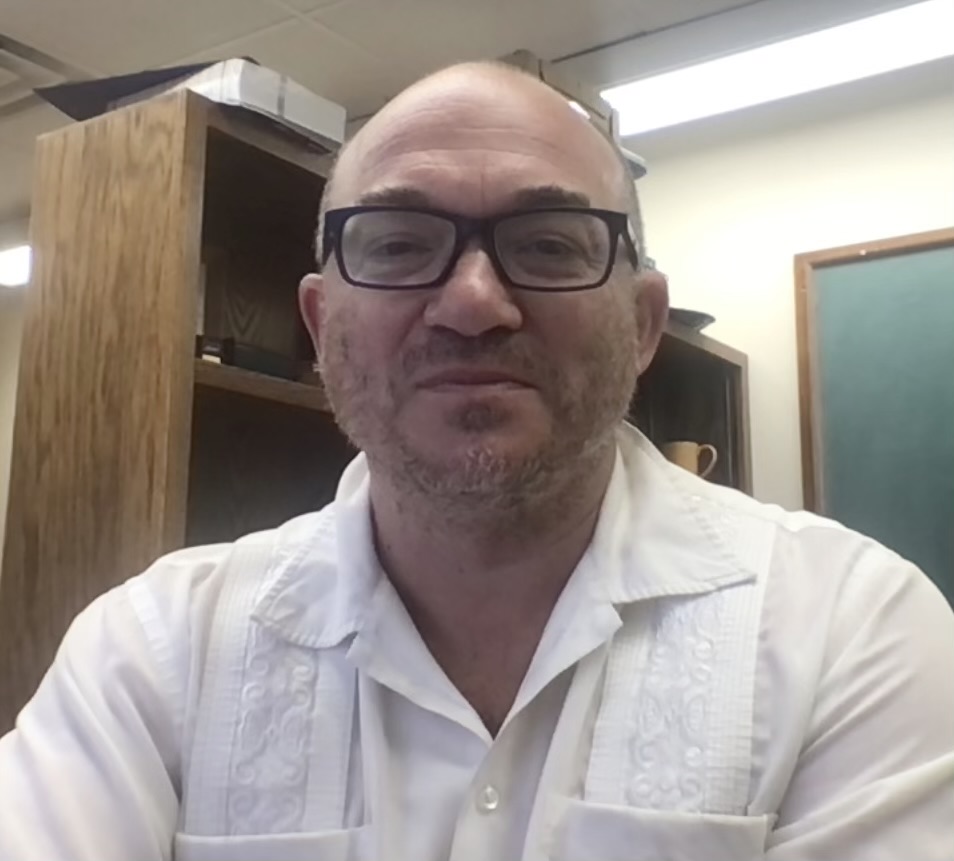
Joseph Bailey is a Professor in the Department of Ecology & Evolutionary Biology at the University of Tennessee, Knoxville. His research focuses on evolutionary ecology, particularly how species interactions link genes to ecosystems, natural selection in community contexts, and scaling genetic processes across geographic and molecular resolutions. He holds a Ph.D. from Northern Arizona University (2003). Education: 2003 – Ph.D., Northern Arizona University Research interests include plant-animal interactions, evolutionary ecology, and the genetic underpinnings of community dynamics. His work integrates molecular, ecological, and evolutionary approaches across diverse systems, including native and invasive species interactions. He has published extensively on topics such as genetic structure of foundation species, plant-microbe interactions, and herbivore-induced ecosystem changes. Lab and Affiliations: His research group operates out of the Joseph Bailey Lab ( http://joebaileylab.com/ ). Publications reflect a focus on community genetics, indirect ecological interactions, and the genetic basis of species interactions.
Professor Anne Wallace is an Adjunct Professor at La Trobe Law School and holds concurrent roles at the University of Denver's Sturm College of Law and Victoria University's Sir Zelman Cowan Centre. She has extensive experience in judicial administration, having served as Head of School at Edith Cowan University and Associate Dean at the University of Canberra. Her research focuses on technology in justice systems, court administration, and Indigenous justice issues. Wallace holds a PhD from the University of Sydney and has authored over 37 scholarly works. Education: LLB (Tasmania), LLM (Melbourne University), Grad Cert Higher Ed (Canberra), PhD (Sydney). Her research explores the integration of ICT in courts, remote witness testimony, and judicial workload management. Notable projects include ARC-funded studies on visual evidence and remote testimony guidelines, and a decade-long Indigenous cultural awareness initiative for judiciary. Recent work addresses post-pandemic court digitalization and Indigenous justice disparities. She has contributed to international collaborations, serving as a visiting expert for CEELI Institute and editorial board member for the International Journal for Court Administration. Her funded research includes the 'Compliance by Design' project under Data to Decisions CRC (2018-2019). Professional activities include judicial training programs, curriculum development for Indigenous justice issues, and advisory roles in court technology policy.
Professor Philip Birch is a distinguished academic in Criminology at the University of Technology Sydney (UTS), Faculty of Design & Society, School of International Studies & Education. With over 15 years of academic experience across British, American, and Australian university systems, he has established himself as a leading expert in policing, community safety, and criminal justice. His extensive practical background in criminology, including roles as a Specialist Crime Team Manager, Community Safety Research Manager, and Through Care Worker in UK correctional facilities, informs his applied research approach. Professor Birch's educational background includes a BSocSci. (Hons) in Social Policy (Crime & Justice) from the University of Manchester, multiple postgraduate qualifications from the Open University (including an MSc. in Social & Criminological Research Methods), a Post Graduate Certificate in Higher Education Practice from the University of Huddersfield, and a PhD in Criminology from the University of New South Wales. He also holds a Fellowship with the Higher Education Academy. His research centers on six key areas: Police & Policing; Community Safety & Crime Prevention; Prisons, Probation & Parole Policy & Practice; Assessment, Treatment & Management of Offenders; Gender & sexuality inclusive Domestic and Family Violence; and Sex Work, Sex Workers and Procurement. His work emphasizes the practical application of criminological research to real-world justice issues, with strong industry engagement across law enforcement and correctional services. Recent publications reveal a clear trend toward police mental health, aging in policing, hate crime identification, trauma-informed policing approaches, and digital community safety initiatives. His research employs diverse methodologies including qualitative case studies, Delphi methods, rapid evidence assessments, and comparative analyses across multiple jurisdictions. Teaching award (2019) from Australian College of Educators for outstanding contribution to education Literati Award (2019) for published work Fellowship of the Higher Education Academy Professor Birch has supervised numerous Honours, Masters by Coursework, Masters by Research and PhD students in Criminology, Criminal Justice and Policing, with several completions to date. He has secured over $1.3 million in research funding, including an ARC Linkage grant, and has acted as an external assessor for domestic and international funding bodies. His research projects address critical issues in criminology and policing, often with direct policy implications. He established the Crime & Security Science (CaSS) Research Group at UTS in 2022, a cross-faculty initiative connecting academia with industry to advance evidence-based criminology, criminal justice, policing, and community safety research. This group serves as a hub for collaborative projects addressing contemporary security challenges through translational research.
Professor Gregor Verbic is a faculty member at the University of Sydney in the School of Electrical and Computer Engineering , where he serves as Director of the Centre for Future Energy Networks . Previously, he held an assistant professor position at the University of Ljubljana and was a NATO-NSERC Postdoctoral Fellow at the University of Waterloo. His career spans academic research, industry leadership as Head of Interenergo's Investment Department, and extensive collaboration with IEEE. PhD in Electrical Engineering (University of Ljubljana) Senior IEEE Member Research Interests focus on transforming power systems to zero-carbon grids through: Aggregation and control of distributed energy resources (DERs) Frequency control with wind generation and electric vehicles Stochastic optimization for multi-energy systems Smart home energy management with phase change materials Notable Contributions include: 2006 IEEE prize paper for voltage instability prediction 2010-2024: 15 recent publications on DER coordination, network tariffs, and low-inertia grid stability Teaching includes courses on: ELEC3203/ELEC9203: Electricity Networks ELEC5213: Engineering Optimisation ELEC5206: Sustainable Energy Systems Labs & Initiatives Centre for Future Energy Networks The Net Zero Institute
Professor Dylan Jones is a Professor of Operational Research at the University of Portsmouth within the School of Mathematics and Physics. He holds dual affiliations with the Centre for Operational Research and Logistics and the Centre of Excellence in Defence, Risk & Resilience. His academic journey includes a BSc (Hons) in Mathematics with Operational Research from the University of Southampton and a PhD in Operational Research from the University of Portsmouth. Specializing in Multi-Criteria Decision Making (MCDM), his research spans logistics, healthcare, renewable energy, and defense applications. He has led over 18 PhD theses and secured EU funding for projects focused on offshore wind energy and sustainable logistics. Professor Jones is also the Director of the Centre for Operational Research and Logistics, emphasizing strategic port development and disaster risk reduction. His work integrates advanced methodologies like goal programming and mixed modeling to address complex real-world challenges. Recent contributions include frameworks for offshore wind farm logistics, sustainable port selection, and resilience-based maintenance strategies. Education: BSc (Hons) in Mathematics with Operational Research, University of Southampton PhD in Operational Research, University of Portsmouth Research interests revolve around applying operational research principles to solve multi-objective problems in logistics, healthcare systems, and renewable energy sectors. His work emphasizes sustainability, decision-making under uncertainty, and optimizing resource allocation. Key projects include developing methodologies for offshore wind energy infrastructure and analyzing risk in maritime logistics. His research outputs (109+ publications) focus on advancing operational research techniques, with notable contributions to goal programming, logistics optimization, and multi-criteria decision analysis. He collaborates internationally, particularly in Brazil, France, Spain, and Portugal, to address global challenges in sustainable energy and infrastructure. Labs/Teams: Centre for Operational Research and Logistics Centre of Excellence in Defence, Risk & Resilience
Sahar Pirooz Azad is an Assistant Professor in the Department of Electrical and Computer Engineering at the University of Waterloo. She holds a PEng designation and specializes in power systems engineering, particularly in HVDC systems and grid stability. Previously, she served as an Assistant Professor at the University of Alberta (2015–2017) and conducted postdoctoral research at the University of Toronto’s CAPE Centre and KU Leuven in Belgium. Her research focuses on enhancing power grid stability through advanced control schemes for HVDC grids, converter modeling, and fault protection mechanisms. Dr. Azad’s work addresses challenges in multi-terminal HVDC systems, offshore wind grid integration, and multi-vendor system compatibility. She has taught courses like Power System Protection and Relaying (ECE 765) and Electromechanical Energy Conversion (ECE 260), reflecting her expertise in both theoretical and applied electrical engineering. Her recent publications emphasize innovative protection schemes for HVDC grids, fault detection algorithms using signal processing (e.g., Hilbert-Huang Transform), and robust controller designs for multi-vendor VSC systems. These contributions aim to improve grid reliability, fault resilience, and renewable energy integration efficiency. Dr. Azad is actively recruiting graduate students and holds Sole-Supervisory Privilege Status (SSPS) at Waterloo. Her research has been supported by European Commission-funded projects like MEDOW and leverages interdisciplinary approaches to tackle modern grid challenges.
Sayfe Kiaei is a Professor in the School of Electrical, Computer and Energy Engineering at Arizona State University (ASU), where he also directs the Connection One Center, an NSF I/UCRC Center. He holds the Motorola Chair in Analog and RF Integrated Circuits. Previously, he served as a professor at Oregon State University (1987–1993) and worked at Motorola’s Wireless Technology Center (1993–2001), contributing to wireless communications and broadband systems. Education: Ph.D. in Electrical and Computer Engineering from Washington State University (1987). Research focuses on RF/analog/digital integrated circuits, transceiver design, sensors, and power management. His work is funded by agencies like DARPA, NSF, DOE, and industrial partners. Key achievements include establishing two Industry-University Cooperative Research Centers (CDADIC and Connection One) and over 200 publications. He is an IEEE Fellow and has led technical committees for major conferences (RFIC, ISCAS, MTT). Industry collaborations span companies like Intel, Samsung, Texas Instruments, and Motorola, with expertise in 3G-4G wireless, bioelectronics, Bluetooth, GPS, and MEMS sensors. Awards include IEEE Fellow status (2002–present) and leadership roles in IEEE editorial and conference committees. Grants and projects include the NSF I/UCRC for Power Management Circuits, DARPA-funded research, and international initiatives like the Pakistan Centers for Advanced Studies in Energy. His lab develops cutting-edge technologies in full-duplex radios, MEMS-based sensors, and energy-efficient IC design.
Professor David Alldred is a Professor of Medicines Use and Safety at the University of Leeds' School of Healthcare, within the Faculty of Medicine and Health. His expertise spans medicines optimisation, patient safety, deprescribing, and care home medication management. He leads key research initiatives such as the NIHR Yorkshire and Humber Patient Safety Research Collaboration's 'Decluttering Safely for Safety' theme and co-leads the School of Healthcare's Quality and Safety research theme. Education: PhD (clinical research on care home medication review), MSc in Clinical Pharmacy, PGCert in Learning and Teaching, and BPharm (Hons). Professional memberships include Fellowships of the Royal Pharmaceutical Society and the Higher Education Academy. Research focuses on improving medication use for older adults in care homes and underserved populations, employing systematic reviews, qualitative studies, and RCTs. Notable projects include the CHUMS study (Department of Health-funded medication error analysis in care homes) and leadership roles in NIHR Programme Grants like CHIPPS and CHARMER. He collaborates with NHS England to implement medicines optimisation programs and co-designed multilingual medication review resources to reduce health inequalities. Awards include the Pharmacy Practice UK Research Award (2015) and NIHR Senior Investigator status (2025). His work emphasizes translating evidence into clinical practice, with over 150 publications and supervising NIHR-funded doctoral students in critical care, diabetes, cystic fibrosis, and geriatrics. Led the Care Homes' Use of Medicines Study (CHUMS), contributed to NICE guidelines for care home medicines management, and developed interventions like the Medicines at Transitions Intervention (MaTI) for heart failure patients. His research themes address polypharmacy reduction, medication safety across care transitions, and pharmacist-led deprescribing strategies.
Associate Professor Steven Lu is a faculty member at the University of Sydney Business School, serving as Deputy Head of Discipline (Education). He holds a PhD in Marketing from the University of Toronto, an MA in Economics from York University, and a BA from Nankai University. His research focuses on quantitative modeling, machine learning, and big data analytics applied to digital economy challenges such as digital retailing, search advertising, and blockchain. He co-directs the Consumer Insights Research Group and is affiliated with the Sydney Institute of Agriculture. Dr. Lu has published in top journals including Marketing Science , Production and Operations Management , and Journal of Retailing . His awards include the CNS Vithala Rao Award, ANZMAC Best Paper Awards (2022-2024), and the 2021 Vice Chancellor's Teaching Award. He teaches courses on machine learning in marketing, marketing research, and new product development. He leads research grants such as 'The Era of Mobile Payment' (2021) and 'Digital Transformation of Food Sensory Quality' (2017). His advising focuses on topics like neural recommender systems, e-coupon effectiveness, and heterogeneous treatment effects analysis.
Profile Roles and Affiliations: Michael Smets is a Professor of Management at the Saïd Business School, University of Oxford. He is also a Research Fellow at Green Templeton College and a member of the Centre for Professional Service Firms. His academic contributions span institutional theory, practice theory, and strategic management. Education: Bachelor’s equivalent in Business and Economics, Cologne University, Germany MSc in Management Research, Saïd Business School DPhil in Management, Saïd Business School Postdoctoral Researcher at Saïd Business School and University of Alberta’s School of Management Research Interests: Michael’s work examines professional service firms (PSFs) through three core lenses: Global Operations: Internationalisation challenges in law, consulting, and reinsurance firms, with a focus on institutional complexity and regulatory systems. Innovation & Career Systems: How evolving career structures in PSFs can simultaneously drive innovation and address work-life balance demands. Recent studies highlight ambidextrous career paths and their strategic leverage. Methodological Innovation: Pioneering video- and team-ethnography to capture micro-level organisational practices. His ‘fly on the wall’ study at Lloyd’s of London is a landmark in this domain. Academic & Industry Impact: His research has been translated into industry-relevant outputs, including reports for the reinsurance sector and handbooks for legal firms. The 2013 ESRC Award for Outstanding Impact in Business recognises this translational work. Academically, he has received the 2012 Academy of Management Journal Best Article Award and multiple best paper awards. Teaching & Executive Education: Michael teaches strategic management, innovation, and business development in executive programmes for Commerzbank, Deloitte, and other global firms. He is Programme Director for the Oxford Leading Professional Service Firms Programme, emphasizing interactive, case-study driven pedagogy. His teaching philosophy prioritises critical thinking over rigid models, as he states: ‘It is critical to understand under which circumstances which models work, and which ones don’t.’ Labs & Collaborations: Affiliated with the Centre for Professional Service Firms and the Oxford Initiative on Rethinking Performance. He collaborates with institutions like Cass Business School and Aston Business School on ethnographic studies. His work also intersects with the Insurance Institute of London and the International Bar Association for practitioner-focused outputs.
Laura Albert is a Professor of Industrial & Systems Engineering at the University of Wisconsin-Madison and former David H. Gustafson Department Chair (2021-24). She serves as a Fellow of AAAS and IISE, and previously held the INFORMS presidency. Her research focuses on optimizing public-sector systems, with applications in critical infrastructure protection, emergency response, and cybersecurity. She advocates for public engagement through op-eds and blogs like 'Punk Rock Operations Research.' Education: PhD in Industrial Engineering, University of Illinois at Urbana-Champaign (2006) MS in Industrial Engineering, University of Illinois at Urbana-Champaign (2001) BS in Industrial Engineering, University of Illinois at Urbana-Champaign (2000) Research Interests: Dr. Albert’s work bridges operations research and public policy, addressing challenges in emergency medical services, voting system security, law enforcement strategies, and opioid treatment diversion programs. She employs mathematical optimization, game theory, and stochastic modeling to design resilient systems. Awards: INFORMS Impact Prize (2018) NSF CAREER Award (2011) Fulbright Award (2020) AAAS Fellow (2020) Advising & Grants: While explicit student names aren’t listed, her research has been supported by grants from the NSF, Army Research Office, and other agencies. She advises on interdisciplinary projects involving public health, cybersecurity, and disaster management. Labs/Teams: Engaged in collaborative efforts across the College of Engineering, including affiliations with the Electrical & Computer Engineering department. Leads initiatives on resilient infrastructure and emergency response systems.
Christoph Bostedt holds dual appointments as a Professor of Physical Chemistry at the Ecole Polytechnique Fédérale de Lausanne (EPFL) and as Head of the Laboratory for Synchrotron Radiation and Femtochemistry (LSF) at the Paul Scherrer Institut (PSI). He leads strategic operations for the LSF, managing five research groups and overseeing four beamlines at the Swiss Light Source and the Alvra Endstation at SwissFEL. His research focuses on ultrafast x-ray science, including single-shot imaging, non-linear x-ray spectroscopy, and femtosecond pump-probe techniques. He collaborates globally on initiatives like the Athos project, aiming to advance ultrafast x-ray technologies. Bostedt has over 150 publications and is a Fellow of the American Physical Society, recipient of the Röntgen Prize. Education: Ph.D. from the University of Hamburg with research at Lawrence Livermore and Berkeley National Laboratories. Prior roles include leadership at Argonne National Laboratory and SLAC National Accelerator Laboratory. Research Interests: Single-particle imaging and coherent diffraction X-ray free-electron laser applications Ultrafast dynamics in nanoparticles and molecular systems Non-linear x-ray spectroscopy Time-resolved x-ray pump-probe methods Awards: Fellow of the American Physical Society Röntgen Prize (University of Giessen) Labs & Projects: Spearheads the Athos beamline project at SwissFEL, developing the Maloja endstation for ultrafast x-ray studies. Oversees the Laboratory for Femtochemistry and collaborates on advanced imaging techniques for nanoscale science.
Angela Kou is an Assistant Professor in the Department of Physics at the University of Illinois at Urbana-Champaign, specializing in the intersection of quantum information science and condensed matter physics. Her laboratory develops novel superconducting circuit elements and qubits, while also utilizing superconducting circuits to investigate topological materials with potential applications in quantum computing. She actively seeks postdoctoral researchers and graduate students to explore superconducting qubit engineering and quantum material sensing. Her research integrates quantum information , topological materials , and superconducting circuit design . Recent publications demonstrate expertise in fluxonium qubit control , quantum dot Josephson junctions , and parafermion zero modes in exotic heterostructures. She contributes to advancing cryogen-free dilution refrigerator technology for scanning probe microscopy applications. Current research trends focus on quantum coherence optimization , phase-slip qubit operation , and vibration mitigation in cryogenic systems. Her work receives support from the Air Force Office of Scientific Research, Army Research Office, IBM-Illinois Discovery Accelerator Institute, and the National Science Foundation. Collaborations span multiple institutions, with key partnerships at Stanford University and SLAC National Accelerator Laboratory. Her technical contributions include microwave impedance microscopy , scanning single-electron transistor measurements , and vibration analysis for quantum device stability.
Prof Lars Olsen is a Professor in the School of Mathematics and Statistics at the University of St Andrews, based in the Mathematical Institute. His research focuses on fractal geometry, dynamical systems, and analysis, with particular emphasis on multifractal theory and metric number theory. He has supervised PhD student Luke Derry and has published extensively in peer-reviewed journals such as Monatshefte für Mathematik , Mathematische Zeitschrift , and Acta Mathematica Hungarica . His work explores intricate mathematical structures such as fractal dimensions, measure-theoretic properties of metric spaces, and applications to number theory. Recent studies include analyses of digit frequencies in infinite iterated function systems, exponential densities of integer subsets, and average distances in self-similar fractals. These contributions bridge pure mathematics with applications in understanding complex natural phenomena through geometric and analytic frameworks. Prof Olsen’s research portfolio demonstrates a strong focus on advanced mathematical analysis, with over 30 peer-reviewed publications since 2017 alone. His investigations into Hewitt-Stromberg measures and Gromov-Hausdorff-Prohoroff spaces exemplify his commitment to advancing foundational theories in fractal geometry and measure theory. Collaboration with international researchers has yielded multidisciplinary insights into topics like Lq-dimension analysis and topological dynamics of continuous functions.
Prof. Jack van der Vorst is the Personal Professor of AgriFood Supply Chain Logistics at Wageningen University's Operations Research and Logistics Group. Previously serving as a member of the Board of Directors of Wageningen University & Research (until 2024) and General Director of the Social Sciences Group, he leads over 1000 personnel across three institutes. His advisory roles include the Topteam AgriFood (Science Captain), Top consortium for Knowledge and Innovation (TKI), The Sustainability Consortium (TSC), and Florensis BV's Supervisory Board. With 20+ PhD supervisions and 200+ publications, his research focuses on innovative logistics concepts in AgriFood systems, including supply chain resilience, sustainability, and system innovation. His work integrates modeling frameworks with practical industry applications, emphasizing perishable products, horizontal collaboration, and environmental efficiency. Research interests span AgriFood System Design, Supply Chain Strategy, and Performance Management. His recent studies address challenges like postharvest loss reduction in developing countries, CO2 emission minimization in cold chains, and circular economy implementation in mushroom supply chains. Methodologically, he employs multi-criteria decision models, optimization techniques, and simulation to address complex logistics problems. Publications highlight themes such as horizontal collaboration success factors, vulnerability assessment frameworks, and green supply chain design. His work bridges academic rigor with industry needs, often collaborating with policymakers and international organizations to promote sustainable agri-food systems.