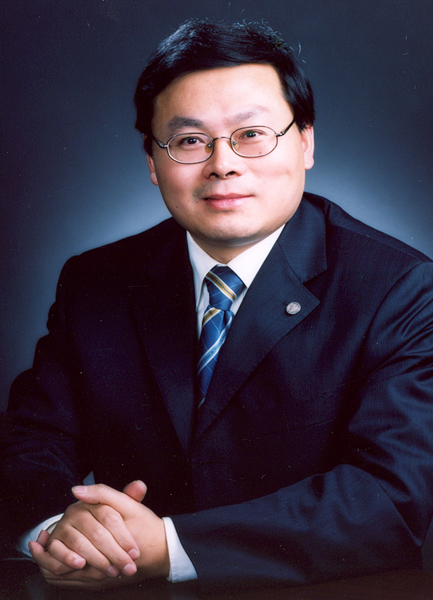
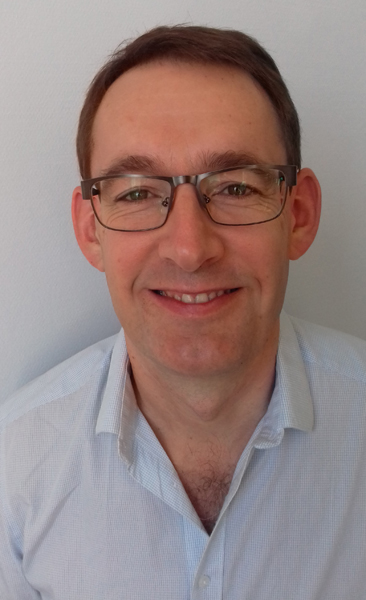
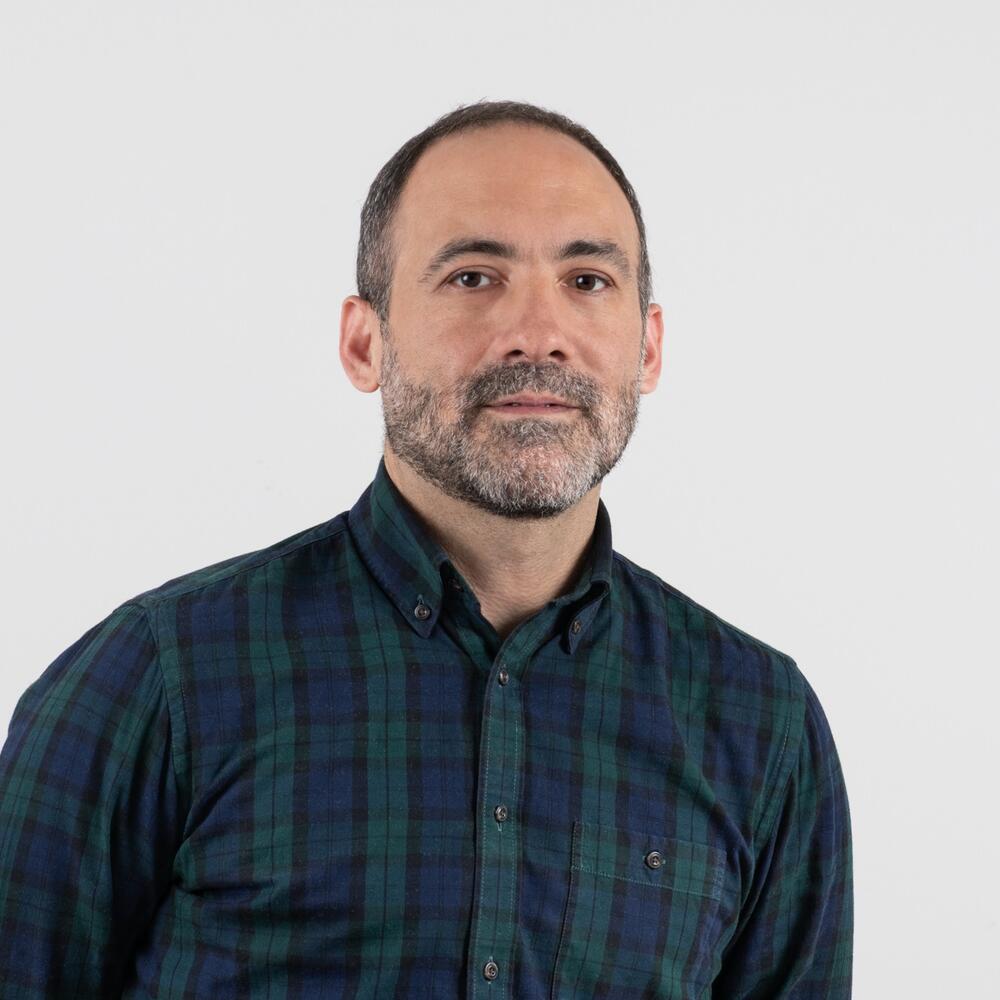
He Chengzhou is a full Professor of English, Drama, and Comparative Literature, and currently serves as Dean of the School of Arts at Nanjing University. He holds a Doctor of Arts from Oslo University, following B.A. and M.A. degrees from Nanjing Normal University. His academic leadership roles include Chinese Co-Director of the Johns Hopkins University-Nanjing University Center for Chinese and American Studies (2013-2017), President of Jiangsu Comparative Literature Association (2016-present), and former Chairman of the International Ibsen Committee (2010-2012). Research focuses on Henrik Ibsen, Scandinavian literatures, intercultural theatre, and comparative drama. Key works include (2004) and (2009). He has been honored with the Ibsen Medal (2002) and the prestigious Changjiang Distinguished Professor title (2015). Professional contributions include directing the Chinese-Nordic Cultural Centre and European Studies Centre at Nanjing University. His academic trajectory spans over three decades, with influential publications in intercultural performance, gender studies, and environmental literary analysis.
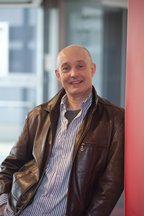
Edward Muir is the Clarence L. Ver Steeg Professor in the Arts and Sciences and Charles Deering McCormick Professor of Teaching Excellence at Northwestern University, with joint appointments in the Department of History and Italian Studies at Weinberg College of Arts and Sciences. His academic journey includes a B.A. from the University of Utah (1969), an M.A. (1970), and Ph.D. (1975) in Modern European History from Rutgers University, including a Semester in Italy Program at Syracuse University (1967). Muir's research explores the intersection of ritual, violence, and power in Renaissance Europe, with emphases on Italian history, microhistory, and cultural anthropology. His work examines civic ceremonies, gender exclusion, and the sociopolitical underpinnings of early opera. Key themes include the anthropology of Venice, religious processions, and community formation in pre-modern societies. His scholarly publications reveal a consistent focus on Renaissance cultural practices, Venetian society, and methodological innovations in microhistory. Recent works analyze opera's emergence in 17th-century Venice, anti-war movements, and gendered public spaces, blending archival rigor with interdisciplinary theory. Awards and Honors: Herbert Baxter Adams Prize (1982) Two-time Howard R. Marraro Prize winner (1982, 1993) Andrew W. Mellon Foundation Distinguished Achievement Award (2010, $1.5 million) Fellow, American Academy of Arts and Sciences (2014) Charles Deering McCormick Professorship for Teaching Excellence (2006) Muir has held major administrative roles including Department Chair at Northwestern and LSU, co-directed the Graduate Program in Italian Studies, and served on editorial boards for journals like the American Historical Review . He mentors through graduate programs but no specific student advisees are listed.
Hervé Lacombe is a Professor of Musicology at the University of Rennes 2, where he has held a faculty position since 2002. He serves as Director of the Music Department (2009-2011, 2022-2023) and previously as Head of the Master's degree in Music and Musicology (2016-2019, 2020-2022). Recognized for his scholarly contributions, he became a Senior Member of the University Institute of France (IUF) in 2023 and is a member of the Academia Europaea. His academic leadership extends to the History and Criticism of Arts Research Unit (UR 1279) and editorial roles including Head of the 'Studies' series for the French Musicology Society publications. Lacombe's research centers on French music from the 19th to 21st centuries, with particular focus on opera history, lyrical dramaturgy, and the globalization of opera. His work explores interdisciplinary connections between music and other arts, cultural contexts of musical production, and historiographical approaches to musicology. He is internationally recognized as a leading authority on composers Bizet and Poulenc, having authored definitive biographies on both. His most significant scholarly achievement is the three-volume 'Histoire de l'opéra français' (2020-2022), a comprehensive history involving nearly 200 international collaborators. This monumental work has received multiple prestigious awards including the René Dumesnil Prize (2020) and the France Musique Claude Samuel Grand Prix du Livre (2021). His earlier works 'Les Voies de l'opéra français au XIXe siècle' (1997) and 'Bizet' (2000) also garnered significant recognition from the Academy of Fine Arts and French Academy. Bernier Prize from the Academy of Fine Arts (1997) Eugène Carrière History Prize from the French Academy (1998) Bordin Prize from the Academy of Fine Arts (2001) Grand Prix des Muses (2014) France Musique Claude Samuel Grand Prix du Livre (2021) Lacombe has directed eight doctoral theses to completion and currently supervises two more. His international influence extends through keynote addresses at institutions worldwide including Keele University, the University of Montreal, and the Kyiv Music Academy. He regularly contributes to opera programs for major international opera houses and has participated in numerous radio broadcasts and documentaries on French musical heritage.
Luca Zoppelli is a Professor of Musicology at the University of Fribourg, Switzerland, since 2000. Previously, he held academic positions at the University of Salento (1993–1998 as Lecturer, then Associate Professor) and taught at several Italian conservatories including Padua, Vicenza, and Lecce. His research focuses on 19th-century opera, Venetian music history, musical dramaturgy, and the aesthetics of Baroque music. He co-directs the critical edition of Vincenzo Bellini's works and served as editor of the Schweizer Jahrbuch für Musikwissenschaft / Annales Suisses de Musicologie (2008–2019). Education: Studied Musicology and Literature at Ca' Foscari University in Venice (B.A., 1984 under Giovanni Morelli). Specialized in Baroque music aesthetics, operatic narrative structures, and the interplay between music and drama. His work bridges historical analysis with contemporary musicological methodologies. Research interests prominently feature operatic composition processes, the role of narrative in music, and the socio-political dimensions of 19th-century Italian opera. His publications critically analyze composers like Rossini, Verdi, Wagner, and Bellini, with notable contributions to understanding musical dramaturgy and the evolution of operatic forms.
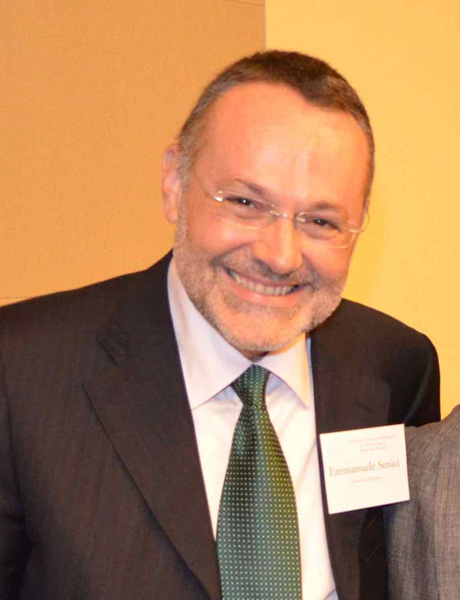
Emanuele Senici is a Full Professor of Music History at Sapienza University of Rome, where he has been teaching since January 2008. Prior to this, he held significant academic positions at the University of Oxford as Reader in Musicology (2006-2007) and University Lecturer in Music (2000-2006), with additional appointments as Tutorial Fellow at St. Hugh's College. His academic career also includes a Junior Research Fellowship at Christ Church, Oxford (1998-2000) and prestigious visiting appointments at King's College London (2009-2023) and Cambridge University (2023). Senici earned his Laurea in Musicology from the University of Pavia (1993), participated in an Erasmus program at King's College London (1992), and completed his MA (1996) and PhD (1998) at Cornell University. His doctoral research focused on Mozart's 'La clemenza di Tito' and its reception in the first thirty years after its premiere. His scholarly work centers on Italian opera of the long nineteenth century, with particular attention to issues of genre, gender, and the historiography of opera. Senici's research explores the intersection of music with broader cultural, political, and technological contexts, examining how opera functions both as historical document and living performance tradition. A significant portion of his recent scholarship investigates opera on screen and in digital media, analyzing how film and television adaptations transform operatic works and their reception. Senici's most recent publications (2023-2025) demonstrate a continued focus on nineteenth-century Italian opera while expanding into new areas of media studies and cultural geography. His work consistently bridges historical musicology with contemporary theoretical frameworks, particularly in gender studies and media studies, showing how historical operatic works remain relevant through modern reinterpretations and adaptations. Leverhulme Visiting Professor (2023) Visiting Professor of Music, King's College London (2009-2023) Edward T. Cone Member, Institute for Advanced Study, Princeton (2006) Jerome Roche Prize, Royal Musical Association (2002) Donald J. Grout Memorial Prize, Cornell University (1997) As an educator, Senici has supervised numerous graduate students and served as Director of Graduate Studies at Oxford. His current teaching at Sapienza includes undergraduate courses on music history and graduate seminars on the medial history of musical theater. He has made significant contributions to academic service through editorial board memberships for major journals including Acta Musicologica, Opera Quarterly, and Il Saggiatore Musicale, and previously served as co-editor of the Cambridge Opera Journal (2003-2008).
Christoph Strehl is a Professor of Singing at the Mozarteum University in Salzburg, specializing in vocal studies and opera training since 2013. A renowned tenor, he has performed internationally with major opera houses and orchestras, collaborating with conductors like Claudio Abbado and directors including Claus Guth. His career spans key roles in Mozart operas (Don Ottavio in Don Giovanni , Tamino in The Magic Flute ), Beethoven's Fidelio , and Schubert's Fierabras . He has recorded extensively for labels like Deutsche Grammophon and EMI, with notable albums including Die Zauberflöte (2007) and Das Paradies und die Peri (2008). His teaching emphasizes creative process integration and vocal technique, supported by masterclasses with luminaries such as Axel Bauni and Norman Shetler. Education: Studied at Folkwang University (Essen) with Soto Papulkas and privately with Silvana Bazzoni-Bartoli in Zurich. Professional milestones include a 9-year tenure at Zurich Opera House (2002-2011) and Salzburg Festival debuts in 2003 and 2019. Active in recitals with pianists like Helmut Deutsch and Pauliina Tukiainen.
Thierry Favier is a Professor at the University of Poitiers , France, since 2010. He holds academic affiliations with the Institut Universitaire de France (2023) and has held visiting positions at prestigious institutions including the University of Zurich , Oxford University , and Heidelberg University . His research focuses on Baroque music , with emphasis on sacred music , French cultural identity , and musical historiography . Doctorate (1997) and Habilitation (2009) from leading French institutions Co-directed major research programs funded by ANR, CNRS, and regional governments Editorial leadership in Eighteenth-Century Music (2017) His scholarly work analyzes the intersection of music and power , musical ethics , and cultural exchange in early modern Europe. Recent publications explore topics like the Italian motet’s influence in France and post-Lullian musical identity . He has received significant recognition for scientific excellence and mobility fellowships. Favier has served as Chair of the Commission of Scientific Expertise (2014–present) and Head of the Music Department (2014-2017) at Poitiers. He has presented at institutions such as the Ecole Normale Supérieure , Gulbenkian Foundation , and Cardiff University , contributing to global discourse on Baroque and Enlightenment-era music.
Amélie Niermeyer serves as University Professor of Acting & Directing and Department Head at the Thomas Bernhard Institute, Mozarteum University Salzburg since 2011. Her distinguished career spans theatre and opera direction across major European venues including Residenztheater Munich, Thalia Theater Hamburg, Deutsches Theater Berlin, and Vienna State Opera. Her research interests center on theatrical interpretation of classical and contemporary texts , with specialization in German-language drama, opera direction, and cross-disciplinary performance practices. She has pioneered innovative approaches to Shakespeare, Chekhov, and modern playwrights like Branden Jacobs-Jenkins, consistently collaborating with leading actors including Juliane Köhler. Recent artistic output reveals sustained engagement with Russian literary adaptations (Anna Karenina, Uncle Vanya) Verdi's operatic canon (La Traviata, Otello) European modernist traditions (Chekhov, Ibsen) while maintaining active direction in both German-speaking and international contexts through 2025. Notable honors include: Munich Promotion Prize for Spring Awakening Nestroy Award Nomination (2020) for Cherry Orchard Niermeyer maintains dual practice as academic leader and active director, currently preparing 2025 premieres of Buddenbrooks (Schauspiel Stuttgart) and La Traviata (Opéra de Dijon) while overseeing curriculum development at Mozarteum's Thomas Bernhard Institute. Her work consistently bridges academic training with professional production demands across theatre and opera disciplines.
Everist Mark Egerton is a Professor of Music at the University of Southampton and holds leadership roles as Associate Dean (Research) in the Faculty of Humanities and Director of the Humanities Graduate School. His academic career spans over four decades, including previous positions at King’s College London and visiting professorships across Europe and Australia. Specializing in Western European music from the medieval period to the 19th century, his research explores themes like cultural transfer, music historiography, and digital musicology. Key scholarly contributions include works on 19th-century French stage music, Mozart's posthumous reception, and medieval polyphony. He has secured major grants such as the £593,470 AHRC award for his 'Cantum pulcriorem invenire' project. His awards include the American Musicological Society’s prestigious Ruth A. Solie and H. Colin Slim prizes for scholarly excellence. Egerton’s academic leadership includes overseeing research strategy at Southampton and directing interdisciplinary graduate training. His work bridges historical analysis with modern methodologies, reflected in publications like *The Cambridge Companion to Medieval Music* and *Mozart’s Ghosts*. He has collaborated internationally, contributing to musicological encyclopedias and editing critical editions of medieval manuscripts.
Christiane Fischer is the Director of the Vienna Singing School since 2006 and has been affiliated with the Music and Arts University of the City of Vienna since 2005. She holds a background in oboe, singing, and music pedagogy from the Stuttgart University of Music and Performing Arts, with postgraduate studies at the Stuttgart Opera School. Her career includes leadership roles in youth music education, including directing the Heidelberg Children's and Youth Choir (1998–2005) and establishing the Vienna-wide Children's and Youth Choirs in 2006. She oversees a 42-member faculty at the Vienna Singing School, supporting ~4,000 children across 54 locations. Key initiatives include the annual 'Festive Singing' event at the Vienna Konzerthaus (featuring 800 students) and the 'Christmas Singing' at St. Stephen's Cathedral (400 singers). In 2018, she led the Vienna Girls' Choir on a successful tour of China. She is a sought-after lecturer in vocal training and choir conducting, with workshops in Austria, Germany, Italy, and Taiwan, and serves as a judge at international choir competitions. Her work emphasizes artistic-scholarly research through MUK's doctoral program, though specific grants or labs are not detailed. Contributions to music education and youth performance have solidified her role as a leader in European music pedagogy.
Noemi Fischer is a Lecturer in Voice and Speech at the Music and Arts University of the City of Vienna (MUK). She holds a Mag.a in Germanistics/Anglistik from the University of Vienna and a drama diploma from the paritätische Prüfungskommission Wien, studying under Eva Zilcher. Her artistic focus centers on structures blending movement, word, music, and gesture between improvisation and composition, with a specialization in choral work. She has led projects such as Hand Aufs Herz (founded 2019), Bahamut Productions (2011–2015), and Rosengewitter (2000–2010). Her teaching roles include voice and speech coaching at MUK since 2018, former positions at the Schauspielschule Innsbruck (2010–2015), and acting as a drama coach at Tanz*Hotel Wien (2015–2020). She also works as a voice-over artist for ORF radio and television documentaries. Fischer’s training spans contemporary dance, Alexander Technique, Feldenkrais, yoga, qi gong, and Centered Riding. Her coaching includes workshops for actors, performers, dancers, and non-artistic professionals, emphasizing vocal and textual performance. She actively engages in music theater collaborations, with select works documented on Vimeo platforms.
Lisandro Abadie is a Universitätsprofessor (Professor) of Voice (Baroque) at the Department of Early Music, Mozarteum University Salzburg. He specializes in Baroque opera and historical performance practice, combining a distinguished singing career with scholarly research. Born in Buenos Aires, he trained at the Schola Cantorum Basiliensis and Lucerne School of Music, receiving the Edwin Fischer Memorial Prize (2006). His roles include Monteverdi's 'L'Orfeo', Charpentier's 'Médée', and Handel's operas, collaborating with renowned ensembles like Les Arts Florissants. Abadie's research focuses on vocal technique history, manuscript analysis, and performance practices. He teaches at the Schola Cantorum Basiliensis and Mozarteum University, conducting masterclasses worldwide. Notable publications include translations of Caccini's writings and studies on vibrato in early music. Upcoming performances include Charpentier's 'Médée' at Paris' Opéra and Madrid's Teatro Real (2024). Education: Schola Cantorum Basiliensis, Lucerne School of Music Key Collaborations: William Christie, Les Arts Florissants, Collegium 1704 Research: Historical vocal techniques, Ullmann's opera manuscripts Teaching: Advanced Vocal Ensemble Studies program, Venice Madrigal Weeks His 60+ recordings span from Monteverdi to Viktor Ullmann, emphasizing period-informed performances. Current projects include a book on historical vibrato practices and stage productions of Baroque masterpieces.
Private University of Music and Arts of the City of ViennaAustria
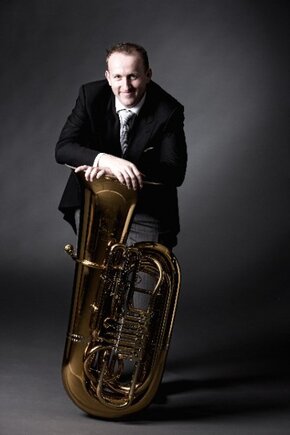
Paul Halwax is a lecturer at the Music and Arts Private University of the City of Vienna, where he has taught since 2000. He directs the kons.wien.brass Ensemble and maintains an active performance career with the Vienna State Opera and Vienna Philharmonic. His background includes studies at the Vienna University of Music and Performing Arts, where he graduated with distinction in bass tuba performance under Prof. Nikolaus Schafferer. Halwax performs extensively with Vienna Philharmonic chamber groups including Trompeterchor, Ensemble 11, and Wien Brass Ensemble. His career began with the Vienna State Opera in 1997, followed by admission to the Vienna Philharmonic Society in 2001.
Alfred Reiter-Wuschko is a Lecturer at the Faculty of Music, Music and Arts Private University of the City of Vienna, specializing in sound direction and concert saxophone. Since 2016, he has contributed to academic programs through teaching and innovative sound design projects. Born in 1977 in Haslach, Upper Austria Studied Sound Engineering and Concert Saxophone at the University of Music and Performing Arts Vienna Master classes with Eugene Rousseau and Jean-Marie Londeix Research & Performance Highlights: He integrates live electronics and sound direction for contemporary ensembles like Ensemble Phace and Low Frequency Orchestra. His work spans multimedia projects (e.g., Stuttgart Opera, Swarovski Crystal Worlds) and collaborations with festivals such as Wien Modern and Darmstadt Summer Courses for New Music. Key Collaborations: Performances with the Vienna Philharmonic, Vienna State Opera Orchestra, and Mozarteum Orchestra Salzburg; sound design for international institutions. Scientific Awards: Magister artium in Sound Engineering with distinction (2004) Magister artium in Concert Saxophone with distinction (2005) Teaching & Projects: Focuses on sound engineering pedagogy and experimental music theater, contributing to interdisciplinary programs at the intersection of technology and performance.
Beppo Binder is a professor at the Faculty of Music, Music and Arts Private University of the City of Vienna (MUK), where he has been affiliated since 1989. His career spans performance, directing, and education in music and theater. Education: Studied at Vienna Conservatory (now MUK), with dance training in Vienna, Paris, and London Master Classes: Heinz Zednik and Werner Hollweg Binder has held diverse roles in musical theater, including engagements at the Austrian Danube Festival Weeks (1991), Vienna Volkstheater (1993), and Salzburg State Theater (1994). He has been a permanent ensemble member at the Baden City Theater since 2000, serving as singer, actor, and director (1994-2000) and contributing to music/theater education.