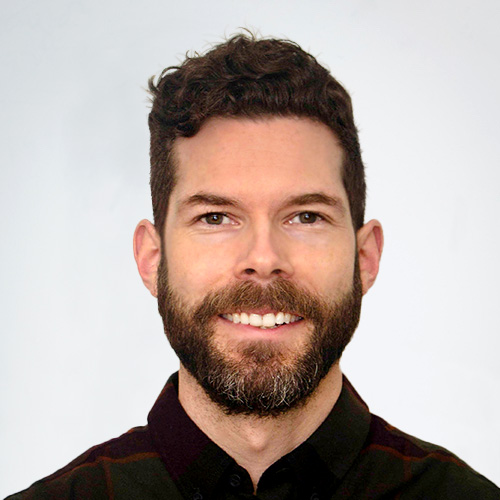
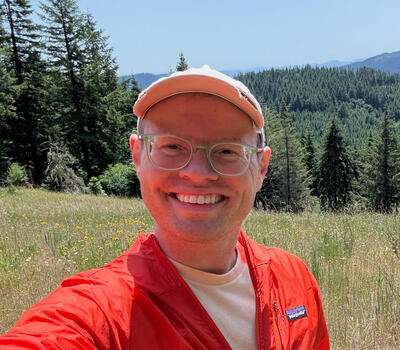
Avery Berman is an Assistant Professor in the Department of Physics at Carleton University and a Scientist at the University of Ottawa Institute of Mental Health Research (IMHR) at The Royal. His work focuses on advancing functional MRI (fMRI) techniques for high-resolution imaging of brain activity and physiology, with applications in neuroscience and mental health disorders. PhD in Biomedical Engineering and MSc in Medical Radiation Physics from McGill University Postdoctoral research at Harvard Medical School and the Martinos Center for Biomedical Imaging Research Interests include: High-resolution fMRI at 7 Tesla Biophysical modeling of vascular networks Quantitative biomarkers for oxygen metabolism PET-MRI hybrid imaging systems Neurovascular coupling in mental illness Scientific Awards include: NSERC Canada Graduate Scholarship (Master's) CIHR Canada Graduate Scholarship (Doctoral) CIHR Postdoctoral Fellowship (top 10/600 applicants) NSERC Postdoctoral Fellowship (top Physics section recipient) Research Funding from NSERC, CFI, and institutional support from Carleton University and IMHR. His lab develops the open-source BOLDsωimsuite software for fMRI signal modeling and collaborates with Canada-wide vascular training programs.
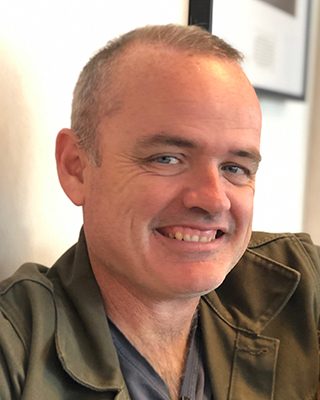
Ramón Luis Rizo Aldeguer is a University Professor in the Department of Computer Science and Artificial Intelligence at the Higher Polytechnic School of the University of Alicante. He has held this position since 1996 and continues to be actively involved in teaching and research as recently as 2025. He previously served in various leadership roles including Director of the Department of Computer Science and Artificial Intelligence (1997-2004) and Deputy Director of the Institutional Projects Area at the University of Alicante (2012-2020). His educational background includes a PhD in Computer Science from the Polytechnic University of Valencia (1992) and a degree in Mathematics from the University of Valencia (1977). He has been a member of the Spanish Association for Artificial Intelligence since 1990 and has held leadership positions within the organization. Rizo Aldeguer's research focuses on artificial intelligence with particular emphasis on swarm robotics, UAV deployment, and deep reinforcement learning. His work bridges theoretical foundations with practical applications in robotics and autonomous systems. He has made significant contributions to educational methodologies, particularly in integrating computational tools into engineering education. His publication record shows a consistent trajectory in swarm intelligence and robotics, with recent publications (2018-2023) demonstrating increasing sophistication in applying deep reinforcement learning to complex multi-agent systems. His research spans both theoretical advancements and practical implementations in robotics and autonomous systems. Fifteen five-year research periods (trienios) Six teaching merit periods Five six-year research periods (sexenios) President of Organizing Committee of VI Conference of Spanish Association for Artificial Intelligence (1995) President of Scientific Committee of CAEPIA (1999) Rizo Aldeguer has supervised 14 doctoral theses, with many receiving the highest honors (SOBRESALIENTE CUM-LAUDE). He has participated as a researcher in over 30 competitive public research projects, serving as principal investigator in 12 of them. His educational projects include innovative teaching methods and the development of computational tools for engineering education. He has been instrumental in the design and implementation of computer science programs at both the University of Alicante and the Polytechnic University of Valencia. He is a founding member of the University Institute for Computer Research and directed the Industrial Computing and Artificial Intelligence research group from 1992 to 2004. His current research continues to focus on swarm robotics and intelligent systems, with active participation in the Valencian Graduate School and Research Network of Artificial Intelligence since 2021.
Dr. Christoph Müller is a leading scientist at the Potsdam Institute for Climate Impact Research (PIK), Germany, where he has served as working-group leader of the Land Biosphere Dynamics group since 2012. He also co-leads the Global Biosphere and Water Modeling team and acts as the scientist-in-charge for the internationally renowned LPJmL global vegetation and crop model. Additionally, he is Co-lead of the Ag-GRID initiative within the Agricultural Model Intercomparison and Improvement Project (AgMIP) and serves as Topical Editor for Geoscientific Model Development . Education Diploma in Geoecology, University of Potsdam (2002) PhD in Geoecology, University of Potsdam & International Max Planck Research School (IMPRS) (2007) Research Interests Dr. Müller’s research centres on understanding and modelling the interactions between climate, land use, and the biosphere to support sustainable food-system transformations. His work integrates global-scale vegetation and crop models with climate projections, socio-economic scenarios, and observational data to assess: Impacts of climate change and extreme events on crop yields and food security Carbon, nitrogen, and water cycles in managed and natural ecosystems Land-based climate-mitigation strategies and their co-benefits or trade-offs Adaptation options for agriculture under global change He promotes open science and reproducible modelling workflows, exemplified by the LPJmL open-source ecosystem model and associated toolkits. Publication Profile & Trends Since 2014 he has authored or co-authored more than 200 peer-reviewed articles. Recent work (2024-2025) highlights three dominant themes: (1) quantifying underestimated negative impacts of climate extremes on crop yields, (2) assessing the sustainability of large-scale land-based mitigation measures, and (3) advancing model intercomparison frameworks (e.g., AgMIP, ISIMIP) to reduce uncertainty in global yield projections. His studies increasingly integrate economic and health perspectives, examining how dietary shifts and food-system transformations can achieve climate, environmental, and social co-benefits. Scientific Awards & Recognition While no formal awards are explicitly listed, several publications have received notable recognition: “Soil quality both increases crop production and improves resilience to climate change” (Nature Climate Change, 2022) – listed among China’s top ten major advances in agricultural science in 2023. “Large potential for crop production adaptation depends on available future varieties” (Global Change Biology, 2021) – top-downloaded article. “Climate change impacts on global agriculture emerge earlier in new generation of climate and crop models” (Nature Food, 2021) – widely cited in IPCC AR6. Leadership, Grants & Collaboration Dr. Müller leads or co-leads multiple international projects and working groups: Working Group Leader – Land Biosphere Dynamics, PIK Research Department 2 Co-Lead – Ag-GRID, Agricultural Model Intercomparison and Improvement Project (AgMIP) Scientist-in-Charge – LPJmL model development and application Topical Editor – Geoscientific Model Development journal These roles involve coordinating multi-institutional consortia, securing competitive grants, and mentoring early-career researchers. Laboratory & Data Resources Dr. Müller’s “team” is essentially the LPJmL modelling group at PIK, comprising post-docs, doctoral researchers, and software engineers who maintain and extend the LPJmL code-base, develop satellite-data fusion products, and provide model-driven policy support to governments and international organisations such as the IPCC, FAO, and World Bank.
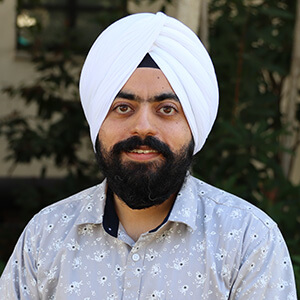
Mark Oskin is an Adjunct Professor at the School of Computer Science and Engineering , University of Washington , focusing on Software & Hardware Systems . He leads the Sampa Group and collaborates on projects like HammerBlade and BlackParrot. University: University of Washington School: School of Computer Science and Engineering Department: Department of Electrical & Computer Engineering His research spans Computer Architecture , Parallel Computing , and Graph Processing , with additional expertise in Quantum Computing , Open Source Hardware , and Distributed Shared Memory . Ongoing work includes custom manycore devices for graph execution and open-source RISC-V designs. Past projects like Grappa and WaveScalar advanced distributed memory and dataflow execution. Recent publications include BlackParrot: An Agile Open Source RISC-V Multicore for Accelerator SoCs (IEEE Micro 2020) and Perceptual Compression of Video Storage and Processing Systems (SoCC 2019), reflecting trends in hardware-software co-design, quantum systems, and energy-efficient video processing. Best Paper Award , USENIX ATC 2015 IEEE Micro Top Picks , 2009 Mark has advised numerous students, including Amrita Mazumdar (IoT video compression startup), Brandon Lucia (CMU), and Steve Swanson (UC San Diego). He co-founded Corensic, a startup exploring deterministic multithreaded execution.
Tiago Manuel Ribeiro Gomes is an Assistant Professor at the Department of Industrial Electronics within the School of Engineering at the University of Minho, Portugal. He is also a Senior Researcher at Centro ALGORITMI and a member of both the IE R&D Group and the ESRG R&D Lab. Holding a Ph.D. in Electronics and Computers Engineering, his research focuses on embedded real-time systems, computer architectures, and hardware/software co-design for IoT devices. Academic Degree: Ph.D. in Electronics and Computers Engineering Current Position: Assistant Professor, School of Engineering, University of Minho Gomes has led extensive research in IoT systems over 15 years, particularly in hardware acceleration for automotive LiDAR sensors, secure embedded systems, and efficient OS frameworks for low-end devices. His work includes the EU-funded CROSSCON project and spans hardware-assisted security, dynamic binary translation, and wireless sensor networks. Recent publications highlight his expertise in automotive sensor technology, with articles like FOG-Zip for LiDAR compression, SecureQNN for TinyML security, and Hardware-Assisted Range Image Generation for LiDAR processing. His work bridges IoT, embedded systems, and cybersecurity, focusing on real-time performance and hardware-software co-design. Projects include the development of reliable/secure automotive sensor solutions and EU project CROSSCON. He contributes to open-source frameworks like UTango for IoT security and investigates heterogeneous fault tolerance architectures using Arm/RISC-V processors. Labs: IE R&D Group, ESRG R&D Lab Education: Ph.D. in Electronics and Computers Engineering, Master’s in Telecommunications Engineering (both from University of Minho)
Daniele Fusi is a Lecturer at the Department of Humanities, Ca' Foscari University of Venice, with a focus on Digital Humanities and Computational Philology. He teaches courses on XML databases and digital/public humanities, bridging classical studies with modern technology. University: Ca' Foscari University of Venice Department: Department of Humanities His research spans digital edition frameworks, metrical analysis, and XML markup for classical texts. Recent works explore AI applications in textual dynamics and forensic linguistic tools for legal corpora, demonstrating interdisciplinary approaches between humanities and computer science. Notable projects include: EpiSearch for ancient inscriptions Chiron framework for metrical analysis AttiChiari digital corpus He actively publishes in journals like Journal of Data Mining and Digital Humanities and Rivista di Cultura Classica e Medioevale , with over 20 years of contributions to digital philology, epigraphic databases, and computational linguistics.
Barry Rowlingson is a Research Fellow at Lancaster University Medical School , affiliated with the Chicas Research Group and DSI-Health . He specializes in spatial statistics applied to disease epidemiology and geospatial software development . Teaches Geospatial Data module for MRes in Global Health Developed online course on Spatial Statistics in R with DataCamp Focuses on open-source geospatial tools for public health Research Interests: His work bridges spatial statistical methodology and infectious disease modeling , with applications in antimicrobial resistance mapping , wastewater-based pandemic surveillance , and health inequality analysis . Recent projects include modeling ESBL-producing bacteria in Malawi and developing spatio-temporal frameworks for COVID-19 wastewater monitoring . Scientific Contributions: Over 15 years, he has developed critical R packages like stpp for spatio-temporal analysis and rgdal for geospatial data abstraction. His 2023 publications address health workforce disparities and disease transmission dynamics using advanced statistical methods. Collaborations: Works with multidisciplinary teams across Lancaster Medical School , DataCamp , and SAVSNet Agile research projects. Supervises PhD student Charlotte Appleton in biostatistics.
Arthur Trembanis is a Professor at the School of Marine Science & Policy at the University of Delaware , where he conducts interdisciplinary research in coastal and marine geoscience. His work bridges oceanography, sediment dynamics, and autonomous systems, with a focus on understanding coastal morphodynamics, hydrodynamics, and seafloor mapping. Coastal & Estuarine Morphodynamics Sediment Transport Modeling Autonomous Underwater Vehicles (AUVs) Seafloor Mapping & Geoacoustics Trembanis leads the Coastal Sediments, Hydrodynamics, and Engineering Lab (CSHEL) , which explores the intersection of marine technology and environmental science. His recent publications highlight advancements in AI-driven seafloor mapping, autonomous survey platforms, and coastal response to extreme weather. He is also active in open-source tools for geological feature detection and educational outreach. The 15 most recent papers reflect trends in machine learning for coastal geology (e.g., AI for Carolina Bay detection), autonomous robotics in marine surveys, and storm impact analysis on coastal systems. Key subfields include LiDAR processing, bedform dynamics, and multi-platform data integration for environmental monitoring. Fulbright Fellowship (University of Sydney) SERDP Project MR20-1480 (Munition mobility in estuarine environments) Follow his work via the CSHEL website , Instagram , or YouTube for fieldwork and lab updates.
James Davis is an Assistant Professor in the Elmore Family School of Electrical and Computer Engineering at Purdue University. His research focuses on engineering robust computing systems through socio-technical approaches, emphasizing software correctness, security, and usability. He applies empirical methodologies to evaluate the practical impact of technical solutions. Research interests include software supply chain security, deep learning reproducibility, regular expression optimization, IoT cybersecurity, and the socio-technical challenges in system design. His work bridges theoretical foundations with real-world applications, addressing issues like regex denial-of-service (ReDoS), model reuse in AI, and developer practices for safety-critical systems. Recent publications span topics such as actor reputation metrics in software supply chains, AI safety for downstream developers, and edge-computing optimizations for vision transformers. His interdisciplinary approach integrates empirical studies, formal verification, and human-centered design principles. No scientific awards are explicitly mentioned in the provided materials. His advising record is currently unspecified, though his research group likely engages in collaborative projects with industry and academia. He contributes to initiatives like the Sigstore ecosystem and open-source security tooling, reflecting his commitment to practical impact.
Dr. Amneet Bhalla serves as an Associate Professor in the Department of Mechanical Engineering within the College of Engineering at San Diego State University (SDSU). His primary contact email is asbhalla@sdsu.edu, with office located in Engineering Building Room 323-G, and phone number (619) 594-2043. Education: Ph.D., Mechanical Engineering, Northwestern University (2013) M.S., Mechanical Engineering, Indian Institute of Technology Kharagpur (2009) B.S., Mechanical Engineering, Indian Institute of Technology Kharagpur (2004-2008) Postdoctoral Training: University of North Carolina at Chapel Hill (Mathematics Department) and Lawrence Berkeley National Laboratory (Computational Research Division) Research Interests: Dr. Bhalla develops advanced numerical methods and high-performance computing techniques for computational fluid dynamics (CFD) and fluid-structure interaction (FSI) problems. His work spans aquatic locomotion, renewable energy device modeling, multiphase flows, vehicular aerodynamics, and bioengineering applications. He creates mathematical models to interrogate underlying flow physics for engineering design optimization, with emphasis on open-source software development through the IBAMR library. Publication Trends: Recent publications (2023-2025) focus on robust numerical frameworks for multiphase flows with phase change, acoustic streaming, and fluid-structure interaction. Key themes include mass conservation in level set methods, adaptive mesh refinement, and solvers for non-isothermal gas-liquid-solid systems. Applications range from aquatic locomotion and renewable energy devices to microfluidics and biomedical flows, demonstrating commitment to both theoretical advances and practical engineering solutions. Scientific Awards: No awards mentioned in the provided text Advising and Grants: Dr. Bhalla secured an NSF CAREER award (2023) for "Consistent Continuum Formulation and Robust Numerical Modeling of Non-Isothermal Phase Changing Multiphase Flows". As PI of the CFD Lab, he mentors graduate students in computational mechanics, leveraging prior industrial experience at ExxonMobil Upstream Research Company. His research integrates industrial practicality with academic rigor through collaborations with national laboratories. Laboratory and Team: The Computational Fluid Dynamics and Flow Physics Laboratory (CFD Lab) develops the open-source IBAMR software—a distributed-memory parallel implementation of the immersed boundary method with adaptive mesh refinement. The lab emphasizes transparency, community engagement, and reproducibility, establishing cross-institutional collaborations while advancing computational methods for complex flow phenomena in engineering and biological systems.
Fahim Hasan Khan is an Assistant Professor in the Computer Science and Software Engineering Department at California Polytechnic State University, San Luis Obispo (Cal Poly). His research focuses on computer vision, applied machine learning, and citizen science applications, with a special emphasis on environmental monitoring and education. He holds a PhD in Computer Science and Engineering from UC Santa Cruz, where he was advised by Professors Alex Pang and James Davis, and a Master's in Computer Science from the University of Calgary. Key research contributions include real-time rip current detection systems (RipFinder, RipScout), mobile citizen science platforms (SmartCS), and educational tools to engage high school students in STEM research. His work has received media attention for innovations in drowning prevention and environmental safety. Notable awards include the Best Poster Presentation Award at ICIAR 2019 and the Best of the Baskin School of Engineering Award at UC Santa Cruz in 2022. Dr. Khan collaborates extensively with industry and academic partners to develop practical solutions for challenges in marine safety, autonomous systems, and healthcare diagnostics. He actively mentors students and seeks to democratize access to machine learning tools through no-code platforms.
Krist V. Gernaey is Professor in Industrial Fermentation Technology at the Technical University of Denmark's Department of Chemical and Biochemical Engineering. His research develops computational tools for bioprocess optimization across pharmaceutical, food, and chemical sectors. Research specializes in mechanistic modeling of fermentation processes, process analytical technology (PAT) implementation, and continuous production system design. Current investigations focus on uncertainty analysis methods, data-driven modeling, and novel bioreactor characterization from micro to production scale. Publications demonstrate applications in vaccine manufacturing, wastewater treatment, chromatography simulation, and sustainable chemical engineering. Recent work advances regulatory frameworks for in silico bioprocess models and AI integration in engineering education. Research collaborations span academic institutions and industry partners across Europe. Professional activities include conference organization and editorial responsibilities for chemical engineering journals.
Jean-Daniel Guigou is an Associate Professor at the University of Luxembourg, affiliated with the Faculty of Law, Economics and Finance and the Department of Finance. His research focuses on pension systems, financial modeling, bankruptcy law, and corporate governance. He has published extensively on topics including trajectory modeling, strategic delegation, and the economic implications of regulatory frameworks such as IFRS 9. His work often integrates statistical methodologies like finite mixture models to analyze economic phenomena. Key themes in his research include the optimal design of pension systems, the dynamics of managerial collusion under asymmetric incentives, and the impact of legal frameworks on financial markets. He has contributed to policy-relevant studies, such as analyses of Luxembourg's mixed pension system and the role of corporate governance in financial development. Guigou’s publications reflect a blend of theoretical and applied economics, with notable contributions to understanding strategic behavior in competitive markets, the robustness of econometric models, and the interplay between law and financial systems. His research bridges academic rigor with practical applications in public policy and financial regulation.
Cory Simon serves as Associate Professor in the Department of Chemical, Biological, and Environmental Engineering within Oregon State University's College of Engineering. His research integrates machine learning, optimization, and chemical engineering to advance materials discovery and environmental sensing systems. His academic foundation includes a Ph.D. in Chemical Engineering from the University of California, Berkeley and a B.S. in Chemical Engineering from The University of Akron. Simon's work centers on Bayesian methodologies for scientific challenges, featuring: Bayesian optimization for adaptive materials synthesis Statistical inversion of physical systems with uncertainty quantification Computational design of nanoporous sensor arrays Stochastic algorithms for robotic environmental monitoring Recent publications demonstrate accelerating focus on multi-fidelity optimization for molecular design and atmospheric water harvesting, bridging chemical engineering with computational science through data-driven approaches. Leading The Simon Ensemble research group, Simon champions a versatile 'buffet-style' research philosophy—drawing from mathematics, statistical mechanics, and machine learning to address interdisciplinary problems across chemistry, materials science, and environmental engineering.
Dr. Siavash Vahidi is an Assistant Professor in the Department of Molecular and Cellular Biology at the University of Guelph. His research focuses on understanding the structure, function, and dynamics of large biomolecular machines, particularly those involved in protein degradation in pathogens like Mycobacterium tuberculosis . He employs advanced techniques such as mass spectrometry (H/D exchange, native MS) and high-field NMR spectroscopy to study these systems. His lab is actively recruiting students and postdocs, emphasizing a commitment to diversity and training in cutting-edge methodologies. Education: BSc in Chemistry, National University of Iran, Tehran PhD in Chemistry and Biochemistry, University of Western Ontario CIHR Postdoctoral Fellowship, University of Toronto & The Hospital for Sick Children Research: Key interests include the M. tuberculosis proteasome system, ClpP proteases in human mitochondria, and the role of allostery in substrate selection. The lab’s integrative approach combines structural biology with biochemical and computational methods, aiming to identify novel drug targets for tuberculosis and other diseases. Awards: Paul de Mayo Award for Best PhD Thesis Lab & Training: The Vahidi Lab emphasizes interdisciplinary training, offering expertise in mass spectrometry, NMR, and computational tools (e.g., Python, Linux). Supported by grants and collaborations, the lab fosters an inclusive environment with a strong focus on mentorship. Lab Resources: Website: Vahidi Lab Twitter: @VahidiLab