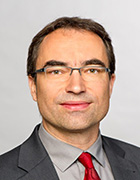
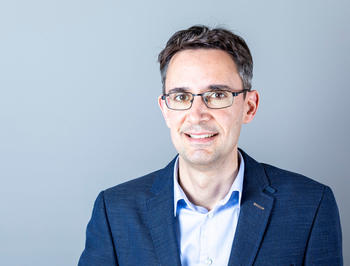
Prof. Mark Heitmann is a Professor of Marketing & Customer Insight at the University of Hamburg Business School. He holds a visiting appointment at Nova School of Business and Economics. His research focuses on AI-driven marketing strategies, social media analytics, brand equity, and consumer decision-making. He has held academic roles at institutions including the University of St. Gallen and Christian-Albrechts-University in Kiel before joining Hamburg in 2011. Academic Career: Holds a PhD (2004) and post-doctoral Habilitation (2007) from the University of St. Gallen. Visiting researcher at Columbia University and the Max Planck Institute for Human Development. Research Interests: Applications of artificial intelligence in marketing Social media and digital transformation Ethical consumer behavior Brand self-expression and visual design Marketing technology (MarTech) innovations Key Achievements: Over 20 peer-reviewed publications in top journals like Journal of Marketing Research and Harvard Business Review . Award-winning research includes the MSI/H. Paul Root Award and IJRM-EMAC Best Article Award. Active in translating research into scalable commercial solutions through software-as-a-service ventures. Team & Collaborations: Leads a research team including M.Sc. candidates Sammar Rath, Julia Rosada, Maximilian Witte, Tijmen Jansen, Claus Hegmann-Napp, and Magdalena Heynicke. Engages in interdisciplinary projects with industry partners.
Krishna Gummadi is a Scientific Director and Professor at the Max Planck Institute for Software Systems (MPI-SWS) in Germany, where he leads the Networked Systems Research Group. He also holds a professorship at the University of Saarland, demonstrating his dual commitment to research and academic instruction in computer science. His educational background includes: Ph.D. in Computer Science and Engineering from the University of Washington (2005) B.Tech. in Computer Science and Engineering from the Indian Institute of Technology, Madras (2000) Gummadi's research spans networked and distributed computer systems with a current focus on social computing systems. His work addresses critical challenges in algorithmic fairness, privacy in social media, trustworthiness of online identities, and information dissemination in social networks. He approaches these problems through interdisciplinary methods combining user-centric studies, data-centric analysis, and systems-centric design to create practical solutions that enhance fairness, transparency, and user control in online platforms. His methodology integrates large-scale observational studies, computational modeling, and system implementation to tackle complex human-computer interaction challenges at societal scale. His recent publications reveal a strong emphasis on fairness in algorithmic decision making, with significant contributions to quantifying and addressing discrimination in machine learning systems. His work bridges computer science, social science, and ethics, creating frameworks for fair classification, understanding media bias, and developing privacy-preserving techniques that maintain functionality while protecting user data. The research demonstrates a progression from technical system design to addressing societal implications of computing systems. Among his notable scientific achievements: ERC Advanced Grant in 2017 for 'Foundations for Fair Social Computing' Test of Time Awards at ACM SIGCOMM and AAAI ICWSM Casper Bowden Privacy Enhancing Technologies (PET) and CNIL-INRIA Privacy Runners-Up Awards IW3C2 WWW Best Paper Honorable Mention Multiple Best Paper awards across prestigious conferences Gummadi has advised numerous PhD students and postdoctoral researchers who have gone on to prominent positions in academia and industry. His ERC Advanced Grant has supported extensive research into fair social computing, while his leadership in major conferences (including serving as General Chair for ICWSM 2016 and Program Chair for WWW 2015) has shaped research directions in the field. His teaching portfolio includes courses on Distributed Systems, Human-Centered Machine Learning, and Social Media Analysis. He leads the Networked Systems Research Group at MPI-SWS, which has developed several publicly available systems including tools for fair classification, privacy risk assessment, trust evaluation in social media, and information diet management. The group's work bridges theoretical advances with practical implementations that address real-world challenges in social computing, with numerous software releases and datasets made available to the research community.
Prof. Dr. Bernd Skiera holds the first chair for electronic commerce in Germany at Goethe University Frankfurt am Main since 1999. He serves on the board of efl - The Data Science Institute and the Schmalenbach Society, while representing Germany at the European Marketing Community (EMAC). Chair of Marketing, Goethe University Frankfurt am Main Board member, efl - The Data Science Institute National representative, European Marketing Community (EMAC) His research focuses on MarTech/SalesTech integration, customer value management, online advertising analytics, data-driven pricing models, and the economic implications of internet privacy regulations. He leads the ERC Advanced Grant project on cookie usage restrictions' economic consequences. Recent publications examine dynamic pricing in digital markets, competition visualization using big data, and AI applications in marketing analytics. The ERC Advanced Grant research has produced empirical analyses of GDPR impacts on advertising ecosystems. 2015 Journal of Marketing Best Paper Award 2013 International Journal of Research in Marketing Best Paper Award Multiple MSI/H. Paul Root Award recognitions He has mentored 17 doctoral students who became professors globally, including at London Business School and LMU Munich. His work bridges marketing analytics with financial valuation through customer equity modeling.
Christine Eckert is a Professor of Marketing Analytics at the TUM School of Management (Technische Universität München). She holds a doctorate in economics from Goethe University Frankfurt am Main and has previously held academic positions at University of Technology Sydney and EBS University of Business and Law. Education: Mathematics (Johannes Gutenberg University Mainz, Christian-Albrechts University Kiel); Economics (Goethe University Frankfurt am Main) Her research focuses on quantitative modeling of market participants' decisions, spanning consumer financial behavior, strategic innovation decisions, and corporate social responsibility. She also explores methodological advancements in management research, particularly causal inference techniques. Notable contributions include serving as co-editor for Big Data and Business Analytics (Journal of Business Research) and receiving an Australian Research Council Discovery Grant (2019-2021). Her work has been recognized with the Center for Financial Planning's Best Paper Award (2021). Key journals: Journal of the Academy of Marketing Science, Journal of Management, Journal of Marketing Research She contributes to academic governance through roles like Panel Member for New Zealand's Performance Based Research Fund (2018) and advisory board membership with Super Consumers Australia (since 2022).
Prof. Dr. Bernd Skiera is a leading Marketing Professor at Goethe University Frankfurt since 1999 and a member of the managing board of the efl - The Data Science Institute. His work bridges information systems and marketing, with a focus on data-driven decision making and digital transformation.
Prof. Dr. Michael Bosnjak leads the Department for Psychological Research Methods at the University of Trier, Germany, focusing on research synthesis methods, theory-driven machine learning, survey methodology, and experimental designs applied to personality psychology (HEXACO model), consumer behavior, and public health. His team includes Dr. Henning Silber (GESIS), Dr. Bernd Weiß (GESIS), and international collaborators at Utrecht University. Affiliation: University of Trier (Department of Psychology) Editorial Roles: Zeitschrift für Psychologie (Editorial Board), Social Science Computer Review (Associate Editor), Frontiers in Psychology (Review Editorial Board) Grants: DFG SFB 884 (co-applicant), DFG Project PaCO (2019-2024, principle investigator), BMBF-funded GESIS Panel Campus His recent publications analyze panel conditioning effects in longitudinal studies, e-commerce privacy dynamics, personality-trait interactions, and psychosis proneness measurement. Scientific awards include the 2016 BMBF infrastructure grant, 2011 Isaac Manasseh Meyer Fellowship, and 2003 Karin Islinger Award. Current projects address data quality in probability-based and opt-in panels, with experimental designs across eight groups testing measurement error mechanisms. He serves as a co-editor for multiple special issues on survey methodology and tourism psychology.
Rhenish Friedrich Wilhelm University of BonnGermany
Thomas Kesselheim is a Professor for Theoretical Computer Science at the University of Bonn, Department of Computer Science (Institute V). He is based in room 2.058 at Friedrich-Hirzebruch-Allee 8, D-53115 Bonn, Germany. His contact email is thomas.kesselheim@uni-bonn.de and he holds virtual office hours via Zoom (Meeting ID: 685 2407 0922, Passcode: 305903). Professor Kesselheim's research focuses on Online Algorithms , Algorithmic Game Theory , and Algorithms and Uncertainty . His work examines how algorithms perform in environments with strategic participants such as internet service providers, cloud infrastructure markets, and advertising platforms. Key research areas include congestion games, price of anarchy, mechanism design, revenue maximization, and optimization under incomplete information. His teaching portfolio spans multiple semesters with courses including Randomized Algorithms & Probabilistic Analysis, Algorithmic Game Theory, and Algorithms and Uncertainty. He regularly offers specialized seminars on Online Algorithms and Optimization under Uncertainty where students explore cutting-edge topics like online stochastic matching and combinatorial auctions via posted prices. Professor Kesselheim's career trajectory shows steady progression from PhD studies at RWTH Aachen University through postdoctoral positions at Cornell University and Max Planck Institute for Informatics, a fellowship at the Simons Institute for the Theory of Computing, a Junior Professorship at TU Dortmund, and his current professorship at the University of Bonn since April 2018. He actively supervises labs and seminars where students implement and evaluate algorithms for optimization under uncertainty, focusing on both theoretical guarantees and practical performance. His research group participates in joint research seminars with other groups at the University of Bonn, discussing topics in computational geometry and algorithm design.
Dr. Pham Hai Chung is a Senior Lecturer and Head of the Professional Communication Programme at the Faculty of Postgraduate Education , British University Vietnam (BUV). Previously, she was a researcher at Harvard Kennedy School (2022-2024) and a lecturer at Vietnam National University (2019-2022). She holds a PhD in Communication from Bournemouth University (2011-2015), an MA in International Journalism from Hong Kong Baptist University (2007-2008), and a BA in English from Hanoi National University (2000-2004). Education PhD in Communication, Bournemouth University (2011-2015) MA in International Journalism, Hong Kong Baptist University (2007-2008) BA in English, Hanoi National University (2000-2004) Her research focuses on brands and youth , social media identity , and media’s role in war . Her work examines consumer culture, digital rights, and propaganda during the Vietnam War. Recent publications include a forthcoming book on North Vietnam’s propaganda strategies and Scopus-indexed studies on Facebook identity construction and photo manipulation among Vietnamese youth. Notable scientific awards include the Hinrich Foundation Scholar (2007-2008). She has contributed to international journals (e.g., Journal of Consumer Marketing , Acta Informatica Pragensia ) and conferences on media, war, and digital governance.
Prof. Dr. Patrick Vonderau is a Professor of Media and Communication Studies at Martin Luther University Halle-Wittenberg (2018–present) and previously held the same role at Stockholm University (2009–2018). His research focuses on media industries, digital distribution systems, cultural history, and the intersection of advertising with screen cultures . He has authored/co-authored seminal works like Spotify Teardown (MIT Press, 2019) and Advertising and the Transformation of Screen Cultures (Amsterdam University Press, 2021). Education : PhD from Humboldt-Universität zu Berlin (2005); studied at University of Copenhagen, Freie Universität Berlin, and Humboldt-Universität zu Berlin. Research Themes include media industries (e.g., Spotify’s algorithmic governance, sponsored films by oil companies), digital compensation models (e.g., music streaming equity studies funded by BKM), and historical media-advertising symbiosis (e.g., early 20th-century industrial films). His work spans algorithmic transparency , platform regulation , and media production cultures . Awards & Editorial Roles : Advisory Editor of the Springer Series in Media Industries ; co-founder of NECS (European Network for Cinema and Media Studies); editorial board member of Montage AV , Media Industries Journal , and Television & New Media . Projects & Leadership : Co-led Shadow Economies of the Internet (Swedish Research Council, 2018–2022); heads the Circuit Lab at Halle-Wittenberg; organized conferences like Connected Viewing (2011) and Urban Mediations (2010).
Peter Pal Zubcsek serves as Senior Lecturer of Marketing at Tel Aviv University's Coller School of Management, previously holding an Assistant Professor position at University of Florida. His academic work bridges marketing, network science, and consumer psychology through rigorous quantitative analysis. His educational background includes: Ph.D. in Management from INSEAD M.Sc. in Informatics from Budapest University of Technology and Economics Zubcsek's research investigates how social network structures shape consumer behavior, with special focus on mobile advertising effectiveness, customer relationship management, and innovation diffusion. His work employs advanced network analysis to model consumer interactions and predict market responses. His publication trajectory from 2011-2017 reveals evolving expertise: starting with foundational network diffusion models (2011), progressing through mobile advertising frameworks (2016), and culminating in connected consumer intelligence systems (2017). This progression demonstrates increasing sophistication in integrating real-world network data with consumer behavior prediction. Key recognitions include: Journal of Interactive Marketing Best Paper Award (2016) MSI Research Grants totaling over $70,000 for mobile consumer behavior projects International Mathematical Olympiad silver medal (1998) He has secured significant research funding including MSI's $40,000 'Ideas Challenge' grant and leads the 'mLab' mobile research initiative, though specific student mentorship details remain undisclosed. His editorial role at Journal of Interactive Marketing underscores disciplinary leadership. The 'mLab' research initiative represents his current focus on mobile consumer behavior, leveraging collaborative frameworks to study real-time advertising response and device ecosystem interactions.
Prof. Dr. Andreas S. Schulz is a faculty member at Technische Universität München (TUM), holding a chair in the Department of Mathematics and the Department of Business and Economics. He previously served as the Patrick J. McGovern Chair of Management and Professor of Mathematics at MIT. His research focuses on mathematical optimization, algorithm design, and their applications in logistics, production, healthcare systems, and online advertising. He has held visiting professorships at institutions such as the Sauder School of Business (UBC) and ETH Zurich. Prof. Schulz’s research bridges operations research, theoretical computer science, and economics. He develops analytical methods to solve complex decision-making problems in business, including scheduling, resource allocation, and network optimization. A key interest is applying mathematical approaches to enhance healthcare delivery and system efficiency. Education: PhD in Operations Research (MIT), prior academic roles at MIT and visiting institutions. Key Achievements: Alexander von Humboldt Professorship (2014), Humboldt Research Award (2010), Glover-Klingman Prize (2006). Research Themes: Robust optimization, approximation algorithms, scheduling theory, and algorithmic game theory. His publications span topics like integer programming, optimal transport, and congestion games. He collaborates across disciplines, emphasizing practical applications of theoretical insights.
Matthias Künzler serves as Professor of Communication Policy and Media Economics at the Institute of Journalism and Communication Studies within Freie Universität Berlin's Department of Political and Social Sciences. His academic career spans Swiss and German institutions including FH Graubünden (2014-2021), Universität Zürich (2002-2013), and guest professorships at Universität Basel, Universität Zürich, Universität Fribourg, and Universität Salzburg. Current research focuses on Local Journalism and Municipal Communication in the Digital Transformation. Freie Universität Berlin (2021-present) FH Graubünden (2014-2021) Universität Zürich (2002-2013) His research examines comparative media systems with emphasis on German and Swiss contexts, local journalism sustainability, public service media transformation, and broadcast regulation. Methodologically grounded in qualitative approaches and organizational theory, his work addresses news deserts, media convergence, and the societal role of local media infrastructure. Recent projects analyze Swiss local media business models, youth engagement with public service content, and municipal communication in digital environments. Analysis of his 15 most recent publications reveals concentrated focus on local media crises (7 articles), public service media challenges (4 articles), and Swiss-German media system comparisons (12 articles). Key emerging themes include news desert mitigation strategies, innovative funding models for local journalism, and public value frameworks for entertainment programming in public service contexts. Künzler serves as decentralized ombudsperson for scientific integrity at Freie Universität Berlin (since 2022) and previously chaired the Swiss Communication Science Association (2016-2022). He co-edits the "Medienstrukturen" book series (13 volumes published since 2012) and participates in editorial boards including Publizistik and M&K Medien & Kommunikationswissenschaft. His teaching covers German media systems, local communication, public service media innovations, and communication policy colloquia. Current doctoral supervision focuses on digital transformation impacts on local journalism and municipal communication. Leadership roles include advisory positions for Berlin's general career preparation program and research committees at FH Graubünden. Research infrastructure includes the ongoing "Lokalmedien in der Schweiz und Liechtenstein" dataset series tracking Swiss local media (2022-2025), developed with Burger and Autenrieth. The "Local Journalism and Municipal Communication" project examines digital transformation impacts through comparative Swiss-German analysis.
Tasos Dagiuklas is a Professor in the Department of Computer Science and Technology within the School of Engineering and Technology at the University of Bedfordshire. With over 168 publications spanning from 1995 to 2025, he has established himself as a leading researcher in telecommunications and network systems. His extensive publication record demonstrates continuous scholarly contribution across multiple decades in the field. Professor Dagiuklas' research focuses on wireless communications, edge computing, 5G/6G networks, quality of experience (QoE), and federated learning . His work bridges theoretical networking concepts with practical applications, particularly in multimedia delivery and security. He has developed significant expertise in video streaming optimization, network security mechanisms, and resource management in emerging network architectures. His research consistently addresses the evolving challenges of modern communication systems, with recent work increasingly focusing on AI integration in networking. Analysis of his recent publications (2023-2025) reveals a strong trend toward edge computing, federated learning, and security applications in next-generation networks. His work demonstrates a strategic shift from traditional networking concerns to more complex systems involving AI integration, energy efficiency, and heterogeneous environments. The publications show consistent collaboration with researchers across multiple institutions, with particularly strong partnerships with Muddesar Iqbal, Ilias Politis, and Stavros Kotsopoulos. Professor Dagiuklas has made substantial contributions to the academic community through his extensive publication record in high-impact venues including IEEE journals and conferences. His work has evolved from foundational networking research to cutting-edge investigations of AI-enhanced communication systems, reflecting the broader trajectory of the field itself. His research demonstrates both technical depth in specific networking challenges and breadth across multiple application domains.
Florian Stahl is Professor of Marketing at the University of Mannheim, affiliated with the Department of Business Administration in the Business School. His research focuses on empirical quantitative marketing, digital transformation, and marketing analytics, with applications in digital communications, pricing, and social media. His research interests include: Empirical Quantitative Marketing Marketing Analytics Digital and Social Media Marketing Economics of Data and Digital Products Brand and Advertising Strategy Behavioral and Experimental Marketing Methodologically, he employs applied econometrics, machine learning, and experimental designs. His recent publications center on influencer marketing, online reviews, network effects, and digital content strategies, reflecting a strong trend toward understanding consumer behavior in digital ecosystems using data-driven approaches. His scientific awards include: H. Paul Root Award (2012) MSI Best Paper Award (2012) Donald R. Lehmann Award (2021) IJRM Best Paper Award (2014) Finalist, Paul E. Green Award (2021) Finalist, Harold H. Maynard Award (2012) Florian Stahl has advised numerous research projects and published in top-tier journals, contributing significantly to marketing science. He has held research grants and collaborative projects, though specific grant details are not listed. He leads the Chair of Quantitative Marketing and Consumer Analytics and maintains an active research team focused on digital marketing innovations. His lab, the Quantitative Marketing and Consumer Analytics team, conducts cutting-edge research on user-generated content, influencer dynamics, and digital strategy, leveraging real-world data and experiments.
Alan Mislove is a Professor of Computer Science at Northeastern University and serves as Senior Associate Dean for Academic Affairs and Interim Executive Director of the Institute of Experiential Artificial Intelligence (EAI). He is also a core faculty member of the Cybersecurity and Privacy Institute and EAI at Northeastern. His research focuses on algorithmic auditing, fairness, and privacy in online systems. Notably, he has testified before Congress on algorithmic discrimination, challenged the CFAA in ACLU litigation, and contributed to landmark FTC and DOJ cases against Meta. His work has been funded by the NSF, Army Research Office, Google, and Amazon Web Services. Mislove’s academic leadership includes roles in Khoury College, where he supports over 2,000 students and faculty. He has advised numerous PhD students, including current research scientist Piotr Sapieżyński. His lab explores algorithmic transparency, PKI security, and middlebox traffic differentiation. Key awards include the 2017 ACM SIGCOMM Test of Time Award and recognition for work on QUIC protocol evaluation. He has authored over 150 publications, including seminal studies on Facebook ad discrimination and Uber’s surge pricing. His teaching spans systems, networks, and social computing courses, emphasizing experiential learning. Mislove actively serves on program committees for IMC, PETS, and other top conferences, and contributed to policy as Deputy U.S. CTO for Privacy (2023–2024).