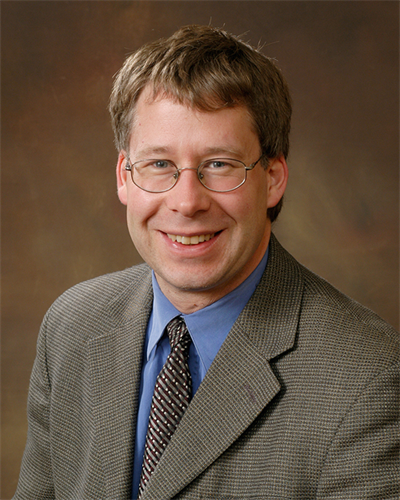
Gudmund Reidar Eiksund is a Professor in Geotechnical Engineering at NTNU's Department of Civil and Environmental Engineering, within the Faculty of Engineering. He holds a PhD from NTNU (1994) and has extensive experience in geotechnical design of offshore foundations, including roles at SINTEF and Geopartner Marin. His research focuses on submarine landslides, offshore wind turbine foundations, and soil-structure interaction. Education: PhD in Geotechnical Engineering, NTNU (1994) Research Interests: Dr. Eiksund specializes in geotechnical challenges for offshore infrastructure, including: Numerical modeling of submarine landslides using advanced methods like MPM-CFD coupling Dynamic and cyclic behavior of monopile foundations in clay/sand Installation effects on pile performance Risk assessment and reliability analysis for offshore geotechnical systems Publications: His recent work emphasizes innovative approaches to: Submarine landslide mechanics and impact forces on offshore structures Pore-pressure development in frozen soils Macro-element models for integrated structural-geotechnical analyses Lab/Team Affiliations: Active in multidisciplinary projects involving computational geotechnics and physical modeling, collaborating with SINTEF and international researchers.
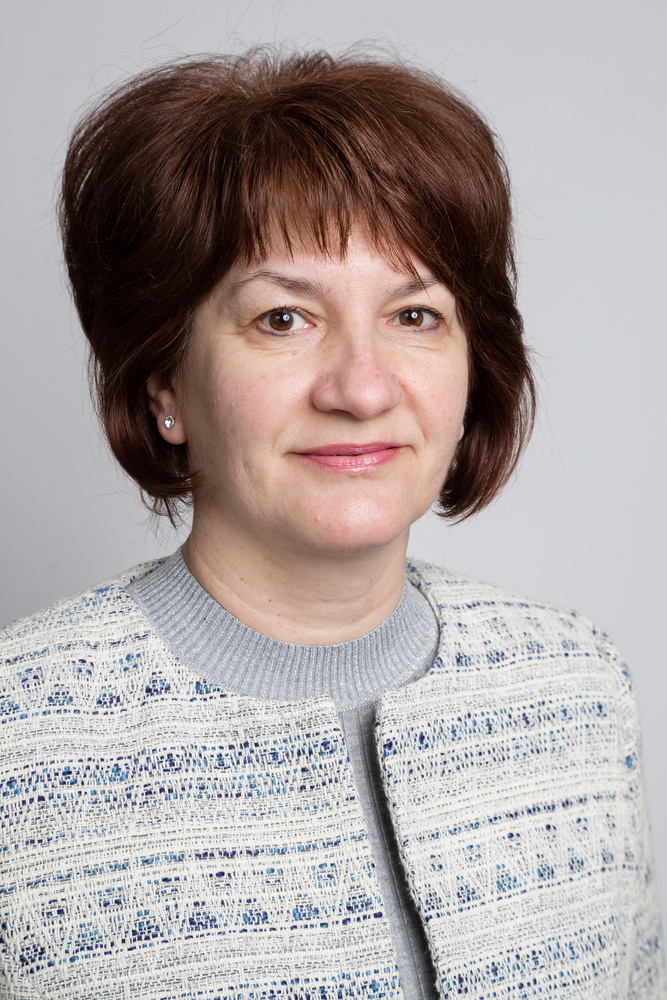
Cristina Vulpe is a Senior Lecturer in the School of Engineering at the University of Western Australia, specializing in geotechnical engineering and asset management. She leads the UWA Geotechnical Soils Lab and serves on the School of Engineering Safety Committee, UWA Academic Board, and Academic Council. Her research focuses on geotechnical risk assessment for onshore/offshore infrastructure, integrating laboratory testing, numerical modeling, and smart sensing technologies. She has contributed design methodologies to ISO standards for offshore geotechnical engineering and collaborates with industry on monitoring technologies for tailings storage facilities. Education: PhD in Geotechnical Engineering from École des Ponts ParisTech. Teaching includes GENG5502 Environmental Geotechnics and GENG5507 Risk, Reliability and Safety courses. Industrial projects include Amira P1217 TSF monitoring and electrokinetic dewatering of mine tailings. Research interests span small strain stiffness analysis, structural health monitoring via InSAR and fiber optics, soil-water-structure interaction, and climate change impacts on infrastructure. Awards include the 2024 Fay Gale Fellowship and 2023 UWA Aspire Award. Her work supports informed decision-making for governments and industry through predictive maintenance frameworks and disaster preparedness strategies.
Daniel Kuchma is a Professor in the Department of Civil and Environmental Engineering at Tufts University School of Engineering. He specializes in the design, behavior, and modeling of concrete structures, with a focus on fatigue analysis, offshore wind energy infrastructure, and advanced instrumentation techniques. Education: Ph.D., University of Toronto, 1996 M.A.Sc., University of Toronto, 1989 B.A.Sc.(Honors), University of Toronto, 1987 Research Interests: Structural behavior of reinforced and prestressed concrete under complex stress states Strut-and-tie method for concrete design Shear design of high-strength concrete bridge girders Advanced instrumentation for numerical model validation Fatigue analysis of offshore wind support structures Recent Research Trends: His work emphasizes experimental and numerical studies of concrete under fatigue, offshore wind turbine foundation durability, and code development for structural design (e.g., ACI 318). Recent publications highlight advancements in fatigue life prediction, marine corrosion effects, and wind energy infrastructure resilience. Awards: Educator of the Year Award (2013) George D. Nassar Award (2010) Charles C. Zollman Award (2008) National Science Foundation CAREER Award (2001–2006) Grants & Professional Activities: Principal investigator for U.S. Department of Energy and Department of the Interior-funded projects on structural concrete fatigue and offshore wind durability Member of ACI Committees (e.g., ACI318E, ACI445D) and international organizations like fib Task Groups Teaching focuses include offshore wind structures, advanced reinforced concrete design, and mechanics of materials Labs & Teams: Active in the Tufts Offshore Wind Energy Research Group and collaborates with industry partners like RCAM Technologies on additive manufacturing for wind turbine foundations.
Dr. Gregory Duthé is a researcher at the ETH Zürich in the Structural Mechanics and Monitoring department. His work bridges computational modeling and structural diagnostics with applications in renewable energy systems. Research contributions include: Development of Graph Neural Networks for aerodynamic flow reconstruction Advancements in wake-induced load estimation for wind farms Innovations in unsupervised fault detection for offshore turbine systems Key publication trends show focus on physics-informed machine learning (2025), multi-agent infrastructure decision support (2025), and leading edge erosion modeling (2021). He combines graph-based architectures with structural health monitoring techniques across wind energy applications. Contact: duthe@ibk.baug.ethz.ch
Francesco Ferri is an Associate Professor at Aalborg University’s Department of the Built Environment, within The Faculty of Engineering and Science. He specializes in ocean and coastal engineering, with a focus on wave energy systems, mooring solutions, and control systems for renewable energy technologies. Ferri is affiliated with the Ocean and Coastal Engineering Research Group and has been involved in multiple high-impact projects, including COmposites, Hybrid testing and SImulations (CHS) and EXOWAVE, which aim to advance wave energy converter (WEC) technology and offshore platform sustainability. His research interests span wave energy engineering, power converter optimization, and the dynamic analysis of mooring systems for floating structures. Ferri has contributed to the development of advanced numerical models for wave propagation and has pioneered experimental validation methods for WEC control systems. He has collaborated on projects funded by the Danish Energy Agency (EUDP) and the North Sea Region Programme, demonstrating expertise in both academic and applied research. Key projects include leadership roles in EXOWAVE (2022–2024) and OESA (2019–2021), focusing on wave energy scale-up and hybrid systems. Ferri has also supervised two PhD students and contributed to over 80 peer-reviewed publications, addressing topics like mooring system optimization, wave-to-wire modeling, and offshore platform multi-use concepts. His work emphasizes interdisciplinary solutions, integrating computational fluid dynamics, control engineering, and experimental testing to enhance the efficiency and reliability of marine renewable energy systems.
Michael Havbro Faber is a Professor at the Department of the Built Environment within the Faculty of Engineering and Science at Aalborg University. His affiliations include the Risk, Resilience, Safety, and Sustainability of Systems Research Group and the Danish Centre for Risk and Safety Management . He holds leadership roles in multiple research projects and serves on the board of the Independent Research Fund Denmark | Technology and Production sciences . Education: Not explicitly detailed in the text. His research focuses on structural integrity management , risk-based inspection planning , and sustainability in infrastructure . Notable contributions include advancements in offshore wind energy systems , structural health monitoring , and decision analysis methodologies . Recent work emphasizes resilience optimization in energy networks and probabilistic safety frameworks. Key awards include the 2019 C. Allin Cornell CERRA Award and the 2012 Hojjat Adeli Award . Over 400 publications and 20+ projects highlight his prolific output, with recent articles addressing offshore wind turbine integrity, subsurface well reliability, and philosophical aspects of probability in engineering safety. Grants & Projects: STROWIN (2022–2024): Reliability-Based Structural Health Monitoring in Offshore Wind VALID (2020–2023): Wave Energy Converter Survivability CO2 Efficiency & Sustainability in Built Environments (2022–2022) Labs/Teams: Danish Centre for Risk and Safety Management, Risk-Based Integrity Management Group.
Prof. Dr.-Ing. Peter Schaumann is an Emeritus Professor at the Institute of Steel Construction within the Faculty of Civil Engineering and Geodetic Science at Leibniz University Hannover. His research focuses on advanced steel construction technologies, particularly in offshore wind energy infrastructure, corrosion and fatigue analysis, fire protection systems, and innovative manufacturing processes. He leads interdisciplinary projects such as ProBucket (suction bucket technology) and GROWup (grouted connections in offshore structures). Research Interests : Offshore wind turbine support structures Corrosion-fatigue interaction in marine environments Automated quality assurance for welded joints Fire resistance of steel-concrete composite systems Bolted flange connections under cyclic loading Deep rolling processes for surface enhancement Key Contributions : His work bridges material science with structural engineering, addressing critical challenges in offshore renewable energy systems. Recent studies analyze submerged grouted connections, suction bucket buckling, and long-term durability of protective coatings. Labs/Teams : Active in the Multi-Scale Methods for Interface Coupling (MUSIC) research group and collaborates with industry partners on large-scale offshore construction projects.
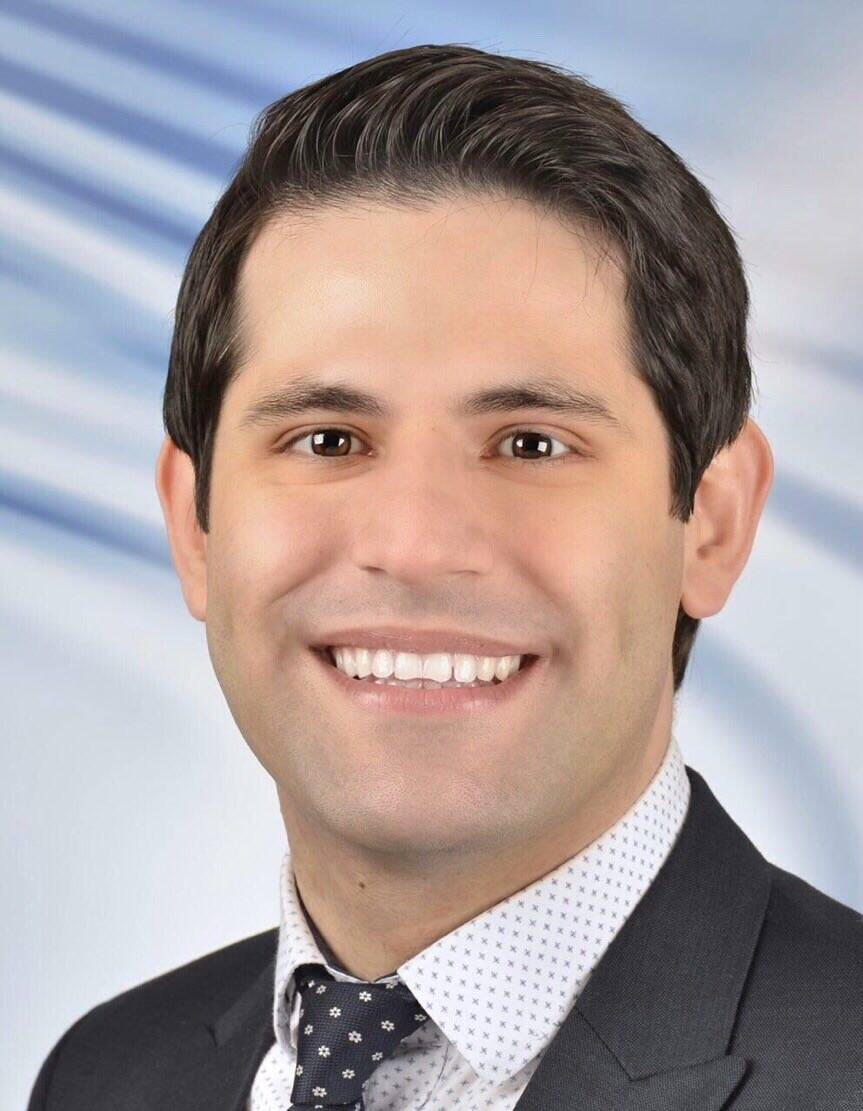
Dr. Matheus Santos is a researcher at the Centre for Robotics and Intelligent Systems within the School of Engineering at the University of Limerick. His work focuses on developing cooperative robotic systems for inspection and monitoring applications. His research interests include path planning algorithms for unmanned systems, multi-robot cooperation (UAV/USV), 3D reconstruction for infrastructure assessment, visual inspection technologies, and fault-tolerant control systems for inaccessible environments. Recent projects involve developing modular UAV systems for wildlife monitoring, cooperative robotic teams for bridge inspection using LiDAR, and fault-tolerant control systems for offshore wind turbine inspection. Dr. Santos' work emphasizes practical applications in environmental monitoring and infrastructure maintenance.
Dr. Sakdirat Kaewunruen is a Professor and Reader in Railway and Civil Engineering at the University of Birmingham, UK. He leads the Birmingham Centre for Railway Research and Education (BCRRE) and convenes the BEng/MEng Railway Engineering and MSc Structural Engineering programs. His roles include Chief Editor of Frontiers in Transportation and Transit Systems and member of EU-funded research initiatives like RISEN and S-CODE. Education: PhD in Civil Engineering (Structures/Railway Infrastructure), University of Wollongong, Australia MBA (Executive), Australian Graduate School of Management BEng (Hons) in Civil Engineering, Suranaree University of Technology Research Interests: Focuses on resilient transport infrastructure, train-track interaction dynamics, smart materials, risk management, and sustainability. His work integrates advanced modeling, sensor technologies, and circular economy principles to enhance railway systems' reliability and environmental impact. Awards: NSW Young Tall Poppy Science Award (Australia) Japan Society for the Promotion of Sciences Long-term Fellowship World Top 100 Most Cited Scientist in Civil Engineering (Stanford University) Grants & Projects: Secured over £15M in research funding, including EU H2020 and UK DfT projects. Leads initiatives like RISEN (Euro1.2M) and collaborates with MIT, University of Illinois, and Southwest Jiaotong University. Labs & Teams: Coordinates interdisciplinary teams in railway resilience, smart infrastructure, and sustainable urban systems. Active in ISO/BSI standards for railway sleepers and recycling of rolling stocks.
Associate Professor Dinescu Stella is affiliated with the Department of Mechanical, Industrial and Transport Engineering at the Faculty of Mechanical and Electrical Engineering of the University of Petroșani (UPET.RO). Her research focuses on mechanical engineering, mining equipment reliability, energy storage systems, and structural integrity analysis. She holds a PhD and has contributed to advancements in rotor excavator dynamics, corrosion impact assessment, and hydrogen storage solutions. Her work combines experimental and computational methods, including spectral analysis, finite element modeling, and simulation tools like SolidWorks. Key areas of interest include optimizing excavation machinery performance, improving material reliability in harsh environments, and exploring sustainable energy storage technologies such as offshore salt cavern utilization. Recent studies address carbon footprint reduction in shipping and CO2 storage safety in geological formations. Publications span over two decades, with notable contributions to lignite mining processes, vibration analysis of mining equipment, and GIS/GPS applications for mine monitoring. Her interdisciplinary approach integrates mechanical engineering with environmental and biomedical challenges, such as scaffold designs for liver cell asymmetry using 3D bioprinting.
Knut Erik Teigen Giljarhus is an Associate Professor at the University of Stavanger's Faculty of Science and Technology within the Department of Mechanical and Structural Engineering and Materials Science. Appointed to a full-time faculty position in 2018 after transitioning from industry roles, he currently serves as Study Program Leader for Mechanical Engineering programs since 2020. Education: PhD from the Norwegian University of Science and Technology (NTNU) Research Interests: His primary expertise lies in Computational Fluid Dynamics (CFD) , with significant contributions to multiphase flow systems (oil/water separation, annular displacements), urban aerodynamics (pedestrian wind comfort, building interactions), and biomedical fluid applications (blood pumps, vascular flow). He employs advanced numerical methods including lattice Boltzmann modeling, large eddy simulations, and machine learning integration for rapid wind prediction. Publication Trends: Analysis of his 2024-2025 output reveals strategic expansion into ML-enhanced CFD for urban wind assessment while maintaining core multiphase flow research. Key themes include non-Newtonian fluid behavior in medical contexts, density-unstable displacement mechanisms, and aerodynamic optimization for sports engineering—all published in high-impact journals like Physics of Fluids and Building and Environment . Scientific Awards: No awards or fellowships were documented in the provided materials Advising and Grants: Formal advisees are not listed in the source material No research grants or funding sources are explicitly mentioned Labs and Teams: As Study Program Leader, he directs mechanical engineering curriculum development at the University of Stavanger. His research leverages the Department's computational facilities and collaborates with SINTEF Energy Research (evidenced in publications) alongside international partners in biomedical engineering and urban wind studies.
Zahra Sharif Khodaei is a Professor in Aerospace Structural Durability and Health Monitoring at Imperial College London's Department of Aeronautics within the Faculty of Engineering. She earned her PhD in numerical modelling of functionally graded materials from Czech Technical University in 2008. Her professional experience includes a research associate role at Imperial College from 2009 before transitioning to a lectureship in 2014. Professor Khodaei holds prestigious fellowships from the Royal Aeronautical Society and Women in Engineering Society. Her research focuses on advanced structural health monitoring (SHM) techniques for aerospace composites, including fatigue analysis, damage detection via guided waves, and integration of physics-informed machine learning. Key areas include development of wireless sensor solutions, probabilistic frameworks for impact localization, and optimization of sensor networks for large composite structures. She also explores metamaterials, fiber optic sensing systems, and reliability analysis under environmental variations. Expertise: SHM, composite materials, fatigue analysis, neural networks, guided wave techniques Affiliations: Aerospace Materials and Structures, Space Engineering, Structural Integrity and Health Monitoring, The Composites Centre Recent work emphasizes baseline-free damage detection methods, probabilistic impact localization, and multi-objective sensor path optimization. Her publications span structural simulations, material characterization under extreme conditions, and hybrid sensor systems for aerospace applications. Scientific Awards: Fellow of Royal Aeronautical Society, Fellow of Women in Engineering Society Current research includes development of digital clone platforms for SHM system testing under uncertainty, vibration-based offshore wind turbine monitoring, and 3D-printed flexible strain sensors. She also investigates automated crack growth quantification using neural networks and temperature compensation frameworks for guided wave systems in large composites.
Dr. Li Ma is an Assistant Professor in Fluid-Structure Interaction at the Department of Civil and Environmental Engineering, Faculty of Engineering, Imperial College London. He joined the university as an undergraduate student, pursued a PhD in the Fluid Mechanics Section, and was appointed as Lecturer in 2020. His research focuses on fluid-structure interaction, including offshore structures, hydrodynamic impacts, wave loads, and renewable energy systems. Key interests include wave breaking, fluid loading models, load statistics, experimental methods, and solar power efficiency. Educations: Bachelor’s degree in Civil Engineering at Imperial College London PhD in Fluid Mechanics at Imperial College London Research Interests: Li Ma’s work bridges fluid dynamics and civil engineering challenges, particularly in marine and energy systems. He explores turbulent buoyancy-driven flows, structural reliability under dynamic loads, and innovative experimental techniques. His recent studies emphasize applications in offshore engineering and renewable energy infrastructure. Labs & Affiliations: Li Ma is affiliated with the Fluid Mechanics Section and the Grantham Institute , contributing to interdisciplinary projects on sustainable energy and environmental engineering.
Surya Teja Kandukuri is a Researcher at the Department of Engineering Sciences at the University of Agder, Norway. His work focuses on fault diagnosis, prognostic health management, and control systems for renewable energy applications, particularly wind and hydroelectric power systems. Education: PhD in Mechatronics, University of Agder (2014-2018) MSc in Systems and Control, Delft University of Technology, Netherlands (2003-2006) B.Tech in Electrical and Electronics Engineering, Nagarjuna University, India (1999-2003) Research Interests: Dr. Kandukuri specializes in model-based fault diagnosis and prognostic system health management for complex engineering systems. His research integrates system identification, estimation, and control theory with advanced machine learning techniques to develop predictive maintenance solutions for renewable energy infrastructure. He has particular expertise in wind turbine systems, where he has developed innovative approaches for monitoring pitch systems, detecting electrical faults in induction motors, and assessing performance degradation over time. His work extends to hydroelectric power plants through the PHMHydro project, where he applies similar health monitoring principles to water turbine systems. The integration of physics-based models with deep learning frameworks represents a key innovation in his research approach, enabling more accurate and timely fault detection in critical infrastructure. Publications Trends: Dr. Kandukuri's publication record demonstrates a consistent focus on health monitoring systems for renewable energy infrastructure. His recent work (2022-2025) shows increasing integration of deep learning techniques with traditional signal processing methods for fault diagnosis. There's a clear progression from wind turbine systems to broader applications in hydroelectric power, reflecting expanding research scope. His collaborations span multiple countries and institutions, particularly with Norwegian and international research partners. Research Groups: Intelligent Mechatronics (iTron) Intelligent Monitoring Projects: Performance and Health Monitoring for Hydroelectric Powerplants (PHMHydro)
Ali Mehmanparast Nodehi is a Professor of Structural Integrity at the University of Strathclyde, within the Department of Naval Architecture, Ocean and Marine Engineering, Faculty of Engineering. He plays a key leadership role in the Strathclyde-Oxford-Edinburgh Centre for Doctoral Training in Wind and Marine Energy Systems and Structures (WAMSS CDT), and previously led the REMS CDT programme. His work bridges academia and industry, with extensive collaborations across global offshore wind operators and research institutions. Education: MEng and PhD from Imperial College London; MBA from Cranfield University Professional Affiliations: Chartered Engineer (IMechE), Fellow of HEA, Chartered Manager (CMI) Editorial Roles: Energy Engineering Subject Editor for Engineering Failure Analysis ; editorial board member for Applied Ocean Research , Forces in Mechanics , Materials at High Temperatures , Journal of Multiscale Modelling , and Wind External Role: Member, UK Forum for Engineering Structural Integrity (FESI) Council since 2014 Prof. Mehmanparast's research centers on structural integrity, fatigue and fracture mechanics, and life extension of offshore renewable energy structures. His work integrates advanced modeling, experimental techniques, and additive manufacturing innovations to solve critical challenges in offshore wind and tidal energy systems. Key themes include corrosion-fatigue interactions, residual stress effects, and integrity assessment of welded and additively manufactured components. The recent publications highlight a consistent focus on enhancing the durability and reliability of offshore energy structures. Trends include the use of advanced materials (e.g., nickel coatings, LTT alloys), optimization of manufacturing processes (e.g., wire arc additive manufacturing), and refinement of fatigue design standards. Subfields span erosion resistance, crack growth prediction, S-N curve validation, and structural health monitoring, all contributing to safer, longer-lasting offshore installations. Scientific honors include: Chartered Engineer (CEng), Institution of Mechanical Engineers (IMechE) Fellow, Higher Education Academy (HEA) Chartered Manager (CMgr), Chartered Management Institute (CMI) Fellow, Chartered Management Institute Prof. Mehmanparast has secured and led major research grants, including the £7.5M EPSRC Co-Tide Programme Grant and the £3M SLIC Joint Industry Project. He has supervised over 10 PhD/EngD students to completion and currently mentors several doctoral researchers. His projects are industry-sponsored and address real-world challenges in structural lifecycle management. He also organizes and chairs international conferences, reinforcing his leadership in engineering structural integrity. He leads or co-leads multiple active research initiatives such as: Evaluation of Corrosion-Fatigue Behaviour in Offshore Wind Turbine Substructures Improving Fatigue Life Assessment by Considering Manufacturing Imperfections CoTide: Co-design for Scalable Tidal Stream Energy Structural Lifecycle Industry Collaboration (SLIC JIP)