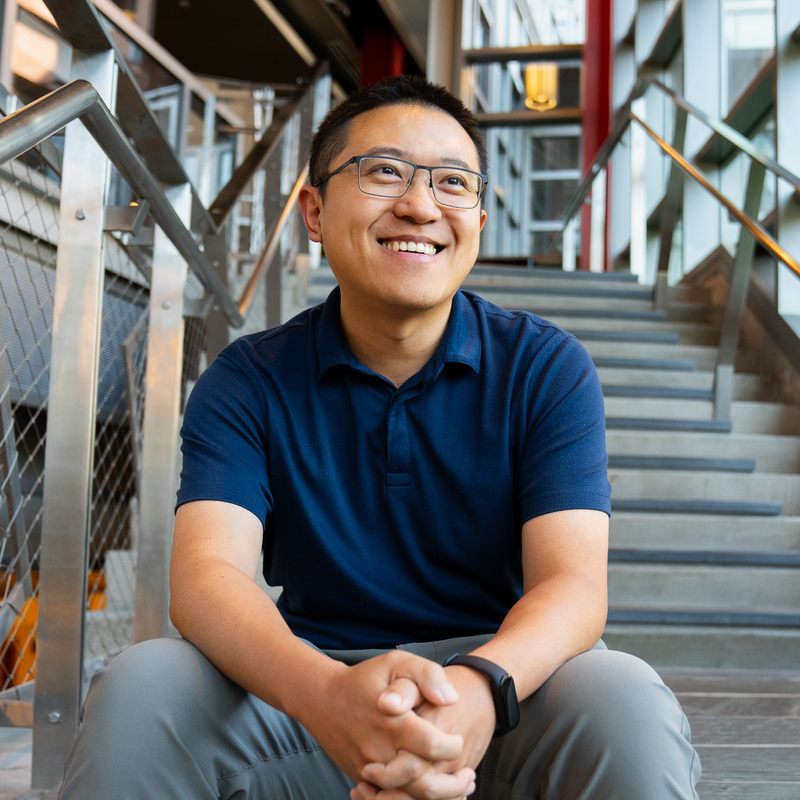
Gang Wang is an Associate Professor in the Department of Computer Science at the Siebel School of Computing and Data Science at the University of Illinois Urbana-Champaign (UIUC) . He serves as the Associate Director of the Capital One Illinois Center for Generative AI Safety and holds courtesy affiliations with the Department of Electrical and Computer Engineering , Security and Privacy Research at Illinois (SPRAI) , and the Coordinated Science Laboratory (CSL) . His research focuses on developing explainable and robust machine learning systems to enhance internet security and privacy. Key areas include adversarial machine learning , deepfake detection , phishing prevention , and security of social computing platforms . He actively contributes to major conferences like USENIX Security , CCS , NDSS , and ICML . Recent publications highlight his work on LLM benchmark contamination , VLM jailbreaks , and deepfake profile detection . His research team has produced award-winning papers at CHI and IEEE SP , with grants from NSF , Amazon , and Google . Notable students include Qingying Hao and Limin Yang , who co-authored multiple high-impact papers.
Georg Rehm holds an Adjunct Professorship in Computational Linguistics and Language Technology at Humboldt-Universität zu Berlin's Faculty of Philosophy. He is a Principal Researcher and Research Fellow at DFKI Berlin's Speech and Language Technology Lab, and Head of the W3C Germany/Austria Chapter. His roles include coordinating major EU initiatives like the European Language Grid (ELG) and QURATOR. Rehm's work spans Language Technology, AI, and multilingual systems, with a focus on digital language equality, curation technologies, and open science infrastructure. He leads projects such as HIVEMIND (2025-2027) and Language Data Space (2023-2025), and has contributed over 275 publications in computational linguistics and related fields. His research addresses challenges in multilingual NLP, fake news detection, and ethical AI deployment. Rehm oversees strategic initiatives like the META-NET network and chairs conferences such as ACL Industry Track and Sci-K workshops. He advises on EU policy frameworks for language technology and collaborates with organizations like the DIN Presidential Committee and FOCUS.ICT. His academic network spans global institutions, and he actively participates in program committees for top venues including ACL, NAACL, and COLING. Rehm's lab develops tools like the Knowledge Storage Ecosystem and contributes to open-source LLM projects like Occiglot and OpenGPT-X. He holds a PhD and has over 25 years of industry-research experience. His research interests include semantic storytelling, interoperable metadata, and AI ethics. He is affiliated with multiple institutes, including the DFKI Lab Berlin and the W3C, and serves on editorial boards for journals like Language Resources and Evaluation.
Dr. Tharindu Ranasinghe is a Lecturer in Security and Protection Science at the University of Lancaster's Computing and Communications Department. His research focuses on developing machine learning approaches for natural language processing (NLP) tasks, emphasizing NLP for Social Good, with applications in computational social science, digital humanities, and text adaptation. He has published in top-tier journals/conferences like ACL, EMNLP, and COLING. He serves as an Associate Editor for the Natural Language Processing journal and has held roles as Area Chair for major NLP conferences. He co-chairs the NeTTT conference series and the LoResLM workshop, promoting research in translation technology and low-resource language models. His work includes creating datasets like SOLD (Sinhala Offensive Language Dataset) and frameworks like MultiLS for lexical simplification. He has received awards for contributions to offensive language detection and quality estimation research. His research groups include SCC (Data Science) and UCREL (University Centre for Computer Corpus Research on Language). He advises PhD student Damith Dola Mullage. Dr. Ranasinghe’s contributions span ethical AI, multilingual NLP, and computational linguistics, addressing societal challenges through technology.
Dirk Hovy is a leading researcher in computational linguistics and natural language processing, focusing on social bias, ethical AI, and sociodemographic factors in language technology. His work bridges NLP with social science, examining how socioeconomic status, gender, and cultural aspects influence both model performance and human-AI interaction. Key Research Themes: Socioeconomic bias in NLP systems, emotion analysis frameworks, hate speech detection, multilingual speech recognition disparities, and safety mechanisms for conversational AI. Collaborative Efforts: Works extensively with teams across Europe and North America, co-authoring studies on topics from Italian Twitter demographics (DADIT dataset) to LGBTQIA+ representation in language models. Methodological Contributions: Proposes novel evaluation frameworks like XSTest for safety behaviors, BooStSa for model significance testing, and Twitter-Demographer for data enrichment. Ethical Advocacy: Promotes inclusive language technology through research on neopronouns, religious bias mitigation, and value-sensitive design principles for safer AI systems. His recent publications explore the limitations of current demographic adaptation techniques in transformers, the reproduction of gendered emotion stereotypes in LLMs, and the urgent need for socio-economic class inclusion in NLP research. His work consistently emphasizes the intersection between technical innovation and societal impact.
Hal Daumé III is a Professor and Volpi-Cupal Family Endowed Professor in the Department of Computer Science at the University of Maryland, with appointments in both Computer Science and Language Science. He leads the TRAILS Institute (Trustworthy AI in Law & Society) and teaches courses on generative AI, trustworthy machine learning, and human-AI interaction. His research focuses on natural language processing (NLP), machine learning, and developing AI systems that minimize societal harms. Key interests include interactive learning paradigms and fairness in AI. Daumé holds a Ph.D. in Computer Science from the University of Southern California (2006). He is affiliated with the Computational Linguistics and Information Processing Lab (CLIP), the Human-Computer Interaction Lab (HCIL), and the Center for Machine Learning. His work bridges technical innovation with ethical considerations, emphasizing inclusivity and human-centered AI design. Notable contributions include the textbook A Course in Machine Learning , open-source NLP tools, and foundational papers on fairness, bias mitigation, and human-AI collaboration. Awards include the Qualcomm Innovation Fellowship (2011) and recognition for sustainability initiatives through UMD's 'Fearless Ideas' program. He advises a vibrant group of Ph.D. students exploring topics like peer-review dynamics, language technology disparities, and AI ethics. Daumé actively promotes responsible AI practices, advocating for inclusive conference organization and ethical guidelines in AI development. His research spans technical advancements and societal impact, aiming to ensure AI systems align with human values and reduce real-world inequities.
Ali Emami is an Assistant Professor in the Department of Computer Science at Brock University (Canada), with a tenure-track position at Emory University starting Fall 2025. His research focuses on natural language processing, machine learning, and AI ethics, particularly evaluating large language models' reasoning and societal impacts. He holds a PhD in Computer Science from McGill University/Mila (2021), with prior degrees from McGill in MSc (2016) and BSc (2014). Research interests include: Natural Language Processing (NLP) and Machine Learning Ethics, bias, and fairness in AI Language understanding and generation AI interpretability and reliability Computational social science Recent work emphasizes benchmarking LLMs' reasoning capabilities (e.g., NYT-Connections, STOP!) and addressing societal bias through books. Notable achievements include the COLING 2025 Best Dataset Award and the EMNLP 2024 Social Impact Award . He has supervised multiple undergrad and graduate researchers, with a focus on fostering collaborative projects. His lab explores personalized narrative generation (MirrorStories) and tool-augmented LLM evaluation frameworks (TALE). Upcoming roles include a talk at the FirstOntario Performing Arts Centre on LLMs' societal mirrors and a 2024 teaching award from Brock’s Faculty of Mathematics & Science.
Justin Weinberg serves as Associate Professor of Philosophy at the University of South Carolina within the McCausland College of Arts and Sciences. Holding a PhD from Georgetown University (2004), he maintains dual prominence in academic philosophy through traditional scholarship and public engagement via Daily Nous, a highly influential philosophy news platform receiving millions of annual visits. His educational foundation was established with a Georgetown PhD completed in 2004, though specific undergraduate and master's institutions aren't detailed in the source materials. Weinberg's academic journey has evolved from traditional philosophical inquiry toward contemporary issues intersecting with technology and academic sociology. Weinberg's research spans ethics, social and political philosophy, and metaphilosophy, examining both theoretical questions regarding normative moral theory and practical topics including love, regret, offensiveness, and technology. His political philosophy work critically assesses idealized political frameworks and explores governmental/non-governmental agency, with current research focusing on the personal and social value of disagreement. This thematic thread connects his academic publications with his editorial role at Daily Nous and his 'Disagree' blog, which reflects his belief that disagreement is 'misunderstood and underappreciated.' His publication record reveals consistent engagement with fundamental philosophical questions while addressing emerging issues. Recent works demonstrate growing interest in the sociology of philosophy, academic practices, and philosophy's intersection with technology, including analyses of GPT-3 and co-authorship patterns. This trajectory shows his ability to bridge theoretical concerns with practical applications in evolving academic landscapes. Editor of Daily Nous - a premier philosophy news/discussion platform visited millions of times annually Author of 'Disagree' blog exploring philosophical questioning and value of disagreement Featured in interviews including 'What is it like to be a philosopher?' Contributor to NPR discussions on philosophy's societal value Podcast guest on 'Brain in a Vat' discussing philosophy's relevance Weinberg actively connects academic philosophy with public discourse through multiple channels. As a father of three children, he brings personal perspective to inquiries about life, relationships, and values. His social media presence across Twitter (@dailynouseditor), Bluesky (@dailynous.com), and Instagram (justin.weinberg) extends his philosophical engagement beyond traditional academic boundaries, making complex ideas accessible while maintaining scholarly rigor. His office in Close-Hipp 522 serves as base for teaching diverse courses from Philosophy of Disagreement (PHIL 370) to Metaphilosophy (PHIL 760).
Chris Davis is a Senior Lecturer I in the Department of Computer Science at The University of Texas at Dallas (UT Dallas), affiliated with the Erik Jonsson School of Engineering and Computer Science. He holds a Ph.D., M.S., and B.S. in Computer Science from UT Dallas (2011, 2009, 2005). His research focuses on Natural Language Processing (NLP), Machine Learning, and their applications in education and biomedical fields. Notable projects include collaborations with IBM Watson to develop cognitive computing courses and advancements in grammatical error detection systems. Research interests span NLP, AI-driven education tools, and interdisciplinary work in biotechnology. Recent publications emphasize curriculum learning frameworks (CLIMB), multimodal semantic processing, and applications of Large Language Models (LLMs) in language teaching. His work also explores chemical methods for medical imaging and malaria treatment, showcasing cross-disciplinary impact. Articles highlight trends in NLP error detection, LLM educational applications, and biomedical innovations. He has pioneered methods for radioisotope labeling and malaria drug development. Davis actively contributes to academic initiatives like the IBM Watson course, blending industry collaboration with pedagogical innovation.
Chris Irwin Davis is an Associate Professor of Instruction in the Department of Computer Science at the University of Texas at Dallas (UTD), where he earned his Ph.D. under Dr. Dan Moldovan. He serves on the UTD Academic Senate (2025-2026). His expertise spans computational linguistics, computational semantics, and NLP for under-resourced languages, particularly Indo-Iranian languages like Farsi and Urdu. His research also explores machine ethics, computational creativity, and artificial general intelligence. Education: Ph.D. in Computer Science from UT Dallas (advisor: Dr. Dan Moldovan). Graduate research at the Human Language Technology Research Institute. Research Interests: Computational semantics and event representation NLP for languages with sparse resources Machine translation and transliteration systems Machine ethics and AGI Assistive technologies and personal robotics Publications focus on NLP applications for under-resourced languages, transliteration systems (e.g., Tajik-Farsi), and machine learning models for grammatical error detection. Recent work explores curriculum learning for infant-inspired AI models and multimodal semantic processing. Teaching includes foundational computer science courses (Discrete Math, Programming Paradigms) and advanced topics like NLP and AI. No formal advisees listed, but extensive teaching and curriculum development experience. Active in developing open-source tools like Phramer (statistical phrase-based translator) and frameworks for event semantics in Persian.
Soumyabrata Dey is an Adjunct Assistant Professor in the Department of Computer Science at Clarkson University's Coulter School of Engineering & Applied Sciences. He holds a Ph.D. (2014) and M.S. (2011) in Computer Science from the University of Central Florida, along with a B.Tech. in Computer Science and Engineering from the West Bengal University of Technology (2005). His research focuses on gesture-based human-computer interaction, 3D reconstruction optimization, biometric authentication, and healthcare data analytics. He has industry experience as a Chief Engineer at Samsung Research Institute and Research Lead at Carl Zeiss. Education: Ph.D. in Computer Science, University of Central Florida, 2014 M.S. in Computer Science, University of Central Florida, 2011 B.Tech. in Computer Science and Engineering, West Bengal University of Technology, 2005 Research interests span context-aware systems, sensor data analytics using ML/DL/RL, and biomedical data analysis. His work includes real-time 3D scene reconstruction, predictive healthcare models, and UV exposure tracking via wearables. He has led NSF-funded projects on biometric authentication technologies and iris data collection. Grants include NSF CITeR awards totaling $150,000 for research on iris matching, fingerprint systems, and smartphone hardware optimization. He holds patents in UV dose tracking and fMRI image analysis. His publications span conferences like ICCV, ECCV, and journals such as Frontiers in Neuroscience. Advising and grants: No formal advisees listed, but his grants highlight collaborative research. Labs/teams: Not explicitly mentioned, though industry collaborations with Samsung and Carl Zeiss suggest active partnerships.
Swapna Gokhale is an Associate Professor at the University of Connecticut, Storrs Campus. Her research spans interdisciplinary domains including Social Media Mining , Spatial Machine Learning for public health, and Computer Science Education . Email: swapna.gokhale@uconn.edu Phone: (860) 486-2772 Office: ITE 237 Her recent work focuses on: Applying spatial ML to public health challenges like suicide mortality and sleep deprivation Advancing 5G network slicing and digital twin frameworks for IoT Analyzing social media discourse during protests and public health crises Developing transformer models for anti-human rights discourse detection Publications reveal expertise in NLP , network optimization , and social determinant of health analytics .
Professor Richi Nayak is an internationally recognized expert in data mining, text mining and web intelligence at Queensland University of Technology's School of Computer Science. As the Applied Data Science Program Leader of the Centre for Data Science, she develops novel methods for text classification, clustering, and information extraction using deep learning, matrix factorization, and ranking-centered approaches. Her research spans three main streams: Text Mining for data organization and understanding, applications of data mining in solving real-world problems across domains including education, healthcare and transportation, and algorithms for automation and personalization. She has successfully commercialized technologies including marketing strategy automation and bias detection systems deployed by Fortune 500 companies. Professor Nayak's recent publications focus on practical applications of machine learning including traffic crash analysis, multimodal learning, biomass modeling, and offensive text detection. Her work consistently addresses real-world problems through innovative machine learning approaches.
Stefano De Pascale is a computational linguist affiliated with the Brussels Center for Language Studies at Free University of Brussels (VUB). His research focuses on lexical semantics, diachronic language change, and dialectology, particularly in Italian and Dutch language contexts. Education: Master in Linguistics (2014) and Bachelor in Language and Literature (2013) from KU Leuven. Current Role: Researcher with expertise in computational semantics and cognitive sociolinguistics. Recent research emphasizes: Algorithmic modeling of semantic drift mechanisms Limburgish dialect normalization using NLP techniques Analysis of hate speech pragmatics in Italian tweets Investigation of borrowed expression integration in Dutch Prototype-based diachronic semantic analysis His projects demonstrate strong interdisciplinary focus combining: Natural Language Processing and Historical Linguistics Corpus-based methodologies with cognitive frameworks Sociolinguistic theory and computational analysis Collaborative work spans institutions in Belgium, Mexico, and Finland, addressing language change through: Token-based modeling approaches Lexical coherence analysis Dialect phonological translation As supervisor of multiple datasets, De Pascale contributes to open science initiatives in computational linguistics.
Wissam Antoun is a PhD Researcher at ALMAnaCH, a research team within INRIA (Institut National de Recherche en Informatique et en Automatique) in Paris. Specializing in Natural Language Processing with a focus on Arabic and French language models, he has developed several influential models including AraBERT (the first Arabic BERT), AraGPT2 (the first Arabic LLM), and CamemBERTa (a French language model based on DeBERTa V3). Prior to his current position, he served as a Research Engineer at ALMAnaCH, a Senior Machine Learning Engineer at Siren Analytics in Beirut, and co-founded the Machine INtelligence Development (MIND) Lab at the American University of Beirut. Wissam's research focuses on developing state-of-the-art NLP technologies for languages displaying high variability, particularly Arabic dialects used on social media. His work spans multilingual language modeling, tokenization techniques for morphologically rich languages, and the development of comprehensive language model suites. Recent projects include Gaperon (a French LLM suite with 1.5B, 8B, and 24B parameters), ModernCamemBERT (the first non-English ModernBERT model), and pioneering work on detecting French AI-generated text. His research demonstrates expertise in model training, evaluation, and practical implementation for real-world NLP applications. His publication record shows consistent high-impact contributions, with AraBERT becoming the most cited Arabic AI paper and most starred Arabic GitHub repository, with over 10 million downloads on Hugging Face. His work has been published at major venues including Findings of ACL 2023 and preprints on arXiv. The trends in his recent articles show a progression from foundational Arabic language models to more sophisticated French language modeling and analysis of AI-generated content. Wissam has received multiple prestigious awards including First Place in the Arabic Sentiment Analysis competition at KAUST (2021) and Second Place in the OSACT4 Shared task on Offensive Language Detection (2020). His technical capabilities span the full AI stack from research to deployment, with expertise in major frameworks, software tools, and programming languages. As an educator, Wissam has served as a Graduate Teaching Assistant at the American University of Beirut, teaching courses in Software Tools, Parallel Programming, and Data Structures and Algorithms. He has also provided NLP instruction through workshop series and supported contestants in the Stars of Science program. His lab work centers around the ALMAnaCH research team at INRIA, where he contributes to advancing French language modeling capabilities through active development on GitHub repositories.
Dr. Ron Doyle holds the Katherine and Dickerson Wright Presidential Chair of Computer Science and Entrepreneurship at Wake Forest University. He received his PhD in Computer Science from Duke University in 2003, following undergraduate and graduate studies at West Virginia University. With over 20 years at IBM and a recent tenure as Chief Technology Officer at Broadcom (2018-2023), he brings extensive industry experience to academia. His research lies at the intersection of computer science and entrepreneurship, focusing on Cloud Computing Distributed Systems Artificial Intelligence Web Application Development Automation Entrepreneurial Innovation . He bridges technical expertise with business insights to help students launch startups. Dr. Doyle holds over 50 U.S. patents and has published extensively on cloud service delivery, edge processing, web quality of service, and content optimization. As a joint appointee in Wake Forest's Center for Entrepreneurship, he mentors student ventures and develops curriculum. His industry accolades include IBM's Distinguished Engineer and Master Inventor titles. Scientific awards include: Distinguished Engineer at IBM Master Inventor at IBM Over 50 U.S. Patents His work demonstrates trends in cloud technologies (adaptive edge processing, SLA enforcement, resource optimization) and AI (offensive language detection). He also contributes to mobile cloud integration and secure device configuration.