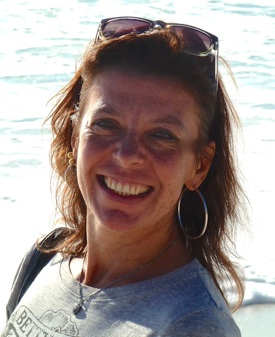
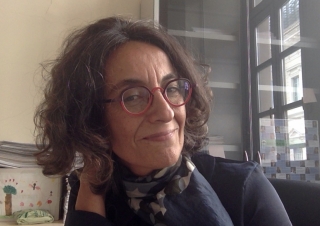
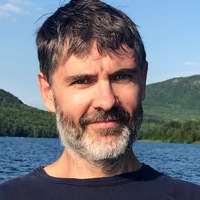
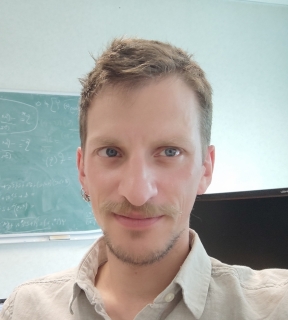
Mauro Conti is a Full Professor at the University of Padua, Italy, where he serves as Editor-in-chief of IEEE TIFS, UniPD Academic Advisor for Entrepreneurship Development, Study Program Coordinator of the MSc degree in Cybersecurity, Head of the SPRITZ Security and Privacy Research Group, and Director of the UniPD node of CINI Cybersecurity National Lab. He also maintains affiliations with TU Delft (NL) and the University of Washington (USA). Additionally, he is the CEO and co-founder of CHISITO and co-founder of DYALOGHI. His research focuses on security and privacy for wireless resource-constrained mobile devices (WSNs, RFIDs, and smartphones), computer system security, computer forensics, access control, and distributed and networked systems. Professor Conti has published extensively in top security venues including ACM CCS, IEEE S&P, NDSS, and USENIX Security, with recent work covering topics such as battery authentication, federated learning privacy, private set intersections, USB peripheral fingerprinting, and ATM PIN inference. He has received numerous prestigious awards including IEEE Fellow, Young Academy of Europe Fellow, EU Marie Curie Fellow, and DAAD Fellow. Professor Conti has advised over 100 students at various levels including PhD, MSc, and BSc, many of whom have gone on to successful careers in academia and industry. His research has been supported by multiple European Commission projects, university grants, and industry collaborations with companies like Cisco and Intel.
Maria Elena Valcher is a Professor at the Department of Information Engineering, University of Padova, Italy. She is an IEEE Fellow (since 2012), IFAC Fellow (since 2023), Socio Effettivo of Istituto Veneto di Scienze, Lettere ed Arti (since 2017, previously Socio Corrispondente 2008-2017), and Socio Effettivo of Accademia Galieliana di Scienze, Lettere ed Arti in Padova (since 2022, previously Socio Corrispondente 2017-2022). She currently serves as Administrator of the Istituto Veneto and holds leadership positions including EUCA President (2024-2025) and IEEE Control Systems Society Past President. Her research focuses on control systems, systems theory, optimization, Boolean control networks, multi-agent systems, and consensus problems. She has made significant contributions in distributed control, data-driven methods, and network optimization, with recent work exploring applications in opinion dynamics and social networks. Recent publications demonstrate a strong emphasis on data-driven approaches to control systems, particularly in distributed state estimation, unknown-input observer design, and multi-agent coordination. Her work shows consistent development in theoretical frameworks for networked systems with practical applications. Awards and Honors: IEEE Fellow (2012) IFAC Fellow (2023) Socio Effettivo, Istituto Veneto di Scienze, Lettere ed Arti (2017-present) Socio Effettivo, Accademia Galieliana di Scienze, Lettere ed Arti in Padova (2022-present) She teaches 'Controlli Automatici' (Bachelor in Information Engineering) and 'Systems Theory' (Master in Control Systems Engineering) during the 2024/2025 academic year. She has chaired major conferences including the 61st IEEE Conference on Decision and Control (CDC 2022) and serves as Program Chair for ICSTCC 2025.
Marilena Vendittelli is a Professor at Sapienza University of Rome, affiliated with the Robotics group. Her research spans control systems, biomedical robotics, motion planning, and autonomous systems. Research Areas: Control systems for robotics and nonholonomic systems Biomedical applications (hyperthermia therapy, needle insertion) UAV navigation and obstacle avoidance Haptics and human-robot interaction Adaptive estimation algorithms Recent Publications focus on adaptive control of bio-heat equations, safe UAV motion planning, soft robotics actuation, and haptic feedback in medical procedures.
Massimo Canale is a Tenured Associate Professor at the Department of Electronics and Telecommunications (DET) of Politecnico di Torino , and a member of the CARS@PoliTO Interdepartmental Center for Automotive Research and Sustainable Mobility. His academic career spans over two decades, focusing on control systems engineering with applications in automotive technology. Scientific Branch: Systems and Control Engineering (IINF-04/A) ERC Sectors: Automotive Engineering, Control Engineering, Control Theory Dr. Canale's research bridges theoretical advancements in Model Predictive Control (MPC) with practical applications in autonomous vehicles , hybrid/electric propulsion , and active suspension systems . His work integrates reinforcement learning and dynamic programming for optimizing vehicle performance and energy efficiency. Recent publications demonstrate trends in autonomous driving architectures (2024), sliding mode control for highway scenarios (2024), and energy management for sustainable mobility (2023-2024). He has developed patented solutions for semi-active suspension control and autonomous vehicle guidance. Award: IEEE Transactions on Control Systems Technology Outstanding Paper Award (2011) Editorial Roles: Associate Editor, IEEE Open Journal of Control Systems (2022–present) Dr. Canale supervises PhD students like Francesco Cerrito and teaches courses on digital control technologies , automatic control , and reinforcement learning at Politecnico di Torino. His research is funded through competitive grants (e.g., MPC4AVP 2021-2022) and commercial contracts (AD Shuttle 2024).
Giovanni Semi is a Full Professor in Urban Sociology at the Interuniversity Department of Territorial Sciences, Planning and Policies (DIST) at Politecnico di Torino. His academic career spans multiple institutions, with significant teaching contributions to doctoral programs at both the University of Milan and University of Turin over the past decade. University of Milan (2013-2023): Multiple cycles of Sociology and Methodology of Social Research University of Turin (2016-2018): Sociology and Methodology of Social Research His research focuses on three interconnected areas: urban studies (particularly gentrification, platform capitalism, and public spaces), migration studies (Mediterranean circulations and daily multiculturalism), and sociology (ethnographic methods, class analysis, and housing dynamics). Semi's work bridges theoretical frameworks with empirical fieldwork, often employing qualitative methodologies to examine contemporary urban transformations. Semi's recent publications demonstrate a consistent focus on the evolving nature of urban inequality, particularly examining how short-term rental platforms, post-pandemic conditions, and gentrification processes reshape urban landscapes and social relations. His work often centers on Turin as a case study while maintaining broader theoretical implications for Southern European urban contexts. As an academic, Semi has contributed significantly to methodological discussions through his practical guide to participant observation, now in its second edition. His research has appeared in prominent journals including Cities, European Urban and Regional Studies, and Identities. His work on urban sociology, particularly concerning gentrification processes and the impact of platform economies on housing markets, has established him as a significant voice in contemporary urban studies, with particular expertise on Southern European urban contexts.
Francesca Marazzi is an Assistant Professor at the University of Rome Tor Vergata's Department of Economics and Finance. She holds affiliations with the CESifo Research Network (as an affiliate), the CESIEG research centre at LUISS Guido Carli University (Deputy Director), and the DEMA P research cluster at Middlesex University, London. Her research focuses on behavioral and experimental economics, particularly exploring dishonest behavior, responsibility avoidance, and health economics issues like women's health and obesity interventions. She teaches courses such as 'Coding for Economic Applications' and 'Research Methods for Social Sciences' at both bachelor's and master's levels. Her work bridges theoretical models with empirical experimentation, addressing topics like corruption, public goods provision, and policy design. Notable contributions include studies on transparency's impact on bribery, pandemic-related behavioral changes, and the effects of soft drink taxation on adolescent health. She actively participates in interdisciplinary projects, such as the CREA initiative integrating AI and mathematics for fairness assertions, and the LongITools exposome analysis in chronic disease research. Marazzi's academic output emphasizes experimental methodologies, with recent focus on pandemic-driven behavioral shifts, financial stability mechanisms, and innovative governance metrics leveraging earth observation data post-wildfires. Her research portfolio reflects a commitment to applied microeconomic analysis with direct societal relevance.
Alessandro Di Vita is an Associate Professor at the Department of Psychological, Pedagogical, Physical Exercise and Training Sciences, School of Medicine and Surgery, Università degli Studi di Palermo (UNIPA). His work centers on educational psychology, career orientation, and pedagogical methodologies for adolescents and university students. Research Interests: Expressive writing for life planning, self-efficacy development, performance anxiety management, peer tutoring, and intercultural education. Key Projects: «Telemaco» (remote peer tutoring), «FOrCe» (career guidance interventions), and «FOrP» (school-university transition). Collaborations: Worked with international institutions like Universidad Austral (Argentina) and Universidad de Estudios de Palermo (Italy). His publications from 2007–2025 reflect a consistent focus on adolescent relationships, educational reform, and digital pedagogy. He has contributed to validation studies for psychological scales like the Worry Emotionality-Junior (WE-J) and developed methodologies such as «SeCo» for post-diploma decision-making. Alessandro also emphasizes Student Voice in educational processes, promoting active participation and resource utilization. Recent works include international comparative studies on peer tutoring and training programs for secondary school teachers.
Matteo Mario Pietro Motterlini is a Full Professor of Philosophy of Science at Università Vita-Salute San Raffaele in Milan, where he is affiliated with the Faculty of Philosophy. He is the director of the Center for Research in Experimental and Applied Epistemology (CRESA) and the Behavior Change Lab, and collaborates with the Cognitive Neuroscience Center and Division of Neuroscience. He holds teaching responsibilities in Cognitive Economics and Neuroeconomics, and Behavior Change, and serves on the university's academic committee. Università degli Studi di Milano – Philosophy London School of Economics – Economics Carnegie Mellon University – Cognitive Science His research lies at the intersection of philosophy, behavioral economics, and cognitive neuroscience, focusing on human rationality, decision-making processes, emotions, regret, and social learning, particularly in economic and financial contexts. He investigates how behavioral science can inform public policy and improve organizational practices. His work integrates experimental methods with neuroimaging to uncover the neurobiological foundations of judgment and choice. The recent publications highlight a strong trend in applying behavioral and cognitive sciences to societal challenges such as vaccine hesitancy, disinformation, charitable giving, and policy design. His work combines empirical rigor with philosophical depth, exploring topics like the epistemology of nudges, truth perception, and the role of expert endorsement. The integration of neuroscience, psychology, and economics is evident across his research output. Chief Behavioral Officer, E.ON Italia Spa Chief Behavioral Officer, Gruppo San Donato Scientific Advisor, MilanLab (AC Milan) Scientific Advisor, MarketPsych LLC Advisor for Behavioral Finance, Fidelity (Growth, Income & Stability project) Advisor for Social and Behavioral Sciences, Presidency of the Council of Ministers (Italy) He has received no explicitly mentioned scientific awards in the provided text. However, his advisory roles in high-impact public and private institutions reflect recognition of his expertise. His books are international bestsellers, translated into multiple languages, indicating broad scholarly and public influence. Motterlini has been actively involved in public engagement through collaborations with Corriere della Sera, Il Sole 24 Ore, and Il Foglio. He has delivered keynote lectures and participated in public festivals and media appearances, including on Sky TG24. He has advised on financial education (EDUFIN) and participated in events on longevity risk, health, and sustainability. His research is supported by interdisciplinary collaborations and applied projects with industry partners. He leads two major research units: the Center for Research in Experimental and Applied Epistemology (CRESA) and the Behavior Change Lab (also referred to as the E.ON Customer Behavior Lab), which focus on biometric and neuroscientific analysis of behavior. These labs serve as hubs for experimental research in decision-making, nudging, and behavioral interventions in health, finance, and sustainability.
Andrea Cristofaro is an Associate Professor at the Department of Computer, Control and Management Engineering, Sapienza University of Rome. He holds an M.Sc. in Mathematics (2005) from Sapienza University of Rome and a Ph.D. in Information Science and Complex Systems (2010) from the University of Camerino. His academic trajectory includes postdoctoral positions at INRIA Rhône-Alpes (France) and the Norwegian University of Science and Technology, followed by faculty appointments at the University of Camerino and University of Oslo before joining Sapienza in 2019. His research spans: Robotic systems : Fault-tolerant control, multi-agent coordination, and hybrid dynamics Distributed parameter systems : Stability analysis, observer design, and optimal control of PDEs Hybrid systems : Control synthesis for systems with state-driven jumps and switching logic Recent publications (2024-2025) predominantly explore fault-tolerant control architectures for multi-robot systems, decentralized task allocation, adaptive observer designs for biological and thermal systems, and optimal control of reaction-diffusion equations. This reflects a consistent focus on robustness in complex dynamical systems with applications ranging from industrial robotics to biomedical engineering. He serves as Associate Editor for Automatica and IEEE Transactions on Control Systems Technology , and is a member of the IEEE CSS Conference Editorial Board.
Şule Elmalı is an Assistant Professor in the Department of Mathematics and Science Education at the Faculty of Education, Sakarya University. Her academic work is centered on improving science education through innovative pedagogical approaches, teacher training, and technology integration. She teaches a range of undergraduate and graduate courses related to science teaching, environmental education, and STEM applications. Her research interests include science education, STEM education, environmental education, educational technology, pre-service teacher training, reflective thinking, and laboratory applications in biology. She has conducted studies on ecological footprint awareness, outdoor education, Web 2.0 tools, mobile applications in biology labs, and the impact of STEM programs on teacher autonomy and entrepreneurship skills. Her work emphasizes conceptual understanding in early science education, such as children's ideas about floating and sinking, and lunar observation experiences among teacher candidates. Her recent publications (2021–2024) span international journals like the Journal of Biological Education and Hacettepe University Journal of Education , focusing on dissection methods, professional development for science teachers, and nature-based learning. These works reflect a trend toward technology-enhanced, experiential, and inquiry-based science education, with a strong focus on teacher development and student conceptual change. TÜBİTAK Publication Incentive Award She has supervised academic contributions through course instruction and research projects, including a professional development program for science teachers in science and art centers. Her work also includes collaborations on research projects related to STEM education, nature-based programs for gifted students, and science center initiatives. She is actively involved in research projects such as the development and evaluation of technology-based in-service training programs for science teachers at science and art centers. She has also contributed to book chapters, such as 'From Theory to Practice: Bringing Life into the Classroom,' and presented at numerous international conferences. Her work bridges theory and practice in science education, aiming to enhance teaching quality and student engagement.
Patrizia Savi is a Tenured Associate Professor at the Polytechnic University of Turin within the Department of Electronics and Telecommunications. She actively participates in the Power Electronics Innovation Center (PEIC) and serves as a Senior Member of IEEE and the International Union of Radio Science . Teaching: She has been the Titolare del corso for 'Campi Elettromagnetici' (Electromagnetic Fields) since 2019-2021 at the Polytechnic University of Turin. Key Collaborations: Works with researchers across Italy and international institutions on projects involving GNSS-R for environmental monitoring. Research Interests: Her work focuses on GNSS Reflectometry for soil moisture retrieval, carbon-based composites (graphene, biochar, nanotubes) for microwave applications, and graphene tunable devices including biosensors. She also explores electromagnetic shielding using sustainable materials. Recent Publication Trends: Recent work emphasizes machine learning integration with GNSS-R data, biochar composite shielding in construction materials, and graphene-based biosensors for glucose and HRP detection. Key applications span climate action , environmental monitoring , and medical diagnostics . Scientific Awards: IEEE Fellow (2016-) IEEE Senior Member (2016-) International Union of Radio Science Senior Member (2024-) Advising: Supervises PhD students Simone Gaetano Ballaera and Fabio Peinetti , focusing on graphene sensors and tunable devices.
Tommaso Grigoletto is an Adjunct Professor at the Department of Molecular Sciences and Nanosystems, Ca' Foscari University of Venice, and a Postdoctoral Fellow at the Department of Information Engineering, University of Padua. His research focuses on theoretical and numerical methods for complex dynamical systems, particularly quantum and classical probability models. He is part of the Quantum Dynamics, Information and Control group at the University of Padua, led by Prof. Francesco Ticozzi. Education: Ph.D. and Master's degrees in Information Engineering from the University of Padua. Research interests include quantum system control, model reduction techniques, and feedback stabilization strategies. He teaches 'Fundamentals of Automatic Controls' at Ca' Foscari University (2024-2025). His articles explore quantum model reduction, feedback control for quantum systems, and stochastic dynamics. He is actively mentoring students interested in control engineering and quantum systems simulations. Open to collaborative research and thesis supervision in these areas. Professional networks include the Quantum Dynamics group at Padua and academic affiliations with both universities. Engaged in open-source projects like an arXiv update bot for tracking research trends.
Giovanni Di Bartolomeo is the Dean of the Faculty of Economics and a Professor at Sapienza University of Rome. He holds additional positions including Advisor to the European Parliament, Member of the Experts Council of the Italian Ministry of Economy and Finance, Senior Fellow at the Luiss Institute for European Analysis and Policy, and co-founder of the Centre for Investigation and Modelling of Experimental Observations (CIMEO). His research focuses on monetary and fiscal policy, macroeconomics, experimental economics, and environmental policy. Di Bartolomeo studied at Sapienza University of Rome and Pompeu Fabra University (Barcelona), earning an MSc and PhD. His work spans ECB policy analysis, climate change mitigation, and the impact of large-scale events like the Euro 2020 on regional economies. He has contributed to evaluating Italy’s Recovery and Resilience Plan and addressing stagflation risks in the Eurozone. His recent publications examine topics such as carbon taxation, financial dominance in the eurozone, and behavioral macroeconomic modeling. Notably, he explores guilt aversion in experimental settings and the strategic dynamics of scarce resources. Di Bartolomeo’s research emphasizes policy resilience, fiscal-monetary coordination, and the long-term implications of short-term political decisions. He has advised on structural reforms, sovereign debt crises, and pandemic fiscal responses. His contributions to public economics and macroeconomic resilience have been published in specialized journals and policy reports.
Giuseppa Compagno , Associate Professor at the University of Palermo (UNIPA), specializes in Psychological, Pedagogical, Physical Exercise and Training Sciences . Her teaching includes Special Education , Intercultural Didactics , and Game Teaching . Research Focus: Neuroeducation, inclusive methodologies, teacher training, and docimological tools. Key Projects: #UNOPERUNO (inclusion/jobs), SOSAC (accessibility), Mind in Mind Lab (assessment). Recent Publications highlight neurodidactic approaches to evaluation, intercultural teaching, and game-based learning for inclusivity. She emphasizes integrating Brain Gym and Habits of Mind into teacher competence frameworks.
Nicola Maria Dusi is an Associate Professor in the Department of Communication and Economics at the University of Modena and Reggio Emilia (UNIMORE). She specializes in semiotics of cinema and media, with a focus on contemporary television series, intermediality, and transmedia storytelling. Her academic work bridges theoretical frameworks with practical analysis of audiovisual media products. Dr. Dusi's research interests encompass multiple dimensions of media studies. She investigates how contemporary television series construct narrative meaning through complex storytelling techniques, with particular attention to the interplay between fiction and documentary elements. Her work on intermediality explores how different media forms interact and transform content across platforms. She has conducted extensive research on the representation of historical events in television miniseries, notably analyzing the Chernobyl TV series as a case study of cultural memory construction. Her scholarly contributions also include studies on biopics, autism representation in media, and the semiotics of cinema archives. She approaches these topics through socio-semiotic frameworks that examine both textual structures and audience reception. Her recent publications reveal a consistent focus on contemporary media phenomena, particularly the evolution of television seriality in the streaming era. She examines how modern TV series negotiate between factual and fictional elements, creating complex narrative ecosystems that extend beyond the screen through paratexts and fan engagement. Her work on Chernobyl demonstrates how a TV miniseries functions as both historical representation and cultural commentary, blending documentary approaches with dramatic storytelling. She also explores more technical aspects of media representation, such as the aesthetics of blurred vision and data moshing in digital media, analyzing how these techniques affect meaning construction and viewer experience. Dr. Dusi is actively involved in teaching courses directly related to her research expertise. She teaches 'Semiotics of Cinema and Media' for Communication Sciences students, covering theoretical frameworks and analytical methods for examining audiovisual texts. Her course includes modules on basic semiotic theories, analysis of cinema and media, and specialized topics in contemporary media studies. She also teaches 'Intermediate Languages' for the Master's Degree in Advertising, Digital Communication, and Business Creativity. Her teaching emphasizes both theoretical knowledge and practical application, incorporating current media examples to illustrate concepts and encouraging students to develop critical analytical skills for understanding complex media phenomena.