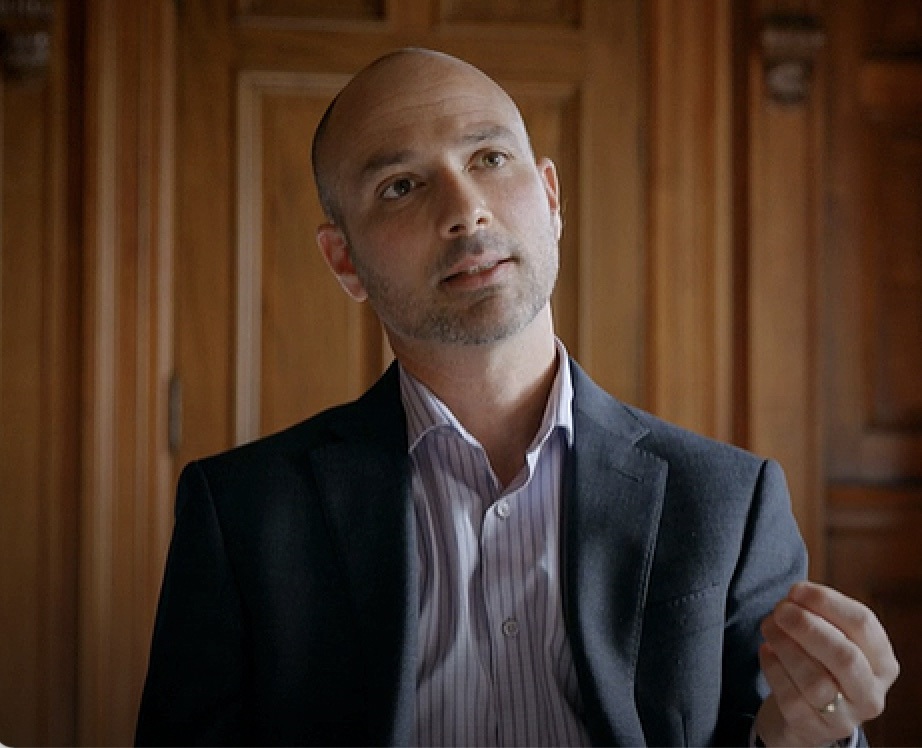
Dr. Emil Sekerinski is a Professor in the Department of Computing and Software at McMaster University, located at ITB 215. He serves as the Undergraduate Advisor for Computer Science (Jan 1, 2025 - June 30, 2025). His research focuses on Programming Logic , Concurrency , Embedded Systems , and Programming Languages , with specialization in Computer Systems, Software Quality, and Computation Theories. He is affiliated with the Digital & Smart Systems research cluster. Recent academic contributions include advanced compiler design, concurrent system design, and formal specification techniques. His work spans theoretical aspects of computing, such as program algebra and automata, alongside practical applications in real-time monitoring and wireless sensor networks. He actively contributes to academic communities, serving as a conference co-chair (FMTea'24) and program committee member (ICTAC'24, iFM'24). Teaching highlights include courses like CAS 781 Advanced Topics: Advanced Compiler Design and Optimization (Fall 2025) and SFWR ENG 3BB4 Concurrent System Design (Fall 2024). His publications emphasize concurrency, formal methods, and algorithm optimization, bridging theoretical foundations with real-world system implementations.
Dr. Laura Dean is a Senior Lecturer in Work Psychology at the University of Sheffield's Management School. She holds roles as a Chartered Psychologist (HCPC) and Senior Fellow of the Higher Education Academy. As President Elect of the British Psychological Society, she leads in advancing psychological research and education. Her research focuses on equality, employee well-being, and employability, particularly for neurodiverse individuals. She teaches modules like Career Theory and Practice, Selection Theory, and Professional Practice across undergraduate and postgraduate programs. Her professional activities include leading the Dean’s List award initiative, which recognizes student academic and social contributions. She has published widely on employability strategies, career counseling, and reproductive biology. Awards include her Senior Fellowship in Higher Education and leadership roles in professional societies. Dr. Dean advises students on the MSc Occupational Psychology and Human Resource Management programs and collaborates on projects like the 'Building Employability' study for autistic students. She actively engages in curriculum development and internationalization efforts to enhance graduate outcomes.
Prof Graham Kirby is a Professor in the School of Computer Science at the University of St Andrews. He has held roles such as Adviser of Studies, Admissions Officer, and Director of Teaching within the School, along with senior faculty roles like Associate Dean Students (2016–2022) and Acting Dean of Science (2019). He holds a PhD and BSc in Computer Science from the University of St Andrews. His research focuses on record linkage, distributed systems, and historical data integration, particularly through projects like the ESRC-funded Digitising Scotland initiative. Key areas include synthetic population data generation, genealogical record linking, and autonomic management of distributed systems. He has supervised numerous PhD and master’s students in these domains. Teaching includes courses on Object-Oriented Programming (CS1002) and Software Quality (CS5035). His work spans interdisciplinary projects with institutions like Edinburgh University and ANU, addressing challenges in data linkage and historical records. Notable publications include advancements in graph database applications for population linkage and studies on gender disparities in vocational interests among Scottish youth. His contributions to academic policy and internationalization are highlighted in thematic peer group reports.
Brenton J. Malin is an Associate Professor in the Department of Communication and Associate Director of the Film and Media Studies program at the University of Pittsburgh. He is also affiliated with the Cultural Studies and Gender, Sexuality, and Women’s Studies programs. Malin holds a PhD in Communication Studies from the University of Iowa and a graduate certificate in the Project on the Rhetoric of Inquiry. His research focuses on media history, theory, and criticism, with concentrations in cultural studies, critical theory, intellectual history, technology studies, and the rhetoric of inquiry. Malin authored two books: *American Masculinity Under Clinton: Popular Media and the Nineties Crisis of Masculinity* (2005) and *Feeling Mediated: A History of Media Technology and Emotion in America* (2014). His articles explore topics such as media technology’s impact on emotion, masculinity in media, and the intersections of technology and cultural discourse. He has taught at institutions including the University of Iowa, St. Olaf College, and San Francisco State University. His research spans diverse topics from early 20th-century media psychology to contemporary digital economies. Notable contributions include analyses of the telegraph’s emotional implications, the tax deduction for advertising as a public media system, and the affective dimensions of media objects. Malin’s work frequently bridges historical and contemporary issues, emphasizing how media technologies shape identity and emotion. Malin has received the Walter Benjamin Award (2010) for his article on media and emotion. His recent collaborations include co-editing *Commercial Intimacy: Affinity and the Marketplace* (2023), exploring consumer capitalism’s emotional dynamics. He teaches courses on media theory, cultural studies, and media ecology, reflecting his interdisciplinary approach to communication studies.
Ingjerd Hoem is a Professor of Social Anthropology and Vice Dean for Education at the University of Oslo's Faculty of Social Sciences. She holds a Magister (1990) and PhD (1996) from the University of Oslo. Her research focuses on ritual communication, linguistic anthropology, and political change with particular attention to Polynesian societies and indigenous populations. Hoem has conducted extensive fieldwork in Tokelau, Samoa, New Zealand, and the Solomon Islands. She served as Head of the Department of Social Anthropology (2010–2015) and led the PhD program there (2008–2009). Previously, she was Research Director at the Kon-Tiki Museum's Pacific Archaeology and Cultural History Institute (2001–2007). Her work explores themes like spatial identification, ritual performances as social facts, and the intersection of kinship systems with state structures. Notable projects include examining colonial ties between Tokelau and New Zealand and analyzing temporal orientations in life narratives. Hoem contributes to academic discourse through articles in journals like Social Anthropology and Oceania , and co-edits volumes on Pacific ethnography. She also engages in public scholarship via encyclopedia entries and reflective essays on anthropological methodologies. Hoem's current project, The MARE NULLIUS project , further extends her research into maritime and territorial cultural studies. Her teaching and administrative roles reflect her commitment to advancing both anthropological education and interdisciplinary research.
Josephine Sullivan is an Associate Professor at KTH Royal Institute of Technology, affiliated with the Division of Robotics, Perception and Learning. She is a core faculty member of Digital Futures, a cross-disciplinary research center addressing global challenges through digital technologies. Her research focuses on AI-driven environmental monitoring, disaster management, and deep learning applications in computer vision and remote sensing. She has supervised projects such as the fusion of radar and optical remote sensing for wildfire monitoring and contributes to initiatives like EO-AI4GlobalChange. Sullivan teaches advanced courses in deep learning, generative models, and machine learning at KTH, emphasizing hands-on training and research integration. Her work bridges theoretical advancements in neural networks with practical solutions for climate-related disasters, leveraging satellite imagery and time-series data. Recent projects highlight innovations in wildfire prediction datasets (Wildfirespreadts) and robust networks for disaster damage assessment (DisasterAdaptiveNet). She collaborates across disciplines at Digital Futures, contributing to labs and teams focused on AI ethics, sustainable technologies, and global change mitigation. Sullivan’s academic leadership includes roles as course examiner and responsible for multiple graduate programs in computer science and engineering.
Dr. Mustafa Bozkurt is a Senior Lecturer in Software Engineering at Queen Mary University of London, affiliated with the School of Electronic Engineering and Computer Science. His research focuses on applying multi-objective optimization and machine learning to address challenges in software engineering, including automated testing, software design, requirements analysis, and maintenance. He actively contributes to areas such as service-oriented architecture, cloud computing, and search-based software engineering. Teaching responsibilities include undergraduate and postgraduate courses such as Database Systems, Introduction to Object-Oriented Programming, and Software Engineering. He also oversees the Software Engineering Project module, emphasizing collaborative problem-solving and practical application of engineering principles. Research interests span service-oriented architecture, software testing methodologies, cloud computing, and requirements engineering. Tools like Visual Paradigm are utilized for UML and BPMN modeling in academic projects. His publications emphasize optimization techniques in testing, cost-aware strategies for service-centric systems, and realistic test input generation. Dr. Bozkurt’s work bridges theoretical advancements with practical software development challenges, aiming to enhance software quality and efficiency through innovative methodologies.
Jens Schedel is a Researcher at the Department of Computer Science 4 (Distributed Systems and Operating Systems) at Friedrich-Alexander University Erlangen-Nuremberg. His academic activities focus on invasive computing, distributed systems, and operating systems. He is affiliated with the Faculty of Engineering and collaborates with the ergoo group (Erlangen Research Group on Distributed Objects and Operating Systems). Education: 2010: Diploma Thesis: 'Design and implementation of a system abstraction layer for the I4Copter framework (QC_OSAL)' 2009: Study Thesis: 'Design and implementation of a distributed management and control software for projectors' Research Interests: Invasive Runtime Support Systems (iRTSS), aspect-oriented operating systems (CiAO), interdisciplinary quadrocopter projects (I4Copter), resource-aware programming, and embedded systems. His work emphasizes adaptive algorithms, parallel computing, and type-safe migration in safety-critical environments. Teaching: Taught courses (SP1/SP2) across multiple semesters (2010–2015), including FITS (Formal IT Systems) and PASST (Programming and Software Systems). Labs/Teams: Member of the ergoo group and contributes to the SFB/TRR 89 Invasive Computing project.
Dr. Peter King is a Senior Lecturer in Education and Childhood Studies at Swansea University, specializing in playwork and childhood development. He holds a PhD in Childhood Studies and oversees the MA Developmental and Therapeutic Play and MA Childhood Studies programs. His research focuses on play theory, particularly the Play Cycle, which he co-authored in his book *The Play Cycle: Theory, Research and Application* (2020). King’s work bridges academic theory with practical applications, emphasizing observational methods and mixed-methods research. He has published extensively on playwork practices, including adaptations during the pandemic and the role of play in diverse contexts like prisons and schools. His contributions include advancing playwork as an academic discipline and advocating for children’s rights to play through qualitative research paradigms. Key areas of expertise include play studies, playwork methodologies, and research methods. He is actively involved in training play professionals and shaping policies that enhance play provision. King’s research has been recognized internationally, with publications in peer-reviewed journals and edited volumes. He also engages in public lectures and workshops to disseminate insights on play’s socio-educational value.
Erez Freud is an Associate Professor in the Department of Psychology at York University, Faculty of Health. He leads the Freud Lab, which is affiliated with the Centre for Vision Research and the VISTA program. He is eligible to supervise graduate students in the Biology Graduate Program and the Brain, Behaviour and Cognitive Science stream. Position: Associate Professor Department: Psychology Faculty: Faculty of Health Institution: York University, Toronto, Canada Lab: Freud Lab Research Affiliations: Centre for Vision Research, VISTA program Dr. Freud's research centers on the cognitive and neural mechanisms of visual perception and object interaction. His work explores how humans recognize objects, guide actions through vision (vision-for-action), and how these systems develop and break down due to aging or brain injury. He investigates the interface between perception and action, with a focus on developmental trajectories and neural reorganization after cortical damage. His lab uses a multidisciplinary approach combining functional MRI, neuropsychological testing, motion tracking, and behavioral experiments in diverse populations including children, older adults, and patients with brain lesions. The recent publications (2022–2025) reflect a strong trend in perception-action dissociation, neural plasticity after brain surgery, face perception under pandemic conditions, and the functional organization of dorsal and ventral visual pathways. Topics include depth perception, attention allocation, motor control, and the impact of environmental changes (e.g., face masks) on social and visual cognition. The research spans cognitive neuroscience, developmental psychology, and clinical neuropsychology, with methodologies rooted in advanced neuroimaging and behavioral analysis. No scientific awards are explicitly mentioned in the provided text. Dr. Freud actively mentors a diverse team of graduate and undergraduate researchers. His lab includes PhD and Master’s students in Psychology, Biology, and Neuroscience programs, working on topics such as visuomotor control in autism, depth perception, memory, and neurodivergence. He has co-supervised students with other faculty members and has hosted postdoctoral researchers. While specific grant details are not listed, the involvement of students in NSERC USRAs suggests participation in funded research projects. The Freud Lab is a dynamic research group within the Department of Psychology at York University, focused on vision science and cognitive neuroscience. It is part of the Centre for Vision Research and the VISTA program, indicating strong interdisciplinary collaboration. The lab investigates brain representations for visual behavior, developmental changes, and neural resilience after injury. Resources include shared fMRI datasets, behavioral paradigms, and stimulus sets (e.g., possible/impossible objects) made publicly available under Creative Commons licensing.
Malin Åkermo is a Professor in Lightweight Structures at the Department of Engineering Mechanics, School of Engineering Science (SCI), KTH Royal Institute of Technology. Her research focuses on composite materials and their industrial manufacturing processes, including simulations, experimental studies, and novel sensing technologies like carbon nanotubes (CNTs) for structural health monitoring. She leads a research group exploring energy-efficient design methodologies and circular materials. Key roles include chairing the Strategic Research Area Excellence in Production (XPRES) at KTH, serving on the KTH Promotion Board, and managing the SAAB-KTH strategic partnership. Nationally, she chairs LIGHTer Academy, a VINNOVA-funded innovation program. Åkermo is an editorial board member for Composites Part B and actively reviews academic journals and grants. Her research interests emphasize hybrid composites, interply friction in prepregs, and multi-objective optimization frameworks for automotive structures. Recent publications highlight advancements in cure monitoring via CNTs, moisture effects, and high-pressure forming techniques. Her work bridges material science, manufacturing, and sustainable design, addressing industrial challenges in aerospace and automotive sectors. Teaching includes courses on composite materials, lightweight structures, and sustainable aviation. Her contributions span over 20 years, with a focus on translating research into industrial applications and fostering interdisciplinary collaboration.
John Paul Gibson is an Associate Professor in the Department of Informatics at Telecom SudParis. His research focuses on formal methods, software engineering, and ethics in computing, with notable contributions to e-voting systems, formal verification, and digital ethics. He has authored and co-authored numerous papers in prestigious journals and conferences, including Formal Aspects of Computing , International Journal of Advanced Computer Science and Applications , and Journal of Information, Communication and Ethics in Society . His academic career includes leadership in interdisciplinary projects like the EU-funded Inclusion4EU initiative and ETHICS4EU, addressing inclusive software design and digital ethics education. He actively contributes to advancing ethical considerations in technology through studies on technical debt, AI ethics, and the political economy of Big Tech. His work bridges theoretical formal methods with practical applications, emphasizing the societal impact of computing systems. Gibson's research also extends to mobile crowdsensing optimization and cybersecurity, with publications in IEEE Transactions on Systems, Man, and Cybernetics and collaborations on cardiovascular risk studies. He has co-edited special issues on e-voting and digital ethics, showcasing his role in shaping academic discourse in these fields. His professional activities include organizing conferences like the International Workshop on Requirements Engineering for Electronic Voting (RE-Vote) and contributions to pedagogical initiatives such as problem-based learning in software engineering education. His lab affiliations include SAMOVAR, where he explores the intersection of formal methods and real-world system development.
Александар Купусинац is a Full Professor at the Department of Applied Computing Sciences within the Faculty of Technical Sciences, University of Novi Sad. He holds roles including Deputy Dean for Teaching since 2020. His expertise spans Object-Oriented Programming (C++, Java, C#), Algorithm Theory, and Software Engineering. Education: Completed Bachelor's in Electrical Engineering and Computing (2005, GPA 9.71), Master's in Applied Mathematics (2008), and PhD in Dynamical Postulates Analysis (2010). Awards include the prestigious Milena Maric-Ainstein Award and a Norwegian Government Scholarship. Teaching: Leads courses on Object-Oriented Programming and Advanced Software Design. Research focuses on algorithm optimization, programming paradigms, and mathematical foundations of computing. Key Achievements: 15+ years of academic service, 50+ teaching hours annually Labs/Teams: Member of Programming Languages Research Group
John M. Zelle is an academic and educator best known for authoring the widely adopted textbook Python Programming: An Introduction to Computer Science . His work is used in college-level computing courses and has been featured in MIT's OpenCourseWare (6.00), indicating significant influence in computer science education. His research and teaching interests include: Computer Science Education Introductory Programming Python Programming Software Design and Problem Solving Object-Oriented Programming Development of Pedagogical Tools (e.g., graphics.py ) The textbook emphasizes fundamental programming concepts using Python as a teaching vehicle, rather than focusing on Python itself. It is praised by experts like Guido van Rossum, the creator of Python, for its clarity and effectiveness in teaching beginners to think like programmers. While specific institutional affiliation is not provided in the text, his role as a textbook author for university courses strongly suggests a faculty background in computer science. No information is available about students, awards, or peer-reviewed publications.
Aurélien Tabard is an Associate Professor in the Department of Computer Science at Université Claude Bernard Lyon 1, affiliated with the LIRIS laboratory and CNRS. His research focuses on Human-Computer Interaction (HCI), participatory design, and sustainable computing, with a strong emphasis on digital sufficiency, software obsolescence, and resilient digital infrastructures. His research interests include: Convivial informatics and participatory design Digital sustainability and software obsolescence Activity-centric computing and classroom orchestration Data physicalization and situated visualization Design for maintenance, autonomy, and durability in digital systems His recent publications reflect a consistent focus on sustainability in computing, user-centered design, and the socio-technical aspects of digital platforms. Themes include understanding obsolescence paths in smartphones, supporting digital skill development, and designing participatory infrastructures resilient to breakdowns. His work often involves field studies, participatory methods, and prototyping. Scientific awards include: Honorable Mention, CHI 2018 Honorable Mention, ICT4S 2023 Best Paper Award, ITS 2011 He advises several students, including Léa Mosesso, Edlira Nano, and Maëva Calmettes, and collaborates with researchers at Inria Lille, University of Victoria, and other institutions. He is currently co-leading the Limites Numériques and PC4-Congrats projects within the PEPR eNSEMBLE initiative. He spent a sabbatical year in 2023 at Inria Lille, working with the Loki and Spirals teams. He has been involved in numerous research projects, such as: PLACED (ERA-NET): Redesigning library services around activities REPI (FUI): Activity-based computing for high school education Épisteme (ANR): Interdisciplinary epistemology of digital technologies Jenlab (ANR): Epistemic digital games for learning