Luca Cardelli is a Principal Researcher and Assistant Director at Microsoft Research Cambridge, UK, since 1997. He holds visiting professorships at Imperial College London (Department of Computing, 2004–2009) and the University of Trento (2005–2007). He earned his PhD in Computer Science from the University of Edinburgh in 1982. His research spans type theory , molecular programming , and principles of programming languages , with applications to systems biology and concurrency theory. Notable contributions include formal frameworks for modeling biochemical systems (e.g., the stochastic π-calculus) and designing DNA-based circuits. Key achievements include the AITO Dahl-Nygaard Senior Prize (2007) and multiple Most Influential Paper Awards at POPL and ETAPS. His work bridges computer science and biology, advancing both theoretical foundations and practical molecular computing.
Georges Gielen is Full Professor in the Department of Electrical Engineering (ESAT) at KU Leuven, Belgium, and part-time Research Director at imec. He has held multiple leadership roles including Chair of ESAT Department (2012-2013, 2020-2024) and Vice-Rector for Science, Engineering & Technology (2013-2017). His academic career spans over 30 years at KU Leuven, progressing from Assistant to Full Professor. His research focuses on analog and mixed-signal integrated circuit design automation , with expertise in CAD tools, design optimization, sensor interfaces, and neuromorphic systems. His work bridges hardware design with machine learning, particularly in hardware-efficient AI implementations and biomedical applications. He has pioneered techniques for automated analog circuit sizing, topology synthesis, and reliability-aware design in nanometer CMOS. Gielen has received numerous accolades including the IEEE CAS Mac Van Valkenburg Award (2015), IEEE CAS Charles Desoer Award (2020), and EDAA Achievement Award (2021). He holds an ERC Advanced Grant AnalogCreate and is an IEEE Fellow since 2002. As a prolific scholar, he has chaired major conferences including DATE (2006), ICCAD (2007), and ESSCIRC (2017). He has graduated over 55 PhD students through the MICAS research group at KU Leuven, currently supervising 13 doctoral candidates. His research team collaborates extensively with imec and industry partners on cutting-edge projects in carbon-aware AI accelerators, uncertainty-aware design, and neuromorphic sensor interfaces.
Sonja Wogrin is a University Professor (Univ.-Prof.) at Graz University of Technology (TU Graz), where she has been heading the Institute for Electricity Economics and Energy Innovation since August 2021. She holds a Dipl.-Ing. in Technical Mathematics from TU Graz (2008), a Master of Science in Computation for Design and Optimization from MIT (2008), and a doctorate in Electricity Systems from Universidad Pontificia Comillas (2013). Her educational background includes: Doctorate in Electricity Systems, Universidad Pontificia de Comillas (June 2013) Dipl.-Ing. in Technical Mathematics, Graz University of Technology (October 2008) Master of Science in Computation for Design and Optimization, MIT (June 2008) Professor Wogrin's research focuses on decision support systems in the energy sector, optimization methodologies, and particularly the problem of generation capacity expansion. Her work spans several key areas including bilevel programming, capacity expansion planning, energy storage systems, and time series aggregation for energy system optimization. She has made significant contributions to understanding how to integrate renewable energy sources into power systems while maintaining economic efficiency and grid stability. Her research often addresses the challenges of decarbonizing electricity systems through advanced mathematical modeling and optimization techniques. Her recent publications demonstrate a strong focus on improving the computational efficiency of energy system models while maintaining accuracy, with particular attention to the integration of renewable energy sources, energy storage systems, and the development of resilient energy communities. She has pioneered work on time series aggregation methods that balance computational tractability with model accuracy, which is crucial for long-term energy planning under uncertainty. Professor Wogrin has received several prestigious awards and fellowships including: 4th EASE Student Award for "Co-Optimisation of energy storage technologies in tactical and strategic planning models" (2019) Beca de movilidad para investigadores "NILS Ciencia y Sostenibilidad" (2015) Beca Erasmus "Personal Docente/Investigador" de formación (2016) Beca Iberdrola de ayuda a la investigación en energía y medio ambiente (2020) She leads multiple significant research projects including EU - NetZero-Opt, RINGs, iKlimET, V2G-QUESTS, and CIDEAL, which focus on optimizing energy systems for net-zero emissions, resilient energy networks, climate and energy system modeling, vehicle-to-grid integration, and industrial decarbonization. Her work has substantial practical implications for energy policy and grid operations in Austria and beyond. Professor Wogrin collaborates extensively with industry partners including Austrian Power Grid AG, KELAG, and Netz Niederösterreich, ensuring her research addresses real-world energy challenges. Professor Wogrin leads the research group at the Institute for Electricity Economics and Energy Innovation, which develops advanced optimization models for energy systems. Her team has created the LEGO (Low-carbon Expansion Generation Optimization) model, an open-source tool for energy system optimization that has gained international recognition. The group's work spans from fundamental optimization methods to practical applications in energy system planning and operation, with a strong emphasis on computational efficiency and model accuracy.
Ahmet Tekalp is a Professor in the Department of Electrical and Computer Engineering at Koc University's College of Engineering since 2001. He holds dual citizenship in Turkey and the USA, with prior academic roles at the University of Rochester (1986-2005) and research positions at Eastman Kodak (1984-1987) and Rensselaer Polytechnic Institute (1981-1984). He chairs the Electronics and Informatics Group at TUBITAK since 2004 as a part-time position. B.S. (1980) in Electrical Engineering & Mathematics, Bogaziçi University M.S. (1982) and Ph.D. (1984) in Electrical, Computer, and Systems Engineering, Rensselaer Polytechnic Institute His research focuses on digital image and video processing, including video compression, motion-compensated filtering for high-resolution applications, video segmentation, object tracking, content-based video analysis, multi-camera surveillance processing, and digital content protection. He has led numerous European and U.S. grants, including FP7 STREP projects and NSF awards, emphasizing applications in sensor networks, visual databases, and medical imaging. His scholarly work spans diverse areas such as superresolution reconstruction, head gesture animation, 3DTV streaming, and reversible data hiding. He has played pivotal roles in editorial boards, including serving as Editor-in-Chief of Signal Processing: Image Communication, and has contributed to major standards bodies like ISO MPEG and ANSI NCITS. Member, Turkish Academy of Sciences (TUBA) Fellow, IEEE Fulbright Senior Scholarship (1999) TUBITAK Science Award (2004) IEEE Signal Processing Society Distinguished Lecturer (1998) He has led multiple international research collaborations and projects, including European FP6/FP7 networks and NATO programs, with substantial grant funding from NSF, NYSTAR, and industry partners like Eastman Kodak, Xerox, and Siemens.
Thorsten Jarz-Sand is a Professor at the Pädagogische Hochschule Steiermark (Styrian College of Teacher Education), specializing in Secondary Vocational Teacher Education. His work focuses on integrating advanced IT systems into educational environments, emphasizing practical technical guidance for schools and organizations. He holds a Magister degree and teaches courses on network infrastructure, system administration, and programming. His research interests include Windows operating systems, server management, and educational technology applications. Key areas of expertise include Active Directory, Hyper-V virtualization, network security, and programming languages like C# and VB.NET. Dr. Jarz-Sand has authored over a dozen technical manuals, including guides for Windows Server 2022, Windows 11, and foundational network technologies. His books emphasize hands-on learning through exercises and real-world case studies, making complex IT concepts accessible for educators and IT professionals. He maintains an active presence in academic and professional circles through his publications and contributions to didactic IT education. Contact him via email or visit his website for resources.
Univ.-Prof. Franz-Markus Peschl is Professor of Cognitive Science and Philosophy of Science at the University of Vienna's Department of Philosophy within the Faculty of Philosophy and Education. He serves as Vice-Director of Studies for the Philosophy Directorate and leads multiple academic initiatives including the Middle European Interdisciplinary Joint Master's Program in Cognitive Science (MEi:CogSci) and the Extension Curriculum on Innovation & Knowledge Creation. As head of the OCKO (Organizing Cognition in Knowing Organizations) Research Group and co-founder of the Vienna Cognitive Science Hub, Prof. Peschl plays a pivotal role in interdisciplinary research and education at the university. Prof. Peschl's research focuses on innovation and knowledge creation across multiple contexts, integrating approaches from cognitive science (particularly 4E/enactive cognition), organizational theory, philosophy/epistemology, and knowledge technologies. His work centers on understanding how novelty emerges through socio-epistemological processes, with particular emphasis on concepts such as Emergent Innovation and Enabling Spaces which he developed as forms of "socio-epistemological engineering." His research explores how humans interact with environments to create knowledge, how organizations function as socially extended cognitive systems, and how we can "learn from future potentials" to develop 21st century & futures skills. He investigates the role of extended and enactive cognition in knowledge processes, the foundations of organizations as cognitive institutions, and implications for educational settings and organizational innovation. Analysis of Prof. Peschl's recent publications reveals a consistent trajectory toward integrating cognitive science with practical innovation frameworks. His work consistently bridges theoretical foundations with actionable insights for organizations and educational settings. A strong theme throughout is the role of physical and social spaces in enabling knowledge work, with empirical studies on material artifacts like LEGO bricks as boundary objects in innovation processes. His scholarship increasingly addresses digital transformation and AI's implications for knowledge creation while maintaining a robust philosophical foundation in epistemology. The temporal dimension of innovation—particularly "learning from the future as it emerges"—represents a distinctive contribution to the field. Prof. Peschl has received recognition for his innovative approaches to teaching and learning, including a Teaching Award. His educational philosophy emphasizes that "learning is a socio-epistemic-material activity of co-creation, interaction with the world and others, and shaping and being shaped by the world on all levels." He has contributed to designing innovative physical learning environments, including the Learning Lab at the Center for Teaching and Learning. His teaching portfolio includes courses on designing innovation processes, cognitive science foundations, and digital innovation labs that reflect his research interests. As head of the OCKO Research Group, Prof. Peschl leads interdisciplinary research on how cognition is organized in knowing organizations. His scholarly network extends through the CEEPUS Network for Cognitive Science and the FWF Cluster of Excellence "Knowledge in Crisis." Beyond academia, he co-founded and serves as CSO of theLivingCore Innovation and Knowledge Architects, demonstrating strong connections between theoretical research and practical innovation applications. His work with international universities through visiting professorships (including Berlin and Bratislava) underscores his global scholarly impact.
N. Katherine Hayles is a Professor of Literature at Duke University, Durham, NC, USA, with a career spanning institutions such as the University of California, Los Angeles (UCLA) and Rochester Institute of Technology. Her work bridges literature, science, and technology, establishing foundational contributions to posthuman studies and digital humanities. She is a member of the American Academy of Arts and Sciences (2015) and has held prestigious fellowships at the National Humanities Center, Princeton University, and the Rockefeller Foundation's Bellagio Center. Research Interests : Interdisciplinary studies connecting literature, science fiction, electronic textuality, and the intersections of literature, science, and technology in the 20th and 21st centuries. Publications : Her influential works include How We Became Posthuman (1999), Writing Machines (2002), and How We Think (2012), alongside articles analyzing experimental fiction, cognitive shifts, and digital media. Scientific Awards : 2015 : American Academy of Arts and Sciences, Institute for Advanced Study Fellowship (Durham University) 2010 : Honorary Doctorate (Art College of Design), Innovation Hall of Fame Inductee (Rochester Institute of Technology) 2007 : Honorary Doctorate (Umea University, Sweden) 2002 : Susanne E. Langer Award ( Writing Machines ), René Wellek Prize, Eaton Award. Grants : Digital Publishing Grant ($10,000) from Duke University's Franklin Humanities Institute and co-directorship of a $225,000 grant for the GreaterThanGames Humanities Laboratory (2011-2014). Current Projects : Collaborating with Durham University's Emergence group on Cognition Everywhere , exploring automated finance algorithms as forms of cognition.
Gabriel Parriaux is an Associate Professor at Vaud Teacher Training College (HEP Vaud) in Switzerland, where he serves as Head of the Unit for Media, Digital Uses and Computer Science Teaching (UER MI). His work focuses on establishing computer science as a formal academic discipline within Swiss schools, moving beyond digital tool usage to understanding foundational computational principles. He plays a key role in developing teacher training programs for computer science education across all school levels. With an academic background spanning Oriental languages (Chinese, Sanskrit) and religious studies, Dr. Parriaux transitioned to computer science education through additional training at the University of Lausanne (UNIL) and EPFL. He is currently completing his doctoral thesis titled "Computer science in primary schools and teacher education" under Professor Éric Bruillard at Université Paris Cité's EDA laboratory. His research examines learning obstacles, teacher representations, effective pedagogical strategies, and curriculum development in computer science education. Recent work has particularly focused on educational robotics, textual analysis of teaching resources, and challenges of delivering computer science teacher training remotely during the pandemic. His publications reveal a strong emphasis on primary education contexts and the development of disciplinary computer science knowledge among future teachers. Dr. Parriaux actively contributes to the Swiss computer science education community as Vice-president of the Swiss Society for Informatics in Education (SSIE) and as an organizer of the Didapro colloquium series. His work bridges educational sciences and computer science, addressing the critical need for well-prepared teachers as computer science becomes institutionalized in Swiss compulsory education.
Dirk Praetorius is a Professor of Numerics of Partial Differential Equations at the Vienna University of Technology (TU Wien), within the Institute for Analysis and Scientific Computing, part of the Faculty of Mathematics and Geoinformation. He leads research in numerical methods for PDEs, with a focus on Finite Element Methods (FEM), Boundary Element Methods (BEM), and computational micromagnetics. His work emphasizes adaptive algorithms, a-posteriori error estimation, and efficient numerical solvers. Praetorius has received awards such as the TU Best Teacher Award (2021) and TU Best Lecture Award (2019). He is also a Senior Editor of Computational Methods in Applied Mathematics and serves on the editorial board of Applied Numerical Mathematics . His research interests span numerical analysis, including adaptive methods for PDEs, matrix compression techniques (e.g., hierarchical matrices), and software development for computational science. Notable contributions include the development of open-source software like MooAFEM (adaptive FEM in MATLAB), Commics (micromagnetic simulations), and HILBERT (BEM library). These tools address challenges in adaptive mesh refinement, iterative solvers, and large-scale scientific computing. Praetorius has supervised numerous PhD students and postdocs, contributing to impactful publications in journals such as Numerische Mathematik , SIAM Journal on Numerical Analysis , and Computer Physics Communications . His work bridges theoretical analysis and practical applications, with a focus on achieving optimal computational efficiency and rigorous error control. In addition to research, Praetorius has led initiatives like TUForMath to foster academic engagement and has been a key contributor to collaborative projects in computational electromagnetics and materials science.
Lukas Zenk is a Professor of Innovation and Network Research at Danube University Krems, Austria. He serves as Deputy Research Leader and is affiliated with the Department of Knowledge and Communication Management. His work bridges creativity, network analysis, and organizational improvisation, focusing on complex environments and societal challenges. Current research themes: Creativity & Innovation, Social Network Analysis, Applied Improvisation Key projects: Meta-competences for unpredictable situations, Framework of organizational improvisation, TISE sustainability education Methodologies: Agent-based modeling, dynamic network visualization, LEGO Serious Play workshops Zenk's research explores how organizations adapt through improvisation, with publications analyzing network dynamics in post-merger integration, pandemic responses, and sustainability transitions. His work emphasizes transdisciplinary collaboration and complexity literacy in education and policy. Recent studies investigate: Meta-competencies in crisis scenarios Personality traits' impact on pandemic conspiratorial thinking Dynamic models for organizational and societal resilience
Bertrand Meyer is a Professor of Software Engineering and Provost at the Constructor Institute of Technology in Schaffhausen, Switzerland (since 2018). He previously held the Chair of Software Engineering at ETH Zurich (2001-2016) and has been Chief Architect at Eiffel Software (since 2001) and President of Informatics Europe (since 2005). Education : Doctorat ès Sciences (Université Henri Poincaré, Nancy, 1985) MS in Computer Science (Stanford University, 1974) Engineer’s degrees (École Nat. Sup. Télécommunications, École Polytechnique, Paris) Research Focus : Bertrand Meyer’s work spans software engineering, object-oriented programming, and formal methods. His research emphasizes practical applications of software verification, testing, and concurrent programming, with a strong commitment to computer science education and software development environments. Scientific Awards : 2011: ERC Advanced Investigator Grant 2010: Harlan Mills prize of the IEEE 2009: ACM Fellow 2007: ACM Software System award 2006: Doctorate Honoris Causa (ITMO University) 2005: Senior Dahl-Nygaard prize 1998: Jolt Award 1991: Election to Académie des Technologies
Mareike Buchmann is a doctoral student in an interuniversity program and a Lecturer in dance and performance studies. She holds a background in theater and literature from Johannes Gutenberg University Mainz and has been working freelance since 2012, developing artistic and educational projects at the intersection of practice and theory. Her research focuses on movement research and embodied knowledge , exploring how orientation emerges from movement through dance. Theoretical foundations include phenomenological-feminist and materialist body discourses , positioning the dancing body as both subject and object of inquiry. Her dissertation, Body/Traces/Sensing – Orienting in Movement , investigates dis/re/orientation practices in dance, aiming to transcend bodily knowledge via artistic research.
Rufin Vogels is a Full Professor in the Department of Neuroscience at KU Leuven's Medical School. He holds a MSc and PhD in Psychology from K.U.Leuven (1982, 1985). His career includes roles as Senior Lecturer (2001-2005) and Lecturer (2000-2001) at K.U.Leuven's Medical School, alongside research positions with the National Fund for Scientific Research (Belgium) and M.I.T. (1985-1986). His research focuses on Electrophysiology in awake monkeys , Cognitive Neuroscience , and Visual Psychophysics . Key interests include neural adaptation mechanisms, visual perception, and object recognition. His work bridges cellular-level recordings with higher-order cognitive functions. Publications span 1982–2013, emphasizing neuroimaging (fMRI), electrophysiological techniques, and primate models. Recent studies explore repetition suppression, 3D structure categorization, and cortical coding of visual actions. Rogers has received the Baron Van Gysel de Meise Award (2006) and Cercle Gaulois-Thierry Speeckaert Award (2011) . He leads Belgian neuroscience organizations as President of the Belgian Society for Neuroscience (2012–) and Belgian Brain Council (2011–). He co-directs KU Leuven's Cognitive and Molecular Neuroscience Program and reviews for top journals like Neuron and Science .
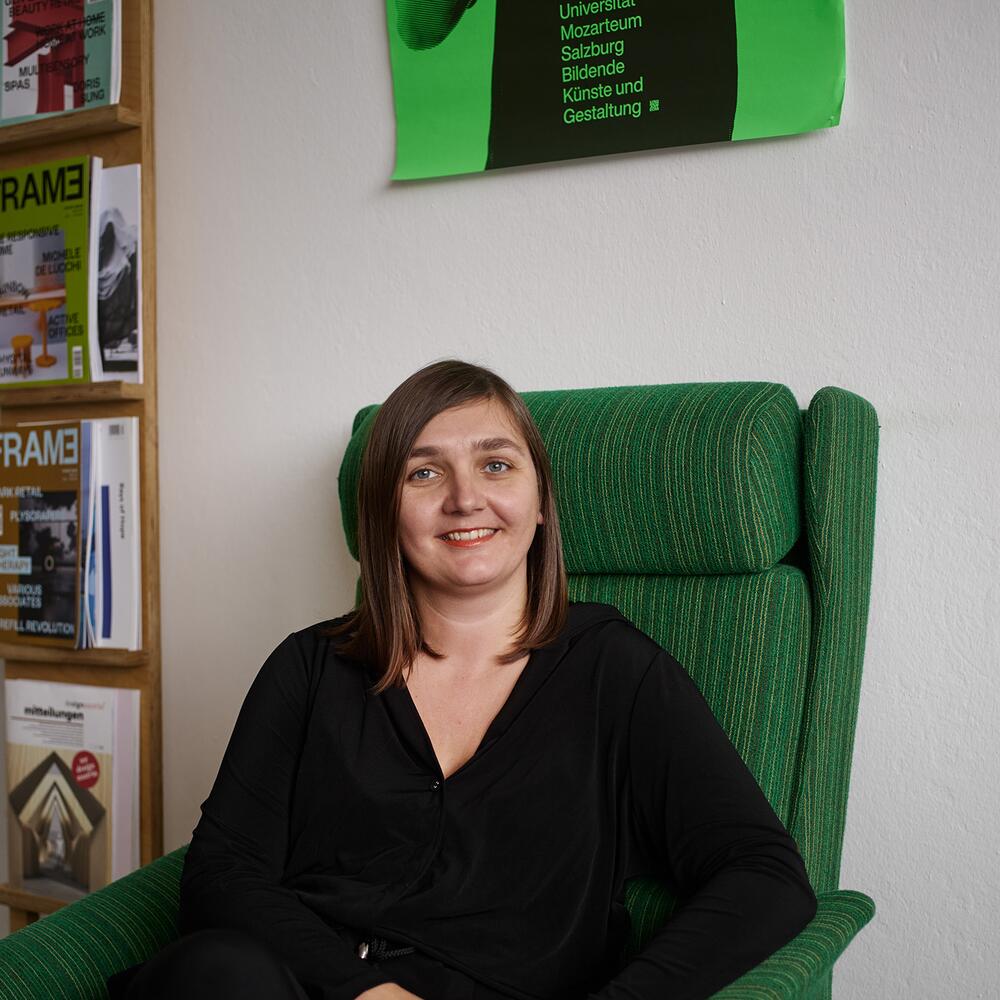
Corina Forthuber is a University Professor of Design & Technology at the University Mozarteum Salzburg, specializing in the intersection of object, space, culture, and society. She leads the Design: Technology.Textiles program and operates a Vienna-based design studio emphasizing participatory projects. Her academic roles include teaching participative design strategies at institutions like the University of Art and Design Linz and NDU St. Pölten. Education: Bachelor's in Arts and Crafts (1998–2000) at Glasfachschule Kramsach, Tyrol Master's in Interior Design (2000–2008) at Burg Giebichenstein Kunsthochschule Halle Research Interests : Forthuber focuses on participatory design methodologies, cultural narratives in spatial interventions, and socially engaged textile practices. Her work bridges art, architecture, and community engagement, often addressing urban regeneration and rural development through collaborative projects. Key Projects : Recent works include the Museum of Unsolicited Guest Gifts (2020), exploring cultural exchange through communal art, and Glurns im Glück (2016), a participatory project reimagining rural tourism. Her installations like Bellevue (2016) and Not Welcome (2016) critique social and spatial dynamics. Awards include the Marianne Brandt Award (2007) and IF Concept Award (2006) for innovative design, alongside grants supporting participatory initiatives such as Children's Cosmos (2013) and Children.Kitchen.Come! (2010). Advising & Grants : Forthuber has coordinated youth design programs like the Pele-Mele creative school (2010–2014) and secured grants from institutions like the Saxony-Anhalt Art Foundation. Her studio's projects frequently involve cross-border collaborations, from Milan to Fortaleza, Brazil. Labs/Teams : Her studio serves as a hub for experimental design, partnering with theaters, museums, and educational institutions to create immersive, community-driven works.
Heinz Dobler serves as a Professor at the University of Applied Sciences Upper Austria, Hagenberg Campus, affiliated with the Research Center Hagenberg. With an h-index of 28 and 43 research outputs spanning 1986-2024, his career demonstrates sustained contributions to software engineering and programming languages. His research focuses on software development methodologies, compiler construction (particularly parsing techniques and semantic evaluation), static program analysis, and genetic programming. Significant work includes innovations in software testing for class libraries and educational approaches for programming novices, reflecting both theoretical depth and practical application. Recent publications (2010-2024) reveal consistent advancement in compiler technologies and software engineering. Key trends include hybrid parsing techniques (BoB), framework-independent genetic programming (GPDL), and testable task design for programming education. His work bridges formal language theory with real-world software development challenges. Scientific awards: No major awards are documented in available records, though his h-index of 28 indicates substantial scholarly impact. Dobler has supervised at least two students, as noted in institutional records. While specific grant details are absent, his leadership in organizing the annual DACHS symposium series (2020-2024) demonstrates active involvement in collaborative research initiatives and academic community building. As a core member of the Research Center Hagenberg, he contributes to software engineering research teams and drives the DACHS symposium series, which fosters interdisciplinary collaboration in compiler design, genetic programming, and software testing. His ongoing 2024 activities confirm active research leadership within the institution.