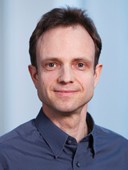
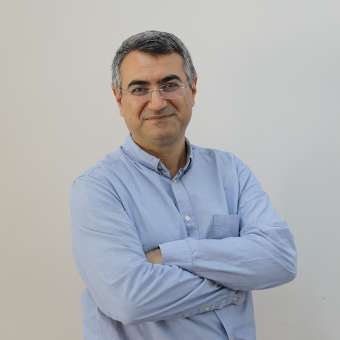
Dr Athanasios Angeloudis is a Reader (Associate Professor) and Director of Impact in the School of Engineering at the University of Edinburgh. He is affiliated with the Institute for Infrastructure and the Environment, leading research on hydro-environmental applications and offshore renewable energy systems. His academic roles include coordinating the Edinburgh Fluid Dynamics Group and serving as a member of NERC’s Peer Review College. Dr Angeloudis holds a PhD in Hydro-environmental Engineering (2014) and an MEng in Civil Engineering (2010) from Cardiff University. He is Chartered with the Technical Chamber of Greece (CEng) and a member of the Institution of Civil Engineers. His research focuses on environmental fluid mechanics, coastal processes, numerical methods, and data analytics. His teaching responsibilities include courses like Civil Engineering Hydraulics and Water Engineering Transport and Treatment . He has secured significant research funding, including the NERC Industrial Innovation Fellowship, and leads projects such as CoTide (tidal stream energy optimization) and ILIAD (maritime data services). Key research contributions span tidal energy systems, climate change impacts on river flows, and computational modeling frameworks like Thetis-SWAN . His work emphasizes collaboration with industry and international partners to advance sustainable energy solutions and environmental resilience.
Dr. Ahmed M. A. Sayed is a Senior Lecturer (equivalent to Associate Professor) and Director of the MSc Big Data Science Programme at Queen Mary University of London's School of Electronic Engineering and Computer Science. He leads the SAYED Systems Group and focuses on distributed systems, federated learning, edge computing, and network optimization. His research bridges system design and machine learning, emphasizing scalability and efficiency. Education: PhD in Computer Science (HKUST, 2017), M.Sc. and B.Sc. (Assiut University, 2012 and 2007). Prior roles include Research Scientist at KAUST and Senior Researcher at Huawei's Future Network Lab. Research Interests: Systems for ML, federated learning, edge/Cloud computing, network congestion control, and IoT. He has secured £730K+ in grants, including a UKRI-EPSRC grant for the KUber project (2024–2027). Awards: 2024 Best Student Paper (IJCAI FL Workshop), Hong Kong PhD Fellowship (2013–2017), and numerous travel grants. Actively supervises PhD/MSc students and postdocs. Grants & Leadership: PI of UKRI-EPSRC KUber project, Co-I in HKRGC and KAUST grants. Organizes workshops at venues like MobiSys and serves on TPC for ICML, EuroSys, and NeurIPS. Labs: Leads SAYED Systems Group, affiliated with Networks Group and DT4SGD Lab at Queen Mary.
Dr. Sabin Tabirca is a Senior Lecturer at the School of Computer Science and Information Technology, University College Cork (UCC). He holds a BSc from Bucharest University and a PhD from Brunel University. His research focuses on Artificial Intelligence, Data Analytics, Algorithmics, Interactive Media, and HCI, with applications in computational cancer modeling, mobile health (mHealth), and parallel computing. He coordinates MPT Activities and is affiliated with the CRR Group and BCRI Centre. Notable awards include UCC's President Award for Innovation in Teaching (2007), IT@Cork Leader Award (2008), and UCC Staff Recognition Award (2013). His teaching includes modules like Parallel and Grid Computing, Mobile Application Design, and Graphics for Interactive Media. Dr. Tabirca has supervised over 70 MSc students and numerous PhD candidates, many of whom now hold academic and industry roles globally. His research includes developing mHealth apps for cystic fibrosis patients, 3D cancer visualization tools, and frameworks for mobile parallel computing. Publications span mHealth design pipelines, cancer prediction models, and mobile gaming for health education. He actively engages in interdisciplinary projects, blending computer science with medical and biological applications.
Summary Raúl Suárez Feijóo is a Researcher at the Universitat Politècnica de Catalunya (UPC) in the Institut d'Organització i Control de Sistemes Industrials (IOC). Born in Asturias, Spain (1959), he holds an Electronic Engineering degree from the National University of San Juan, Argentina (1984), and a Doctorate in Engineering from UPC (1993). His research focuses on robotized assembly, fine motion planning, grasping, and multi-robot systems. He has led the IOC as Deputy Director (2003–2009) and Director (2009–2016). He coordinates doctoral programs in Automation and Robotics at UPC. Suárez has authored numerous publications and received awards including the Best Paper Award at IEEE ISATP (1995) and the Best Reviewer Award at ICRA (2015). Education: Electronic Engineer (1984, Argentina), Doctor Engineer (1993, UPC) Leadership Roles: Director of IOC (2009–2016), Coordinator of Doctoral Programs Research: Over 100 publications in robotics, emphasizing grasping, manipulation, and industrial automation. His work includes contributions to robotic hands, motion planning, and collaborative robotics. Notable projects involve 5G-enabled robotic systems and multi-AGV traffic management. Awards highlight his impact in both international and national robotics communities.
Goong Chen is a Professor at Texas A&M University (TAMU) within the College of Arts & Sciences. His research focuses on Control Theory, Applied Mathematics, and interdisciplinary applications in computational mechanics, fluid dynamics, and quantum systems. He holds a Ph.D. from the University of Wisconsin (1977) and a B.S. from National Tsing-Hua University (1972). His research interests span computational biomechanics, forensic modeling, nanofluidics, and mathematical physics. Recent work includes modal analysis of animal motion, crash mechanics of aircraft, and forensic reconstruction of disasters. He has contributed to theoretical advancements in PDEs, nonlinear dynamics, and quantum computing. Chen’s articles address cutting-edge topics like thermoelastic plates, Volterra equations, and DFIM systems. He has pioneered numerical methods for complex systems using OpenFOAM and finite element techniques. His computational models have been applied to real-world scenarios such as submarine implosions and chemical warfare forensics. No academic awards are explicitly listed, but his extensive publication record reflects significant contributions to applied mathematics and engineering. He leads research teams focused on interdisciplinary challenges in computational science and engineering.
Matthias S. Maier is an Associate Professor in the Department of Mathematics at Texas A&M University, affiliated with the College of Arts & Sciences. His research focuses on multiscale methods, computational fluid dynamics, and finite element software development, particularly with the deal.II library. He organizes an annual undergraduate summer school on PDE modeling and simulation. Research Interests: Multiscale effects in Maxwell’s equations, computational fluid dynamics, finite element methods, and numerical analysis. His work includes studies on surface plasmon-polaritons, homogenization theory, and high-performance computing for hyperbolic systems. Developed ryujin, a high-performance finite-element solver for compressible flows. Contributed to deal.II, a widely used open-source finite element library. Recipient of NSF awards (DMS 1912847, DMS 2045636) and AFOSR funding. Teaching includes courses on numerical methods (Math 417, 610), mathematical modeling (Math 442), and finite element methods (Math 676). He advises graduate students in applied mathematics and computational science. Labs/Teams: Core developer of deal.II and contributor to the ryujin framework. Collaborates with interdisciplinary teams in physics and engineering.
Dr. Jonathan Liebenau is an Associate Professor (Reader) in Technology Management at the London School of Economics (LSE), part of the Department of Management. He also holds a visiting professorship at Columbia University’s Graduate School of Business and School of Engineering. His expertise spans technology management, innovation policy, and the socio-economic impacts of information systems in developing countries. He has authored/co-authored over 70 publications and advised global organizations such as Dell, IBM, and the UK Office of Science and Innovation. Education: PhD in History and Sociology of Science (University of Pennsylvania, 1981), BA in Science Policy (University of Rochester, 1976). His career includes roles at the Smithsonian Institution, Boston University, and academic leadership roles at LSE. Research focuses on technology policy, telecommunications, and the role of digital infrastructure in development. He leads LSE Tech, a research group exploring internet economics and policy. Notable work includes studies on payment systems modernization, blockchain regulation, and the economic implications of cloud computing in emerging economies. Advisory roles include membership on boards at Istanbul Bilgi University and the American University in Cairo. He has supervised numerous PhD students researching topics like ICT in Sub-Saharan Africa, banking innovation in Thailand, and DSS applications in national debt management. His recent articles address global technological competition with China, urban mobility policy, and fintech innovation mechanisms. He emphasizes interdisciplinary approaches to understanding how technology shapes economic development and regulatory frameworks.
Per Gunnar Kjeldsberg is a Professor at the Department of Electronic Systems, Norwegian University of Science and Technology (NTNU), and currently serves as acting head of the institute. His research focuses on embedded heterogeneous multi-processor systems , particularly in multimedia and digital signal processing applications . He has led and participated in numerous national and international projects, including EU Horizon 2020 initiatives like READEX (as work package leader) and Tulipp (as principal researcher), and supervises the MSCA-IF project Palmera . Kjeldsberg is a Senior Member of IEEE and part of the European Network of Excellence HiPEAC . Education : Sivilingeniør (MSc) in Electrical Engineering (1992), PhD (2001) from Norwegian Institute of Technology (NTH)/NTNU His work spans energy-efficient computing , radiation-hardened memory design for space applications, and dynamic hardware management . Publications include co-authoring three books and over 150 peer-reviewed articles in journals and conferences. He leads the Circuit and Radio Systems group and drives a strategic NTNU initiative on Energy Efficient Computing Systems . Kjeldsberg has held visiting researcher roles at imec (Belgium), University of California, Irvine, imec Netherlands (Holst Centre), and University of New South Wales (Australia). Scientific Awards : Senior Member of IEEE Mikroelektronikkprisen (2006–2015)
Jaakko Timo Henrik Järvi is a Professor in the Department of Informatics at the University of Bergen, Norway, with additional affiliations at the University of Turku, Finland. His research focuses on programming language design, generic programming, and human-computer interaction, particularly in GUI frameworks and software reuse. His research interests include generic programming, programming language design (especially the Magnolia language), high-performance computing, array programming, and GUI engineering. He emphasizes formal methods and algebraic specifications to build reusable and efficient software systems. His work bridges theoretical foundations with practical applications in software development and education. The recent publications highlight a strong trend in declarative GUI frameworks, multi-selection models, and generic programming. His work explores domain-specific languages for GUI structure manipulation, reusable selection semantics across platforms, and optimizing array computations using the Mathematics of Arrays. These efforts reflect a consistent focus on software abstraction, correctness, and reusability. Jaakko Järvi has supervised doctoral students, including Tetiana Yarygina, whose dissertation explored microservice security. While no specific grants are detailed, his work on VisAST was supported by the Research Council of Norway (Project 250683), indicating active external funding. He frequently collaborates with researchers like Magne Haveraaen, Knut Anders Stokke, and Sean Parent. He contributes to tools and frameworks such as the MultiselectJS library and the VisAST educational tool. These are outcomes of collaborative research teams focused on improving software development practices and computer science education.
Dr. Ahmad Ibrahim is an Associate Professor in Computer Science at the University of Birmingham Dubai, where he serves as the Undergraduate Programme Director and Year 2 Coordinator for BSc students. He is also the School Outreach Coordinator for the Computer Science program at the Dubai campus. Educational Background: Postgraduate Certificate in Higher Education (PGCHE), University of Birmingham, 2021 Fellow of the Higher Education Academy (FHEA), University of Birmingham, 2021 PhD in Computer Science, University of Pisa, Italy, 2016 MSc in Computer Science, Korea Advanced Institute of Science and Technology (KAIST), South Korea, 2009 BSc in Computer System Engineering, G.I.K Institute of Engineering Sciences and Technology, Pakistan, 2005 Dr. Ibrahim's research focuses on the Internet of Things, Quality of Service (QoS) prediction, Web services, and Cloud and Fog computing. His teaching interests include Object-oriented programming, Full Stack application development, Security and Networks, Operating Systems and Systems Programming, and Advanced Networking. His recent publications demonstrate a strong trend in fog and edge computing, with particular emphasis on QoS optimization, cost-effective deployment, and resource management in distributed environments. His work bridges theoretical modeling with practical application deployment strategies across cloud-edge continua. Scientific Awards and Recognition: Fellow of the Higher Education Academy (FHEA), 2021 Postgraduate Certificate in Higher Education (PGCHE), University of Birmingham, 2021 Dr. Ibrahim has supervised and contributed to numerous research projects in distributed systems and cloud computing, particularly through collaborations on European initiatives like SeaClouds. He has secured recognition for his teaching excellence and is actively involved in curriculum development and academic outreach.
Professor Asif Gill is Head of Discipline for Software Engineering at the School of Computer Science, University of Technology Sydney (UTS), where he was promoted to Professor of Computer Science in January 2024. He also serves as Director of the DigiSAS Research and Innovation Lab and is actively involved in the Global Big Data Technologies Centre at UTS. As a founder of both the DigiSAS Lab and the Future Generation Enterprise Architecture Community of Practice (FGEA CoP), he has established integrated teaching-research-engagement frameworks that translate academic research into practical applications while enhancing graduate employment opportunities. Professor Gill's research interests span Adaptive Enterprise Architecture , Agile Software Development , and Design Science Research & Innovation , with a particular focus on architecting large-scale data-intensive enterprise software systems. His work addresses challenges across academia, industry, government, and society, with significant contributions to AI systems architecture, digital identity management, and enterprise knowledge graphs. His applied research has resulted in numerous collaborations with organizations including the Reserve Bank of Australia, Revenue NSW, Capsifi, Data Zoo, and the NSW Department of Planning, Industry and Environment. His publication record includes 3 books and over 190 articles in major academic journals such as IEEE Transactions on Professional Communication, Information and Management, and Information Systems. His recent work demonstrates a consistent focus on cutting-edge topics in enterprise architecture, AI systems, and digital identity, with multiple publications appearing in 2024-2025. His research trajectory shows a clear evolution from foundational work in agile software development toward more sophisticated integration of AI, enterprise architecture, and data governance. Fellow of the Australian Computer Society (ACS) Fellow of DSE (ESCP Center for Design Science in Entrepreneurship) Senior Member IEEE Associate Editor, IEEE Transactions on Technology & Society Associate Editor, Springer Nature Discover Data journals Member, Data Sharing Committee, IFIP Technical Committee 8.1 Member, Standards Australia Software and Systems Engineering Committee IT-015 Professor Gill has successfully secured numerous research grants from 2019-2026, totaling significant funding for projects related to digital identity, enterprise architecture, and AI systems. His approach emphasizes industry-academia collaboration, with many projects involving direct partnerships with government agencies and industry organizations. He has supervised multiple PhD and Master's students through industry-sponsored scholarships and maintains active collaborations with researchers across multiple institutions. Leading the DigiSAS Research and Innovation Lab, Professor Gill has created an environment that bridges theoretical research with practical implementation. The lab focuses on developing frameworks and tools for adaptive enterprise architecture, with particular emphasis on AI-enabled systems, data governance, and digital identity solutions. His work on the Data Satellite Architecture represents a significant contribution to combating data pollution in federated digital ecosystems.
Konstantinos Markantonakis is a Professor of Information Security in the Department of Information Security at Royal Holloway, University of London, where he also serves as Director of the Smart Card and IoT Security Centre and the Transformative Digital Technologies, Security and Society Catalyst. He is a leading figure in embedded systems and IoT security, with extensive research and consultancy experience. BSc (Hons) in Computer Science, Lancaster University, 1995 MSc in Information Security, Royal Holloway, 1996 PhD in Smart Card Security, Royal Holloway, 2000 MBA in International Management, Royal Holloway, 2005 His research focuses on securing embedded and cyber-physical systems, including smart cards, mobile devices, drones, automotive systems, and IoT. He investigates trusted execution environments, side-channel analysis, secure protocols, and hardware-software binding. His work bridges theoretical security and practical implementation, often uncovering zero-day vulnerabilities in consumer devices. The recent publications highlight a strong trend in trusted computing, remote attestation, secure embedded systems, and privacy-preserving technologies. His research integrates blockchain for secure energy trading, develops frameworks for edge machine learning, and advances forensic techniques for damaged storage media. He also explores covert channels in mobile and cloud environments, demonstrating a deep understanding of both offensive and defensive security. Best Paper Award Markantonakis has led major research projects such as EXFILES (forensic extraction from encrypted smartphones), Future TPM (quantum-resistant trusted modules), and the Academic Centre of Excellence in Cyber Security Research. He has supervised numerous PhD students and delivered keynotes at international conferences. His consultancy work has impacted financial institutions, transport operators, and mobile platform security. He leads the Smart Card and IoT Security Centre, a research hub focusing on practical security for connected devices. The centre conducts cutting-edge research in side-channel attacks, secure application execution, and forensic analysis, contributing significantly to both academic and industrial advancements in cybersecurity.
Professor Titus Sebastiaan van Erp is affiliated with the Department of Chemistry at the Norwegian University of Science and Technology (NTNU), where he has worked since 2016. His research focuses on advancing molecular simulation techniques to study complex biological and industrial processes without approximations, particularly through path sampling methods for rare events. 2016 – Present: Professor, NTNU 2012 – 2016: Associate Professor, NTNU 2006: Centre-of-Excellence Fellow, Leuven 2004: Marie Curie Fellow His research develops innovative methodologies like RETIS and REPPTIS to enhance simulation accuracy and expand accessible time/system scales. He has supervised students in DNA denaturation, electron transfer reactions, and protein folding studies. Recent publications analyze NaCl dissociation, ABL-imatinib kinetics, and permeation mechanisms. His work involves Python-based PyRETIS software development and collaborations across computational chemistry, biophysics, and materials science. 2025: NaCl Dissociation via Predictive Power Path Sampling 2025: RETIS/REPPTIS for Biomolecular Kinetics 2024: PyRETIS 3 for Boundary-Free Rare Events Scientific recognitions include: Centre-of-Excellence Fellowship (2006) Marie Curie Fellowship (2004) He has advised multiple students in masters theses on molecular simulation, including projects on DNA unwinding, electron transfer, and protein folding. His lab integrates algorithm development with applications in chemical reactions, biomolecular systems, and nanoscale materials.
Ralf Hiptmair is a Full Professor at ETH Zürich, serving as Head of the Seminar for Applied Mathematics and Deputy Head of the Department of Mathematics. He also holds the position of Director of Studies for ETH BSc and MSc in Computational Sciences and Engineering (CSE). His research spans computational mathematics, numerical analysis, finite element methods, boundary element methods, computational electromagnetism, multigrid methods, discrete differential forms, shape optimization, wave propagation, and kinetic equations. Hiptmair's work on auxiliary space methods was recognized as a breakthrough in computational science in the 2008 DOE Report on recent significant advancements in computational science. His research focuses on developing and analyzing numerical methods for partial differential equations, with particular emphasis on structure-preserving discretizations, computational electromagnetism, and boundary integral equations. His work has significant applications in engineering, physics, and computational science. Hiptmair's publications demonstrate a strong focus on advancing numerical techniques for electromagnetic problems, wave propagation, and shape optimization. His recent work shows increasing interest in computational topology, geometric numerical integration, and interdisciplinary applications of numerical methods. Featured as breakthrough in computational science in the 2008 DOE Report on recent significant advancements in computational science (for Auxiliary space methods) Hiptmair has supervised numerous doctoral, master's, and bachelor's students across mathematics, computational science and engineering, and related fields. His research group has received funding for developing advanced numerical methods with applications in electromagnetism, fluid dynamics, and computational physics. He is actively involved in teaching numerical methods courses at both undergraduate and graduate levels. Hiptmair leads research efforts in the Seminar for Applied Mathematics, collaborating with industry partners like ABB Corporate Research and Siemens on practical applications of computational methods. His work bridges theoretical numerical analysis with real-world engineering challenges.
Dr. İsmail Arı is an Assistant Professor in the Computer Science department at Özyeğin University . He holds a PhD from the University of California, Santa Cruz (2004), MS from University of Maryland (2000), and BS in Electrical & Electronics Engineering from Boğaziçi University (1998).