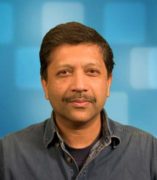
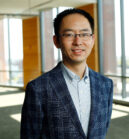
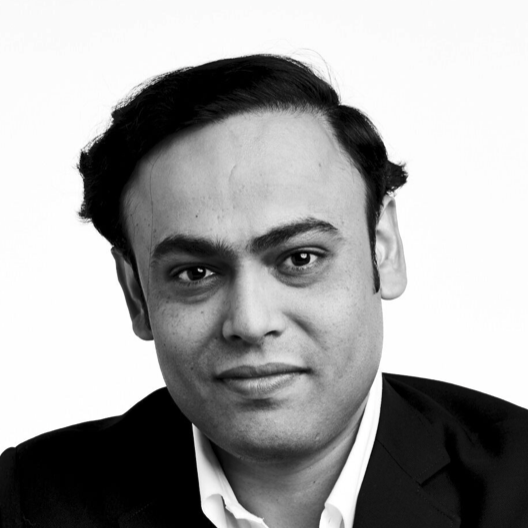
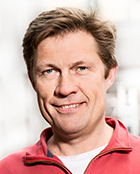
Shantanu Dutt is a full Professor in the Department of Electrical and Computer Engineering at the University of Illinois at Chicago , located in Chicago, IL. His office is in 930 SEO at 851 S. Morgan St, and he can be reached at dutt@uic.edu . Education Ph.D. in Computer Science and Engineering, University of Michigan, Ann Arbor (1990) M.Tech. in Computer Engineering, Indian Institute of Technology Kharagpur (1984) B.E. in Electronics and Communication Engineering, Maharaja Sayajirao University of Baroda (1983) Research Interests Professor Dutt’s research agenda centers on VLSI Computer-Aided Design (CAD) , with particular emphasis on physical design and incremental synthesis targeting both ASICs and FPGAs. He explores discrete optimization techniques to solve placement, routing, and partitioning problems. Another major thrust is FPGA built-in self-test (BIST) and trusted design , ensuring provable diagnosability and security against hardware Trojans. He also investigates fault-tolerant computing at both chip and system levels, and develops parallel and distributed computing algorithms for scalable performance. Scientific Awards 1996 Best Paper Award , ACM/IEEE Design Automation Conference, for “A probability-based approach to VLSI circuit partitioning” 1995 Most Influential Paper Award , Fault-Tolerant Computing Symposium, for “Design and reconfiguration strategies for near-optimal k-fault-tolerant tree architectures” Research Impact and Funding Professor Dutt has published extensively in top-tier journals (IEEE TVLSI, ACM TRETS, IEEE TCAD) and premier conferences (ICCAD, DAC, DATE, FTCS). His work has shaped incremental placement, timing-driven routing, FPGA security, and fault-tolerant multiprocessor architectures. While specific grant numbers are not listed, the breadth and longevity of his publication record indicate sustained funding from NSF, industry, and other agencies. Laboratory and Collaborations Although no formal laboratory name is provided, Professor Dutt’s research is conducted within the ECE department’s VLSI CAD and Fault-Tolerance groups, collaborating with graduate students and colleagues across the US and internationally.
Kimberly A. Whitler serves as the Frank M. Sands Sr. Associate Professor of Business Administration at the University of Virginia's Darden School of Business. With nearly 20 years of industry experience in general management, strategy, and marketing roles within CPG and retailing sectors, she brings practical expertise to her academic work. Her career includes significant positions at Procter & Gamble, Aurora Foods, David's Bridal, and PetSmart, where she helped build $1B+ brands including Tide, Bounce, Downy and Zest. Dr. Whitler's educational background includes: B.A. in psychology and business administration from Eureka College MBA from the University of Arizona, Eller School of Business M.S. and Ph.D. from Indiana University, Kelley School of Business Whitler is an authority on marketing strategy, brand management, and marketing performance, with particular expertise in understanding how a firm's marketing performance is affected by its C-suite and board. Her research focuses on C-level marketing management challenges, digital marketing transformation, employer branding, and the emerging field of athlete branding through NIL (Name, Image & Likeness). She has authored over 350 articles as a Forbes senior contributor and published in top journals including Harvard Business Review, Journal of Marketing, and Journal of the Academy of Marketing Science. Her award-winning publications demonstrate a consistent progression from traditional brand management topics toward more strategic considerations of marketing's role at the executive and board levels. Recent work examines digital transformation, brand purpose, and the evolving CMO role, reflecting her deep understanding of how marketing strategy intersects with organizational leadership. Whitler has received numerous professional accolades: Ranked as a Top Influencer of CMOs Named Favorite Professor of Top MBA Students in Poets and Quants Winner of Darden's Morton Award in 2018 and 2021 Finalist for Journal of Marketing's 2018 MSI/Paul H. Root Award Winner of 2017 Robert D. Buzzell Best Paper award Winner of 2020 Sheth Foundation Award As an active consultant and speaker, Whitler has worked with numerous C-level organizations including Coca-Cola, McDonald's, U.S. Department of Defense, and Gartner. She has been cited over 3,600 times in major media outlets including Wall Street Journal, New York Times, and Bloomberg, establishing herself as a leading voice in marketing strategy. Her industry experience informs her teaching and research, creating a valuable bridge between academic theory and practical application. Whitler leads research initiatives focused on marketing leadership and brand strategy, often collaborating with industry partners to ensure practical relevance of her work. Her recent projects include examining the impact of marketers on corporate boards and developing frameworks for effective marketing technology implementation, positioning her at the forefront of strategic marketing research.
Yuxin Chen is a Professor at the University of Pennsylvania , holding joint appointments in the Department of Statistics and Data Science and the Department of Electrical and Systems Engineering . Prior to UPenn, he was an Assistant Professor at Princeton University (2017-2021) and a Postdoctoral Researcher at Stanford University (2015-2017). His research spans statistics, optimization, reinforcement learning theory, diffusion models, and information theory , with a focus on theoretical foundations and practical algorithms for machine learning. Education : Ph.D. in Electrical Engineering (Stanford, 2015), M.S. in Statistics (Stanford, 2013), M.S. in Electrical and Computer Engineering (UT Austin, 2010), B.E. in Electrical/Microelectronics (Tsinghua, 2008). Research Interests encompass theoretical and applied aspects of machine learning, including nonconvex optimization , sample complexity analysis , low-dimensional adaptation , and generative modeling . His work bridges mathematical rigor with real-world applications, particularly in scientific imaging and high-dimensional data analysis. Scientific Awards include the SIAM Activity Group on Imaging Science Best Paper Prize (2024) Alfred P. Sloan Fellowship (2022) NSF Career Award (2022) Google Research Scholar Award (2022) IEEE Transactions on Power Electronics Prize Paper Award (2024) Advising and Grants : He has mentored numerous students who have transitioned to academic roles at institutions like UIUC and UW-Madison. His research is supported by grants from the NSF , Amazon , and Google , with recent projects focusing on controllable diffusion models and efficient reinforcement learning algorithms .
Michael Knap is an Associate Professor of Collective Quantum Dynamics at the Technical University of Munich (TUM), within the Department of Physics at the TUM School of Natural Sciences. His research group focuses on condensed matter theory, quantum many-body systems, and quantum simulation. Knap holds office in room 5101.01.037 at James-Franck-Str. 1, 85748 Garching b. München, and can be reached at michael.knap@ph.tum.de or +49 (89) 289 - 53777. Prof. Knap's research delves into the rich physics of quantum many-body systems, particularly exploring non-equilibrium dynamics and transport phenomena in ultracold quantum gases, interacting light-matter systems, and correlated quantum materials. His work spans multiple subfields including topological phases of matter, quantum simulation with trapped ions, fracton physics, and quantum computation. He develops novel numerical approaches based on quantum information theory and utilizes artificial intelligence and machine learning to tackle challenging problems in condensed matter physics. His group's research connects fundamental theoretical questions with experimental implementations in quantum simulators. The analysis of Prof. Knap's recent publications (2023-2025) reveals a strong focus on topological quantum matter, quantum simulation, and emergent phenomena in constrained quantum systems. His work frequently bridges condensed matter theory with quantum information science, as evidenced by publications on fracton hydrodynamics, higher-form symmetries, and quantum error correction. There's a clear progression toward increasingly complex quantum systems and connections to experimental implementations on quantum processors. His research shows significant interdisciplinary reach, connecting condensed matter physics with quantum computing and quantum information theory. ERC Consolidator Grant (2025) ERC Starting Grant (2019) Supervisory Award, TUM Department of Physics (2018) Promotio sub auspiciis Praesidentis rei publicae, Austria (2013) Prof. Knap has established a robust research program supported by prestigious European Research Council grants. His group actively collaborates with both theoretical and experimental groups worldwide, particularly in the quantum simulation community. He has supervised numerous students through Master's Seminars on Collective Quantum Dynamics covering topics like quantum simulation with trapped ions and theoretical quantum computation. His research has received significant attention, with several publications featured as Editors' suggestions and Research Highlights in leading journals. The Collective Quantum Dynamics group maintains strong connections with experimental quantum simulation efforts, particularly in the areas of ultracold atoms and trapped ion systems. Knap's theoretical work often provides frameworks for interpreting experimental results in quantum simulators, creating a productive feedback loop between theory and experiment. His group participates in collaborative research networks focused on advancing quantum simulation capabilities and understanding fundamental aspects of quantum many-body physics.
Saurabh Amin is a Professor in the Department of Civil and Environmental Engineering at the Massachusetts Institute of Technology (MIT), where he also serves as the Edmund K. Turner Professor and Undergraduate Officer. He is a Principal Investigator at the Laboratory of Information and Decision Systems and holds affiliations with the Operations Research Center and the Center for Computational Science and Engineering. His educational background includes: B.Tech. 2002, Indian Institute of Technology (IIT) Roorkee M.S. 2004, University of Texas (UT) Austin Ph.D. 2011, University of California (UC) Berkeley Saurabh Amin's research focuses on the design and control of infrastructure systems using game theory and optimization in networks. His work spans three main areas: resilient network control, information systems and incentive design, and optimal resource allocation in large-scale infrastructure systems. By concentrating on critical infrastructure domains including highway transportation, electric power distribution, and urban water networks, his research develops innovative theory and tools to enhance system performance against both stochastic and adversarial disruptions. His approach involves modeling cyber-physical interactions in infrastructures to assess vulnerabilities, developing detection and response tools for failures at various scales, and designing economic incentive schemes that improve aggregate public good while accounting for dependencies and private information among strategic entities. Amin's work bridges mathematical systems theory with practical civil engineering applications, creating a rigorous theoretical foundation for infrastructure resilience that addresses diverse failure mechanisms from natural disasters to deliberate malicious actions. His recent publications demonstrate a strong focus on decarbonization of energy systems, resilient infrastructure planning under climate uncertainty, optimization methods for complex networked systems, and game-theoretic approaches to sustainable infrastructure management. His work increasingly integrates artificial intelligence and machine learning techniques with traditional control theory to address contemporary challenges in infrastructure resilience and sustainability. The research shows a clear trajectory toward addressing climate change impacts on infrastructure systems while maintaining economic efficiency and operational reliability. Professor Amin has received numerous prestigious awards and honors: Common Ground Excellence in Teaching Award, 2025 HSCC Test-of-Time Award, 2024 MIT CEE, Distinguished Service and Leadership Award, 2023 Samuel M. Seegal Prize (SoE) – inspiring students in pursuing and achieving excellence, 2022 Earll M. Murman for Excellence in Undergraduate Advising, 2022 C3.ai Digital Transformation Institute Research Award, 2020 MIT, Ole Madsen Mentoring Award, 2020 MIT, Energy Initiative Research Award, 2020 National Academy of Engineering, China-America Frontiers of Engineering Symposium speaker, 2019 MIT, Robert N. Noyce Career Development Professor, 2015-2018 Google Faculty Research Award, 2015 National Science Foundation CAREER Award, 2015 Siebel Energy Institute Research Award, 2015 MIT, Solomon Buchsbaum AT&T Research Fund Award, 2012 Professor Amin has been actively involved in significant research projects including the C3.ai DTI project on Causal Reasoning for Real-Time Attack Identification in Cyber-Physical Systems and another on Learning in Routing Games for Sustainable Electromobility. He serves as the chief scientist on multi-institutional NSF grants, including the $9 million Foundations of Resilient Cyber-Physical Systems (CPS) project. His teaching portfolio includes courses such as 1.008 Engineering for a Sustainable World, 1.104 Sensing and Intelligent Systems, 1.020 Engineering Sustainability: Analysis and Design, and 1.208 Resilient Networks. As Undergraduate Officer, he plays a key role in shaping the educational experience for civil and environmental engineering students at MIT. Professor Amin leads the Resilient Infrastructure Networks Lab at MIT, where his team develops theoretical foundations and practical tools for infrastructure resilience. The lab focuses on the intersection of control theory, game theory, and optimization applied to cyber-physical infrastructure systems. Current research directions include pandemic-resilient urban mobility and hurricane-resilient smart grid operations, reflecting the lab's commitment to addressing pressing societal challenges through rigorous systems engineering approaches.
Claus Thustrup Kreiner is a Professor of Economics and Director of the Center for Economic Behavior and Inequality (CEBI) at the University of Copenhagen's Faculty of Social Sciences, Department of Economics. He also serves as Area Director of Public Economics in the CESifo network and was co-editor of the Journal of Public Economics from 2014 to 2020. Kreiner has held various leadership positions including Director of the Economic Policy Research Unit (EPRU) since 2005 and Director of the Center of Excellence WEST from 2011-2013. Education: Ph.D. in Economics, University of Copenhagen, 1998 Visiting Ph.D. student, University of York, 1996 M.Sc. in Economics, University of Copenhagen, 1994 B.Sc. in Economics, University of Copenhagen, 1991 Claus Thustrup Kreiner's research primarily focuses on Public Economics , with secondary specializations in Labor Economics, Household Finance, Applied Microeconometrics, and Experimental Economics. His work examines inequality in income, wealth and health, optimal redistribution policy, and behavioral responses to public policy. Kreiner has conducted significant research using Danish administrative data to analyze tax compliance, labor supply responses, and inequality dynamics. His research often involves collaborations with institutions like Columbia University, London School of Economics, and UC Berkeley. His recent publications reveal a strong focus on inequality across multiple dimensions (income, wealth, health, life expectancy), tax policy design and compliance, labor market responses to policy changes, and the intersection of behavioral economics with public policy. Kreiner frequently employs high-frequency administrative data from Denmark to provide empirical evidence on how individuals and households respond to economic policies and shocks. Scientific Awards and Recognition: Appointed Knight of The Order of Dannebrog by Queen Margrethe II (2018) The Invisible Hand Award from the Society of Social Economics (2006, 2001) Best Teacher Award from the Study Board of Economics at University of Copenhagen (2002) Research Fellow at Centre for Economic Policy Research (CEPR), London (2009-) Kreiner has supervised numerous students primarily in Public Economics and has received multiple research grants including from the Danish Social Science Research Council (2003, 2006, 2009), International Growth Center (2009), and Danish National Research Foundation (1998-2003). He has served on important policy bodies including as co-chair of the Danish Economic Council (2010-2014) and member of the Danish Tax Commission (2008-2009). As Director of CEBI (Center for Economic Behavior and Inequality), Kreiner leads a major research center funded by the Danish National Research Foundation. He also directs the Economic Policy Research Unit (EPRU) and has been instrumental in establishing research collaborations through networks like CESifo. His work bridges academic research and policy application, as evidenced by his practical policy experience with government commissions.
Gautam Kamath is an Assistant Professor at the University of Waterloo's Cheriton School of Computer Science, a Faculty Member at the Vector Institute, and a Canada CIFAR AI Chair. He leads The Salon, a research group focused on statistics, algorithms, machine learning, and optimization. His work bridges theoretical foundations with practical applications in data privacy and robustness, contributing to both academic research and real-world deployments that impact millions of users. Dr. Kamath earned his PhD and SM degrees in Electrical Engineering and Computer Science at MIT, where he was advised by Costis Daskalakis. Prior to MIT, he graduated from Cornell University in May 2012 with a degree in Computer Science and Electrical and Computer Engineering, where he worked with Bobby Kleinberg. His academic journey reflects a strong foundation in both theoretical computer science and practical applications. His research focuses on developing solutions for trustworthy and reliable machine learning and statistics, with particular emphasis on data privacy and robustness. He addresses fundamental problems in these areas, revitalizing statistical toolkits for the modern data era where privacy preservation is paramount. His work spans theoretical foundations of differential privacy to practical applications that have been deployed at scale, including contributions to systems that protect the sensitive information of hundreds of millions of individuals. Analysis of his recent publications reveals a strong trend toward addressing the interplay between privacy, robustness, and machine learning performance. His work increasingly examines practical deployment challenges while maintaining theoretical rigor, with growing emphasis on diffusion models, generative AI, and the legal implications of AI systems. There's a clear trajectory from foundational privacy theory toward addressing real-world implementation challenges across diverse application domains. Canada CIFAR AI Chair Ontario Early Researcher Award 2024 Caspar Bowden Award for Outstanding Research in Privacy Enhancing Technologies STOC Best Student Presentation Award ICML 2024 Best Paper Award Microsoft Research Fellow at the Simons Institute for the Theory of Computing Dr. Kamath actively mentors students, with notable successes including Valentio Iverson winning the Germain-Erdős Undergraduate Award and Chris Trevisan receiving the CRA Outstanding Undergraduate Researcher Award. His service to the research community is extensive, serving as Editor-in-Chief of TMLR, on the Executive Committee of the Learning Theory Alliance, and on steering committees for major conferences including ICML, COLT, and ALT. He has organized numerous workshops focused on privacy-preserving machine learning and differential privacy. Through The Salon research group, Dr. Kamath fosters a collaborative environment where postdoctoral fellows, graduate students, and undergraduates work together on cutting-edge problems at the intersection of statistics, algorithms, machine learning, and optimization. The group maintains strong connections with industry partners and participates in major research initiatives, including the Vector Institute's privacy and security research efforts. Looking forward, Dr. Kamath will be moving to the Computer Science department at NYU's Courant Institute of Mathematical Sciences in September 2026, where he plans to expand his research program.
Dr. Chenming Zhang is an Advanced Queensland Industry Research Fellow at the School of Civil Engineering, The University of Queensland. His research focuses on hydrological processes in coastal and terrestrial groundwater systems, with particular emphasis on evaporation-driven mass and heat transport in soils and tailings, and hydrogeochemical dynamics in aquifers and mine waste systems. Specializes in IoT-based environmental monitoring Develops numerical models for coastal aquifer dynamics Conducts field and laboratory experiments on tailings behavior Research interests span coastal hydrology, groundwater modeling, mine waste management, and environmental monitoring. He works on contamination transport, aquifer protection, and climate impacts on water systems. Recent publications analyze: Iron curtain formation in subterranean estuaries Sea water intrusion mechanisms Salinity dynamics in tidal wetlands Smart sewer monitoring systems Scientific awards include the prestigious Advanced Queensland Industry Research Fellowship. He supervises multiple PhD projects on mine waste hydrology and coastal aquifer management, with notable collaboration on: Evolution Mining's gold tailings projects ARC Discovery Projects on coastal processes Grange Resources' PAF cell instrumentation His work combines field measurements, laboratory testing, and computational modeling to address critical environmental challenges in mining and coastal zones.
Camillo J. Taylor is the Raymond S. Markowitz President’s Distinguished Professor in the Department of Computer and Information Science at the University of Pennsylvania , where he has been a faculty member since 1997. He also serves as Associate Dean for Diversity, Equity, and Inclusion at the School of Engineering and Applied Science. His research focuses on Computer Vision and Robotics , particularly in 3D reconstruction, semantic mapping, and autonomous navigation. Education: A.B. in Electrical Computer and Systems Engineering, Harvard College (1988) M.S. and Ph.D. in Computer Science, Yale University (1990, 1994) Research Interests: Dr. Taylor’s work bridges Computer Vision and Robotics to enable autonomous systems to perceive and navigate complex environments. Key themes include semantic SLAM, event camera applications, and meta-learning for adaptive controllers. His projects often integrate vision, physics, and multi-agent collaboration, as seen in systems like EvMAPPER and OCCAM . Recent Article Trends: His 2024–2025 publications focus on semantic mapping , event-based vision , and multi-agent LLM systems , reflecting his lab’s emphasis on real-time perception, physics-informed reconstruction, and rational decision-making in robotics. These works span applications from solar eclipse imaging to wildfire analysis and natural hazard resilience. Awards: NSF CAREER Award (1998) Lindback Minority Junior Faculty Award (2001) IEEE WACV Best Paper Award (2012) Lindback Distinguished Teaching Award (2012) Advising and Service: Dr. Taylor has advised numerous PhD students, including Jason Hughes and Bowen Jiang. He has served as a Program Chair for CVPR (2006, 2017) and General Chair for ICCV (2021). His contributions to the GRASP Laboratory have advanced autonomous micro-UAVs and semantic SLAM.
Dr. Yi Huang is a Senior Lecturer in Climate Science at the School of Geography, Earth and Atmospheric Sciences , University of Melbourne . She holds a Ph.D. in Mathematical Sciences General from Monash University , where her work focused on cloud and precipitation systems over the Southern Ocean. Her research addresses fundamental questions in atmospheric processes, Earth's energy budget, and water cycle dynamics. She specializes in cloud-climate interactions, precipitation systems, geographical variability in atmospheric phenomena, and the application of field observations, remote-sensing data, and numerical modeling to improve weather and climate predictions. The recent Google Scholar articles suggest interdisciplinary work in solar cell materials and semiconductor physics, though this is not explicitly detailed in her official bio. The scientific awards section is currently empty due to no explicit mentions in the provided text. She has not been described as advising students or participating in specific lab teams in the scraped content.
Thomas Peyrin is a Full Professor at Nanyang Technological University (NTU) in Singapore, leading the Symmetric Key and Lightweight Cryptography Lab (SyLLab) since 2012. He co-founded TT-logic.ai, focusing on cryptographic innovations. His academic journey includes a Ph.D. in Cryptology from Orange Labs and University of Versailles (2008), a Master in Computer Science from MPRI (2005), and engineering training at CPE Lyon (2004). Education : Ph.D. (2008), MPRI Master (2005), EPFL Exchange (2003-2004), CPE Lyon (1999-2004) Career : Full Professor at NTU (2022-present), Associate Professor (2017-2022), Nanyang Assistant Professor and NRF Fellow (2012-2017), Research Fellow at NTU (2010-2012), Cryptography Expert at Ingenico (2008-2010) Thomas specializes in symmetric cryptography, cryptanalysis of hash functions and block ciphers, and machine learning applications to security. His work includes groundbreaking research on SHA-1 collisions, lightweight cryptographic primitives (e.g., GIFT, PHOTON), and automated cryptanalysis frameworks. Recent projects explore integrating AI with cryptographic verification and fault attack resistance. His publications span top conferences like CRYPTO, EUROCRYPT, and CHES, with awards including the FSE Test of Time Award (2025), FSE Best Paper (2023), and NRF Investigatorship (2022). He has advised numerous students in cryptographic research and co-founded SyLLab, a leading lab for symmetric cryptography innovation. Scientific Awards : Test of Time Award at FSE 2025 Best Paper Award at FSE 2023/ToSC NRF Investigatorship (2022) Lee Kuan Yew Postdoctoral Fellowship Best Paper Awards at FSE 2012 and ASIACRYPT 2007
Adrien Auclert is an Associate Professor in the Department of Economics at Stanford University. He holds prestigious research affiliations including Research Fellow at the Centre for Economic Policy Research (CEPR), Senior Fellow at the Stanford Institute for Economic Policy Research (SIEPR), Research Associate at the National Bureau of Economic Research (NBER), and member of the French Council of Economic Analysis. His research centers on inequality, macroeconomics, and international economics with a focus on heterogeneous-agent models (HANK). He develops computational tools like the Sequence-Space Jacobian to analyze fiscal/monetary policy, debt relief, and global imbalances. His work bridges theoretical macroeconomics with urgent policy questions, particularly examining how distributional heterogeneity shapes aggregate economic dynamics. Recent publications reveal a dominant trend in studying household-level heterogeneity's role in macroeconomic transmission mechanisms. Auclert demonstrates how fiscal stimulus, monetary policy, and trade shocks propagate asymmetrically through income/wealth distributions, with significant implications for inequality dynamics and policy design in open economies. His scientific honors include: Research Fellow, Centre for Economic Policy Research Senior Fellow, Stanford Institute for Economic Policy Research Research Associate, National Bureau of Economic Research Member, French Council of Economic Analysis Auclert actively engages in policy formulation through the French Council of Economic Analysis, co-authoring influential notes on fiscal consolidation and monetary policy. He is co-organizing the upcoming SITE workshop "Macroeconomics in the Sequence Space" at Stanford (September 8-10, 2025), advancing methodological frontiers in heterogeneous-agent modeling.
Karl Henrik Johansson is a Professor at the School of Electrical Engineering and Computer Science, KTH Royal Institute of Technology in Stockholm, Sweden, where he also serves as the Founding Director of Digital Futures. He is a Fellow of both IEEE and the Royal Swedish Academy of Engineering Sciences, and has held leadership positions including Immediate Past President of the European Control Association and IEEE Control Systems Society Vice President Diversity, Outreach & Development. Dr. Johansson earned his MSc in Electrical Engineering and PhD in Automatic Control from Lund University. His academic journey includes visiting positions at prestigious institutions such as UC Berkeley, Caltech, and NTU. His research focuses on networked control systems and cyber-physical systems with applications in transportation, energy, and automation networks. His work investigates fundamental challenges in connecting physical world systems through communication networks, exploring how wireless communication and sensor technology can enhance system robustness, reliability, energy efficiency, and safety. Current research directions include security of cyber-physical systems, distributed optimization, multi-agent systems, and applications to intelligent transportation and energy networks. Analysis of his recent publications reveals a strong focus on distributed optimization algorithms, secure networked control, multi-agent systems, and applications to transportation and energy networks. His work increasingly integrates machine learning techniques with traditional control theory, addressing challenges in privacy-preserving distributed computation, resilient state estimation, and resource allocation in complex networked systems. IEEE Control Systems Society Hendrik W. Bode Lecture Prize (2024) Swedish Research Council Distinguished Professor (2018-2027) Wallenberg Scholar (2009-2026) IFAC Young Author Prize IEEE CSS Distinguished Lecturer (2017-2019) IFAC Outstanding Service Award IEEE Fellow Dr. Johansson has supervised over 100 postdocs and PhD students, with many now holding prominent positions at institutions worldwide. His research has been supported by significant grants including the Swedish Research Council Distinguished Professor Grant (2018-2027), multiple Wallenberg Foundation grants, and numerous EU and national research projects. He has directed major research centers including ACCESS Linnaeus Centre (2009-2016) and Strategic Research Area ICT TNG (2013-2020). His research group operates within the Digital Futures initiative and maintains strong connections with industry partners through projects like the Integrated Transport Research Lab (supported by Scania and Ericsson) and Smart Mobility Lab. The group actively collaborates with international institutions and participates in major EU-funded projects addressing challenges in cyber-physical systems, transportation, and energy networks.
Christian Moormann serves as Director and Full Professor of the Institute of Geotechnics at the University of Stuttgart, where he has held his position since 2010. His leadership extends to national and international geotechnical organizations, including serving as Chairman of the German Geotechnical Society (DGGT) since 2022. His educational background includes a distinguished Diplom in Civil Engineering from Leibniz University Hannover (1989-1994), followed by doctoral studies at TU Darmstadt where he earned his Dr.-Ing. with distinction in 2002 for research on soil-groundwater interaction in deep excavations. He completed his habilitation at TU Darmstadt in 2009 on optimization of geotechnical composite structures. Professor Moormann's research spans the critical intersection of theoretical geomechanics and practical engineering applications. His work focuses on material behavior of semi-solid and variable-strength rocks, numerical methods in geotechnics, and reliability analyses for geotechnical composite structures. He has made significant contributions to deep foundation systems, pile-raft foundations, and the application of geosynthetics in construction. His recent work increasingly addresses sustainable applications including near-surface geothermal energy systems and innovative ground improvement techniques. With over 350 publications throughout his career, Moormann's scholarly output demonstrates consistent focus on practical geotechnical challenges. His publication themes reveal evolving emphasis from fundamental soil mechanics to complex system behavior, with growing attention to sustainability and reliability-based design approaches in geotechnical engineering. Professor Moormann holds numerous leadership positions that reflect his standing in the field: Chairman of the German Geotechnical Society (DGGT) since 2022 Head of the "Earth and Foundation Engineering" section of DGGT since 2018 German Delegate to Eurocode 7 Technical Committee (TC 250/SC 7) Chair of the DIN Standards Committee "Piles" (NABau 005-05-07) Member of the Professional Image Committee of ISSMGE His professional activities extend to significant consulting work through his own firm "Prof. Moormann Geotechnik Consult" established in 2010, and leadership of the PÜZ certification office. Moormann serves as an officially appointed expert for earthworks, foundation engineering, and rock engineering. His work on developing practical engineering standards through multiple DIN committees and Eurocode 7 implementation demonstrates his commitment to bridging academic research with practical engineering applications. The Institute of Geotechnics under Professor Moormann's leadership maintains strong connections with industry through its COMMAS program and extensive field testing capabilities. His team actively participates in developing practical engineering solutions for complex geotechnical challenges, particularly in deep foundation systems, excavation support, and sustainable geotechnical applications including geothermal energy systems.
Dond Asha Kisan is an Assistant Professor at the School of Mathematics , Indian Institute of Science Education and Research Thiruvananthapuram (IISER TVM). His research focuses on numerical analysis and computational mathematics , particularly in finite element methods for partial differential equations. He can be contacted at ashadond@iisertvm.ac.in or via phone at +91 (0)471-2778247. PhD : Mathematics, Indian Institute of Technology Bombay M.Sc. : Mathematics, K.T.H.M. College, Nashik Kisan's research spans adaptive finite element methods , stabilized formulations for convection-diffusion problems , and optimal control governed by Stokes equations . His work includes convergence analysis, nonconforming discretizations, and hybrid numerical schemes. Recent publications (2023-2025) address stochastic modeling in liquid crystal physics, advanced WENO schemes, and adaptive algorithms for control problems. Scientific Awards : No explicit awards mentioned in the data, though he held prestigious postdoctoral fellowships including National Post-Doctoral Fellowship and NBHM Post-Doctoral Fellowship. Kisan has extensive teaching experience , including MATLAB workshops and undergraduate course assistantships. He has presented at major international conferences like ICIAM and Hyperbolic Problems, demonstrating global engagement in computational mathematics.