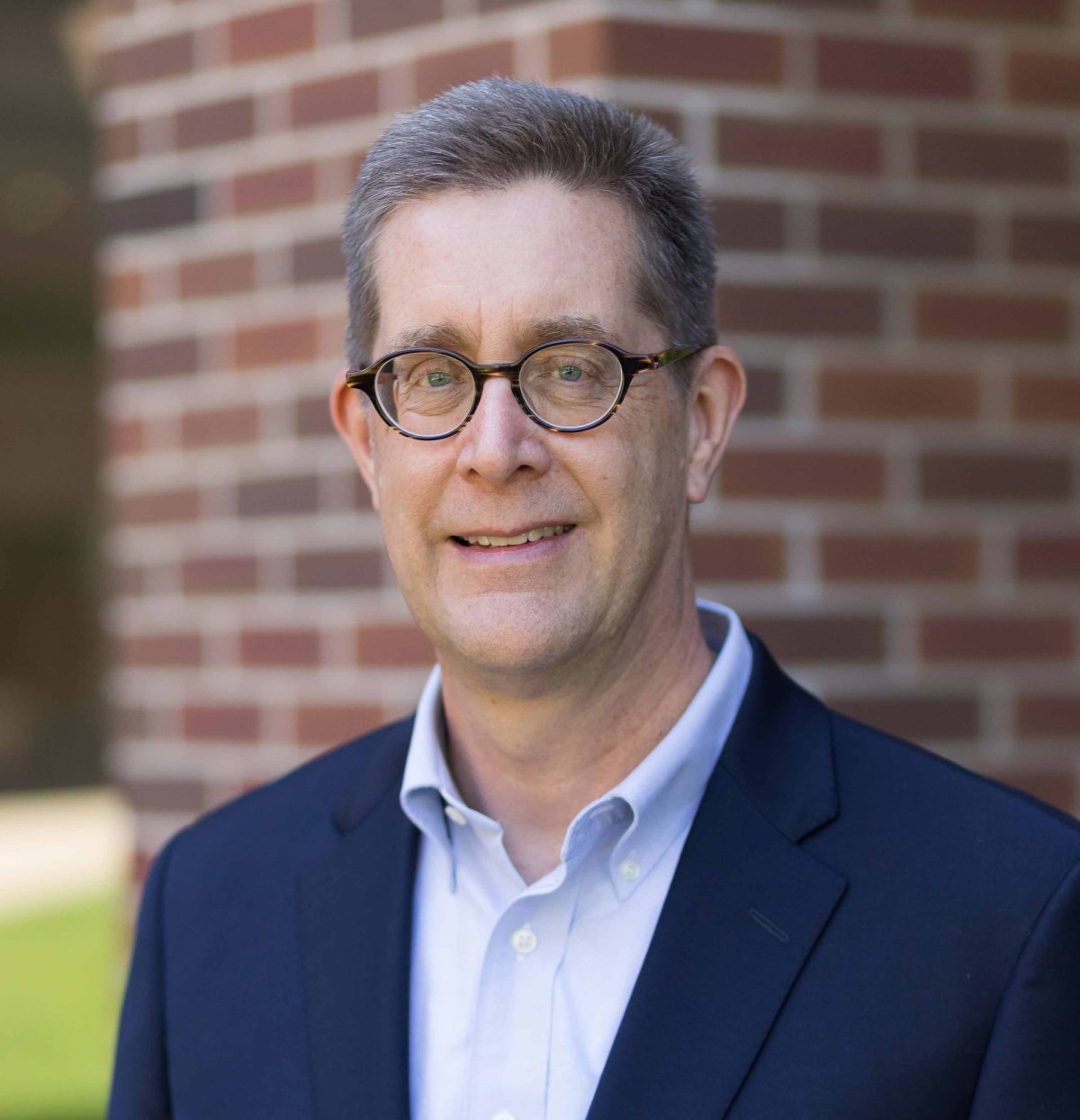
Jeff Derby is a Professor at the University of Minnesota within the College of Science and Engineering , affiliated with the Department of Chemical Engineering and Materials Science . He leads the Derby Group , focusing on computational modeling of materials processing. His research integrates transport phenomena , phase change , and reaction dynamics to advance crystalline material growth techniques. Contact: derby@umn.edu | 612/625-8881 | 239 Amundson Hall, 421 Washington Avenue SE, Minneapolis, MN 55455 Research Interests span nonlinear phenomena in crystal growth , microstructure evolution , defect formation , and high-pressure growth processes for semiconductors (e.g., II-VI crystals), silicon, sapphire, and diamond substrates. His group develops open-source computational tools to model incompressible fluid dynamics , heat/mass transfer , and radiation heat transfer . Scientific Awards : Distinguished McKnight University Professor Labs & Collaborations : The Derby Group collaborates with experimental teams to validate simulations and optimize materials processing across applications in semiconductors , photovoltaics , and optical systems .
William Newman is a Professor in the Department of Earth, Planetary, and Space Sciences at the University of California, Los Angeles (UCLA), currently on sabbatical at the Institute for Advanced Study in Princeton. His primary academic home resides within UCLA's geoscience and planetary science division. His educational credentials include: B.Sc. (Hon.) in Physics from the University of Alberta, Canada (1971) M.Sc. in Physics from the University of Alberta, Canada (1972) M.S. in Astronomy and Space Science from Cornell University (1975) Ph.D. in Astronomy and Space Science from Cornell University (1979) Professor Newman applies theoretical physics and applied mathematics to solve critical real-world problems across multiple disciplines. His research spans statistical techniques for climate change assessment, earthquake hazard modeling, solar system evolution (including collision risks from trans-Jovian bodies), astrophysical jet dynamics, and pattern emergence in complex systems. This interdisciplinary work bridges geophysics, planetary science, and astrophysics through rigorous mathematical frameworks. His publication record (2024-2016) reveals three dominant research thrusts: (1) Semiconductor electron emission physics (GaAs nanotips, photoemission sources), (2) Solar system dynamics and celestial mechanics (N-body simulations, impact hazards), and (3) Complex systems analysis (earthquake patterns, statistical record-breaking events). These intersect physics, earth sciences, and computational mathematics through shared methodologies in statistical modeling and nonlinear dynamics. At UCLA, Newman developed innovative courses including a natural disasters undergraduate GE course (satisfying diversity requirements) and graduate-level planetary atmospheres and continuum mechanics curricula. His academic contributions include over 100 refereed papers and graduate textbooks published by Princeton and Cambridge University Presses, focusing on mathematical methods for geophysics and space physics.
Dr. Jonathan Hu is a Professor in the Department of Electrical and Computer Engineering at Baylor University's School of Engineering and Computer Science. He holds a PhD from the University of Maryland Baltimore County (2008) and completed a postdoctoral fellowship at Princeton University (2009–2011). He is an active researcher in optics and photonics, leading the Photonics Research Laboratory and advising both graduate and undergraduate research assistants. Research Interests: Nanophotonics and metamaterials for photovoltaic and biomedical applications Mid-IR supercontinuum generation using chalcogenide photonic crystal fibers 2D materials such as graphene and their alignment via magnetic fields Coherent optical communication and quantum optical Fredkin gates Numerical simulation of electromagnetic problems and leaky mode analysis His recent publications (2019–2024) demonstrate a strong focus on quantum plasmonics, specialty optical fibers, optofluidics, and nonlinear optical phenomena, with high-impact work in journals like Science Advances , ACS Photonics , and Advanced Materials . The research shows a clear trend toward integrating photonics with 2D materials and quantum systems, with applications in sensing, communication, and materials characterization. Scientific Awards and Recognition: 35 Baylor faculty named among top 2% most cited researchers (2023) Editor’s Pick, Journal of Applied Physics (2018) Top three downloads in OSA journals for three consecutive months (2009) NSF Graduate Research Fellowship (awarded to advisee) Chinese Government Award for Outstanding Self-Financed Students Abroad (awarded to advisee) Second Place in FiO + LS Student Competition (awarded to advisee) Advising and Grants: Dr. Hu actively mentors students at all levels, with current graduate research assistants including Wei Zhang, Zhihao Hu, and Sterling Walzel. His lab is supported by external funding, though specific grants are not detailed in the text. He has advised PhD students such as Joshua Young, Chao Niu, and Chengli Wei, many of whom have gone on to successful academic and industry careers. His teaching includes core courses like EGR 1302, ELC 2320, and ELC 4320, as well as advanced topics in computational photonics and integrated photonics. Labs and Teams: He leads the Photonics Research Laboratory at Baylor University, located at the BRIC facility. He is also involved with the Baylor University Optica Student Chapter, promoting optics outreach and networking among students and researchers.
Herb Winful is a Professor of Optics at the University of Michigan's College of Engineering, Department of Electrical and Computer Engineering. He specializes in nonlinear optics, laser physics, quantum tunneling , and photonics , with a focus on phenomena like superluminal group velocities, frequency comb generation, and light storage via stimulated Brillouin scattering. Research areas span quantum tunneling times , nonlinear photonic materials , and coherent beam combining in fiber laser arrays. His work includes frequency comb spectroscopy using quantum-well diode lasers, ultrafast erbium fiber lasers , and negative group delay engineering in birefringent waveguides. The article list reveals expertise in supercontinuum generation , evanescent wave dynamics , photonic crystals , and nonlinear pulse manipulation . Key subfields include stimulated Brillouin/Raman scattering , parabolic similaritons , and time-domain modeling of optical systems. Award-winning scientific contributions include resolving the Hartman effect paradox and optimizing fiber laser arrays for high-power applications. His research bridges theoretical insights with practical innovations in optical engineering and quantum optics .
Thuy T. Le is a Professor of Electrical Engineering at San Jose State University's College of Engineering. With a distinguished career spanning several decades, he teaches graduate and undergraduate courses in digital system design, computer architecture, microprocessor systems, and related fields. His academic journey began with earning B.S., M.S., and Ph.D. degrees from the University of California, Berkeley. Professor Le's research interests encompass a broad spectrum of cutting-edge technological domains. His primary focus areas include System-on-Chip (SoC) and Embedded System Design, Hardware Accelerators for complex algorithms, Quantum Computing, implementation of Probability theory and Monte Carlo simulation, and radiation effects on electronic devices and systems. His work bridges traditional electrical engineering with emerging computational paradigms, demonstrating a consistent ability to adapt to evolving technological landscapes while maintaining strong foundations in core engineering principles. Analysis of Professor Le's publication record reveals a consistent trajectory from nuclear reactor physics and computational methods toward modern hardware acceleration and quantum computing. His early work focused on nuclear reactor simulation and radiation shielding, then evolved to parallel computing and distributed systems, and has recently centered on hardware acceleration for complex algorithms, quantum computing applications, and AI hardware. This progression demonstrates his ability to transition between major technological paradigms while maintaining expertise in computational methods and hardware implementation. Professor Le has demonstrated significant leadership in professional service, having served as keynote speaker, general chair, technical program chair, session chair, reviewer, and committee member for numerous international conferences. His service extends beyond academia through his role as Co-Founder and Advisor of the Vietnamese Strategic Ventures Network and Chairman of the Board of the United States–Vietnam Foundation. In his educational role, Professor Le has made substantial contributions to engineering curriculum development and assessment. He has taught a wide range of courses including EE271 (Advanced Digital System Design), EE210, EE250, and various project/thesis courses. His research advising spans digital system design, ASIC, SOC, and hardware accelerators. He has also collaborated with local companies on projects related to high-performance system architectures, parallel algorithms, digital arithmetic, and System-on-Chip verification.
Prof. Dr. Jens Eisert is a Professor at the Free University of Berlin, where he leads the Quantum Many-Body Theory, Quantum Information Theory, and Quantum Optics research group (Eisert AG) within the Institute of Theoretical Physics at the Dahlem Center for Complex Quantum Systems. His office is located at Arnimallee 14, Room 1.3.06 in Berlin-Dahlem. His research focuses on the intersection of quantum information theory and condensed matter physics, specifically exploring what information processing tasks are possible using individual quantum systems as information carriers. His group develops mathematical-theoretical foundations of quantum information, particularly in entanglement theory and tomography, while also investigating quantum optical implementations using light modes or cold atoms in optical lattices. A major emphasis of their work is on quantum many-body systems, including static properties, efficient numerical simulation methods like tensor networks, and non-equilibrium quantum dynamics. Recent publications highlight significant contributions in thermalization of quantum systems (Communications Physics 2025), quantum thermodynamics (Nature Physics 2025), and quantum error correction (PRX Quantum 2025). The group's work is characterized by combining the rigor of mathematical physics with physically motivated applicability, frequently leading to direct collaborations with experimental groups. Quantum Information Theory Quantum Many-Body Theory Quantum Optics Entanglement Theory Tensor Networks Quantum Error Correction Prof. Eisert maintains active supervision of numerous PhD students and postdoctoral researchers, with research positions regularly available in areas including quantum error correction, quantum information theory, tensor networks, and quantum simulation. His group has published extensively in top journals including Nature Physics, PRX Quantum, and Physical Review series.
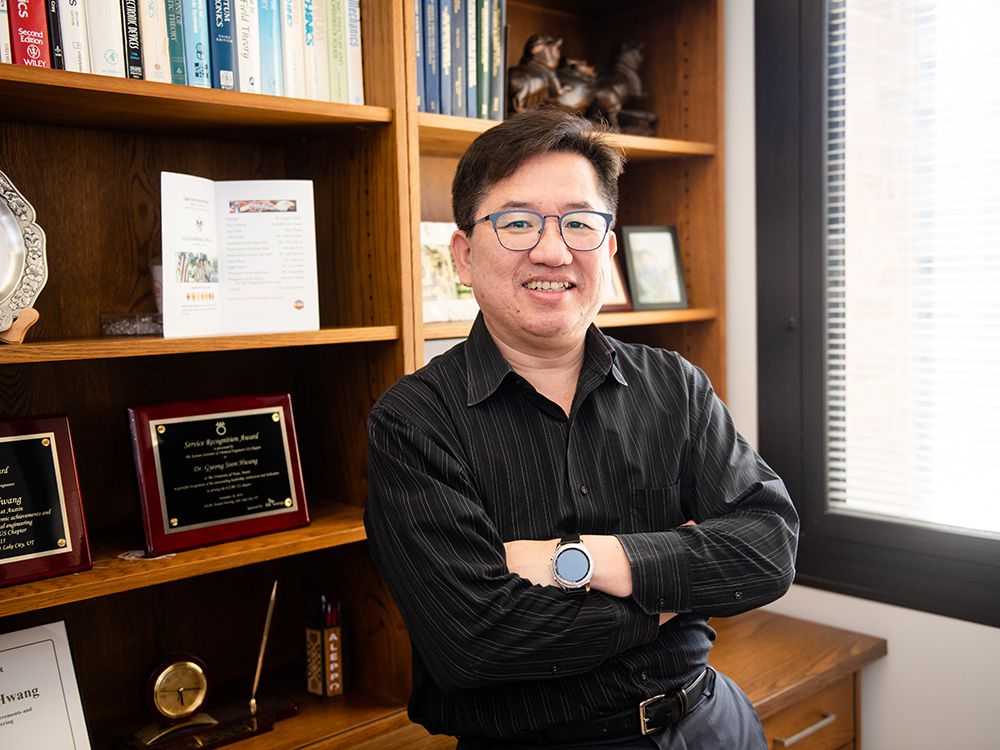
Gyeong Hwang is a Matthew Van Winkle Regents Professor of Chemical Engineering at The University of Texas at Austin. He leads the Hwang Research Group focused on computational materials discovery and design for energy and electronic applications. His work emphasizes multiscale modeling of nanostructured materials, with applications in energy storage/conversion, carbon capture, and semiconductor processing. Educational Qualifications: Ph.D., Chemical Engineering, California Institute of Technology (1999) M.S., Applied Physics, California Institute of Technology (1998) M.S., Chemical Engineering, Seoul National University (1993) B.S., Chemical Engineering, Seoul National University (1991) Research Interests: Hwang's research integrates first-principles modeling with experimental validation to address challenges in: - Surface chemistry and interfacial reactions - Nanostructured materials synthesis - Electrochemical device fabrication - CO₂ capture mechanisms His group develops computational tools for predicting material behaviors at atomic and continuum scales. Recent Publications Trends: Publications (2023-2025) focus on: - Solid-state battery interfaces - Plasma-enhanced material deposition - Ionic liquid interactions - Thermal/spatial transport phenomena - Electrochemical reaction mechanisms Awards: NSF CAREER Award (2005) Electrochemical Society's F.M. Becket Memorial Award (1999) Korean Chemical Engineering Service Award (2010) Advising & Grants: Leads interdisciplinary research funded by NSF, industry partnerships, and regents' endowments. Active in graduate student training through courses like ChE 379 (Molecular Simulation) and ChE 348 (Numerical Methods). Labs/Teams: The Hwang Research Group operates state-of-the-art computational facilities for quantum mechanics simulations and multiscale modeling. Collaborates with experimental groups globally on materials prototyping.
Dr. Ahmet Avsar is an Assistant Professor and NRF Fellow in the Department of Material Science and Engineering at the National University of Singapore (NUS), appointed since September 2022. Prior to this, he served as an Assistant Professor of Physics at Newcastle University (UK) and held an EPFL Fellowship (co-funded by the European Marie Curie COFUND) at the Swiss Federal Institute of Technology Lausanne (EPFL, Switzerland) from 2016 to 2020. He completed his PhD in Physics at NUS. His research focuses on exploiting quantum degrees of freedom (spin, pseudospin, valley) in atomically thin materials for energy-efficient information technologies. This includes fabricating mesoscopic devices with 2D heterostructures and studying their electronic, magnetic, and optical properties at low temperatures. His work emphasizes sustainable computing through spin, magnon, and superconducting quasiparticle-based information processing. Key research areas include spintronics in graphene and 2D materials, van der Waals magnetism, excitonic devices, and low-temperature characterization. His recent projects explore anisotropic spin transport in black phosphorus, valleytronics, and logic-in-memory systems using atomically thin semiconductors. Dr. Avsar has been recognized as an NRF Fellow and EPFL Fellow. His research is supported by the National Research Foundation (NRF) of Singapore. He has authored or co-authored numerous high-impact publications in journals like Nature Materials , Nature Nanotechnology , and Review of Modern Physics . His academic trajectory includes postdoctoral research at EPFL and prior roles in the UK, reflecting a trajectory of excellence in quantum materials and nanotechnology research.
Herman F. Nied is a Professor in the Department of Mechanical Engineering & Mechanics at Lehigh University, where he has been since 1995. He served as department chair from 2002 to 2008 and has been a Fulbright Visiting Professor at the Technical University of Graz and a Visiting Research Scientist at the Fraunhofer Institut. Ph.D., Applied Mechanics, Lehigh University (1981) M.S., Applied Mechanics, Lehigh University (1978) B.S., Mechanical Engineering, University of Rochester (1976) Nied's research spans polymer processing, fracture mechanics, electronic packaging, welding, and computational methods. His lab focuses on finite element simulations for 3-D fracture analysis and thermoforming processes. He has graduated 25 Ph.D. and 35 M.S. students, holds 14 patents, and has received funding from Semiconductor Research Corporation, NSF, ONR, DARPA, and industry leaders like Ford and GE. Semiconductor Research Corporation National Science Foundation Office of Naval Research Department of Transportation DARPA Ford GE Awards include the NSF CAREER award, GE’s Saul Dushman Award, and Fellow of the American Society of Mechanical Engineers.
Igor Di Marco is a Researcher at Uppsala University's Department of Physics and Astronomy, specializing in Materials Theory. He has maintained continuous research activity at Uppsala since 2009, initially as a postdoctoral fellow and subsequently as a researcher, with a temporary leave in 2017 to lead a group at the Asia-Pacific Center for Theoretical Physics in South Korea. Dr. Di Marco earned his PhD in condensed matter theory from Radboud University of Nijmegen in 2009. His academic trajectory has focused on computational approaches to understanding complex quantum materials, particularly those exhibiting strong electron correlations. His research centers on computational physics and condensed matter theory , with emphasis on developing methods to determine electronic and magnetic properties of strongly correlated materials . Dr. Di Marco is one of the principal developers of the all-electron DFT code RSPt (a Sweden-USA-France collaboration), which utilizes the full-potential linearized muffin-tin orbitals method. His expertise spans density-functional theory (DFT) , dynamical mean-field theory (DMFT) , and their integration (DFT+DMFT). Current research extends to X-ray absorption spectroscopy (XAS) and resonant inelastic X-ray scattering (RIXS) . Analysis of his recent publications reveals a consistent focus on electronic correlations in quantum materials, particularly in kagome metals, van der Waals magnets, and complex alloys. His work bridges theoretical method development with practical materials applications, frequently examining magnetic properties and electronic structure calculations across diverse material systems. Dr. Di Marco has made significant contributions to computational methodologies for strongly correlated electron systems, including the development of the DFT+DMFT framework within RSPt featuring full self-consistency over electron density and self-energy. His research projects have addressed magnetic properties of transition metals, excitation spectra of metal oxides, theoretical frameworks for lanthanides, and prediction of novel 2D materials.
Per-Erik Hellström is a Professor at KTH Royal Institute of Technology, affiliated with the Department of Electronics and Embedded Systems. His research focuses on semiconductor process technology, particularly the heterogeneous integration of materials like SiGe, Ge, high-κ dielectrics, and metal gates with Si CMOS to advance integrated circuits. He leads KTH's FDSOI CMOS process and circuit technology, emphasizing sequential 3D integration for future CMOS developments. Additionally, he manages the Si and SiC process line at Electrum Laboratory, overseeing tool maintenance, process control, and upgrades. Researcher ID: ORCID Location: Kistagangen 16 Email: pereh@kth.se His work involves developing nanometer-sized transistors through double patterning techniques and studying material integration for enhanced device performance. He teaches courses in electrical circuits, semiconductor devices, and nanotechnology at both Bachelor's and Master's levels, including Electrical Engineering (IF1330) , Embedded Electronics (IE1206) , and Introduction to Integrated Circuits (IL2241) . He also supervises degree projects and exams. Scientific achievements include the 2020 G03 Best Paper Award for gate stack research. His recent publications highlight advancements in Type-II superlattices, 3D integration, and high-temperature sensors. Key collaborators include PhD students working on nanotechnology and process engineering.
Jonathan Freund is Professor of Mechanical Science and Engineering and Aerospace Engineering at the University of Illinois at Urbana-Champaign, holding the Donald Biggar Willett Professorship since 2016. He serves as Head of Aerospace Engineering (2020-present) and is Co-Director of the Center for Exascale-enabled Scramjet Design (CEESD). His academic journey began with all three degrees in Mechanical Engineering from Stanford University (B.S. 1991, M.S. 1992, Ph.D. 1998), followed by faculty positions at UCLA (1997-2001) before joining UIUC. Freund's research spans fluid mechanics with applications in biomedical systems, aeroacoustics, and materials science. His work focuses on computational modeling of cellular blood flow, jet noise control, plasma-coupled combustion, uncertainty quantification, and nanoscale material processing. He develops advanced simulation tools to investigate phenomena ranging from atomically thin liquid films to spacecraft propulsion systems. His laboratory leverages high-performance computing to solve complex multiphysics problems requiring exascale capabilities. Analysis of his recent publications reveals a strong emphasis on computational fluid dynamics applied to biological systems (35%), aeroacoustics and jet noise (25%), materials processing at nanoscale (20%), and uncertainty quantification methods (20%). His work consistently bridges fundamental fluid mechanics with practical engineering applications, particularly in medical technologies and advanced propulsion systems. Donald Biggar Willett Professor (2016-present) Kritzer Faculty Scholar (2011-2016) Fellow of the American Physical Society (2011) Campus Excellence in Faculty Mentoring Award (2017) APS DFD Gallery of Fluid Motion Winner (2000) Associate Fellow of AIAA (2012) Freund has advised numerous graduate students and received multiple teaching honors including the Engineering Council Award for Excellence in Advising (2008, 2012) and repeated recognition on the List of Excellent Teachers. His research has been supported by agencies including the Department of Energy's National Nuclear Security Administration. He leads the CEESD center which develops physics-faithful predictive simulations for scramjet design using advanced high-temperature composite materials.
Pyry Kivisaari is a Postdoctoral Researcher at the Department of Neuroscience and Biomedical Engineering, Aalto University, specializing in computational modeling of optoelectronic semiconductor devices. His work bridges theoretical physics and engineering applications with significant contributions to light-emitting diode and solar cell technologies. His primary research domains include: Optoelectronics and photonics Semiconductor device physics Nanoscale optoelectronic structures Numerical simulation frameworks Light-matter interaction in resonant cavities Efficiency enhancement mechanisms Analysis of his 15 most recent publications (2019-2024) reveals a consistent focus on thin-film and nanoscale optoelectronic devices, particularly examining carrier dynamics, light emission characteristics, and efficiency limitations in LED and solar cell architectures. His work frequently employs advanced simulation techniques to investigate novel device concepts like nanotree LEDs, double diode structures, and thermophotonic systems, with strong emphasis on practical engineering solutions for performance optimization. Dr. Kivisaari maintains active collaboration with leading researchers in semiconductor physics and has published in high-impact journals including Applied Physics Letters, Physical Review Applied, and Nano Letters, demonstrating sustained scholarly productivity in optoelectronic device research.
Xiuhao Deng is an Associate Research Fellow and PhD Supervisor at the Institute of Quantum Science and Engineering, Southern University of Science and Technology (SUSTech), with adjunct positions at Pengcheng Lab and Hefei Lab. He obtained his B.S. in Modern Physics from University of Science and Technology of China (USTC) in 2005, followed by an M.S. in Atomic and Molecular Physics from USTC (2009) and a Ph.D. in Physics from University of California, Merced (2015). Research Interests: Driven quantum systems Quantum control theory and open quantum systems Superconducting and spin qubits Quantum error correction Quantum simulation Quantum computing His work focuses on robust quantum gate engineering, scalable quantum control, and error mitigation in multi-qubit systems. Recent publications emphasize geometric correspondence methods, noise resilience, and hardware optimization. Academic Activities: Organized QIP 2020 (international quantum conference) Reviewer for Phys. Rev. X , Phys. Rev. Lett. , and other journals Transferred to Shenzhen International Quantum Academy in 2025 after tenure at SUSTech
Pasquale Scarlino is a Tenure Track Assistant Professor in the Institute of Physics at École Polytechnique Fédérale de Lausanne (EPFL), where he founded and leads the Hybrid Quantum Circuits (HQC) Laboratory. He holds a dual appointment with the School of Basic Sciences (SB) and the Physics Section (SB-SPH), conducting research at the intersection of semiconductor and superconducting quantum technologies. His laboratory develops hybrid quantum hardware for advanced quantum information processing. His educational background includes a Master's degree in Physics from the University of Salento (Italy, 2011), where he was a student of Scuola Superiore ISUFI, followed by a Ph.D. from TU Delft (2016) in the Spin Qubits group of Prof. L.M.K. Vandersypen at the Kavli Institute of Nanoscience-Qutech. His doctoral work focused on Si/SiGe spin qubits in collaboration with the M. Eriksson Group at Wisconsin University. Scarlino's research centers on experimental quantum physics using hybrid superconductor/semiconductor devices with electrostatically defined quantum dots coupled to high-impedance microwave resonators. He investigates light-matter interactions in unconventional regimes, quantum transport in low-dimensional systems, and spin/charge qubit implementations. His work aims to merge semiconductor and superconducting platforms to expand quantum information capabilities, with applications in quantum computing, quantum optics, and analog quantum simulation. Early career achievements include establishing the first coherent interface between superconducting and semiconducting quantum systems using high-impedance resonators. His publication record shows strong focus on microwave photon-mediated interactions between quantum systems, with recent work exploring quantum acoustics, topological band engineering, and criticality-enhanced sensing. The articles demonstrate increasing specialization in hybrid quantum hardware, with a shift toward germanium-based systems and advanced resonator designs in the latest publications. Scarlino has advised eleven Ph.D. students at EPFL and teaches courses including General Physics (Electromagnetism), Solid State Systems for Quantum Information, and Introduction to Quantum Science and Technology. His teaching emphasizes experimental quantum hardware approaches and critical assessment of quantum computing platforms. The Hybrid Quantum Circuits Laboratory operates within EPFL's Institute of Physics, utilizing state-of-the-art nanofabrication facilities and cryogenic measurement setups. The team collaborates extensively with leading quantum research groups worldwide, maintaining strong ties with previous institutions including ETH Zurich, TU Delft, and Microsoft Station Q Copenhagen.