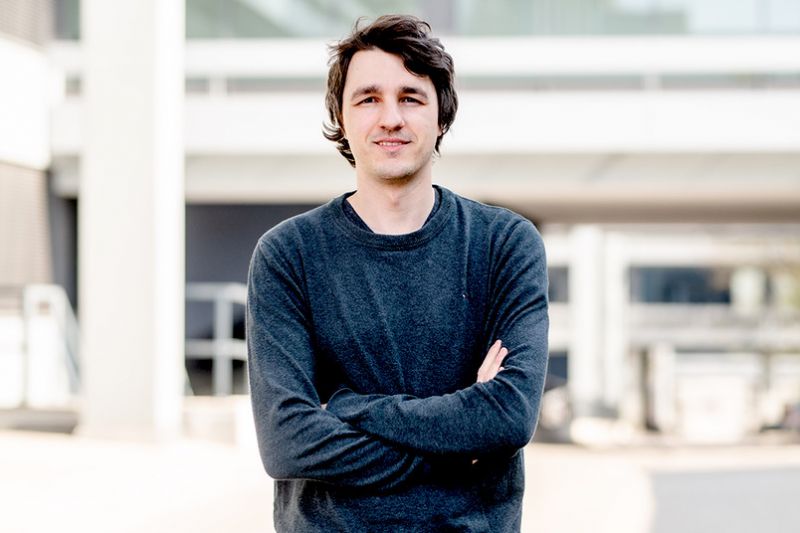
Dr Leok Lee is a Lecturer in the School of Electrical and Mechanical Engineering at the University of Adelaide . He is also an active member of the Centre for Energy Technology , contributing to cutting-edge research in renewable energy systems. Research Interests: Renewable energy systems, with a focus on solar thermal energy and energy storage. System integration and optimisation of complex transient energy systems. Computational fluid dynamics (CFD) and experimental design for energy applications. Decarbonisation of heavy industry through clean energy technologies. His research spans from fundamental studies in heat transfer and fluid mechanics to applied engineering solutions for decarbonising industrial processes. He has led and contributed to projects funded by ARENA and HILT CRC, targeting the integration of concentrated solar thermal energy into industrial applications such as the Bayer Alumina process. Supervision & Mentorship: Dr Lee is eligible to supervise Masters and PhD students and actively mentors undergraduate, Masters, and PhD candidates. He encourages prospective students to contact him via email to discuss research opportunities. Contact: Email: leok.lee@adelaide.edu.au Location: Room 3, Engineering South, North Terrace Campus
John Dolbow is a Professor in the Thomas Lord Department of Mechanical Engineering and Materials Science at Duke University, with secondary appointments in Civil and Environmental Engineering and Mathematics. He is a Bass Fellow and holds leadership roles as Associate Vice President for Research & Innovation since 2024. Education: B.S.M.E. (University of New Hampshire, 1995), M.S. (Northwestern, 1998), Ph.D. (Northwestern, 1999) Research Focus: Computational fracture mechanics, phase-field modeling, hydrogels, and multiphysics problems in geomechanics and biomedical engineering His recent work advances phase-field methods for fracture nucleation, hydraulic fracturing in geothermal systems, and laser lithotripsy simulations. Dolbow leads Duke's Computational Mechanics Laboratory, integrating civil, mechanical, and materials science approaches. Key contributions include: Erratum corrections for computational mechanics frameworks Nitsche-stabilized methods for interface constraints Phase-field models for surfactant-driven particle raft fracture Multi-resolution approaches for hydraulic fracture simulation Embedded FEM techniques for moving boundary problems Scientific Recognition: R. H. Gallagher Young Investigator Award (2005) Robert J. Melosh Medal for Finite Element Analysis (1999) DOE Computational Science Graduate Fellowship (1997) DOE CSGF Steering Committee Chair
Jonathan Freund is Professor of Mechanical Science and Engineering and Aerospace Engineering at the University of Illinois at Urbana-Champaign, holding the Donald Biggar Willett Professorship since 2016. He serves as Head of Aerospace Engineering (2020-present) and is Co-Director of the Center for Exascale-enabled Scramjet Design (CEESD). His academic journey began with all three degrees in Mechanical Engineering from Stanford University (B.S. 1991, M.S. 1992, Ph.D. 1998), followed by faculty positions at UCLA (1997-2001) before joining UIUC. Freund's research spans fluid mechanics with applications in biomedical systems, aeroacoustics, and materials science. His work focuses on computational modeling of cellular blood flow, jet noise control, plasma-coupled combustion, uncertainty quantification, and nanoscale material processing. He develops advanced simulation tools to investigate phenomena ranging from atomically thin liquid films to spacecraft propulsion systems. His laboratory leverages high-performance computing to solve complex multiphysics problems requiring exascale capabilities. Analysis of his recent publications reveals a strong emphasis on computational fluid dynamics applied to biological systems (35%), aeroacoustics and jet noise (25%), materials processing at nanoscale (20%), and uncertainty quantification methods (20%). His work consistently bridges fundamental fluid mechanics with practical engineering applications, particularly in medical technologies and advanced propulsion systems. Donald Biggar Willett Professor (2016-present) Kritzer Faculty Scholar (2011-2016) Fellow of the American Physical Society (2011) Campus Excellence in Faculty Mentoring Award (2017) APS DFD Gallery of Fluid Motion Winner (2000) Associate Fellow of AIAA (2012) Freund has advised numerous graduate students and received multiple teaching honors including the Engineering Council Award for Excellence in Advising (2008, 2012) and repeated recognition on the List of Excellent Teachers. His research has been supported by agencies including the Department of Energy's National Nuclear Security Administration. He leads the CEESD center which develops physics-faithful predictive simulations for scramjet design using advanced high-temperature composite materials.
Professor Karl Bernhard Friedrich serves as Universitätsprofessor and Chair of Metallurgical Process Engineering and Metal Recycling at RWTH Aachen University's Faculty of Georesources and Materials Engineering. He leads the Institute for Metallurgical Science and Electrometallurgy (IME), with his office located in Building 1401, Room 108 at Intzestraße 3 in Aachen. His leadership extends to numerous EU-funded research initiatives focused on sustainable metallurgy and circular economy principles. Professor Friedrich's research interests span metallurgical process engineering, metal recycling, extractive metallurgy (pyrometallurgy and hydrometallurgy), battery recycling technologies, lithium recovery processes, and vacuum metallurgy. His work emphasizes resource efficiency and sustainable practices in metal production and recycling, with particular focus on developing environmentally sound processes for electronic waste and battery recycling. The institute under his leadership has pioneered several innovative recycling concepts for lithium-ion batteries and electronic scrap. Analysis of his recent publications reveals a strong focus on battery recycling technologies, particularly lithium recovery from spent batteries through both pyrometallurgical and hydrometallurgical routes. His research group has developed advanced processes for black mass treatment, slag valorization, and metal recovery optimization. The work demonstrates increasing integration of digital technologies and multi-objective modeling in metallurgical process development. Honorary doctorate from Montanuniversität Leoben (2025) recognizing outstanding scientific achievements and commitment to promoting young scientists Long-standing collaboration with Montanuniversität Leoben through the Aachen-Leoben Workshop for non-ferrous metallurgists Professor Friedrich actively supervises numerous doctoral students and has established several collaborative research programs including the DFG priority program 'engineered artificial minerals,' and doctoral programs 'circular electronics' and 'circular e-cars.' His institute maintains strong industry connections, with growing demand for TBRC and VAR trial campaigns. The institute recently commissioned a new large-scale arc furnace and is preparing for leadership transition in early 2027. The IME under Professor Friedrich's leadership operates extensive research facilities focused on vacuum metallurgy, pyrometallurgy, and hydrometallurgy. The institute collaborates with industry partners through the GDMB Zinc & Lead Technical Committee and participates in numerous European research networks. Current research activities focus on developing sustainable processes for battery recycling, electronic waste treatment, and critical metal recovery with emphasis on circular economy principles.
Chris Matzner is a Professor and Associate Graduate Chair at the University of Toronto's Department of Astronomy and Astrophysics, affiliated with the Dunlap Institute for Astronomy & Astrophysics. He earned his Ph.D. from UC Berkeley in 1999. His research focuses on astrophysical fluid dynamics, particularly star formation processes (protostellar disks, molecular clouds, energy feedback) and stellar explosions (supernovae, gamma-ray bursts), employing analytical, numerical, and observational approaches. His research encompasses: Dynamics of protostellar outflows and molecular cloud interactions Models for supernova shocks and gamma-ray burst mechanisms Fragmentation in star and planet formation Massive black hole accretion processes Evolution of giant molecular clouds Stellar feedback in galactic environments Analysis of his 15 most recent publications reveals strong emphasis on supernova dynamics (particularly Type Ia explosions), star formation mechanisms in clusters and molecular clouds, shock wave physics in astrophysical contexts, and the development of astronomical instrumentation. The works demonstrate consistent focus on explosive transients, fluid dynamics in cosmic environments, and observational constraints on theoretical models. As Associate Graduate Chair, he oversees academic programs and student development. His laboratory affiliations include the Dunlap Institute's computational astrophysics and instrumentation groups. Current work involves modeling star cluster-galaxy interactions, tidal disruption events, and developing next-generation UV/IR detectors.
Nicolas Binder is a Professor and Head of the Turbomachinery and Propulsion Research Group at ISAE-SUPAERO . His research focuses on turbomachinery aerodynamics, unsteady flow analysis, and innovative propulsion systems for aerospace applications. Member of EuroTurbo executive committee ASME Member Associate Editor, Journal of Turbomachinery Research expertise in off-design operations and windmilling flows Research Interests : Aerodynamics of turbomachinery in severe off-design conditions Unsteady flow dynamics in turbines Innovative propulsion methods including magneto-hydrodynamics Flow analysis techniques for compressors and fans Recent publications (2024-2021) emphasize transient flow modeling in turbines, windmilling operation optimization, and variable geometry turbine performance. Articles span experimental validation of numerical models, shock wave interactions, and novel propulsion concepts like plasma-thrusters for drones.
Richard Anantua is an Assistant Professor in the Department of Physics and Astronomy within the College of Sciences at the University of Texas at San Antonio (UTSA), and also serves as an Adjunct Professor at Rice University since 2024. His research group is pioneering Event Horizon Telescope (EHT) science in Texas, focusing on computational and theoretical astrophysics related to black holes and relativistic phenomena. Assistant Professor, UTSA – 2022–Present Adjunct Professor, Rice University – 2024–Present Postdoctoral Fellow, Harvard-Smithsonian Center for Astrophysics – 2019–2021 Postdoctoral Fellow, UC Berkeley – 2016–2019 Education: Ph.D. in Physics – Stanford University M.S. in Physics – Stanford University B.S. in Physics and Philosophy – Yale University B.S. in Economics and Mathematics – Yale University Ed.M. in Education Policy and Management – Harvard University Richard Anantua’s research focuses on computational astrophysics , particularly the modeling of emission near supermassive black holes using general relativistic magnetohydrodynamic (GRMHD) simulations. His work bridges theoretical models with observational data from cutting-edge instruments like the Event Horizon Telescope (EHT) and its next-generation counterpart (ngEHT). Key areas include black hole accretion flows, relativistic jets, plasma physics, and neutrino emission. He has developed methodologies to connect simulation variables—such as electron temperature, magnetic field strength, and current density—to observable signatures across the electromagnetic spectrum. The recent publications from his group reflect a strong trend in high-resolution modeling of black hole environments , with emphasis on M87, Sgr A*, and theoretical constructs like primordial black holes and dark matter alternatives. These works integrate numerical simulations with observational predictions, particularly for EHT and ngEHT capabilities, covering emission morphology, jet stability, plasma composition, and neutrino physics. The interdisciplinary nature of his research spans astrophysics, plasma physics, and computational science. Scientific Engagement and Mentorship: Active mentor of postdoctoral researchers, PhD students, master’s students, and undergraduates at UTSA. Group members regularly present at national conferences such as the American Astronomical Society (AAS) and SCEECS. Supervised master’s thesis on GRMHD emission modeling. Anantua has been involved in major collaborations, including the Event Horizon Telescope Collaboration during his postdoc at Harvard, and continues to lead a vibrant research group at UTSA. His lab focuses on advancing computational tools for black hole imaging and theoretical modeling of extreme astrophysical environments.
Brian Weeks is an Associate Professor in the School for Environment and Sustainability at the University of Michigan, where he joined as an Assistant Professor in 2019. His research focuses on understanding how species and communities respond to human-induced environmental changes, with particular emphasis on avian systems. Weeks leads an active research group that integrates museum specimen-based work, genomics, and field studies to investigate biodiversity responses to global change. Weeks' research interests span evolutionary ecology, climate change biology, and biodiversity conservation. His work primarily examines how bird species and communities have responded to environmental change through morphological adaptations. He combines museum-, field-, and lab-based approaches to study evolutionary processes across multiple scales, from macroevolutionary patterns in the Solomon Islands to contemporary changes in North American migratory birds. His lab has developed innovative methods like Skelevision for high-throughput measurement of functional traits from museum skeletal specimens. His publication record shows a strong focus on climate-driven morphological changes in birds, with recent work demonstrating how warming temperatures drive size reductions while simultaneously increasing wing length. His research has revealed that smaller-bodied species change at faster rates, and that migration timing shifts are decoupled from morphological changes. Weeks' lab also investigates biodiversity-ecosystem functioning relationships and extinction risk prediction. Packard Fellowship in Science and Engineering (2022) Ecological Society of America's George Mercer Award (2022) Katma Award, American Ornithological Society ISI Highly Cited paper (2021) Weeks advises multiple PhD and Master's students, and his lab collaborates extensively with researchers across institutions. His work has received significant media attention, with coverage in Science, The Wall Street Journal, The Washington Post, BBC News, and numerous international outlets. His research on birds shrinking due to climate change achieved an Altmetric score higher than 99.98% of papers tracked, reflecting its substantial scientific and public impact.
T.J.C. van Terwisga is a Professor at the Ship Hydromechanics and Structures department of Delft University of Technology (Faculty of Mechanical, Maritime and Materials Engineering). His research focuses on cavitation phenomena, vortical flows, and microbubble dynamics, with applications in ship hydrodynamics and marine technology. PhD in Mechanical Engineering (specialization in cavitation physics) Editorial Board Member: The Journal of Ocean Technology (2006–present) Research Interests : Cavitation inception and erosion mechanisms Air lubrication systems for ship drag reduction Underwater shipping noise propagation Bubble dynamics in vortical flows Experimental fluid mechanics Hydrofoil performance optimization Scientific Contributions : Developed advanced calibration methods for microbubble measurement systems Investigated air lubrication regime transitions under varying flow conditions Studied cavitation onset in counter-rotating vortex flows Explored bubble capture mechanisms in vortical flows Contributed to underwater soundscape modeling for maritime operations Editorial Roles : Editor, The Journal of Ocean Technology (2006–present) Editor, The Journal of Ocean Technology (2009–present)
Philip Brunner is a Professor of Hydrogeology at the University of Neuchâtel's Faculty of Science since 2012. He is based at the Center for Hydrogeology and Geothermics (CHYN), leading the Laboratory of Hydrogeological Processes. His work centers on sustainable water resource management through quantitative tools. He earned his PhD from ETH Zurich, focusing on sustainable salt and water management in Western China's agricultural basins. Post-PhD, he conducted three years of postdoctoral research in Australia, developing new approaches for simulating river-aquifer interactions. Brunner's research spans surface water-groundwater interactions, numerical modeling, and remote sensing. He integrates methods from numerical modeling, remote sensing, scientific computing, and isotopic chemistry. His interdisciplinary collaborations with mathematicians, biologists, and physicists address challenges in agriculture, ecohydrology, engineering, and sustainable resource management. Recent publications highlight innovative tracer techniques (noble gases, microbes), low-cost monitoring systems, and advanced numerical models. His work tackles climate change impacts on ecosystems, groundwater in conflict zones, and sustainable practices in diverse environments including mountains and agricultural regions. He teaches courses such as Introduction to Hydrological Processes (Master), Numerical Modeling (Master), Remote Sensing (Master), and Introduction to Soil Physics (Bachelor, in French). His laboratory serves as a center for experimental and computational hydrogeological research.
Matthew A. Franchek is a Professor in the Department of Mechanical and Aerospace Engineering at the University of Houston, where he has served since 2002. His career spans over three decades, including prior roles as Professor and Chair at the University of Houston (2002–2009), Director of the Biomedical Engineering Program (2002–2009), and faculty positions at Purdue University from 1992 to 2002. He earned his Ph.D. (1991), M.S. (1988), and B.S. (1987) in Mechanical Engineering from Texas A&M University and the University of Texas at Arlington, respectively. Dr. Franchek’s research focuses on Dynamic Systems, Measurement and Control , with expertise in linear/nonlinear system identification, multivariable control theory, diagnostics/prognostics, and adaptive control. His engineering applications span internal combustion engines , exhaust after-treatment , noise/vibration control , and health prognostics for cardiovascular/respiratory systems . His recent publications highlight applications in superconductor manufacturing, aeroelastic stability, magnetic actuators, and subsea engineering. 2002 Best Paper Award, ASME Journal of Dynamic Systems, Measurement and Control 2001 ASME Dynamic Systems and Control Division Young Investigator Award 1997 CASA/SME University Lead Award 1997 Feddersen Faculty Fellow, Purdue University Multiple teaching awards at Purdue University (1994–2001) and Texas A&M University (1991) He has served as an Associate Editor for the ASME Journal of Dynamic Systems, Measurement and Control, held leadership roles in ASME and IEEE, and organized symposia on nonlinear control and robust control at international conferences. His professional activities include advisory roles at Cummins Incorporated and reviewing for NSF and numerous journals.
Ajay B. Limaye is an Assistant Professor in the Department of Environmental Sciences at the University of Virginia. His research spans terrestrial and planetary landscapes, focusing on fluvial geomorphology, quantitative stratigraphy, and planetary surface processes. He employs remote sensing, geospatial analysis, numerical modeling, and laboratory experiments to study river dynamics, sedimentary deposits, and climate records on Earth, Mars, and Titan. His work integrates NSF and NASA-funded projects, including the development of a Landscape Evolution Laboratory with a 7m×3m experimental basin for controlled landscape modeling. His research explores feedbacks between landslides and ecology in central Virginia, Martian deltaic deposits, and submarine channel systems. He teaches courses in geomorphology, planetary geology, and fundamental geosciences. NSF CAREER Award (2023) : "GLOW: Sequencing rivers with machine learning and bioinformatics" Keck Institute Fellowship (2010) : High-resolution stratigraphy of Mars polar deposits Recent publications analyze braided river dynamics (e.g., Brahmaputra-Jamuna River), meander bend geometry, landslide-vegetation interactions, and planetary hydrology. His experimental work on autogenic fluvial terraces and turbidity maximum zones in estuaries demonstrates interdisciplinary methodological rigor.
Thorsten W. Becker is a Professor of Earth and Planetary Sciences at the Jackson School of Geosciences, University of Texas at Austin, holding the Shell Companies Foundation Distinguished Chair in Geophysics. He is also a Senior Research Scientist at the Institute for Geophysics and a Faculty Associate at the Institute for Computational Engineering and Sciences. His research focuses on the co-evolution of planetary interiors and surface systems, integrating geodynamic modeling, seismology, and field data to study processes like plate tectonics, mantle convection, and seismic anisotropy. Becker earned a Diplom in Physics from Goethe University (Frankfurt) and a Ph.D. in Geophysics from Harvard University. He has held academic positions at the University of Southern California and Scripps Institution of Oceanography. His honors include the Augustus Love Medal (EGU), Evgueni Burov Medal (IUGG), and Fellow of the American Geophysical Union. His teaching interests span Tectonic Geodynamics, Natural Hazards, and Numerical Modeling. He chairs the US National Academies’ Standing Committee on Solid Earth Geophysics and has led major initiatives like the NSF-funded Megathrust Modeling Framework. His work bridges computational geoscience, tectonics, and geodynamic theory, with over 160 peer-reviewed publications. Recent research emphasizes mantle flow dynamics, slab interactions, and AI-driven seismic analysis. Key contributions include models of subduction termination, slab-induced cratonic thinning, and the role of mechanical anisotropy in tectonic processes.
Prof. Dr. Jonathan Bedford is a leading researcher in physical geodesy at Ruhr-Universität Bochum's Institute of Geology, Mineralogy and Geophysics. Previously, he worked at the German Research Centre for Geosciences (GFZ) in Potsdam and the Free University of Berlin. His research focuses on subduction zone dynamics, coseismic/postseismic deformation, and machine learning applications in geophysics. University of Leeds (BSc Geosciences) Colorado School of Mines (MS Geosciences) Free University of Berlin (PhD 2015) His work spans: Subduction zone mechanics and earthquake cycles Viscoelastic relaxation and afterslip modeling Machine learning for earthquake prediction Geodetic data analysis with GPS and InSAR Fault interaction and seismic hazard assessment Power-law rheology in crustal deformation Research trends from his publications show emphasis on: Pre-earthquake deformation patterns (wobbling, gradual unlocking) Postseismic processes (afterslip, viscoelastic relaxation, poroelasticity) Integration of geodetic and seismic data Physics-based and data-driven earthquake analog models Notable collaborations include GFZ Potsdam, Free University of Berlin, and Chilean institutions. His work combines numerical modeling with observational data to understand megathrust earthquake mechanisms and improve seismic hazard assessments.
Hari Sundar is an Associate Professor in the Department of Computer Science at Tufts University, holding the Ada Lovelace Associate Professorship. Previously, he served as an Associate Professor at the Kahlert School of Computing, University of Utah. His research focuses on developing parallel algorithms for computational sciences and high-performance computing, addressing challenges in biosciences, geophysics, computational fluid dynamics, and computational relativity. He leads efforts in adaptive mesh refinement, geometric multigrid methods, and scalable scientific computing frameworks like Dendro-GR for numerical relativity. Education: Ph.D. in Computer Science from the University of Pennsylvania (2009), and a Bachelor of Engineering from the University of Delhi (2000). Postdoctoral work at the Oden Institute, University of Texas at Austin. Research Interests: Parallel algorithms, high-performance computing architectures, computational relativity (binary black hole simulations), multiphase flow modeling, and domain-specific languages for scientific computing. His work emphasizes scalability and efficiency on modern supercomputers. Key Contributions: Development of the Dendro-GR platform for gravitational wave simulations, scalable PDE solvers, and GPU-optimized algorithms for phonon transport and genomic sequence alignment. His recent work includes advancements in gravitational waveform modeling for LISA space missions and thermodynamically consistent two-phase flow simulations. Grants & Collaborations: Active in NSF-funded projects on computational relativity, multiphase flow algorithms, and scalable PDE solvers. Collaborates across disciplines in astrophysics, materials science, and bioinformatics.