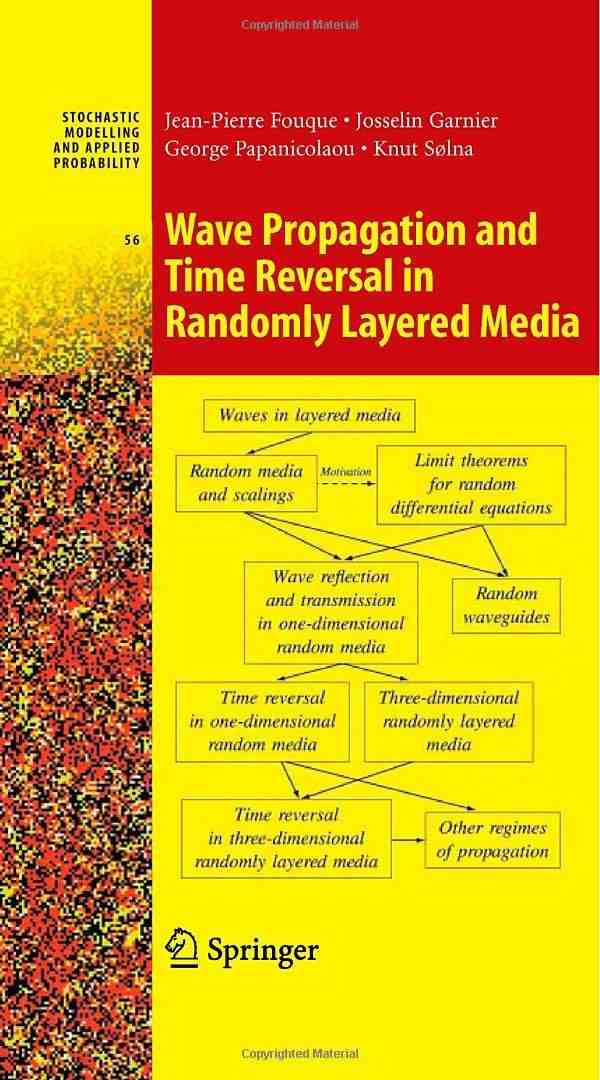
Josselin Garnier is a Professor at Ecole Polytechnique, France, affiliated with the Center for Applied Mathematics. His research focuses on wave propagation in random media, imaging techniques, uncertainty quantification, and inverse problems. He has authored/co-authored multiple influential books including Wave Propagation and Time Reversal in Randomly Layered Media (2007) and Multi-Wave Medical Imaging (2017). His work bridges mathematical theory with applications in optics, seismology, and nuclear engineering. Research interests emphasize stochastic dynamics, nonlinear wave interactions, and Bayesian methods for parameter estimation. He leads a large research group with over 30 PhD students, many working on interdisciplinary projects such as thermalization in optical fibers and seismic fragility analysis. His contributions include developing reduced order modeling approaches for inverse problems and advancing methodologies for uncertainty quantification in nuclear reactor simulations. Key collaborations involve institutions like the French Mathematical Society and the Ciroquo Research & Industry Consortium. His educational contributions include the widely used All-in-one Mathematics textbook series for undergraduate students.
Thomas Fingar is a Lecturer and Shorenstein APARC Fellow at Stanford University's Freeman Spogli Institute for International Studies. He holds a Ph.D. in Political Science from Stanford and an A.B. in Government and History from Cornell University. His career includes senior roles in U.S. intelligence, including Deputy Director of National Intelligence for Analysis (2005-2008) and Assistant Secretary of State for Intelligence and Research (2000-2001 and 2004-2005). Institution: Stanford University Affiliation: Walter H. Shorenstein Asia Pacific Research Center Previous Roles: Oksenberg-Rohlen Distinguished Fellow (2010-2015), Payne Distinguished Lecturer (2009) Research focuses on China's foreign policy, international security, and intelligence analysis. Key themes include Sino-Russian relations, U.S.-China strategic competition, and regional stability in East Asia. Publications emphasize analytical frameworks for national security decision-making and geopolitical dynamics in Asia. His scholarship bridges academia and policy circles, informed by decades of government service.
Professor Subhamoy Bhattacharya (Suby) holds the Chair in Geomechanics at the University of Surrey since October 2022. With a PhD in pile failure mechanisms from the University of Cambridge, he has held academic roles at the University of Bristol (Senior Lecturer in Dynamics, Visiting Fellow), University of Oxford (Departmental Lecturer, Junior Research Fellow), and Somerville College. His research focuses on offshore wind turbine foundations, seismic design, soil-structure interaction, and liquefaction mitigation. Key Research Areas: Geomechanics, Offshore Wind Turbines, Seismic Resilience, Hybrid Foundation Systems, Soil Damping Analysis Recent Publications: 15+ articles on monopile foundation dynamics, seismic hazards, and hybrid renewable energy systems His experimental work at Surrey's SAGE laboratory investigates soil damping curves through physical model tests, introducing zonal methods for damping ratio linearization. Collaborative studies with teams across Europe and Asia address post-storm stiffness degradation, gravity-based foundation design, and climate change impacts on offshore wind farm durability. All his research emphasizes practical engineering frameworks validated through centrifuge tests and finite element modeling. Current projects include seismic design guidelines for offshore wind turbines in typhoon-prone and earthquake-prone regions, with applications to Chinese coastal conditions and Indian nuclear plant resilience strategies. His work bridges academic research and industry standards, focusing on technology readiness levels for novel foundation certifications.
Adam Hecht is a Professor of Nuclear Engineering at the University of New Mexico (UNM), leading research in radiation detection, nuclear nonproliferation, and fission data. He holds a Ph.D. from Yale University (2004) and has held academic positions since 2008, progressing from Assistant to Associate Professor before becoming full Professor in 2022. His work focuses on advanced detector development (e.g., AlSb semiconductors, perovskites), muon imaging for spent fuel verification, and machine learning applications in radiation spectroscopy. He directs the UNM Radiation Research and Detector Development (R²D²) lab and co-leads the Center for Nuclear Nonproliferation Science and Technology (CNNST). Education: Ph.D. Physics (Yale, 2004), M.Phil. (Yale, 2001), M.S. (Yale, 1998), B.S. Physics (UC Irvine, 1997). Research emphasizes fission fragment measurements, nonproliferation technologies, and environmental radiation analysis. He has authored/co-authored over 70 peer-reviewed articles, with recent work on neutron multiplicity, detector materials, and muon tomography for nuclear safeguards. Research interests span experimental nuclear physics, including SPIDER fission spectrometry, novel detector materials (AlSb, perovskites), and radiation data mining. Awards include the J.W. Gibbs Fellowship (Yale). Collaborations include LANL, UNLV, and the Canadian Penning Trap mass spectrometry projects. Students and postdocs in his lab work on projects such as fission yield measurements, neutrino detection, and neutron/gamma identification algorithms. Key contributions include the development of the UNM Fission Fragment Spectrometer and advancements in room-temperature semiconductor detectors. His work bridges fundamental nuclear science with applied security needs, including projects funded by DOE, DTRA, and NSF.
David Ray is a Professor of Endocrinology at the University of Oxford, serving as Head of the Oxford Centre for Diabetes, Endocrinology and Metabolism (OCDEM) and Co-Director of the Sir Jules Thorn Sleep and Circadian Neuroscience Institute. His research focuses on circadian rhythms, inflammation, and metabolism, particularly investigating nuclear receptors' roles in health and disease. He holds a PhD from the University of Manchester and has held roles such as MRC grant recipient and clinical fellowship panel member. Education: Trained in general internal medicine in North West England, PhD in Medicine from the University of Manchester, UCLA research fellowship. Research interests include circadian regulation of immunity and metabolism, nuclear receptor biology, and translational medicine. His work bridges population genetics, experimental models, and human studies to uncover time-dependent physiological mechanisms. Recent articles emphasize circadian-immune interactions, drug timing optimization, and metabolic pathways. He has contributed to landmark studies like the REV-ERBα and BMAL1 circadian pathways. Awards: Fellow of the Royal College of Physicians (FRCP), Wellcome Investigator Award Advising/Grants: Wellcome Trust and MRC grants, mentorship in clinical fellowships. Active in sleep medicine and endocrine research networks. Labs: Leads the Ray Group at OCDEM and collaborates with the Kavli Institute for Nanoscience Discovery.
Dr. David Logan is an Assistant Professor of Security Studies at The Fletcher School of Law and Diplomacy, Tufts University. His research focuses on nuclear weapons policy, arms control, and U.S.-China security dynamics. Previously, he taught at the Naval War College and held fellowships at MIT's Security Studies Program and Princeton's Center for International Security Studies. He earned degrees from Grinnell College (B.A.) and Princeton University (M.P.A., M.A., Ph.D.). Logan's work addresses strategic stability, nuclear deterrence, and China's military modernization. He has published in International Security , Foreign Affairs , and War on the Rocks . His teaching includes courses on U.S.-China security relations, nuclear strategy, and technological innovation in security. He directed the Strategic Education Initiative at Princeton and conducted research for the National Defense University and Defense Threat Reduction Agency. His expertise spans Chinese military affairs, command structures, and non-proliferation challenges. Despite no listed awards, his prolific output positions him as a leading voice on contemporary security issues.
Emily Meierding is an Associate Professor in the Department of National Security Affairs at the Naval Postgraduate School. Her expertise includes energy geopolitics, environmental security, and economic statecraft, with a focus on debunking myths about resource-driven conflicts. Her research investigates oil's role in international disputes, sanctions efficacy, and energy interdependence. She has testified before the U.S.–China Economic and Security Review Commission and published extensively on petrostate stability and conflict dynamics. Awards include the duPont-Columbia Award for investigations into racial profiling and multiple Emmys for corruption exposés. Recent articles analyze fuel supply chains in West Africa, Russia's war in Ukraine, and sanctions against North Korea. Teaching interests encompass energy security, international relations theory, and U.S. national security policy.
Andrea Carpignano is a Tenured Associate Professor at the Department of Energy (DENERG) of Politecnico di Torino. He is a member of the Interdepartmental Center Ec-L (Energy Center Lab) and holds positions in multiple research and teaching committees. His roles include chairing courses such as Valutazione di Impatto Ambientale e LCA and Risk Analysis at the Master's level, and collaborating on undergraduate courses like Sicurezza degli impianti energetici. Research interests span nuclear safety , risk assessment , process safety , asset integrity , CFD modeling for industrial accidents, and land use planning for major hazard installations. He actively contributes to sustainable energy transitions through projects involving offshore platforms, green hydrogen, and eco-design strategies aligned with SDGs 7, 9, and 12. He has been involved in significant research projects such as IMAGHyNE (2024–2029) and E-VINCE (2017), and led studies on uncertainty quantification in industrial accident analysis and networked system reliability. His consulting work includes risk evaluations for gas compressors and environmental impact assessments for industrial products like faucets and textiles. Andrea Carpignano advises PhD students and collaborates in national and international research initiatives. He is part of research groups including NEMO, LAME, and TESIN within DENERG.
Virginia Strati is an Assistant Professor in the Department of Physics and Earth Sciences at the University of Ferrara, Italy. Her research focuses on environmental radioactivity, geoneutrino physics, and geophysical modeling. She holds a BSc (2010) and MSc (2012) in Geosciences from the University of Siena, and a PhD in Physics (2016) from the University of Ferrara. Key affiliations include collaborations with the Borexino and JUNO neutrino experiments, and contributions to airborne gamma-ray spectroscopy for environmental monitoring. Her work integrates nuclear physics, geology, and engineering to address topics like Earth's radiogenic heat, soil moisture dynamics, and public radiation exposure assessment. She has developed methodologies for uranium distribution mapping, radon monitoring in dwellings, and educational tools for teaching environmental radioactivity. Research highlights include predicting geoneutrino signals for the SNO+ and JUNO detectors, analyzing cosmic radiation effects on airborne surveys, and designing purification systems for liquid scintillator detectors. She has also pioneered interdisciplinary education programs combining gamma spectroscopy with computer science for K-12 students. Her projects often involve international collaborations with institutions like the Hellenic Centre of Marine Research and the Chinese Academy of Sciences. Ongoing work focuses on refining crustal models for neutrino experiments and advancing precision agriculture through radiometric soil monitoring.
Jonathan Martin is a Researcher IV in Systems Engineering at the National Renewable Energy Laboratory (NREL), specializing in hybrid energy system design and cost optimization. He leads development of NREL's H2Integrate (H2I) tool for optimizing energy storage from intermittent sources to produce industrial commodities like hydrogen, ammonia, and steel, while conducting experimental work at NREL's High Flux Solar Furnace. His educational background includes: Bachelor of Engineering from Swarthmore College PhD in Mechanical Engineering from the University of Michigan-Ann Arbor Martin's research spans energy systems engineering with emphasis on hydrogen production, biofuels, combustion optimization, and critical materials degradation. His experimental work focuses on de-risking commercial systems like 48-hour city backup power solutions and molten-salt thermal storage for CSP/nuclear applications, integrating techno-economic analysis with experimental validation. Recent publications demonstrate strong trends in carbon capture-to-fuels conversion, thermal energy storage innovation, and electrification infrastructure, all emphasizing practical implementation and techno-economic viability across renewable energy domains. Scientific recognition includes: NREL President's Award (2020) NREL President's Award (2022) Martin actively collaborates with industry partners through projects like the CharIN Megawatt Charging System initiative and leads experimental validation efforts at NREL's High Flux Solar Furnace facility, focusing on materials degradation and system de-risking for commercial deployment.
Dr. SIM Xueling is an Assistant Professor at the Saw Swee Hock School of Public Health, National University of Singapore (NUS), with expertise in statistical genetics, pharmacogenomics, and biostatistics. She has held academic positions since 2015 and previously worked as a Research Fellow at the University of Michigan and Research Assistant at NUS. Doctor of Philosophy, NUS (2011) BSc. Hons. in Statistics, NUS (2005) Her research focuses on genetic determinants of metabolic diseases, including type 2 diabetes, obesity, and cardiometabolic traits, leveraging multi-ancestry genome-wide association studies (GWAS), proteomics, and multi-omics approaches. She co-authored numerous high-impact publications analyzing gene-environment interactions, polygenic risk scores, and biomarker discovery. Recent publications highlight trends in applying AI to medical imaging for diabetes stratification, exploring nuclear regulatory pathways in diabetes progression, and developing precision medicine frameworks like the PRECISE-SG100K genomic engine. Her work emphasizes population diversity in genetic studies to improve global health outcomes. Best Research Publication Award 2nd Annual Graduate Scientific Congress 2012 She has extensive teaching experience in epidemiological methods and genetics courses at NUS. Media outlets like ScienceDaily and BioSpectrum Asia have covered her research on diabetes-related genetic markers and cholesterol-lowering therapies.
Stephan D. Voss, MD, PhD, is an Associate Professor of Radiology at Harvard Medical School and holds dual leadership roles as the Quality and Safety Physician Director and Nuclear Medicine Medical Director within the Department of Radiology at Boston Children's Hospital. His clinical expertise spans pediatric radiology, nuclear medicine, and oncological imaging, with a focus on optimizing diagnostic protocols for childhood malignancies. Education: Undergraduate: Princeton University (1984) Medical School: University of Wisconsin (1988) Internship & Residency: Beth Israel Deaconess Medical Center (1995-2000) Fellowship: Pediatric Radiology, Boston Children's Hospital (2001) Dr. Voss's research centers on developing novel imaging tools for pediatric oncology , particularly neuroblastoma-specific diagnostics. He pioneers the use of antibody-targeted contrast agents for SPECT/PET imaging and chairs the Imaging Section of the Children's Oncology Group Phase I Consortium, establishing standardized protocols for cancer staging and treatment response assessment. His recent publications demonstrate a strong focus on advanced imaging techniques for pediatric cancers, including PET/MRI surveillance for genetic syndromes, radiation injury quantification, and optimizing nuclear medicine protocols. Collaborative clinical trials frequently investigate targeted therapies for refractory solid tumors. Dr. Voss leads translational research at Boston Children's Hospital, directing projects on molecular imaging probe development and coordinating multi-institutional efforts to refine imaging guidelines for pediatric lymphoma and neuroblastoma through the SEARCH and COG consortia.
Michelle Black is an Associate Professor in the Department of Political Science at the University of Nebraska Omaha (UNO), within the College of Arts and Sciences. She serves as Co-Director of the Nebraska Deterrence Lab, Security Innovations Academic Programming Director for NCITE, a Research Partner at the National Strategic Research Institute (NSRI), and Co-Editor of the Space and Defense Journal . With over seventeen years of professional experience in the U.S. Department of Defense, including roles at USSTRATCOM and as a U.S. Army Special Operations NCO, Dr. Black brings deep operational and policy-relevant expertise to her academic work. Her educational background includes a PhD in Political Science from the University of Nebraska-Lincoln (2016), an MS in Negotiation and Dispute Resolution from Creighton University (2009), a Graduate Certificate in Intelligence Studies from Mercyhurst College (2007), an MS in International Relations from Troy University (2005), and a BA in Cultural Anthropology from the University of Iowa (2001). Dr. Black's research centers on deterrence theory, political violence, insurgency, terrorism, and national security, with a strong focus on decision-making analysis and Middle East security. Her work explores Multi-Actor Deterrence, online radicalization, and the intersection of intelligence and policy. She teaches courses at UNO, the Department of Defense, and in community outreach programs, covering topics such as U.S. Foreign Policy, Intelligence and National Security, and Deterrence Theory. Her recent publications (2015–2024) reflect a consistent trajectory in high-impact security and political science journals, with increasing emphasis on deterrence education, workforce development, and multi-domain strategy. Themes across her articles include NATO deterrence frameworks, intelligence education reform, and the political integration of insurgent groups, indicating a shift toward institutional and pedagogical contributions alongside operational security analysis. Dr. Black has received significant research funding as Principal or Co-Principal Investigator from NATO, DHS, the Department of the Air Force, and NSRI, supporting projects on multi-actor deterrence, counterterrorism education, and coherent deterrence development. These grants highlight her leadership in bridging academic research with defense and homeland security applications. She advises students and collaborates extensively, particularly with scholars like Lana Obradovic and Rula Jabbour. She leads research teams through the Nebraska Deterrence Lab and contributes to national security discourse via media engagements and public lectures. Her lab and team efforts focus on strategic foresight, deterrence innovation, and workforce development in intelligence and counterterrorism.
Timo Tiira is a Researcher at the Institute of Seismology, University of Helsinki , and Supervisor for the Doctoral Programme in Geosciences. His work focuses on seismology and geophysics, particularly seismic event discrimination using Finnish station networks. PhD in Geophysics (Discrimination of seismic events using Finnish station network) MSc in Physics (Seismisten signaalien havaitseminen Hutt&Murdock-detektorin ja digitaalisen suodatuksen avulla) Research Interests: Seismology and geophysics with emphasis on seismic event discrimination, crustal structure analysis, ambient noise tomography, and seismic hazard assessment for critical infrastructure like nuclear power plants. Key Contributions: Leadership in establishing the Finnish Seismic Instrument Pool (FINNSIP) , development of 3D shear wave velocity models for Helsinki, and automated seismic event classification systems. Collaborative work spans Finland, Russia, and Ukraine with 103+ activities and 187+ research outputs. Scientific Awards: Recipient of Best GFF Articles award (2014) Projects: Active in SCARCE: Scandinavian Arctic Continental Experiment (2023–2028) and Monitoring the monitoring (2020–2025). Key roles in seismic networks for geothermal and nuclear facility monitoring.
Dion Groothof is an active medical researcher specializing in nephrology, cardiology, and population health, with significant contributions to kidney transplantation, amyloidosis, and mortality risk prediction. His collaborative work spans multiple international institutions focusing on translational clinical research. His primary research domains include: Kidney Graft Survival and Transplantation Outcomes Wild-Type Transthyretin Amyloidosis Pathophysiology Mortality Risk Factors in Chronic Diseases Climate Change Impacts on Renal Health Population-Based Cohort Studies in Nephrology Metabolic Biomarkers in Kidney Disease Analysis of his 65+ research outputs reveals a strong translational focus connecting laboratory findings with clinical applications. Key trends show increasing emphasis on cardiac-renal interactions, novel imaging biomarkers for amyloidosis, and development of climate-adaptive clinical protocols. His work consistently addresses UN Sustainable Development Goals related to health equity and well-being through population-level interventions. Dr. Groothof maintains active collaborations across European research networks, evidenced by multi-country co-authorship patterns. His recent publications demonstrate leadership in developing interim clinical guidelines for emerging challenges like climate-related health risks, while advancing diagnostic precision in amyloidosis through nuclear medicine techniques.