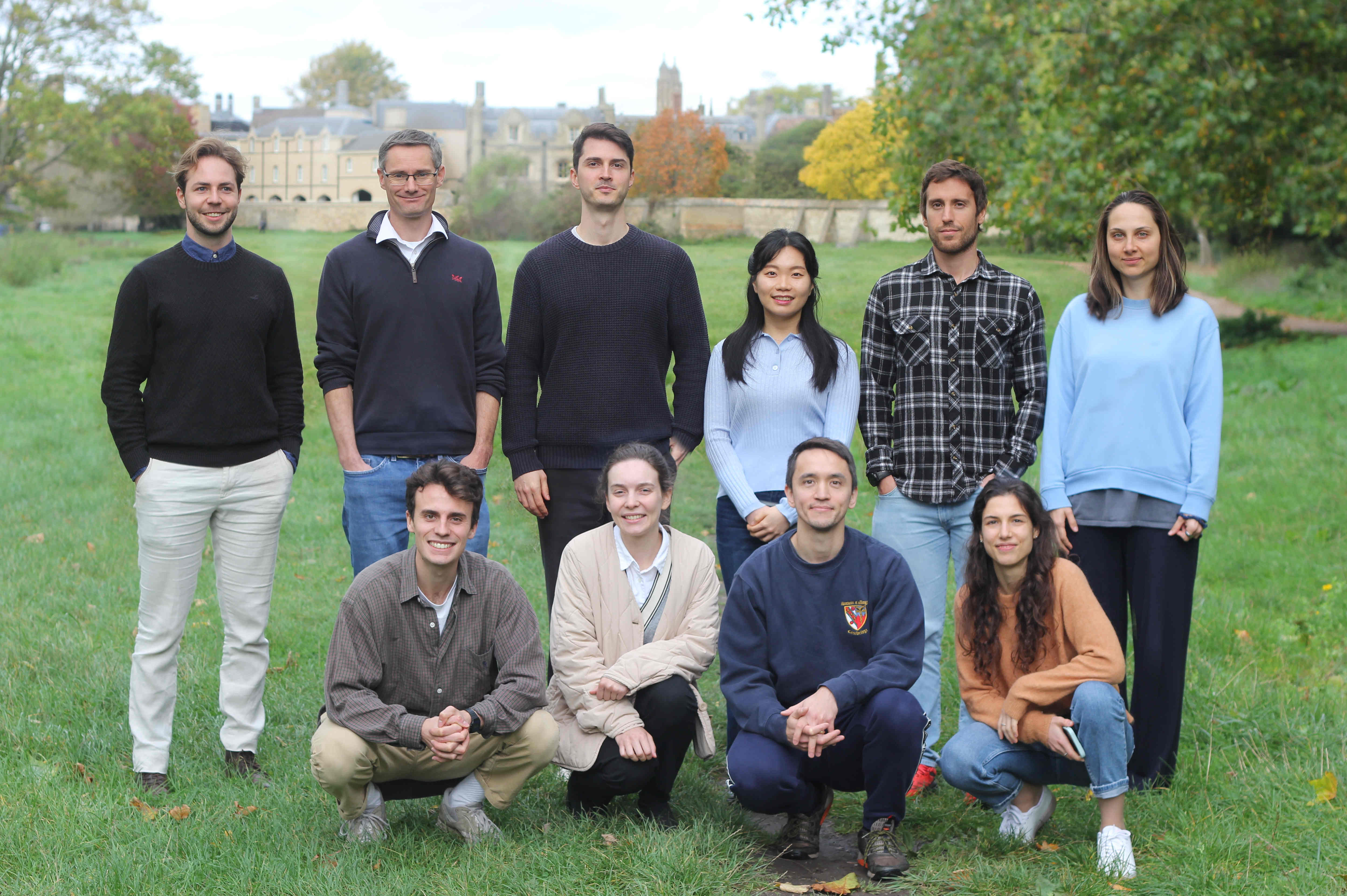
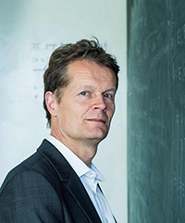
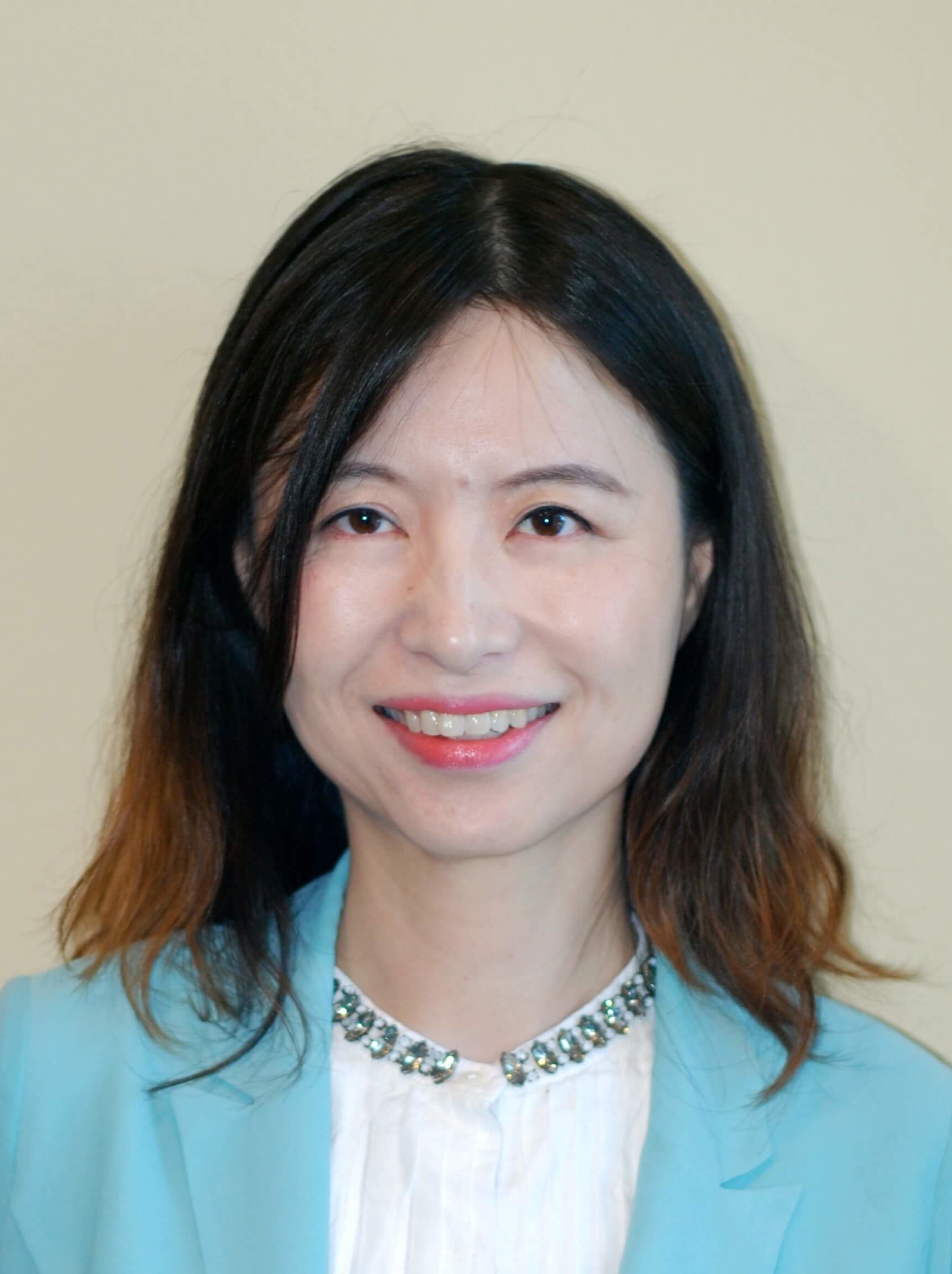
Richard E. Turner is a Professor of Machine Learning at the University of Cambridge's Department of Engineering and Research Lead for AI for Weather Prediction at the Alan Turing Institute. He serves as Cambridge Lead for the EPSRC Probabilistic AI Hub and previously held roles including Visiting Researcher at Microsoft Research, Co-Director of the AI4ER CDT, and Course Director for the Machine Learning and Machine Intelligence MPhil program. Current research focuses on probabilistic machine learning fundamentals, environmental prediction (weather/climate), and spatio-temporal modeling combining deep learning with Bayesian methods Supervised 26 PhD students (13 graduated) and 7 research assistants/associates Secured over £30M in research funding from EPSRC, Microsoft, Toyota, Google, DeepMind, Amazon, and Improbable Featured in BBC Radio 5 Live's The Naked Scientist, BBC World Service's Click, and Wired Magazine His recent publications demonstrate expertise in diffusion models for PDE simulations, Gaussian Processes for environmental applications, and Bayesian methods for spatio-temporal forecasting. Key trends include climate modeling using ML, neural PDE solvers, and scalable probabilistic inference. Awards : Cambridge Students' Union Teaching Award for Lecturing; supervised Qualcomm Innovation Fellowship winner Collaborations : Microsoft Research (AI4Science), Alan Turing Institute, EPSRC Probabilistic AI Hub Turner leads the Turner Group within Cambridge's Machine Learning Group, focusing on uncertainty-aware ML for scientific applications. Current research assistants work on topics like meta-learning, Bayesian inference, and climate science applications.
Subhashis Ghoshal is a Goodnight Distinguished Professor in the Department of Statistics at North Carolina State University (NCSU). He holds a Ph.D. in Statistics from the Indian Statistical Institute (1995). His research focuses on Bayesian nonparametrics, high-dimensional models, asymptotic theory, and functional data analysis. He has authored influential books like *Fundamentals of Nonparametric Bayesian Inference* (2017) and contributed to methodologies in image processing and statistical inference. Key awards include the Goodnight Distinguished Professorship (2021), Dr. Cavell Brownie Mentoring Award (2014-15), and the De Groot Prize (2019). He has held editorial roles in journals like *Statistical Science* and *Annals of Statistics*. His work bridges theory and applications, addressing challenges in modern statistical problems such as uncertainty quantification and causal inference. He advises on graduate programs and actively contributes to academic leadership at NCSU.
Ann B. Lee is a Professor and Co-Director of the PhD Program in Statistics at Carnegie Mellon University , with a joint appointment in the Department of Statistics & Data Science and the Machine Learning Department. Prior to joining CMU, she held positions as a J.W. Gibbs Assistant Professor at Yale University and a visiting research associate at Brown University. PhD in Physics, Brown University MSc/BSc in Engineering Physics, Chalmers University of Technology, Sweden Her research focuses on statistical methodology for complex data in the physical sciences , emphasizing trustworthy inference, uncertainty quantification, and integration of classical statistics with machine learning. Recent work includes likelihood-free inference, calibrated forecasting, and diagnostics for generative models. The STAMPS research group , which she co-founded in 2018, hosts weekly meetings and public webinars. In Fall 2024, STAMPS will transition into a CMU Research Center. Recent publications span likelihood-free inference , climate modeling , and astronomy . Notable collaborations include applications to hurricane intensity guidance , galaxy redshift estimation , and cosmological parameter biases . She mentors PhD students and has advised multiple award-winning researchers, including ASA Best Student Paper Award winners. Her teaching includes advanced courses on probability, regression, and AI for climate sciences.
Emmanuel J. Candès is the Barnum-Simons Chair in Mathematics and Statistics at Stanford University, with joint appointments in the Institute of Computational and Mathematical Engineering and as Professor of Statistics and Electrical Engineering (by courtesy). His research spans mathematical signal processing , high-dimensional statistics , and data science , focusing on compressive sensing, inverse problems, and applications to imaging sciences. 2021 IEEE Jack S. Kilby Signal Processing Medal 2020 Princess of Asturias Award for Technical and Scientific Research 2017 MacArthur Fellow His recent work on conformal prediction and uncertainty quantification has advanced machine learning reliability, particularly in high-dimensional settings. Publications include breakthroughs in medical imaging, gravitational wave detection, and AI validation frameworks. Key collaborations include Terence Tao (UCLA) and Justin Romberg (Georgia Tech) for IEEE Kilby Medal recognition. He serves as Co-chair of Stanford's Data Science Institute and previously as Statistics Department Chair (2016–2019).
Michal Kolesár is a Professor in the Department of Economics at Princeton University , holding this position since July 2020. Previously, he served as Assistant Professor (2014-2020) with dual appointments in Economics and the Woodrow Wilson School (2018-2020), and as Visiting Assistant Professor at MIT (2016-2017). His research focuses on econometrics , particularly causal inference , instrumental variables , nonparametric regression , and robust statistical methods . His work addresses fundamental challenges in high-dimensional data analysis, treatment effect heterogeneity, and finite-sample inference validity. Current projects include developing bias-aware methods for regularized regression and analyzing dynamic causal effects in nonlinear systems. Kolesár's recent publications reveal a strong emphasis on methodological rigor with practical applications. His work spans instrumental variable techniques (addressing contamination bias, weak identification), regression discontinuity designs (discrete running variables, measurement error), and high-dimensional inference (sparsity fragility, honest confidence intervals). Key recurring themes include finite-sample optimality, coverage probability guarantees, and robustness to model misspecification. Fellow of the International Association for Applied Econometrics (2023) Journal of Econometrics best associate editor award (2023) Sloan Research Fellowship (2019) NSF grants for high-dimensional data inference (2021-2025) and nonparametric regression (2016-2019) Graduate Economics Club teaching awards (2017, 2018) As an educator, Kolesár teaches advanced econometrics courses at both undergraduate (ECO 312, ECO 313) and graduate levels (ECO 517, ECO 519, ECO 539b). He serves as Co-editor of the Journal of Business & Economic Statistics (2024-2027) and sits on editorial boards of Econometrica , American Economic Journal: Applied Economics , and others. His professional activities include extensive peer review for top journals and organization of major econometrics conferences including the 2026 Econometric Society Winter Meeting.
Tamara Broderick is an Associate Professor in the Department of Electrical Engineering and Computer Science at MIT, specializing in machine learning and statistics. Her research focuses on developing methods for uncertainty quantification in data analysis, Bayesian nonparametrics, and scalable inference algorithms. She leads a research group advising PhD students and postdocs in statistical machine learning. Her work spans Bayesian modeling, variational inference, spatial statistics, and applications in epidemiology and environmental science. Recent projects involve uncertainty-aware forecasting, robustness analysis of statistical methods, and efficient algorithms for high-dimensional inference. Broderick teaches Bayesian Modeling and Inference and contributes to MIT's statistics and data science initiatives.
Andre Wibisono serves as Assistant Professor in Yale University's Department of Computer Science with a secondary appointment in Statistics & Data Science, joining the faculty in 2021 after postdoctoral research at University of Wisconsin-Madison and Georgia Institute of Technology. His educational background includes: Ph.D. in Computer Science, UC Berkeley M.A. in Statistics, UC Berkeley M.Eng. in Computer Science, MIT S.B. in Mathematics and Computer Science, MIT Wibisono's research focuses on algorithm design for machine learning through optimization, sampling, and game theory , leveraging dynamical systems and information theory to develop accelerated discrete-time algorithms from continuous dynamics. His work provides theoretical foundations for efficient machine learning systems with applications in generative modeling and constrained optimization. Recent publications (2023-2025) demonstrate consistent innovation in Hamiltonian-based optimization , constrained-space sampling , and min-max game convergence , characterized by rigorous mathematical analysis connecting continuous dynamics to discrete algorithms. Key trends include randomized integration for acceleration, phi-divergence convergence guarantees, and symplectic geometry applications to mirror descent. Scientific recognition includes: NSF CAREER Award for developing algorithmic frameworks bridging continuous and discrete dynamics He actively mentors current students (Siddharth Mitra, Kaylee Yang, Jane Lee, Qiang Fu, Peter Wang) and has guided two postdocs to faculty positions. Research is funded through the NSF CAREER award and collaborative CIF grants focused on Hamiltonian dynamics for sampling and optimization. His Yale research group develops theoretical foundations for next-generation machine learning algorithms, emphasizing mathematical rigor in optimization and sampling with applications to generative modeling and constrained inference problems.
François-Xavier Briol is an Associate Professor in the Department of Statistical Science at University College London (UCL). He co-leads the Fundamentals of Statistical Machine Learning research group and holds roles including theme lead for Computational Statistics and Machine Learning (CSML), co-director of the UCL CDT in Data-Intensive Science, and ELLIS scholar. His research focuses on merging scientific models with data through robust statistical and machine learning methods, emphasizing computational efficiency and model misspecification robustness. Education: BSc/MMORSE from the University of Warwick, PhD from the joint Warwick-Oxford CDT in Statistics. Postdoctoral roles at Imperial College London (Mathematics) and University of Cambridge (Engineering), followed by a Group Leader position at The Alan Turing Institute (2020–2023). Research interests include probabilistic numerical methods, Bayesian inference for intractable models, Stein’s method, and kernel-based approaches. His work has been recognized via awards like the AISTATS Best Paper Award and Blackwell-Rosenbluth Award, with funding from EPSRC and Amazon. Advising: Supervised PhD students in areas like Bayesian quadrature, robust inference, and Gaussian processes. Current students focus on topics such as Bayesian filtering and sensitivity analysis. Grants include EPSRC funding and an Amazon Research Award. Labs/Teams: Active in UCL’s ELLIS unit, CSML, and Turing Institute collaborations. Editorships include SIAM/ASA Journal on Uncertainty Quantification and Bayesian Analysis.
Aad van der Vaart is a Professor of Stochastics at Leiden University's Mathematical Institute. He was awarded the prestigious NWO Spinoza Prize in 2015 for groundbreaking work in mathematical statistics, particularly Bayesian methods applied to medical imaging, genetic data, and complex models. His research bridges pure mathematical theory with applied domains like neuroscience and astronomy. Research Interests : Van der Vaart focuses on infinite-dimensional Bayesian statistics, nonparametric models, and statistical genetics. His work emphasizes rigorous mathematical analysis of prior distributions and their impact on data-driven conclusions. Applications include gene network modeling and PET scan image reconstruction. Key Contributions : Authored influential books on estimation theory; pioneered modern Bayesian approaches to high-dimensional data. His Spinoza Prize funds will support interdisciplinary research and hiring new talent in statistical methods. Awards : NWO Spinoza Prize (2015), recognized as a global leader in statistical theory. Future Directions : Expanding into astronomical data analysis and medical applications, leveraging Bayesian frameworks for big datasets.
Huiyan Sang is a Professor and Director of the Undergraduate Program in the Department of Statistics at Texas A&M University (College of Arts & Sciences). She earned her Ph.D. in Statistics from Duke University and a B.Sc. in Mathematics and Applied Mathematics from Peking University. Her research focuses on spatial statistics, Bayesian nonparametric methods, machine learning, computational statistics, and applications in environmental sciences, geosciences, urban planning, and biomedical research. Her interdisciplinary work integrates statistical methodologies with real-world challenges, such as analyzing extreme environmental events, optimizing urban infrastructure, and modeling complex systems like human mobility during pandemics. She has contributed to advancing spatio-temporal modeling, Gaussian processes, and Bayesian hierarchical frameworks for large datasets. Recent publications highlight innovations in nonparametric regression, spatial functional data analysis, and stochastic frontier analysis, often leveraging computational efficiency and scalability. Her work addresses critical societal issues, including the impact of community design on public health and environmental monitoring through remote-sensing data. No scientific awards are explicitly listed in the provided texts. She advises no students or grants in the current dataset but collaborates widely on interdisciplinary projects. Her research lab focuses on developing cutting-edge statistical tools with applications in engineering, public health, and environmental science.
Vladimir Spokoiny is a Professor at the Departments of Mathematics and Economics of the Humboldt University of Berlin and Head of the Research Group "Stochastic Algorithms and Nonparametric Statistics" at the Weierstrass Institute for Applied Analysis and Stochastics (WIAS) in Berlin, Germany. His research spans multiple areas of statistics, machine learning, and financial mathematics, with significant contributions to nonparametric statistics, high-dimensional data analysis, and statistical methods in finance. Spokoiny received his M.Sc. in applied mathematics from the Moscow Institute of Railway Engineering in 1981 and his Ph.D. in mathematics from Lomonosov Moscow State University in 1988. He completed his Habilitation at Humboldt University in 1996. His academic career includes positions at the All-Union Institute of Railway Transport in Moscow, the Institute for Information Transmission Problems in Moscow, and the Institute for Applied Analysis and Statistics in Berlin before joining the Weierstrass Institute and Humboldt University where he has been a professor since 2002. Spokoiny's research focuses on adaptive nonparametric smoothing and hypothesis testing, high dimensional data analysis, statistical methods in finance, image analysis with applications to medicine, classification, and nonlinear time series. His work often addresses the challenges of nonstationarity in time series data and develops innovative methods for volatility estimation and risk management. He has made significant contributions to the development of adaptive weights smoothing procedures, which have applications in image processing, community detection, and manifold learning. His recent work has expanded into high-dimensional statistics, Bayesian inference, and optimization methods for machine learning, with publications demonstrating novel approaches to Gaussian approximation, Laplace methods, and statistical inference in non-Euclidean spaces. Spokoiny has supervised numerous PhD students including Oliver Reiss, Danilo Mercurio, Ying Chen, Elmar Diederichs, and Mstislav Elagin, whose research has focused on mathematical finance, time series analysis, and statistical methods. He serves as an Associate Editor for The Annals of Statistics (since 2004) and Statistics and Decisions (since 2002), and has previously served on the editorial board of the Journal of Statistical Planning and Inference. His professional activities include reviewing for major statistical journals including Annals of Statistics, Bernoulli, Econometrica, and Journal of American Statistical Association, as well as reviewing grant proposals for the National Science Foundation (USA), German Research Foundation, and Netherlands Organisation for Scientific Research. Spokoiny is a member of several professional societies including the International Statistical Institute, American Statistical Association, Institute of Mathematical Statistics, and Bernoulli Society. He is fluent in Russian (mother tongue), English, and German, and has good knowledge of French. His research group at WIAS focuses on developing novel statistical methodologies with applications across various scientific domains, particularly emphasizing adaptivity and robustness in complex data environments. The group's work has significant implications for financial risk management, medical imaging, and machine learning applications, with recent publications addressing fundamental questions in high-dimensional statistics and nonparametric inference.
Tim Huh is a Professor and Chair of the Operations and Logistics Division at the University of British Columbia's Faculty of Commerce and Business Administration. He specializes in inventory control, supply chain management, and operations research, with a focus on dynamic decision-making under uncertainty. B.A., B.Math, M.Math from University of Waterloo M.A. from Regent College M.S., Ph.D. from Cornell University His research spans theoretical and applied topics including renewable energy systems, healthcare operations, and digital learning analytics. Recent work explores wind power storage optimization, asynchronous video usage in education, and multi-echelon inventory solutions. Scientific recognition includes the Canada Research Chair in Operations Excellence and Business Analytics He teaches core business analytics and operations management courses at both undergraduate and graduate levels, emphasizing quantitative decision-making and process fundamentals.
S. Yaser Samadi is an Associate Professor in the Department of Mathematics at the School of Mathematical and Statistical Sciences, Southern Illinois University Carbondale. He holds a Ph.D. in Statistics from the University of Georgia (2014) and maintains an active research program in advanced statistical methodologies. Education: Ph.D. in Statistics, University of Georgia, 2014 Research Interests: Dr. Samadi specializes in multivariate time series analysis, high-dimensional statistical inference, and tensor data analysis. His work addresses critical challenges in big data, symbolic data, and dimension reduction for time series through Bayesian analysis and sequential methods for dependent and independent data, yielding robust models for complex data structures. Publication Trends: His recent publications (2014-2023) emphasize time series analysis, dimension reduction, and innovative approaches for interval-valued and matrix-valued data. Key contributions include envelope models for vector autoregression, copula-based count data modeling, and sequential analysis techniques, bridging theoretical statistics with econometrics and data science applications. Scientific Awards: Outstanding Teacher of the Year, School of Mathematical and Statistical Sciences (2021) Advising: Dr. Samadi has mentored four Ph.D. students to completion: Rukayya Ibrahim (Assistant Professor, Penn State Harrisburg), Wiranthe Herath (Assistant Professor, Drake University), Tharindu De Alwis (Postdoctoral Fellow, WPI), and Hadi Safari Katesari (Teaching Assistant Professor, Stevens Institute of Technology). His Master's students Samira Zaroudi (CUNY) and Reginald Ziedzor (Amplify) have also achieved notable career placements.
Carlos Cinelli is an Assistant Professor in the Department of Statistics at the University of Washington, where he conducts research at the intersection of causal inference, statistical methodology, machine learning, and artificial intelligence. He is also a data science fellow at the eScience Institute and affiliate faculty of the Center for Statistics and the Social Sciences, demonstrating his interdisciplinary approach to causal methodology. Dr. Cinelli received his Ph.D. in Statistics from the University of California, Los Angeles, advised by Chad Hazlett and Judea Pearl, two prominent figures in causal inference. His research focuses on developing new causal and statistical methods for transparent and robust causal claims in empirical sciences, with particular attention to challenges faced by social and health scientists. His work spans theoretical developments in causal identification, sensitivity analysis frameworks, and practical software implementations that enable researchers to assess the robustness of their causal conclusions. Cinelli's research program addresses fundamental questions about how unobserved confounding affects causal estimates and develops tools to quantify how sensitive findings are to potential violations of causal assumptions. His work on omitted variable bias frameworks has been particularly influential across multiple disciplines. Through his publications, Cinelli has established himself as a leading researcher in causal inference methodology, with papers appearing in top journals across statistics, machine learning, epidemiology, and social sciences. His work demonstrates both theoretical rigor and practical relevance, often accompanied by open-source software implementations that make his methods accessible to applied researchers. Best paper award at SBE 2024 in Econometrics Royalty Research Fund (RRF) Award recipient NSF/MMS research support As an advisor, Cinelli has successfully guided PhD students like Nick Irons to dissertation completion. He actively seeks new students with strong interests in causal inference. His research is supported by multiple funding sources including the National Science Foundation and the University of Washington's Royalty Research Fund. Cinelli contributes to the academic community through editorial work for the Journal of Causal Inference and by developing widely used software packages like sensemakr for sensitivity analysis.
Scientia Professor Robert Kohn is a distinguished academic at the University of New South Wales, holding a position in the School of Economics within the UNSW Business School. With a career spanning several decades, Professor Kohn has established himself as a leading expert in statistical methodology and econometric modeling. His research has significantly contributed to Bayesian statistics and computational methods for complex data analysis. Professor Kohn's research focuses on advanced statistical methodologies including Bayesian methodology, variable selection and model averaging, nonparametric regression models, time series modeling, multivariate Gaussian and non-Gaussian regression, and Markov chain Monte Carlo simulation algorithms. His work bridges theoretical statistics with practical applications across economics, finance, and cognitive science. His research demonstrates a consistent trajectory toward developing more efficient computational methods for complex statistical models, with recent work emphasizing variational Bayesian methods, particle filtering techniques, and applications to time series analysis. Analysis of his recent publications (2022-2025) reveals a strong focus on advancing computational statistical methods, particularly in Bayesian inference for complex models. His work shows increasing integration of machine learning techniques with traditional statistical methods, especially in handling high-dimensional data and complex time series structures. Professor Kohn has made significant contributions to variational inference methods, particle-based computational techniques, and applications to financial time series and cognitive modeling. Professor Kohn has maintained an exceptionally productive research career with continuous publication output since the 1970s, demonstrating remarkable longevity and adaptability in his research focus as statistical methodologies have evolved. His work shows strong international collaboration, particularly with researchers in Australia, the United States, and Europe, reflecting his standing in the global statistical community.