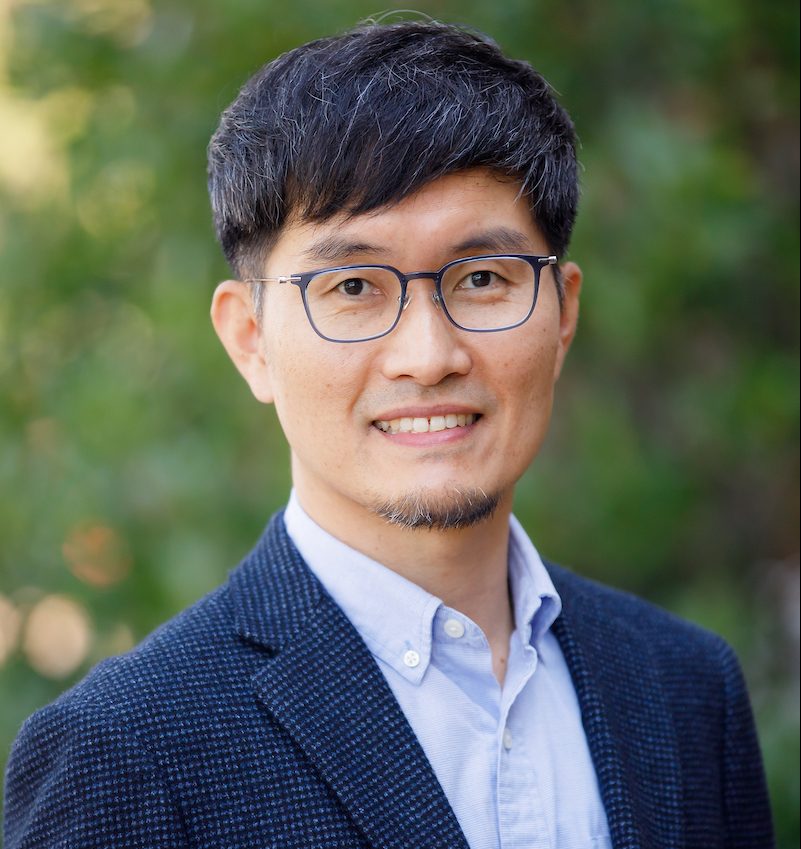
Andrew D. ParsekianView profile
Associate Professor
Andrew D. Parsekian is an Associate Professor in the Department of Geology & Geophysics at the University of Wyoming, part of the College of Engineering and Physical Sciences. He serves as Director of the Hydrologic Science Program and is actively engaged in research and graduate education in environmental geophysics. Ph.D., Rutgers-Newark, 2011 B.S., Dickinson College, 2005 His research focuses on environmental geophysics, particularly the application of non-invasive geophysical methods to study groundwater and cryospheric systems. His group specializes in ground-penetrating radar, electrical resistivity tomography, seismic refraction, and nuclear magnetic resonance. These tools are used to investigate permafrost dynamics, active layer processes, snow distribution, and hydrogeophysical inversion in complex terrains. His recent publications (2024–2025) span high-impact journals such as Geophysics , Journal of Geophysical Research , and The Cryosphere . The work demonstrates a strong trend toward integrating geophysical data with hydrological models, incorporating uncertainty quantification, and applying machine learning to hydrofacies classification. Many of his papers feature student lead-authors, highlighting his active mentorship in graduate research. Scientific contributions include leadership in the ABoVE airborne radar surveys and the Permafrost Dynamics Observatory. His work bridges geophysics, hydrology, and climate science, with growing emphasis on remote sensing and big data analytics. Machine learning-based hydrofacies classification Uncertainty quantification in geophysical inversion Permafrost and active layer monitoring Snow distribution and non-Gaussian statistics Hydrogeophysical data fusion Remote sensing of boreal and Arctic systems Dr. Parsekian teaches Fundamentals of Research for incoming graduate students and Engineering and Environmental Geophysics every odd-year spring. He advises several graduate students, many of whom have led recent publications. His research is supported by active collaborations and data-sharing initiatives, though specific grants are not listed in the text. He leads a dynamic research group focused on advancing near-surface geophysical techniques for environmental applications. He is affiliated with the Hydrologic Science Program and conducts fieldwork in diverse environments, from Arctic permafrost regions to tropical peatlands. His team combines field data collection with advanced data processing and modeling, contributing to both theoretical and applied geophysics.