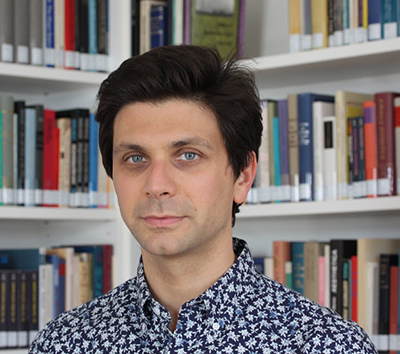
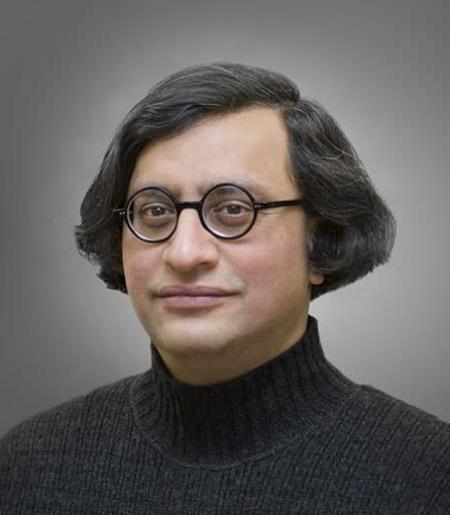
Sebastian Lecourt is an Assistant Professor in the Department of English at the University of Houston's College of Liberal Arts and Social Sciences. His scholarship focuses on Victorian literature, religion and secularism, world literature, and literary theory, examining intersections between British imperial culture and global religious traditions. Ph.D. in English from Yale University M.Phil. and M.A. from Yale University B.A. in English from Macalester College Lecourt's research investigates how Victorian writers engaged with global religious traditions through literary forms, particularly exploring secularization debates and transnational cultural exchange. His work traces how figures like George Eliot and Walter Pater challenged liberal secular frameworks by reimagining religion as cultural identity. His recent publications examine Victorian Buddhist adaptations, comparative religious genre construction, and global literary networks. Key journals include PMLA , Representations , and Victorian Studies . His current book project, The Genres of Comparative Religion, 1783-1927 , analyzes how literary forms shaped cross-cultural religious comparisons. Lecourt's research has been supported by prestigious grants from the American Council of Learned Societies, National Endowment for the Humanities, and the Institute for Advanced Study at the University of Konstanz. He teaches courses on British Empire literature, Victorian science fiction, children’s literature, and literary theory.
Campbell Drake is a Senior Lecturer in Interior Architecture at the University of Technology Sydney's School of Architecture within the Faculty of Design, Architecture and Building. Registered as an architect in New South Wales and Victoria with over 15 years of professional experience, he specializes in sustainable eco-tourism development in environmentally sensitive locations. His work bridges academic research and practical application through partnerships with government and non-government agencies focused on Indigenous infrastructure and housing. Education: PhD from RMIT University (2012-2018) Masters of Research Architecture from Goldsmiths College, University of London (2009-2010) Bachelor of Architecture from RMIT University (1999-2005) Dr. Drake's research centers on the interaction between urban infrastructure and social formation within remote communities, particularly investigating socio-architectural relations in Indigenous contexts. His work explores how infrastructure can enhance wellbeing, cultural practices, and environmental sustainability. He specializes in participatory design methods that empower communities through culturally responsive approaches that integrate Indigenous knowledge systems. His research spans sustainable tourism development in Indonesia, Indigenous housing policy in Australia, cultural burning practices, and the spatial politics of tourism infrastructure, demonstrating a commitment to decolonizing design practices and creating architecture that serves community needs. His recent publications reveal a clear trajectory toward evaluating specific programs (like the Roads to Home Program and Wreck Bay housing strategy) while simultaneously developing theoretical frameworks for culturally responsive architecture. There's a consistent focus on Indigenous infrastructure, housing, and participatory design methodologies, with increasing attention to the intersection of traditional knowledge systems with contemporary design practices in remote Australian communities. His work bridges practical implementation with critical theoretical analysis of power dynamics in architectural practice. Scientific Awards: 2018 UTS Teaching and Learning Awards: Indigenous Professional Capabilities High Commendation Interior Design/Interior Architecture Educators Association Teaching Award (2018 Third place finalist) 2018 AILA Research, Policy & Communication Landscape Architecture Award International Interior Design Association 2014 Global Excellence Awards Dr. Drake supervises Masters and PhD students with a focus on Indigenous architecture and sustainable design. His funded research includes culturally responsive design principles for Aboriginal housing, evaluations of the Wreck Bay Village housing program, Roads to Home evaluations for Gulargambone & Bowraville Reserves, and solar lighting projects for Namoi and Gingie Reserves. His grants come from diverse sources including the NSW Aboriginal Land Council, National Indigenous Australians Agency, and Department of Planning Industry and Environment, reflecting the practical impact of his work. As a founding member of UTS TIISHA (The Indigenous Infrastructure and Sustainable Housing Alliance), Dr. Drake leads collaborative research projects focused on 'health enabling infrastructure' to address structural factors of Indigenous disadvantage. TIISHA works with multiple Aboriginal Land Councils and government agencies to evaluate and implement housing and infrastructure programs that respect cultural values and community needs, demonstrating his commitment to creating tangible benefits for Indigenous communities through architectural practice.
David B. Edwards serves as the James N. Lambert '39 Professor of Anthropology in the Anthropology and Sociology Department at Williams College, where his research focuses on Afghanistan, political violence, and Islamic societies through ethnographic and visual methodologies. Education: B.A. from Princeton University (1975) M.A. from University of Michigan (1979) Ph.D. in Anthropology from University of Michigan (1986) Research Focus: Professor Edwards' work critically examines political violence and martyrdom in Afghan contexts, with groundbreaking studies on suicide bombing in his 2017 monograph Caravan of Martyrs . His interdisciplinary approach integrates documentary film production and visual anthropology to explore post-conflict societies, humanitarianism, and Islamic transformations. Current scholarship analyzes state-building dynamics, media's role in religious revolution, and the geopolitical implications of the 'New World Order' in South Asia. Publication Themes: His scholarly trajectory reveals consistent focus on Afghanistan across three decades, evolving from early ethnographic studies of tribal politics to contemporary analyses of media-driven religious change. The works demonstrate methodological diversity spanning monographs, reprinted theoretical contributions, and documentary film, with increasing attention to visual culture and humanitarian interventions since 2005. Scientific Recognition: Fulbright Fellowship at Charles University, Prague (2012-2013) Carnegie Scholar award from Carnegie Corporation of New York (2003-2004) National Endowment for the Humanities Residential Fellowship (1998-1999) Open Society Institute Fellowship (2004-2005) Williams Class of 1945 World Fellowship (1999) Professional Engagement: Edwards maintains active research funding and institutional partnerships including his Board of Trustees role at the American University in Afghanistan. His grant portfolio demonstrates sustained support for fieldwork in conflict zones, with Fulbright and Carnegie awards enabling critical research during pivotal post-9/11 periods. While specific advisees aren't listed, his course offerings in advanced seminars indicate ongoing mentorship of undergraduate researchers. Collaborative Initiatives: He contributes to the Williams Afghan Media Project and maintains scholarly networks through reprinted works in major anthropology anthologies, reflecting his influence in shaping disciplinary conversations about conflict zones and Islamic societies.
Katie Carmichael is an Associate Professor at Virginia Tech's College of Liberal Arts and Human Sciences, Department of English. She serves as Director of Language Sciences and Co-director of the Speech Lab. Her research focuses on language variation/change, language ideologies, and language-place connections, particularly in Louisiana French and Southern US dialects like New Orleans English and Cajun English. Director of Language Sciences Co-director of Speech Lab Active in language research and teaching Carmichael's work centers on variationist sociolinguistics, exploring topics such as: Low-back vowel mergers in New Orleans English Intergenerational dialect change Raciolinguistic identity in Creole communities Phonetic/phonological diffusion patterns Language endangerment in Louisiana French Place-linked dialect awareness Scientific recognition includes: Roger W. Shuy Best Paper of the Year in American Speech (2024) Exemplary Program Award for Language Sciences (2024) University Award for Excellence in Teaching (2024) College of Liberal Arts Certificate of Teaching Excellence (2024) She teaches graduate-level courses like "Language and Place" and undergraduate courses including "Language and Ethnicity," "Language and Society," and "Contemporary Approaches to Linguistics II." As Co-director of Virginia Tech's Speech Lab, she leads research on acoustic phonetics and sociolinguistic variation.
Patrick Munk is an Associate Professor at the National Food Institute, Technical University of Denmark (DTU), where he leads research in the Research Group for Genomic Epidemiology and contributes to the DTU Microbes Initiative. His work integrates genomics, metagenomics, and bioinformatics to study antimicrobial resistance (AMR) across human, animal, and environmental systems. He is actively involved in global surveillance efforts and is currently accepting PhD students. PhD, MSc Member, The Danish Young Academy (2024–2029) Patrick Munk’s research focuses on antimicrobial resistance, genomic epidemiology, metagenomics, and bioinformatics . His work leverages large-scale sequencing of sewage, livestock, and environmental samples to understand the global spread of resistance genes. He has led and contributed to major international studies, including the global sewage surveillance project across 101 countries, and has developed key genomic resources such as the PanRes and MetalResistance databases. His recent publications span high-impact journals like Nature Communications and Nature Microbiology , with themes centered on sewage-based surveillance, fecal resistomes in livestock, source attribution of microbial communities, and novel sequencing methodologies . His research has been widely covered in media and policy documents, reflecting its societal impact. Genomic analysis of sewage from 101 countries (Nature Communications, 2022) Time-series metagenomics for source-attributed surveillance (Nature Communications, 2024) High-throughput single-cell metagenomic sequencing (Frontiers in Microbiology, 2025) Patrick Munk has received recognition through significant media coverage, policy citations, and widespread academic engagement. His work has been highlighted in over 40 news outlets, referenced in policy sources and patents, and discussed across social media and academic platforms like Mendeley and Wikipedia. He supervises multiple PhD students and is a Principal Investigator or Supervisor on several active and completed projects, including Bioinformatic methods for multi-metagenome integration and Host range and epidemiology of antibiotic resistance . He is also a co-creator of key datasets that support open science in AMR research. His lab is part of a broad collaborative network involving DTU, international consortia, and public health agencies.
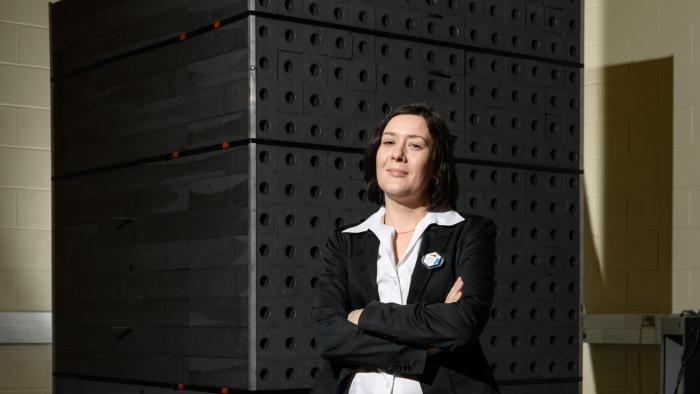
Anna Erickson serves as Woodruff Professor and Associate Chair for Research at Georgia Institute of Technology's George W. Woodruff School of Mechanical Engineering, where she bridges reactor engineering and nuclear nonproliferation through integrated theoretical and experimental approaches. Director of the $25M DOE NNSA-funded Consortium for Enabling Technologies and Innovation (12 universities, 12 national labs), she has authored over 100 publications including the seminal text Active Interrogation in Nuclear Security (Springer, 2018) and advises federal agencies on nuclear security policy. Education: Ph.D. in Nuclear Science and Engineering, Massachusetts Institute of Technology (2011) M.S. in Nuclear Science and Engineering, Massachusetts Institute of Technology (2008) B.S., Oregon State University (2006) Research Focus: Dr. Erickson pioneers nonproliferation-by-design methodologies through two integrated thrusts: advanced reactor analysis for proliferation-resistant nuclear energy systems and radiation detection for border security applications. Her work uniquely combines machine learning with nuclear engineering to develop safeguards for next-generation reactors, with significant contributions to antineutrino detection systems and medical physics applications like proton radiography. Current projects emphasize small modular reactor safety and spectral imaging techniques. Publication Trends: Analysis of her 15 most recent publications (2018-2020) reveals dominant themes in antineutrino-based reactor monitoring (60% of works), advanced radiation detection systems (30%), and small modular reactor design (10%). Key innovations include lithium-loaded scintillators for neutron detection, spectral X-ray correction algorithms, and high-temperature reactor concepts with inherent proliferation resistance, demonstrating consistent DOE funding focus on nuclear security infrastructure. Awards: Woodruff Professorship (2019) Lockheed Dean's Excellence in Teaching Award (2016) US Frontiers of Engineering Symposium (National Academy of Engineering, 2015) American Nuclear Society Graduate Scholarships (2006, 2009) Stewardship Science Graduate Fellowship (DOE, 2008-2011) Leadership & Funding: As director of the $25M Consortium for Enabling Technologies and Innovation, she manages cross-institutional R&D in machine learning, advanced manufacturing, and nuclear detection. Her Laboratory for Advanced Nuclear Nonproliferation and Safety (LANNS) coordinates with Aerospace Engineering, Chemistry, and International Affairs departments on nonproliferation projects, while her ELATES leadership program participation (2022) enhances STEM management capabilities. Recent media engagements with CBS News (nuclear fusion breakthrough) and CNN (radiation safety) demonstrate policy impact. Research Infrastructure: The multidisciplinary LANNS lab develops experimental detection systems alongside reactor modeling tools, supporting the Consortium's mission to create deployable nuclear security technologies. Collaborations with 12 national laboratories enable access to unique facilities for radiation source characterization and reactor simulation, with current efforts focused on AI-enhanced safeguards for commercial reactor fleets.
Stephen John CHARTERS is a Professor in the Wine & Spirits Department at Burgundy School of Business (BSB), where he is affiliated with the School of Wine & Spirits. His academic work focuses on wine business, marketing, and cultural aspects of wine consumption, with particular expertise in terroir studies and wine tourism. His research interests span multiple dimensions of wine business and consumer behavior. Charters examines how cultural contexts shape wine consumption patterns, the role of terroir in consumer perception, and the evolving dynamics of wine markets globally. His work frequently investigates how historical traditions interact with contemporary consumer preferences, particularly across different cultural contexts. He has conducted significant research on wine tourism development, especially in lesser-known regions, and how geographical reputation impacts consumer choices and market positioning. His recent work has increasingly focused on sustainability in wine consumption and the psychological factors influencing drinking behaviors. Analysis of his recent publications reveals a strong focus on cross-cultural comparisons, particularly examining how Old World and New World wine markets interact and influence each other. His research methodology often combines qualitative approaches with consumer surveys to understand the complex relationship between geographical indications, brand authenticity, and consumer preferences. There's a noticeable trend toward examining how traditional wine concepts like terroir apply beyond wine to other products like cheese, demonstrating conceptual innovation in his field. Professor Charters has been actively involved in major academic conferences including the Academy of Wine Business Research (AWBR), European Association of Wine Economists (EuAWE), and American Association of Wine Economists (AAWE), where he frequently presents his research findings and participates in academic discussions shaping the field. His academic contributions include co-authoring The Routledge Handbook of Wine and Culture (2022), which represents a significant scholarly contribution to understanding the intersection of wine and cultural studies. He has also co-authored books including Wine Business Management and Economie et management du vin, establishing himself as a leading authority in wine business education. Charters maintains an active research program with collaborators across multiple countries, as evidenced by his international co-authorship patterns. His work frequently appears in leading journals such as Journal of Wine Research, International Journal of Wine Business Research, and Wine Economics and Policy, demonstrating his standing within the academic community.
Leonhard Dobusch is a full Professor of Business Administration with a focus on Organization at the University of Innsbruck's Faculty of Business and Management, specifically within the Institute for Organisation and Learning. He has held this position since February 2016, after serving as a Junior Professor at Freie Universität Berlin from 2012-2016. Professor Dobusch maintains active international collaborations with researchers at institutions including ETH Zurich, University of Oxford, University of Zurich, and University of Duisburg-Essen. University of Innsbruck: Professor of Business Administration (since 2016) Freie Universität Berlin: Junior Professor of Management (2012-2016) Freie Universität Berlin: Postdoc at Chair for Inter-Organizational Cooperation (2009-2012) Stanford Law School: Research Fellow at Center for Internet & Society (2008) Max Planck Institute for Social Research: Postdoc Fellow (2008-2009) Professor Dobusch's research centers on three interconnected areas that challenge conventional organizational thinking. His work on organizational openness examines how principles like open source software, open science, and open innovation manifest in practice, revealing how formal openness often leads to unintended exclusion. His second research stream investigates alternatives to intellectual property rights in regulatory uncertain environments, particularly in pharmaceutical innovation where he studies approaches to vaccine development beyond traditional patent systems. Thirdly, he develops the concept of 'organisationality' to redefine how we understand organization in increasingly fluid social systems. His research has significant implications for companies, public administrations, and scientific institutions navigating the challenges of openness, regulatory uncertainty, and new organizational forms in the digital age. Professor Dobusch's publication record demonstrates consistent high-impact contributions to organizational studies, with articles appearing in top journals including Organization Studies, Journal of Management Studies, and Long Range Planning. His work shows a clear trajectory from studying open source software adoption in city administrations (his doctoral research) to broader questions about organizational forms, openness, and intellectual property in complex systems. 2025: Best Reviewer Award of the Journal Organization Theory 2025: Prof of the Year Award in Rhetoric and Didactics 2022: Best Paper Award of the Strategy Practice Interest Group 2020: Ideas Worth Teaching Award by Aspen Institute for 'Organizing in Times of Crisis' 2020: LehrePlus!-Preis der Universität Innsbruck 2016: LehrePlus!-Preis for 'Open Organizations and Organizing Openness' course Professor Dobusch actively integrates his research into teaching, exemplified by his award-winning wiki-based course 'Open Organizations and Organizing Openness' and the collaborative online course series 'Organizing in Times of Crisis', which received international recognition. He currently leads a three-year DFG/FWF-funded research project 'Organising Creativity under Regulatory Uncertainty: Alternative Approaches to Intellectual Property' with Professor Sigrid Quack. Within professional networks, he serves as Chair of the Executive Board of the Interest Group 'Strategizing Activities and Practices' at the Academy of Management and regularly leads sub-themes at the European Group of Organization Studies Colloquium on Organizational Openness. Professor Dobusch contributes to several research communities through his blogs 'osconjunction.net' and 'governancexborders.com', and participates in the Momentum-Kongress that connects academic research with social and political practice. His work bridges theoretical innovation with practical relevance, particularly in how organizations can navigate the tensions between openness and closure, formal regulation and creative adaptation.
Paul Firbas is an Associate Professor in the Department of Hispanic Languages and Literature at Stony Brook University, with affiliations in the Department of History. He holds a Ph.D. from Princeton University (2001), an M.A. from the University of Notre Dame (1995), and a B.A. from Universidad Católica del Perú (1992). Previously, he was an Assistant Professor at Princeton University (2001-2007) and a Visiting Professor at Columbia University (Spring 2007). Education: Ph.D., Princeton University, 2001; M.A., University of Notre Dame, 1995; B.A., Universidad Católica del Perú, 1992 His research focuses on Epic Poetry , Colonial Latin American Literature , Textual Criticism , Colonial Geopolitics , and Digital Humanities . He has extensively studied Spanish-American texts from the colonial period, particularly those discussing transatlantic South America's geography, information circulation, and moral geography. His work bridges literary analysis with historical documentation, emphasizing the role of epic poetry in shaping colonial identity. Recent publications include a 2025 digital humanities project on Magellanic route information flows, the 2023 two-volume edition of Lima's early news-sheets, and critical studies on 18th-century Lima's satire (2009), 16th-17th century Peruvian poetry (2019), and 2006 critical edition of 'Armas antárticas' . These works highlight transatlantic networks, geopolitical shifts, and literary responses to colonial crises. He has co-edited multiple volumes, including 'La biblioteca del Inca Garcilaso' (2016) and 'La forma inicial' (2015), a conversation book with Ricardo Piglia. His research also intersects with documentary film studies, as seen in 'Conversaciones en Princeton' (1998), co-edited with Pedro Meira Monteiro.
Florian Rabitz is a Professor in the Department of International Relations at Vilnius University's Institute of International Relations and Political Science (VU TSPMI). His work focuses on global environmental politics , international institutions , and the governance implications of new and emerging technologies in sustainability contexts. He holds a PhD in Political Science from the Free University of Brussels. Education : PhD in Political Science (Free University of Brussels) Rabitz's research explores the intersection of technology and global governance, particularly in areas like space resource utilization , gene drive organisms , and solar radiation management . His recent publications analyze the formation of international regimes for space resources and the equity challenges of asteroid mining. He contributes to global policy discussions through his role as a Senior Research Fellow at the Earth System Governance Project and as a member of the Ad Hoc Technical Expert Group on Synthetic Biology under the Convention on Biological Diversity. His methodological approaches include social network analysis and topic modeling to map complex governance systems. Key Affiliations : Earth System Governance Project Convention on Biological Diversity (Expert Group) Rabitz has presented his research at major international conferences, including the European Consortium for Political Research General Conference and the Toronto Conference on Earth System Governance.
Dr. Tim Crawford serves as Dean of the College of Christian Studies and Professor at the University of Mary Hardin-Baylor, holding a Ph.D. in Old Testament from The Southern Baptist Theological Seminary with expertise spanning Biblical Hebrew, Masoretic traditions, and Holocaust studies. His academic foundation includes a B.A. in Religion from Samford University (1980), M.Div. from Southwestern Seminary (1984), and extensive postgraduate studies at Cambridge University, Hebrew Union College, and archaeological excavations in Israel. Advanced training encompasses Holocaust research through seminars at the United States Holocaust Memorial Museum and travel studies in Medieval Spain. Research focuses on textual analysis of the Hebrew Bible, particularly Masoretic scholarship and comparative studies of Syro-Palestinian inscriptions, with significant contributions to Holocaust-Christian relations. His methodological approach integrates linguistic precision, archaeological evidence, and theological reflection across Biblical studies. Recent publications demonstrate evolving expertise from Iron Age epigraphy (1990s) to Masoretic pedagogy (2000s), highlighting consistent engagement with Hebrew textual transmission and interdisciplinary applications in religious education. Berger Foundation Grant for Spain travel seminar (2004) Outstanding Teaching Awards (Bluefield College, 1995 & 2003) Alpha Chi Educator of the Year (2006-2007) Directory of American Scholars listing Who’s Who Among American Teachers (2006) Who’s Who in American Education (2007-2008) As academic leader and mentor, he guides curriculum development in Biblical studies while maintaining active church ministry roles including adult education and pastoral committees. Professional engagement includes leadership in the National Association of Baptist Professors of Religion and Society of Biblical Literature. His scholarly ecosystem bridges the College of Christian Studies with international research networks through the International Organization for Masoretic Studies and archaeological collaborations in Israel.
Iftikhar Dadi is the John H. Burris Professor in the Department of History of Art at Cornell University's College of Arts & Sciences. He also serves on the editorial and advisory boards of ARTMargins, South Asian Studies, Archives of Asian Art, and Bio-Scope: South Asian Screen Studies. Dadi has held significant leadership roles including Chair of Cornell's Department of Art (2010-14), Director of Cornell's South Asia Program (2015-16 and 2018-2023), and Chair of the Department of History of Art (2020-23). He is a board member of Cornell's Institute for Comparative Modernities (ICM) and serves as an advisor to the Hong Kong-based research organization Asia Art Archive. Dadi received his PhD in the history of art at Cornell University, with studies in the Departments and programs of History of Art and Visual Studies and the Institute for Comparative Modernities. His academic journey has been deeply rooted at Cornell, where he has risen to become a distinguished professor with an endowed chair. Dadi's research focuses on modern and contemporary art from a global and transnational perspective, with particular emphasis on South and West Asia and their diasporas. His work is informed by postcolonial theory and globalization studies, examining how emergent publics forge new avenues for civic participation through film, media, and popular cultures of South Asia. He investigates questions of memory and borders in contemporary globalization, and the productive capacities of urban informalities across the Global South, often drawing on archaeology, cinema, and art historical references. His scholarship has pioneered new methodologies for understanding art in postcolonial contexts, challenging Eurocentric narratives while developing nuanced frameworks for global art history. His recent publications reveal consistent engagement with South Asian visual culture, particularly examining cinema, urban aesthetics, and transnational artistic practices. Dadi's work consistently bridges academic scholarship with curatorial practice, demonstrating how theoretical frameworks can be applied to real-world artistic production and exhibition contexts. His research shows a progression from examining historical modernisms to contemporary urban aesthetics, reflecting evolving scholarly interests while maintaining core methodological commitments to decolonial approaches and global perspectives. Book Prize from the American Institute of Pakistan Studies (2010) Grants from the Andy Warhol Foundation Grants from the Getty Foundation Grants from the Mellon Foundation Grants from the National Endowment for the Humanities Dadi has received significant research funding that has enabled major scholarly projects, exhibitions, and conferences. He co-organized 'The Next Monsoon: Climate Change and Contemporary Cultural Production in South Asia,' a three-day event at Cornell University in October 2023. His curatorial work includes major exhibitions like 'Pop South Asia: Artistic Explorations in the Popular' (Sharjah Art Foundation 2022 and Kiran Nadar Museum of Art 2023) and 'Lines of Control' on partitions and borders. As an artist, Dadi works collaboratively with Elizabeth Dadi, with exhibitions at prestigious venues including Sharjah Biennial 15 (2023), Kunstmuseum Thun, Switzerland (2022), and Kettle's Yard, Cambridge University (2019-20).
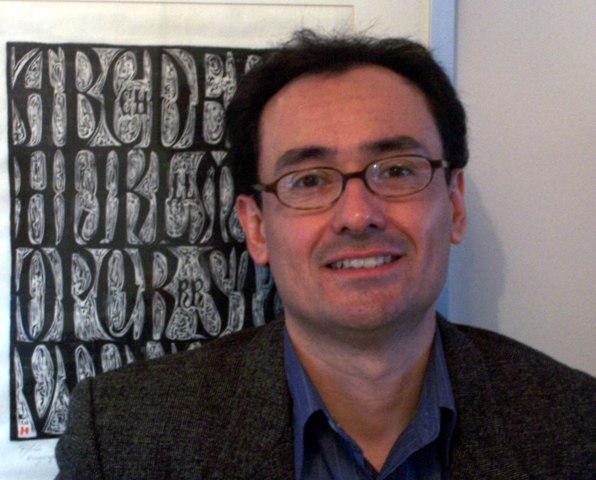
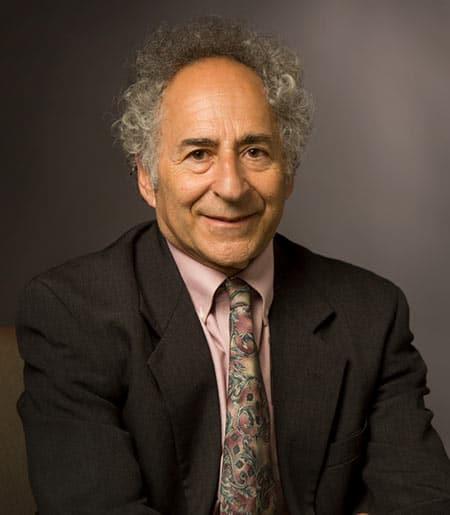
Daniel R. Schwarz is the Frederic J. Whiton Professor of English Literature and Stephen H. Weiss Presidential Fellow at Cornell University's College of Arts and Sciences, where he has taught since 1968. He holds dual affiliations with the Literatures in English department and Jewish Studies Program. His research spans British High Modernism (1890-1950), Holocaust Studies, narrative theory, and the relationship between visual arts and literature. Key interests include James Joyce, Joseph Conrad, Wallace Stevens, and the evolution of the European novel. His work emphasizes humanistic criticism and pluralistic reading approaches. Schwarz's publications reveal trends toward interdisciplinary cultural criticism, with recent work examining media transformation ( Endtimes? ) and educational methodology ( How to Succeed in College ). His scholarship consistently bridges literary analysis with contemporary cultural concerns. Cornell's Russell Award for Distinguished Teaching (1998) Stephen H. Weiss Presidential Fellow (1999) Directed nine NEH seminars Honored with festschrift Reading Texts, Reading Lives (2012) Schwarz advises the English Club and Men's Varsity Tennis Team while contributing to Presidential Research and College Scholar programs. His teaching philosophy emphasizes critical thinking, writing skills, and the enduring value of humanities education. He maintains active scholarship through Huffington Post columns on media and higher education, and continues research on European novel traditions.
Tania Sengupta is an Associate Professor of Architectural History and Theory at The Bartlett School of Architecture, University College London, where she also serves as Co-Director of the Architectural and Urban History and Theory (AUHT) PhD programme. Previously, she served as Director of Architectural History and Theory at the Bartlett for nearly five years (from early 2019 to July 2023), one of the school's core streams of teaching and learning. Her academic journey includes teaching positions at TVB School of Habitat Studies in New Delhi and the University of Westminster before joining UCL in 2011. Trained as an architect, urban designer, and architectural historian, Dr. Sengupta brings a multidisciplinary approach to her scholarship that combines archival research with fieldwork and oral history. Her research focuses on the architecture, urbanism, and continuing legacies of colonialism and imperialism in South Asia and global postcolonial contexts such as Britain, with particular interest in questions of (in)equity stemming from colonial inheritances and alternative epistemologies. Her scholarly output reveals consistent thematic focus on colonial spatial cultures, particularly in Bengal and eastern India, with recent works exploring ephemeral architecture (like Kolkata's Durga Puja festival), gendered spaces, and the relationship between bureaucracy and built environments. Her publications span architectural history, postcolonial studies, and critical race theory, emphasizing non-Western perspectives and decolonial approaches through monographs, journal articles, and edited volumes. Her major awards include: RIBA President's Award for Architectural History & Theory 2019 RIBA President's Medal for Research 2019 Shortlisted for Society of Architectural Historians (SAH) GB Colvin Prize 2020 Paul Mellon Centre Mid-career Fellowship 2022 Melbourne University's Macgeorge Fellowship 2024 As an educator, Dr. Sengupta has supervised approximately 50 postgraduate dissertations to completion, with several winning awards including the RIBA Research Awards and MAD Travel Fellowship. Her PhD students have explored diverse topics across global contexts including spaces of Somali migrants in Cape Town, architectural pedagogy in China, and early twentieth century architectural modernity in India. She is actively engaged in decolonizing architectural education through initiatives like the 'Race' and Space curriculum. Dr. Sengupta serves as Co-Chief Editor of Architecture Beyond Europe (ABE), a journal focused on global architectural histories, and as Associate Editor of South Asian Studies. She represents the Bartlett at the Architectural Humanities Research Association and has held visiting research fellowships at institutions including Heidelberg University and Leibniz-Zentrum Moderner Orient.
Professor Alan Penn is a leading academic at University College London's The Bartlett School of Architecture , where he holds the title of Professor in Architectural and Urban Computing. He previously served as Dean of the Bartlett Faculty of the Built Environment from 2009 to 2019 and has been instrumental in establishing Space Syntax Ltd , a UCL knowledge transfer spin-out company. His affiliations include membership in the Space Syntax Laboratory, board membership of UCL Consultants Ltd, and trustee status at Shakespeare North Trust. Education: BSc (1978), Dip Arch (1980), MSc (1983) - all from University College London Alan Penn’s research investigates how spatial design influences social and economic behaviors through innovative space syntax methodologies . Key areas include: Agent-based simulations of human behavior Spatio-temporal representations of built environments Urban spatial network analysis Urban sustainability across multiple dimensions Cognitive markers in architectural design Historical urban growth modeling His recent publications demonstrate a strong focus on computational urbanism, evolutionary city patterns, and behavioral architecture. Research trends show interdisciplinary approaches combining architectural theory with: Machine learning applications Network science analysis Behavioral psychology insights Historical GIS techniques Complex systems modeling Public health considerations Scientific recognition includes: HEFCE Business Fellowship (2001-2005) KTP SE Region Award (2010) Multiple UCL Enterprise awards ‘Spirit of Enterprise’ Award (2008) As Principal Investigator he leads the £5m EPSRC-funded Urban Dynamics Lab , demonstrating sustained research excellence. His work extends to public engagement through: Shakespeare North Trust educational theatre development Media appearances (New Scientist, Slashdot) Public policy contributions