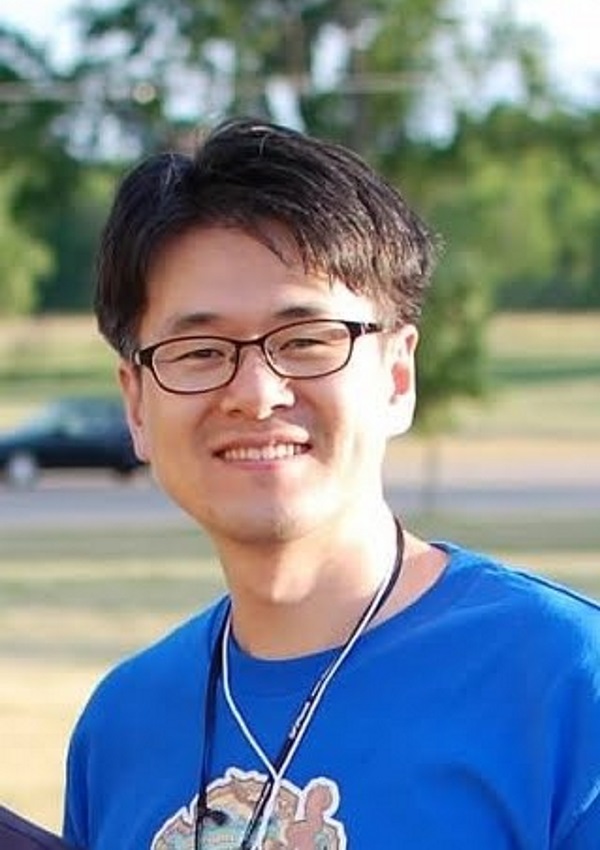
Tae-Ho Lee is an Associate Professor in the Department of Psychology at Virginia Tech, with affiliated appointments in the School of Neuroscience and Translational Biology, Medicine, and Health. His research focuses on affective and cognitive neural development across the lifespan, neurodegeneration, and family-based neural dynamics. PhD in Brain and Cognitive Science, University of Southern California M.A. in Clinical Psychology, Korea University B.A. in Psychology, Korea University Dr. Lee’s work explores brain connectome dynamics, dyadic neural concordance in families, and age-related attentional control. He employs neuroimaging techniques to study how familial and environmental factors shape emotional and cognitive outcomes in adolescents and older adults. Recent publications highlight trends in longitudinal studies , parent-child neural similarity , and functional connectivity in emotion regulation . Key areas include autism spectrum disorder, substance misuse risk, and the role of socioeconomic factors in brain development. Rising Star , Association for Psychological Science (2020) Dr. Lee is not currently accepting students and leads the Affective Neurodynamics and Development (AND) Lab at Virginia Tech.
Cristian Gómez Canela is a Full Professor in the Department of Analytical and Applied Chemistry at the School of Engineering, Ramon Llull University (IQS). He serves as Coordinator of the Master's Degree in Analytical Chemistry and is an active member of the Catalan Chemical Society (SCQ), representing SCQ in EuChems-EYCN. His academic journey includes a PhD in Chemistry from the University of Barcelona (2014), followed by postdoctoral research at IDAEA-CSIC and King's College University. Dr. Gómez Canela's research focuses on environmental analytical chemistry, particularly the optimization and validation of analytical methods based on liquid chromatography coupled with tandem mass spectrometry (LC-MS/MS) and high-resolution mass spectrometry (HRMS) for determining organic pollutants in environmental samples. His work extends to metabolomics applied to aquatic organisms and the analysis of neurotoxic compounds in water systems. His research fingerprint reveals strong expertise in zebrafish models (100%), neurotransmitter analysis (66%), Daphnia magna studies (64%), and neurotoxicity assessment (21%). His recent publications (2024-2025) demonstrate a clear trend toward environmental neurotoxicology, with emphasis on the effects of pharmaceuticals and industrial pollutants on aquatic organisms. His work integrates advanced analytical techniques with biological endpoints to assess environmental risks, particularly focusing on neurological and cardiovascular impacts. The research spans method development for pollutant detection, environmental monitoring, and mechanistic studies of neurotoxic effects. Dr. Gómez Canela leads multiple significant research projects including CHEMIPARK (2024-2027) on passive sampling methodologies for environmental pollutants, GESPA (2022-2025) as part of the Environmental Process Engineering and Simulation Group, and several projects on neuroactive compounds in water systems. He has an impressive research output with 91 scientific publications from 2011-2025 and an h-index of 27 with over 2,000 citations. As a dedicated educator, he contributes to multiple academic programs including the Master in Analytical Chemistry, Master in Pharmaceutical Chemistry, and undergraduate degrees in Chemistry and Chemical Engineering. His research group GESPA represents a multidisciplinary team combining chemical engineering, biotechnology, and chemical analysis to advance environmental sustainability through theoretical and experimental approaches.
Aidan J Horner is a Professor in the Department of Psychology at the University of York. He holds a BSc in Psychology (2005) and MSc in Cognitive Neuroscience (2006) from the University of York, followed by a PhD in Cognitive Neuroscience from the University of Cambridge (2010). His career includes postdoctoral research at Otto-von-Guericke University (2010–2011) and University College London (2011–2016), and a visiting scholar position at Stanford University (2008). He returned to York as a Lecturer in 2016, advancing to Senior Lecturer and his current Professorship. Research Focus: Horner’s work examines how the brain encodes and retrieves long-term memories, particularly spatial and event-based information. He employs experimental psychology, virtual reality, neuroimaging (e.g., fMRI, MEG), and computational modeling to study hippocampal and cortical mechanisms underlying memory formation, consolidation, and forgetting. His recent studies explore the role of theta oscillations in memory binding, the impact of emotion on memory coherence, and forgetting dynamics. Publications & Awards: Over 50 peer-reviewed articles, including high-impact work in Current Biology , Nature Communications , and Cognition . Recognized with the Annual Cognitive Paper Prize Award (2022) for groundbreaking contributions to memory research. Grants & Projects: Lead investigator on ESRC-funded projects (e.g., "Promoting rapid and sustained learning of novel information" , 2018–2022). Collaborates with institutions like the York Neuroimaging Centre (YNiC) to advance neuroimaging techniques in cognitive studies. Labs & Teams: Affiliated with the York Neuroimaging Centre (YNiC), integrating neuroimaging with behavioral and computational approaches to memory systems. Active in interdisciplinary teams studying memory plasticity and cognitive neuroscience.
Joseph P. Bressler is an Associate Professor at Johns Hopkins University, jointly affiliated with the Bloomberg School of Public Health and the Krieger School of Arts and Sciences. He is a member of the Department of Environmental Health and Engineering and conducts research at the Kennedy Krieger Institute in Baltimore, Maryland. His work bridges public health, neuroscience, and molecular toxicology, focusing on environmental impacts on brain development. Education: PhD, Rutgers University, 1978 Dr. Bressler’s research centers on neurotoxicology, particularly how environmental pollutants such as lead, cadmium, and aluminum disrupt metal transport systems and affect neurodevelopment. His laboratory investigates the role of iron and other metal transporters at the blood-brain barrier and in glial cells, revealing mechanisms of metal uptake and toxicity. His work has implications for understanding autism, fetal alcohol syndrome, and other neurodevelopmental disorders. His recent publications highlight ongoing research into metal homeostasis, cytotoxicity in cancer and neuronal cell lines, e-cigarette aerosol variability, and epigenetic changes in sex chromosome aneuploidies. The research spans molecular mechanisms, in vitro models, and human health outcomes, demonstrating a multidisciplinary approach to environmental health. Scientific Contributions: Elucidated how lead and cadmium hijack iron transporters to enter the brain Demonstrated aluminum activation of iron uptake pathways in glial cells Investigated flavoring agents like ethyl maltol in enhancing metal toxicity Explored epigenetic and behavioral impacts in rare genetic conditions Dr. Bressler has advised numerous researchers and collaborators across disciplines. His work has been supported by federal and institutional grants, though specific funding details are not provided in the source text. He actively publishes in high-impact toxicology and environmental health journals, with research cited in policy and public health discussions. He leads a research laboratory focused on cellular and molecular mechanisms of neurotoxicity, utilizing in vitro models of the blood-brain barrier, astrocytes, and neuronal cell lines. His team collaborates widely across neuroscience, public health, and environmental engineering domains.
Prof. Dr. Mareike Kühne is a full-time Professor of Business Administration at the Department of Business and Management, Brandenburg University of Technology. With a unique interdisciplinary background spanning economics, business administration, philosophy, and neuroscience, she bridges affective dimensions with economic rationality to develop holistic decision-making frameworks. Doctorate in Economics, Otto von Guericke University Magdeburg (1992-1997) Fulbright Scholar, San Diego State University (1997-1998) Studies in Philosophy, Humboldt University (2007-2011) Doctoral and Master’s in Neuroscience, Berlin School of Mind and Brain (2011-2013) Her research integrates insights from psychology and neuroscience into capital market-oriented corporate reporting, corporate governance, and normative rationality frameworks. She critiques current economic models for neglecting the embodied nature of cognition, advocating for a more nuanced understanding of rationality that incorporates lived experience. Her 15 most recent works span sustainability reporting (2025), neuroeconomics (2021), M&A disputes (2017), and IFRS standard evolution (2005-2012). These publications highlight her focus on reconciling traditional accounting principles with interdisciplinary approaches to decision-making. Fulbright Scholar (1997-1998) Prof. Kühne has taught at Humboldt University, HHL Leipzig, and the Berlin School of Mind and Brain. She actively participates in professional organizations including the German Society for Philosophy, European Accounting Association, and European Financial Reporting Advisory Group. Her work emphasizes the practical impact of neuroscientific findings on economic policy and standard-setting.
Han Joo Lee is a Professor and Director of Graduate Studies in the Department of Psychology at the University of Wisconsin-Milwaukee (UWM). He holds appointments in both the College of Letters & Science and the Clinical Psychology program. Lee earned his Ph.D. from the University of Texas at Austin in 2009. His research focuses on adult psychopathology, particularly anxiety disorders (e.g., OCD, social anxiety, PTSD), cognitive-perceptual processing abnormalities, and web-based psychological interventions. He has developed online assessment systems for anxiety disorders and conducted experimental studies on attentional biases and error-monitoring processes in clinical populations. Key research themes include: (1) maladaptive cognitive-perceptual mechanisms underlying anxiety disorders, (2) digital tools for mental health assessment, and (3) behavioral interventions targeting compulsive behaviors. His work integrates experimental, clinical, and neuroscientific approaches to understand symptom maintenance and treatment development. Lee's recent studies explore functional connectivity in skin-picking disorders, predictive factors for OCD treatment outcomes, and dual-hormone stress reactivity in PTSD. He collaborates with institutions like the UWM Psychology Clinic and maintains active grant-funded research projects. No specific awards are listed, but his extensive publication record reflects sustained contributions to clinical psychology. He advises the graduate program at UWM, overseeing training for clinical psychology doctoral students. His lab develops innovative interventions, including computerized response inhibition training for trichotillomania and interpretation-based treatments for thought-action fusion.
Maria T. Schultheis is a Professor in Drexel University's Department of Psychological and Brain Sciences and holds a joint appointment in the School of Biomedical Engineering, Science and Health Systems. As Interim Director of Clinical Training, she oversees clinical psychology education. She earned her PhD in Clinical Psychology from Drexel University in 1998. Her research focuses on neurorehabilitation, particularly applying virtual reality (VR) technology to assess and improve driving capacity and everyday functioning in individuals with neurological disorders like traumatic brain injury, stroke, and multiple sclerosis. She has pioneered VR-based driving simulators for clinical evaluation and rehabilitation. Her work integrates clinical psychology, engineering, and transportation science, addressing cognitive, physical, and behavioral demands of driving post-neurological injury. Key projects include developing driving assessment protocols for disabled populations and investigating fatigue management in MS patients. Her interdisciplinary approach has been funded by NIH, NIDRR, and the NMSS. Notable awards include the 2007 APA Early Career Award (Division 40) and recognition from the National Academy of Neuropsychology. Schultheis leads the Applied Neuro-Technologies Lab, emphasizing ecologically valid methodologies. Over 35 peer-reviewed publications and presentations at international forums highlight her contributions. She serves on the National Research Council’s Transportation Research Board, influencing policy on neurological disorders and mobility. Grants have supported projects like VR-based financial competency assessments and understanding dual-task demands in post-concussion driving. Her research also explores decision-making competency in young adults and the neurocognitive correlates of risky driving behaviors. Collaborations with biomedical engineers and transportation specialists reflect her commitment to bridging clinical practice and technological innovation for functional recovery.
Steven Siciliano is a Professor and NSERC/FCL Industrial Research Chair in In Situ Remediation and Risk Assessment at the University of Saskatchewan's College of Agriculture and Bioresources. He leads the CREATE Human and Ecological Risk Assessment Program. His expertise spans soil toxicology, greenhouse gas dynamics in polar ecosystems, and nitrogen cycle interactions in contaminated environments. Education: Ph.D. in Toxicology, University of Saskatchewan B.Sc. in Biochemistry, Concordia University Research Interests: His work focuses on human-soil interaction dynamics, including soil pollution impacts on human health (e.g., PAH toxicity via soil ingestion) and ecosystem resilience (e.g., nitrogen cycle disruptions). He investigates Arctic/Antarctic soil microbiology, greenhouse gas production in polar deserts, and the ecological effects of pollutants like mercury and petroleum hydrocarbons. His lab is divided into toxicology (e.g., metal cardiovascular effects, soil ingestion models) and ecology (e.g., sub-zero water effects on gene expression, Arctic nitrogen cycles). Teaching: Teaches courses on environmental fate analysis, contaminated site management, and advanced risk assessment methodologies at both undergraduate and graduate levels. Courses include EVSC 420, TOX 820, and EVSC 821. Grants & Labs: Directs the CREATE Program and leads projects funded by NSERC and industry partnerships. His lab integrates fieldwork, molecular techniques, and modeling to address environmental remediation challenges. Collaborates on projects like cryoturbation-driven carbon dynamics and microbial community analysis in agricultural systems. Labs/Teams: Active in soil science research teams, including Arctic soil microbiology and bioremediation innovation groups. Engages in interdisciplinary collaborations with environmental engineers and ecologists to advance in situ remediation technologies.
James Shorter is a Professor of Biochemistry and Biophysics at the Perelman School of Medicine, University of Pennsylvania. He is affiliated with multiple prestigious institutes, including the Institute on Aging (IOA), the Institute for Translational Medicine and Therapeutics (ITMAT), the Penn Center for AIDS Research (CFAR), the Chemistry-Biology Interface (CBI), and the Penn Institute for RNA Innovation. He mentors several training programs such as the Penn Summer Undergraduate Internship Program (SUIP), PennPREP, and the Translational Research Immersion Program (TRIP), and serves as a Primary Trainer at the Center for Neurodegenerative Research (CNDR). Ph.D. in Cell Biology, University of London, 2000 M.A. in Biology, University of Oxford, 1995 Dr. Shorter’s research focuses on protein homeostasis, particularly the mechanisms of protein disaggregation and the role of prion-like domains in neurodegenerative diseases such as ALS, Alzheimer’s, Parkinson’s, and frontotemporal lobar degeneration. His lab investigates the Hsp104 disaggregase from yeast and has engineered variants to combat human proteinopathies. They also identified the mammalian disaggregase system (Hsp110/Hsp70/Hsp40) and explore how small molecules and nuclear import receptors can reverse pathological phase transitions of RNA-binding proteins like TDP-43 and FUS. His work bridges structural biology, genetics, and translational neuroscience. His recent publications highlight trends in targeting TDP-43 and FUS proteinopathies, engineering Hsp104 for selective detoxification, understanding mitochondrial disaggregases like Skd3, and modulating phase transitions with nuclear import receptors. His research spans from fundamental mechanisms of protein folding to therapeutic development for neurodegenerative diseases. Faculty Member, Institute on Aging (IOA) Faculty Member, Institute for Translational Medicine and Therapeutics (ITMAT) Mentor, Penn Summer Undergraduate Internship Program (SUIP) Primary Trainer, Center for Neurodegenerative Research (CNDR) Faculty Member, Penn Center for AIDS Research (CFAR) Member, Penn Institute for RNA Innovation Mentor, Translational Research Immersion Program (TRIP) Dr. Shorter advises numerous graduate students and postdoctoral researchers through the Biochemistry and Molecular Biophysics, Pharmacology, Neuroscience, and Cell and Molecular Biology graduate groups. His lab receives funding from NIH and other sources to support research on protein disaggregation, phase separation, and neurodegenerative disease mechanisms. He has trained many scientists now active in academia and biotech. His lab, located in Stellar-Chance Laboratories, operates at the intersection of biochemistry, cell biology, and translational medicine, with active projects on Hsp104 engineering, mitochondrial proteostasis, and the role of RNA-binding proteins in disease. The lab collaborates widely across Penn and with international partners to advance understanding and treatment of protein misfolding disorders.
Chen Ran, PhD, is an Assistant Professor in the Department of Neuroscience at Scripps Research in San Diego. His laboratory focuses on understanding how the brain processes internal sensory signals from visceral organs, such as hunger, satiety, nausea, and visceral pain. Using advanced techniques like in vivo two-photon calcium imaging, optogenetics, and circuit tracing, his team maps the functional architecture of brainstem circuits responsible for interoceptive processing. Key contributions include the discovery of a 'visceral homunculus' in the brainstem and the development of novel calcium indicators for high-resolution neuronal activity tracking. Education : PhD in Biology, Stanford University (2017) Bachelor of Science in Biology, Peking University (2011) Research Interests : Dr. Ran’s work integrates experimental and analytical approaches to decode how visceral stimuli are transduced into conscious sensations. Current projects investigate the coding logic of mechanical, chemical, and thermal signals from internal organs, with implications for developing therapies for obesity, diabetes, visceral pain, and eating disorders. The lab employs cutting-edge tools to visualize and manipulate neural circuits in awake behaving mice, linking circuit-level activity to physiological states. Awards & Honors : NARSAD Young Investigator Award (2022) NIH K01 Career Development Award (2023) Simons Collaboration on the Global Brain Award (2022) Harvard Brain Science Initiative Award (2021) Grants & Funding : Supported by NIH, Simons Foundation, and private philanthropy, his research bridges basic science and translational medicine. Current grants focus on brainstem circuit mapping and developing therapeutic targets for interoceptive disorders. Labs & Affiliations : Dr. Ran leads an interdisciplinary team at Scripps Research’s Neuroscience Department, collaborating with engineers, geneticists, and clinicians to advance interoceptive neuroscience.
Dr. Sharon K. Sagiv is an Adjunct Assistant Professor of Epidemiology at UC Berkeley's School of Public Health and an investigator at the Center for Environmental Research and Children’s Health. Her research focuses on prenatal and early-life environmental toxin exposures, particularly persistent organic pollutants, heavy metals, pesticides, and consumer chemicals, and their impacts on child neurodevelopment. She has extensively studied associations between environmental toxicants and neurodevelopmental disorders like ADHD and autism, alongside innovative work using functional neuroimaging to assess neural activity in exposed populations. Dr. Sagiv holds a PhD in Epidemiology from UNC Chapel Hill (2004), an MPH from Boston University (1998), and a BA in Biology from Franklin and Marshall College (1993). She has contributed to major cohorts such as CHAMACOS and Project Viva, examining long-term effects of pollutants like PFAS, organophosphates, and PBDEs. Her work bridges epidemiology, toxicology, and neuroimaging to advance understanding of environmental health risks. Research interests emphasize translational environmental health science, with a focus on pesticide mixtures, air pollution, and endocrine disruptors. Key themes include exposure assessment frameworks, functional neuroimaging outcomes, and developmental origins of health disparities. She teaches grant-writing seminars and collaborates globally on pesticide neurotoxicity studies in farmworker populations. Recent publications highlight links between prenatal PFAS exposure and metabolic outcomes, pesticide exposure and brain connectivity, and traffic pollution’s role in neurocognitive decline. Her research portfolio includes systematic reviews on air pollution health impacts and methodological innovations for assessing chemical mixtures in pregnancy. Dr. Sagiv’s work has policy implications for environmental regulations and public health interventions targeting vulnerable populations.
Yanli Lin is an Assistant Professor in the Department of Psychology within the College of Arts & Sciences at the University of Arkansas. She holds a Ph.D. in Clinical Psychology from Michigan State University and completed a postdoctoral fellowship in Cognitive Neuroscience at Washington University in St. Louis (2020–2024). Position: Assistant Professor Institution: University of Arkansas School: College of Arts & Sciences Department: Psychology Email: yanlil@uark.edu Her research focuses on understanding how mindfulness and contemplative practices influence attention, emotion regulation, cognition, and interpersonal behavior, with an emphasis on the mind-brain-behavior relationship. She employs cognitive neuroscience methods, including EEG and statistical modeling, to investigate neural and behavioral effects of meditation in both health promotion and clinical contexts. Her interdisciplinary approach integrates insights from psychology, neuroscience, philosophy, and religious studies. The recent publications highlight a consistent trend in studying distinct mindfulness states—particularly focused attention and open monitoring—on neural markers of emotion and cognitive control. Her work employs within-subject designs and advanced electrophysiological techniques to parse subtle differences in mindfulness-induced brain dynamics. These studies contribute to a growing understanding of how specific meditation practices can be precisely targeted for therapeutic applications. She has been recognized with several prestigious awards: NIH/NIA F32 National Research Service Award WUSTL McDonnell Center for Systems Neuroscience SGP Award Mind & Life Institute Francisco J. Varela Research Award Dr. Lin advises graduate students and leads a research laboratory focused on mindfulness and cognitive neuroscience. While specific grant details are not listed, her award history suggests active external funding. Her lab uses EEG and behavioral experimentation to explore how meditation shapes cognition and emotion, contributing to the scientific foundation for mindfulness-based interventions.
Dr. Prabhakar Pagilla is the Associate Department Head and a Professor in the Department of Mechanical Engineering at Texas A&M University. He holds the James J. Cain Professor II title and leads the Robotics and Control Engineering Group. His research focuses on advanced control systems for robotics and roll-to-roll manufacturing, with emphasis on nonlinear dynamics, autonomous systems, and mechatronics. Education: Ph.D., Mechanical Engineering, University of California, Berkeley (1996) M.S., Mechanical Engineering, University of California, Berkeley (1994) B.E., Mechanical Engineering, Osmania University (1990) Research Interests: Modeling and control of roll-to-roll manufacturing systems Autonomous vehicles and cooperative adaptive cruise control Robotics/mechatronics, including workpiece localization and human-robot collaboration Control of large-scale nonlinear dynamic systems Recent Trends in Publications: Dr. Pagilla’s recent work emphasizes safety and efficiency in autonomous systems, including platooning strategies, V2V communication impacts, and exoskeleton ergonomics. His robotics research explores real-time path planning, shared control mechanisms, and anomaly detection in manufacturing processes. Awards: Fellow of ASME (2011) John J. Shelton Best Paper Award (2017, 2019) Regents Distinguished Research Award (2012) Lab/Teams: The Robotics and Control Engineering Group at Texas A&M focuses on interdisciplinary projects combining advanced control theory with practical applications in robotics and manufacturing. Current initiatives include surface finishing of curved geometries and predictive intent modeling for human-robot collaboration.
Zsofia Zavecz is a Research Associate at the University of Cambridge Department of Psychology. Her work focuses on the neurophysiological mechanisms underlying sleep and memory consolidation, with particular emphasis on electrophysiological correlates of lucid dreaming and sleep-dependent learning. Research highlights include: Investigation of EEG functional connectivity during statistical learning Study of transcranial stimulation effects on probabilistic learning Analysis of sleep restriction impacts on hormonal regulation Exploration of cognitive reserve mechanisms in sleep disorders Her neuroscientific investigations span procedural memory systems, neural oscillations, and cross-population studies in both healthy individuals and pediatric sleep-disordered breathing patients.
Charu Gupta Kumar is a Research Professor in the Department of Bioengineering at the University of Illinois Urbana-Champaign, affiliated with the Neuroscience program. Her research focuses on systems and computational biology, integrating computational genomics, bioinformatics, and systems biology approaches to study microbiome/pathogen dynamics, neurological diseases, and evolutionary processes. She leads the Systems and Computational Biology Group, emphasizing interdisciplinary methodologies to address complex biological questions. Her academic roles include a zero-time appointment in the Department of Neuroscience (2013–present) and service as an admission reviewer for the Carle Illinois College of Medicine (2020–2022). She advises a diverse cohort of undergraduate and graduate students engaged in bioengineering and computational biology projects. Her work bridges environmental microbiology with human health, exploring astrocyte roles in neurological disorders like glioblastoma and autism, and investigating evolutionary mechanisms of metabolic networks across species. Publications highlight contributions to bovine genomics, microbial community analysis in subsurface environments, and computational tools for genomic data management. Her research trends emphasize translational applications of computational biology to environmental and clinical challenges, with recent focus on microbiome-disease interactions and astrocyte signaling pathways. Advising spans mentoring over 18 students across bioengineering and computer science disciplines, with notable alumni advancing to institutions like MIT and Johns Hopkins. She collaborates with跨学科 teams in bioengineering and neuroscience, contributing to the broader Grainger College of Engineering research ecosystem.


.jpg)