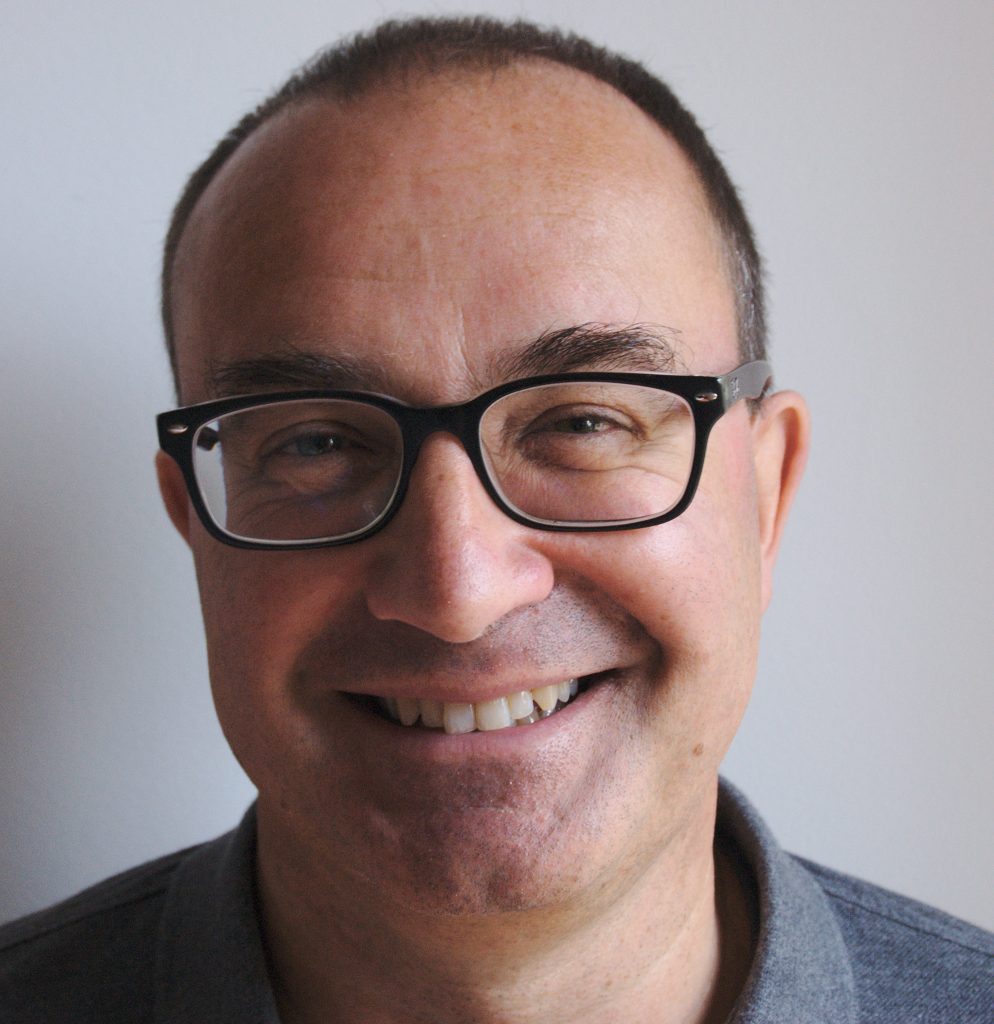
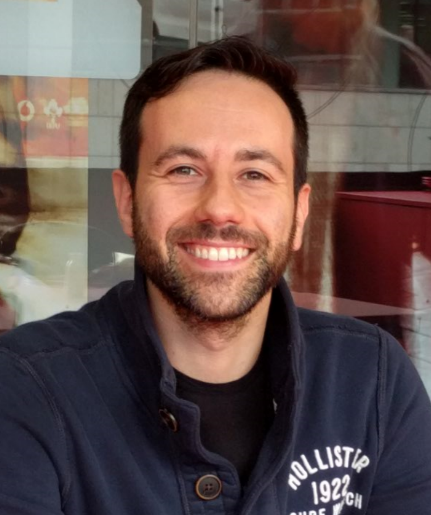
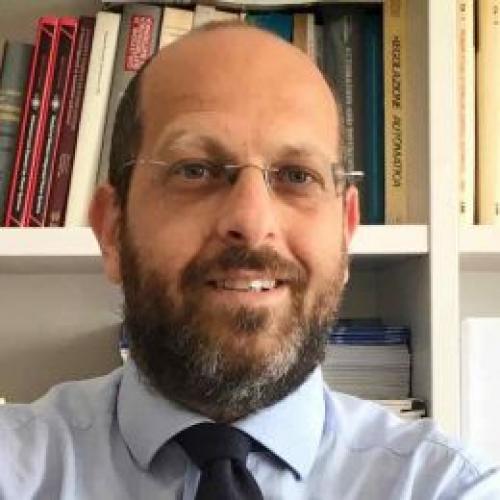
Vittorio Solina is a Researcher at the Department of Mechanical, Energy and Management Engineering (DIMEG) of the University of Calabria, specializing in industrial systems simulation and digital twin technologies. His work spans Industry 4.0/5.0 applications, supply chain optimization, and human-robot collaboration. Affiliation: University of Calabria Academic Role: Researcher (Legge 240/10) Research Focus: Digital twins, simulation modeling, sustainable manufacturing His research emphasizes advanced simulation tools for decision support, including applications in Industry 4.0 , Smart Manufacturing , and Agri-Food Supply Chains . Recent work explores adaptive simulation optimization for Industry 5.0 and 5G-enabled robotics. Key publication trends include: (1) Digital twin integration for supply chain resilience (2024-2025), (2) Simulation automation methodologies (2025), and (3) Human-robot collaboration frameworks (2024).
Michele Zorzi is a Professor of Telecommunications at the School of Engineering, University of Padova, Italy, where he has held a faculty position since 2003. He leads the SIGNET (Signal processing and Networking) Research Group, focusing on cutting-edge wireless networking challenges including mmWave communications and underwater networks. His extensive publication record exceeds 600 papers in top-tier journals and conferences, reflecting significant contributions to the field through both theoretical and experimental work. He received his Laurea Degree (1990) and Ph.D. (1994) in Electrical Engineering from the University of Padova. Prior academic appointments include Politecnico di Milano (1993-1996), University of California San Diego (1995-1998), and University of Ferrara (1998-2003), where he progressed from Associate Professor to full Professor. His educational trajectory demonstrates deep roots in Italian academia with international exposure. Professor Zorzi's research spans wireless communications and networking, with current emphases on mmWave networking for vehicular systems, underwater acoustic/optical communications, non-terrestrial networks, and AI-driven networking solutions. His group conducts experimental validations including at-sea trials for underwater systems and testbeds for vehicular networks. Key projects include PRATA for predictive QoS in autonomous driving and IoT-based environmental monitoring of the Venice Lagoon, demonstrating practical applications of theoretical work. Analysis of his 2022-2025 publications reveals strong trends in applying artificial intelligence to networking challenges across diverse environments. There is significant emphasis on vehicular networks (predictive QoS, teleoperated driving), underwater systems (acoustic/optical communications, AUV swarms), and satellite networks (Starlink integration, NTN security). Experimental validation in real-world scenarios like the Venice Lagoon monitoring project and underwater sea trials characterizes his applied research approach. His scientific accolades include: IEEE Fellow (2007) IEEE Communications Society Best Tutorial Paper Award (2008, 2019) Stephen O. Rice Best Paper Award (2018) Multiple best paper awards at IEEE conferences (2005-2020) As principal investigator for numerous European and US research projects plus 20+ industry-funded initiatives, Professor Zorzi has mentored over 35 PhD students and post-docs. Graduates now hold prominent positions at institutions including Stanford, UCSD, CTTC, and Huawei. His SIGNET group maintains active international collaborations and contributes to open-source networking tools via GitHub, demonstrating commitment to community engagement. The SIGNET Research Group, housed within the Department of Information Engineering, operates specialized experimental facilities for mmWave and underwater communications. Current initiatives include AI-based predictive QoS frameworks for vehicular networks, underwater optical communication systems using ultraviolet light, and large-scale IoT deployments for environmental monitoring. The group's GitHub presence indicates strong open-science practices, while recent sea trials confirm hands-on experimental capabilities beyond theoretical work.
Andrea Bonfiglio is an Associate Professor at the Department of Naval, Electrical, Electronic and Telecommunication Engineering (DITEN) within the School of Engineering at the University of Genoa. His work focuses on power systems, smart grids, and renewable energy integration with a particular emphasis on innovative control strategies and energy storage solutions. Teaching areas: Electrical Systems, Industrial Measurements, Energy Security Key research themes: Smart distribution networks, synthetic inertia, microgrid control, vehicle-to-grid technologies, battery energy storage Recent work explores virtual energy partitioning, load flow optimization, and inertia allocation in transmission networks Contact: a.bonfiglio@unige.it His publications highlight advanced control methodologies using machine learning and sliding mode control for both transmission and distribution networks, with applications to renewable integration and grid stability challenges.
Rita Cucchiara is a Full Professor at the Department of Engineering 'Enzo Ferrari' of the University of Modena and Reggio Emilia. She leads the AImageLab research laboratory, part of the Artificial Intelligence Research and Innovation Center (AIRI) in Modena. Her research focuses on Computer Vision, Pattern Recognition, Machine Learning, and Multimedia, with applications in video surveillance, medical imaging, human-centered AI, and generative models. She is actively involved in interdisciplinary projects like ELIAS (European Lighthouse for AI Sustainability) and ELSA (European Lighthouse on Secure AI). Her recent roles include being elected Rector of the University of Modena and Reggio Emilia in 2025. She has organized and participated in major AI events, including workshops at NeurIPS, CVPR, and ECCV, and has contributed to advancements in multimodal models, deepfake detection, and trustworthy AI. Education details are not explicitly provided, but her extensive academic and research experience at the University of Modena underscores her expertise. She collaborates with institutions like NVIDIA, CINECA, and industry partners such as Digital Design and NVIDIA's AI Technology Center. AImageLab's projects include developing systems for medical imaging, ethical AI, and generative adversarial networks (GANs) for design surfaces. She co-organizes initiatives like the ELLIS Summer School on Large-Scale AI and contributes to policy discussions on AI ethics and societal impact. Her work spans from foundational research (e.g., vision transformers, continual learning) to applied projects (e.g., DDGan system for surface printing). Key grants and collaborations include the FAIR project and PNRR-M4C2 initiatives. She advises students and researchers in AI, with 7 PhD positions funded under national programs. Her leadership roles in AIRI and AImageLab highlight her commitment to bridging academia and industry, fostering innovation in AI-driven solutions for sustainability and healthcare.
Gian Antonio Susto is an Associate Professor at the Department of Information Engineering , University of Padova . With a Ph.D. in Information Technology and post-doctoral experience at National University of Ireland, Maynooth, he leads research in Machine Learning , Semiconductor Manufacturing , and Industrial IoT . His work bridges Anomaly Detection , Continual Learning , and Algorithmic Fairness with applications in Hydroelectric Power Plants , Particle Accelerators , and Smart Mobility . B.Sc. and M.Sc. in Controls Engineering, University of Padova (cum laude) Ph.D. in Information Technology, University of Padova (2013) Post-Doc at National University of Ireland, Maynooth (2012-2013) Assistant Professor at University of Padova (2013-2021) His research focuses on Explainable AI , Virtual Metrology , and Deep Learning for manufacturing and infrastructure monitoring. Recent projects include the AIMS5.0 (AI for Manufacturing Sustainability) and MICS (Circular Economy in Italy) initiatives. His publications span Engineering Applications of Artificial Intelligence , IEEE Transactions , and Information Processing & Management , with 15+ recent papers on topics like Fault Diagnosis , Continual Learning , and Fair Ranking . Key scientific awards include: IEEE CCTA Best Student Paper Award (2021) IP&M 2020 Ph.D Paper Award Best Industry Paper Award, European Workshop on Advanced Control and Diagnosis (ACD 2019) He has supervised Ph.D. students on projects involving Particle Accelerators , Plant Behavior Modeling , and Explainable AI , with alumni now at institutions like Max Planck Institute , IBM , and Scripps Research . Current teaching includes Reinforcement Learning and Explainable Machine Learning at graduate and Ph.D. levels.
Gaetano Valenza is an Associate Professor of Bioengineering at the University of Pisa, Italy, where he leads the Neuro-Cardiovascular Intelligence Lab at the Enrico Piaggio Research Centre. He holds affiliations with the Neuroscience Statistics Research Laboratory at MIT and has served as a Research Fellow at Harvard Medical School and Massachusetts General Hospital. His academic work spans bioengineering, computational physiology, and affective computing. His research focuses on statistical and nonlinear biomedical signal and image processing , cardiovascular and neural modeling , and physiologically interpretable artificial intelligence . He develops wearable systems for physiological monitoring, with applications in autonomic nervous system assessment, brain-heart interactions, and mental health. His work has led to novel metrics such as the Sympathetic and Parasympathetic activity indices derived from ECG. The 15 most recent publications reflect a consistent trend in brain-heart interplay , complexity analysis of physiological signals , explainable AI in healthcare , and virtual reality applications in mental health . His work integrates advanced signal processing, nonlinear dynamics, and machine learning to decode emotional and cognitive states from physiological data. Dr. Valenza is a Senior Member of IEEE and serves on several technical committees. He is an active editorial leader, currently serving as Associate Editor for IEEE-EMBC , Plos One , Complexity , and Scientific Reports , and has guest-edited special issues in Philosophical Transactions of the Royal Society A and IEEE Journal of Biomedical and Health Informatics . He has led or participated in numerous international research projects, including FP7 and H2020 initiatives such as NEVERMIND and EXPERIENCE. He teaches courses in Biostatistics, Probability & Biostatistics, and Advanced Image Processing at the University of Pisa. As lab head and project coordinator, he leads a multidisciplinary team working on neuro-cardiovascular intelligence, wearable systems, and AI-driven mental health interventions.
Marilena Vendittelli is a Professor at Sapienza University of Rome, affiliated with the Robotics group. Her research spans control systems, biomedical robotics, motion planning, and autonomous systems. Research Areas: Control systems for robotics and nonholonomic systems Biomedical applications (hyperthermia therapy, needle insertion) UAV navigation and obstacle avoidance Haptics and human-robot interaction Adaptive estimation algorithms Recent Publications focus on adaptive control of bio-heat equations, safe UAV motion planning, soft robotics actuation, and haptic feedback in medical procedures.
Antonio Lioy is a Full Professor in the Department of Control and Computer Science (DAUIN) at the Polytechnic University of Turin. He serves as the Cyber Security Representative for the university in national and European government collaborations, is a member of the SmartData@PoliTO interdepartmental center, and acts as Scientific Advisor for the DRIVESEC partnership. His research is deeply rooted in cybersecurity, electronic identity, network and web security, and quantum-resistant systems. His research interests focus on cybersecurity , electronic identity , network security , web security , and quantum cryptography . He leads the TORSEC Security Group and conducts research in LAB 7, with a strong emphasis on trusted computing, post-quantum cryptography, IoT security, and secure network infrastructures. His work aligns with ERC sectors in computer systems and cryptology, and supports UN SDGs on innovation and sustainable cities. His recent publications show a strong trend toward post-quantum cryptography , remote attestation , trusted execution environments , and secure network virtualization . These works appear in top venues such as IEEE, ACM, and IFIP conferences, with a focus on securing future digital infrastructures against emerging threats. Themes include integrity management in softwarized networks, standard-based attestation, and quantum-resistant PKI strategies. He has supervised numerous PhD students, including Davide Colaiacomo, Francesco Vaccaro, Flavio Ciravegna, Grazia D'Onghia, Lorenzo Ferro, Francesco Settanni, Enrico Bravi, Silvia Sisinni, Luca Mannella, and Ignazio Pedone, whose research spans cybersecurity, quantum computing, and IoT. He leads multiple high-profile research projects such as Q-FENCE, QUBIP, SERICS, and FISHY, funded by Horizon Europe and national programs, demonstrating significant grant acquisition and leadership. He is actively involved in research labs and teams, primarily the TORSEC - Security Group (DAUIN) and LAB 7 - Research Laboratory (DAUIN) , which focus on applied cybersecurity research. His projects often involve collaboration with industry and government bodies, emphasizing real-world impact in secure digital identity, critical infrastructure protection, and quantum-safe transitions.
Sara Vinco is an Associate Professor at the Department of Control and Computer Engineering (DAUIN), Politecnico di Torino, Italy. She specializes in battery simulation, digital twins, and energy-efficient design automation for heterogeneous embedded systems, aligning with Industrial and Information Engineering (Area 0009) and ERC sectors including Computer Architecture and Machine Learning . Her research focuses on advancing cyber-physical systems through simulation frameworks like SystemC-AMS, enabling holistic modeling of analog, digital, and thermal domains. Key projects include data-driven digital twins for EV batteries and low-area digital circuits in industrial/medical applications, supported by commercial contracts such as C-based virtual prototyping. Her recent publications (2022-2023) emphasize machine learning for battery SOH/SOC estimation , energy monitoring in production lines , and multi-domain fault modeling . These works span journals like IEEE Transactions and conferences including DATE and ISLPED. Awarded the FFABR 2017 grant and IEEE FDL Best Paper Award 2011 , she also chairs editorial boards for IEEE Transactions on CAD and DATE Conference. She supervises PhD students Giovanni Pollo (Digital Circuits) and Khaled Alamin (EV Battery Twins), reflecting her leadership in smart systems design.
Riccardo Raheli is a Full Professor at the University of Parma , Department of Engineering and Architecture, with a career spanning over three decades in Information and Communication Technologies (ICT). He has served as Chair of the Councils for Telecommunications and Communication Engineering programs, and as representative of the University of Parma in CNIT and its Members' Assembly. Education: Laurea in Electronic Engineering (University of Pisa, 1983), M.Sc. in Electrical and Computer Engineering (University of Massachusetts, 1986), Postgraduate Diploma (Scuola Superiore Sant'Anna, 1987) Key Roles: President of Degree Councils (2002-2018), CNIT Committee Member (2000-2005), Editorial Board member for IEEE Transactions, Springer and MDPI journals His research bridges telecommunications , digital signal processing , and healthcare applications , producing extensive international publications and industrial patents. He has co-authored monographs including Detection Algorithms for Wireless Communications (Wiley, 2004) and LDPC Coded Modulations (Springer, 2009). Recent article trends show interdisciplinary work in automotive stress monitoring (IoT/Matlab-based systems), video processing for healthcare (neonatal seizures, respiratory monitoring), and acoustic field control (microphone virtualization, personal sound zones). His work spans machine learning applications in automotive systems, stochastic acoustic modeling , and power-line communications . Scientific Leadership : Co-Chair for IEEE conferences (ICC 2010, GLOBECOM 2011, ISPLC 2020) Editorial roles in 7+ international journals Grants & Collaborations : Led industrial patents in communications systems Coordinated CNIT Technical Reports series (2025) He teaches Wireless Communications and Digital Signals Laboratory , emphasizing Matlab/Simulink proficiency. His laboratory sessions focus on practical implementation of signal processing algorithms, requiring full software installation on personal devices.
Marina Pucci is an Associate Professor of Near Eastern Archaeology at the University of Florence's Department of History, Archaeology, Geography, Arts and Entertainment (SAGAS). She specializes in the Late Bronze Age and Iron Age periods in Syria and Anatolia, with particular expertise in ceramic analysis, spatial studies, and cultural contact during these historical periods. Her extensive fieldwork includes directing excavations at key sites such as Kınık Höyük in Turkey and participating in major projects at Alalakh, Zincirli, and Tell Shech Hamad. Her academic background includes a PhD summa cum laude from Freie Universität Berlin and a Master's degree from the University of Pisa. She has held numerous academic positions including Fixed-term Researcher under the Rita Levi Montalcini program and currently serves as an Associate Professor at the University of Florence. Pucci's research focuses on material culture of the Late Bronze Age and Iron Age in Anatolia, the Levant, Central Syria, and Northern Mesopotamia. She examines group identity, migration theories, center-periphery relationships in the Neo-Assyrian and Hittite Empires, functional analysis of pottery, social archaeology, architectural space, and Syrian archaeology. Her work often explores cultural encounters, technological transfers, and the impact of political changes on material culture across the ancient Near East. Her recent publications demonstrate a consistent focus on the Amuq region, ceramic analysis, and Iron Age material culture. Her work increasingly incorporates digital documentation methods and addresses cultural heritage preservation in conflict zones. She examines transitions between historical periods, particularly the Late Bronze to Iron Age transition, analyzing how material culture reflects social, political, and economic changes. Her research connects specific archaeological findings to broader historical narratives about cultural contacts and transformations in the ancient Near East. As an academic advisor, Professor Pucci supervises undergraduate, master's, and doctoral students, guiding thesis work on Near Eastern archaeology. She has secured significant research funding including MAECI grants, OrMe Foundation support, Prin projects, and Rita Levi Montalcini funding. Her international collaborations span institutions in Turkey, Syria, Iran, Israel, Germany, and the United States. Professor Pucci leads archaeological field teams at Kınık Höyük in Niğde, Turkey, directing a group of 6-7 students and postdocs from the University of Florence. She coordinates international collaborations with the Oriental Institute at Chicago, Freie Universität Berlin, and various Turkish and Syrian universities on excavation and preservation projects. Her work has significant implications for understanding cultural heritage in conflict areas and developing preservation strategies for endangered archaeological sites.
Albena Kostadinova Yaneva is a Full Professor at the Department of Architecture and Design (DAD) at Politecnico di Torino, Italy. Her academic work bridges Political and Social Sciences with Architecture , focusing on the Sociology of Environment and Territory . She teaches courses such as Academic Writing: 5 Exercises in Style , Innovation Studies , and Architecture, Society and Territory A . Research Areas : Sociological analysis of architectural practices, digital technologies in design, actor-network theory applications, and material culture. Teaching Roles : Course Instructor for PhD and Master's programs, emphasizing critical design, environmental sustainability, and urban sociology. Her recent publications explore themes like the impact of Zoom technologies on architectural collaboration, performative school buildings, and the role of models in design processes. Collaborative works include studies on graphene research labs and the interplay between science and urban development. She supervises PhD student Rayna Elena Razmilic Triantafilo, whose research focuses on architectural discourse platforms. Though no scientific awards are explicitly listed, her work engages with interdisciplinary methodologies, blending architectural anthropology and digital humanities to analyze contemporary design challenges.
Roberta Spallone is a Full Professor in the Department of Architecture and Design (DAD) at Politecnico di Torino, where she conducts research and teaches in architectural representation, digital modeling, and cultural heritage. Her work bridges historical architectural theory with cutting-edge digital technologies like AR, VR, and AI. Research Interests: Her research focuses on 3D and reconstructive modeling, augmented and virtual reality (AR/VR) for cultural heritage, descriptive geometry, history of architectural representation, and the study of architectural treatises—especially those on military engineering. She explores digital technologies for the survey, representation, and communication of cultural heritage, with a strong emphasis on geometric analysis and historical accuracy. The trends in her recent publications reflect a consistent focus on the digital interpretation of early modern military architecture, particularly through parametric modeling and geometric analysis of treatises by figures like Guarini. She applies AR and VR to enhance accessibility and storytelling in museum and urban heritage contexts, emphasizing inclusive and sustainable cultural tourism. Scientific Awards: Best paper award, Italian Union for Drawing - UID (2021) Best Paper, 40th International Conference of Teachers of Representation Disciplines UID (2018) Best paper, FORTMED Conference 2015 (Historical Research) UID Silver Plaque (1997) PhD 1st prize ex aequo, Italian Design Union (1997) Advising and Grants: She supervises PhD students including Enrico Pupi and Fabrizio Natta. She leads the national PRIN research project INFORTREAT and multiple applied research contracts involving AR/VR for heritage sites like Palazzo Carignano and Mirafiori Castle. She is the Scientific Responsible for collaborative agreements with Fondazione Torino Musei and the Regional Directorate of Museums in Piedmont. Labs, Teams, and Collaborations: She is a key member of the scientific committees of FORTMED, UID, and Nexus Architecture and Mathematics. She serves on editorial boards for journals such as Nexus Network Journal and Diseñar Con... , and has guest-edited special issues. She frequently collaborates with researchers across Europe on projects linking architecture, mathematics, and digital heritage.
Federico Becattini is a Tenure-Track Assistant Professor at the Department of Information Engineering and Mathematics (DIISM), University of Siena, Italy. He is an active member of the Siena Artificial Intelligence Lab (SAILab), where he contributes to cutting-edge research in computer vision, deep learning, and artificial intelligence. His work spans multiple interdisciplinary domains, including autonomous driving, human behavior understanding, cultural heritage, neuromorphic vision, and fashion recommendation. His research interests center on memory-based neural networks , which he has applied in numerous publications at top-tier venues such as CVPR, ECCV, IEEE TPAMI, and ACM TOMM. He has also delivered tutorials on this topic at international conferences including ICIAP 2022 and ACM MM 2022, and taught a Ph.D. course at the University of Florence. His recent work is aligned with the Collectionless AI paradigm, which emphasizes continual learning and interaction with dynamic environments. The recent publications highlight a strong trend in human-centric AI , focusing on understanding people through multimodal analysis of face, body, and clothing, as well as generating 3D virtual avatars. There is also a clear emphasis on memory-augmented architectures for temporal reasoning, explainability, and adaptive learning. His editorial role as Associate Editor of the International Journal of Multimedia Information Retrieval further underscores his standing in the research community. Associate Editor, International Journal of Multimedia Information Retrieval (IJMIR) Organizer, Workshop on Facial and Body Expressions (ICPR2020) Co-organizer, T-CAP Workshop (ICIAP2021, ICPR2022) Co-organizer, MCFR Workshop (ACM MM 2022) Co-organizer, WCPA Workshop and Challenge (ECCV 2022) Federico Becattini actively advises students and researchers within SAILab, particularly in the context of Ph.D. theses and research projects related to Collectionless AI and memory-based models. While specific grants are not mentioned, his extensive publication record and leadership in workshops and editorial roles suggest involvement in funded research initiatives. He collaborates with both academic and international research communities, serving as a reviewer for top-tier conferences and journals. He is a core member of the SAILab research group, which is pioneering the Collectionless AI initiative—a framework for continual learning over time, interacting with humans and agents without relying on pre-built static datasets. This lab serves as a hub for innovation in adaptive and sustainable AI systems.
Federico Silvestro is a Full Professor at the University of Genoa , affiliated with the Naval, Electrical, Electronic and Telecommunications Engineering Department . His academic roles include being a Course Coordinator, Department Council Member, and Deputy Director of DITEN. His research focuses on Power systems stability and control Cybersecurity in energy networks Electric propulsion for marine applications Optimal energy storage and microgrid design Integration of renewable energy in maritime contexts Recent publications highlight trends in data-driven power system analysis , DC microgrid modeling , cybersecurity for virtual power plants , and advanced energy management strategies for maritime and port systems. Email: federico.silvestro@unige.it He leads the ENET-RT Lab , focusing on real-time power systems simulation and co-simulation platforms for marine and grid applications.