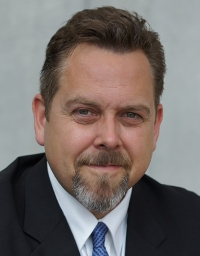
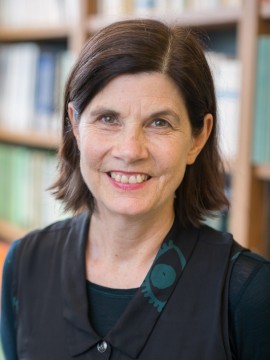
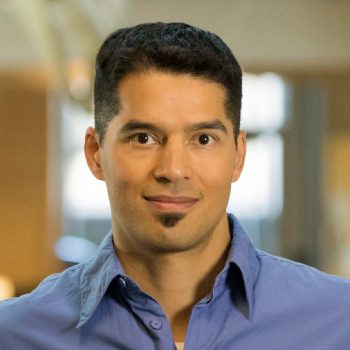
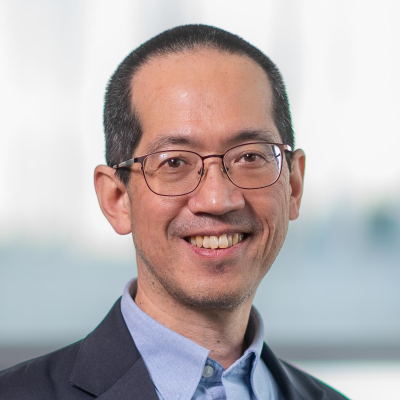
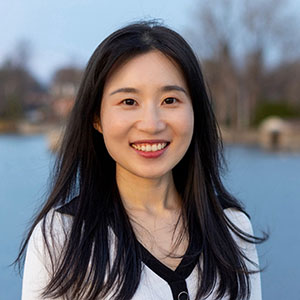
Dr. Daniel Jarvis is a Professor at Nipissing University's Schulich School of Education within the Faculty of Education and Professional Studies, specializing in mathematics education and technology integration. His educational background includes a BA from the University of Waterloo, BEd and MEd from Nipissing University, and PhD from Western University. Research interests focus on mathematics pedagogy, instructional technology, interdisciplinary studies, and teacher professional learning. Key projects include SSHRC-funded international research on Computer Algebra Systems and collaborative initiatives like GeoVisage and the Mathematics Knowledge Network of Ontario. Publications demonstrate consistent focus on educational technology implementation, mathematics competency development, and innovative teaching approaches across diverse educational contexts. Research frequently examines technology integration in STEM education and professional development models.
Robert Wilton is a Professor of Social Geography at McMaster University's School of Earth, Environment & Society. His research focuses on the social geographies of disability, exploring barriers to social inclusion in employment, housing, and welfare systems. He has led SSHRC-funded studies on disabled individuals' experiences in labor markets and urban environments. Wilton has co-edited influential books like *Towards Enabling Geographies* and serves as an associate editor for *Health & Place*. Education : PhD in Geography (University of Southern California, 1999), MA in Geography (University of Southern California, 1994), BA (Hons) in Geography (University of Hull, 1991). Research Interests : Disability inclusion, mental health geographies, urban accessibility, and the intersection of gender with disability. His work analyzes how spatial contexts shape access to work, housing, and healthcare. Recent Articles : Recent publications examine disability housing adaptations, mental health workplace negotiations, and cancer risk communication. His research bridges geographical theories with practical policy implications for marginalized groups. Teaching : Teaches courses on urban social geography, human geography theories, and research methods. Recent courses include *ENVSOCTY 3UR3 Urban Social Geography* and *GEOG 729 Applying Social Theories*. Collaborations : Co-authors include Ann Fudge Schormans, Nick Marquis, and Nikolaos Yiannakoulias. Over 80 publications since 1993, with active collaborations in Canada and internationally.
Geraldine Pratt is a full Professor and Head of the Department of Geography at the University of British Columbia (Faculty of Arts). She holds the Canada Research Chair in Care Economies and Global Labour and has been a Fellow of the Royal Society of Canada since 2011. Her work bridges feminist geography labour precarity transnational care economies climate justice housing equity . Pratt earned her PhD in Geography (1984), University of British Columbia MA in Geography (1980), University of British Columbia BSc in Psychology (1977), University of Toronto and has held academic appointments at UBC since 1986. Her research focuses on labour migration , geographies of care , and climate-related housing justice , often employing collaborative methods with migrant organizations and community groups. Recent projects examine outsourcing and automation in elder care housing (in)justice amid climate change heat vulnerability in Vancouver testimonial theatre as research methodology . Analysis of her 15 most recent publications (2020–2023) reveals consistent engagement with migrant worker rights , transnational care systems , and urban climate resilience . These works span journals like Antipode , Global Networks , and Annals of the American Association of Geographers , often co-authored with collaborators like Caleb Johnston and Rafi Arefin. Scientific awards include Canadian Association of Geographers’ Scholarly Distinction (2006) Killam Graduate Mentoring Award (2007) American Association of Geographers’ Distinction (2023) Jacob Biely Research Prize (2019) Honorary Doctorate, University of Oslo (2014) . Pratt supervises PhD candidate Rachel Stern in projects linking climate justice to housing equity, including heat vulnerability studies post-2021 heat dome. Her Canada Research Chair (2015–) supports ongoing collaborations with migrant organizations on temporary foreign worker programs. Labs/teams include the Centre for Climate Justice at UBC, where her housing justice research intersects with initiatives like the Public Scholars Initiative and partnerships with Vancouver Coastal Health and the South Vancouver Seniors Network.
Dr. Mela Sarkar is an Associate Professor in the Department of Integrated Studies in Education (DISE) at McGill University's Faculty of Education. She holds a Ph.D. from Concordia University (2000), with prior degrees from McGill and Concordia. Her research focuses on critical sociolinguistics, Indigenous language revitalization, and second language pedagogy, emphasizing marginalized communities' communicative practices. She has been actively involved with the BILD/LIDA research community since 2014, curating its blog and advising the J-BILD journal. Expertise: Multilingualism, hybrid identities, Mi’gmaq language preservation, Hip-Hop linguistics Key Projects: 10-year Mi’gmaq revitalization work in Listuguj, Quebec 'welcome class' studies, South Asian women's French learning Her work bridges applied linguistics with social justice, exploring how language policies intersect with cultural identity. Recent publications examine Ukrainian language learning during the pandemic and decolonial approaches to knowledge production. She has supervised doctoral programs but is currently not accepting new students. Dr. Sarkar’s research has been published in journals like the Canadian Modern Language Review, Journal of Language, Identity and Education, and International Journal of Qualitative Methods. She advocates for pedagogical innovation that centers marginalized voices in academic publishing and curriculum design.
Caroline Palmer is a Professor in the Department of Psychology at McGill University and holds the Distinguished James McGill Professorship in Cognitive Neuroscience of Performance. She directs the NSERC-CREATE training grant in Complex Dynamics and is an Associate Member of the Schulich School of Music. Her research focuses on understanding how music influences human behavior, particularly through auditory-motor synchronization, nonlinear dynamics, and temporal coordination in ensemble performance. She explores how rhythmic patterns in music and speech engage attention, memory, and emotion, with applications to social interaction and health. Key research themes include the role of endogenous rhythms in interpersonal synchronization, the physiological effects of musical engagement, and the dynamics of human-machine collaboration. Awards include Fellowship in the Royal Society of Canada. Her work integrates neuroscience, psychology, and computational modeling to explain how music shapes human movement and social connection. Grants and collaborations include leadership in interdisciplinary training programs and partnerships with the Schulich School of Music. She maintains the Sequence Production Lab, investigating neural and behavioral mechanisms underlying skilled performance. Recent studies highlight music's impact on cardiac dynamics, respiratory synchrony, and dyadic coordination in social contexts.
Daniel Y Chen is a Lecturer in the Department of Statistics at the University of British Columbia (UBC), Vancouver Campus. He holds a PhD Candidate status in Genetics, Bioinformatics, and Computational Biology at Virginia Tech, focusing on data science education in the biomedical sciences. His expertise includes statistical computing, open source software development, and reproducible research practices. Education: PhD Candidate (in progress): Genetics, Bioinformatics & Computational Biology, Virginia Tech MSc: Relevant field (implied via career progression) Research Interests: Daniel's work bridges data science pedagogy and biomedical applications. He focuses on improving computational literacy among medical practitioners through accessible education resources, open source tools, and reproducible workflows. His technical contributions span R and Python ecosystems, including packages like grader and pyprojroot , and authoring Pandas for Everyone . He actively promotes best practices in scientific programming and collaborative software development. Grants & Contributions: Contributions to RStudio's gradethis and learnr packages Open source maintenance (e.g., Arch Linux AUR packages) Labs/Teams: Affiliated with UBC's Data Science for Biomedicine (DS4BIOMED) initiative and Virginia Tech's Social Decision Analytics Laboratory. Collaborates with RStudio and GitHub communities on education and tool development.
Kai M. A. Chan is a Full Professor and Canada Research Chair (Tier 1) in Re-Wilding and Social-Ecological Transformation at the University of British Columbia (UBC), leading the CHANS Lab. He holds dual appointments in the Institute for Resources, Environment and Sustainability and the Institute for Oceans and Fisheries. His research focuses on interdisciplinary sustainability science, integrating ecology, policy, and ethics to address global environmental challenges. Education: PhD (Ecology & Evolutionary Biology) from Princeton University, MSc from Stanford University, and postdoctoral training at Stanford’s Center for Conservation Biology. He has held visiting roles at UC Santa Barbara and is a Fellow of the Leopold Leadership Program and Royal Society of Canada. Research interests center on social-ecological systems transformation, rewilding, and relational values. He co-leads CoSphere, a global initiative fostering sustainability advocacy. His work bridges natural and social sciences, emphasizing equitable outcomes and ecological restoration. Key contributions include foundational ecosystem services frameworks, transformative change research, and leadership in the IPBES Global Assessment. His lab supports 15+ graduate students and postdocs, focusing on topics like urban biodiversity, climate policy, and conservation messaging. Awards: UBC Killam Fellowship, Clean50 Sustainability Leader, and multiple grants from NSERC/SSHRC. He edits People and Nature and advises governments globally on ecosystems and climate resilience.
Alan Hu is a Professor in the Department of Computer Science at the University of British Columbia (UBC), part of the Faculty of Science. His research focuses on formal verification, algorithms, computer architecture, and electronic design automation. He teaches courses such as Intermediate Algorithm Design and Analysis (CPSC 320) and Introduction to Formal Verification and Analysis (CPSC 513). Dr. Hu has received notable awards, including the IEEE Council on Electronic Design Automation Outstanding Service Award and the IBM Faculty Award. His work emphasizes scalable verification techniques, SAT-based algorithms, and optimization in cloud computing and hardware systems. His research spans formal methods for hardware/software systems, including verification of embedded software, cache coherence, and network function virtualization. Notable contributions include advancements in SAT modulo theories, data race detection in heterogeneous systems, and cloud resource allocation frameworks like Cospot. Dr. Hu has been actively involved in teaching and curriculum development, consistently offering courses on algorithms, formal verification, and software design since 2000. His publications reflect a blend of theoretical foundations and practical applications in electronic design, cloud infrastructure, and verification tools. His scientific achievements include innovations in post-silicon validation, emulation-based coverage reduction, and formal analysis for debug trace optimization. He also contributes to the academic community through conference organization and editorial roles in formal verification and computer-aided design.
Paola Flocchini is a Professor and University Research Chair on Intruder Agents and the Decontamination of Communication Networks at the University of Ottawa's School of Electrical Engineering and Computer Science. She also serves as Associate Director of the OCICS Program. Her PhD is from an unspecified institution. Her research focuses on distributed computing, algorithms for autonomous robots, distributed systems, and cellular automata. She has contributed to advancing theoretical frameworks for mobile robotic networks, fault-tolerant systems, and dynamic network exploration. Research Interests: Distributed Computing Mobile Entities and Autonomous Robots Algorithm Design for Dynamic Networks Black Hole Detection and Network Decontamination Asynchronous Algorithms and Schedulers Her recent work emphasizes computational power of energy-constrained robots, pattern formation under sequential schedulers, and fault localization in dynamic topologies. She has published extensively in venues like ICALP, IWOCA, and DISC. Her research bridges theory and application, addressing challenges in distributed systems, robotics, and network security.
Kevin Haggerty is a Professor of Sociology at the University of Alberta and a Canada Research Chair. He holds a PhD from the University of British Columbia, alongside degrees from Carleton and the University of Toronto. His research focuses on policing, surveillance, and risk management, particularly through the University of Alberta Prison Project (UAPP), which examines incarcerated individuals' experiences with gender, drugs, race, and the opioid crisis. Haggerty has co-authored influential works like Policing the Risk Society and edited key texts such as the Routledge Handbook of Surveillance Studies . He has received numerous accolades, including the Killam Research Laureate and multiple teaching awards. His work spans academic leadership roles, including executive editor of the Canadian Journal of Sociology , and collaborations with organizations like the Canadian Research Network on Terrorism, Security and Society (TSAS). Courses taught include SOC 226 (Surveillance Studies) and SOC 420 (Criminal Justice Topics). His research emphasizes evidence-based practices and ethical dilemmas in criminology, with a focus on marginalized populations within criminal justice systems.
Brendan Pass is a Professor in the Department of Mathematical and Statistical Sciences at the University of Alberta. His research focuses on optimal transportation theory, with applications in mathematical economics, mathematical physics, and density functional theory. He is a core member of the Kantorovich Initiative, an interdisciplinary group dedicated to advancing optimal transport methodologies and their practical implementations. His work bridges pure mathematics with applied fields, addressing complex problems in multi-marginal transport, economic equilibrium modeling, and geometric analysis. Pass’s academic contributions span theoretical frameworks for optimal transport between spaces of differing dimensions, cyclic cost structures, and robust risk management. He explores intersections with diverse disciplines, including econometrics, financial mathematics, and geometric probability. His publications often address uniqueness conditions for Monge solutions, Wasserstein metrics, and barycenter problems in metric spaces. He has co-authored works on topics ranging from hedonic pricing models to vectorial martingale transport. Recent research trends include leveraging optimal transport for inequality measurement, robust optimization, and data denoising. His methodologies emphasize structural analysis and algorithmic design, with applications in crop root systems, quantum chemistry (via density functional theory), and option pricing. Pass frequently collaborates with institutions globally, contributing to both theoretical advancements and real-world problem-solving. Teaching responsibilities include advanced mathematics courses such as Math 156 (Calculus for Business/Economics) and Math 300 (Boundary Value Problems). His scholarly output includes over 50 peer-reviewed articles, conference contributions, and edited volumes. Current projects explore ODE characterizations of transport problems, distributional robustness, and partial identification in econometric models.
Craig Harvey, PhD, is an Assistant Professor in the Department of History, Classics, & Religion at the University of Alberta. He specializes in Roman Archaeology, focusing on the eastern provinces of the Roman Empire. His research integrates fieldwork in Jordan with studies of Roman imperialism, environmental adaptation, and frontier dynamics. He teaches courses on classical archaeology methodology, field techniques, and Roman provincial archaeology. Education: PhD in Classical Art and Archaeology, University of Michigan (2020) MA, University of Victoria BAH, Queen's University Research Interests: Roman frontier societies and environmental interactions Building materials and construction techniques in imperial contexts Archaeology of Jordan, particularly Nabataean and Roman sites like Humayma and ‘Ayn Gharandal Role of Roman baths in cultural identity formation Economic and social relationships between Roman military and local communities Recent Work: His publications analyze material culture from Jordanian sites to explore Roman imperial strategies, provincial resilience, and technological transfer. Fieldwork projects emphasize interdisciplinary approaches to understanding Roman frontier life. Teaching & Fieldwork: Lead instructor for advanced field archaeology courses (CLASS 475/476/601/602) Organizes fieldwork programs in the Mediterranean/Middle East Labs/Teams: Collaborates with the Vindolanda Archaeological Leather Project and leads excavations at Jordanian sites.
Kaidi Wang is an Assistant Professor and Agriculture and Agri-Food Innovation Chair in Applied Microbiology at the University of Saskatchewan's College of Agriculture and Bioresources, Department of Food and Bioproduct Sciences. Her research program focuses on food microbiology to improve safety, quality and sustainability of agri-food products, with emphasis on microbial ecology of foodborne pathogens like Salmonella. Education includes a PhD in Food Science from McGill University, Master of Science in Food Science from University of British Columbia, and Bachelor of Engineering in Food Science and Engineering from Zhejiang University, China. Research integrates advanced detection techniques including optical tweezers, microfluidics, vibrational spectroscopy, machine learning, transcriptomics and metabolomics. Key investigations examine pathogen survival mechanisms in agroecosystems, particularly biofilm formation and viable but non-culturable (VBNC) states. Additional research applies molecular tools, sensor-enabled data and artificial intelligence to study microbial behavior in food fermentation. Publications demonstrate focus on innovative detection methods, including Raman spectroscopy combined with neural networks for pathogen identification and novel approaches for VBNC state detection in foodborne pathogens. Research contributes to developing safer food processing methods and sustainable supply chain management. Laboratory focuses on molecular detection techniques and advanced spectroscopic methods for microbial characterization in food systems.
Utsav Sadana is an Assistant Professor of Operations Research in the Department of Computer Science and Operations Research (DIRO) at the University of Montréal. He holds affiliations with IVADO, CIRRELT, and GERAD research centers. His academic journey includes a postdoctoral fellowship at McGill University and a PhD in Management Science from HEC Montréal under Prof. Georges Zaccour. His research spans mathematical optimization, machine learning, and game theory with applications in decision-making under uncertainty. Key interests include entropic risk measures, impulse control in differential games, and contextual optimization methods. His work integrates theoretical foundations with practical applications in security, insurance, and technology adoption. His recent publications demonstrate a strong focus on distributionally robust optimization, risk-averse decision making, and game-theoretic approaches to dynamic systems. The 2025 European Journal of Operational Research survey synthesizes advances in contextual optimization, while his 2023 INFORMS Journal paper establishes the value of randomized strategies in network security contexts. As an educator, he teaches Methods of Operations Research (IFT-6575) and Dynamic Programming (IFT-6521) at the University of Montréal, and previously taught Business Statistics at McGill University. Lead researcher on Decision-making in dynamical systems (2024-2030) funded by NSERC Discovery Grant Co-researcher on Integration of Environmental Data in Urban Planning (2024-2026) with MITACS Acceleration funding His research methodology combines theoretical rigor with computational implementation, evidenced by his GitHub repositories containing optimization solvers and experimental code for risk analysis.
Shannon Fargey is an Associate Teaching Professor in the Department of Geography at the University of Victoria, Faculty of Social Sciences, where she has been a core teaching faculty member since 2014. She is based in Victoria, British Columbia, on the traditional territories of the lək̓ʷəŋən, Songhees, Esquimalt, and WSÁNEĆ peoples. Her work centers on teaching excellence and student discovery in physical geography, geomatics, and environmental sustainability. PhD, University of Manitoba MSc, University of Calgary BSc, University of Calgary Her research interests include mountain meteorology, hydrology, climate change, spatial analysis, and field-based education. She is passionate about exploring mountain landscapes and leads field schools focused on alpine environmental change and meteorology. She is also committed to campus-based teaching across all levels of the geography program. Her recent projects emphasize decolonizing and Indigenizing curriculum, particularly in the Clayoquot Sound Field Semester, and improving hydrological understanding in the Sooke Watershed through a dense network of rain gauges. These efforts reflect her interdisciplinary approach combining physical geography with community-engaged pedagogy. Shannon has received multiple teaching accolades, including the 2023 Award for Excellence in Teaching from the Canadian Association of Geographers. She also serves as Undergraduate Advisor, Honours Advisor, and Chair of the Undergraduate Advisory Committee, actively mentoring students through directed studies and interdisciplinary projects. Award for Excellence in Teaching, Canadian Association of Geographers (2023) Early Career Teaching Excellence Award, Faculty of Social Sciences, UVic (2022–2023) J. Alistair McVey Award for Teaching Excellence, Western Division, CAG (2022–2023) She supervises undergraduate honors and directed studies students and supports graduate committees, though she does not currently supervise graduate theses. Her lab and research activities are centered on field instrumentation and spatial data science, particularly in watershed and mountain environments. More details about her research are expected to be published soon.