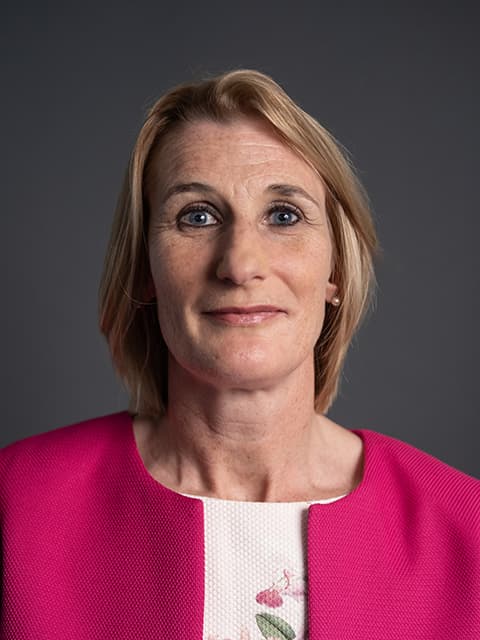
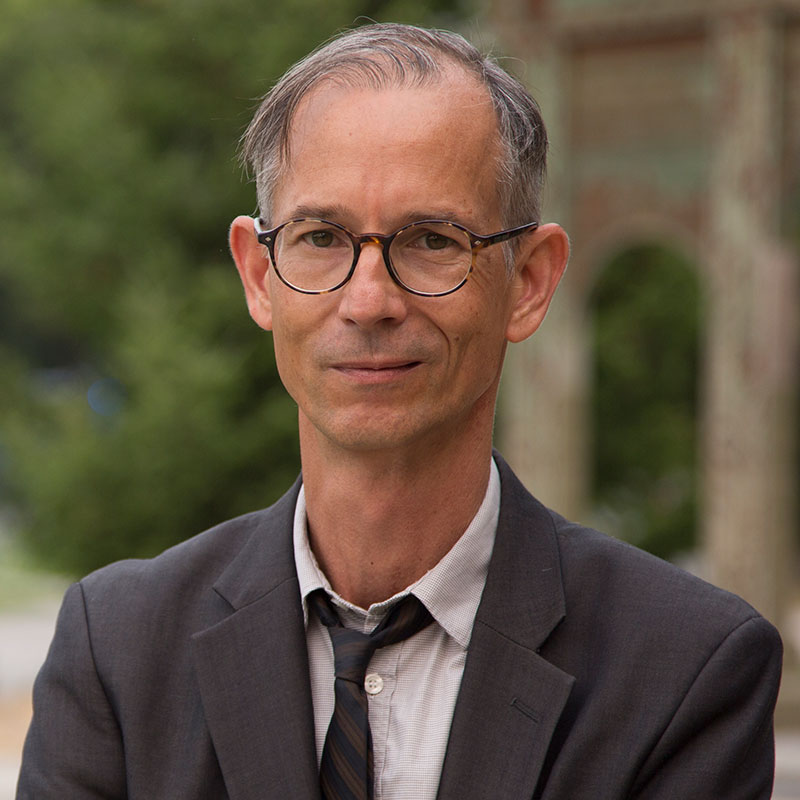
Professor Jan Godsell serves as Dean of Loughborough Business School and holds the title of Professor of Operations and Supply Chain Strategy. Her dual career spans academia and industry, combining academic rigor with executive experience in global firms like Dyson and ICI/Zeneca Pharmaceuticals. She focuses on strategic supply chain alignment, circular economy transitions, and Industry 4.0 applications. Her research bridges operational excellence and strategic business goals, emphasizing sustainability, deglobalization risks, and innovation ecosystems. Advisory roles include the Made Smarter Expert Panel and Industrial Strategy Challenge Fund Advisory Group, reflecting her industry influence. Key research themes include circular economy frameworks, supply chain resilience, and the interplay between technology and sustainable practices. Recent work explores net-zero supply chains, food waste prevention, and geopolitical sourcing strategies. Awards and grants are not explicitly listed in the provided text, but her extensive advisory roles and leadership positions underscore her recognized expertise. Her career trajectory highlights a commitment to transforming academic insights into actionable industry strategies.
Sonja Wogrin is a University Professor (Univ.-Prof.) at Graz University of Technology (TU Graz), where she has been heading the Institute for Electricity Economics and Energy Innovation since August 2021. She holds a Dipl.-Ing. in Technical Mathematics from TU Graz (2008), a Master of Science in Computation for Design and Optimization from MIT (2008), and a doctorate in Electricity Systems from Universidad Pontificia Comillas (2013). Her educational background includes: Doctorate in Electricity Systems, Universidad Pontificia de Comillas (June 2013) Dipl.-Ing. in Technical Mathematics, Graz University of Technology (October 2008) Master of Science in Computation for Design and Optimization, MIT (June 2008) Professor Wogrin's research focuses on decision support systems in the energy sector, optimization methodologies, and particularly the problem of generation capacity expansion. Her work spans several key areas including bilevel programming, capacity expansion planning, energy storage systems, and time series aggregation for energy system optimization. She has made significant contributions to understanding how to integrate renewable energy sources into power systems while maintaining economic efficiency and grid stability. Her research often addresses the challenges of decarbonizing electricity systems through advanced mathematical modeling and optimization techniques. Her recent publications demonstrate a strong focus on improving the computational efficiency of energy system models while maintaining accuracy, with particular attention to the integration of renewable energy sources, energy storage systems, and the development of resilient energy communities. She has pioneered work on time series aggregation methods that balance computational tractability with model accuracy, which is crucial for long-term energy planning under uncertainty. Professor Wogrin has received several prestigious awards and fellowships including: 4th EASE Student Award for "Co-Optimisation of energy storage technologies in tactical and strategic planning models" (2019) Beca de movilidad para investigadores "NILS Ciencia y Sostenibilidad" (2015) Beca Erasmus "Personal Docente/Investigador" de formación (2016) Beca Iberdrola de ayuda a la investigación en energía y medio ambiente (2020) She leads multiple significant research projects including EU - NetZero-Opt, RINGs, iKlimET, V2G-QUESTS, and CIDEAL, which focus on optimizing energy systems for net-zero emissions, resilient energy networks, climate and energy system modeling, vehicle-to-grid integration, and industrial decarbonization. Her work has substantial practical implications for energy policy and grid operations in Austria and beyond. Professor Wogrin collaborates extensively with industry partners including Austrian Power Grid AG, KELAG, and Netz Niederösterreich, ensuring her research addresses real-world energy challenges. Professor Wogrin leads the research group at the Institute for Electricity Economics and Energy Innovation, which develops advanced optimization models for energy systems. Her team has created the LEGO (Low-carbon Expansion Generation Optimization) model, an open-source tool for energy system optimization that has gained international recognition. The group's work spans from fundamental optimization methods to practical applications in energy system planning and operation, with a strong emphasis on computational efficiency and model accuracy.
Professor Poul Alberg Østergaard is affiliated with Aalborg University's Department of Sustainability and Planning, focusing on sustainable energy planning and smart energy systems. His work aligns with UN Sustainable Development Goals, emphasizing energy transition, renewable integration, and decarbonization strategies. Professor in Energy Planning Expertise: Energy Systems Analysis, District Heating, Renewable Energy Transition Key Projects: Sustainable Heating Roadmaps, Municipal Energy Planning (e.g., Aalborg 2020-2050 Strategy) Research interests include 100% renewable energy systems, smart grids, energy storage, and policy frameworks. He has contributed to over 287 publications and 25 projects since 1996, with notable work on island energy transitions, hydrogen pathways, and district heating optimization. Media engagements highlight his role as an advisor on energy pricing, district heating dynamics, and nuclear energy debates. He organizes international conferences like the Smart Energy Systems series and collaborates globally on energy policy and modeling tools like EnergyPLAN. Labs/Teams: Member of the Sustainable Energy Planning Research Group and contributor to initiatives like the Smart Island Energy Systems (SMILE) project.
Dr. Wolfgang Haupt is a researcher and Head of the Research Group 'Politics and Planning' at the Leibniz-Institut für Raumbezogene Sozialforschung (IRS) since December 2023. He holds a PhD in urban studies from the Gran Sasso Science Institute and Sant'Anna School of Advanced Studies and has a background in geography from Technische Universität Dresden. He is currently completing his habilitation at the Chair of Regional Planning, Brandenburg University of Technology Cottbus-Senftenberg, where he also teaches. His research focuses on urban climate governance, resilience, policy learning between cities, and institutional change. His research expertise spans urban climate governance, climate change adaptation and mitigation, urban resilience, policy diffusion, transnational municipal networks, cultural heritage in urban development, and institutional change. He has led and contributed to numerous research projects on local climate policy, city-to-city learning, and transformation pathways in German and European cities. His work emphasizes the role of smaller and structurally disadvantaged municipalities in climate action, challenging dominant narratives focused on large, well-resourced cities. The most recent publications reflect a strong trend in analyzing climate governance in medium-sized and smaller cities, the impact of social movements like Fridays for Future, the role of disruptive events (e.g., Tesla Gigafactory) in institutional change, and comparative studies of climate policy in European forerunner cities. His research increasingly integrates interdisciplinary and transdisciplinary approaches, examining the intersection of climate, migration, and infrastructure policies. Lead Project: Conflicts in Planning: Major Projects and their Potential for Institutional Change (2022–2025) Third-party funded project: Unlikely Climate Pioneers: Local Governments’ Net Zero Actions in Left Behind Places in the UK and Germany (2024–2026) Third-party funded project: Im Dialog mit Expert*innen aus der kommunalen Praxis: Was können wir aus der Migrations- und Klimakrise lernen? (2024–2025) Cross-departmental project: Disruption and Spatial Development (2022–2025) Habilitation project: Forerunner, Follower and Laggards: Governance of Climate Change in German Cities (2022–2025) Dr. Haupt regularly supervises and collaborates with early-career researchers and contributes to academic and public discourse through teaching, conference presentations, and expert policy dialogues. He is actively involved in transdisciplinary research, engaging with municipal practitioners and policymakers to bridge research and practice in urban planning and climate governance. He leads multiple research teams focusing on climate governance, institutional change, and urban resilience.
Fabiano Pallonetto is a Professor at Maynooth University's School of Business, with affiliations to the Hamilton Institute and Innovation Value Institute (IVI). He combines academic research with industry experience in energy, IT, and transport sectors. Role: Professor Location: Room 314, Maynooth University Contact: Fabiano.Pallonetto@mu.ie His research focuses on smart grid integration, energy system optimization, and sustainable development. Key projects include: NexSys (Funded Investigator): Developing net-zero energy pathways FLOW (Principal Investigator): Flexible EV-grid integration RES4CITY (Coordinator): Workforce upskilling for renewables Recent publications analyze energy flexibility software, deep learning optimization models, phase change materials for thermal storage, and blockchain security frameworks. His work spans smart cities , renewable integration , and AI-driven energy systems . Student Supervision: Currently advising MR B. Mohseni-Gharyehsafa (PhD research).
Hans Hellsmark is an Associate Professor and Senior Researcher at Chalmers University of Technology's Environmental Systems Analysis department. He serves as coordinator of the Chalmers Initiative for Innovation and Sustainability Transitions and as one of the profile managers for Technology Governance in Energy Transitions within the Energy Area of Advance. Additionally, he acts as Chalmers coordinator for the Swedish knowledge centre for renewable transportation fuels (f3), working with diverse stakeholders across academia, industry, and policy to facilitate societal transitions through knowledge support and tailored activities. His research focuses on innovation and research policy for transformative societal change, particularly examining how policy instruments drive sustainability transitions. Hellsmark investigates the socio-economic benefits of governmental investments in research infrastructure and analyzes the complex interactions between policy makers, industry actors, research institutes, and universities in facilitating energy transitions. His work specializes in policy mixes, directionality in transformative missions, and the role of pilot and demonstration plants in market formation for sustainable technologies. Recent publications reveal a strong focus on energy transition pathways in process industries and hydrogen economies, with recurring themes of policy alignment challenges, stakeholder narratives, and practical implementation of decarbonization strategies. His research consistently examines how directionality in policy missions influences industrial transformation and how demonstration projects bridge technology development and market formation. Hellsmark leads and participates in numerous research projects funded by VINNOVA, Swedish Energy Agency, Formas, and Nordic Energy Research, including 'Mission-driven policy instruments for zero and negative emissions' (2024-2026), 'Nordic Hydrogen Hubs' (2023-2026), and 'Pilot and Demonstration Plants for Energy Transitions' (ongoing since 2020). His work demonstrates extensive collaboration with researchers including Anna Bergek, Patrik Söderholm, and Johnn Andersson across multiple institutions. He works within the Environmental Systems Analysis research group at Chalmers, contributing to the university's Energy Area of Advance. His research connects closely with Chalmers' broader sustainability initiatives and knowledge platforms focused on system transformation, where he helps bridge academic research with practical policy applications in the energy transition.
Lars Coenen is a Professor in Innovation and Sustainability Transitions at the Mohn Centre for Innovation and Regional Development, Western Norway University of Applied Sciences. Previously, he held positions at the TIK Centre (Professor II), CIRCLE at Lund University, and the Melbourne Sustainable Society Institute as the City of Melbourne Chair of Resilient Cities. Research focuses on regional and urban innovation, particularly environmental innovation and sustainability transitions. Author of over 65 papers in journals like Research Policy , Environment and Planning A , and Economic Geography . Research funded by JPI Urban Europe, EU Framework 7, Swedish Energy Agency, and Nordic Energy Research. His work addresses spatial concentrations of innovation, climate change mitigation, and the role of universities and cities in sustainability transitions. Publications highlight advancements in urban living labs, circular bioeconomy, and mission-oriented innovation districts. Coenen’s academic contributions include theoretical frameworks for regional diversification, transformative innovation policy, and socio-technical system changes in urban contexts.
Alison M. Ferris is an Assistant Professor in the Department of Mechanical and Aerospace Engineering at Princeton University conducting experimental research at the intersection of chemical kinetics, optical diagnostics, and sustainable fuel development using shock wave methodologies. Her educational background includes: Ph.D. in Mechanical Engineering from Stanford University (2021) M.S. in Mechanical Engineering from the University of Wisconsin-Madison (2014) B.S. in Mechanical Engineering from Columbia University (2012) Dr. Ferris's research focuses on high-temperature reaction chemistry for sustainable aviation fuels (SAFs), combining shock tube experiments with laser-based diagnostics to measure key reaction rates and develop predictive models. Current projects investigate the link between aviation particulates and contrail formation, low-carbon fuel kinetics, and data-driven approaches for accelerating SAF development through machine learning and optical sensing techniques. Analysis of her 15 most recent publications (2019-2024) reveals dominant themes in sustainable aviation fuels, ammonia combustion for zero-carbon propulsion, and advanced diagnostic development. Her work consistently employs shock tube platforms for high-temperature flame speed measurements while increasingly integrating machine learning for fuel property prediction, demonstrating evolution from fundamental kinetics toward applied sustainable fuel solutions. Scientific awards: No awards were documented in the provided information. Dr. Ferris leads the Ferris Lab where she advises graduate researchers in combustion science, though specific student names and grant details were not provided in the source material. The Ferris Lab (D324 Engineering Quadrangle) maintains three core research thrusts: Sustainable Fuels development using machine learning, Chemical Kinetics investigations of reaction pathways, and Flame Dynamics studies of alternative fuels at extreme conditions through shock wave methodologies.
Abolfazl Simorgh is a researcher at Charles III University of Madrid's Department of Aerospace Engineering, specializing in climate-optimized aviation systems. His work bridges mathematical control theory with practical climate impact mitigation, focusing on robust trajectory optimization under environmental and operational uncertainties. He leads development of open-source tools for sustainable flight planning while contributing to major European aviation initiatives. Education: B.Sc. in Control Engineering (2017) M.Sc. in Control Engineering (2020) Ph.D. in Aerospace Engineering from Charles III University of Madrid Dr. Simorgh's research centers on developing mathematical frameworks that reconcile aircraft trajectory optimization with climate impact reduction. His expertise spans robust control systems, optimization under uncertainty, and climate modeling integration, with particular emphasis on non-CO₂ emissions. His methodology addresses both CO₂ and non-CO₂ climate forcing mechanisms through computationally efficient algorithms that account for weather variability and climate metric uncertainties. This work directly supports aviation's decarbonization by providing operational strategies that reduce environmental footprint without prohibitive cost increases. Analysis of his 15 most recent publications reveals a cohesive research trajectory focused on operationalizing climate-optimal flight planning. His work consistently integrates climate science with aerospace engineering through robust optimization frameworks, demonstrating particular innovation in handling multiple uncertainty sources (weather, climate models, emissions). The publications cluster around three interconnected themes: 1) Development of open-source computational tools (ROOST, CLIMaCCF), 2) Network-scale implementation of climate-aware air traffic management, and 3) Risk analysis of climate mitigation strategies. This body of work establishes new methodological standards for quantifying and minimizing aviation's total climate impact. Scientific Awards: Luis Azcárraga Aeronautical Innovation Award for collaborative research impact Best Paper Award (2022) from a high-impact aerospace journal Dr. Simorgh secures significant research funding through European Commission projects including FlyATM4E (climate-optimized flight planning), ALARM (aviation emissions reduction), and RefMAP (sustainable aviation pathways). His grant portfolio emphasizes practical implementation of climate mitigation strategies, with strong industry-academia collaboration. He mentors junior researchers through project teams and has developed three major open-source Python libraries (CLIMaCCF, ROOST, ROC) that have become community standards for climate impact assessment in aviation research. His current work focuses on scaling climate-optimized trajectories to continental airspace while addressing operational constraints and economic viability. He leads a research group focused on climate-aware air traffic management, developing the ROOST simulation framework for GPU-accelerated trajectory optimization and the CLIMaCCF library for standardized climate metric calculations. His team collaborates with European air navigation service providers and aircraft manufacturers to transition research into operational practice, with current projects emphasizing real-time implementation and regulatory compliance frameworks.
Dr. Dharik Mallapragada is an Assistant Professor in the Department of Chemical and Biomolecular Engineering at NYU Tandon School of Engineering, affiliated with the Center for Advanced Technology in Telecommunications (CATT). His research focuses on mathematical modeling to analyze low-carbon technologies and their integration into energy systems, emphasizing decarbonization pathways for developed and developing economies. He holds a B.Tech from IIT Madras and a Ph.D. in Chemical Engineering from Purdue University. Key research areas include optimizing energy infrastructure planning, electricity market designs for decarbonization, and techno-economic assessments of hydrogen production and storage. Recent work explores repurposing coal plants into thermal storage, evaluating rate structures for renewables-dominant grids, and analyzing India’s energy transition challenges. Mallapragada’s work bridges computational techniques like optimization modeling and data analytics with real-world policy and geographical contexts. Publications highlight infrastructure synergies between power and gas systems, hydrogen production pathways, and electrification barriers in heavy industries. His research underscores the importance of flexible energy systems and equitable policy frameworks, particularly for emerging economies. The Sustainable Energy Transitions (SET) group he leads collaborates globally to address climate mitigation challenges through analytical tools and cross-sectoral solutions.
Sam Cooper is a Lecturer in the Department of Mechanical Engineering at the University of Bath, affiliated with the Centre for Sustainable Energy Systems (SES), Centre for Climate Adaptation & Environment Research (CAER), and the Institute of Sustainability and Climate Change. His research focuses on optimizing decarbonization technologies and assessing their environmental impacts across energy, industrial, and agro-food sectors. He utilizes tools like life cycle assessment (LCA), input-output analysis (IOA), and energy/exergy analysis. Education: PhD in Thermodynamic Analysis of Air Source Heat Pumps (2013) supervised by Prof. McManus and Prof. Hammond at the University of Bath. Research Projects Sustainable Chemicals and Materials Manufacturing Hub (EPSRC, 2024–2031) Creating disaggregated GHG sources extension table for UK MRIO model (EPSRC, 2020–2021) Key Research Themes Industrial decarbonization strategies Renewable energy integration Climate impact modeling
Matthew Hannon is a Professor of Sustainable Energy Business and Policy at the Hunter Centre for Entrepreneurship, Strathclyde Business School, University of Strathclyde. His research focuses on the business models, policies, and technologies critical to achieving a socially equitable, net-zero economy. He leads and co-leads major research initiatives including the UKRI-funded EnergyREV consortium, the UK Energy Research Centre’s Community Energy Finance and 'Whole Person - Whole Place' retrofit projects, and the Scottish Universities Insight Institute’s Carbon Offsetting for Communities project. His educational background includes a PhD in Co-evolution of Innovative Business Models and Sustainability Transitions from the University of Leeds and a Postgraduate Certificate in University Learning and Teaching from Imperial College London. He has held visiting positions at Imperial College London and is actively engaged in knowledge exchange and policy outreach. Hannon's research interests span sustainable energy, energy policy, business model innovation, community energy, energy justice, and smart local energy systems. His work emphasizes the socio-technical dimensions of energy transitions, particularly how community engagement, financial mechanisms, and policy design can enable equitable decarbonization. He has published in top-tier journals such as Nature Energy , Energy Research and Social Science , and Technological Forecasting and Social Change , and has co-authored books on energy innovation. The 15 most recent publications reflect a strong focus on community energy finance, smart local energy systems, energy retrofitting, and policy innovation. Key themes include the role of business models in sustainability transitions, the financing of grassroots innovation, and the social and relational aspects of energy efficiency. His work increasingly integrates justice and equity into the design of energy systems and policies. Place on the Royal Society of Edinburgh's Scottish Crucible (2018) World Energy Congress Recognition (2016) Hannon has supervised multiple PhD students and is actively involved in advising on research projects. His work has attracted significant funding from UKRI, ESRC, EPSRC, and other bodies. He provides expert testimony to parliamentary committees and contributes to government consultations. He is a council member of the British Institute of Energy Economics, chair and trustee of the community energy charity South Seeds, and a member of advisory panels for BSI/Defra and USwitch. He is also the co-founder and host of the Local Zero podcast, which highlights local climate action and has been recognized as the Times Pod of the Week. Hannon leads or co-leads several active research projects, including 'Systems Approaches for Accelerating a Just Transition (JUST-Systems)' and 'The Role of Smart Energy Homes in Accelerating a Just Transition to Net-Zero'. His team includes co-investigators from across Strathclyde and partner organizations, reflecting a collaborative, interdisciplinary approach to tackling complex energy challenges.
Robert Kozak is a Professor and Dean of the Faculty of Forestry at the University of British Columbia (UBC). He is based in the Office of The Dean at the Forest Sciences Centre, Vancouver, BC. His research and teaching focus on sustainable business management practices within forestry and the emerging conservation economy. Research Areas: Human Dimensions of the Environment, Forest-Dependent Communities in Transition, International Development, Poverty Alleviation, Forest Certification, Value-Added Strategies, Climate Action Pathways, Recognitional Justice in Urban Greening. Current Projects: He leads research initiatives funded by SSHRC Insight Grants and MITACS Elevate Grants, including enhancing community forest enterprises, exploring climate action pathways for a net-zero carbon economy, and addressing recognitional justice in urban greening. Fellow, The Institute of Materials, Minerals and Mining (2000) Killam Teaching Prize (2001, 2014) IUFRO Scientific Achievement Award (2014) Doctor of Agriculture and Forestry honoris causa, University of Helsinki (2022) Kozak serves on advisory teams and collaborates with institutions like the Forests and Communities in Transition Lab (FACT). He is not currently accepting new graduate students or postdoctoral fellows.
Professor Zhenguo Huang is a distinguished academic at the University of Technology Sydney (UTS), where he serves as Director of the Centre for Green Technology and leads the University's Hydrogen Energy Program. His work focuses on developing novel technologies for clean fuels, emission measurement, and environmental decontamination, with particular emphasis on hydrogen storage solutions as Australia advances its hydrogen strategy. He holds a Professor position in the School of Civil and Environmental Engineering within the Faculty of Engineering and Information Technology. Professor Huang received his PhD from the University of Wollongong in 2007, followed by a postdoctoral appointment at The Ohio State University in the US. His undergraduate degree is a BSc from Northeastern University in Shenyang, China. This strong foundation in materials science and engineering has enabled his significant contributions to the field of clean energy technologies. His research spans multiple cutting-edge areas in energy conversion and storage, with particular focus on hydrogen storage materials, CO2 conversion technologies, and advanced electrolytes. His pioneering work on two-dimensional boron-containing nanosheets has opened new possibilities in energy applications, particularly for hydrogen storage under mild conditions. He also investigates liquid-phase hydrogen carriers that could enable practical large-scale hydrogen storage and transport. His research integrates fundamental materials science with practical engineering solutions for the clean energy transition, with significant emphasis on commercialization potential. Analysis of Professor Huang's recent publications reveals a strong progression from basic research on boron compounds to applied technologies with commercial viability. His work demonstrates increasing sophistication in nanoscale engineering of hydrogen storage materials, with particular emphasis on lowering operating temperatures and improving cycling stability. The research shows a clear trajectory toward practical implementation, with growing attention to techno-economic analysis and system integration for real-world applications. His significant contributions to the field have been recognized through multiple prestigious awards: ARC DECRA fellowship ARC Future Fellowship Humboldt Research Fellowship for Experienced Researchers (Alexander von Humboldt Foundation) University of Wollongong Vice-Chancellor's Award for Outstanding Achievement in Research Commercialisation, Impact and Engagement UTS Vice-Chancellor's Awards for Research Excellence: Research Leadership and Development Award SCIAS Fellow, Siebold-Collegium Institute for Advanced Studies, Germany Professor Huang actively supervises PhD students and has secured substantial research funding from diverse sources including the Australian Research Council (ARC), Cooperative Research Centre Projects (CRC-P), and industry partnerships. His current projects include multiple ARC Discovery Projects focused on hydrogen storage materials and boron nanomaterials, as well as industry-funded research with organizations like Boron Molecular and HB11 ENERGY HOLDINGS. He serves as a Research Advisor at the National Institute for Materials Science in Japan and has established strong international collaborations, particularly through his role as Chair of the International Hydrogen Carriers Alliance. He heads the Boron for Energy Storage and Transfer (BEST) Lab at UTS, which focuses on three main research directions: hydrogen storage materials, boron-containing 2D materials, and advanced electrolytes. The lab brings together cross-disciplinary expertise to tackle challenges in clean energy technologies, with particular focus on practical solutions for the hydrogen economy. His breakthrough in hydrogen storage and Na-ion batteries has been successfully commercialized in partnership with Melbourne-based specialist chemical manufacturer, Boron Molecular.
Prof. Evina Katsou is a Chair Professor at Imperial College London in the Department of Civil and Environmental Engineering, Faculty of Engineering. She leads the Resilience & Sustainability group, focusing on AI and digital tools for sustainable solutions in water, wastewater, and industrial sectors. Research Interests include wastewater treatment processes, circular economy frameworks, greenhouse gas mitigation, and sustainability methodologies. Her work bridges digital innovation with environmental engineering, advancing net-zero pathways and ISO standards for circular economy. Professional Engagement : Co-leads the Intelligent and Smart Systems Action Group in the ICT4Water Cluster, chairs two Cost Action working groups, co-chairs IWA Small Water & Wastewater Systems Specialist Group, and contributes to ISO 59020 standards. Projects & Leadership : Coordinated 27 R&D projects, including EU-funded initiatives like SMART-Plant, DEEP-Purple H2020, HYDROUSA H2020, and SAFELOOP Horizon Europe. These focus on resource recovery, renewable energy, and decision-making tools. Labs & Teams : Leads a multidisciplinary group of 25 postdoctoral researchers and PhD students at Imperial College London.